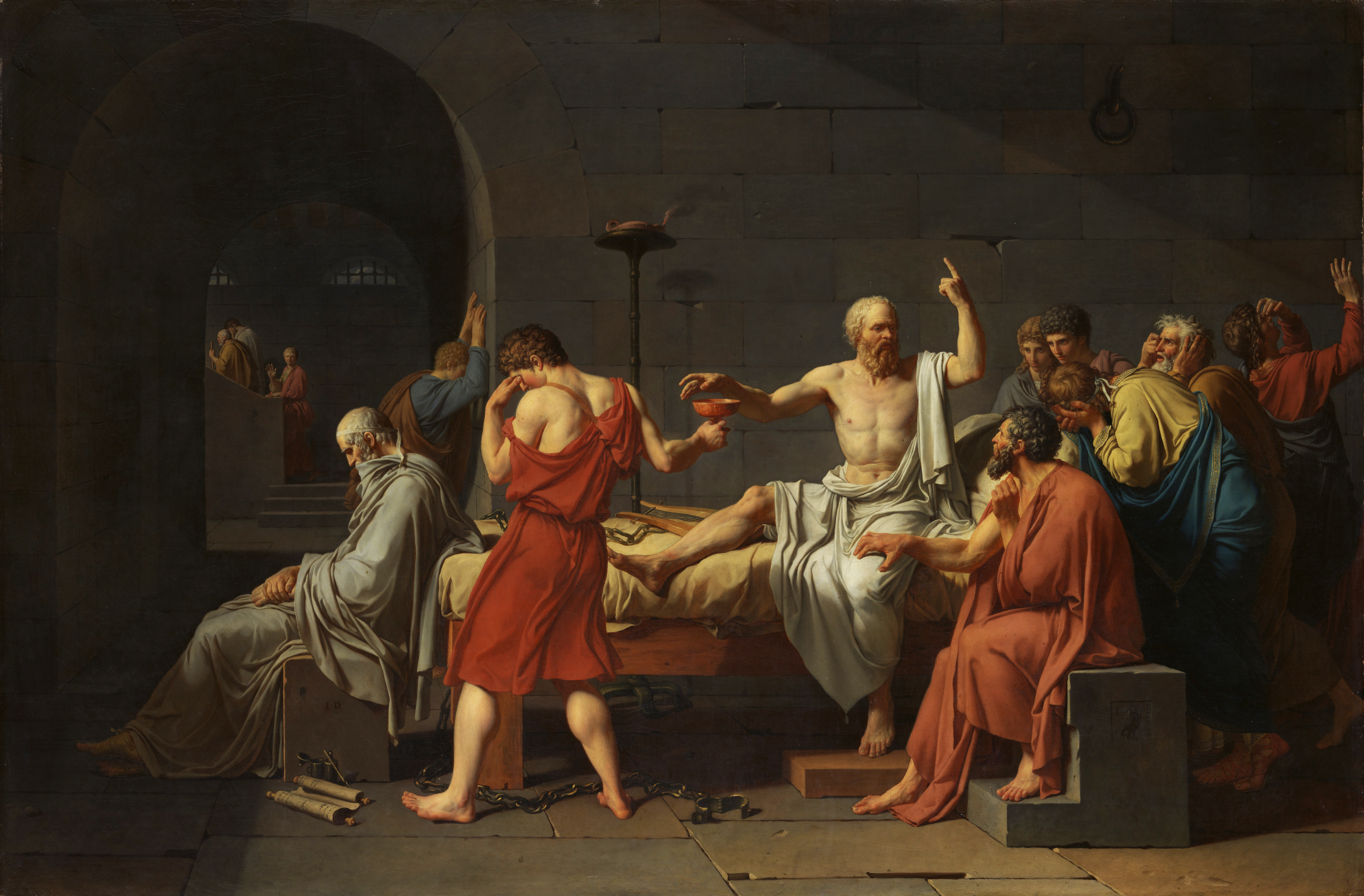
Korinna Laughed: Making Pindar Better

Plutarch, On the Fame of Athens 348 a

“Korinna warned Pindar when he was still young and puffed up over his proper use of diction that he was an uncharming writer [a-mousos] since he did not include myths—this happens to be the work of poetry. Instead, he based his work on odd words [glosses], stretched meanings, periphrases, melodies, and rhythms, all ornaments for the subject matter. Then Pindar, trusting the things she said, wrote this line: “Ismenos or gold-staved Melia or Kadmos, or the holy generation of sewn men, or the overwhelming strength of Herakles, or the joyful rite of Dionysus.”

After he showed this to Korinna, she laughed and said one should sow with one hand, not the whole bag. In truth, Pindar mixed up and threw together every seed of myth and poured it into his song.”

Ἡ δὲ Κόριννα τὸν Πίνδαρον, ὄντα νέον ἔτι καὶ τῇ λογιότητι σοβαρῶς χρώμενον, ἐνουθέτησεν ὡς ἄμουσον ὄντα καὶ μὴ ποιοῦντα μύθους, ὃ τῆς ποιητικῆς ἔργον εἶναι συμβέβηκε, γλώττας δὲ καὶ καταχρήσεις καὶ μεταφράσεις καὶ μέλη καὶ ῥυθμοὺς ἡδύσματα τοῖς πράγμασιν ὑποτιθέντα.σφόδρ᾿ οὖν ὁ Πίνδαρος ἐπιστήσας τοῖς λεγομένοις ἐποίησεν ἐκεῖνο τὸ μέλος.

Ἰσμηνὸν ἢ χρυσαλάκατον Μελίαν,

ἢ Κάδμον ἢ σπαρτῶν ἱερὸν γένος ἀνδρῶν,

ἢ τὸ πάνυ σθένος Ἡρακλέους

ἢ τὰν Διωνύσου πολυγαθέα τιμάν.

δειξαμένου δὲ τῇ Κορίννῃ γελάσασα ἐκείνη τῇ χειρὶ δεῖν ἔφη σπείρειν, ἀλλὰ μὴ ὅλῳ τῷ θυλάκῳ. τῷ γὰρ ὄντι συγκεράσας καὶ συμφορήσας πανσπερμίαν τινὰ μύθων ὁ Πίνδαρος εἰς τὸ μέλος ἐξέχεεν.

Here’s another anecdote:

Aelian, Varia Historia 13.25

“When Pindar was competing in Thebes he encountered unlearned audiences and was defeated by Korinna five times. When he was trying to refute his own lack of poetic ability [amousia], he used to call Korinna a pig.”

Πίνδαρος ὁ ποιητὴς ἀγωνιζόμενος ἐν Θήβαις ἀμαθέσι περιπεσὼν ἀκροαταῖς ἡττήθη Κορίννης πεντάκις. ἐλέγχων δὲ τὴν ἀμουσίαν αὐτῶν ὁ Πίνδαρος σῦν ἐκάλει τὴν Κόρινναν.

We don’t have much from Korinna, but we do have the following line, which I think is appropriate for this anecdote:

“I sing of the virtues of heroes and heroines.”

ἱώνει δ᾿ εἱρώων ἀρετὰς / χεἰρωάδων

Here is a longer piece. Those who know Pindar might sense some similarities:

Fr. 2 (P.Oxy.2370, prim.ed. Lobel)

“Terpsichorê calls me
To sing fine tales
To the white-robed Tanagrean women.
And the city delights much
In my clear-voiced song.
For whatever great tales
[others have shadowed with lies]
We will sing [anew]
[over] the broad-wayed earth.
From the time of our fathers
I begin the tale for
The maidens just as I have sung
Many times, dressing up Kephisos
Our founder with words.”

ἐπί με Τερψιχόρα [καλῖ
καλὰ Ϝεροῖ’ ἀισομ[έναν
Ταναγρίδεσσι λε[υκοπέπλυς
μέγα δ’ ἐμῆς γέγ[αθε πόλις
λιγουροκω[τί]λυ[ς ἐνοπῆς.
ὅττι γὰρ μεγαλ.[
ψευδ[.]σ̣.[.]αδομ̣ε[
.[.]..ω γῆαν εὐρού[χορον
λόγια δ’ ἐπ πατέρω[ν
κοσμείσασα Ϝιδιο[
παρθ[έ]νυσι κατά [ρχομη
πο]λλὰ μὲν Κα̣φ̣[ισὸν ἱών-
γ’ ἀρχ]αγὸν κόσμ[εισα λόγυ]ς,

Eyes on the Skies!

Iamblichus, Protrepticus 51:

“Humans are the most noble of the animals, as is clear from the fact that they are born both from and directed toward nature. This it is for the sake of which nature and god made us. When Pythagoras was asked about the purpose for which humans were created, he said, ‘To look upon the heavens’, and he said that he himself was an observer of nature, and had come into life for that purpose. They also say that Anaxagoras was asked for what reason someone might choose to be born and to go on living, and he responded, ‘in order to watch the heavens, and the stars and moon and sun’, as though nothing else in the world were worth consideration.”

τιμιώτατον δέ γε τῶν ἐνταῦθα ζῴων ἄνθρωπός ἐστιν, ὥστε δῆλον ὅτι φύσει τε καὶ κατὰ φύσιν γέγονε. καὶ τοῦτό ἐστι τῶν ὄντων οὗ χάριν ἡ φύσις ἡμᾶς ἐγέννησε καὶ ὁ θεός. τί δὴ τοῦτό ἐστι Πυθαγόρας ἐρωτώμενος, ‘τὸ θεάσασθαι’ εἶπε ‘τὸν οὐρανόν’, καὶ ἑαυτὸν δὲ θεωρὸν ἔφασκεν εἶναι τῆς φύσεως καὶ τούτου ἕνεκα παρεληλυθέναι εἰς τὸν βίον. καὶ ᾿Αναξαγόραν δέ φασιν εἰπεῖν ἐρωτηθέντα τίνος ἂν ἕνεκα ἕλοιτο γενέσθαι τις καὶ ζῆν, ἀποκρίνασθαι πρὸς τὴν ἐρώτησιν· ὡς ‘τοῦ θεάσασθαι [τὰ περὶ] τὸν οὐρανὸν καὶ <τὰ> περὶ αὐτὸν ἄστρα τε καὶ σελήνην καὶ ἥλιον’, ὡς τῶν ἄλλων γε πάντων οὐδενὸς ἀξίων ὄντων.

Many Meanings for Many-Wayed

Homer, Odyssey, 1.1

“Sing to me, Muse, of the man of many ways…”

῎Ανδρα μοι ἔννεπε, Μοῦσα, πολύτροπον, ὃς μάλα πολλὰ

Scholia Od ad 1.1

“The problem: Polytropos [“many-wayed”] Antisthenes claims that Homer doesn’t praise Odysseus as much as he criticizes him when he calls him polytropos. He didn’t make Achilles and Ajax polytropoi, but they were direct [‘simple’] and noble. Nor did he make Nestor the wise tricky, by Zeus, and devious in character—he simply advised Agamemnon and the rest and if he had anything good to counsel, he would not stand apart keeping it hidden; in the manner Achilles showed that he believed the man the same as death “who says one thing but hides another in his thoughts.”

᾿Απορία. πολύτροπον] οὐκ ἐπαινεῖν φησιν ᾿Αντισθένης ῞Ομηρον τὸν ᾿Οδυσσέα μᾶλλον ἢ ψέγειν, λέγοντα αὐτὸν πολύτροπον. οὐκ οὖν τὸν ᾿Αχιλλέα καὶ τὸν Αἴαντα πολυτρόπους πεποιηκέναι, ἀλλ’ ἁπλοῦς καὶ γεννάδας· οὐδὲ τὸν Νέστορα τὸν σοφὸν οὐ μὰ Δία δόλιον καὶ παλίμβολον τὸ ἦθος, ἀλλ’ ἁπλῶς τε ᾿Αγαμέμνονι συνόντα καὶ τοῖς ἄλλοις ἅπασι, καὶ εἰς τὸ στρατόπεδον εἴ τι ἀγαθὸν εἶχε συμβουλεύοντα καὶ οὐκ ἀποκρυπτόμενον τοσοῦτον ἀπεῖχε τοιοῦτον τρόπον ἀποδέχεσθαι ὁ ᾿Αχιλλεὺς ὡς ἐχθρὸν ἡγεῖσθαι ὁμοίως τῷ θανάτῳ ἐκεῖνον “ὅς χ’ ἕτερον μὲν κεύθει ἐνὶ φρεσὶν, ἄλλο δὲ εἴπῃ” (Il. ι, 313.).

“Antisthenes in interpreting this asks “why, then, is wretched Odysseus called polytropos? Really, this is the way to mark him out as wise. Isn’t it true that his manner never indicates his character, but that instead it signals his use of speech? The man who has a character difficult to penetrate is well-turned. These sorts of inventions of words are tropes/ways/manners

λύων οὖν ὁ ᾿Αντισθένης φησὶ, Τί οὖν; ἆρά γε πονηρὸς ὁ ᾿Οδυσσεὺς ὅτι πολύτροπος ἐκλήθη; καὶ μὴν διότι σοφὸς οὕτως αὐτὸν προσείρηκε. μήποτε οὖν ὁ τρόπος τὸ μέν τι σημαίνει τὸ ἦθος, τὸ δέ τι σημαίνει τὴν τοῦ λόγου χρῆσιν; εὔτροπος γὰρ ἀνὴρ ὁ τὸ ἦθος ἔχων εἰς τὸ εὖ τετραμμένον· τρόποι δὲ λόγων αἱ ποιαὶ πλάσεις.

Schol. ad Demosthenes. Orat. 20

“For a man of many ways changes himself in accordance with the nature of the matters at hand.”

πολύτροπος γὰρ ὁ ἀνὴρ καὶ πρὸς τὴν τῶν πραγμά-των φύσιν συμμεταβάλλεται.

Plato, Hippias Minor 366a

Soc. “People who are many-wayed are deceptive because of their foolishness and thoughtlessness, or because of wickedness and some thought?

Hippias: Most of all, because of wickedness and intelligence.

Soc. So, it seems, they are really intelligent.

Hip. Yes, by Zeus, wicked smart.

Soc. And men who are smart—are they ignorant of what they do or do they understand it?

Hip. They really understand what they are doing. For this reason, they also do evil.

Soc. So, is it the ignorant or the wise who know these things which they understand?

Hip. The wise know these very things, how to deceive.

—ΣΩ. Πολύτροποι δ’ εἰσὶ καὶ ἀπατεῶνες ὑπὸ ἠλιθιότητος καὶ ἀφροσύνης, ἢ ὑπὸ πανουργίας καὶ φρονήσεώς τινος;

—ΙΠ. ῾Υπὸ πανουργίας πάντων μάλιστα καὶ φρονήσεως.

—ΣΩ. Φρόνιμοι μὲν ἄρα εἰσίν, ὡς ἔοικεν.

—ΙΠ. Ναὶ μὰ Δία, λίαν γε.

—ΣΩ. Φρόνιμοι δὲ ὄντες οὐκ ἐπίστανται ὅτι ποιοῦσιν, ἢ ἐπίστανται; —

—ΙΠ. Καὶ μάλα σφόδρα ἐπίστανται· διὰ ταῦτα καὶ κακουργοῦσιν.

—ΣΩ. ᾿Επιστάμενοι δὲ ταῦτα ἃ ἐπίστανται πότερον ἀμαθεῖς εἰσιν ἢ σοφοί;

—ΙΠ. Σοφοὶ μὲν οὖν αὐτά γε ταῦτα, ἐξαπατᾶν.

Pseudo-Phocylides, Sententiae

“Don’t trust the people;  the mob is many-wayed. For the people, water, and fire are all uncontrollable things.”

Λαῶι μὴ πίστευε, πολύτροπός ἐστιν ὅμιλος· λαὸς <γὰρ> καὶ ὕδωρ καὶ πῦρ ἀκατάσχετα πάντα.

Hesychius

Polytropos: One who [is turned] toward many things; or, someone who changes his understanding at each opportune moment.”

πολύτροπος· ὁ ἐπὶ πολλὰ τρεπόμενος, ἢ τρέπων τὴν ἑαυτοῦ διάνοιαν ὑφ’ ἕνα καιρόν

Schol HM 1.1 ex 62-74 (Attributed to Porphyry)

“If wise men are clever at speaking to others, then they also know how to speak the same thought in different ways; and, because they know the many different ways of words about the same matter. And if wise men are also good, then this is reason Homer says that Odysseus who is wise is many-wayed: he knew how to engage with people in many ways.

Thus Pythagoras is said to have known the right way to address speeches to children, to make those addresses appropriate for women to women, those fit for leaders to leaders, and those appropriate for youths to youths. It is a mark of wisdom to find the manner best for each group of people; and it is a mark of ignorance to use a single type of address toward people who are unaccustomed to it. It is the same for medicine in the successful use of its art, which fits the many-wayed nature of therapy through the varied application to those who need assistance. This manner of character is unstable, much-changing.

Many-wayedness of speech is also a finely crafted use of language for different audiences and it becomes single-wayed. For, one approach is appropriate to each. Therefore, fitting the varied power of speech to each, shaping what is proper to each for the single iteration, makes the many-wayed in turns single in form and actually ill-fit to different types of audiences, rejected by many because it is offensive to them.

εἰ δὲ οἱ σοφοὶ δεινοί εἰσι διαλέγεσθαι, καὶ ἐπίστανται τὸ αὐτὸ νόημα κατὰ πολλοὺς τρόπους λέγειν· ἐπιστάμενοι δὲ πολλοὺς τρόπους λόγων περὶ τοῦ αὐτοῦ πολύτροποι ἂν εἶεν. εἰ δὲ οἱ σοφοὶ καὶ ἀγαθοί εἰσι, διὰ τοῦτό φησι τὸν ᾿Οδυσσέα ῞Ομηρος σοφὸν ὄντα πολύτροπον εἶναι, ὅτι δὴ τοῖς ἀνθρώποις ἠπίστατο πολλοῖς τρόποις συνεῖναι. οὕτω καὶ Πυθαγόρας λέγεται, πρὸς παῖδας ἀξιωθεὶς ποιήσασθαι λόγους, διαθεῖναι πρὸς αὐτοὺς λόγους παιδικούς, καὶ πρὸς γυναῖκας γυναιξὶν ἁρμοδίους, καὶ πρὸς ἄρχοντας ἀρχοντικούς, καὶ πρὸς ἐφήβους ἐφηβικούς. τὸ γὰρ ἑκάστοις πρόσφορον τρόπον ἐξευρίσκειν σοφίας εἶναι, ἀμαθίας δὲ τὸ πρὸς τοὺς ἀνομοίως ἔχοντας τῷ τοῦ λόγου χρῆσθαι μονοτρόπῳ. ἔχειν δὲ τοῦτο καὶ τὴν ἰατρικὴν ἐν τῇ τῆς τέχνης κατορθώσει, ἠσκηκυῖαν τῆς θεραπείας τὸ πολύτροπον, διὰ τὴν τῶν θεραπευομένων ποικίλην σύστασιν. τρόπος μὲν οὖν τὸ παλίμβολον τοῦτο τοῦ ἤθους, τὸ πολυμετάβολον. λόγου δὲ πολυτροπία καὶ χρῆσις ποικίλη λόγου εἰς ποικίλας ἀκοὰς μονοτροπία γίνεται. ἓν γὰρ τὸ ἑκάστῳ οἰκεῖον· διὸ καὶ τὸ ἁρμόδιον ἑκάστῳ τὴν ποικιλίαν τοῦ λόγου εἰς ἓν συναγείρει τὸ ἑκάστῳ πρόσφορον, τὸ δ’ αὖ μονοειδές, ἀνάρμοστον ὂν πρὸς ἀκοὰς διαφόρους, πολύτροπον ποιεῖ τὸν ὑπὸ πολλῶν ἀπόβλητον ὡς αὐτοῖς ἀπότροπον λόγον. H M1 Q R

Image result for Ancient Greek Odysseus

Like Curtains at the Threshold of Literature

Augustine, Confessions 1.13:

“But now may my God shout in my soul, and may your truth say to me, ‘It is not so, it is not so.’ That earlier learning was far better. See! I am more prepared to forget the wanderings of Aeneas and all of that sort of thing than I am to write and read. Though it be true that veils hang over the thresholds of the schools of literature, they do not so much signify the honor of secret knowledge as they do the concealment of error. May those whom I do not fear not shout against me, as I confess what my soul wishes, my God, and as I rest in the chastisement of my own wicked ways, so that I may love your good paths; let not those buyers and sellers of literature declaim against me because, if I were to pose the question to them, whether Vergil told the truth when he said that Aeneas once came to Carthage, the blockheads among them would respond that they did not know, but the more learned would admit that it was not true. But if I were to ask with what letters Aeneas’ name is written, everyone who learned would respond correctly according to that settled agreement by which people have affirmed among themselves the proper use of those symbols. Likewise, if I asked which of these things, if forgotten, would be the greater loss – reading and writing, or those poetic figments – who would not easily see how a man would respond if he had not entirely forgotten himself?

I sinned, therefore, as a boy when I placed those inane studies higher in my affections than the more useful ones; nay, rather, I hated the useful ones, but loved the useless. Indeed, ‘one and one is two, and two and two are four’ was to me the most hateful little song, and the sweetest thing was that spectacle of vanity – the wooden horse full of men, the burning of Troy, and the ghost of Creusa herself.”

Jean Baptiste Wicar, Vergil Reading the Aeneid to Augustus, Octavia, and Livia

sed nunc in anima mea clamet deus meus, et veritas tua dicat mihi, ‘non est ita, non est ita.’ melior est prorsus doctrina illa prior. nam ecce paratior sum oblivisci errores Aeneae atque omnia eius modi quam scribere et legere. at enim vela pendent liminibus grammaticarum scholarum, sed non illa magis honorem secreti quam tegimentum erroris significant. non clament adversus me quos iam non timeo, dum confiteor tibi quae vult anima mea, deus meus, et adquiesco in reprehensione malarum viarum mearum, ut diligam bonas vias tuas, non clament adversus me venditores grammaticae vel emptores, quia, si proponam eis interrogans, utrum verum sit quod Aenean aliquando Carthaginem venisse poeta dicit, indoctiores nescire se respondebunt, doctiores autem etiam negabunt verum esse. at si quaeram quibus litteris scribatur Aeneae nomen, omnes mihi qui haec didicerunt verum respondent secundum id pactum et placitum quo inter se homines ista signa firmarunt. item si quaeram quid horum maiore vitae huius incommodo quisque obliviscatur, legere et scribere an poetica illa figmenta, quis non videat quid responsurus sit, qui non est penitus oblitus sui? peccabam ergo puer cum illa inania istis utilioribus amore praeponebam, vel potius ista oderam, illa amabam. iam vero unum et unum duo, duo et duo quattuor, odiosa cantio mihi erat, et dulcissimum spectaculum vanitatis, equus ligneus plenus armatis et Troiae incendium atque ipsius umbra Creusae.

“The Things I Would do For Socrates…”

Another Letter from Libanius

Ep. 80: To Maximus

“The things I would do for Socrates, if I had lived at his time when those beasts were upon him—those three sycophants—I think it is right that I do thse very things for one who is a follower of Socrates now.

And I would have done those things and these which I am doing now not because I was afraid that they would suffer anything terrible because of those charges—for it is not terrible for a philosopher to be freed from his body, but instead the greatest good—but because I know that a man dedicated to philosophy is the greatest advantage to humanity no less than if the goods were to return to spend time with men in counseling and helping us—the kinds of things we have heard poets speak of.

For these reasons, I hate Anytos* and his kind. I was beseeching the gods for you—this is my kind of alliance—I was not seeking a favor with this, but instead returning one.”

  1. Ἃ ἐποίουν ἂν περὶ Σωκράτην, εἰ κατὰ Σωκράτην ἐγεγόνειν, ὅτε αὐτῷ τὰ θηρία ἐπέκειτο, συκοφάνται τρεῖς, ταῦτ᾿ ᾤμην δεῖν καὶ νῦν ποιεῖν περὶ τὸν τὰ Σωκράτους ἐζηλωκότα.
  2. ἔπραττον δ᾿ ἂν ταῦτά τε κἀκεῖνα ἂν ἐποίουν οὐχ ὑπὲρ τῶν ἐν ταῖς αἰτίαις δεδοικὼς μὴ δεινόν τι πάθωσιν—οὐδὲν γὰρ δεινὸν φιλοσόφοις ἐκλυθῆναι σώματος, μέγιστον μὲν οὖν ἀγαθόν—ἀλλ᾿ εἰδὼς ὅτι πάμμεγα κέρδος ἀνθρώποις ἀνὴρ φιλοσοφῶν καὶ οὐ πολὺ τοῦτ᾿ ἔλαττον τοῦ τοὺς θεοὺς ἀναμεμίχθαι τοῖς ἀνθρώποις καὶ συμβουλεύειν καὶ συμπράττειν, οἷα τῶν ποιητῶν λεγόντων ἀκούομεν.
  3. διὰ δὴ ταῦτα μισῶ μὲν τοὺς περὶ Ἄνυτον· ὑπὲρ δὲ σοῦ τοὺς θεοὺς ἐκάλουν, τουτὶ γὰρ ἡ παρ᾿ ἐμοῦ συμμαχία, καὶ οὐκ ἦρχόν γε χάριτος ἐκείναις ταῖς φροντίσιν, ἀλλ᾿ ἠμειβόμην.


*Anytos is one of Socrates’ recorded accusers in his trial of 399 BCE

Image result for Socrates and libanius

Homer, Aesthetics, and Utility

Werner Jager, Paideia (tr. Gilbert Highet, pp.35-36)

“In early Greek thought there was no separation between ethics and aesthetics: the distinction was comparatively late in arising. Plato himself held that the value of Homer’s poetry was immediately diminished by a proof that it did not tell the truth. The idea that poetry is not useful to life first appears among the ancient theorists of poetics; and it was the Christians who finally taught men to appraise poetry by a purely aesthetic standard — a standard which enabled them to reject most of the moral and religious teaching of the classical poets as false and ungodly, while accepting the formal elements in their work as instructive and aesthetically delightful. Many poets since then have conjured up the gods and heroes of pagan mythology; but now we think of them merely as the shadowy puppets of poetic fancy. We might easily regard Homer from the same narrow point of view; but if we did, we should never come to understand what myth and poetry really meant to the Greeks. We are naturally repelled when the philosophical critics of the Hellenistic age sum up Homer’s educational influence in a bald rationalist fabula docet, or when they follow the sophists in making the great epics a mere, encyclopaedia of art and knowledge. But that scholastic idea is only the degenerate form of a real truth — coarsened, like all beauty and all truth, by passing through coarse hands. We are right in feeling such bare utilitarianism to be repulsive to our aesthetic sense; but it is none the less certain that Homer (like all the great Greek poets) is something much more than a figure in the parade of literary history. He is the first and the greatest creator and shaper of Greek life and the Greek character.”

An Awkward Letter about Not Getting Letters

In this day and age, this might instead be a text message or a tweet to someone in a position of authority. But this letter is from Libanius to Julian the Apostate, Roman Emperor and our personal (anti-?)hero:

Ep. 86

“Even if you don’t send me letters, I still dine on your words. For whenever someone else gets one, we hear about it and immediately read it, either by persuading or overpowering the unwilling recipient. So, my profit is no less than theirs even though it is only their right to be honored. I would also ask for honor, for some love-token from you. For, clearly, if you would honor me in any way, you wouldn’t do it without love.”

Ἀλλ᾿ εἰ καὶ μὴ πρὸς ἡμᾶς ἐπιστέλλεις, ἡμεῖς γε τοῖς σοῖς ἑστιώμεθα γράμμασιν. ὅταν γὰρ ὅτι τις ἔλαβε μάθωμεν, εὐθὺς ἡμεῖς πλησίον καὶ ἢ πείσαντες ἢ κρατήσαντες ἀκόντων ἀνέγνωμεν.τὸ μὲν οὖν κέρδος οὐχ ἧττον ἡμῶν ἢ ᾿κείνων, τὸ τετιμῆσθαι δὲ παρ᾿ ἐκείνοις μόνοις. ἐρῶμεν δὲ καὶ αὐτοὶ τιμῆς, ἐπειδὴ καὶ φίλτρου τοῦ παρὰ σοί. δῆλον γὰρ ὡς, εἴ τι τιμήσεις, οὐκ ἄνευ γε τοῦ φιλεῖν τοῦτο ποιήσεις.

Image result for Julian the Apostate

F**k The Aeneid!

Augustine, Confessions 1.13:

“Even now I have not yet sufficiently explored why I then hated the Greek literature on which with which I was glutted as a little boy. Indeed, I loved Latin literature – not the stuff which our elementary teachers taught us, but the stuff that we learned from the philologists. To tell the truth, I considered those first readings, where one learns to read and write and count, almost as burdensome and punishing as all of Greek literature. But what caused this, except the sinfulness and vanity of life, which made me nothing but flesh, a passing wind which never returned. Surely those first readings were better, because they were more certain; by their aid it was happening – has happened – that I am able to read if I come across some writing and I myself am able to write if I please. They were better, I say, than those in which I was compelled to remember the wanderings of some Aeneas, while forgetting of my own wanderings, and to bewail Dido’s death because she committed suicide, while in the midst of these trifles I, wretched as could be, allowed myself to die away from you with dry eyes.

For what could be more wretched than a wretch not pitying himself as he cries about the death of Dido, which came about from loving Aeneas, all the while not crying over his own death, which happens from not loving you, God, the light of my heart and the bread of the internal mouth of my soul and the virtue marrying together my mind and the breast of my thoughts? I did not love you, and I was fornicating away from you, and as I fornicated everyone shouted, ‘Great job, great job!’ The friendship of this world is a kind of fornication away from you, and the phrase ‘Great job, great job!’ is spoken so that one might feel shame if he does not conform. I did not weep over all of these things. Instead, I wept over Dido, now dead after seeking her end with the sword, while I myself followed the lowest things which you created as I, no more than dirt, hastened to the dirt myself. Were I prevented from reading those things, I would have grieved, because I had no reading material to grieve over. With such madness did I think that literature more noble and fruitful than the things which taught me to read and write.”

Sandro Botticelli 050.jpg
Sandro Botticelli, St. Augustine in His Study

quid autem erat causae cur graecas litteras oderam, quibus puerulus imbuebar? ne nunc quidem mihi satis exploratum est. adamaveram enim latinas, non quas primi magistri sed quas docent qui grammatici vocantur. nam illas primas, ubi legere et scribere et numerare discitur, non minus onerosas poenalesque habebam quam omnes graecas. unde tamen et hoc nisi de peccato et vanitate vitae, qua caro eram et spiritus ambulans et non revertens? nam utique meliores, quia certiores, erant primae illae litterae quibus fiebat in me et factum est et habeo illud ut et legam, si quid scriptum invenio, et scribam ipse, si quid volo, quam illae quibus tenere cogebar Aeneae nescio cuius errores, oblitus errorum meorum, et plorare Didonem mortuam, quia se occidit ab amore, cum interea me ipsum in his a te morientem, deus, vita mea, siccis oculis ferrem miserrimus.
quid enim miserius misero non miserante se ipsum et flente Didonis mortem, quae fiebat amando Aenean, non flente autem mortem suam, quae fiebat non amando te, deus, lumen cordis mei et panis oris intus animae meae et virtus maritans mentem meam et sinum cogitationis meae? non te amabam, et fornicabar abs te, et fornicanti sonabat undique: ‘euge! euge!’ amicitia enim mundi huius fornicatio est abs te et ‘euge! euge!’ dicitur ut pudeat, si non ita homo sit. et haec non flebam, et flebam Didonem extinctam ferroque extrema secutam, sequens ipse extrema condita tua relicto te et terra iens in terram. et si prohiberer ea legere, dolerem, quia non legerem quod dolerem. tali dementia honestiores et uberiores litterae putantur quam illae quibus legere et scribere didici.

For Friday, Some Fragments from Phocylides

Some fragments from Phocylides, mostly preserved in Stobaeus

3 Stob. 4.29.28

“What good is it to be noble
For those who are charmless in words and counsel?”

τί πλέον, γένος εὐγενὲς εἶναι,
οἷς οὔτ᾿ ἐν μύθοις ἕπεται χάρις οὔτ᾿ ἐνὶ βουλῇ;

Φωκυλίδου (fr. 9 B. p. 4473).

“Many men certainly seem to be sound of mind
Because they walk around in good order, even though they’re airheads”

Πολλοί τοι δοκέουσι σαόφρονες ἔμμεναι ἄνδρες,
σὺν κόσμῳ στείχοντες, ἐλαφρόνοοί περ ἐόντες.

Ps. Phoc. 113

“Everyone is equal as a corpse and god is king of the dead.
The land is common to all, both paupers and their kings.”

Πάντες ἴσον νέκυες, ψυχῶν δὲ θεὸς βασιλεύει.
κοινὸς χῶρος ἅπασι, πένησί τε καὶ βασιλεῦσιν.

Fr. 4

“A city lived in order on high ground
Though small is better than brainless Ninevah”

πόλις ἐν σκοπέλῳ κατὰ κόσμον
οἰκέουσα σμικρὴ κρέσσων Νίνου ἀφραινούσης.

Related image
Temple of Apollo at Didyma

The Horrors of Classical Studies

The brightest and most promising of my former students expressed her gratitude for the two years in which I taught her Latin, but simultaneously gave voice to a regret that we did not spend more time talking about the broader historical, cultural, and social implications of the texts, as well as ancient civilization more generally. As with all good criticism, this cut deep because I recognize the justice of the reproach, and have long been concerned about it in my own teaching. Unfortunately, (and I hope that this does not sound like idle excuse fabrication), the tremendous burden imposed by the rather extensive and rigorous AP Latin curriculum does not allow for broad general reading in the Classics with advanced high school students, nor does it encourage the most interesting reading. To be sure, some of the Vergil selections represent poetry at its finest, but many of the best parts of the poem are still omitted; moreover, Caesar in all of his arid insipidity seems to actively drive students away from the study of the Classics. People often associate the study of Classics with the study of the sublime, but I think that Caesar serves as an excellent case study in the utter horror that one often confronts when reading ancient authors.

Julius Caesar is simultaneously one of the most famous but deeply controversial figures in history, and his Commentaries on the Gallic Wars has long been a fixture of Latin classes. He is lauded by some for his political cunning and ability to subvert the entire Roman ruling elite to his own will, and alternatively dismissed as a monomaniacal tyrant who committed genocide before dipping his blade in his own countrymen’s blood to achieve that subversion. I will make no attempt to adjudicate this matter, which has been hashed out for nearly two-thousand years. Yet, I wonder how we are to teach this as a text in high school? Surely, there is much to be said for the repetitive and simple vocabulary, the countless examples of well-balanced tricolons, and the pedagogical continuity with previous generations when students begin to read Gallia est omnis divisa in partes tres. Caesar gives an objective and impersonal account of a war which happened more than 2,000 years ago. This historical distance seems to mitigate the cruelty of the entire endeavor in some students’ minds. Some of my colleagues in the history department have begun to complain about the dispassionate way in which many students, unborn or still infants during 9/11, talk about the day with a certain flippancy as simply something that happened and not a horror or crisis in human history. Caesar himself, by rendering the entire account as impersonal as possible, contributes to this reception. Consider his note, after defeating the Veneti in Book III of the Gallic Wars, Itaque omni senatu necato reliquos sub corona vendidit (“And so, with the whole senate having been killed, he sold the rest into slavery.”) One cold sentence contains every fatal blow delivered to each member of a governing body as he breathed his last breath, and everything endured by the survivors in losing their rights as human beings.

Perhaps it ought not to be surprising then that these same students are able to casually read of the systematic devastation of a large part of the Gallic race. Worse still, I feel that I as a teacher have become complicit in this trivialization by casually asking students things such as, “Who’s ready to read about another round of murder today?” Yet, I find that when I think upon all of the slaughter then so dispassionately described in Caesar, and all of the slaughter so dispassionately described in the newspaper today, my very soul turns away in disgust, and I find it nearly impossible to think of each individual death brought on by violence through the ages. It is for good reason that Edward Gibbon referred to history as “little more than the register of the crimes, follies, and misfortunes of mankind.” I wonder, is it even possible to discuss these things in a totally earnest and uncynical way without simply descending into despair? And how do we discuss them with the young? Caesar’s value as a repository of clear Latin is undoubted; yet, how can we use the systematic horror recounted therein as a tool to inform our common humanity? Surely, it cannot be by retaining the same dispassionate perspective with which Caesar provides us.

Moving from slaughter to slavery, and from ancient to modern, I worry that many of our current Latin textbooks have embraced a light and playful attitude toward the topic. One need look no further than the Cambridge Latin Course and Hans Orberg’s Lingua Latina, both of which I have used in the classroom. Lingua Latina does not go too deep into anything, but the routinized punishment of slaves with violent beating is used as a gag throughout, complete with the onomatopoetic (and student-pleasing) tuxtax tuxtax to conjure up the sound of the thwacking. Students love the characters in the CLC, most notably Grumio, the somnolent kitchen slave who is depicted living a perfectly happy life in the Roman villa; there is no hint of beating, crucifixion, or torture in a trial which may await him. The course offers a historical note (not in the actual Latin) about the lives of slaves, but it is rather sanitized. Later, the paterfamilias Caecilius purchases a beautiful slave girl, and all of the students giggle as they translate Melissa Grumionem delectat with ‘Melissa pleases Grumio.’ This is all rather jocular and cartoonish, and gracefully sidesteps the serious issues here. Did Caecilius ever rape Melissa? Is that what masters did in the ancient world? If the question comes up in class, it seems rather difficult to address the issues of slavery and women’s suffering seriously after it has been turned into a recurring punchline.

These are modern pedagogical resources, but their treatment of slavery actually seems consciously designed to help students absorb ancient texts later. You can read many works of ancient literature with no real understanding of the experience of Roman slaves and still understand them as literature, but once the Latin student cracks open a volume of Plautus or Terence, it becomes all-important. In that sense, books like the CLC prepare students to expect slaves in scenes from everyday life, but they also pave the way for adopting the Roman attitude toward them: ‘Haha, that slave is about to get beaten! What a joke!’ I understand that the intent here is to help pave the way for students to receive and experience these works as the Romans did, but we as Classicists should admit that this is impossible. We can try our best to set aside preconceptions, and learn as much as we can about cultural context, but a Roman never had to do either of these things. We are observers and preservers of things past, and will never be ‘reborn Romans’. It also seems less than laudable to try to recapture and renew the Roman attitude toward the people whom they considered merely in the light of occasionally inconvenient property. My students often ask whether I wish that I could be transported back to ancient Greece or Rome, and I answer emphatically no. The antiquarian’s job is to decry modern civilization, but this practice itself goes back to Hesiod, and I doubt that any Classicist would actually claim that life was better in ancient Greece or Rome. These are objects for study, not revivification.

Once we have moved beyond the introductory learning phase, I am not sure what I can do to seriously address the question of slavery in class, as most of the ancient sources are obviously problematic. Sure, someone like Seneca might advise a friend to be a benevolent master, but this was supposed to be insurance against misfortune, and not a general rule of humanity. Standard curricular options like Catullus and Vergil have little to say, and Caesar presents us with the same problem of callous indifference discussed above, though I concede that reading against the grain of his indifference may be the most effective strategy. The most affecting summary of the problem that comes to my mind was not written by an ancient writer or a classicist, but by George Orwell in his Looking Back on the Spanish War:

“When I think of antiquity, the detail that frightens me is that those hundreds of millions of slaves on whose backs civilization rested generation after generation have left behind them no record whatever. We do not even know their names. In the whole of Greek and Roman history, how many slaves’ names are known to you? I can think of two, or possibly three. One is Spartacus and the other is Epictetus. Also, in the Roman room at the British Museum there is a glass jar with the maker’s name inscribed on the bottom, ‘Felix fecit’. I have a mental picture of poor Felix (a Gaul with red hair and a metal collar round his neck), but in fact he may not have been a slave; so there are only two slaves whose names I definitely know, and probably few people can remember more. The rest have gone down into utter silence.”

These horrors of war and slavery are two issues which loom large in teaching and discussing Classical literature, but even among works of pure fiction there is so much of what can only be described as horror. As an end-of-year myth unit, I went through the myths surrounding the House of Pelops all the way to the point at which Orestes kills his mother Clytemnestra. This is an exceptionally dark set of myths, but one must nevertheless concede that the themes of rape, incest, and murder loom large in much of Greek myth. Yet, the Greeks (and the Romans following them) somehow managed to confront and engage with these stories in a serious way, while not losing (but perhaps even enhancing) their sense of humanity. I should note emphatically that this sense of humanity alone did not entail morality or good deeds; Scipio is said to have wept while quoting Homer at the destruction of Carthage, but at least he felt something. One may readily ask why a body of history and literature containing so much that is awful should still be given such extensive study. To butcher Horace, mutatis nominibus, de nobis fabula narratur (change the names, and the story is about us). One may as well ask why we do not simply neglect or destroy physical relics like the Parthenon or the Pyramids, which are in their own ways monuments to forced labor, oppressive social systems, and much else that is base. Yet, it is not as though we ourselves have arrived at some Utopian pinnacle from which we can glibly talk about the manifest moral inferiority of the ancients. Do women enjoy equal rights with men the world over? Has slavery been effaced from the world? Do people not die every day in countless violent conflicts? There is much in Classical literature which is sublime and beautiful – the perfect artistic expression of humanity’s loftiest and most abiding sentiments. There is also much in Classical literature, history, and civilization which is utterly repugnant, but we ought to study it all the more for just that reason. One does not find a cure for disease by forgetting or ignoring it, and so too with the sickness of the soul: only through diligent study of all that is worst in humanity can we avert it and bring about a better world.

All of this sounds rather fine and hopeful, yet it has brought me no closer to solving the more practical problem of dealing with these issues effectively in a public high school classroom. Unlike a college lecture hall, even the most expansive high school has fairly narrow limits, beyond which the teacher treads at his peril. Similarly, even in Latin we are bound by something bordering on a mandated curriculum, which renders students far more likely to be thinking of the eleven billion uses of the ablative than, say, reading Greek philosophy in translation or really discussing issues of ancient history and society. In sum, I may simply be confessing my own failures as a teacher over the past two years, and wish that I had found a better way to step aside from grammar grinding and syllabus ploughing to really teach something. I will try my best to rectify this in the future, and I eagerly solicit any and all comments either on the theoretical or practical side of this question.

sunt lacrimae rerum et mentem mortalia tangunt