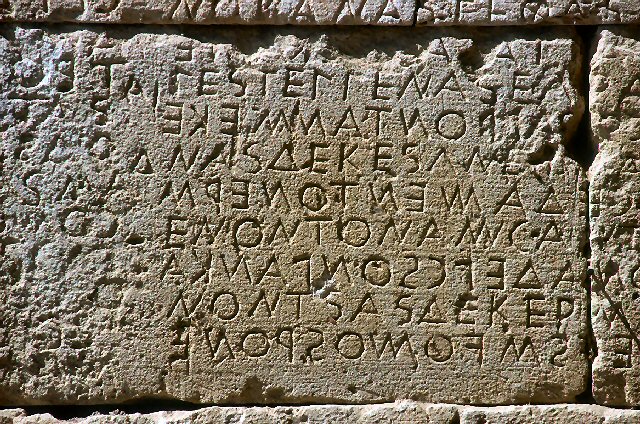
Queen Elizabeth’s Greek

Roger Ascham, The Scholemaster:

“It is your shame, (I speake to you all, you yong Ientlemen of England) that one mayd should go beyond you all, in excellencie of learnyng, and knowledge of diuers tonges. Pointe forth six of the best giuen Ientlemen of this Court, and all they together, shew not so much good will, spend not so much tyme, bestow not so many houres, dayly orderly, & constantly, for the increase of learning & knowledge, as doth the Queenes Maiestie her selfe. Yea I beleue, that beside her perfit readines, in Latin, Italian, French, & Spanish, she readeth here now at Windsore more Greeke euery day, than some Prebendarie of this Chirch doth read Latin in a whole weeke. And that which is most praise worthie of all, within the walles of her priuie chamber, she hath obteyned that excellencie of learnyng, to vnderstand, speake, & write, both wittely with head, and faire with hand, as scarse one or two rare wittes in both the Vniuersities haue in many yeares reached vnto. Amongest all the benefites yt God hath blessed me with all, next the knowledge of Christes true Religion, I counte this the greatest, that it pleased God to call me, to be one poore minister in settyng forward these excellent giftes of learnyng in this most excellent Prince. Whose onely example, if the rest of our nobilitie would folow, than might England be, for learnyng and wisedome in nobilitie, a spectacle to all the world beside. But see the mishap of men: The best examples haue neuer such forse to moue to any goodnes, as the bad, vaine, light and fond, haue to all ilnes.”

The Benefits of Philosophy

These sayings come from the Gnomologium Vaticanum


36 “When [Aristippos] was asked what benefit had come to him from philosophy he said “being able to engage pleasantly with the people I meet.”

῾Ο αὐτὸς ἐρωτηθείς, τί αὐτῷ περιγέγονεν ἐκ φιλοσοφίας, ἔφη· „τὸ ἀδεῶς τοῖς ἐντυγχάνουσιν ὁμιλεῖν”.


162 “Biôn used to say that thought was the procurer of all good things but that prudence is their master.”

῾Ο αὐτὸς τὴν μὲν φρόνησιν ἔφη παντοπώλιον εἶναι τῶν ἀγαθῶν, τὴν δὲ σωφροσύνην στρατουργίαν.


182 “When Diogenes was asked by Aristippos what benefit he gained from philosophy he said “Being wealthy without having a cent”

῾Ο αὐτὸς ἐρωτηθεὶς ὑπὸ ᾿Αριστίππου τί αὐτῷ περιεγένετο ἐκ φιλοσοφίας εἶπε· „τὸ πλουτεῖν μηδὲ ὀβολὸν ἔχοντα.”


Image result for ancient greek philosopher vase

No Day Without a Latin Motto

From The New-England Courant, February 11, 1723:

p.s. Gentle Readers, we design never to let a Paper pass without a Latin Motto if we can possibly pick one up, which carries a Charm in it to the Vulgar, and the learned admire the pleasure of Construing. We should have obliged the World with a Greek scrap or two, but the Printer has no Types, and therefore we intreat the candid Reader not to impute the defect to our Ignorance, for our Doctor can say all the Greek Letters by heart.

Sententiae Antiquae IRL: Erik and Joel Go To A Museum

As some people know, the blog sententiaeantiquae.com and the twitter feed @sentantiq are run by a two headed beast. Erik teaches Latin at a high school in Texas; Joel teaches Greek at Brandeis University. Until last year, we lived in the same city and had lots of time to engage in literary and linguistic shenanigans. We have kept in touch and in trouble over email and over the phone for the past year. But, this week, Erik came to new England.

So, today, we went to the Museum of Fine Arts in Boston and took some pictures. We put them on twitter with the creative hastag #sentatiqgoestoamuseum. It was intense. It was fun. Everyone should do it.

Here are some tweets and some pictures we made. We will be adding pictures and some reflections on the art over the following weeks.


https://twitter.com/sentantiq/status/890588640136617984

Trying to get a good angle

And here are some actual photos of us together.

Erik and Joel 1

Erik and Joel 2

Learning vs. Experience

Roger Ascham, The Scholemaster:

“Learning teacheth more in one yeare than experience in twentie: And learning teacheth safelie. when experience maketh mo miserable then wise. He hasardeth sore, that waxeth wise by experience. An vnhappie Master he is, that is made cunning by manie shippewrakes: A miserable merchant, that is neither riche or wise, but after som bankroutes. It is costlie wisdom, that is bought by experience. We know by experience it selfe, that it is a meruelous paine, to finde oute but a short waie, by long wandering. And surelie, he that wold proue wise by experience, he maie be wittie in deede, but euen like a swift runner, that runneth fast out of his waie, and vpon the night, he knoweth not whither. And verilie they be fewest of number, that be happie or wise by vnlearned experience. And looke well vpon the former life of those fewe, whether your example be old or yonge, who without learning haue gathered, by long experience, a litle wisdom, and som happines: and whan you do consider, what mischiefe they haue committed, what dangers they haue escaped (and yet xx. for one, do perishe in the aduenture) than thinke well with your selfe, whether ye wold, that your owne son, should cum to wisdom and happines, by the waie of soch experience or no.”

This is the way to do it.

Bad Witnesses: Some Apocryphal Sayings of Heraclitus

These sayings come from the Gnomologium Vaticanum


310 “Heraclitus the natural philosopher said that he was wisest of all when he was young because he didn’t think that he knew anything.”

῾Ηράκλειτος ὁ φυσικὸς ἔφησε σοφώτατος γεγονέναι πάντων νέος ὤν, ὅτι ᾔδει ἑαυτὸν μηδὲν εἰδότα.


311 “Heraclitus used to say “The ears and eyes of foolish people are terrible witnesses.”

῾Ο αὐτὸς ἔφη· „κακοὶ μάρτυρες ὦτα καὶ ὀφθαλμοὶ ἀφρόνων ἀνθρώπων”.


312 “Heraclitus used to say “Honors enslave gods and men”

῾Ο αὐτὸς ἔφη· „τιμαὶ θεοὺς καὶ ἀνθρώπους καταδουλοῦνται”.


313 “Heraclitus said “people are terrible judges of the truth”

<῾Ο> αὐτὸς εἶπεν· „ἄνθρωποι κακοὶ ἀληθινῶν ἀντίδικοι”


Image result for ancient greek Heraclitus

Heroine Kills Monster, Gets Kingdom: Cyrene the Lion-Slayer

Akesandros of Cyrene (Jacoby 469) F4

“Akesandros tells the story in his Concerning Cyrene that when Eurypylos was king in Libya, Cyrene was taken by Apollo because there was a lion plaguing the land. Eurypylos put his kingship up as a prize for anyone who could kill a lion—and Cyrene killed the lion and gained the kingdom. Her children were Autoukhos and Aristaios. Phularkhos says that she came to Libya with a group, and when they went on a hunting expedition, she joined them too.”

᾽Ακέσανδρος δὲ ἐν τοῖς Περὶ Κυρήνης ἱστορεῖ, ἐπ᾽ Εὐρυπύλου βασιλεύοντος ἐν Λιβύηι ὡς ὑπὸ ᾽Απόλλωνος διακομισθείη ἡ Κυρήνη, λέοντος δὲ τὴν χώραν λυμαινομένου προθείη τὴν βασιλείαν ὁ Εὐρύπυλος ἆθλον τῶι ἀποκτενοῦντι τὸν λέοντα, τὴν δὲ(?) διαχρήσασθαι αὐτόν καὶ τὴν βασιλείαν λαβεῖν· παῖδας δὲ αὐτῆς γενέσθαι Αὐτοῦχον καὶ ᾽Αρισταῖον. φησὶ δὲ αὐτὴν Φύλαρχος (81 F 16) ἐλθεῖν μετὰ πλειόνων εἰς Λιβύην, τούτων δὲ ἐκπεμφθέντων ἐπὶ τὴν κυνηγίαν, τούτοις καὶ αὐτὴν συνεξελθεῖν.

This story is really exceptional in Greek myth and history for a couple of reasons. First, here we have a female beast-slayer who follows the classic pattern of killing a monster and gaining a kingdom. Second, while her children are mentioned–following a typical pattern of defining women by their offspring–her mate is not. There are some other sources on this figure.

Nonnos, Dionys. 13.300-301

“Cyrene, another deer-pursuing Artemis,
The lion-slaying nymph bore him, after sex with Phoibos.”

τόν ποτε Κυρήνη, κεμαδοσσόος ῎Αρτεμις ἄλλη,
Φοιβείῃ φιλότητι λεοντοφόνος τέκε νύμφη…

Related image

The Laws and the Soul of the State

These sayings come from the Gnomologium Vaticanum


112 “When Antagoras was about to cast a capital vote against someone he cried. Someone asked him “Why do you vote to condemn and cry?” He responded “It is necessary by nature to give our sympathy; the law demands my vote.”

῾Ο αὐτὸς καταδικάζειν τινὸς θανατικὴν ψῆφον μέλλων ἐδάκρυσεν· εἰπόντος δέ τινος· „τί παθὼν αὑτὸς καταδικάζεις καὶ κλαίεις”; εἶπεν· „ὅτι ἀναγκαῖόν ἐστι τῇ μὲν φύσει τὸ συμπαθὲς ἀποδοῦναι, τῷ δὲ νόμῳ τὴν ψῆφον.”


211 “Demosthenes used to say that the laws are the sinews of democracy”

῾Ο αὐτὸς ἔφησε τοὺς νόμους δημοκρατίας νεῦρα.


229 “Demosthenes used to say that the laws are the soul of the state. “just as the body dies when bereft of the soul, so too the city perishes when there are no laws”

῾Ο αὐτὸς ἔφη πόλεως εἶναι ψυχὴν τοὺς νόμους· „ὥσπερ δὲ σῷμα στερηθὲν ψυχῆς πίπτει, οὕτω καὶ πόλις μὴ ὄντων νόμων καταλύεται”.


443 “When asked how cities might be best inhabited, Plato said, “If philosophers are kings and kings practice philosophy.”

῾Ο αὐτὸς ἐρωτηθεὶς πῶς ἂν ἄριστα αἱ πόλεις οἰκοῖντο ἔφη· „εἰ φιλόσοφοι βασιλεύοιεν ἢ οἱ βασιλεῖς φιλοσοφοῖεν.”


Image result for ancient greek laws

Ignorance vs. Intentional Stupidity

Hugo of St. Victor, Didascalion

On the Study of Reading – Preface (Part I)

“There are many whom nature has left so destitute of intellect that they are unable to grasp even those things which are easiest to understand; of these people, there seem to be two types. There are certain people who, granting that they are not ignorant of their own dullness, eagerly strive for knowledge with whatever effort they can, and apply themselves to the task with unremitting zeal; though they achieve little from the realization of the work, they seem to deserve something for their efforts. But there are other people who understand that they will never be able to understand the highest things, so they neglect even the smallest ones, and resting secure in their own indolence, we find that the more they waste the light of truth in the most important things, the more they flee from learning the smallest things, which they are actually able to understand. For this reason, the Psalm has it, ‘They did not wish to understand how they could do well.’ Not knowing is, indeed, a far different thing from not wanting to know. Indeed, ignorance is a kind of weakness, but the detestation of knowledge is the sign of a depraved will.

There is, however, yet another group of people whom nature has so enriched that she has offered them a clear approach to the truth. For these people, even if the strength of their mind is not equal to the task, there is not the same virtue or will for cultivating the senses through exercise and natural instruction. For, there are many people who, wrapped up in the business and concerns of this age more than is really necessary, are entirely given to the vices and pleasures of the body, and they bury the treasure of God in the ground; they neither seek the fruit of wisdom, nor the use of good work – these people are on the whole rather detestable. Again, for some people, family poverty or their slender means diminishes the opportunity of learning. Yet, I think that these people can hardly be excused on this account, since we see so many people laboring under famine, thirst, and even want of clothes, who yet attain the fruit of knowledge. Indeed, it is one thing when you are not able (or, I should say, are not easily able) to learn, and it is an entirely different thing when you are able to learn but unwilling to do so. Just as it is more glorious to attain wisdom by virtue alone, when no other opportunities rush to assist you, so too it is much more shameful to have a vigorous intellect and to overflow with wealth while wasting away in idleness.”


DE STUDIO LEGENDI

Praefatio


[770C] Multi sunt quos ipsa adeo natura ingenio destitutos reliquit ut ea etiam quae facilia sunt intellectu vix capere possint, et horum duo genera mihi esse videntur. [770D] nam sunt quidam, qui, licet suam hebetudinem non ignorent, eo tamen quo valent conamine ad scientiam anhelant, et indesinenter studio insistentes, quod minus habent effectu operis, obtinere merentur effectu voluntatis. ast alii quoniam summa se comprehendere nequaquam posse sentiunt, minima etiam negligunt, et quasi in suo torpore securi quiescentes eo amplius in maximis lumen veritatis perdunt, quo minima quae intelligere possent discere fugiunt. unde psalmista: Noluerunt, inquit, intelligere ut bene agerent. longe enim aliud est nescire atque aliud nolle scire. nescire siquidem infirmitatis est, scientiam vero detestari, pravae voluntatis. est aliud hominum genus quos admodum natura ingenio ditavit et facilem ad veritatem veniendi aditum praestitit, quibus, [771A] etsi impar sit valitudo ingenii, non eadem tamen omnibus virtus aut voluntas est per exercitia et doctrinam naturalem sensum excolendi. nam sunt plerique qui negotiis huius saeculi et curis super quam necesse sit impliciti aut vitiis et voluptatibus corporis dediti, talentum Dei terra obruunt, et ex eo nec fructum sapientiae, nec usuram boni operis quaerunt, qui profecto valde detestabiles sunt. rursus aliis rei familiaris inopia et tenuis census discendi facultatem minuit. quos tamen plene per hoc excusari minime posse credimus, cum plerosque fame siti nuditate laborantes ad scientiae fructum pertingere videamus. [771B] et tamen aliud est cum non possis, aut ut verius dicam, facile non possis discere, atque aliud posse et nolle scire. sicut enim gloriosius est, cum nullae suppetant facultates, sola virtute sapientiam apprehendere, sic profecto turpius est vigere ingenio, divitiis affluere, et torpere otio.

The Dangers of Epitomes and Commonplace Books

Roger Ascham: The Scholemaster

“This is a way of studie, belonging, rather to matter, than to wordes: to memorie, than to vtterance: to those that be learned alreadie, and hath small place at all amonges yong scholers in Grammer scholes. It may proffet priuately some learned men, but it hath hurt generallie learning it selfe, very moch. For by it haue we lost whole Trogus, the best part of T. Liuius, the goodlie Dictionarie of Pompeius festus, a great deale of the Ciuill lawe, and other many notable bookes, for the which cause, I do the more mislike this exercise, both in old and yong.

Epitome, is good priuatelie for himselfe that doth worke it, but ill commonlie for all other that vse other mens labor therein: a silie poore kinde of studie, not vnlike to the doing of those poore folke, which neyther till, nor sowe, nor reape themselues, but gleane by stelth, vpon other mens growndes. Soch, haue emptie barnes, for deare yeares. Grammer scholes haue fewe Epitomes to hurt them, except Epitheta Textoris, and such beggarlie gatheringes, as Horman, whittington, and other like vulgares for making of latines: yea I do wishe, that all rules for yong scholers, were shorter than they be. For without doute, Grammatica it selfe, is sooner and surer learned by examples of good authors, than by the naked rewles of Grammarians. Epitome hurteth more, in the vniuersities and studie of Philosophie: but most of all, in diuinitie it selfe.

In deede bookes of common places be verie necessarie, to induce a man, into an orderlie generall knowledge, how to referre orderlie all that he readeth, ad certa rerum Capita, and not wander in studie. And to that end did P. Lombardus the master of sentences and Ph. Melancthon in our daies, write two notable bookes of common places.

But to dwell in Epitomes and bookes of common places, and not to binde himselfe dailie by orderlie studie, to reade with all diligence, principallie the holyest scripture and withall, the best Doctors, and so to learne to make trewe difference betwixt, the authoritie of the one, and the Counsell of the other, maketh so many seeming, and sonburnt ministers as we haue, whose learning is gotten in a sommer heat, and washed away, with a Christmas snow againe: who neuerthelesse, are lesse to be blamed, than those blind bussardes, who in late yeares, of wilfull maliciousnes, would neyther learne themselues, nor could teach others, any thing at all.”

“We weren’t learning anyway!”