A Book Replaced By No Other

Libanius, Autobiography 148-149

“Another detail, small, yet not small, is worth adding to these things. For, I will perhaps seem to be pedantic to some of you, but I, bitten deep, know that I feel this way because of a serious matter.

See, I had a copy of Thucydides, with charming and small writing. The whole thing was easy enough to lift that I used to carry it myself with a slave following me and the burden was a delight. I learned enough of the war of the Spartan and Athenians in it to feel what, perhaps, others have felt too. I would never even come near to the same pleasure from another copy of the book.

Because I used to praise this possession too much to too many people and was delighting it more than Polykrates did his ring, I attracted thieves to it, some of whom I caught. But the last one of them started a fire to avoid being caught and so I stopped searching but I could not let go of grief. In fact, every profit I had from Thucydides began to shrink once I found him in different writing with displeasure.”

  1. Τούτοις ἄξιον ἐκεῖνο προσθεῖναι σμικρόν τε καὶ οὐ σμικρόν· ὑμῶν μὲν γὰρ ἴσως τῳ μικρολογεῖσθαι δόξω, δηχθεὶς δὲ αὐτὸς τὴν ψυχὴν οἶδα καὶ ἐπὶ μεγάλῳ τοῦτο παθών. ἦν μοι ἡ Θουκυδίδου συγγραφή, γράμματα μὲν ἐν μικρότητι χαρίεντα, τὸ δὲ σύμπαν οὕτω ῥᾴδιον φέρειν ὥστ᾿ αὐτὸς ἔφερον παιδὸς ἀκολουθοῦντος καὶ τὸ φορτίον τέρψις ἦν. ἐν τούτῳ τὸν πόλεμον τῶν Πελοποννησίων καὶ Ἀθηναίων μαθὼν ἐπεπόνθειν ὅπερ ἴσως ἤδη τις καὶ ἕτερος· οὐ γὰρ ἂν ἐξ ἑτέρας βίβλου ταῦτ᾿ ἂν αὖθις ἐπῆλθον πρὸς ἡδονήν.
  2. ἐπαινῶν δὴ πολλὰ καὶ πρὸς πολλοὺς τὸ κτῆμα καὶ εὐφραινόμενος μᾶλλον ἢ Πολυκράτης τῷ δακτυλίῳ κλέπτας αὐτῷ τοῖς ἐπαίνοις ἐπῆγον, ὧν τοὺς μὲν ἄλλους εὐθὺς ᾕρουν, ὁ δέ γε τελευταῖος πῦρ1ἀνῆψε τοῦ μὴ ἁλῶναι, καὶ οὕτω δὴ τοῦ ζητεῖν μὲν ἐπεπαύμην, τὸ μὴ λυπεῖσθαι δὲ οὐκ εἶχον. ἀλλὰ καὶ τὸ κέρδος μοι τὸ παρὰ τοῦ Θουκυδίδου μέγα ἂν γενόμενον μεῖον ἤρχετο διὰ τὸ σὺν ἀηδίᾳ γράμμασιν ἑτέροις ὁμιλεῖν.
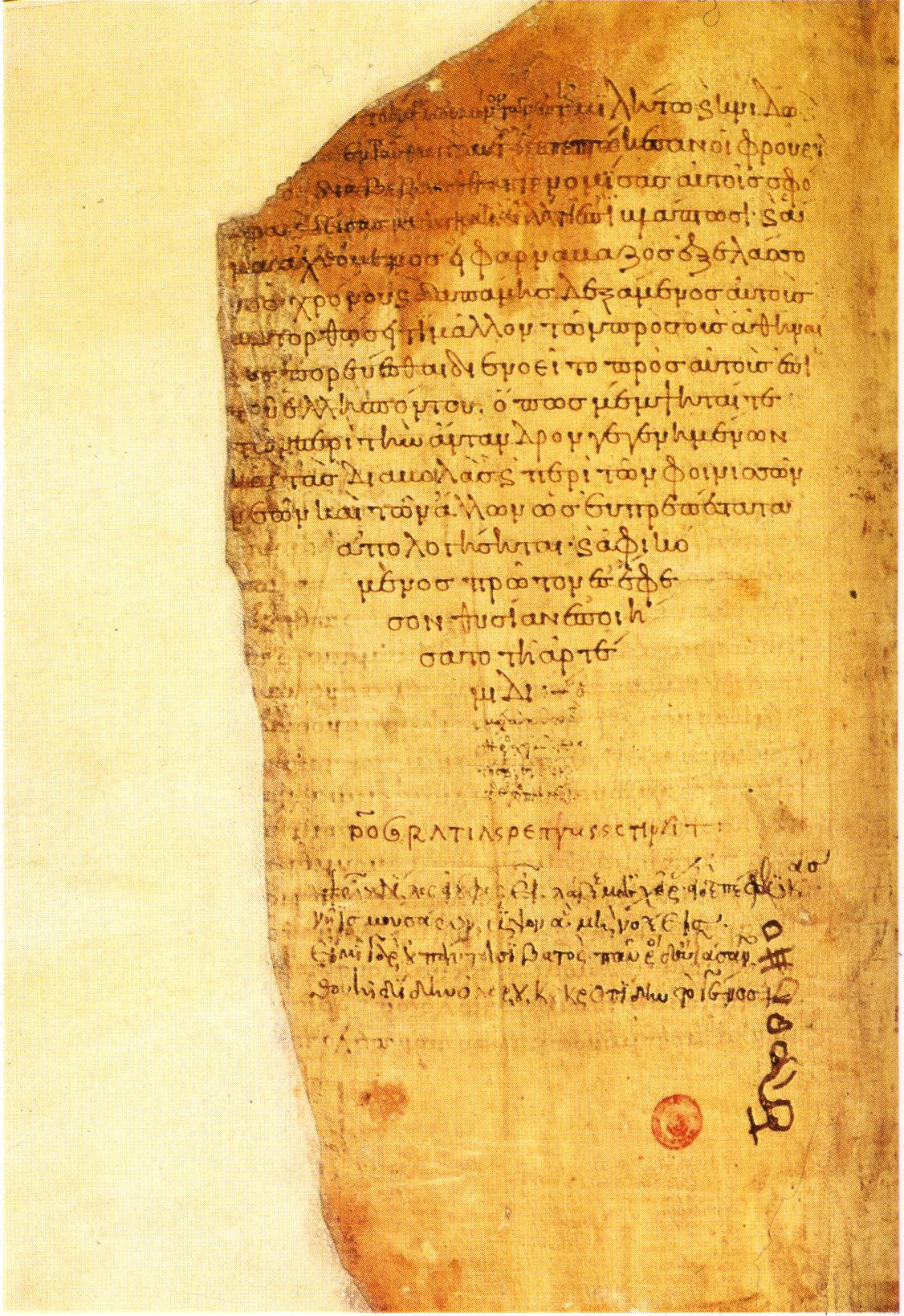
 

Image result for codex of thucydides
Alas, not Libanius’ text:

This tale reminds me of the box-Iliad:

Plutarch, Life of Alexander 26.4

“When a small box was brought to him—which seem more valuable than the rest of the possessions and baggage they had taken from Dareios, [Alexander] asked his friends what thing seem especially worthy of being put in it. Although many of them made many suggestions, Alexander said that he would keep the Iliad safe by placing it inside. Not a few of the most credible sources claim this.

If, as the Alexandrians say is true—since they believe Herakleides—Homer was no lazy or unprofitable travel companion…”

Κιβωτίου δέ τινος αὐτῷ προσενεχθέντος, οὗ πολυτελέστερον οὐδὲν ἐφάνη τοῖς τὰ Δαρείου χρήματα καὶ τὰς ἀποσκευὰς παραλαμβάνουσιν, ἠρώτα τοὺς φίλους, ὅ τι δοκοίη μάλιστα τῶν ἀξίων σπουδῆς εἰς αὐτὸ καταθέσθαι. πολλὰ δὲ πολλῶν λεγόντων, αὐτὸς ἔφη τὴν ᾿Ιλιάδα φρουρήσειν ἐνταῦθα καταθέμενος· καὶ ταῦτα μὲνοὐκ ὀλίγοι τῶν ἀξιοπίστων μεμαρτυρήκασιν. εἰ δ’, ὅπερ ᾿Αλεξανδρεῖς λέγουσιν ῾Ηρακλείδῃ (fr. 140 W.) πιστεύοντες, ἀληθές ἐστιν, οὔκουν [οὐκ] ἀργὸς οὐδ’ ἀσύμβολος αὐτῷ συστρατεύειν ἔοικεν ῞Ομηρος.

This passage refers to an earlier moment in the Life. Coincidentally, I also sleep the same way…

8.4

“[Alexander] was also naturally a lover of language, a lover of learning, and a lover of reading. Because he believed that the Iliad was a guidebook for military excellence—and called it that too—he took a copy of it which had been edited by Aristotle which they used to refer to as “Iliad-in-a-Box”. He always kept it with his dagger beneath his pillow—as Onêsikritos tells us.

When there were no other books in -and, he sent to Harpalos for some more. Then Harpalus sent him Philistos’ books along with some tragedies of Euripides, Sophokles and Aeschylus and the dithyrambs of Telestes and Philoxenos.”

ἦν δὲ καὶ φύσει φιλόλογος καὶ φιλομαθὴς καὶ φιλαναγνώστης, καὶ τὴν μὲν  ᾿Ιλιάδα τῆς πολεμικῆς ἀρετῆς ἐφόδιον καὶ νομίζων καὶ ὀνομάζων, ἔλαβε μὲν ᾿Αριστοτέλους διορθώσαντος ἣν ἐκ τοῦ νάρθηκος καλοῦσιν, εἶχε δ’ ἀεὶ μετὰ τοῦ ἐγχειριδίου κειμένην ὑπὸ τὸ προσκεφάλαιον, ὡς ᾿Ονησίκριτος ἱστόρηκε (FGrH 134 F 38)· τῶν δ’ ἄλλων βιβλίων οὐκ εὐπορῶν ἐν τοῖς ἄνω τόποις, ῞Αρπαλον ἐκέλευσε πέμψαι, κἀκεῖνος ἔπεμψεν αὐτῷ τάς τε Φιλίστου βίβλους καὶ τῶν Εὐριπίδου καὶ Σοφοκλέους καὶ Αἰσχύλου τραγῳδιῶν συχνάς, καὶ Τελέστου καὶ Φιλοξένου διθυράμβους.


A Model Friend Request for Readers; A Somewhat Awkward Dating Profile

Dio Chrysostom, 18.21

 “I would like it, if it were also pleasing to you, for us to meet at some time and then, spending time with ancient writers and talking about them, be useful to one another.”

βουλοίμην δ᾿ ἄν, εἴ σοι κεχαρισμένον εἴη, καὶ ἐν τῷ αὐτῷ ποτε ἡμᾶς γενέσθαι, ἵνα καὶ ἐντυγχάνοντες τοῖς παλαιοῖς καὶ διαλεγόμενοι περὶ αὐτῶν χρήσιμοί τι γενοίμεθα.

Image result for Ancient Greek and Roman Reading fresco

[I actually find this sentiment a little sweet and completely relatable]

A Display of Hairudition

Macrobius, Saturnalia 5.19

“In the fourth book of the Aeneid, describing the death of Dido, Vergil says that a lock of her hair was cut away in these verses:

Proserpina had not yet cut away the tawny lock from her and condemned her head to Stygian Orcus.

Then Iris, sent by Juno, cut away Dido’s hair and brought it to Orcus. Vergil has not contrived this story out of nothing, as that otherwise very learned man Cornutus supposes when he adds this commentary to the verse:

Whence came this story that hair must be taken away from the dying is unknown; but Vergil is accustomed to invent things now and then in the old poetic fashion, as he did with the golden bough.

Thus writes Cornutus. But I am ashamed that such a great man, though steeped in Greek literature, did not know that most remarkable play of Euripides, the Alcestis. For in that play, Orcus is brought onto the scene bearing a sword to cut the hair of Alcestis, and he speaks thus:

This woman then will go to the home of Hades.
I proceed to her, so that I may begin the rite with my sword.
For one is sacred to the god below ground
Once this blade has consecrated the hair of their head.

So it is clear, I think, whom Vergil followed in introducing the part about cutting the hair. But the Greeks mean by ἁγνίσαι to consecrate to the gods, whence your poet says in the character of Iris,

Ordered by Juno, I bear this sacred hair to Dis, and loose you from your body.

Related image
Henry Fuseli, “Dido”


In libro quarto in describenda Elissae morte ait quod ei crinis abscisus esset his versibus:

Nondum illi flavum Proserpina vertice crinem
Abstulerat, Stygioque caput damnaverat Orco.

Deinde Iris a Iunone missa abscidit ei crinem et ad Orcum refert. Hanc Virgilius non de nihilo fabulam fingit, sicut vir alias doctissimus Cornutus existimat, qui annotationem eiusmodi adposuit his versibus: Unde haec historia, ut crinis auferendus sit morientibus, ignoratur: sed adsuevit poetico more aliqua fingere, ut de aureo ramo. Haec Cornutus. Sed me pudet quod tantus vir, Graecarum etiam doctissimus litterarum, ignoravit Euripidis nobilissimam fabulam Alcestim. In hac enim fabula in scenam Orcus inducitur gladium gestans quo crinem abscidat Alcestidis, et sic loquitur,

ἡ δ᾽ οὖν γυνὴ κάτεισιν εἰς Ἅιδου δόμους.
στείχω δ᾽ ἐπ᾽ αὐτὴν ὡς κατάρξωμαι ξίφει:
ἱερὸς γὰρ οὗτος τῶν κατὰ χθονὸς θεῶν
ὅτου τόδ᾽ ἔγχος κρατὸς ἁγνίσῃ τρίχα.

Proditum est, ut opinor, quem secutus Virgilius fabulam abscidendi crinis induxerit: ἁγνίσαι autem Graece dicunt dis consecrare, unde poeta vester ait ex Iridis persona:

— Hunc ego Diti
Sacrum iussa fero, teque isto corpore solvo.

“A Beacon of Love or Hate”: An Epigram

Greek Anthology, 12.156, Anyonymous

“Just like a spring storm, Diodoros,
My love is decided by an uncertain sea.
Sometimes you show pouring rain, but at others
You are clear, and you pour a soft smile from your eyes.

So I, like the shipwrecked on the swell,
Measure out the blind waves as I spin,
Drawn here and there by the great storm.

But you, shine me a beacon of love or even hate
So I can know by which wave we should swim.”

Εἰαρινῷ χειμῶνι πανείκελος, ὦ Διόδωρε,
οὑμὸς ἔρως, ἀσαφεῖ κρινόμενος πελάγει·
καὶ ποτὲ μὲν φαίνεις πολὺν ὑετόν, ἄλλοτε δ᾿ αὖτε
εὔδιος, ἁβρὰ γελῶν δ᾿ ὄμμασιν ἐκκέχυσαι.
τυφλὰ δ᾿, ὅπως ναυηγὸς ἐν οἴδματι, κύματα μετρῶν
δινεῦμαι, μεγάλῳ χείματι πλαζόμενος.
ἀλλά μοι ἢ φιλίης ἔκθες σκοπὸν ἢ πάλι μίσους,
ὡς εἰδῶ ποτέρῳ κύματι νηχόμεθα.

Related image
Tristan and Iseult at Longy


A Measure of Wine for Madness or Pain

Two fragments from Euenus

Anth. Pal. 11.49 Εὐήνου 

“The best measure of Bacchus is not too much
Nor too little
For this he is the cause of pain or madness.
He is happy to be mixed fourth with three Nymphs—
Then he is most prepared for the bedroom.
But if he puffs too much, he turns away from loves
And dips into sleep, the next-door neighbor of death.”

Βάκχου μέτρον ἄριστον ὃ μὴ πολὺ μηδ᾿
ἐλάχιστον·
ἔστι γὰρ ἢ λύπης αἴτιος ἢ μανίης.
χαίρει κιρνάμενος δὲ τρισὶν Νύμφαισι τέταρτος·
τῆμος καὶ θαλάμοις ἐστὶν ἑτοιμότατος.
εἰ δὲ πολὺς πνεύσειεν, ἀπέστραπται μὲν ἔρωτας,
βαπτίζει δ᾿ ὕπνῳ, γείτονι τοῦ θανάτου.

5 Stob. 3.20.2 Εὐήνου

“Anger often eclipses humans’ hidden mind.
This is much worse than madness.”

πολλάκις ἀνθρώπων ὀργὴ νόον ἐξεκάλυψεν
κρυπτόμενον· μανίης πουλὺ χερειότερον.

Nouvelle acquisition latine 1673, fol. 76v, Marchand de vin. Tacuinum sanitatis, Milano or Pavie (Italy), 1390-1400.

The Classroom: A Tale of Failure

Of all the English words freighted with odium and disgust, there are few as appalling as administration. How many times does it rankle upon the ear in a given day? “Tenure lines have been reduced as we have increased pay for administration.” “Today, the Trump administration announced…” “Sorry kids, you can no longer learn Latin because of insufficient support from administration.”

As a concept, administration had undergone a meaningful shift even in the Roman world. Though the word administrare in its most literal sense meant “to attend upon/serve”, it came to possess the more general figurative meaning “to govern”. But why wax so etymological on the concept of administration? Dear reader, it is because administration serves simply as a metonym for all of the pernicious trends in American education today.

If I told you that this is all really about Latin, you might ask “Who cares about Latin anymore?” Given its antiquity, one might be surprised to learn that, of all people, kids care about it. But for all of that, kids are regularly told not to study Latin, just as they are regularly advised not to do anything else (like art or music) which they might genuinely enjoy. Enrichment is out, and enrichment is in, and Latin is seen as a less than ideal path to the realm of top-hats and monocles. But you already knew that, so I will put it to you straight: my Latin program is dead.

Dead in the way that Latin is. It will survive for a while longer as I engage in a losing battle to prop up its etiolated and sickly corpse by arguing for its relevance, its importance, its glory. Yet I made all of those arguments for it when it was still in the full and vigorous bloom of youth (read: administrative support), and still it was destroyed by the strength-sapping plague of indifference.

Like many Latin teachers around the country, I am the only Latin teacher at my school, and manage a program which requires five separate preps every day. (All teachers at my school are responsible for six classes, but typically two preps, e.g. three periods each of English I and English III; only Latin, French, and German have so many individual preps, as the lingo goes.) This is ideal for those who don’t much care for team planning, but it is a substantial amount of extra preparatory work for each school day, and it can become taxing to remember just where each class is in the curriculum on any given day. But the greatest emotional toll is taken in the form of having to keep the program alive by endlessly prostituting yourself. A teacher of a core subject can bestride the narrow classroom with an air of cold indifference to students’ interests, needs, or engagement in the sure knowledge that their subject will still be offered in the following year. Marginalized subjects, however, are in practice expendable subjects. Because students need only take two years of a foreign language in Texas (and because this requirement can now be satisfied by two years of middle school Spanish), language programs are cursed with the twin problems of low enrollment and high attrition. So every year I put on a grand show to attract new students to Latin I, make my classes as engaging as possible, assign no homework while offering endless opportunities for extra credit, and never fail a student. And yet…

This year, my Latin students are better than ever, and they are true believers. A solid 30% of them are diehard JCL fans, and we have gotten 2nd place at the state JCL convention for two years in a row. The program is relatively small, but administration gets notes from parents about how much Latin has meant to their children. In response, my Latin classes will be gutted next year from six to three, and I will be given three classes of English to keep me busy. The reason cited for this reduction is the paltry enrollment numbers for next year, and those can be attributed to the machinations of the school counselors.

Counselors do not like Latin because it is harder to schedule students in a class with only one or two sections; moreover, they regularly advise students not to take Latin beyond the second year, in the interest of blasting through all of their required courses (Health and Speech? What the fuck is that? I regularly remind my students that any class which they give to a football coach is not an actual class, but a gilded sinecure masquerading as legitimate work to justify that coaching salary plus stipend.) as soon as possible. And so, very few students enrolled for Latin next year, and even many of my own students drank the poisonous cocktail which the counselors offered them.

As I argued in a post last week, people do not actually think that antiquity is irrelevant to contemporary affairs, and Latin still has substantial cache as a status symbol. Latin did not suddenly become less relevant to students over the past year. Rather, the demise of the program is reflective of a much broader problem with the nation’s divestment from public education. Confronted with the looming threat of one of Ayn Rand’s old masturbatory fantasies – privatization of education at the hands of profit-thirsty CEOs – the leaders in public education have decided to change the terms of the contest by entirely ceding actual education to charter schools. Superintendents have doubled down on the most singularly ineffective response to the crisis, and turned schools into a bizarre hyper-capitalist fantasy land. They are technology showrooms for the unsuspecting but easily-indoctrinated young consumer who now grows up with a Google ecosystem as part of “the classroom”; they are social media playgrounds in which both teachers and students can develop their brands; they are athletic organizations (with all of the concomitant merchandising) which happen to accidentally engage at times in some pro-forma education. Much of real early education is not sexy and exciting: it involves a bit of book work and ass-to-chair time. Public school superintendents have embraced a customer-service model which is dependent upon advertising, but this advertising comes through abandoning real learning for the sake of gimmicks which are readily shared on social media. Who would share a photo of kids reading or writing? But give them some Nerf swords and take a picture of them “re-enacting the French Revolution”, and you’ll earn yourself teacher of the month.

Perhaps this all reads like the bitterness of a man who has failed: failed to adapt, failed to inspire, failed to make a difference. Lack of administrative support is a hard current to swim against; budget cuts are a wholly inexorable force; and the decay wrought by the ravages of time awaits us in every part of our lives. Now that half of my time will be spent teaching English, I cannot imagine what I can do to revive the Latin program when even my most concerted full-time effort could not overcome the hostility gradually wearing it away in a system more and more poised to reject everything most important in human life for the sake of a few extra dollars. We expend a lot of energy thinking about the reform of Classics education at the university, but all of that is really for naught if we do not cultivate the enthusiasm of the small but extremely diverse and ultra-committed bunch in our high school classrooms. I used to be proud of my district as one of the strongest bastions for Latin education among Texas’ public high schools, but as support has been increasingly withdrawn from our programs around the district, I cannot help but think that Latin really will become once again the preserve only of the elite private and charter schools. This is but one defeat among many others, but we cannot cede the field, lest our children learn that the last place to expect an education is in one of our public schools.

pic44

Dreaming of the Catalog of Ships?

Philostratus, Heroicus 6. 3-4

“I am sailing from Egypt and Phoenicia for twenty-five days at this point, somehow. As the ship was drawing up into Elaious, I dreamed I was reading the words of Homer when he describes the catalog of the Achaeans and that I was inviting all the Achaeans to get on to my ship as if it were large enough to hold them all!

When I was waking from the dream because some shiver had spread over me, I supposed that it prophesied a slow and long journey. For visions of the dead are bad signs for eager people.”

ΟΙΝ. Πλέω μὲν ἐξ Αἰγύπτου καὶ Φοινίκης πέμπτην καὶ τριακοστὴν ἤδη που ταύτην ἡμέραν. κατασχούσης δὲ τῆς νεὼς εἰς Ἐλεοῦντα τοῦτον ἔδοξα τὰ Ὁμήρου ἔπη ἀναγινώσκειν, ἐν οἷς τὸν κατάλογον τῶν Ἀχαιῶν φράζει, καὶ ξυνεκάλουν τοὺς Ἀχαιοὺς ἐμβῆναι τὴν ναῦν ὡς ἀποχρῶσαν ὁμοῦ πᾶσιν. 4ἐπεὶ δὲ ἐξέθορον τοῦ ἐνυπνίου (καὶ γάρ με καὶ φρίκης τι ὑπεληλύθει), ξυνεβαλόμην μὲν αὐτὸ ἐς βραδυτῆτα τοῦ πλοῦ καὶ μῆκος· αἱ γὰρ τῶν ἀποθανόντων ὄψεις ἀργοὶ τοῖς ἐσπουδακόσι.

Detail showing a painting of ships in a harbour from the illuminated border of the Treaty of Amiens between England and France, 18 August 1527. Catalogue reference E 30/1113. The full image is available through our Image Library.
From the UK National Archives

Drugs, the Homeric Scholia and the Lotus-Eaters

In Odysseus’ tale of his wanderings he recounts how he saved his men from the temptations of the land of the Lotus-Eaters

Odyssey 9.82-97

“From there for nine days I was carried by ruinous winds
over the fish-bearing sea. On the tenth we came to the land
of the Lotus-Eaters where they eat the florid food.
There we disembarked to the shore and we drew water;
soon my companions made dinner around the swift ships.
But after we had shared the food and drink
I sent out companions to go and discover
whatever men there were who ate the fruit of the earth.
I chose two men and sent a herald as a third.
They went and met the Lotus-eating men.
The Lotus-Eaters didn’t bring any harm to my companions,
but they gave them their lotus to share.
Whoever ate the honey-sweet fruit of the lotus
no longer wished to report back or return home,
but just longed to stay there among the Lotus-eating men
to wait and pluck the lotus, forgetting his homecoming.”

ἔνθεν δ’ ἐννῆμαρ φερόμην ὀλοοῖσ’ ἀνέμοισι
πόντον ἐπ’ ἰχθυόεντα• ἀτὰρ δεκάτῃ ἐπέβημεν
γαίης Λωτοφάγων, οἵ τ’ ἄνθινον εἶδαρ ἔδουσιν.
ἔνθα δ’ ἐπ’ ἠπείρου βῆμεν καὶ ἀφυσσάμεθ’ ὕδωρ,
αἶψα δὲ δεῖπνον ἕλοντο θοῇς παρὰ νηυσὶν ἑταῖροι.
αὐτὰρ ἐπεὶ σίτοιό τ’ ἐπασσάμεθ’ ἠδὲ ποτῆτος,
δὴ τότ’ ἐγὼν ἑτάρους προΐην πεύθεσθαι ἰόντας,
οἵ τινες ἀνέρες εἶεν ἐπὶ χθονὶ σῖτον ἔδοντες,
ἄνδρε δύω κρίνας, τρίτατον κήρυχ’ ἅμ’ ὀπάσσας.
οἱ δ’ αἶψ’ οἰχόμενοι μίγεν ἀνδράσι Λωτοφάγοισιν•
οὐδ’ ἄρα Λωτοφάγοι μήδονθ’ ἑτάροισιν ὄλεθρον
ἡμετέροισ’, ἀλλά σφι δόσαν λωτοῖο πάσασθαι.
τῶν δ’ ὅς τις λωτοῖο φάγοι μελιηδέα καρπόν,
οὐκέτ’ ἀπαγγεῖλαι πάλιν ἤθελεν οὐδὲ νέεσθαι,
ἀλλ’ αὐτοῦ βούλοντο μετ’ ἀνδράσι Λωτοφάγοισι
λωτὸν ἐρεπτόμενοι μενέμεν νόστου τε λαθέσθαι.

The scholia present reactions to this passage that are not altogether alien from some arguments in the debate about drug enforcement and addiction.

One scholiast quotes Heraclitus the Paradoxographer with approval, noting that this scene is about how the wise man can resist pleasure.

Schol. T ad. Od. 9 89

“From Herakleitos. If someone wishes to examine Odysseus’ wanderings precisely, he will find an allegorical tale. For he has set up Odysseus as something of a vehicle of every kind of virtue through which has philosophized: and then he resists the vices that corrupt human life: the land of the Lotus-eaters represents pleasure, a land of foreign corruption which Odysseus masterfully passes by, and then he settles the wild heart of each man with either chastisement or persuasion.”

ἐκ τοῦ ῾Ηρακλείτου. καθόλου δὲ τὴν ᾿Οδυσσέως πλάνην εἴ τις ἀκριβῶς ἐθέλει σκοπεῖν, ἠλληγορημένην εὑρήσει. πάσης γὰρ ἀρετῆς καθάπερ ὄργανόν τι τὸν ᾿Οδυσσέα παραστησάμενος ἑαυτῷ διὰ τοῦτο πεφιλοσόφηκεν, ἐπειδήπερ τὰς ἐκνεμομένας τὸν ἀνθρώπινον βίον ἤχθηρε κακίας, ἡδονὴν μέν γε τὸ Λωτοφάγων χωρίον, ξένης γεωργὸν ἀπολαύσεως, ἣν ᾿Οδυσσεὺς ἐγκρατῶς παρέπλευσε, τὸν δ’ ἄγριον ἑκάστου θυμὸν ὡσπερεὶ καυτηρίῳ τῇ παραινέσει τῶν λόγων ἐπήρωσε.

Another commentator actually speaks of the Lotus-eaters as just men. This author implies that Odysseus’ men choose to take the drugs. Therefore, the blame is on them.

Schol. Q ad Od. 9.92

“Because they are righteous men, the [Lotus-eaters] do not restrain anyone by force, but by persuasion. For in the word “they were devising” it is clear that the ruin which attends these men does not happen without their consent. For, because the Lotus-eaters are righteous men, they were detaining no one by force but they were bewitching them with words alone.”

οὐδ’ ἄρα Λωτοφάγοι] δίκαιοι ὄντες ἄνδρες βίᾳ τινι οὐ κατεῖχον, ἀλλὰ πειθοῖ. τὸ δὲ “μήδοντο” δηλοῖ ὅτι οὐχ ἑκούσιος ἦν ἐκείνων ὁ γενόμενος ὄλεθρος. καὶ γὰρ οἱ Λωτοφάγοι δίκαιοι ὄντες βίᾳ οὐδένα κατεῖχον, ἀλλὰ τῷ λόγῳ μόνῳ ἔθελγον. Q.

And another comment explains that the men who partake of the lotus don’t actually forget their homecoming, but they merely stop worrying about it. Because, you know, it is their fault.

Schol. HQ ad Od. 9.97

“They forgot their homecoming” This follows from their nature, as it happens with the irrational animals, that the Lotus brings them forgetfulness and because of pleasure they spurn their homecoming. The sentiment is similar to the Iliad’s “they forgot their rushing valor”—they did not really forget it, but they stopped fostering it.”

νόστου τε λαθέσθαι] ἀκολούθως τῇ φύσει, ὡς ἐπὶ ἀλόγων ζῴων, οὐχ ὡς μέντοι τοῦ λωτοῦ λήθην ἐμποιοῦντος, ἀλλὰ διὰ τὴν ἡδονὴν καταφρονούντων τοῦ νόστου. ὅμοιον δέ ἐστι τῷ “λάθοντο δὲ θούριδος ἀλκῆς” (Il. ο, 322.). οὐ γὰρ ἐπελάθοντο, ἀλλὰ κατημέλησαν.

In these three cases, drug addiction is treated as an individual responsibility and not as either a biological challenge [e.g. addiction as a disease] or a social problem [an act of oblivion in a society with no collective meaning or sense of belonging].

(Maybe they were all on drugs anyway)

Ancient Greek may not have had a word for the concept of addiction. And there is definitely a school of thought that sees drug use as being an issue of tolerance:

Apollonios the Paradoxographer

50 “In his work On Plants, in the last part of the material, Theophrastos says that Eunomos, the Khian and purveyor of drugs, did not [cleanse himself/die] while drinking many doses of hellebore. Once, even, when together with his fellow craftsmen he took over 22 drinks in one day as he sat in the agora and he did not return from his implements. Then he left to wash and eat, as he was accustomed, and did not vomit. He accomplished this after being in this custom for a long time, because he started from small amounts until he got to so many large ones. The powers of all drugs are less severe for those used to them and for some they are even useless.”

50 Θεόφραστος ἐν τῷ περὶ φυτῶν, ἐν τῇ ἐσχάτῃ τῆς πραγματείας· Εὔνομος, φησίν, ὁ Χῖος, ὁ φαρμακοπώλης, ἐλλεβόρου πίνων πλείονας πόσεις οὐκ ἐκαθαίρετο. καὶ ποτέ, ἔφη, ἐν μιᾷ ἡμέρᾳ συνθέμενος τοῖς ὁμοτέχνοις περὶ δύο καὶ εἴκοσι πόσεις ἔλαβεν ἐν τῇ ἀγορᾷ καθήμενος καὶ οὐκ ἐξανέστη ἀπὸ τῶν σκευῶν <μέχρι δείλης>. τότε δ’ ἀπῆλθεν λούσασθαι καὶ δειπνῆσαι, ὥσπερ εἰώθει, καὶ οὐκ ἐξήμεσεν.

“…One could imagine the poet deciding that drugs, too, are a part of experience, and maybe one could learn even from them. And, that being granted, given the poem’s frequent points of contact with a drug culture of some kind, it is not altogether implausible that in book 11 the poet conducts his hero on a hallucinogenic trip to the Underworld precisely when and where it will do him the most good. But only then, and for very special reasons, does it earn something like his grudging respect”

-Douglas J. Stewart. The Disguised Guest. 1976, 212.

No Return to Phoebus or Pan

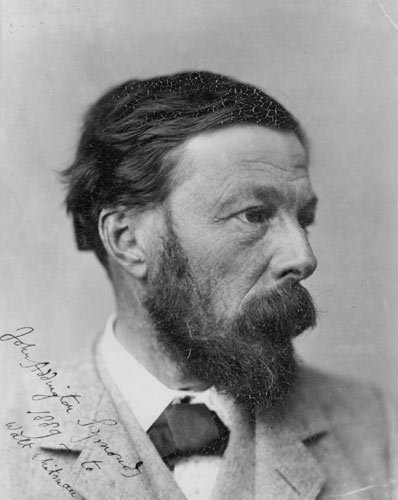
John Addington Symonds, Sketches and Studies in Italy and Greece:

“This shore would stand for Shelley’s Island of Epipsychidion, or the golden age which Empedocles describes, when the mild nations worshipped Aphrodite with incense and the images of beasts and yellow honey, and no blood was spilt upon her altars—­when ’the trees flourished with perennial leaves and fruit, and ample crops adorned their boughs through all the year.’  This even now is literally true of the lemon-groves, which do not cease to flower and ripen.  Everything fits in to complete the reproduction of Greek pastoral life.  The goats eat cytisus and myrtle on the shore; a whole flock gathered round me as I sat beneath a tuft of golden green euphorbia the other day, and nibbled bread from my hands.  The frog still croaks by tank and fountain, ‘whom the Muses have ordained to sing for aye,’ in spite of Bion’s death.  The narcissus, anemone, and hyacinth still tell their tales of love and death.  Hesper still gazes on the shepherd from the mountain-head.  The slender cypresses still vibrate, the pines murmur.  Pan sleeps in noontide heat, and goat-herds and wayfaring men lie down to slumber by the roadside, under olive-boughs in which cicadas sing.  The little villages high up are just as white, the mountains just as grey and shadowy when evening falls.  Nothing is changed—­except ourselves.  I expect to find a statue of Priapus or pastoral Pan, hung with wreaths of flowers—­the meal cake, honey, and spilt wine upon his altar, and young boys and maidens dancing round.  Surely, in some far-off glade, by the side of lemon-grove or garden, near the village, there must be still a pagan remnant of glad Nature-worship.  Surely I shall chance upon some Thyrsis piping in the pine-tree shade, or Daphne flying from the arms of Phoebus.  So I dream until I come upon the Calvary set on a solitary hillock, with its prayer-steps lending a wide prospect across the olives and the orange-trees, and the broad valleys, to immeasurable skies and purple seas.  There is the iron cross, the wounded heart, the spear, the reed, the nails, the crown of thorns, the cup of sacrificial blood, the title, with its superscription royal and divine.  The other day we crossed a brook and entered a lemon-field, rich with blossoms and carpeted with red anemones.  Everything basked in sunlight and glittered with exceeding brilliancy of hue.  A tiny white chapel stood in a corner of the enclosure.  Two iron-grated windows let me see inside:  it was a bare place, containing nothing but a wooden praying-desk, black and worm-eaten, an altar with its candles and no flowers, and above the altar a square picture brown with age.  On the floor were scattered several pence, and in a vase above the holy-water vessel stood some withered hyacinths.

As my sight became accustomed to the gloom, I could see from the darkness of the picture a pale Christ nailed to the cross with agonising upward eyes and ashy aureole above the bleeding thorns.  Thus I stepped suddenly away from the outward pomp and bravery of nature to the inward aspirations, agonies, and martyrdoms of man—­from Greek legends of the past to the real Christian present—­and I remembered that an illimitable prospect has been opened to the world, that in spite of ourselves we must turn our eyes heavenward, inward, to the infinite unseen beyond us and within our souls.  Nothing can take us back to Phoebus or to Pan.  Nothing can again identify us with the simple natural earth.”

The Aeneid’s Pot Brownie, Commentary on 6.420

Fragments of this lost commentary on the Aeneid were recently found near a monument to Saint Raphael. The work, dated to 420 CE, was signed only with the name “Louis.” This comment is on Book VI when Aeneas and Sibyl subdue Cerberus in the underworld. Edited by Dani Bostick

Aeneid 6.419-22

Seeing Cerberus’ neck bristling with snakes,
the priestess tosses him a treat laced with honey
and medicated grains. Opening his three throats,
rabid with hunger, he scarfs down what she tossed, and
his huge backs relax as he falls to the ground, spread
out across the entire cave.

Cui vātēs horrēre vidēns iam colla colubrīs
melle sopōrātam et medicātīs frūgibus offam 420
obicit. Ille famē rabidā tria guttura pandēns
corripit obiectam, atque immānia terga resolvit
fūsus humī tōtōque ingēns extenditur antrō.

6.420  she tosses a treat laced with honey and medicated grains

Here “treat” is a pot brownie. 420 is an extraordinary number. If one were to sail from Carthage to Alba Longa with a stop in Sicily, the journey would be 420 miles. Here, however, is not the number 420. You see, 4 is April, the fourth month of the year, and 20 is the twentieth day of the month (the 12th day before the Kalends).  On this day, almost everyone enjoys cannabis.

Ovid once wrote, “Caesar, in April you have something which might take control of you” (Fasti 4.20). He added, “Aeneas, manifest piety, carried through fire sacred things and his father on his shoulders, other sacred things.” Ovid is telling us that Aeneas imported cannabis, “sacred things,” into Italy as a trafficker of drugs. We also know that oracles use such drugs frequently.

For these reasons, the treat consumed by Cerberus was not full of opiates, but rather cannabis. Since the treat was not only drugged with honey, but with “medicated grains,” which we call “cannabis,” Cerberus immediately passes out when he eats it. When men consume cannabis, some lose their minds and rage in reefer madness, others, calm as stones, rest on the sofa and, eager for food, satisfy their hunger with snacks.


6.420  melle soporatam et medicatis frugibus offam

Hic “offam” est crustulum cannabis.

420 est numerus extraordinarius. Si quis, commoratus in Sicilia, a Karthagine ad Albam Longam navigaret, iter CDXX milium passuum esset. Hic tamen non est CDXX, sed numerus diei. Nam IV est Mensis Aprilis, quarta mensis anni; XX est vicesima dies mensis, a.d. XII Kal.  Ea die paene omnes cannibi fruuntur.

Ovidius olim scripsit: “Caesar, in Aprili, quo tenearis, habes” (4.20). addidit, “Aeneas, pietas spectata, per ignes sacra patremque humeris, altera sacra, tulit.” nobis dicit Aenean cannabim, “sacra,” in Italiam mercatorem medicamentorum portavisse. Scimus etiam vates medicamentis saepe fruari.

Quibus de causis, offa a Cerbero comesta non est plena papaverum, sed cannabis. Cum offa non modo melle, sed etiam “medicatis frugibus,” quas “cannabim” vocamus, soporata esset, Cerberus ea comesta subito obdormivit. Cum homines cannabim consumunt, alii furibundi insania cautum furiant, alii placati velut lapides in toro conquiescunt avidique cibi latrantem stomachum cenulis leniunt.  


Marginalia:

Vide: Hesychius, s.v. kannabis

Kannabis: A Skythian herb for burning which has the kind of power that it completely dries out anything subject to it. It is a plant similar to linen from which Thracians make ropes (Cf. Herodotus 4.74.)

κάνναβις· Σκυθικὸν θυμίαμα, ὃ τοιαύτην ἔχει δύναμιν, ὥστε ἐξικμάζειν πάντα τὸν παρεστῶτα. ἔστι δὲ φυτόν τι λίνῳ ὅμοιον, ἐξ οὗ αἱ Θρᾷσσαι ἱμάτια ποιοῦσιν. ῾Ηρόδοτος (4,74)

“Kannabisthênai: to extract and burn cannabis.”

κανναβισθῆναι· πρὸς τὴν κάνναβιν ἐξιδρῶσαι καὶ πυριασθῆναι

N.B. This discovery may have been satirical. The Hesychius is real.