The Implements We Worship

Anonymous, Epistle to Diognetus 2

“Again, couldn’t those things which you worship be reshaped by humans into implements similar to the rest? Aren’t they all deaf? Aren’t they all blind? Aren’t they soulless and without perception? Aren’t they incapable of motion? Aren’t they rotting? Aren’t they decaying?

And you call these things gods. You are slaves to these things. You worship them. In the end, you will be like them.”

οὐ ταῦτα πάλιν, τὰ νῦν ὑφ᾿ ὑμῶν προσκυνούμενα, δύναιτ᾿ ἂν ὑπὸ ἀνθρώπων σκεύη ὅμοια γενέσθαι τοῖς λοιποῖς; οὐ κωφὰ πάντα; οὐ τυφλά; οὐκ ἄψυχα; οὐκ ἀναίσθητα; οὐκ ἀκίνητα; οὐ πάντα σηπόμενα; οὐ πάντα φθειρόμενα;

ταῦτα θεοὺς καλεῖτε, τούτοις δουλεύετε, τούτοις προσκυνεῖτε, τέλεον δ᾿ αὐτοῖς ἐξομοιοῦσθε.

Image result for ancient greek idols

Origin of the Sardonic Smile

Lionel A. Tollemache, Recollections of Pattison:

“This masterful mode of translating tallies well with his strong desire that his pupils and friends should always use the best phrases and forms of speech. He [Mark Pattison] protested even against the common error of calling a sarcastic smile a sardonic one. He and I once talked over the old tradition a tradition mentioned, I think, by a Scholiast on Homer from which the word ‘sardonic’ is said to have sprung. In very early times the natives of Sardinia were wont to eat such of their country- men as were worn out by age. But, as manners grew milder, it was not thought seemly that a patriarch should be thus doomed without his own  consent; and, in proof that his consent was freely given, he was himself chosen to bid the guests. Such, however, was the force of public opinion (opponents of euthanasia should make a note of this) that the veteran always issued the invitations to the supper where, in Hamlet’s phraseology, he would not eat but be eaten. The courteous smile which beamed on the old gentleman’s countenance as he was doing this last act of hospitality ἑκὼν ἀέκοντί γε θυμῷ is the prototype of all sardonic smiles. For the truth of this ghastly story the Rector would not vouch; but he insisted that the word ‘sardonic’ should be used in the sense which the story indicates. In short, he wished his pupils to remember that a sardonic laugh is a laugh at one’s own expense, and on the wrong side of one’s mouth. From the following remarks, it will appear that he himself laughed sardonically at the world.”

http://minerva.union.edu/wareht/greek3/writing_homer_ms.jpg

There is an interesting proverbial tradition behind this too.

A Contract for a Slave Purchase

For more non-elite Latin, go to the list here.

AE 1922, 0135. 151 (CE, Fayoum, Egypt)

This is a contract written on a wax tablet for the sale of a Marmarian slave girl to Titus Memmius Montanus, a sailor in the praetorian fleet stationed at Ravenna. The girl is described as ‘veteranae’ (βετρανε), meaning she has been enslaved for some time. We don’t know what happened to her after this moment, but, as this contract was found in Egypt, there is good reason to believe that Titus Memmius was there at some point.

The writer of the contract was likely a native Greek speaker who was unfamiliar with the Latin alphabet, employing Greek morphology (nominative -ος, , genitive -ου/-ης, accusative -ους, etc.), phonetic tendencies (-αρουν for -arum), and vocabulary (πεντηρω) in an otherwise formulaic document. It also displays several spellings reflective of Latin speech, such as the merging of /b/ and /w/ to /β/, and the monophthongization of /ae/ to /ɛ/.

For more on the language, see Adams (2003) Bilingualism and the Latin Language.

BC 1
Enslaved captives. (image: The History Project)

ΓΑΙΩ ΚΟΥΡΤΙΩ ΙΟΥΣΤΩ ΙΟΥΛΙΩ ΝΑΥΤΩΝΕ
ΚΩΝΣΟΥΛΙΒΟΥΣ ΣΕΞΣΤΟΥΜ ΝΩΝΑΣ ΟΚΤΩΒΡΗΣ
ΑΙΣΧΙΝΗΣ ΑΙΣΧΙΝΟΥ ΦΛΑΟΥΙΑΝΟΣ ΜΙΛΗΣΙΟΣ ΣΚΡΙ
ΨΙ ΜΗ ΑΚΚΕΠΙΣΣΕ Α ΤΙΤΩ ΜΕΜΜΙΩ ΜΟΝΤΑΝΩ
ΜΙΛΙΤΕ ΠΕΝΤΗΡΩ ΑΥΓΙΣΤΙ ΔΗΝΑΡΙΟΥΣ ΣΕΣΚΕΝ
ΤΟΥΣ ΒΙΓΕΝΤΙ ΚΙΝΚΥΕ ΠΡΕΤΙΟΥΜ ΠΟΥΕΛΛΑΙ ΜΑΡ
ΜΑΡΙΑΙ ΒΕΤΡΑΝΕ ΚΟΥΑΜ ΕΙ ΔΟΥΠΛΑ ΟΠΤΙΜΙΣ ΚΟΝ
ΔΙΚΙΩΝΙΒΟΥΣ ΒΕΝΔΙΔΙΤ ΕΤ ΤΡΑΔΙΔΙ ΕΞ ΕΝΤΕΡΡΟ
ΓΑΤΙΩΝΕ ΦΑΚΤΑ ΤΑΒΕΛΛΑΡΟΥΝ ΣΙΓΝΑΤΑΡΟΥΜ
ΑΚΤΟΥΜ ΚΑΣΤΡΙΣ ΚΛΑΣΣΗΣ ΠΡΑΙΤΩΡΙΑΙ ΡΑΒΕΝ
ΝΑΤΟΥΣ

IDEM COSVLVBVS AEADEM DIEM DOMITIVS THE
OPHILVS SCRISI ME IN VEDITIONEM PVELLAE MARMA
RIAE SVPRA SCRIPTAE PRO AESCINE AESCINE PHI
LIVM FLAVIANVM SECVNDVM AVCTOREM EX
STITISE [ ]
[ ] ACCTVM

Γαιω Κουρτιω Ιουστω Ιουλιω Ναυτωνε / κωνσουλιβους σεξστουμ νωνας οκτωβρης / Αισχινης Αισχινου Φλαουιανος Μιλησιος σκρι/ψι μη ακκεπισσε α Τιτω Μεμμιω Μοντανω / μιλιτε πεντηρω Αυγιστι δηναριους σεσκεν/τους βιγεντι κινκυε πρετιουμ πουελλαι Μαρ/μαριαι βετρανε κουαμ ει δουπλα οπτιμισ κον/δικιωνιβους βενδιδιτ ετ τραδιδι εξ εντερρο/γατιωνε φακτα ταβελλαρουν σιγναταρουμ / ακτουμ καστρις κλασσης πραιτωριαι Ραβεν/νατους

Idem cosulubus aeadem diem Domitius The/ophilus scrisi me in veditionem puellae Marma/riae supra scriptae pro Aescine Aescine phi/lium Flavianum secundum auctorem ex/stitise acctum

“In the consulships of Gaius Curtius Iustus and Julius Nauto (151 CE), October 2nd. I, Aeschines Flavianus, a Milesian, son of Aeschines, wrote that I received from Titus Memmius Montanus, soldier on the quinquireme Augustus, 625 denarii as the price of the Marmarian girl, a long-serving (‘veteran’) slave, whom I sold to him at double repayment (i.e. on default) under the best terms and handed over after the finished inspection of the signed tablets. Completed at the camp of the praetorian fleet at Ravenna.

In the same consulships and on the same day, I, Domitius Theophilus, wrote that I was present as a witness on behalf of Aeschines Flavianus, son of Aeschines, for the sale of the Marmarian girl, described above. Completed.”

Should anyone else want to use this in a Latin class (I’m incorporating it into a course reading), I’ve adapted a somewhat standardized version in the Latin alphabet:

Gaio Curtio Iusto (et) Iulio Nautone consulibus, sextum nonas Octobres, Aeschines Aeschinae (filius) Flavianus Milesius scripsi me accepisse a Tito Memmio Montano, milite quinquiremis Augusti, denarios sescentos viginti quinque pretium puellae Marmariae veteranae, quam ei dupla optimis condicionibus vendidit (vendidi) et tradidi ex interrogatione facta tabellarum signatarum, actum castris classis praetoriae Ravennae.

Idem consulibus eadem die, Domitius Theophilus scripsi me in venditione puellae Marmariae, supra scriptae, pro Aeschine Aeschinae filio Flaviano secundum auctorem exstitisse. Actum.

Roman Slave Collar
Roman slave collar (image: University of Colorado-Boulder)

As Prolific as Chrysippus?

Diogenes Laertius, Lives of the Philosophers 7.7 180 Chrysippus

“He was so famous for his dialectic that the majority of people supposed that if the gods had dialectic if would be no different from Chrysippus’. While he had plenty of material, he was not much mistaken in his phrasing too.

He was the hardest working philosopher of them all, as is clear from the mere list of his publications: for their count is beyond 705. But he did advance their number by writing often on the same matter and writing down everything he thought of and correcting it often while also using and abundance of citations. This was so severe that in one of his publications he set out nearly every part of Euripides’ Medea. When someone picked up the book and asked him what he was reading, he said “Chrysippus’ Medea.”

Οὕτω δ᾿ ἐπίδοξος ἐν τοῖς διαλεκτικοῖς ἐγένετο, ὥστε δοκεῖν τοὺς πλείους ὅτι εἰ παρὰ θεοῖς ἦν [ἡ] διαλεκτική, οὐκ ἂν ἄλλη ἦν ἢ ἡ Χρυσίππειος. πλεονάσας δὲ τοῖς πράγμασι τὴν λέξιν οὐ κατώρθωσε. πονικώτατός τε παρ᾿ ὁντινοῦν γέγονεν, ὡς δῆλον ἐκ τῶν συγγραμμάτων αὐτοῦ· τὸν ἀριθμὸν γὰρ ὑπὲρ πέντε καὶ ἑπτακόσιά ἐστιν. ἐπλήθυνε δ᾿ αὐτὰ πολλάκις ὑπὲρ τοῦ αὐτοῦ δόγματος ἐπιχειρῶν καὶ πᾶν τὸ ὑποπεσὸν γράφων καὶ διορθούμενος πλεονάκις πλείστῃ τε τῶν μαρτυριῶν παραθέσει χρώμενος· ὥστε καὶ ἐπειδή ποτ᾿ ἔν τινι τῶν συγγραμμάτων παρ᾿ ὀλίγον τὴν Εὐριπίδου Μήδειαν ὅλην παρετίθετο καί τις μετὰ χεῖρας εἶχε τὸ βιβλίον, πρὸς τὸν πυθόμενον τί ἄρα ἔχοι, ἔφη, “Χρυσίππου Μήδειαν.”

Image result for Chrysippus

Potions and Spells: Crimes and their Legal Names

Quintilian, 7.3.10

“A different kind of question arises when the argument depends on a word which comes from a written text. This does not happen in courtrooms unless the words shape the legal outcome: is killing oneself a homicide? Is the one who compels a tyrant to kill himself a tyrannicide? Are magical spells like poisoning?

The matter is clear. Suicide is not understood as being the same as killing another person; it is not the same thing to kill a tyrant and compel him to die. Spells are not the same thing as mortal poison. The issue is whether they should be referred to with the same legal name.”

Diversum est genus cum controversia consistit in nomine quod pendet ex scripto, nec versatur in iudiciis nisi propter verba quae litem faciunt: an qui se interficit homicida sit, an qui tyrannum in mortem compulit tyrannicida, an carmina magorum veneficium. Res enim manifesta est sciturque non idem esse occidere se quod alium, non idem occidere tyrannum quod compellere ad mortem, non idem carmina ac mortiferam potionem, quaeritur tamen an eodem nomine appellanda sint.

20120224-Magical_book_Kircherian_Terme.jpg
Spell book?

Ignorance & Forgery

Quintilian, Institutio Oratoria 1.8:

“To investigate what everyone, including the most worthless people, ever wrote is an example either of excessive misery or empty ostentation, which both detains and destroys minds which would better be left free for other things. Someone who has shaken off all of the dusty fragments unworthy of reading could just as easily spend their labor upon the tales of old women. The commentaries of grammarians are full of these kinds of pitfalls, and even their authors barely know what is in them. It is said of Didymus, than whom no one ever wrote more, that when he was arguing against some tale as though it were wholly fictitious, his very own book was brought against him, since it contained that very tale. This happens especially in fantastic tales, all the way to the point of absurdity and shame, whence comes the excessive license granted to every knave of inventing things such that they safely lie about entire books and authors as they find it convenient, because those things which never existed cannot naturally be discovered. For, in more generally known matters, the forgers are discovered by curious inquisitors. And so, it seems to me that among the grammarian’s virtues will be numbered not to know some things.”

http://parliamoitaliano.altervista.org/wp-content/uploads/grammaticus.jpg

Persequi quidem quid quis umquam vel contemptissimorum hominum dixerit aut nimiae miseriae aut inanis iactantiae est, et detinet atque obruit ingenia melius aliis vacatura. Nam qui omnis etiam indignas lectione scidas excutit, anilibus quoque fabulis accommodare operam potest: atqui pleni sunt eius modi impedimentis grammaticorum commentarii, vix ipsis qui composuerunt satis noti. Nam Didymo, quo nemo plura scripsit, accidisse compertum est ut, cum historiae cuidam tamquam vanae repugnaret, ipsius proferretur liber qui eam continebat. Quod evenit praecipue in fabulosis usque ad deridicula quaedam, quaedam etiam pudenda, unde improbissimo cuique pleraque fingendi licentia est, adeo ut de libris totis et auctoribus, ut succurrit, mentiantur tuto, quia inveniri qui numquam fuere non possunt: nam in notioribus frequentissime deprenduntur a curiosis. Ex quo mihi inter virtutes grammatici habebitur aliqua nescire.

Drunk on Foolishness: An Epitaph

IMT Kyz Kapu Dağ 1731 [=Greek Anthology, 3.14; From Mysia, 4th Century CE?]

“Wrecked and drunk with foolishness, why did you
Violently attack the bed of Zeus’ bride?
He doused you in blood as a consequence and then
Set you rightfully on the ground as as food to the beasts and birds.”

1 μάργε καὶ ἀφροσύνῃ μεμεθυσμένε, τίπτε βιαίως
εἰς εὐνὰς ἐτράπης τᾶς Διὸς εὐνέτιδος;
ὅς σε δὴ αἵματι φῦρσε κατάξια, θηρσὶ δὲ βορρὰν
καὶ πτανοῖς ἐπὶ γᾷ εἴασε νῦν ὁσίως.

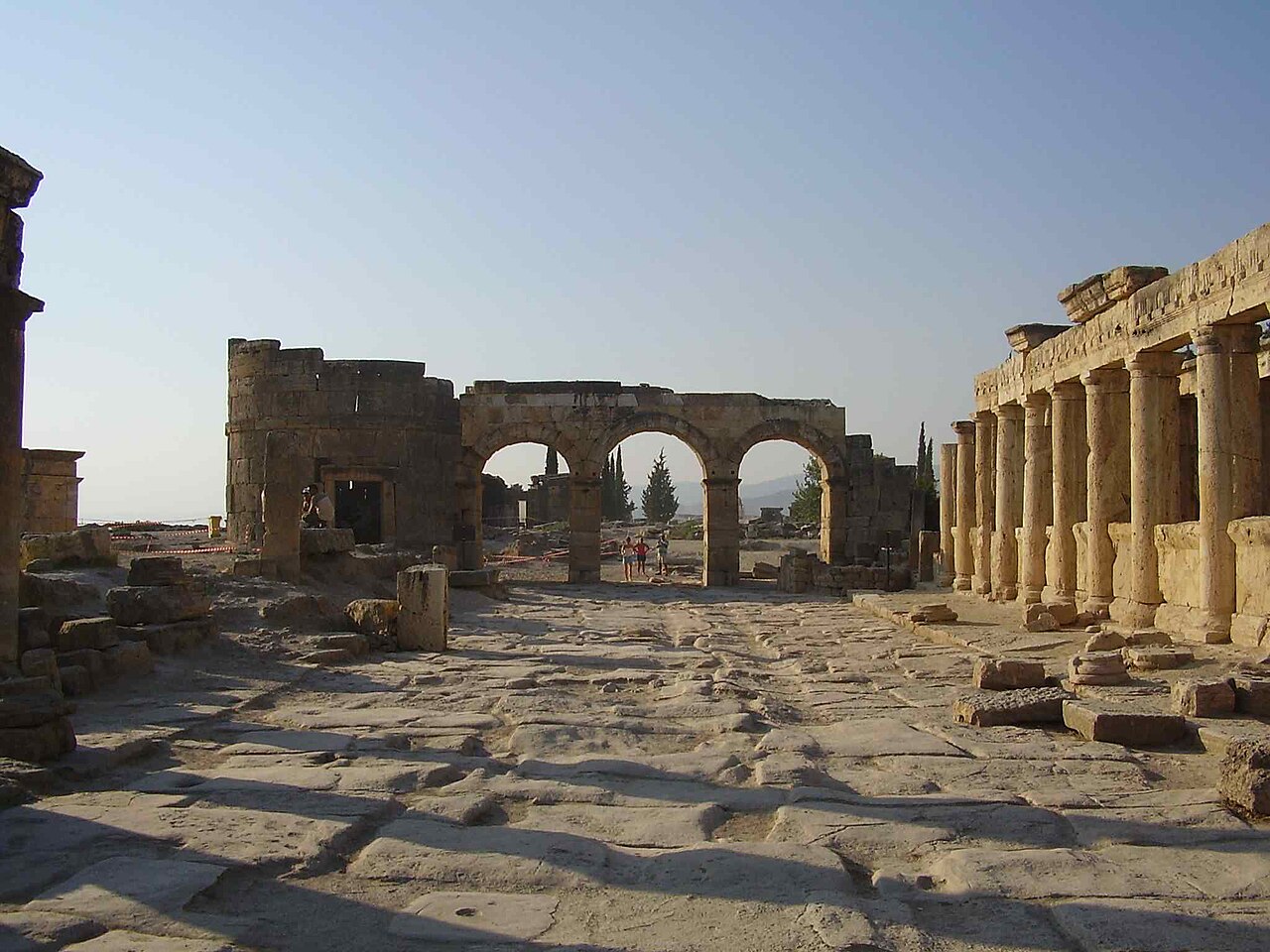
Hierapolis colonnade.jpg
Ruins from Hierapolis

On Speaking and Air

Hippocrates of Cos, On Flesh 608

“Speaking is possible because of air, when someone pulls it into their whole body but especially down into the hollow spaces. When this air is forced to exit through the empty place, it makes a sound because the head echoes. The tongue shapes the sound by touching: as it turns in the throat and closes the palate or the teeth it brings clarity to the sounds. If the tongue does not make the sound sharper by touching each time, the person can’t speak clearly, but, utters only sounds as they are in nature.

An indication of the truth of this is that people who are deaf from birth do not know how to speak but make only simple sounds. It is also not possible to speak after you have breathed out all your air. This is clear: whenever people want to speak loud, they draw in a great breath which they force out of their mouth and they can make a great sound as long as the breath remains. Then, their sound diminishes.”

Διαλέγεται δὲ διὰ τὸ πνεῦμα ἕλκων εἴσω πᾶν τὸ σῶμα, | τὸ πλεῖστον δὲ ἐς τὰ κοῖλα αὐτὸς ἑωυτῷ· αὐτὸ δὲ θύραζε ὠθεόμενον διὰ τὸ κενὸν ψόφον ποιέει· ἡ κεφαλὴ γὰρ ἐπηχεῖ. ἡ δὲ γλῶσσα ἀρθροῖ προσβάλλουσα· ἐν τῷ φάρυγγι ἀποφράσσουσα καὶ προσβάλλουσα πρὸς τὴν ὑπερῴην καὶ πρὸς τοὺς ὀδόντας ποιέει σαφηνίζειν· ἢν δὲ μὴ ἡ γλώσση ἀρθροῖ προσβάλλουσα ἑκάστοτε, οὐκ ἂν σαφέως διαλέγοιτο, ἀλλ᾿ ᾗ ἕκαστα φύσει τὰ μονόφωνα. τεκμήριον δέ ἐστι τούτῳ, οἱ κωφοὶ οἱ ἐκ γενεῆς οὐκ ἐπίστανται διαλέγεσθαι, ἀλλὰ τὰ μονόφωνα μοῦνον φωνέουσιν. οὐδ᾿ εἴ τις τὸ πνεῦμα ἐκπνεύσας πειρῷτο διαλέγεσθαι· δῆλον δὲ τόδε· οἱ ἄνθρωποι ὁκόταν βούλωνται μέγα φωνῆσαι, ἕλκοντες τὸ πνεῦμα τὸ ἔξω ὠθέουσι θύραζε καὶ φθέγγονται μέγα ἕως ἂν ἀντέχῃ τὸ πνεῦμα, ἔπειτα δὲ καταμαραίνεται τὸ φθέγμα·

Image result for hippocrates of cos
Hippocrates of Cos will examine you now

Porson: Professor, Poker-Wielder, Party Animal

Edith Sitwell, English Eccentrics (VIII):

“After reading the previous chapter we may, perhaps, find ourselves inclined to agree with those persons who insist that the Graces and the Pluses are but rarely on visiting terms. Professor Porson, who was a generation older than Miss Fuller, Dr. Parr, who contradicted Dr. Johnson, and Dr. George Fordyce, are other startling examples of this breach between sisters. Mr. Timbs, the chronicler of both these gentlemen, becomes particularly morose when dealing with Professor Porson; and tells us that ‘it is sufficiently notorious that Porson was not remarkably attentive to the decoration of his person.’ But the decorations that adhered to him seem to me, on the contrary, of a very remarkable character; and a writer in the Monthly Magazine was much struck by his appearance, ‘with a large patch of coarse brown paper on his nose, the rusty black coat hung with cobwebs’; whilst another friend, who met him in 1807, was dumbfounded ‘by his fiery and volcanic face, and by his nose, on which he had a perpetual efflorescence, and which was covered with black patches; his clothes were shabby, his linens dirty’.

Yet in earlier life, who more gallant than the Professor, who more assiduous in their attentions to the Fair? It is rumoured, indeed, that he once carried a young lady round the room in his teeth. But that was before dinner, and after dinner, the Professor, though equally manly, was less urbane. Indeed Mr. Timbs tells us that, whilst at Cambridge, his passion for smoking, which was then going out among the younger generation, his large and indiscriminate potations, and his occasional use of the poker with a very refractory controversialist, had caused his company to be shunned by all except the few to whom his wit and scholarship were irresistible. Apparently, the gifts in question did not always prove irresistible to the Fellows of Trinity, who when the use of the poker seemed imminent, would slink out of the Common Room, and leave the Professor sitting at the table, emitting no sign of life excepting a perpetual eruption of smoke. In the morning, the servants were accustomed to seeing him sitting where he had been left, with no appearance of having moved, even once, during his night-long vigil.

These vigils became a source of anxiety in the houses which the Professor frequented, and it became necessary, at last, for the sake of preserving the health and sanity of the hosts, that the Professor should be told that he must never stay to a later hour than eleven. He showed no resentment at this mandate, but kept the agreement, honourably, and to the letter. But, ‘though he never attempted to exceed the hour limited, he would never stir before and woe betide the host who suggested such a breach of faith. But this state of affairs did not extend to every house, or to every host, and there were houses in which the Professor behaved like a lion rampant.

The unfortunate Mr. Horne Tooke, for instance, was one of Professor Porson’s unhappier hosts, for he was foolish enough to invite the Professor to dine with him on a night that he knew had been preceded by three nights in which the Professor had refused all entreaties on the part of his hosts that he should go home to bed. Mr. Tooke thought, there-ore, that Professor Porson would relent on this occasion. But the night wore on, and Mr. Tooke was worn out, for the Professor became more and more animated, passing from one learned theme to another. The poker was out of sight and out of mind, but insensibility, at any costs, might have been preferred. Dawn broke, the birds sang, the milkmen shouted, the Professor continued his monologue. At last, in mid morning, the exhausted Mr. Tooke proclaimed that he had an engagement to meet a friend for breakfast in a coffeehouse at Leicester Square. The Professor was delighted, and announced that he would come too. But in the end. Providence came to the rescue of Mr. Tooke and, soon after the Professor and he were seated in the coffee- house, the Professor’s attention was distracted for an instant, and Mr. Tooke, seizing the opportunity, fled as fast as his legs would carry him, nor did he pause for breath until he had reached Richmond Buildings. Having reached this haven of refuge, he barricaded himself in, and ordered his servant not to admit the Professor even if he should attempt to batter down the door. For ‘a man’, Mr. Tooke observed, ‘who could sit up four nights successively, could sit up forty’.”

https://upload.wikimedia.org/wikipedia/commons/thumb/0/0a/Portrait_of_Richard_Porson%2C_M.A_%284672674%29.jpg/250px-Portrait_of_Richard_Porson%2C_M.A_%284672674%29.jpg

Souls of (in)Equal Worth?

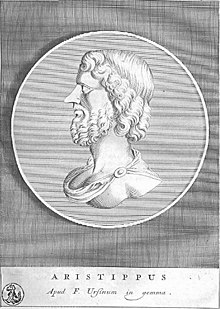
Diogenes Laertius, Lives of the Philosophers 2.8 Aristippos 71

“Once, when [Aristippos] was sailing to Corinth and there was a storm, he got pretty upset. When someone said to him, “We simple people are not afraid, but you philosophers are cowards now?”, he responded, “We are not each worrying about souls of equal worth.”

When someone else thought highly of himself for his great learning, Aristippos said, “Just as those who eat the most and exercise the most are not healthier than those who take what they need, so too the serious people are not those who read many books but useful ones.”

Εἰς Κόρινθον αὐτῷ πλέοντί ποτε καὶ χειμαζομένῳ συνέβη ταραχθῆναι. πρὸς οὖν τὸν εἰπόντα, “ἡμεῖς μὲν οἱ ἰδιῶται οὐ δεδοίκαμεν, ὑμεῖς δ᾿ οἱ φιλόσοφοι δειλιᾶτε,” “οὐ γὰρ περὶ ὁμοίας,” ἔφη, “ψυχῆς ἀγωνιῶμεν ἑκάτεροι.” σεμνυνομένου τινὸς ἐπὶ πολυμαθείᾳ ἔφη, “ὥσπερ οὐχ οἱ τὰ πλεῖστα ἐσθίοντες [καὶ γυμναζόμενοι] ὑγιαίνουσι μᾶλλον τῶν τὰ δέοντα προσφερομένων, οὕτως οὐδὲ οἱ πολλὰ ἀλλ᾿ οἱ χρήσιμα ἀναγινώσκοντές εἰσι σπουδαῖοι.”

Image result for Aristippus