Stumbling After Pleasure Like a Drunk Looking for Home

Boethius, Consolation of Philosophy III. 38-55

“Now all good things dependent upon the body may be understood as we have said. Strength and size seem to confer prominence; beauty and speed bring fame; health brings pleasure. It is clear that happiness alone is sought through all of these qualities. For whatever any man seeks foremost is the very thing he believes is the greatest good. But we have then defined the greatest good as happiness, which is why each man judges the state of happiness to be the very thing he desires beyond all else.

Therefore, you have laid bare before your eyes the basic shape of human happiness: wealth, honor, power, glory and pleasure. When Epicurus examined these things, he decided that his highest good was pleasure because all others seemed to bring enjoyment to the mind. But I return to human desires: for human minds even when the memory is hazy still seeks its own good but, just like a drunk, does not know which path will lead home. Certainly how can those who struggle not to lack anything seem to do wrong?”

Iam vero corporis bona promptum est ut ad superiora referantur. Robur enim magnitudoque videtur praestare valentiam, pulchritudo atque velocitas celebritatem, salubritas voluptatem; quibus omnibus solam beatitudinem desiderari liquet. Nam quod quisque prae ceteris petit, id summum esse iudicat bonum. Sed summum bonum beatitudinem esse definivimus; quare beatum esse iudicat statum quem prae ceteris quisque desiderat.

Habes igitur ante oculos propositam fere formam felicitatis humanae—opes, honores, potentiam, gloriam, voluptates. Quae quidem sola considerans Epicurus consequenter sibi summum bonum voluptatem esse constituit, quod cetera omnia iucunditatem animo videantur afferre. Sed ad hominum studia revertor, quorum animus etsi caligante memoria tamen bonum suum repetit, sed velut ebrius domum quo tramite revertatur ignorat. Num enim videntur errare hi qui nihilo indigere nituntur?


Image result for boethius

Catholicism vs. Criticism

Mark Pattison: Joseph Scaliger

“But, after allowing for I these influences, we must look within rather than without, for the momentum which Scaliger’s religious convictions obeyed. The creed of a scholar or a man of science is often a matter of small interest to him; he wears the religion of his country as he does its garb. With Scaliger it was not so. He could not have been a Catholic. For his knowledge was not a professional skill, a linguistic, a verbal art, or a literary taste. His criticism was to him an instrument of truth. Philology was not an amusement for the ingenious, but the mode of ascertaining the true sense of ancient records. And the controversy as it came to stand at the end of the century between Catholic and Protestant was much more one of interpretation than it has since become. We now think Scaliger’s dictum, ‘All controversies in religion arise from ignorance of criticism ‘ (Non aliunde dissidia in religione pendent quam ab ignoratione grammaticae) somewhat overdrawn. But it was almost literally true at that time. Not only had the Catholic theologians rested their case on all sorts of false renderings and expositions of the Scripture and fathers, on supposititious documents, on historical frauds, on exploded hypotheses, but their principle of interpretation was a rotten one — the principle, namely, that that is the true sense of a text which is conformable to the received doctrine of the Church. A clear scientific insight into the laws of interpretation inevitably forces the mind which arrives at it to rebel against such a maxim. The spell is broken, and it becomes aware that that may be the true sense of Scripture which the Church may have ruled to be heresy. It was, therefore, impossible in the sixteenth century for a consummate critic to be other than a Protestant.”

Claudius, Gourd-God

The following excerpt is from a satirical essay called the “Apocolocyntosis”–the “gourdification”–attributed to Seneca the Younger  (by Cassius Dio). 

Seneca, Apocolocyntosis 4-5

“And he spat up his soul and then he seemed to stop living. He died, moreover, while he listened to comedians, so you understand that I do not fear them without reason. His final voice was heard among people as follows. When he emitted the greater sound with that part with which he spoke more easily, he said “Oh my, I shat myself I think”. Whether or not he did this, I do not know: but he certainly fouled up the place.

The things that were done next on earth are useless to report—for you certainly know it clearly. There is no risk that the memory left by public celebration will disappear—no one forgets his own joy. What was done in heaven, you should hear—the proof will come from the author!

It was announced to Jupiter that a man of certain good size had come, really grey. I don’t know what he was threatening, since he was constantly moving his head and dragging his right foot. When they asked what country he was from he responded with a confused sound and troubled voice—they could not understand his language. He was not Greek or Roman or of any other race.

Then Jupiter sent Hercules who had wandered over the whole earth and seemed to know every nation. He ordered him to go and explore what people this man was from. Then Hercules was a bit undone by the first sight because he had not yet feared all the monsters. As he gazed upon this new kind of a thing with its uncommon step, a voice belonging to no earth-bound beast but more like something coming out of a marine monster, coarse and wordless, he thought that he had arrived at a thirteenth labor. As he looked more closely, it seemed to him to be a man. Se he went up to him and said what comes easiest to a Greek tongue. “Who are you among men and from where? Where is your city and parents?”

Et ille quidem animam ebulliit, et ex eo desiit vivere videri. Exspiravit autem dum comoedos audit, ut scias me non sine causa illos timere. Ultima vox eius haec inter homines audita est, cum maiorem sonitum emisisset illa parte, qua facilius loquebatur: “vae me, puto, concacavi me.” Quod an fecerit, nescio: omnia certe concacavit.

Quae in terris postea sint acta, supervacuum est referre. Scitis enim optime, nec periculum est ne excidant memoriae quae gaudium publicum impresserit: nemo felicitatis suae obliviscitur. In caelo quae acta sint, audite: fides penes auctorem erit. Nuntiatur Iovi venisse quendam bonae staturae, bene canum; nescio quid illum minari, assidue enim caput movere; pedem dextrum trahere. Quaesisse se, cuius nationis esset: respondisse nescio quid perturbato sono et voce confusa; non intellegere se linguam eius, nec Graecum esse nec Romanum nec ullius gentis notae. Tum Iuppiter Herculem, qui totum orbem terrarum pererraverat et nosse videbatur omnes nationes, iubet ire et explorare, quorum hominum esset. Tum Hercules primo aspectu sane perturbatus est, ut qui etiam non omnia monstra timuerit. Ut vidit novi generis faciem, insolitum incessum, vocem nullius terrestris animalis sed qualis esse marinis beluis solet, raucam et implicatam, putavit sibi tertium decimum laborem venisse. Diligentius intuenti visus est quasi homo. Accessit itaque et quod facillimum fuit Graeculo, ait:

τίς πόθεν εἰς ἀνδρῶν, πόθι τοι πόλις ἠδὲ τοκῆες;

Image result for roman emperor claudius

Like Father, Like Son? A Taboo Love and a Wasting Sickness

Valerius Maximus, 5.7 ext. 1

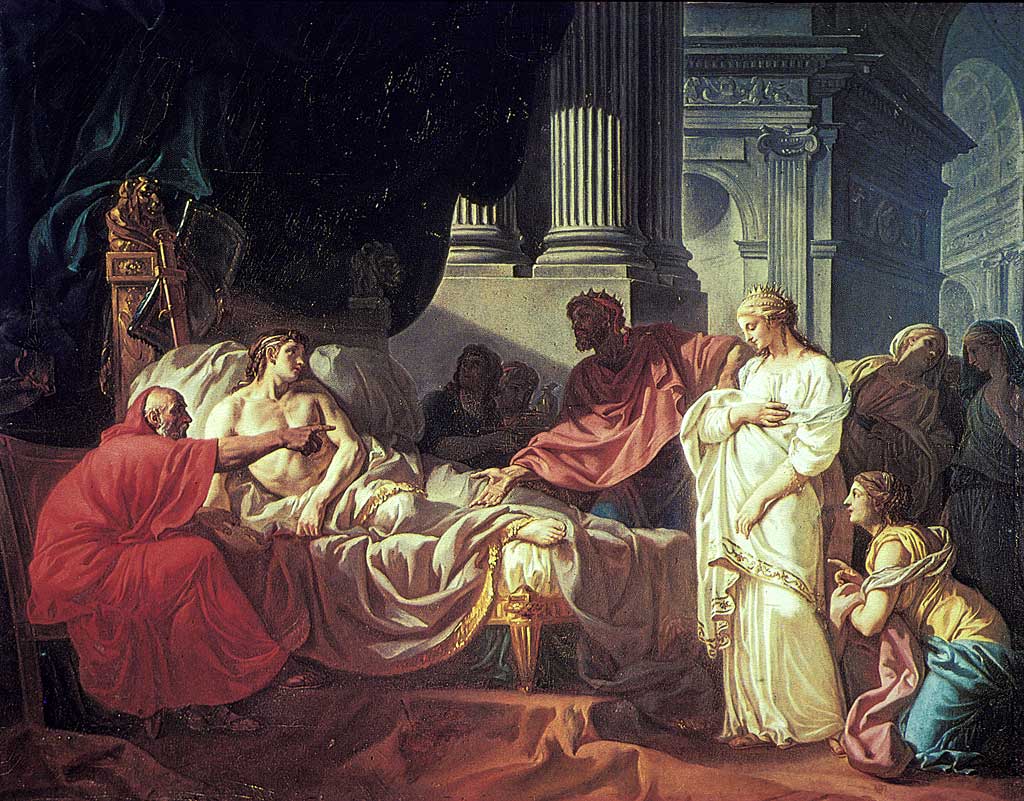
“Let’s turn to somethings more pleasant to think about. Antiochus, the son of king Seleucus, was overcome with endless love for his stepmother Stratonice. Because he knew he was burning with taboo passions, he was hiding the wound of his wicked heart with dutiful dissimulation.

These warring emotions which were shut up in the same organs—the most pressing desire and the deepest shame—tortured him, causing his body to waste away. He used to stretch out in bed like a dying man and his close friends were lamenting. His father, laid out by grief, was thinking of the death of his only son and his own terrible loss. The whole house was funereal instead of royal.

But the wisdom of Leptines the Astrologer or Erisastratos the physician as some claim dispelled the cloud of sorrow. While sitting next to Antiochus, he noticed that the boy’s complexion grew ruddy and his breath hastened when Stratonice entered. And he got to the truth itself with a more investigative observation. While Stratonice was entering and the exciting again, he quietly grasped the young man’s arm and figured out what kind of sickness this was by the increase or decrease of his pulse.

He told Seleucus right away and Seleucus wasted no time in giving his wife who was most dear to him over to his son. For he believed that Fate caused his son to fall in love but that honor had prepared him to hide that love to death itself. Think for yourself of that old king, a lover. For it will soon be clear how many difficult troubles came when a father’s indulgence reigned supreme.”

Ceterum ut ad iucundiora cognitu veniamus, Seleuci regis filius Antiochus, novercae Stratonices infinito amore correptus, memor quam improbis facibus arderet, impium pectoris vulnus pia dissimulatione contegebat. itaque diversi adfectus iisdem visceribus ac medullis inclusi, summa cupiditas et maxima verecundia, ad ultimam tabem corpus eius redegerunt. iacebat ipse in lectulo moribundo similis, lamentabantur necessarii, pater maerore prostratus de obitu unici filii deque sua miserrima orbitate cogitabat, totius domus funebris magis quam regius erat vultus.

sed hanc tristitiae nubem Leptinis mathematici vel, ut quidam tradunt, Erasistrati medici providentia discussit: iuxta enim Antiochum sedens, ut eum ad introitum Stratonices rubore perfundi et spiritu increbrescere, eaque egrediente pallescere et excitatiorem anhelitum subinde recuperare animadvertit, curiosiore observatione ad ipsam veritatem penetravit: intrante enim Stratonice et rursus abeunte bracchium adulescentis dissimulanter apprehendendo modo vegetiore, modo languidiore pulsu venarum comperit cuius morbi aeger esset, protinusque id Seleuco exposuit. qui carissima sibi coniuge filio cedere non dubitavit, quod in amorem incidisset Fortunae acceptum referens, quod dissimulare eum ad mortem usque paratus esset ipsius pudori imputans. subiciatur animis senex rex amans: iam patebit quam multa quamque difficilia paterni adfectus indulgentia superavit.

Stratonice, a Macedonian noble and granddaughter of Antipater (who held Macedonia as regent when Alexander went on his campaign in 331 BCE) was married to Seleucus in 300 BCE at age 17 and then his son Antiochus in 294 BCE. Her daughter with Seleucus (Phila) went on to marry Antigonus II Gonatas, who ruled Macedonia. One son with Antiochus, a second Seleucus, was executed. But her other son, Antiochus II Theos, ruled the Seleucid empire after the first Antiochus. Another daughter, Apama II, married Magas of Cyrene and was mother of Berenice II.

There should be a miniseries about Stratonice.

David-Antiochus et Stratonice.jpg
Antiochus and Stratonice by Jacques-Louis David, 1774

Why Weep Without Reason? All Mortals Die

IMT Kyz Kapu Dağ 1694  [= Greek Anthology 7.334] (Cyzicos, 2/3 Century CE)

“Pitiless god, why did you show me the light
Only for a brief number of few years?
Is it because you wanted to afflict my poor mother
With tears and laments through my short life?

She bore me and raised me and paid much more
Mind to my education than my father.
For he left me as a small orphan in this home
While she endured every kind of labor for me.

It would have been dear for me to have had success
Before our respected leaders with speeches in the law courts.
But the adolescent bloom of lovely youth did not
Reach my face. There was no marriage, no torches.

She did not sing the famous marriage song for me,
And the ill-fated woman never saw a child, a remnant
Of our much-lamented family. And it hurts me even when dead
My mother Polittê’s still growing grief
In her mourning thoughts over Phronto, the child she bore
Swift-fated, the empty pride of a dear country.

B. “Pôlittê, endure your grief, rein in your tears.
Many mothers have seen dead sons.
But they were not like him in their ways and life,
They were not so reverent toward their mother’s sweet face.
But why mourn so uselessly? Why weep without purpose?
All mortals will go to Hades in common.”

A.1 νηλεὲς ὦ δαῖμων, τί δέ μοι καὶ φέγγος ἔδειξας
εἰς ὀλίγων ἐτέων μέτρα μινυνθάδια;
ἦ ἵνα λυπήσῃς δι’ ἐμὴν βιότοιο τελευτήν
μητέρα δειλαίην δάκρυσι καὶ στοναχαῖς,
5 ἥ μ’ ἔτεχ’, ἥ μ’ ἀτίτηλε καὶ ἣ πολὺ μείζονα πατρός
φροντίδα παιδείης ἤνυσεν ἡμετέρης;
ὃς μὲν γὰρ τυτθόν τε καὶ ὀρφανὸν ἐν μεγάροισι
κάλλιπεν, ἣ δ’ ἐπ’ ἐμοὶ πάντας ἔτλη καμάτους·
ἦ μὲν ἐμοὶ φίλον ἦεν ἐφ’ ἁγνῶν ἡγεμονήων
10  ἐμπρεπέμεν μύθοις ἀμφὶ δικασπολίαις·
ἀλλά μοι οὐ γενύων ὑπεδέξατο κούριμον ἄνθος
ἡλικίης ἐρατῆς, οὐ γάμον, οὐ δαΐδας·
οὐχ ὑμέναιον ἄεισε περικλυτόν, οὐ τέκος εἶδε
δύσποτμος, ἐκ γενεῆς λείψανον ἡμετέρης
15 τῆς πολυθρηνήτου· λυπεῖ δέ με καὶ τεθνεῶτα
μητρὸς Πωλίττης πένθος ἀεξόμενον
Φρόντωνος γοεραῖς ἐπὶ φροντίσιν, ἣ τέκε παῖδα
ὠκύμορον, κενεὸν χάρμα φίλης πατρίδος.

B.19 Πωλίττα, τλῆθι πένθος, εὔνασον δάκρυ·
20 πολλαὶ θανόντας εἶδον υἱεῖς μητέρες· ——
ἀλλ’ οὐ τοιούτους τὸν τρόπον καὶ τὸν βίον,
οὐ μητέρων σέβοντας ἡδίστην θέαν· ——
τί περισσὰ θρηνεῖς, τί δὲ μάτην ὀδύρεαι;
εἰς κοινὸν Ἅιδην πάντες ἥξουσι βροτοί.

Image result for cyzicus ruins greece
Ruins at Cyzicos

How to Console a F**k-Up

Erasmus, Colloquia Familiaria:

“Mauritius: You have returned to us fatter than usual. You have come back a bit longer.

Cyprianus: Yet I would have loved to come back more intelligent or more learned.

M: You left unbearded and have returned with a little growth. You contracted a bit of age while you were gone. What’s up with this paleness? What about this leanness? What of your goat-like forehead?

C: Just as fortune, so too goes one’s body…

M: Was your fortune bad?

C: It was never indeed favorable otherwise, but it never blew more hatefully than now.

M: I grieve for your misfortune – your calamity distresses me. But what evil was there?

C: I made a shipwreck of all my money.

M: In the sea?

C: Nope – on the shore, before I ever set sail.

M: Where the hell was that?

C: On the shore of Britain.

M: Well, it’s good that you swam back here alive. Better to lose your money than your life. The payment of money is lighter than the expense of one’s reputation.

C: Yet with life and reputation intact, all my money is lost.

M: Life can never be recovered, reputation can but with difficulty, yet it’s easy enough to repair the loss of money somehow. How did this disaster happen?

C: I don’t know – it must just be my fate. Thus it seemed best to the gods. Thus it pleased my evil genius.

M: You see then that learning and virtue are the safest riches, since they can never be taken away and they never burden their possessor.

C: That’s a pretty piece of philosophy you’re spouting, but I’m still pissed.”

erasmus2

A Good Exercise for Debate: Reading Aloud

Plutarch, “Advice on Keeping Well”, Moralia  130 C-D

“This is why we need to make ourselves accustomed to this exercise and practiced for it by speaking at length. But if there is some worry that our body is lacking or is worn out, then we can read aloud or recite. For reading has the same relation to debate that a ride in a wagon has to exercise—it moves softly on the carriage of another’s words and bears the voice in different direction. But debate provides in addition struggle and strength, since the mind enters into the affair with the body. We should be wary, however, of extremely emotional or spasmodic shouting.”

διὸ δεῖ μάλιστα ποιεῖν ἑαυτοὺς τούτῳ τῷ γυμνασίῳ συνήθεις καὶ συντρόφους ἐνδελεχῶς λέγοντας, ἂν δ᾿ ᾖ τις ὑποψία τοῦ σώματος ἐνδεέστερον ἢ κοπωδέστερον ἔχοντος, ἀναγιγνώσκοντας ἢ ἀναφωνοῦντας. ὅπερ γὰρ αἰώρα πρὸς γυμνάσιόν ἐστι, τοῦτο πρὸς διάλεξιν ἀνάγνωσις, ὥσπερ ἐπ᾿ ὀχήματος ἀλλοτρίου λόγου κινοῦσα μαλακῶς καὶ διαφοροῦσα πράως τὴν φωνήν. ἡ δὲ διάλεξις ἀγῶνα καὶ σφοδρότητα προστίθησιν, ἅμα τῆς Dψυχῆς τῷ σώματι συνεπιτιθεμένης. κραυγὰς μέντοι περιπαθεῖς καὶ σπαραγμώδεις εὐλαβητέον


Image result for child reading from scroll villa
Fresco, Villa of the Mysteries (Pompeii)

A Greek Professor Socializes

John Addington Symonds, Memoirs

“One evening Jowett sat staring at the fire, and would not speak, and did not seem to want me to go. At last he said, ‘When I say nothing, people fancy I am thinking about something. Generally, I am thinking about nothing. Goodnight.’ On another occasion he broke silence with this abrupt remark: ‘Mr. Swinburne is a very singular young man. He used to bring me long and eloquent essays. He had an illimitable command of language; but it was all language; I never could perceive that he was following a train of thought.’ On a third evening, he stopped me before I sat down to read: ‘I cannot listen to your essay tonight. I have just had news that Clough is dead.’ This was the first time, I believe, that I had ever heard of Clough. Jowett went on, ‘He was the only man of genius – whom one felt to be a man of genius – I have known among the younger men of Balliol.’

Jowett’s breakfast parties were even more paralysing than his coaching hours. Nothing is anywhere more depressing than a breakfast at which conversation is expected. In the great tutor’s rooms the young men came together, torpid, stiff, shy, awkward. He sat, sipped tea, ate little, stared vacantly. Few spoke. The toast was heard crunching under the desperate jaws of youths exasperated by their helplessness. Nevertheless, it was a great event to go there – although nobody shone, neither host nor guest.

Jowett had the knack of killing the innocent foundlings of his own or his companion’s brain by some crushing yet inconclusive observation. One after another, topics fell stillborn from our lips. The stock story of the undergraduate who, passing the gate of Balliol, remarked, ‘A fine day, Mr. Jowett,’ and getting no answer relapsed in silence during an hour and a half of peripatetic exercise, to be greeted on re-entering the gate with, ‘A poor remark, that of yours, Mr. Jones’ – this story is hardly a caricature of the truth.”

https://media1.britannica.com/eb-media/04/172804-004-E4A188A9.jpg

Changing Your Mind is the Point of Research

Quintilian, 3.6.

“I admit that I now have a bit of a different opinion from what I believed before. Perhaps it would be safest for my reputation to change nothing which I not only believed but also approved for many years. But I cannot endure knowing that I misrepresent myself, especially in this work which I compose as some help for our good students. For even Hippocrates, famous still for his skill in medicine, seems to have conducted himself very honorably when he admitted his own errors so his followers would not make a mistake. Marcus Tullius did not hesitate to condemn some of his own books in subsequent publications, the Catulus and Lucullus, for example.

Prolonged effort in research would certainly be useless if we were not allowed to improve upon previous opinions. Nevertheless, nothing of what I taught then was useless. These things I offer now, in fact, return us to basic principles. Thus it will cause no one grief to have learned from me. I am trying only to collect and lay out the same ideas in a slightly more sensible fashion. I want it made known to all, moreover, that I am showing this to others no later than I have convinced myself.”

Ipse me paulum in alia quam prius habuerim opinione nunc esse confiteor. Et fortasse tutissimum erat famae modo studenti nihil ex eo mutare quod multis annis non sensissem modo verum etiam adprobassem. Sed non sustineo esse conscius mihi dissimulati, in eo praesertim opere quod ad bonorum iuvenum aliquam utilitatem componimus, in ulla parte iudicii mei. Nam et Hippocrates clarus arte medicinae videtur honestissime fecisse quod quosdam errores suos, ne posteri errarent, confessus est, et M. Tullius non dubitavit aliquos iam editos libros aliis postea scriptis ipse damnare, sicut Catulum atque Lucullum et… Etenim supervacuus foret in studiis longior labor si nihil liceret melius invenire praeteritis. Neque tamen quicquam ex iis quae tum praecepi supervacuum fuit; ad easdem enim particulas haec quoque quae nunc praecipiam revertentur. Ita neminem didicisse paeniteat: colligere tantum eadem ac disponere paulo significantius conor. Omnibus autem satis factum volo non me hoc serius demonstrare aliis quam mihi ipse persuaserim.

Mind Change real

Destroying Pentheus Only Once

Lucian, The Ignorant Book Collector 19

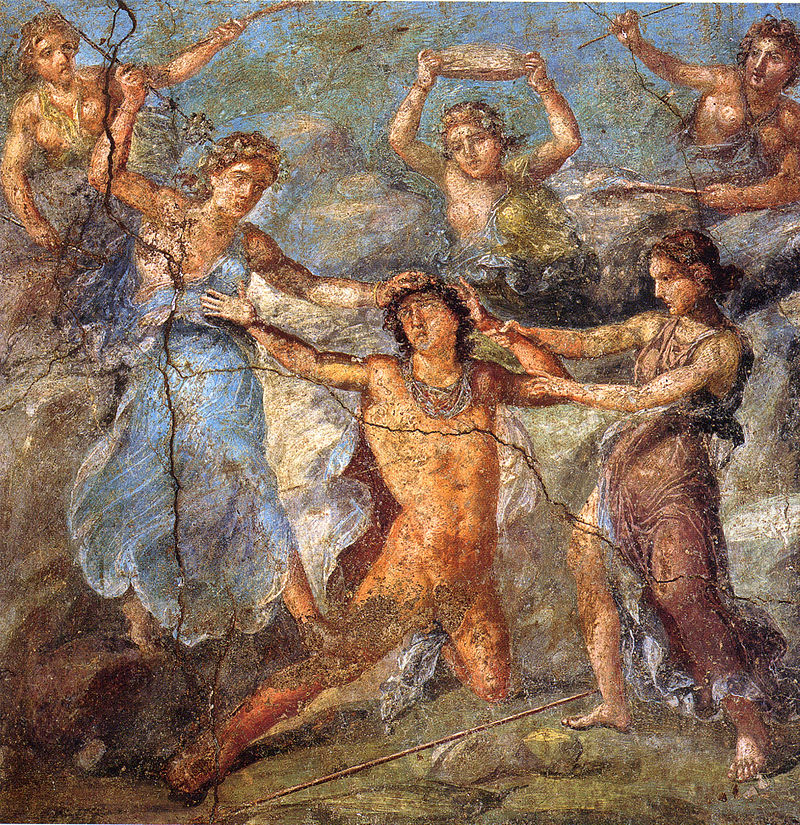
“When Demetrius the Cynic observed an uneducated person reading the most beautiful book in Korinth—and I think it was Euripides’ Bacchae near the spot where the messenger is narrating what happened to Pentheus and what Agave did—he grabbed the book and tore it up, saying, “It is better for me to shred Pentheus just once than for you to do it over and over again.”

Δημήτριος δὲ ὁ Κυνικὸς ἰδὼν ἐν Κορίνθῳ ἀπαίδευτόν τινα βιβλίον κάλλιστον ἀναγιγνώσκοντα —τὰς Βάκχας οἶμαι τοῦ Εὐριπίδου, κατὰ τὸν ἄγγελον δὲ ἦν τὸν διηγούμενον τὰ τοῦ Πενθέως πάθη καὶ τὸ τῆς Ἀγαύης ἔργον—ἁρπάσας διέσπασεν αὐτὸ εἰπών, “Ἄμεινόν ἐστι τῷ Πενθεῖ ἅπαξ σπαραχθῆναι ὑπ᾿ ἐμοῦ ἢ ὑπὸ σοῦ πολλάκις.”

Pompeii - Casa dei Vettii - Pentheus.jpg
Roman Fresco: Pentheus Dies Each Time You Look At It