Latin vs. Philology: Part XIII

Francesco Filelfo, Letter to Lorenzo Medici (Part 13)

“Should we think then that the Romans had a habit in the theater differing from what we find among the Athenians? One time, they were putting on that play of Aeschylus, in which these verses were composed about Amphiaraus: ‘For he wishes to be noble, not merely to seem so, and harvesting the fertile field of his deep mind wisely sows the surest counsels.’ When they heard this, the whole population turned its eyes to Aristides, as being the wisest and most just man among them.

That tragedy was written in Attic Greek, a language which was equally well-known to the Athenians, both educated and not, just as Latin was to the Romans.

The Attic Greek which the poets used in writing is the same which you will find not just among the orators who were held in high esteem, but even among those philosophers who came after Socrates, especially Plato and Aristotle. If their books seem to us inept or composed with a certain harshness, that should be imputed to their translators: for they both wrote elegantly and with perfect clearness.”

Putemusne aliam Romanis fuisse consuetudinem in theatro quam Atheniensibus reperimus? Agebatur ea Aeschyli tragoedia, ubi hi sunt versus in Amphiaraum: “Nam vult vir esse, non videri hic optimus. Qui mentis altae fertilem sulcans segetem Consulta callens germinat gravissima”. Quibus auditis populus universus in unum Aristiden, ut in virum sapientissimum ac iustissimum, oculos coniecit.

At ea tragoedia attice scripta est: quae lingua Atheniensibus omnibus aeque indoctis erat doctisque communis, ut Romanis latina.

Et qua ii poetae in scribendo sunt usi, hoc est attica, eandem invenias non apud oratores modo qui habentur in pretio, sed etiam apud eos omnis philosophos qui fluxerunt a Socrate, praecipueque apud Platonem et Aristotelen, quorum libri si qui apud nostros reperiantur aut inepta aut duriore scripti oratione, id quicquid fuerit vitii dandum est interpretibus: nam ii eleganter dilucideque scripserunt.

The Key to a Long Life: Magic (Or Maybe Climate and Diet)

Lucian, Octogenarians 3-5

“Homer claims that Nestor, obviously, the wisest of the Achaians, lived more than three generations, a man the poet explains to us was best trained in both mind and body. And the prophet Teiresis, well tragedy has him living through six generations. It might be credible that a man dedicated to the gods and who followed a reverent diet might live as long as possible.

It is recorded that whole clans of people are very long-lived thanks to their way of life—for example, the people of the Egyptians called holy-authors, the exegetes of myth in Assyria and Arabia, and the people the Indians call Brahmans, men who pursue philosophy with precision. There are also the people called the magoi, that prophetic clan dedicated to the gods among the Persians, Parthians, Bactrians, Khoasmians, Arians, Sacae, Medes, and among many other barbarian people. The magoi are strong and live many years because they learn to use magic and eat with considerable discipline.

There are, in addition, entire peoples who are long-lived: for example, some people record that the Sêres live up to 300 years. According to some authors, this is because of the weather; others claim that it is their soul or their diet that is responsible for the length of their lives—for, they claim that the whole nation drinks only water. It is reported that the people of Athos live 130 years or that the Chaldeans live over a hundred and that they rely on barley bread as a medicine to keep their vision sharp.”

Νέστορα μὲν οὖν τὸν σοφώτατον τῶν Ἀχαιῶν ἐπὶ τρεῖς παρατεῖναι γενεὰς Ὅμηρος λέγει, ὃν συνίστησιν ἡμῖν γεγυμνασμένον ἄριστα καὶ ψυχῇ καὶ σώματι. καὶ Τειρεσίαν δὲ τὸν μάντιν ἡ τραγῳδία μέχρις ἓξ γενεῶν παρατεῖναι λέγει. πιθανὸν δ᾿ ἂν εἴη ἄνδρα θεοῖς ἀνακείμενον καθαρωτέρᾳ διαίτῃ χρώμενον ἐπὶ μήκιστον βιῶναι. καὶ γένη δὲ ὅλα μακρόβια ἱστορεῖται διὰ τὴν δίαιταν, ὥσπερ Αἰγυπτίων οἱ καλούμενοι ἱερογραμματεῖς, Ἀσσυρίων δὲ καὶ Ἀράβων οἱ ἐξηγηταὶ τῶν μύθων, Ἰνδῶν δὲ οἱ καλούμενοι Βραχμᾶνες, ἄνδρες ἀκριβῶς φιλοσοφίᾳ σχολάζοντες, καὶ οἱ καλούμενοι δὲ μάγοι, γένος τοῦτο μαντικὸν καὶ θεοῖς ἀνακείμενον παρά τε Πέρσαις καὶ Πάρθοις καὶ Βάκτροις καὶ Χωρασμίοις καὶ Ἀρείοις καὶ Σάκαις καὶ Μήδοις καὶ παρὰ πολλοῖς ἄλλοις βαρβάροις, ἐρρωμένοι τέ εἰσι καὶ πολυχρόνιοι διὰ τὸ μαγεύειν διαιτώμενοι καὶ αὐτοὶ ἀκριβέστερον. ἤδη δὲ καὶ ἔθνη ὅλα μακροβιώτατα, ὥσπερ Σῆρας μὲν ἱστοροῦσι μέχρι τριακοσίων ζῆν ἐτῶν, οἱ μὲν τῷ ἀέρι, οἱ δὲ τῇ γῇ τὴν αἰτίαν τοῦ μακροῦ γήρως προστιθέντες, οἱ δὲ καὶ τῇ διαίτῃ· ὑδροποτεῖν γάρ φασι τὸ ἔθνος τοῦτο σύμπαν. καὶ Ἀθῴτας δὲ μέχρι τριάκοντα καὶ ἑκατὸν ἐτῶν βιοῦν ἱστορεῖται, καὶ τοὺς Χαλδαίους ὑπὲρ τὰ ἑκατὸν ἔτη βιοῦν λόγος, τούτους μὲν καὶ κριθίνῳ ἄρτῳ χρωμένους, ὡς ὀξυδορκίας τοῦτο φάρμακον·

Image result for medieval manuscript tiresias
The Witch of Endor, by the Master of Otto van Moerdrecht, 15th century

Forgetting Your Schooling

John Evelyn, Diary (May 18th 1661)

“I heard and saw such exercises at the election of scholars at Westminster school to be sent to the university in Latin, Greek, Hebrew, and Arabic, in themes and extemporary verses, as wonderfully astonished me in such youths, with such readiness and wit, some of them not above twelve, or thirteen years of age. Pity it is, that what they attain here so ripely, they either do not retain, or do not improve more considerably when they come to be men, though many of them do; and no less is to be blamed their odd pronouncing of Latin, so that out of England none were able to understand, or endure it.”

Overblown Nautical Danger

James Howell, Familiar Letters (27):

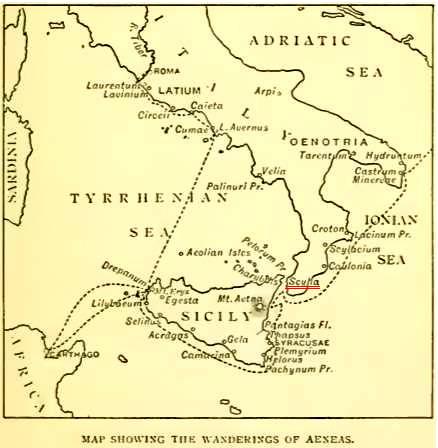
“In this voyage we passed through, at least touched, all those seas, which Horace and other poets sing of so often, as the Ionian, the Aegean, the Icarian, the Tyrrhene, with others, and now we are in the Adrian Sea, in the mouth whereof Venice stands like a gold ring in a bear’s muzzle. We passed also by Aetna, by the infames Scopulos, Acroceraunia, and through Scylla and Charybdis, about which the ancient poets, both Greek and Latin, keep such a coil, but they are nothing so horrid or dangerous, as they make them to be: they are two white keen-pointed rocks, that lie under water diametrically opposed, and like two dragons defying one another, and there are pilots, that in small shallops, are ready to steer all ships that pass. This amongst divers other, may serve for an instance that the old poets used to heighten and hoist up things by their airy fancies above the reality of truth.”

Greek and the Beauty of Holiness

Jane Addams, Twenty Years at Hull House:

“The only moments in which I seem to have approximated in my own experience to a faint realization of the ‘beauty of holiness,’ as I conceived it, was each Sunday morning between the hours of nine and ten, when I went into the exquisitely neat room of the teacher of Greek and read with her from a Greek testament. We did this every Sunday morning for two years. It was not exactly a lesson, for I never prepared for it, and while I was held within reasonable bounds of syntax, I was allowed much more freedom in translation than was permitted the next morning when I read Homer; neither did we discuss doctrines, for although it was with this same teacher that in our junior year we studied Paul’s Epistle to the Hebrews, committing all of it to memory and analyzing and reducing it to doctrines within an inch of our lives, we never allowed an echo of this exercise to appear at these blessed Sunday morning readings. It was as if the disputatious Paul had not yet been, for we always read from the Gospels.”

Jane Addams

The Sickness of the Soul: Cicero on Irrational Hate

Cicero, Tusculan Disputations 5.25-6

“Furthermore, for these things it is believed that their opposites are born from fear, just as in hatred of women as in the Misogunos of Atilius or that against the whole race of humankind which we have heard that Timon who is called the Misanthrope felt or even being inhospitable. All these diseases of the soul develop from a special fear of those things which people fear and then hate. They define a disease of the soul, moreover, as a vehement belief about a thing which is not desired even though it is anticipated powerfully, a belief which is constant and deeply held.”

Quae autem sunt his contraria, ea nasci putantur a metu, ut odium mulierum, quale in Μισογύνῳ Atilii1 est, ut in hominum universum genus, quod accepimus de Timone, qui μισάνθρωπος appellatur, ut inhospitalitas est: quae omnes aegrotationes animi ex quodam metu nascuntur earum rerum, quas fugiunt et oderunt. Definiunt autem animi aegrotationem opinationem vehementem de re non expetenda, tamquam valde expetenda sit, inhaerentem et penitus insitam.

Royal 15 D V   f. 107v
2nd half of the 15th century, Royal MS 15 D V, f. 107v

Insanity and the Rules of Grammar

Sextus Empiricus, Against the Professors 179

“Just as when there is a certain local currency which is accepted in a city, the person who uses this is able to complete whatever his business obligations are in that city without too much bother, but the one who refuses to use it but creates for himself some new strange currency and tries to use that as currency instead is a feel, so too in life the person who does not want to use customary modes of discourse, like the currency, and tries to coin some particular kind of his own, is nearly insane.

And so, if the grammarians agree to give us some skill which they call analogy by which they compel us to speak with one another in accordance with some “Hellenism” then we must show that this skill has no support and that those who want to speak correctly must speak in a non-technical way, using a simple style in life and following the rules which are used by the majority of people.”

ὥσπερ γὰρ ἐν πόλει νομίσματός τινος προχωροῦντος κατὰ τὸ ἐγχώριον ὁ μὲν τούτῳ στοιχῶν δύναται καὶ τὰς ἐν ἐκείνῃ τῇ πόλει διεξαγωγὰς ἀπαραποδίστως ποιεῖσθαι, ὁ δὲ τοῦτο μὲν μὴ παραδεχόμενος ἄλλο δέ τι καινὸν χαράσσων ἑαυτῷ καὶ τούτῳ νομιστεύεσθαι θέλων μάταιος καθέστηκεν, οὕτω κἀν τῷ βίῳ ὁ μὴ βουλόμενος τῇ συνήθως παραδεχθείσῃ, καθάπερ νομίσματι, ὁμιλίᾳ κατακολουθεῖν ἀλλ᾿ ἰδίαν αὑτῷ τέμνειν μανίας ἐγγὺς ἐστίν. διόπερ εἰ οἱ γραμματικοὶ ὑπισχνοῦνται τέχνην τινὰ τὴν καλουμένην ἀναλογίαν παραδώσειν, δι᾿ ἧς κατ᾿ ἐκεῖνον ἡμᾶς τὸν ἑλληνισμὸν ἀναγκάζουσι διαλέγεσθαι, ὑποδεικτέον ὅτι ἀσύστατός ἐστιν αὕτη ἡ τέχνη, δεῖ δὲ τοὺς ὀρθῶς βουλομένους διαλέγεσθαι τῇ ἀτέχνῳ καὶ ἀφελεῖ κατὰ τὸν βίον καὶ τῇ κατὰ τὴν κοινὴν τῶν πολλῶν συνήθειαν παρατηρήσει προσανέχειν.

Image result for medieval manuscript grammarian
British Library Royal 16 G V f.

Latin vs. Philology, Part XII

Francesco Filelfo, Letter to Lorenzo Medici (Part 12)

“We read in Cicero’s first book of Tusculan Disputations something like this: ‘Since bodies fell into the earth and were then covered by the ground [humus], from which we get the phrase ‘to bury’ [humari], they used to think that the rest of the life of the dead was led underground. Great errors have followed this opinion, and poets have increased them. A great crowd in the theater, in which crowd some women are to be found, is moved by hearing such a grand song: I am here and I have scarcely arrived from Acheron by a deep and arduous road, a cave strewn with the greatest suspended crags, where the thick smoke of the dead stands firm. So strong has the error grown, which seems to me to have been dispelled, that even though they knew that bodies were burned, they pretended that things happened in the underworld which could not occur nor be understood without physical bodies. Indeed, spirits living entirely of themselves could not be comprehended by the mind – they were seeking some kind of form and figure.’

And how came it that the women were so moved by those verses, nay even terrified, if they did not understand what was being recited?

Another tragedy was put on at the Ludi Apollinares, and Gnaeus Pompey was there with the rest of the people. In his presence, the tragedian Diphilus, as he came in the performance to the verse with the meaning, ‘He has grown great from your misery,’ did not fear to hold out his hands toward Pompey the Great and to pronounce the verse with great pity, and as he was called back by the people somewhat, again without any hesitation he did not cease to demonstrate that he was in the conduct of things a man of excessive and intolerable power, and he came to this verse employing the same perseverance, ‘There will come a time when you will greatly bewail that very virtue.’ Could Diphilus have been so frequently recalled by the people as though applauding if it had only poorly heard and understood what he was singing?”

Murderer of Gnaeus Pompeius Magnus, 106 BC - 48 BC, Pompey, (Murderer of Gnaeus Pompeius Magnus, 106 BC - 48 BC, Pompey, Pompey the Great, a military and...)

Legimus apud M. Tullium Ciceronem, libro primo Quaestionum Tusculanarum, huiusmodi verba: “In terram enim cadentibus corporibus iisque humo tectis, e quo dictum est humari, sub terra censebant reliquam vitam agi mortuorum. Quam eorum opinionem consecuti magni errores sunt, quos auxerunt poetae. Frequens enim consessus theatri in quo sunt mulierculae movetur audiens tam grande carmen: ‘Adsum atque advenio Acheronte vix via alta atque ardua, spelunca saxis structa asperis pendentibus maximis, ubi rigida constat crassa caligo inferum’. Tantumque invaluit error, qui mihi quidem iam sublatus videtur, ut corpora cremata cum scirent, tamen ea fieri apud inferos fingerent, quae sine corporibus neque fieri possent neque intelligi. Animos enim per se ipsos viventis non poterant mente complecti, formam aliquam figuramque quaerebant”.

Et quo pacto mulierculae versibus illis commotae essent, perinde atque perterritae, ni quae recitabantur intellexissent?

Agebatur alia tragoedia ludis Apollinaribus, intereratque una cum universo populo G. Pompeius Magnus. Quo quidem praesente non est veritus Diphilus tragoedus, cum inter agendum ad illum venisset versum quo sententia haec continebatur: “Miseria vestra magnus est”, directis in Pompeium Magnum manibus, miserabiliter eum pronunciare, ut aliquotiens revocatus a populo, sine ulla rursus cunctatione nimiae illum et intolerabilis potentiae rerum gestu perseveranter demonstrare non destitit, ad eum usque locum eadem usus perseverantia: “Virtutem istam, Veniet tempus cum graviter gemas”. Num Diphilus fuisset totiens a populo tanquam applaudenti revocatus, si minus quae canebantur et audisset et cognovisset?

Send Me Something Good to Read

Marcus Antoninus to Fronto, 161 CE

“…I have read just a little bit from Coelius and from a speech of Cicero, but pretty much in secret and only in bits. One worry trips over another so much that meanwhile my sole respite is to take a book to hand. For our young daughters are staying in town with Matidia—therefore they cannot come to visit me in the evening because of the sharpness of the air….[ …]

Send me something which seems to you to be particularly well-written so I may read it, either your own or someone from Cato, Cicero, Salust, Gracchus, or from some other poet—for I need a rest—and especially that kind of reading which will raise my spirit and shake me from the worries which have fallen over me. Also, if you have any excerpts from Lucretius or Ennius—euphonious lines or those which give a good sense of character.”

…<legi ex Coe>|lio paululum et ex Ciceronis oratione, sed quasi furtim, certe quidem raptim: tantum instat aliud ex alio curarum, quom interim requies una librum in manus sumere. Nam parvolae nostrae nunc apud Matidiam in oppido hospitantur: igitur vespera ad me ventitare non possunt propter aurae rigorem…

Mitte mihi aliquid quod tibi disertissimum videatur, quod legam, vel tuum aut Catonis aut Ciceronis aut Sallustii aut Gracchi aut poetae alicuius, χρῄζω γὰρ ἀναπαύλης, et maxime hoc genus, quae me lectio extollat et diffundat ἐκ τῶν κατειληφυιῶν φροντίδων; etiam si qua Lucretii aut Ennii excerpta habes εὔφωνα <στίχι>α1et sicubi ἤθους ἐμϕάσεις.

Opening of the 1483 manuscript copy of De rerum natura by Girolamo di Matteo de Tauris

Long Term Effects of Anger and Hate

Valerius Maximus, Memorable Words and Deeds 9.3. Praef.

“Anger, also, or hatred may inspire great waves of emotion in human hearts. The onset of the first is faster, but the second is more lasting in the desire to cause harm. Either feeling is full of turbulence and is never violent without some self-torture because it suffers pain when it wants to cause it, anxious from its bitter obsession that it might not win vengeance.

But there are the most clear examples of the particular property of these emotions which the gods themselves have desired be evident in famous individuals through something said or done rather rashly. Think of how great Hamilcar’s hate for the Roman people was! When he was gazing at his four sons when they were boys, he used to say that he was raising lion cubs of that number for the ruin of our empire! Instead, they converted their upbringing to the destruction of their own country, as it turned out.

That is how great the hate was in a boy’s heart, but it was equally fierce in a woman’s too. For the Queen of the Assyrians, Semiramis, when it was announced to her that Babylon was in rebellion as she was having her hair done, went out right away to put down the revolt with part of her hair still undone and she did not put her hair back in order before she regained power over the city. This is why there is a statue of her in Babylon where she is shown reaching for vengeance in wild haste.”

Ira quoque aut odium in pectoribus humanis magnos fluctus excitant, procursu celerior illa, nocendi cupidine hoc pertinacius, uterque consternationis plenus adfectus ac numquam sine tormento sui violentus, quia dolorem, cum inferre vult, patitur, amara sollicitudine ne non contingat ultio anxius. sed proprietatis eorum certissimae sunt imagines, quas <di> ipsi in claris personis aut dicto aliquo aut facto vehementiore conspici voluerunt.

Quam vehemens deinde adversus populum Romanum Hamilcaris odium! quattuor enim puerilis aetatis filios intuens, eiusdem numeri catulos leoninos in perniciem imperii nostri alere se praedicabat. digna nutrimenta quae in exitium patriae suae, ut evenit, <se> converterent!

ext. In puerili pectore tantum vis odii potuit, sed in muliebri quoque aeque multum valuit: namque Samiramis, Assyriorum regina, cum ei circa cultum capitis sui occupatae nuntiatum esset Babylona defecisse, altera parte crinium adhuc soluta protinus ad eam expugnandam cucurrit, nec prius decorem capillorum in ordinem quam urbem in potestatem suam redegit. quocirca statua eius Babylone posita est, illo habitu quo ad ultionem exigendam celeritate praecipiti tetendit.

Dishekel hispano-cartaginés-2.jpg
Carthaginian Coin