I am You and You are Me

The Fragmentary “Gospel According to Eve”

“I stood on a high mountain and I saw one tall person and another short one. And I heard something like a thunder’s sound and I went closer to hear it. He addressed me and said: “I am you and you are me and wherever you are I am there; and I am implanted in all things. So you can gather me from wherever you want. And when you harvest me, you harvest yourself.”

ἔστην ἐπὶ ὄρους ὑψηλοῦ καὶ εἶδον ἄνθρωπον μακρὸν καὶ  ἄλλον κολοβὸν καὶ ἤκουσα ὡσεὶ φωνὴν βροντῆς καὶ ἤγγισα τοῦ ἀκοῦσαι καὶ ἐλάλησε πρός με καὶ εἶπεν· ἐγὼ σὺ καὶ σὺ ἐγώ, καὶ ὅπου ἐὰν ᾗς, ἐγὼ ἐκεῖ εἰμι καὶ ἐν ἅπασίν εἰμι  ἐσπαρμένος· καὶ ὅθεν ἐὰν θέλῃς, συλλέγεις με, ἐμὲ δὲ συλλέγων ἑαυτὸν συλλέγεις

Creation of Eve, Sistine Chapel, Michelangelo

From The Iliad to The Irishman

The Irishman is in many ways Scorsese’s saddest film. Its central tragic conflict centers on people who, while engaged in violent and heady power struggles throughout their lives, prove wholly incapable of managing basic human relationships and living through the utter ordinariness of life.

Scorsese lays the blame for Hoffa’s downfall upon his haughty and insolent behavior in and immediately following his jail sentence. His poorly disguised disdain for his fellow prisoner Tony Pro escalates when they have both finished their sentences, and Hoffa asks Tony for support in his attempt to regain control of the union:

Tony: He said he’ll take care of it, no questions asked. You wouldn’t do that but he will. I meant the other thing.

Hoffa: What other thing?

Tony: You know.

Hoffa: I don’t know.

Tony: Your apology.

Hoffa: My apology? My apology for what?

Tony: For what you said when you were sitting there eating your ice cream like some fucking king.

Hoffa’s inability to strike a conciliatory tone mirrors the attitudes of both Agamemnon and Achilles in their quarrel at the beginning of the Iliad. Unable to make even slight conciliatory gestures to the opposite party, each of these characters brings ruin upon himself when a simple ‘sorry’ would have yielded dividends. As narrator, Frank points to Hoffa’s time in jail as the beginning of everything falling apart.

Tragedy is the result of individual choices, but in some ways the saddest part of life is the inexorable fate which awaits us all, brought on by the ravages of time. I felt genuinely sad watching Joe Pesci’s hands shake as he denied that he was able to eat bread any more due to his advanced age and failing health. He was introduced and maintained his presence throughout the film as one of its most powerful operators, but he was rendered wholly unable to eat the bread and wine which he and Frank had bonded over during their first shared meal. While this may be a mechanism for heightening the pathos and hinting that Russell, unable to eat the bread, is thus separated from the possibility of communion and redemption, it also strongly suggests the spirit underlying Tennyson’s Ulysses when he says

Tho’ much is taken, much abides; and tho’

We are not now that strength which in old days

Moved earth and heaven, that which we are, we are.

In his final scene, Russell says that he is going to church and tells Frank not to laugh. How far degraded from the power broker he once was. Frank, however, has the misfortune to survive his time in jail and struggle to adapt to a dull and ordinary life, spurned by his daughters, and abandoned to the care of the nursing home.

The inability to return to a boring life of plain domesticity is characteristic both of the tragic figures drawn from the Trojan cycle who return home, as well as of the criminal figures whom Scorsese so often profiles. In Goodfellas, Henry Hill tells us, “As far back as I can remember, I always wanted to be a gangster.” By the end of the movie, Henry is no longer a gangster, but a washed up loser and a rat. Similarly, in The Irishman, everyone either ends up dead or, like Frank, forced to reckon with the mundane tragedy of everyday existence once the high times have ended. Menelaus and Nestor seem to do well enough, but Agamemnon is murdered when he returns home, and, if any of the post-Odyssey stories hold any weight, the comforts of home actually had little to offer Odysseus.

At the close of the movie, Frank waxes Nestorian when his nurse asks about a picture of his daughter Peggy posing with Jimmy Hoffa.

Nurse: Who’s that with her?

Frank: You don’t know who that is?

Nurse: No.

Frank: Jimmy Hoffa.

Nurse: Oh, yeah.

Frank: Yeah, right, “Oh, yeah.” You don’t know who he is.

Nurse: Okay, I don’t.

Frank: Yeah. Oh, boy, you don’t know how fast time goes by until you get there.

It is fashionable to make fun of Nestor for being so sentimentally nostalgic for a lost time when men were better and more heroic, but this is the very nostalgia on which heroic poetry itself was based. Similarly, Scorsese’s films often exude a kind of wistful nostalgia, especially for the middle of the 20th century. As the narrator, Frank is well aware of the fact that people now don’t really know much or care much about Jimmy Hoffa. His comments on this score are a metapoetic conceit whereby Scorsese, who surely dove deep into Hoffa history, is able to nudge the audience slyly about his own choice of subject, while simultaneously reflecting upon the transience of time. Hoffa may have been a minor king in his own day, but time and folly robbed him of his power and his fame, as he has now been abandoned to the curio cabinet of history.

To what base uses we may return, Horatio! Why may

not imagination trace the noble dust of Alexander,

till he find it stopping a bung-hole? (Hamlet 5.1)

Many of the other power players and potentates who appear throughout the film appear with captions below them at their first appearance, providing information on their date and manner of death. These have the effect of cinematic footnotes, and suggest that all of these characters are now just that – footnotes in a largely forgotten history. The movie itself is a real triple decker (at three and a half hours), and though it goes by quickly (as Frank himself suggested), one cannot help but feel that the slow burn of the film is meant to thumb the nose at fleeting time itself.

The gangsters who died in the middle of mob activity are the most Achillean of the characters, if for no other reason than in each case, an early death cut one off from the possibility of old age, drab disappointment, and lonely domesticity. Hoffa’s death is like that of Agamemnon: murdered by someone he trusted after withdrawing (or rather, being forced out) from the scene of glory. Frank, however, is something more like Odysseus: his involvement in a particular conflict had become such an integral part of his character and worldview that he was wholly unsuited for domestic personal relationships. As Alyssa Rosenberg wrote, the most important scene in Frank’s narrative arc is not killing Hoffa, but being wholly rejected by his daughter Peggy. In a subsequent scene, another of his daughters reveals to him just how entirely isolated from his family he has been for his entire life.

There is a tendency to think that tragedy occurs in the middle of great and impressive action, but a fair number of tragic figures simply cannot manage the everyday details of basic human life: being happy at home, content with enough, conceding a small piece of your vanity and apologizing to defuse a tense situation. George Eliot managed to spin an entire novel out of the tragedy and the heroism of quiet, unglamorous, everyday life. We should not be too take in by the grand setting and weighty backdrop of so many of our narratives: in the end, they’re all just about living.

“Just about anybody can face a crisis. It’s that everyday living that’s rough.” (Bing Crosby in The Country Girl, 1954)

Image result for the irishman retirement home

Leaden Footwear for the Skinny Gentleman

Aelian, Historia Varia 9.13:

They say that Philetas of Cos was extremely thin. And so, because he could be easily knocked over on any account, they say that he had soles fashioned from lead in his shoes, so that he wouldn’t be knocked over by the winds if they happened to be blowing hard. But if he was thus unable to bear up against the force of the wind, how was he able to lift the burden of his shoes? I am not at all persuaded by this story, but I have simply said what I have learned about this man.

Φιλητᾶν λέγουσι τὸν Κῷον λεπτότατον γενέσθαι τὸ σῶμα. ἐπεὶ τοίνυν ἀνατραπῆναι ῥᾴδιος ἦν ἐκ πάσης προφάσεως, μολίβδου φασὶ πεποιημένα εἶχεν ἐν τοῖς ὑποδήμασι πέλματα, ἵνα μὴ ἀνατρέπηται ὑπὸ τῶν ἀνέμων, εἴ ποτε σκληροὶ κατέπνεον. εἰ δὲ ἦν οὕτως ἀδύνατος, ὥστε μὴ ἀντέχειν πνεύματι, πῶς οἷός τε ἦν τοσοῦτον φορτίον ἐπάγεσθαι; ἐμὲ μὲν οὖν τὸ λεχθὲν οὐ πείθει· ὃ δὲ ἔγνων ὑπὲρ τοῦ ἀνδρός, τοῦτο εἶπον.

Athenaeus, Deipnosophistae 12.552

Philetas, the poet from Cos, was rather thin, and had around his feet balls made of lead to compensate for the lightness of his body and prevent him from being blown over by the wind.

λεπτότερος δ’ ἦν Φιλήτας  ὁ Κῷος ποιητής, ὃς διὰ τὴν τοῦ σώματος ἰσχνότητα σφαίρας ἐκ μολίβου πεποιημένας εἶχε περὶ τὼ πόδε, ὡς μὴ ὑπὸ ἀνέμου ἀνατραπείη.


philetas
American Notes and Queries, Vol. II No. 17


Tis the Season to Drink With Reason: Put a Philosopher in Charge!

In Plutarch’s “Table-Talk” we find three books of ten ‘conversation prompts’ followed by an imagined conversation based on them. Below is just the beginning of the discussion about what kind of a man should be named the symposiarch–a office tasked with setting the conversation, number of drinks, and strength of the wine during the symposium.

Table-Talk: Moralia 620: What kind of man should be in charge of drinking?

My brother-in-law Kratôn and my friend Theôn were at a drinking party when everyone was beginning to get tipsy but then calmed down and they began to speak about the symposiarch, because they were of the opinion that I should take up the duty and not allow an ancient custom to be abandoned by everyone. No, they thought I should renew it and reestablish the position’s authority over drinking parties and their rules. This seemed right to the other guests as well to the extent that they raised a shout and called on me to do the job.

Then I said, “Since this is agreed upon by all of you, I select myself as the symposiarch and I order the rest of you to drink as you would want to for the present, but Kratôn and Theôn—the men who introduced this idea and carried it, they must elaborate in brief outline what kind of many should be selected as symposiarch, and what goal he will make the priority of his office, and how he will apply the customs of the symposium. I entrust to them to choose their order of speaking.

They tried a little to deny what they were asked, but when everyone was insisting that they obey the leader and do what he asked. Kratôn first said that it is necessary that the chief of the guards be the most guardianly among them, as Plato says, and therefore the chief symposiast must be the most sympotic. And he explained “He is this kind of a man should he be neither easily overcome by drunkenness nor disinclined to drink, as Kuros used to say when he wrote to the Lakedaimonians that he was more kingly than his brother and could handle a lot of unmixed wine well. For a drunk is arrogant and rude but someone who doesn’t drink at all is a buzzkill and better suited to watching the children than running a drinking party.”

Image result for ancient greek symposium


Ποῖόν τινα δεῖ τὸν συμποσίαρχον εἶναι;

Κράτων ὁ γαμβρὸς ἡμῶν καὶ Θέων ὁ ἑταῖρος ἔν τινι πότῳ παροινίας ἀρχὴν λαβούσης εἶτα παυσαμένης λόγον ἐποιήσαντο περὶ τῆς συμποσιαρχίας, οἰόμενοί με δεῖν στεφανηφοροῦντα μὴ περιιδεῖν παλαιὸν ἔθος ἐκλειφθὲν παντάπασιν, ἀλλ᾿ ἀνακαλεῖν καὶ καταστῆσαι πάλιν τῆς ἀρχῆς τὴν νενομισμένην ἐπιστασίαν περὶ τὰ συμπόσια καὶ διακόσμησιν. ἐδόκει δὲ ταῦτα καὶ τοῖς ἄλλοις, ὥστε θόρυβον ἐκ πάντων καὶ παράκλησιν γενέσθαι.

“Ἐπεὶ τοίνυν,” ἔφην ἐγώ, “δοκεῖ ταῦτα πᾶσιν, ἐμαυτὸν αἱροῦμαι συμποσίαρχον ὑμῶν καὶ κελεύω τοὺς μὲν ἄλλους ὡς βούλονται πίνειν ἐν τῷ παρόντι, Κράτωνα δὲ καὶ Θέωνα, τοὺς εἰσηγητὰς καὶ νομοθέτας τοῦ δόγματος, ἔν τινι τύπῳ βραχέως διελθεῖν, ὁποῖον ὄντα δεῖ τὸν συμποσίαρχον αἱρεῖσθαι καὶ τί ποιούμενος τέλος ὁ αἱρεθεὶς ἄρξει καὶ πῶς χρήσεται τοῖς κατὰ τὸ συμπόσιον· διελέσθαι δὲ τὸν λόγον ἐφεξῆς αὐτοῖς ἐπιτρέπω.”. Μικρὰ μὲν οὖν ἠκκίσαντο παραιτούμενοι· κελευόντων δὲ πάντων πείθεσθαι τῷ ἄρχοντι καὶ ποιεῖν τὸ προσταττόμενον, ἔφη πρότερος ὁ Κράτων ὅτι δεῖ τὸν μὲν φυλάκων ἄρχοντα φυλακικώτατον, ὥς φησιν ὁ Πλάτων, εἶναι, τὸν δὲ συμποτῶν συμποτικώτατον. “ἔστι δὲ τοιοῦτος ἂν μήτε τῷ μεθύειν εὐάλωτος ᾖ μήτε πρὸς τὸ πίνειν ἀπρόθυμος, ἀλλ᾿ ὡς ὁ Κῦρος ἔλεγεν πρὸς Λακεδαιμονίους γράφων ὅτι τά τ᾿ ἄλλα τοῦ ἀδελφοῦ βασιλικώτερος εἴη καὶ φέροι καλῶς πολὺν ἄκρατον· ὅ τε γὰρ παροινῶν ὑβριστὴς καὶ ἀσχήμων, ὅ τ᾿ αὖ παντάπασι νήφων ἀηδὴς καὶ παιδαγωγεῖν μᾶλλον ἢ συμποσιαρχεῖν ἐπιτήδειος.

Hated By the People, Plotted Against by Friends

Diodorus Siculus, The Library of History 37.22a

“Sertorius, when he noticed that the uprising among the indigenous people was overwhelming, turned nasty to his allies: he accused some and had them killed; others he threw into prison; but he liquidated the wealth of the richest men. Even though he acquired a great deal of gold and silver this way, he did not put any of it into the public treasury for the war effort, instead he hoarded it for himself. He didn’t use it to pay the soldiers either or even share some of it with his commanders.

When it came to capital cases, he did not consult the council or advisers, but had hearings in private and gave judgments after serving as the solitary judge. He did not consider his commanders worthy of invitations to his banquets and demonstrated no beneficence to his friends. As he was generally driven mad by the worsening state of his own rule, he acted tyrannically toward everyone: he was hated by the people and conspired against by his friends.”

Ὅτι ὁ Σερτώριος θεωρῶν ἀκατάσχετον οὖσαν τὴν ὁρμὴν τῶν ἐγχωρίων πικρῶς προσεφέρετο τοῖς συμμάχοις, καὶ τοὺς μὲν καταιτιώμενος ἀπέκτεινεν, τοὺς δὲ εἰς φυλακὴν παρεδίδου, τῶν δὲ εὐπορωτάτων ἐδήμευε τὰς οὐσίας. πολὺν δὲ ἄργυρον καὶ χρυσὸν ἀθροίσας οὐκ εἰς τὸ κοινὸν τοῦ πολέμου ταμιεῖον κατετίθετο, ἀλλ᾿ ἰδίᾳ ἐθησαύριζεν· οὔτε τοῖς στρατιώταις ἐχορήγει τὰς μισθοφορίας, οὔτε τοῖς ἡγεμόσι μετεδίδου τούτων, οὔτε τὰς κεφαλικὰς κρίσεις μετὰ συνεδρίου καὶ συμβούλων ἐποιεῖτο, διακούων δὲ ἰδίᾳ καὶ μόνον κριτὴν ἑαυτὸν ἀποδείξας ἐποιεῖτο τὰς ἀποφάσεις· εἴς τε τὰ σύνδειπνα τοὺς ἡγεμόνας οὐκ ἠξίου παραλαμβάνειν, οὐδὲ φιλανθρωπίας οὐδεμιᾶς μετεδίδου τοῖς φίλοις. καθόλου δὲ διὰ τὴν ἐπὶ τὸ χεῖρον ἐπίδοσιν τῆς περὶ αὐτὸν ἐξουσίας ἀποθηριωθεὶς τυραννικῶς ἅπασιν προσεφέρετο. καὶ ἐμισήθη μὲν ὑπὸ τοῦ πλήθους, ἐπεβουλεύθη δὲ ὑπὸ τῶν φίλων.


Quintus Sertorius by Gerard van der Kuijl

Two Epigrams From Grumpy Grammarians

11.140 Loukillios

“To those chattering song-fighters at the feast,
The greased-up grammarians of Aristarchus,
Men who don’t like to joke or drink but lie there
Playing childish games with Nestor and Priam,
Don’t leave me—in their words—to be “booty and spoil”.
Today I am not eating “Goddess, sing the rage…”

Τούτοις τοῖς παρὰ δεῖπνον ἀοιδομάχοις λογολέσχαις,
τοῖς ἀπ’ ᾿Αριστάρχου γραμματολικριφίσιν,
οἷς οὐ σκῶμμα λέγειν, οὐ πεῖν φίλον, ἀλλ’ ἀνάκεινται
νηπυτιευόμενοι Νέστορι καὶ Πριάμῳ,
μή με βάλῃς κατὰ λέξιν „ἕλωρ καὶ κύρμα γενέσθαι”·
σήμερον οὐ δειπνῶ „μῆνιν ἄειδε, θεά.”

11.378 Palladas

“I can’t endure a wife and grammar,
Impoverishing grammar, and a wife unjust.
The suffering from both is death and fate.
I have now just barely fled from grammar,
But I cannot retreat from this man-fighting wife:
Our contract and Roman custom forbid it!”

Οὐ δύναμαι γαμετῆς καὶ γραμματικῆς ἀνέχεσθαι,
γραμματικῆς ἀπόρου καὶ γαμετῆς ἀδίκου.
ἀμφοτέρων τὰ πάθη θάνατος καὶ μοῖρα τέτυκται.
τὴν οὖν γραμματικὴν νῦν μόλις ἐξέφυγον,
οὐ δύναμαι δ’ ἀλόχου τῆς ἀνδρομάχης ἀναχωρεῖν·
εἴργει γὰρ χάρτης καὶ νόμος Αὐσόνιος.

romanschool

Plato and Friends on Why We Need to Partay

Democritus, fr. 230

“A life without parties is a long journey without inns.”

βίος ἀνεόρταστος μακρὴ ὁδὸς ἀπανδόκευτος.

Plato, Laws 653d

“Great. Now, since many of these kinds of education—which accustom us to correctly manage pleasures and pains—lose their effectiveness during life, the gods took pity on  the human race because it is born to toil and assigned to us as well parties as vacations from our toil. In addition, they have also given us the Muses, Apollo the master of music, and Dionysus as party-guests so that people can straighten out their habits because they are present at the festival with the gods.”

ΑΘ. Καλῶς τοίνυν. τούτων γὰρ δὴ τῶν ὀρθῶς τεθραμμένων ἡδονῶν καὶ λυπῶν παιδειῶν οὐσῶν χαλᾶται τοῖς ἀνθρώποις καὶ διαφθείρεται τὰ πολλὰ ἐν τῷ βίῳ, θεοὶ δὲ οἰκτείραντες τὸ τῶν ἀνθρώπων ἐπίπονον πεφυκὸς γένος ἀναπαύλας τε αὐτοῖς τῶν πόνων ἐτάξαντο τὰς τῶν ἑορτῶν ἀμοιβὰς [τοῖς θεοῖς] καὶ Μούσας Ἀπόλλωνά τε μουσηγέτην καὶ Διόνυσον ξυνεορταστὰς ἔδοσαν, ἵν᾿ ἐπανορθῶνται τάς γε τροφὰς γενόμενοι ἐν ταῖς ἑορταῖς μετὰ θεῶν.

Thucydides, 2.38.1

“Certainly we have furnished our mind with the greatest reliefs from our labors, maintaining games and feasts throughout the year in public and in private living with care and finery, all those things which provide pleasure to expel our grief. Because of the greatness of our city, everything comes to us from the earth and we are lucky enough to harvest all of the goods from our own land with no less familiar pleasure than those we gather from other peoples.”

‘Καὶ μὴν καὶ τῶν πόνων πλείστας ἀναπαύλας τῇ γνώμῃ ἐπορισάμεθα, ἀγῶσι μέν γε καὶ θυσίαις διετησίοις νομίζοντες, ἰδίαις δὲ κατασκευαῖς εὐπρεπέσιν, ὧν καθ’ ἡμέραν ἡ τέρψις τὸ λυπηρὸν ἐκπλήσσει. ἐπεσέρχεται δὲ διὰ μέγεθος τῆς πόλεως ἐκ πάσης γῆς τὰ πάντα, καὶ ξυμβαίνει ἡμῖν μηδὲν οἰκειοτέρᾳ τῇ ἀπολαύσει τὰ αὐτοῦ ἀγαθὰ γιγνόμενα καρποῦσθαι ἢ καὶ τὰ τῶν ἄλλων ἀνθρώπων.

Special thanks to Dr. Liv Yarrow for tweeting these passages


File:Ancient Greek Symposium. Museum of Nicopolis.jpg
Marble Anaglyph of ancient symposium. A couple in love time. Archaeological Museum of Nicopolis, Preveza.

waynes world wayne GIF by chuber channel

Maybe Just Sparknotes for Aristotle?

F.R. Leavis, The ‘Great Books’ and a Liberal Education:

Perhaps the case today is not as utterly hopeless—not quite as hopeless—as the Great Books scheme would make it appear, even though such a scheme, fervently advocated with wide and powerful support, suggests that all notion of what a living tradition is like has been lost. But I will, at any rate for the moment, put aside talk about “tradition” (that tricky concept which needs such delicate and positive handling) and make some points that must have occurred to anyone who, as a “teacher,” is concerned with liberal education at a place where, in a modern community, liberal education is at least a recognized and institutional concern: a university. Thinking of correctives to academic tendencies, one tells oneself that there will be this mark of a student’s having spent his time not without profit: he will leave the university knowing to much better effect that there are renowned works he needn’t take as seriously as convention affirms, and others that, though they will repay the right reader’s study, are not for him. For an instance of the first class, there is Aristotle’s Poetics, a treatise prescribed among the Great Books. There may be some point in a student’s looking up the Poetics when he is going into Tragedy under the guidance of Gilbert Murray, Jane Harrison, Cornford, and the other anthropologizing Hellenists. But the man who leaves the university able to suppose that in the Poetics he has studied an illuminating treatise on the foundations of literary criticism has not used his time to real educational profit—even if he has won high academic distinction. It is characteristic of the academic conventionality of the Great Books ethos to endorse the conventional academic standing of the Poetics.

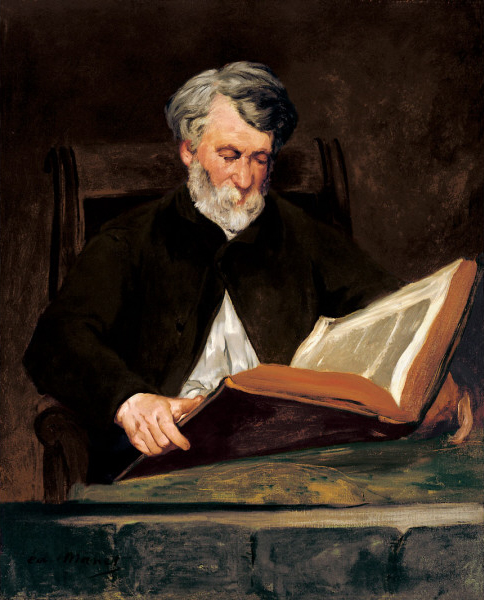
File:Edouard Manet - The Reader.jpg
Edouard Manet, The Reader


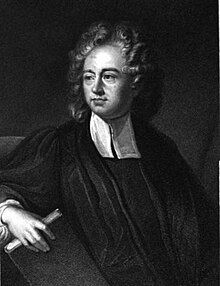
Bentley’s “Indexes”

R.C. Jebb, English Men of Letters: Bentley, (p.7)

The next six years, from the twenty-first to the twenty-seventh of his age (1683-1689), were passed by Bentley in Dr. Stillingfleet’s family. It was during this period, when he enjoyed much leisure and the use of a first-rate library, that Bentley laid the solid foundations of his learning. He enlarged his study of the Greek and Latin classics, writing notes in the margin of his books as he went along. In those days, it will be remembered, such studies were not facilitated by copious dictionaries of classical biography, geography, and antiquities, or by those well-ordered and comprehensive lexicons which exhibit at a glance the results attained by the labors of successive generations. Bentley now began to make for himself lists of the authors whom he found cited by the ancient grammarians; and it may be observed that a series of detractors, from Boyle’s allies to Richard Dawes, constantly twit Bentley with owing all his learning to ‘indexes.’ Thus, in a copy of verses preserved by Granger, Bentley figures as

‘Zoilus, tir’d with turning o’er

Dull indexes, a precious store.'”

A Banquet of Learning; A Dinner No-Show

Cicero Topica V

“But because I have welcomed someone eager for a feast of learning, I shall prepare it so well that there will be some leftovers rather than allow you to leave still hungry for more….”

Sed quoniam avidum hominem ad has discendi epulas recepi, sic accipiam, ut reliquiarum sit potius aliquid quam te hinc patiar non satiatum discedere.

Pliny the Younger to Septimius Clarus (Letter 15)

“Who do you think you are?! You agree to come do dinner…but you don’t come? The judgment is passed: You must pay my cost to a penny, and this is not moderate. All was set out: a lettuce for each, three snails, two eggs, wine with honey chilled with snow—for you should include this too among the highest expense since it dissolves on the plate—and there were olives, beets, pickles, onions and countless other things no less neat.

You would have heard a comedy or a reader or a singer of all of them, given my generosity. But you went where I don’t know, preferring oysters, a sow’s belly, sea-urchins, and Spanish dancers. You will suffer for this, somehow, believe me. You did something bad to one of us, certainly to me, but perhaps to yourself too. How much we played, laughed, and studied! You might eat better food at many homes, but nowhere will you eat so enjoyably, simply, and freely. In sum: try me: and if later you don’t excuse yourself from another’s meal, you can always lie to me again. Goodbye!”

Plinius Septicio Claro Suo S.

Heus tu! promittis ad cenam, nec venis? Dicitur ius: ad assem impendium reddes, nec id modicum. Paratae erant lactucae singulae, cochleae ternae, ova bina, halica cum mulso et nive (nam hanc quoque computabis, immo hanc in primis quae perit in ferculo), olivae betacei cucurbitae bulbi, alia mille non minus lauta. Audisses comoedos vel lectorem vel lyristen vel (quae mea liberalitas) omnes. At tu apud nescio quem ostrea vulvas echinos Gaditanas maluisti. Dabis poenas, non dico quas. Dure fecisti: invidisti, nescio an tibi, certe mihi, sed tamen et tibi. Quantum nos lusissemus risissemus studuissemus! Potes adparatius cenare apud multos, nusquam hilarius simplicius incautius. In summa experire, et nisi postea te aliis potius excusaveris, mihi semper excusa. Vale.

Image result for Ancient Roman library food
Fresco from Pompeii