Can’t Translate Horace!

William King, Political and Literary Anecdotes:

Some ladies of my acquaintance, who have a fine understanding and a turn to  poetry, of which they are good judges, have often complained that they could not discover any great beauties in the Odes of Horace, which are so much admired, although they have read the most celebrated translations (for they are unacquainted with the original) in English, French, and Italian. But the truth is, the Odes of Horace never were nor ever can be translated, so as to display the beauties of the original, which wholly consist in the language and expression.

In the thought or sentiment there is nothing extraordinary or more excellent than what may be found in the poems of his cotemporaries; but the language is inimitable, and I doubt whether the most learned critic of the Augustan age, allowing him the best taste as well as judgment, could have mended a single expression in any of the Odes, or even have changed one word for a better. This is what Petronius calls the curiosa felicitas of Horace; which two words are as happily joined together as simplex munditiis: and these four words are, perhaps, sufficient to characterise the poet, and express the beauty of his style in his own manner.

I could never read the first stanza in the Carmen Seculare without falling into a fit of devotion: and yet when I read it in the best translation, it does not affect me. Thus likewise those beautiful odes Donec gratus eram, &c. and Quem tu, Melpomene, &c. (of which Scaliger said he would rather be the author than King of Arragon) rendered into any modern language, do not seem to deserve an hundredth part of the praise bestowed on the originals.

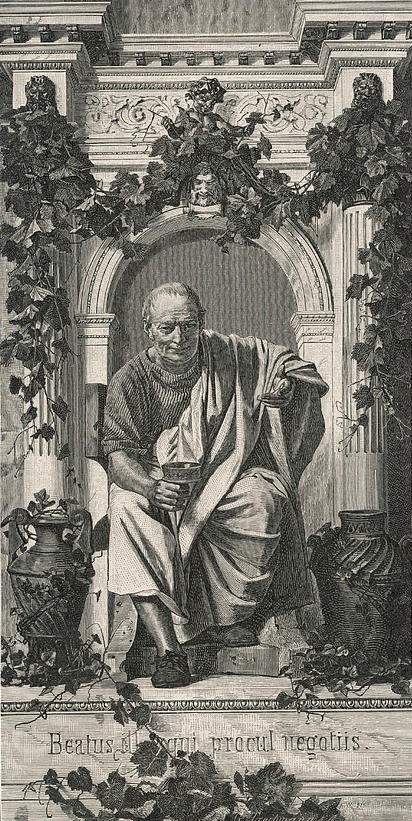
Horace, as imagined by Anton von Werner

A New Year’s Day Tradition — Hangovers: Words for Them and Some Dubious Cures

Crapulous: def. 2: Sick from excessive indulgence in liquor.

kraipale

 Latin: crapula, from Grk. Kraipalê

Apuleius, Apologia 59

“Where in the world is Crassus? Did he slink back to Alexandria because he was tired of his home? Is he cleaning his walls? Or, more likely, is the drunk suffering from a hangover?”

Crassus ipse ubi gentium est? An Alexandriam taedio domus remeavit? An parietes suos detergit? An, quod verius est, ex crapula helluo attemptatur?

From the Suda:

Kraipalê: The pounding that comes from drinking too much wine. We also have the participle “carousing” which is when someone acts poorly because of drinking, or just being drunk. It derives from the word “head” (kara) and “pound” (pallein). Or, it could also come from screwing up (sphallesthai) timely matters (kairiôn)

Κραιπάλη: ὁ ἐκ πολλῆς οἰνώσεως παλμός. καὶ Κραιπαλῶν, ἀντὶ τοῦ ἐκ μέθης ἀτακτοῦντα, μεθύοντα. ἀπὸ τοῦ κάρα πάλλειν τοὺς μεθύοντας. ἢ ἀπὸ τοῦ σφάλλεσθαι τῶν καιρίων.

Kraipalôdês: “Prone to drunkenness”: The ancients knew well the weaknesses of the spirit, weather it was a person who was prone to excessive drinking or a love-seeker who has his brain in his genitals.”

Κραιπαλώδης· τῆς ψυχῆς τὰ ἐλαττώματα κατηπίσταντο, εἴτε κραιπαλώδης τις εἴη καὶ μέθυσος εἴτε φιλήδονος καὶ ἐν τοῖς αἰδοίοις ἔχων τὸν ἐγκέφαλον.

Kraipalaikômos“Hangover-revel”: Metonymically, this a song that happens while drunk

Κραιπαλαίκωμος: μετωνυμικῶς ὁ κατὰ μέθην γινόμενος ὕμνος.

Image result for Ancient Greek puking vase

Hippocrates of Cos, Epidemics 2.30

“If someone has head pain from a hangover, have him drink a cup of unmixed wine. For different head pains, have the patient eat bread warm from unmixed wine.”

Ἢν ἐκ κραιπάλης κεφαλὴν ἀλγέῃ, οἴνου ἀκρήτου κοτύλην πιεῖν· ἢν δὲ ἄλλως κεφαλὴν ἀλγέῃ, ἄρτον ὡς θερμότατον ἐξ οἴνου ἀκρήτου ἐσθίειν.

Plutarch, Table-Talk 3 (652F)

“Those who are suffering bodily from drinking and being hungover can find relief from sleeping immediately, warmed with a cover. On the next day, they can be restored with a bath, a massage, and whatever food does not cause agitation but restores the warmth dispelled and lost from the body by wine.”

 ἰῶνταί γε μὴν τὰς περὶ τὸ σῶμα τῶν μεθυσκομένων καὶ κραιπαλώντων κακώσεις εὐθὺς μὲν ὡς ἔοικε περιστολῇ καὶ κατακλίσει συνθάλποντες, μεθ᾿ ἡμέραν δὲ λουτρῷ καὶ ἀλείμματι καὶ σιτίοις, ὅσα μὴ ταράττοντα τὸν ὄγχον ἅμα πράως ἀνακαλεῖται τὸ θερμὸν ὑπὸ τοῦ οἴνου διεσπασμένον καὶ πεφυγαδευμένον ἐκ τοῦ σώματος.

Aristotle, Problemata 873a-b

“Wine (being of a wet nature) stretches those who are slow and makes them quick, but it tends to restrain those who are quick already. On that account, some who are melancholic by nature become entirely dissipated in drunken stupors (kraipalais). Just as a bath can make those who are all bound up and stiff more readily able to move, so does it check those who are already movable and loose, so too does wine, which is like a bath for your innards, accomplish this same thing.

Why then does cabbage prevent drunkenness (kraipale)? Either because it has a sweet and purgative juice (and for this reason doctors use it to clean out the intestines), even though it is itself of a cold nature. Here is a proof: doctors use it against exceptionally bad cases of diarrhea, after preparing it by cooking it, removing the fiber, and freezing it. It happens in the case of those suffering from the effects of drunkenness (kraipalonton) that the cabbage juice draws the wet elements, which are full of wine and still undigested, down to their stomachs, while the body chills the rest which remains in the upper part of the stomach. Once it has been chilled, the rest of the moist element can be drawn into the bladder. Thus, when each of the wet elements has been separated through the body and chilled, people are likely to be relieved of their drunkenness (akraipaloi). For wine is wet and warm.”

καὶ ὁ οἶνος (ὑγρὸς γάρ ἐστι τὴν φύσιν) τοὺς μὲν βραδυτέρους ἐπιτείνει καὶ θάττους ποιεῖ, τοὺς δὲ θάττους ἐκλύει. διὸ ἔνιοι τῶν μελαγχολικῶν τῇ φύσει ἐν ταῖς κραιπάλαις ἐκλελυμένοι γίνονται πάμπαν. ὥσπερ γὰρ τὸ λουτρὸν τοὺς μὲν συνδεδεμένους τὸ σῶμα καὶ σκληροὺς εὐκινήτους ποιεῖ, τοὺς δὲ εὐκινήτους καὶ ὑγροὺς ἐκλύει, οὕτως ὁ οἶνος, ὥσπερ λούων τὰ ἐντός, ἀπεργάζεται τοῦτο.

Διὰ τί ἡ κράμβη παύει τὴν κραιπάλην; ἢ ὅτι τὸν  μὲν χυλὸν γλυκὺν καὶ ῥυπτικὸν ἔχει (διὸ καὶ κλύζουσιν αὐτῷ τὴν κοιλίαν οἱ ἰατροί), αὐτὴ δ’ ἐστὶ ψυχρά. σημεῖον δέ· πρὸς γὰρ τὰς σφοδρὰς διαρροίας χρῶνται αὐτῇ οἱ ἰατροί, ἕψοντες σφόδρα καὶ ἀποξυλίζοντες καὶ ψύχοντες. συμβαίνει δὴ τῶν κραιπαλώντων τὸν μὲν χυλὸν αὐτῆς εἰς τὴν κοιλίαν κατασπᾶν τὰ ἐν αὐτοῖς ὑγρά, οἰνηρὰ καὶ ἄπεπτα ὄντα, αὐτὴν δὲ ὑπολειπομένην ἐν τῇ ἄνω κοιλίᾳ ψύχειν τὸ σῶμα. ψυχομένου δὲ ὑγρὰ λεπτὰ συμβαίνει εἰς τὴν κύστιν φέρεσθαι. ὥστε κατ’ ἀμφότερα τῶν ὑγρῶν ἐκκρινομένων διὰ τοῦ σώματος, καὶ καταψυχομένου, εἰκότως ἀκραίπαλοι γίνονται· ὁ γὰρ οἶνος ὑγρὸς καὶ θερμός ἐστιν.

Livy, Ab Urbe Condita 11.14          

“This misery and fear have easily relieved me of my hangover.”

miseria haec et metus crapulam facile excusserunt

If you have read this far, you’re probably not that hungover

Plautus, Rudens 585-590

“But why am I standing here, a sweating fool?
Maybe I should leave here for Venus’ temple to sleep off this hangover
I got because I drank more than I intended?
Neptune soaked us with the sea as if we were Greek wines
And he hoped to relieve us with salty-beverages.
Shit. What good are words?”

sed quid ego hic asto infelix uuidus?
quin abeo huc in Veneris fanum, ut edormiscam hanc crapulam,
quam potaui praeter animi quam lubuit sententiam?
quasi uinis Graecis Neptunus nobis suffudit mare,
itaque aluom prodi sperauit nobis salsis poculis;
quid opust uerbis?

Plautus, Stichus 226-230

“I am selling Greek moisturizers
And other ointments, hangover-cures
Little jokes, blandishments
And a sycophant’s confabulations.
I’ve got a rusting strigil, a reddish flask,
And a hollowed out follower to hide your trash in.”

uel unctiones Graecas sudatorias
uendo uel alias malacas, crapularias;
cauillationes, assentatiunculas,
ac periuratiunculas parasiticas;
robiginosam strigilim, ampullam rubidam,
parasitum inanem quo recondas reliquias.

This is a topic we have covered at great length before

Alexis, fr. 287

“Yesterday you drank too much and now you’re hungover.
Take a nap—this will help it. Then let someone give you
Cabbage, boiled.”

ἐχθὲς ὑπέπινες, εἶτα νυνὶ κραιπαλᾷς.
κατανύστασον· παύσῃ γάρ. εἶτά σοι δότω
ῥάφανόν τις ἑφθήν.

Nikokharês

“Tomorrow we will boil acorns instead of cabbage
To treat our hangover.”

εἰσαύριον .. ἀντὶ ῥαφάνων ἑψήσομεν
βαλάνιον, ἵνα νῷν ἐξάγῃ τὴν κραιπάλην.

Alexis, fr. 390

“If only we got hangovers before we drank
Then no one would ever drink more
Than is good for them. But now, because
We do not expect to escape drinking’s penalty,
We too eagerly drink unmixed wines”

εἰ τοῦ μεθύσκεσθαι πρότερον τὸ κραιπαλᾶν
παρεγίνεθ’ ἡμῖν, οὐδ’ ἂν εἷς οἶνόν ποτε
προσίετο πλείω τοῦ μετρίου. νυνὶ δὲ τὴν
τιμωρίαν οὐ προσδοκῶντες τῆς μέθης
ἥξειν προχείρως τοὺς ἀκράτους πίνομεν.

Sopater

“It is sweet for people to drink at dawn
Streams of honey when they are struck by thirst
Driven by the last night’s hangover”

νᾶμα μελισσῶν ἡδὺ μὲν ὄρθρου
καταβαυκαλίσαι τοῖς ὑπὸ πολλῆς
κραιπαλοβόσκου δίψης κατόχοις.

Related image
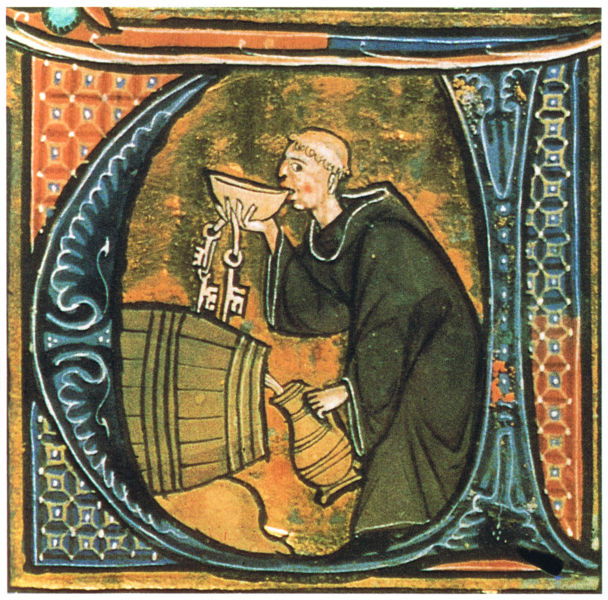
Illumination from a copy of Li livres dou santé by Aldobrandino of Siena. British Library manuscript Sloane 2435, f. 44v.

Greek and Roman Words on Vomiting

Greek Puking

ἐξεμέω, ἐξερεύγομαι: “vomit”

κατεξεράω: “vomit upon”

κοπριήμετος: “shit-puking”

προεξεμέω: “to puke beforehand”

ἐμεσία: “pukey”; i.e., a disposition to vomit

ἔμεσμα: “puke”, i.e. “that which is vomited

ἐμετηρίζω: “to administer an emetic”

ἐμετικός: “something that causes vomiting; an emetic”

ἀκρητόχολος: “bilious vomiting”

δυσεμής: “Difficult to vomit”

εὐέμετος: “Vomiting easily”

χολημετέω: “to vomit bile”

Image result for Ancient greek vomit vase

Herodotus, 1.133

“They can’t puke or piss in front of another”

καί σφι οὐκ ἐμέσαι ἔξεστι, οὐκὶ οὐρῆσαι ἀντίον ἄλλου

Revelations, 3.16

“I’m going to puke you from my mouth.”

μέλλω σε ἐμέσαι ἐκ τοῦ στόματός μου

Cicero, For King Deiotauros 7.22

“When you said you wanted to puke after dinner, they began to lead you into the bathroom”

‘cum’ inquit ‘vomere post cenam te velle dixisses, in balneum te ducere coeperunt

Plautus, Rudens 27

“By the god, I wish too much that you’d puke up your lungs!”

Pulmoneum edepol nimis velim vomitum vomas.

From P. Chantraine, an etymology. Did someone choke on a digamma?

chantraine (2)

The Roman Side of Things

Vomax, “given to vomiting”

Vomer, “ploughshare”; “membrum virile

Vomica: “sore, boil”; “an evil”

Vomicosus: “full of sores or tumors”

Vomicus: “ulcerous”

Vomificus: “that which causes vomiting”

Vomifluus: “flowing with pus”

Vomitio: “a spewing”

Vomitor: “one who vomits”

Vomitorious: “that produces vomiting, emetic”

Vomitus: “a vomiting”

Vomo: “to puke”, cf. Greek ἐμέω, *ϝεμ-

Image result for Ancient Roman Vomiting

Come and Drink! A Blessing Equal to Fire

Panyasis is an epic poet from the 5th century BCE. We have a few long fragments of his Heraklea.

Panyasis fr. 19 [also cited at Athenaeus 37a 12–13; Stob. 3.18.21]

“Friend, come and drink! For this itself is also a virtue,
Whenever someone drinks the most wine at the feast
Using the best techniques, and also encourages his friends.

Yes, the man who is fast at the feast is equal to one in war,
Working through the grievous battles, where few people
Are actually brave and withstand the rushing war.

I think that his glory is equal when someone delights in
Being there at the feast and encourages the rest of the band too.
For a mortal does not seem to me to live or to have the life
Of a mortal who knows pain, if he sits there
Restraining his heart from wine—no, he’s an idiot.

For wine is a blessing for mortals equal to fire,
A fine armor against evil and companion for song.
It has its own share of the feast and of reward,
It has the power of dance, of bewitching love,
And is a shelter from worry and sadness.

So, you need to drink to the dedication at the feast
With a happy spirit—don’t sit with a full stomach,
Sated like a vulture who has forgotten happiness.”

“ξεῖν᾿, ἄγε δὴ καὶ πῖν᾿· ἀρετή νύ τίς ἐστι καὶαὕτη,
ὅς κ᾿ ἀνδρῶν πολὺ πλεῖστον ἐν εἰλαπίνηι μέθυ πίνηι
εὖ καὶ ἐπισταμένως,ἅμα τ᾿ ἄλλον φῶτα κελεύηι.
ἶσον δ᾿ ὅς τ᾿ ἐν δαιτὶ καὶ ἐν πολέμωι θοὸς ἀνήρ,
ὑσμίνας διέπων ταλαπενθέας, ἔνθά τε παῦροι
θαρσαλέοι τελέθουσι μένουσί τε θοῦρον ἄρηα.
τοῦ κεν ἐγὼ θείμην ἶσον κλέος, ὅς τ᾿ ἐνὶ δαιτί
τέρπηται παρεὼν ἅμα τ᾿ ἄλλον λαὸν ἀνώγηι.
οὐ γάρ μοι ζώειν γε δοκεῖ βροτὸς οὐδὲ βιῶναι
ἀνθρώποιο βίον ταλασίφρονος, ὅστις ἀπ᾿ οἴνου
θυμὸν ἐρητύσας μείνηι πότον, ἀλλ᾿ ἐνεόφρων.
οἶνος γὰρ πυρὶ ἶσον ἐπιχθονίοισιν ὄνειαρ,
ἐσθλὸν ἀλεξίκακον, πάσης συνοπηδὸν ἀοιδῆς.
ἐν μὲν γὰρ θαλίης ἐρατὸν μέρος ἀγλαΐης τε,
ἐν δὲ χοροιτυπίης, ἐν δ᾿ ἱμερτῆς φιλότητος,
ἐν δέ τε μενθήρης καὶ δυσφροσύνης ἀλεωρή.
τώ σε χρὴ παρὰ δαιτὶ δεδεγμένον εὔφρονι θυμῶι
πίνειν, μηδὲ βορῆς κεκορημένον ἠΰτε γῦπα
ἧσθαι πλημύροντα, λελασμένον εὐφροσυνάων.”

Add MS 27695 f. 14r K057778
British Library, from a treatise on the Seven Vices, Add MS 27695, f. 14r

2019: A Year in Reading

Small talk follows predictable patterns and rarely veers off of script, and so people often ask me in casual conversation about my hobbies. These same people are generally either perplexed or disappointed when I tell them that a shortage of free time in general precludes the possibility of practicing a wide array of hobbies in earnest, but that I typically spend most of my spare time reading. Indeed, if I could find myself gainfully employed simply reading, analyzing, synthesizing, and commenting, I would achieve a pinnacle of happiness otherwise reserved only for the rich.

Perhaps I cannot account for what I accomplished in 2019 because all of it consisted simply of the perusal of books. And while it strikes me that this may appear insufferably vain as I type this, I have noticed that people tend to develop lists of their top recommendations for the year only at the end of the year (perhaps following the general thread of Solonian advice about not evaluating someone’s fortune in life until they are dead), and I have decided to follow suit by posting a set of recommendations from my bookshelf this year.

Edouard_Manet_-_The_Reader

Released in 2019:

Anthony Grafton – Forgers and Critics: Creativity and Duplicity in Western Scholarship

Technically, this is a re-release, but the updated foreword and afterword constitute 2019 material. I would read anything by Anthony Grafton (and I’m dying to read his new book Inky Fingers in 2020), and anyone who is familiar with his work will know that he treats masses of erudition with a light and inviting style. Sure, it’s a serious and learned book, but it also lends itself to armchair reading with a coffee in hand. Perhaps the best insight to be gleaned from the book is the association between critical scholars and forgers – the tools necessary for each occupation being essentially the same.

Jia Tolentino, Trick Mirror:

Ever since I read her article, The Repressive, Authoritarian Soul of “Thomas the Tank Engine & Friends”, Jia Tolentino has been the only regular contributor to The New Yorker whose work I both look forward to and read through without fail. I recall reading somewhere that Zadie Smith thought that she was the perfect Millennial writer (or something to that effect), in that she managed to have a firm foothold in and understanding of the culture of my generation without it having ruined her. The essays which bookend the collection The I in Internet (about the elision of self and the commodification of identity in digital culture) and I Thee Dread (cynically romantic or romantically cynical reflections on marriage) were alone worth the price of the book.

Trick Mirror: Reflections on Self-Delusion: Tolentino, Jia

Daniel Mendelsohn, Ecstasy and Terror: From the Greeks to Game of Thrones

This was fortunately mercifully short on Game of Thrones material, because I find myself unable to come to terms with my former avid fondness for that show after its full-on commitment to wrapping up at the expense of making sense. Yet it was also less strictly Classical than I had anticipated, too. The book is a collection of Mendelsohn’s essays and criticism, and its range is wide and expansive. I took a particularly sick satisfaction in Mendelsohn’s brutal review of Stephen G. Kellman’s Redemption: The Life of Henry Roth, for no other reason than the fact that Kellman once shot me a surly glare when I was an undergraduate and opened a door for him and his wife, poet and professor Wendy Barker.

Ecstasy and Terror

Guy Gavriel Kay, A Brightness Long Ago:

I tried to pick this up at the bookstore several times without any success because it had never occurred to me to look in the sci-fi/fantasy section. If either of those genres sounds unappealing to you, don’t worry: it is not really either of them. Kay’s work occupies a distinct space adjacent to historical fiction, or what I once heard him describe as a quarter-turn toward fantasy. All of the characters and settings are entirely fictional, yet it is set in what is clearly a fictionalized Renaissance Italy. Much of the narrative follows the central character Gudanio Cerra as he tries to keep himself alive amidst an ongoing conflict between two powerful condottieri, Folco Cino d’Acorsi and Teobaldo Monticola di Remigio. In addition to the wonderfully sad lyrical asides, the plot is constantly engaging throughout, and I was so involved that I read the book in a marathon session one Saturday.

Image result for brightness long ago


Older Books:

Zadie Smith, Feel Free:

This was released in 2018, and so qualifies as an “older book,” but I cannot recommend it enough. Feel Free is another one of those books which I ploughed through in a marathon session because it was so engaging. I had not read Zadie Smith before this collection, but I was so impressed that I went on a binge and read all of her novels afterward.

Image result for zadie smith feel free

Edward Gibbon: The Decline and Fall of the Roman Empire

Don’t @ me on this one. Despite all of Gibbon’s flaws and shortcomings, I feel the need every few years to read through the Decline and Fall in its entirety, and I’m afraid that it might be my desert island book. The edition by J.B. Bury lets you feel the satisfaction of seeing Gibbon’s factual errors as you read. Some of the later volumes are more of a slog than the first few, but I will still probably read straight through this again in a year or two.

Image result for gibbon decline and fall bury

Herman Melville, Moby Dick:

A lovely trip to Nantucket’s whaling museum with Joel and his family this summer kindled the urge to read this bad boy for a third time, which did indeed prove to be the charm. Although I had read it twice before, I found this run through it to be the most engaging, and no book in my library is so thoroughly dog-eared throughout. A work of unparalleled genius, and definitely the most quotable book I’ve ever read.

Image result for melville moby dick penguin

Historia Augusta:

How did I read all of the complaints about the gossipy and tawdry nature of this book for so many years without dipping into it? It may not be the most reliable history, or even a forgery, but it’s one of the most engaging Latin prose works we have outside of the Satyricon.

Image result for historia augusta loeb

Kristine Haugen, Richard Bentley: Poetry and Enlightenment

I wrote up a full review of this book here.


The Book I Wanted to Hate But Couldn’t:

Ezra Pound, ABC of Reading

Ezra Pound may have been a villain, and even in the narrow field of criticism he often goes off the rails pretty hard, but I blasted through this in one sitting because it was so utterly engaging throughout. Pound’s reflections on reading, and especially his thoughts on ancient poetry, are not bad. But his unwavering insistence on Chaucer and Provençal poets reminded me of the anecdote in Menelsohn’s collection about Mary Renault trying to push everyone into reading Thomas Malory.

Image result for abc of reading


The Book I Wanted to Like But Couldn’t:

Herman Melville, Pierre:

One need look no further than the comparison between Pierre and Moby Dick to dispel the cult of genius. An author may be able to produce a work of genius, but they may have just the one. Pierre was criticized as one of the world’s most unreadable books, and I took up the challenge only to toss it aside about halfway through. The plot is unbearably absurd, and I found that I could not get past the stilted and affected archaism of the dialogue. This work alone made me wonder whether it is not for the best that so much of ancient literature has perished, allowing us to shower the surviving poets’ works with accolades while being spared the disappointment of reading some of their abortive attempts at art.

Image result for melville pierre penguin


“F**k Bentley and His Scholarship!”

Joseph Addison, The Spectator (No. 470):

I have been very often disappointed of late Years, when upon examining the new Edition of a Classick Author, I have found above half the Volume taken up with various Readings. When I have expected to meet with a learned Note upon a doubtful Passage in a Latin Poet, I have only been informed, that such or such Ancient Manuscripts for an et write an ac, or of some other notable Discovery of the like Importance. Indeed, when a different Reading gives us a different Sense, or a new Elegance in an Author, the Editor does very well in taking Notice of it; but when he only entertains us with the several ways of spelling the same Word, and gathers together the various Blunders and Mistakes of twenty or thirty different Transcribers, they only take up the Time of the learned Reader, and puzzle the Minds of the Ignorant. I have often fancied with my self how enraged an old Latin Author would be, should he see the several Absurdities in Sense and Grammar, which are imputed to him by some or other of these various Readings. In one he speaks Nonsense; in another, makes use of a Word that was never heard of: And indeed there is scarce a Solecism in Writing which the best Author is not guilty of, if we may be at Liberty to read him in the Words of some Manuscript, which the laborious Editor has thought fit to examine in the Prosecution of his Work.

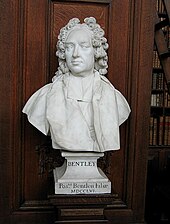
Image result for richard bentley scholar

The Difference between Being Tipsy and Being Drunk, A Critical Holiday Debate

N.B. ὁ νήφων, “sober”

ὁ ἀκροθώραξ, “tipsy”

ὁ μεθύων, “drunk”

ὁ δὲ παντάπασι μεθύων, “shit-faced”

Plutarch, Moralia 653: Table-Talk Book 3, Question 8

Why are those who are actually drunk, less messed up than those we call tipsy?

“Since we have hassled Aristotle,” my father said, “Shouldn’t we also try to say something particular about those who are called “tipsy”. For even though he was the sharpest in these kinds of explorations, he seems to me to have insufficiently examined the cause of this. For he says, I think, that it is possible for a sober man to make a judgment well and in line with reality while one who is pretty drunk is too wrecked to have control over his perception even as one who is only tipsy remains strong in imagination but has compromised logic. For this reason, he makes judgments and does it badly because he following imaginary things. What do you think about these things?” He said.

“When I was reading this,” I said, “the argument was fine regarding the cause. But if you want me to work up some contribution of my own, look first at whether we should credit the difference you have mentioned to the body. For, the tipsy mind alone is messed up, the body is still capable of serving impulses because it is not yet completely permeated. But when the body is overcome and soaked, it betrays its movements and ignores them and it does not move on to actual deeds. Those who have a body that still responds to them are reproved not by their lack of logical thought but by their greater strength.”

Then I said, “And, if we were to consider it from another principle, nothing stops the strength of wine from being variable and from changing alongside its amount. In the same way, fire, if it is measured, gives strength and hardness to pottery; but if it strikes it too much, it melts it and makes it liquid. In another way, spring revives and increases fevers as it begins while the heat of summer settles them and makes them desist.

Therefore, what prevents the mind, once it is moved by wine naturally, when it has been disturbed and excited, from calming and settling down as drinking increases? Hellebore has at its onset of purging pain for the body. But if less then the right amount is given, it disturbs but does not cleanse. And some people are made a little manic when they have a smaller does of sleeping medicine, but sleep once they take more.”

Image result for Ancient Greek drinking vessels

Διὰ τί τῶν ἀκροθωράκων λεγομένων οἱ σφόδρα μεθύοντες ἧττον παρακινητικοί εἰσιν

 “Οὐκοῦν,” εἶπεν ὁ πατήρ, “ἐπεὶ παρακεκινήκαμεν τὸν Ἀριστοτέλη, καὶ περὶ τῶν ἀκροθωράκων τι καλουμένων ἴδιον ἐπιχειρήσομεν εἰπεῖν; οὐ γὰρ ἱκανῶς μοι δοκεῖ, καίπερ ὀξύτατος ὢν ἐν τοῖς τοιούτοις ζητήμασι, διηκριβωκέναι τὴν αἰτίαν. φησὶ γὰρ οἶμαι τοῦ μὲν νήφοντος εὖ καὶ κατὰ τὰ ὄντα κρίνειν τὸν λογισμόν, τοῦ δ᾿ ἄγαν μεθύοντος ἐκλελυμένην κατέχεσθαι τὴν αἴσθησιν, τοῦ δ᾿ ἀκροθώρακος ἔτι μὲν ἰσχύειν τὸ φανταστικὸν ἤδη δὲ τεταράχθαι τὸ λογιστικόν· διὸ καὶ κρίνειν καὶ κακῶς κρίνειν ἐπακολουθοῦντα7 ταῖς φαντασίαις. ἀλλὰ πῶς,” εἶπεν, “ὑμῖν δοκεῖ περὶ τούτων;”

 “Ἐμοὶ μέν,” ἔφην, “ἐπισκοποῦντι κατ᾿ ἐμαυτὸν ἀποχρῶν οὗτος ἦν πρὸς τὴν αἰτίαν ὁ λόγος· εἰ δὲ κελεύεις ἴδιόν τι κινεῖν, ὅρα πρῶτον εἰ τὴν εἰρημένην διαφορὰν ἐπὶ τὸ σῶμα μετοιστέον ἐστίν. τῶν γὰρ ἀκροθωράκων ἡ διάνοια μόνον τετάρακται, τὸ δὲ σῶμα ταῖς ὁρμαῖς ἐξυπηρετεῖν δύναται, μήπω βεβαπτισμένον· ὅταν δὲ κατασεισθῇ καὶ πιεσθῇ, προδίδωσι τὰς ὁρμὰς καὶ παρεῖται, μέχρι γὰρ ἔργων οὐ πρόεισιν· ἐκεῖνοι δὲ τὸ σῶμα συνεξαμαρτάνον ἔχοντες οὐ τῷ μᾶλλον ἀλογιστεῖν ἀλλὰ τῷ μᾶλλον ἰσχύειν ἐλέγχονται. ἀπ᾿ ἄλλης δ᾿,” εἶπον, “ἀρχῆς σκοποῦντι τοῦ οἴνου τὴν δύναμιν οὐδὲν κωλύει ποικίλην εἶναι καὶ τῇ ποσότητι συμμεταβάλλουσαν· ὥσπερ τὸ πῦρ τὸν κέραμον, ἂν μὲν ᾖ μέτριον, συγκρατύνει καὶ πήγνυσιν, ἂν δ᾿ ὑπερβολῇ πλήξῃ, συνέτηξε καὶ ῥεῖν ἐποίησεν· ἀνάπαλιν δ᾿ ἡ ὥρα τοὺς πυρετοὺς ἀρχομένη μὲν ἀνακινεῖ καὶ ἐκκαίει, προϊούσης δὲ μᾶλλον καθίστανται καὶ ἀπολήγουσιν. τί οὖν κωλύει καὶ τὴν διάνοιαν ὑπὸ τοῦ οἴνου φυσικῶς κινουμένην, ὅταν ταραχθῇ καὶ παροξυνθῇ, πάλιν ἀνίεσθαι καὶ καθίστασθαι πλεονάζοντος; ὁ γοῦν ἑλλέβορος ἀρχὴν τοῦ καθαίρειν ἔχει τὸ ταράττειν τὸν ὄγκον· ἂν οὖν ἐλάτων τοῦ μετρίου δοθῇ, ταράττει μὲν οὐδὲν δὲ καθαίρει. καὶ τῶν ὑπνωτικῶν ἔνιοι λαβόντες ἐνδοτέρω τοῦ μετρίου θορυβωδέστερον διατίθενται, πλέον δὲ λαβόντες καθεύδουσιν.

A Poem to a Jug of Wine

Greek Anthology 5.135 Anonymous

“Curved, well-turned, with a single ear on a long neck,
Slim-throated, speaking through lips close-kept,
You happy server of Bacchus, the Muses, and Aphrodite,
Our party’s delightful mistress, laughing sweetly.
Why are you drunk when I’m sober, but when I’m trashed,
You’re sober? You break the rules of the drinker’s pact.”

εἰς λάγυνον ὁμοίως οἰνηράν

Στρογγύλη, εὐτόρνευτε, μονούατε, μακροτράχηλε,
ὑψαύχην, στεινῷ φθεγγομένη στόματι,
Βάκχου καὶ Μουσέων ἱλαρὴ λάτρι καὶ Κυθερείης,
ἡδύγελως, τερπνὴ συμβολικῶν ταμίη,
5τίφθ᾽, ὁπόταν νήφω, μεθύεις σύ μοι, ἢν δὲ μεθυσθῶ,
ἐκνήφεις; ἀδικεῖς συμποτικὴν φιλίην.


File:East Greek wine jug in Wild Goat style.jpg
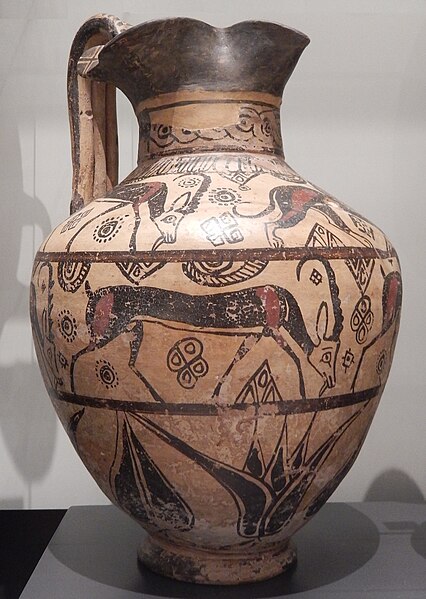
Wild Goat Style Greek Wine Jug, 6th Century BCE

Tom Paxton, “Bottle of Wine” (1968)

Bottle of wine, fruit of the vine
When you gonna let me get sober
Leave me along, let me go home
I wann’a go back and start over

Get Bent! (ley)

Dynamic and divisive figures like Bentley are apt to leave in their wake a mass of biographical recollection neatly divided into hagiography and hate. Though the average person may be surprised to learn that some of the most bitterly partisan divisions outside of politics can be found within the realm of scholarship, there is a long tradition of scholarly work serving as the basis of personal animus, and there are few scholars whose work ignited as much passionate controversy in the broader literary world as did Richard Bentley. While famous among Classical scholars, Bentley is largely forgotten to the broader intellectual world, except to those who recall him as the butt of the joke in Pope’s Dunciad and Swift’s Battle of the Books. Our man Bentley, a graduate of St. John’s College, Oxford, spent much of the 1680s in the household of Edward Stillingfleet before rolling on to the scholarly scene in the 1690s with two works which display what Gibbon would call “a stock of erudition which would have puzzled a doctor.”

Bentley’s Letter to Mill and Dissertations on the Epistles of Phalaris represent apparently epochal moments in the history of English Classical scholarship, and they were certainly important. Yet there is a temptation to regard Bentley’s work as wholly sui generis, if for no other reason than because his towering genius and the fame accruing to him for his polemical savagery place him so high in the pantheon of English scholarship that his predecessors have been largely effaced from memory. (Indeed, so strong is this tendency, that C.O. Brink’s volume on English Classical scholarship was entitled Bentley, Porson, Housman – not because there were no other English Classical scholars, but rather because these three are so manifestly preeminent as to force the rest into the unenviable position of ambient historical noise.) One may compare Bentley’s reputation with that of his contemporary, Isaac Newton. While Newton, too, was working within a tradition of scientific work laid out before him, the singularity of his individual achievement led to the elision of his predecessors.

Image result for phalaris bronze bull

In her study Richard Bentley: Poetry and Enlightenment, Kristine Louise Haugen positions Bentley within a well-established set of scholarly work in 17th century England. A chapter on Restoration Cambridge lays the ground for understanding Bentley’s development by analyzing the work of Thomas Stanley, John Pearson, and Thomas Gale. Thomas Stanley’s History of Philosophy, a scholarly engagement with Diogenes Laertius’ Lives of the Philosophers, sought to augment and correct the biographies which Laertius wrote. Much of the value of this work is attributed to Stanley’s extensive compilation of chronological and biographical material supplemental to Diogenes. Stanley also produced the “first large-scale edition of a classical poet ever published” with his Aeschylus. Stanley was not endowed with the same keen power for textual criticism which characterized Bentley, and Haugen notes that it is his preoccupation with and commentary upon the more strictly literary qualities of the text which set him apart from Bentley, whose own process inclined toward commenting only upon textual problems in need of remedy.

While Thomas Stanley played the literary gentleman, John Pearson was the polemical scholar whose edition of the philosopher Hierocles dove into the weeds of commentary upon pseudo-Pythagorean verses with a hint of polemical fire. Haugen paints Pearson as something like a Mr. Casaubon (not the scholar, but the character from Middlemarch), who “evidently never hit on the reigning ideas that could have turned his masses of notes into a meaningful narrative or a decisive editorial procedure.” [p.30] Pearson was also the author of the Vindication of the letters of Ignatius of Antioch, which set a precedent for Bentley in its striving to find a way to blend scholarship and polemic.

The methods of Thomas Gale approach more closely to the methodical rigor of Bentley. Gale composed a series of comments and notes upon the Library of Apollodorus. Haugen devotes some pages to explicating Gale’s methods by analyzing his approach to the corruptions at Apollodorus 1.9.26. Gale’s approach drew on comparative analysis between passages in Apollodorus, Apollonius of Rhodes, Hesychius, Strabo, and a scholiast in order to restore Apollodorus’ text. She notes the parallel between the method of comparative reading in Gale’s work and that in Bentley’s Horace of 1711, and demonstrates that Bentley’s approach, though it was both criticized and ridiculed, simply represented the employment of an established scholarly procedure. Bentley’s fault was in offending the sensibilities of 18th century literary gentlemen, for whom the received text was regarded as canon passed down to them from their school days, and reinforced through a series of endless and ostentatious quotations in periodical publication.

Bentley’s major works can be separated into roughly three periods: the polemical works on obscure books (Letter to Mill and Dissertation on the Epistles of Phalaris) in the 1690’s; the scholarly analysis of canonical literature (Horace, New Testament, Terence, and the discovery of digamma in the works of Homer); and his preoccupation with the figure of the meddling editor (in his edition of Manilius, and in the much maligned edition of Paradise Lost).

Bentley’s intellectual development was fostered by privileged patronage. For all that has been made about “Bentley’s idexes”, it is worth noting that one cannot embark profitably on the project of indexing unless one has access to books. In 1682, Bentley became the tutor to James Stillingfleet, the younger son of Edward Stillingfleet. This position involved more than simply educating young James. Bentley was a member of the household, and served as an all-purpose toady for Stillingfleet: amanuensis, ghost writer, and procurer of books. In this last function, it serves to note that Bentley was charged with purchasing volumes for Stillingfleet’s library, a task which on some occasions led to the acquisition of rare or useful classical books. Moreover, Bentley’s position also meant that he had access to the whole of Stillingfleet’s library, and it would be hard to overstate the effect which access to such a treasury would have had on Bentley’s later stock of erudition. Later, owing in part to the boost in life granted him by Stillingfleet’s patronage, Bentley was made Keeper of the Royal Library in 1693. We are perhaps liable now to underestimate the value of access to information in light of the relative cheapness of both books and information today. While Bentley was undoubtedly endowed with a remarkably acute intellect, one must concede that he would not have become the colossus of English classical scholarship were it not for the patronage of the rich and powerful.

Bentley rolled on to the public scholarly scene in 1691 with his Letter to Mill, which is ostensibly intended as commentary upon Mill’s edition of the Byzantine historian John Malalas. The story goes that Bentley wanted to see the edition before its publication, and Mill agreed to let him take a look in exchange for penning a commentary essay on it. The text of Malalas as it stood offered fertile ground for Bentley’s intellect, and what was supposed to be simply some “remarks” morphed into a full blown essay, focused in large part on Greek drama. Haugen judges that the “Letter to Mill was largely the work of an autodidact, with all of the freedoms and some of the deficiencies that this implies.” [p.82] Yet it is perhaps this very sense of freedom which makes Bentley’s scholarship so novel and invigorating.

The Battle of the Books (or The Quarrel Between Ancients and Moderns) has been forgotten by the public at large, perhaps because the debate has been so firmly settled on the side of modernity, but it was still capable of exciting tempers at the end of the 17th century, and served as the foundation for Bentley’s famous Dissertation Upon the Epistles of Phalaris. The epistles were literary forgeries (or playful literary exercises) written in the persona of Phalaris, the tyrant of Akragas, who cooked his enemies inside a brazen bull which he kept at his court. Many astute readers had long seen that the Epistles were not actually written by the tyrant himself, but that did not prevent Sir William Temple from blundering his way into citing them as proof for his claim that the achievements of antiquity far surpassed those of the modern world. Temple described the Epistles as having “more Race, more Spirit, more Force of Wit and Genius than any others I have ever seen, either antient or modern.” William Wotton, one of Bentley’s friends, penned a response to Temple arguing for the superiority of modern achievement, and published it along with the 78 page first edition of the Dissertation, composed by Bentley, which showed that the Epistles were neither original, nor as ancient as Temple had supposed. This led to a counterattack by Francis Atterbury, which in turn drove Bentley to publish a substantially enlarged, 540 page edition of the Dissertation. Unsurprisingly, the second edition of the Dissertation was far more diffuse and digressive than the first, and it does more than simply prove its point about the Epistles – it provides commentary upon and solutions to a wide range of textual and chronographic problems which are tangentially related to issues suggested by the Epistles themselves.

The expanded Dissertation makes for a tough read, but Haugen does an admirable job of summarizing the key arguments and conclusions, with helpful notes on Bentley’s method of scholarly exposition. It is unlikely that readers today would take sufficient interest in the controversy to read through Bentley’s work, and even a Classical scholar can be forgiven for feeling somewhat stupefied when confronted with the sheer mass of intimidating erudition which Bentley drew up for the book. Yet, the expanded edition was written and published with remarkable haste (released only one year after Atterbury’s attack), suggesting that this was all material which Bentley had ready in the chamber. Nevertheless, the literary world found the massive display of erudition distasteful, and served as the basis for the ridicule which Jonathan Swift and Alexander Pope leveled against Bentley in The Battle of the Books and The Dunciad. Moreover, the 1699 publication of the Dissertation marks the end of Bentley’s publication in the realm of the rarefied and minutely obscure, as he ceased after this point to write on forgotten Greek works, and turned his attention to something a bit more canonical.

Bentley’s edition of Horace, published in 1712, exposed him to broader public notice than his earlier works on account of Horace’s widespread popularity as a gentleman’s reading material. The broad popularity and canonical status of that poet meant that many of Bentley’s contemporaries had learned Horace by heart in their school days. Thus, when Bentley produced a triple decker quarto edition of Horace consisting of over 700 pages (more than 400 of which were devoted to his notes and commentary), it is not surprising that Horace’s drawing room readers were disconcerted and even offended by Bentley’s apparent audacity. Much of the impetus for the publication came from Bentley’s position at the head of Cambridge University Press, which was busily engaged in the project of releasing ‘editions’ – that is, collected volumes of a single author’s work – in an effort to catch up with the rival Oxford University Press.

Haugen spends some time examining Bentley’s method in emending the text of Horace, which marked a departure from the scholarly practice of the Letter and the Dissertation. In each of those works, Bentley was offering broader scholarly commentary on particular issues, not trying to correct the problems of a single text. And so, where his previous publications relied heavily on the marshalling of masses of erudition, Bentley relied far more on his own innate critical and aesthetic genius to produce the conjectures in his edition of Horace. This could on occasion produce the right result, but Bentley’s enthusiasm for emendation (Haugen notes that nearly every page of Bentley’s text features some deviation from the received text) suggests that he got a bit carried away by his own critical spirit. As such, Bentley’s edition of Horace, while surely a work of critical genius in its own right, is nevertheless remembered today more for the interest of its methods and arguments than for its textual soundness.

Image result for bentley horace

Bentley’s later work is still suffused with his characteristic critical acuity and deep erudition, but there is something less immediately gratifying about the metrical arcana of his edition of Terence, or the marked emphasis on manuscript work (as contrasted to conjectural enthusiasm in his Horace) found in his New Testament work. Haugen’s chapter Vi Commodavi provides a clear and readable account of Bentley’s metrical expertise and its bearing on his edition of Terence, but it is hard to imagine a reader waking up early to peruse these pages unless they are already captivated by the subject of meter. While the documentation and explication of Bentley’s later work are all just as thoroughgoing as in earlier chapters, it is Bentley’s work itself which lacks the potent polemical interest of the early publications. Perhaps it is because we see here Bentley the scholar, while the Letter and the Dissertation presented us with Bentley the bumptious genius.

Of course, no study of Bentley would be complete without a treatment of his most embarrassing mistake: his edition of Milton’s Paradise Lost. The publication of critical editions of English poets was not wholly unexampled, as is clear from Pope’s own critical edition of Shakespeare, but Bentley’s mangling of Milton was ill-conceived, and may be more responsible for the posthumous ridicule which he received than were the attacks leveled against him by Pope and Swift. Bentley thought that he detected errors in Milton’s epic which had been introduced intentionally by a shadowy and malicious figure known as the Editor. Having postulated the existence of this literary villain, Bentley could then frame his conjectural emendation of Paradise Lost as a restoration of Milton’s true intent, and not an attempt to correct Milton’s diction by the standards of Bentleian genius.

In her discussion of this colossal wreck of abortive scholarship, Haugen draws the connection between Bentley’s anti-editorial crusade in his Milton to a similar impulse characterizing his edition of the Roman astronomical poet, Manilius. Although he had begun his edition of Manilius decades before its publication in 1739, it is characterized more by the preoccupation with evil interpolators found in his Milton (1732) than it is with the broad scholarship which had interested him in the 1680s-1690s. “At the same time, it is quite possible that the Paradise Lost edition stood behind the final form of Bentley’s Manilius, centrally devoted as both editions were to exposing the work of spectacularly active interpolators.” [p.212]

Haugen’s study of Bentley is engaging, and one could easily spend months reading it to mine a full history of 17th and 18th century English scholarship from its pages. Certainly, it does not have the same racy and gossipy quality which can be found in Jebb’s or Monk’s biographies. The latter two gentlemen were certainly concerned with Bentley’s scholarship, and addressed the intellectual side of his life, but they were also far more keen to include extensive details about Bentley’s disastrously pugnacious life as the head of Trinity College. In eschewing the more gossipy (though exceptionally entertaining) bits of Bentley’s life and focusing in such detail both on the development of Bentley’s intellect and the history of his intellectual milieu stemming from the work of scholars in Restoration era Cambridge, Haugen has provided an essential volume for anyone who has anything more than a passing interest in the history of scholarship.


Plato Hated Games, Drinking, and Sleep

Diogenes Laertius, Lives of the Philosophers (3.39-40)

Plato is said to have upbraided someone whom he saw playing dice. When the man responded that they were playing for small stakes, Plato responded, “but the habit itself is not a small thing.” When he was asked whether there would one day be reminiscences of him as there were for some of his predecessors, he responded, “First it is necessary to make a name, and then many reminiscences will follow.” Once, when Xenocrates came in, he asked him to punish his slave, saying that he himself wasn’t able to do it because he was angry. But he said to one of them, “You would have been punished if I hadn’t been in a range.”

Once, when he sat upon a horse, he immediately got back off, saying that he needed to take care not to be taken by horse pride. His advice to drunkards was to look at themselves in the mirror, for they would then abandon that unwholesome pursuit. He said that drinking to drunkenness was unbecoming for everyone except at festivals held in honor of the god who gives the wine. He also disapproved of excessive sleep. He says in The Laws, “A sleeping person is good for nothing.” Plato also contended that the truth was more pleasing than other sounds. Others say that he claimed that speaking the truth was the finest thing. In The Laws, he writes thus on the subject of truth: “Stranger, the truth is a fine and stable thing. Yet it is not easy to persuade people of it.”

He wanted to leave some remembrance of himself behind either in his friends or in his books. According to some people, he was often in the habit of withdrawing into seclusion.

Painting of two ancient philosophers
“Come on man, you’re so lame.”

῾Ο γοῦν Πλάτων λέγεται θεασάμενός τινα κυβεύοντα αἰτιάσασθαι· τοῦ δὲ εἰπόντος ὡς ἐπὶ μικροῖς, “ἀλλὰ τό γ’ ἔθος,” εἰπεῖν, “οὐ μικρόν.” ἐρωτηθεὶς εἰ ἀπομνημονεύματα αὐτοῦ ἔσται ὥσπερ τῶν πρότερον ἀπεκρίνατο· “ὀνόματος δεῖ τυχεῖν πρῶτον, εἶτα πολλὰ ἔσται.” εἰσελθόντος ποτὲ Ξενοκράτους εἶπε μαστιγῶσαι τὸν παῖδα· αὐτὸν γὰρ μὴ δύνασθαι διὰ τὸ ὠργίσθαι. ἀλλὰ καὶ πρός τινα τῶν παίδων, “μεμαστίγωσο ἄν,” εἶπεν, “εἰ μὴ ὠργιζόμην.” ἐφ’ ἵππου καθίσας εὐθέως κατέβη φήσας εὐλαβεῖσθαι μὴ ἱπποτυφίᾳ ληφθῇ. τοῖς μεθύουσι συνεβούλευε κατοπτρίζεσθαι· ἀποστήσεσθαι γὰρ τῆς τοιαύτης ἀσχημοσύνης. πίνειν δ’ εἰς μέθην οὐδαμοῦ πρέπον ἔλεγε πλὴν ἐν ταῖς ἑορταῖς τοῦ καὶ τὸν οἶνον δόντος θεοῦ. καὶ τὸ πολλὰ δὲ καθεύδειν ἀπήρεσκεν αὐτῷ. ἐν γοῦν τοῖς Νόμοις (vii. 808b) φησί· “κοιμώμενος οὐδεὶς οὐδενὸς ἄξιος·” εἶναί τε ἥδιον τῶν ἀκουσμάτων τὴν ἀλήθειαν· οἱ δὲ τὸ λέγειν τἀληθῆ. καὶ περὶ ἀληθείας δ’ ἐν τοῖς Νόμοις φησὶν οὕτως (ii. 663e)· “καλὸν μὲν ἡ ἀλήθεια, ὦ ξένε, καὶ μόνιμον· ἔοικε μὴν οὐ ῥᾴδιον <εἶναι> πείθειν.” ἀλλὰ καὶ ἠξίου μνημόσυνον αὑτοῦ λείπεσθαι ἢ ἐν φίλοις ἢ ἐν βιβλίοις· ἐξετόπιζε καὶ αὐτὸς τὰ πλεῖστα, καθά τινες φασί.