Lingering Winter Cold? Here’s A Spice for the Elimination of Hardened Phlegm

Galen, De Simplicium Medicament. 12.55

Maker is an inner tree bark which comes from India, in regarding its flavor it is sufficiently sour, fragrant as well with a brief bitterness. But it also has a sweet smell similar to most Indian fragrances. The substance itself seems to come from a mixture, which is mostly of cold earth but a little bit of something warm and course—this is why it dries rather powerfully and gets sour and because of that mixes with the intestinal and dysenteric forces: it is in the third order of medicines which dry but it produces no different effect along the range of heat and cold*”

     [α′. Περὶ μάκερος.] Μάκερ φλοιός ἐστιν ἐκ τῆς ᾿Ινδικῆς κομιζόμενος, ἐν μὲν τῷ γεύεσθαι στρυφνὸς ἱκανῶς, μετά τινος βραχείας δριμύτητος ἀρωματιζούσης· ὀσμώμενος δὲ ἡδὺς ὁμοίως τοῖς πλείστοις ἀρώμασι τοῖς ᾿Ινδικοῖς. ἔοικεν οὖν καὶ αὐτὸς ἐκ μικτῆς οὐσίας συνεστάναι, τῆς πλείστης μὲν γεώδους ψυχρᾶς, ὀλίγης δέ τινος θερμῆς τε καὶ λεπτομεροῦς, ὅθεν ἰσχυρῶς ξηραίνει καὶ στύφει καὶ διὰ τοῦτο κοιλιακαῖς τε καὶ δυσεντερικαῖς μίγνυται δυνάμεσιν, ἐν μὲν τῇ τρίτῃ τάξει τῶν ξηραινόντων ὑπάρχων, ἐν δὲ τῇ κατὰ θερμότητα καὶ ψυχρότητα διαφορᾷ μηδέτερον ἐπιφανῶς ἐργαζόμενος.

*special thanks to the first comment for useful suggestions and addressing some of my very deep ignorance about Galen


Paulus 7.3.12

“Maker is a bark which comes from India, when dry in the third stage, it is in the middle of hot and cold. It is harsh and coarse. For this reason it works into the intestinal and dysenteric [regions].”

     Μάκερ φλοιόϲ ἐϲτιν ἐκ τῆϲ ᾿Ινδικῆϲ κομιζόμενοϲ, ξηραίνων μὲν κατὰ τὴν τρίτην τάξιν, μέϲοϲ δὲ κατὰ θερμότητα καὶ ψῦξιν· ἔϲτι δὲ καὶ ϲτυπτικὸϲ λεπτομερήϲ· ὅθεν κοιλιακοῖϲ τε καὶ δυϲεντερικοῖϲ ἁρμόττει.

Is this Walidda? Cf. Pliny the Elder Nat. Hist. 12.18

Aetius, 8.47.42

“These are [medicines] for the wealthy: “costos, amômos, and the one called maker, which is sufficiently hot with a sour taste. The Kurêneaic juice is useful for the elimination of hardened phlegm or something of the substances which accompany this, just like lasar is.”

ἔϲτι δὲ καὶ ταῦτα ἐπὶ μὲν τῶν πλουϲίων κόϲτοϲ καὶ ἄμωμον καὶ τὸ καλούμενον μάκερ, θερμαῖνον ἱκανῶϲ μετὰ  ϲτύψεωϲ καὶ ὁ Κυρηναικὸϲ δὲ ὀπὸϲ εἰϲ διαφόρηϲιν τῶν ϲκληρυνομένων φλεγμονῶν ἐπιτήδειοϲ ἤ τι τῶν μετ’ αὐτῶν, οἷόν ἐϲτι τὸ λάϲαρ.

Flower-01-KayEss-1.jpeg

A Man Who Does Only What Must Not Be Done

Pliny, Letters 4.2

To My Dear Friend Attius Clementius,

“Regulus lost his son, a single suffering he did not merit but I don’t know if he considered it a bad thing. The boy was clever but of an unreliable nature who still could have turned out well if he had not favored his father. Regulus freed the boy so he could stand as a heir for his mother’s estate. Once the boy was freed—as they commonly say thanks to the man’s habits—his father enchanted him with the foul pretense of indulgence which is not customary to parents.

It is hard to believe, but look at Regulus. He mourns the lost boy madly. The child used to keep many ponies for riding and driving, and he used to have big and small dogs along with nightingales, parrots, and blackbirds. Regulus slaughtered them all around his son’s pyre.This is not grief but a show of grief. There’s also a sudden, miraculous celebrity to him. Everyone despises, hates him, but they rush, even crowd him as if they approve of him, admire him. In short, if I may put it in a phrase, they rival Regulus in Regulus’ way.

He stays in his gardens across the Tiber, a place where he has covered a huge area with giant porticos and covered the bank with his own statues, because he is as luxuriant in his greed as he is effulgent in his severe infamy. In this way, he troubles the whole city at an unhealthy time of year and he thinks it is some solace that he annoys people.

He claims that he wants to take another wife, which is as perverse as everything else he does. You will hear soon enough of the marriage of the mourning old man. Too early for one, too late for the other. How can I predict this, you ask? It is not anything the man said—nothing is more likely a lie than that—but because it is a sure thing that Regulus will do whatever should not be done. Good bye.”

C. Plinius Attio Clementi Suo S.
1Regulus filium amisit, hoc uno malo indignus, quod nescio an malum putet. Erat puer acris ingenii sed ambigui, qui tamen posset recta sectari, si patrem non referret. Hunc Regulus emancipavit, ut heres matris exsisteret; mancipatum (ita vulgo ex moribus hominis loquebantur) foeda et insolita parentibus indulgentiae simulatione captabat. Incredibile, sed Regulum cogita. Amissum tamen luget insane. Habebat puer mannulos multos et iunctos et solutos, habebat canes maiores minoresque, habebat luscinias psittacos merulas: omnes Regulus circa rogum trucidavit. Nec dolor erat ille, sed ostentatio doloris. Convenitur ad eum mira celebritate. Cuncti detestantur oderunt, et quasi probent quasi diligant, cursant frequentant, utque breviter quod sentio enuntiem, in Regulo demerendo Regulum imitantur. Tenet se trans Tiberim in hortis, in quibus latissimum solum porticibus immensis, ripam statuis suis occupavit, ut est in summa avaritia sumptuosus, in summa infamia gloriosus. Vexat ergo civitatem insaluberrimo tempore et, quod vexat, solacium putat. Dicit se velle ducere uxorem, hoc quoque sicut alia perverse. Audies brevi nuptias lugentis nuptias senis; quorum alterum immaturum alterum serum est. Unde hoc augurer quaeris? Non quia adfirmat ipse, quo mendacius nihil est, sed quia certum est Regulum esse facturum, quidquid fieri non oportet. Vale.

Relief from a Roman Sarcophagus

Biting Tax-men, Barking Philosophers

Philostratus, Lives of the Sophists 511

“Even though he was held in high esteem in Smyrna, which would shout almost anything in praise of him as a wondrous man and orator, Nicetes did not mix much with the people. He gave the following explanation of his fear to the crowd: “I fear the people more when they praise me than when they mock me.” Once when a tax-man acted offensively to him in the court room and said “Stop barking at me”, Nicetes responded cleverly, “By Zeus, I will when you stop biting me!”

Μεγάλων δ’ ἀξιούμενος τῆς Σμύρνης τί οὐκ ἐπ’ αὐτῷ βοώσης ὡς ἐπ’ ἀνδρὶ θαυμασίῳ καὶ ῥήτορι, οὐκ ἐθάμιζεν ἐς τὸν δῆμον, ἀλλ’ αἰτίαν παρὰ τοῖς πολλοῖς ἔχων φόβου „φοβοῦμαι” ἔφη „δῆμον ἐπαίροντα μᾶλλον ἢ λοιδορούμενον.” τελώνου δὲ θρασυναμένου ποτὲ πρὸς αὐτὸν ἐν δικαστηρίῳ καὶ εἰπόντος „παῦσαι ὑλακτῶν με” μάλα ἀστείως ὁ Νικήτης „νὴ Δία”, εἶπεν „ἢν καὶ σὺ παύσῃ δάκνων με.”

Nicetes lived around the time of the Emperor Nero.

Image result for Medieval manuscript tax collector
House Books of the Nuremberg Twelve Brothers Foundation, Nuremberg 1388. Occupation and dress.

Sicilian Days

D.H. Lawrence, Memoir of Maurice Magnus:

In early April I went with my wife to Syracuse for a few days: lovely, lovely days, with the purple anemones blowing in the Sicilian fields, and Adonis-blood red on the little ledges, and the corn rising strong and green in the magical, malarial places, and Etna flowing now to the northward, still with her crown of snow. The lovely, lovely journey from Catania to Syracuse, in spring, winding round the blueness of that sea, where the tall pink asphodel was dying, and the yellow asphodel like a lily showing her silk. Lovely, lovely Sicily, the dawn-place, Europe’s dawn, with Odysseus pushing his ship out of the shadows into the blue. Whatever had died for me, Sicily had then not died: dawn-lovely Sicily, and the Ionian sea.

We came back, and the world was lovely: our own house above the almond trees, and the sea in the cove below. Calabria glimmering like a changing opal away to the left, across the blue, bright straits, and all the great blueness of the lovely dawn-sea in front, where the sun rose with a splendour like trumpets every morning, and me rejoicing like a madness in this dawn, day-dawn, life-dawn, the dawn which is Greece, which is me.

Well, into this lyricism suddenly crept the serpent.

File:Jacob Philipp Hackert 006.jpg

Solon Says: Sue Bad Leaders of State

Aeschines, Against Timarchus

“[Solon] believed that someone who managed their own personal affairs badly would manage matters of state similarly. It did not seem likely to the lawgiver that that the same person who was a scoundrel in private would be a useful citizen in public. He also did not think right that a person should come to speak in public before being prepared for it, not just for words but in life.

And he also thought that advice from a good and noble person, however poorly and simply it was framed, is beneficial to those who hear it, while the words of a person who has no shame, who has made a mockery of his own body and who has shamefully managed his inheritance—well, these words he believed would never help the people who heard them, not even if they were delivered well.

This is why he keeps these kinds of people from the platform, why he forbids them from addressing the public. If someone speaks, then, not merely against these precepts but also for the sack of bribery and criminality, and if the state can no longer endure such a person, he adds “Let any citizens who desires it, and who is able, sue him…”

τὸν γὰρ τὴν ἰδίαν οἰκίαν κακῶς οἰκήσαντα, καὶ τὰ κοινὰ τῆς πόλεως παραπλησίως ἡγήσατο διαθήσειν, καὶ οὐκ ἐδόκει οἷόν τ᾿ εἶναι τῷ νομοθέτῃ τὸν αὐτὸν ἄνθρωπον ἰδίᾳ μὲν εἶναι πονηρόν, δημοσίᾳ δὲ χρηστόν, οὐδ᾿ ᾤετο δεῖν τὸν ῥήτορα ἥκειν ἐπὶ τὸ βῆμα τῶν λόγων ἐπιμεληθέντα πρότερον, ἀλλ᾿ οὐ τοῦ βίου. καὶ παρὰ μὲν ἀνδρὸς καλοῦ καὶ ἀγαθοῦ, κἂν πάνυ κακῶς καὶ ἁπλῶς ῥηθῇ, χρήσιμα τὰ λεγόμενα ἡγήσατο εἶναι τοῖς ἀκούουσι· παρὰ δὲ ἀνθρώπου βδελυροῦ, καὶ καταγελάστως μὲν κεχρημένου τῷ ἑαυτοῦ σώματι, αἰσχρῶς δὲ τὴν πατρῴαν οὐσίαν κατεδηδοκότος, οὐδ᾿ ἂν εὖ πάνυ λεχθῇ συνοίσειν ἡγήσατο τοῖς ἀκούουσι. τούτους οὖν ἐξείργει ἀπὸ τοῦ βήματος, τούτους ἀπαγορεύει μὴ δημηγορεῖν. ἐὰν δέ τις παρὰ ταῦτα μὴ μόνον λέγῃ, ἀλλὰ καὶ συκοφαντῇ καὶ ἀσελγαίνῃ, καὶ μηκέτι τὸν τοιοῦτον ἄνθρωπον δύνηται φέρειν ἡ πόλις, “Δοκιμασίαν μέν,” φησίν, “ἐπαγγειλάτω Ἀθηναίων ὁ βουλόμενος, οἷς ἔξεστιν,” ὑμᾶς δ᾿ ἤδη κελεύει

File:Portrait bust of Sophocles on Herm (known as Solon)-Uffizi.jpg
Bust Labeled “Solon” but Probably actually Sophocles. Sue Me.

Diagnose Thyself: Why Be a Doctor?

Galen, On the Opinions of Hippocrates and Plato 9.5.5-7

“For some  practice the art of medicine for the money, and some do it for exemption from taxes. But some pursue medicine because of their love for humanity [philanthrôpia] just as there are those who do it for the fame or honor medicine attracts. Therefore doctors are named by the fact that they are all craftsmen of health in common, inasmuch as they perform their craft for different reasons—one will be called a lover of humanity [philanthrôpos], another titled a lover of honor [philotimos], while another is considered a lover of reputation [philodoxos] and another is a money maker.

The aim of a doctor for doctors, then, is not fame or wealth, as Mênodotos the Empiricist wrote. This is a goal for Mênodotus but not for Diocles or Hippocrates or Empedocles nor even a few others of those ancient doctors—however so many ministered to people because of their love of humanity [philanthrôpia]. Left bare among these kind of examples—and they are abundant in Hippocrates and Plato—the particular features and the common traits of each craft may be examined.”

τινὲς μὲν γὰρ ἕνεκα χρηματισμοῦ τὴν ἰατρικὴν τέχνην ἐργάζονται, τινὲς δὲ διὰ τὴν ἐκ τῶν νόμων αὐτοῖς διδομένην ἀλειτουργησίαν, ἔνιοι δὲ διὰ φιλανθρωπίαν, ὥσπερ ἄλλοι διὰ τὴν ἐπὶ ταύτῃ δόξαν ἢ τιμήν.  ὀνομασθήσονται τοιγαροῦν ᾗ μὲν ὑγιείας εἰσὶ δημιουργοὶ κοινῇ πάντες ἰατροί, καθόσον δὲ τὰς πράξεις ἐπὶ διαφόροις ποιοῦνται σκοποῖς, ὁ μέν τις φιλάνθρωπος, ὁ δὲ φιλότιμος, ὁ δὲ φιλόδοξος, ὁ δὲ χρηματιστής.

οὔκουν τοῖς ἰατροῖς τὸ τέλος ἐστὶν ὡς ἰατροῖς ἔνδοξον ἢ πόριμον, ὡς Μηνόδοτος <ὁ> ἐμπειρικὸς ἔγραψεν, ἀλλὰ Μηνοδότῳ μὲν τοῦτο, Διοκλεῖ δ’ οὐ τοῦτο, καθάπερ οὐδὲ ῾Ιπποκράτει καὶ ᾿Εμπεδοκλεῖ οὐδ’ ἄλλοις τῶν παλαιῶν οὐκ ὀλίγοις ὅσοι διὰ φιλανθρωπίαν ἐθεράπευον τοὺς ἀνθρώπους. γυμνασάμενος οὖν ἐν τοῖς τοιούτοις τις παραδείγμασι, πάμπολλα δ’ ἐστὶ παρ’ ῾Ιπποκράτει καὶ Πλάτωνι, ῥᾳδίως κατόψεται τά τε ἴδια τέχνης ἑκάστης καὶ τὰ κοινά.


Image result for medieval manuscript medical doctor
From medievalists.net

Marcus Valerius Martial is Dead!

Pliny, Letters 3.21

To My Dear Friend Cornelius Priscus.

I am hearing that Valerius Martial is dead and I am taking it badly. He was a brilliant, subtle, and sharp man who had both wit and acuity in his writing without sacrificing sincerity. I sponsored his trip home when he left Rome—I gave him this because of our friendship and for the verses he composed about me.

It was the ancient custom to reward poets with honors or money when they had composed encomia for individuals or cities. This has become less common in our times along with other remarkable and exceptional gestures. For once we stop doing things worthy of praise, we also consider it inappropriate to be praised.

You wonder which were the verses which earned my thanks? I would send you the book if I had not memorized them. If you like these lines, you can look up others in his books. The poet is speaking to to muse, and he orders her to you’re your house on the Esquiline and approach with respect:

“Muse, don’t knock on his door at he wrong time, and drunk
He dedicates every day to bitter Minerva
Hard at work for the ears of the Hundred Men
On compositions which later generations
Will compare to Arpi’s pages too.
You will arrive more safely when the lights are on.
This is your time when Lyaeus goes wild
When the rose reigns and hair is wet.
Then may even the uptight Catos read me.”

Did I dismiss someone who wrote these things about me in a friendly manner rightly and do I now mourn the lost as one of my best friends.? He surely gave me as much as possible and would have given more if he could have. Still, is there anything greater to be given to a person than praise which is famous and eternal? But will what he wrote be eternal? Perhaps not, but he still wrote it as if it would be. Farewell.

C. Plinius Cornelio Prisco Suo S.

1Audio Valerium Martialem decessisse et moleste fero. Erat homo ingeniosus acutus acer, et qui plurimum in scribendo et salis haberet et fellis, nec candoris minus. Prosecutus eram viatico secedentem; dederam hoc amicitiae, dederam etiam versiculis quos de me composuit. Fuit moris antiqui, eos qui vel singulorum laudes vel urbium scripserant, aut honoribus aut pecunia ornare; nostris vero temporibus ut alia speciosa et egregia, ita hoc in primis exolevit. Nam postquam desîmus facere laudanda, laudari quoque ineptum putamus. Quaeris, qui sint versiculi quibus gratiam rettuli? Remitterem te ad ipsum volumen, nisi quosdam tenerem; tu, si placuerint hi, ceteros in libro requires. Adloquitur Musam, mandat ut domum meam Esquilis quaerat, adeat reverenter:

Sed ne tempore non tuo disertam
pulses ebria ianuam, videto.
Totos dat tetricae dies Minervae,
dum centum studet auribus virorum
hoc, quod saecula posterique possint
Arpinis quoque comparare chartis.
Seras tutior ibis ad lucernas:
haec hora est tua, cum furit Lyaeus,
cum regnat rosa, cum madent capilli.
Tunc me vel rigidi legant Catones.

Meritone eum qui haec de me scripsit et tunc dimisi amicissime et nunc ut amicissimum defunctum esse doleo? Dedit enim mihi quantum maximum potuit, daturus amplius si potuisset. Tametsi quid homini potest dari maius, quam gloria et laus et aeternitas? At non erunt aeterna quae scripsit: non erunt fortasse, ille tamen scripsit tamquam essent futura. Vale.

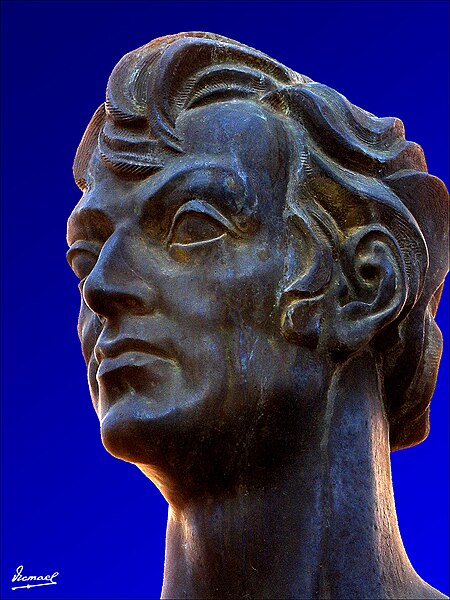
File:Martialis - Bust - by Melero01.jpg
Martialis by Juan Cruz Melero

Cold-Hearted Love

Propertius, Elegies 2.8.7–12

“Everything transforms; loves certainly change too—
You are overcome by those you’ve conquered, this is fortune’s wheel in love.
Great leaders, great tyrants often fall,
Thebes has fallen and high Troy now merely was.
How many gifts I gave; How many songs I made!
But that cold-hearted girl never even said “I love you”.

omnia vertuntur: certe vertuntur amores:
vinceris a victis, haec in amore rotast.
magni saepe duces, magni cecidere tyranni,
et Thebae steterunt altaque Troia fuit.
munera quanta dedi vel qualia carmina feci!
illa tamen numquam ferrea dixit ‘amo.’

Cupid and Psyche, Pompeii

Shaking Us Down

Latin Trag. Adesp. = Ps-Cicero, Ad. Herenn. 2.26

“I cannot think…or figure out any reason why
I might impeach him. What would let you accuse someone
Who is honorable, if he is good? And if he is not honorable
What would let you impeach him if he thinks it is but a
Minor thing?”

Nequeo . . .
qua causa accusem hunc exputando evolvere.
Nam si veretur quid eum accuses qui est probus?
Sin inverecundum animi ingenium possidet,
quid autem accuses qui id parvi auditum
aestimet? . . .

Aristophanes fr 228 = Suda sigma 290

“Shaking-down”: Blackmail, this is a metaphor from people who shake trees: “I was shaking them down, I demanded money, I was threatening them and was extorting them again and again.”

σεῖσαι· τὸ συκοφαντῆσαι, ἀπὸ τῶν τὰ ἀκρόδρυα σειόντων· ἔσειον, ᾔτουν χρήματ᾿, ἠπείλουν, ἐσυκοφάντουν πάλιν

Mycenaean Goat and Tree Vase at the British Museum

Slander and Salt

Demetrius, On Style 301.

“Because he wanted to slander his enemies, [Hipponax] broke his meter and made it stumble instead of straight: he made the rhythm irregular. This is appropriate for surprise and attack. For rhythmic and smooth composition is more appropriate for praise than for blame. This is all I have to say about hiatus.”

 (301) καὶ ὥσπερ τὸ διαλελυμένον σχῆμα δεινότητα ποιεῖ, ὡς προλέλεκται, οὕτω ποιήσει ἡ διαλελυμένη ὅλως σύνθεσις. σημεῖον δὲ καὶ τὸ Ἱππώνακτος· λοιδορῆσαι γὰρ βουλόμενος τοὺς ἐχθροὺς ἔθραυσεν τὸ μέτρον, καὶ ἐποίησεν χωλὸν ἀντὶ εὐθέος καὶ ἄρυθμον, τουτέστι δεινότητι πρέπον καὶ λοιδορίᾳ· τὸ γὰρ ἔρρυθμον καὶ εὐήκοον ἐγκωμίοις ἂν πρέποι μᾶλλον ἢ ψόγοις. τοσαῦτα καὶ περὶ συγκρούσεως.

Com. Adesp. 842 Σ Aristophanes Birds 281

“Philokles was a tragic poet, the son of Philopeithes and Aeschylus’ sister. Whoever calls him “Salt’s son” does it because he was bitter and salt is bitter.”

ἔστι δὲ ὁ Φιλοκλῆς τραγῳδίας ποιητὴς, καὶ Φιλοπείθους υἱὸς ἐξ Αἰσχύλου ἀδελφῆς. ὅσοι δὲ Ἁλμίωνος αὐτόν φασιν, ἐπιθετικῶς λέγουσι διὰ τὸ πικρὸν εἶναι. ἅλμη γὰρ ἡ πικρία.

File:Hipponax of Ephesus.jpg