Hippocratic Precept: Don’t Blackmail Sick People for Money

Corpus Hippocratica, Precepts 4.10

“The way you address a patient requires some kind of a theory too. For, if you begin talking about payment, then something else occurs in every situation. You will leave the sick person with the kind of impression that you will abandon him and leave if there is no agreement and that you don’t care and you will not apply any relief in the present.

Therefore, you should not make an issue about payment. For we believe that this kind of thought is harmful when someone is sick, and even more so if the sickness is intense. For the swiftness of a sickness which does not provide ample time for changing your mind urges the one who practices medicine well not to seek profit but to think more of reputation. It is, therefore, better to rebuke patients who have been saved rather than to blackmail those who are facing ruin.”

παραινέσιος δ’ ἂν καὶ τοῦτ’ ἐπιδεηθείη τῆς θεωρίης· εἰ γὰρ ἄρξαιο περὶ μισθαρίων· ξυμβάλλει γάρ τι καὶ τῷ ξύμπαντι· τῷ μὲν ἀλγέοντι τοιαύτην διανόησιν ἐμποιήσεις τὴν, ὅτι [οὐκ] ἀπολιπὼν αὐτὸν πορεύσῃ μὴ ξυνθέμενος, καὶ ὅτι ἀμελήσεις, καὶ οὐχ ὑποθήσῃ τινὰ τῷ παρεόντι. ἐπιμελεῖσθαι οὖν οὐ δεῖ περὶ στάσιος μισθοῦ· ἄχρηστον γὰρ ἡγεύμεθα ἐνθύμησιν ὀχλεομένου τὴν τοιαύτην, πουλὺ δὲ μᾶλλον, ἢν ὀξὺ νόσημά τι· νούσου γὰρ ταχυτὴς καιρὸν μὴ διδοῦσα ἐς ἀναστροφὴν οὐκ ἐποτρύνει τὸν καλῶς ἰητρεύοντα ζητεῖν τὸ λυσιτελές, ἔχεσθαι δὲ δόξης μᾶλλον· κρέσσον οὖν σωζομένοισιν ὀνειδίζειν ἢ ὀλεθρίως ἔχοντας προμύσσειν.

Image result for medieval manuscript doctor seeing patient

Falling Down in the World: From Senator to Professor

Pliny, Letters 4.11

To My Friend Cornelius Minicianus,

Have you heard that Valerius Licinianus is teaching in Sicily. I don’t think you have since the news just reached me. This Praetorian Senator was only just recently considered among the most eloquent advocated in Rome. But he has fallen to this: an exile from the Senate and a professor of rhetoric.

Thus, in his first lecture, he spoke these words soulfully: “What games do you play with us, Fortune? You make professors from senators, and senators from professors!” So much bile, so much bitterness—perhaps he got himself made a teacher just to say it! When he entered wearing a Greek cloak—since those who have been exiled are forbidden the toga—he composed himself, looked himself over, and announced, “I will lecture in Latin!”

C. Plinius Cornelio Miniciano Suo S.
Audistine Valerium Licinianum in Sicilia profiteri? nondum te puto audisse: est enim recens nuntius. Praetorius hic modo inter eloquentissimos causarum actores habebatur; nunc eo decidit, ut exsul de senatore, rhetor de oratore fieret. Itaque ipse in praefatione dixit dolenter et graviter: “Quos tibi, Fortuna, ludos facis? facis enim ex senatoribus professores, ex professoribus senatores.” Cui sententiae tantum bilis, tantum amaritudinis inest, ut mihi videatur ideo professus ut hoc diceret. Idem cum Graeco pallio amictus intrasset (carent enim togae iure, quibus aqua et igni interdictum est), postquam se composuit circumspexitque habitum suum, “Latine” inquit “declamaturus sum.”

Roman portraiture fresco of a young man with a papyrus scroll, from Herculaneum, 1st century AD

Phalaris, a Phucking Phine Phriend

Sir William Temple, Of Ancient and Modern Learning:

It may perhaps be further affirmed, in favour of the ancients, that the oldest books we have are still in their kind the best. The two most ancient that I know of in prose, among those we call profane authors, are Aesop’s Fables and Phalaris’s Epistles, both living near the same time, which was that of Cyrus and Pythagoras. As the first has been agreed by all ages since for the greatest master in his kind, and all others of that sort have been but imitations of his original; so I think the Epistles of Phalaris to have more grace, more spirit, more force of wit and genius, than any others I have ever seen, either ancient or modern. I know several learned men (or that usually pass for such, under the name of critics) have not esteemed them genuine; and Politian, with some others, have attributed them to Lucian: but I think he must have little skill in painting, that cannot find out this to be an original; such diversity of passions, upon such variety of actions and passages of life and government, such freedom of thought, such boldness of expression, such bounty to his friends, such scorn of his enemies, such honour of learned men, such esteem of good, such knowledge of life, such contempt of death, with such fierceness of nature and cruelty of revenge, could never be presented but by him that possessed them; and I esteem Lucian to have been no more capable of writing, than of acting what Phalaris did. In all one writ, you find the scholar or the sophist; and in all the other, the tyrant and the commander.

Image result for phalaris bronze bull

Merely Playing with Words: Learning For School Not for Life

Seneca, Moral Epistle 106.11-12

“In sum, whatever we do we are compelled to do by either malice or virtue. What controls a body, is corporeal; what gives force to a body is a body. The good of a body is corporeal good; the good of a person is the good of a body—therefore it too is corporeal.

Since I have pursued this custom as you wanted, now I myself will say what I expect you to say: “we have been playing games!” Our wit is worn thing by silly things—they make us learned but not good. To be wise is a more obvious matter—it is much better to use literature to improve the mind, but we waste the rest of our time in empty matters, and so we waste philosophy itself. Just as in all things, so too we labor excessively over literature. We learn not for life but for school. Goodbye.”

Denique quidquid facimus, aut malitiae aut virtutis gerimus imperio. Quod imperat corpori, corpus est, quod vim corpori adfert, corpus. Bonum corporis corporalest,bonum hominis et corporis bonum est; itaque corporale est.

11Quoniam, ut voluisti, morem gessi tibi, nunc ipse dicam mihi, quod dicturum esse te video: latrunculis ludimus. In supervacuis subtilitas teritur; non faciunt bonos ista, sed doctos. Apertior res est sapere, immo simpliciter satius est ad mentem bonam uti litteris, sed nos ut cetera in supervacuum diffundimus, ita philosophiam ipsam. Quemadmodum omnium rerum, sic litterarum quoque intemperantia laboramus; non vitae sed scholae discimus. Vale.

Dirc van Delf | Table of Christian Faith | Illuminated by the Masters of Dirc van Delft | ca. 1405–10 | The Morgan Library & Museum
Dirc van Delf, Table of Christian Faith, in Dutch, The Netherlands, Utrecht(?), ca. 1405-10, Illuminated by the Masters of Dirc van Delft (from pinterest)


Half Baconed Arguments

Roger Bacon, Opus Maius 1.1:

There are four exceptionally great obstacles to comprehending the truth, which impede every wise person, and hardly allow anyone to arrive at a true claim to wisdom. These are, to wit, the example of fragile and unworthy authority, the endurance of custom, the perception of the inexperienced mob, and the hiding of one’s own ignorance with a display of apparent wisdom. Every person is involved with these, every station of life is occupied by them. Indeed, anyone you meet in their particular arts of life and study and every kind of business uses the three worst arguments for the same conclusion: ‘this was exemplified by our ancestors,’ ‘this is customary,’ and ‘this has become common, and therefore should be maintained.’

Image result for roger bacon

Quatuor vero sunt maxima comprehendendae veritatis offendicula, quae omnem quemcumque sapientem impediunt, et vix aliquem permittunt ad verum titulum sapientiae pervenire: videlicet fragilis et indignae auctoritatis exemplum, consuetudinis diuturnitas, vulgi sensus imperiti, et propriae ignorantiae occultatio cum ostentatione sapientiae apparentis. His omnis homo involvitur, omnis status occupatur. Nam quilibet in singulis artibus vitae et studii et omnis negotii tribus pessimis ad eandem conclusionem utitur argumentis, scilicet, hoc exemplificatum est per maiores, hoc consuetum est, hoc vulgatum est; ergo tenendum. Sed oppositum conclusionis longe melius sequitur ex praemissis, sicut per auctoritatem et experientiam et rationem multipliciter probabo.

Still Enslaved, on A Technicality

Pliny, Letters 4.10

To My Friend Statius Sabinus,

You were describing to me that Sabina, when she designated us as heirs, did not explain that her slave Modestus should be freed, but still left him a legacy by saying, “to Modestus whom I ordered to be freed”. You ask to hear what I think. I have talked to people who are experienced in the law. It is agreed by all of them that he is not owed freedom since she did not give it nor the legacy because she gave it to him when he was a slave.

But this seems to be a clear error to me and I think that we would act as if she had written it out because she believe that she wrote it. I have faith that you will agree with my take on this, since you are customarily sedulously in carrying out the will of those who have passed away—it should be understood by good heirs as if it were the law. Respect puts no less a demand on us as law does for others. Therefore, let Modestus enjoy his freedom with our approval and receive the legacy as if Sabina had cared for everything with utmost precision. Truly, she did care, since she chose her heirs well! Goodbye!”

C. Plinius Statio Sabino Suo S.
Scribis mihi Sabinam, quae nos reliquit heredes, Modestum servum suum nusquam liberum esse iussisse, eidem tamen sic adscripsisse legatum: “Modesto quem liberum esse iussi.” Quaeris quid sentiam. Contuli cum peritis iuris. Convenit inter omnes nec libertatem deberi quia non sit data, nec legatum quia servo suo dederit. Sed mihi manifestus error videtur, ideoque puto nobis quasi scripserit Sabina faciendum, quod ipsa scripsisse se credidit. Confido accessurum te sententiae meae, cum religiosissime soleas custodire defunctorum voluntatem, quam bonis heredibus intellexisse pro iure est. Neque enim minus apud nos honestas quam apud alios necessitas valet. Moretur ergo in libertate sinentibus nobis, fruatur legato quasi omnia diligentissime caverit. Cavit enim, quae heredes bene elegit. Vale.

File:Roman slave shackles.jpg
Roman Slave Shackles

Apion’s a Racist Buffoon, But People Listen to Him

Josephus, Against Apion 2

“I will turn now to refuting the remaining authors who have written against us. I really don’t know if it is worth my time to respond seriously to the attacks of Apion the grammarian. Some of what he has written is similar to what other people claim; things which he added are rather weak, and most of it is complete absurdity which, to speak truthfully, exposes the author for a scoundrel and a fraud right to the end of his life.

But since many people tend because of ignorance to be attracted by these kinds of arguments rather than those of a serious nature and they take pleasure in slander while finding praise annoying, I believe I am compelled to not to leave this person unexamined since he has composed an indictment of us direct enough for a courtroom.

This is because I have also noticed that people are especially pleased when someone who started to slander others first is refuted through his own vices. Now, Apion’s argument is not easy to sum up or to understand clearly what he wants to say. But—as far as is pack of disordered lies can be analyzed—some of his words are like those already examined, related to how our people departed from Egypt; another category is the accusation against the Jewish residents of Alexandria; and the third is mixed up among those with claims against our temple rites and general practices.”

ἄρξομαι δὲ νῦν τοὺς ὑπολειπομένους τῶν γεγραφότων τι καθ᾿ ἡμῶν ἐλέγχειν. καίτοι περὶ τῆς πρὸς Ἀπίωνα τὸν γραμματικὸν ἀντιρρήσεως ἐπῆλθέ μοι διαπορεῖν, εἰ χρὴ σπουδάσαι· τὰ μὲν γάρ ἐστι τῶν ὑπ᾿ αὐτοῦ γεγραμμένων τοῖς ὑπ᾿ ἄλλων εἰρημένοις ὅμοια, τὰ δὲ λίαν ψυχρῶς προστέθεικεν, τὰ πλεῖστα δὲ βωμολοχίαν ἔχει καὶ πολλήν, εἰ δεῖ τἀληθὲς εἰπεῖν, ἀπαιδευσίαν, ὡς ἂν ὑπ᾿ ἀνθρώπου συγκείμενα καὶ φαύλου τὸν τρόπον καὶ παρὰ πάντα τὸν βίον ὀχλαγωγοῦ γεγονότος. ἐπεὶ δ᾿ οἱ πολλοὶ τῶν ἀνθρώπων διὰ τὴν αὐτῶν ἄνοιαν ὑπὸ τῶν τοιούτων ἁλίσκονται λόγων μᾶλλον ἢ τῶν μετά τινος σπουδῆς γεγραμμένων, καὶ χαίρουσι μὲν ταῖς λοιδορίαις, ἄχθονται δὲ τοῖς ἐπαίνοις, ἀναγκαῖον ἡγησάμην εἶναι μηδὲ τοῦτον ἀνεξέταστον καταλιπεῖν, κατηγορίαν ἡμῶν ἄντικρυς ὡς ἐν δίκῃ γεγραφότα. καὶ γὰρ αὖ κἀκεῖνο τοῖς πολλοῖς ἀνθρώποις ὁρῶ παρακολουθοῦν, τὸ λίαν ἐφήδεσθαι ὅταν τις ἀρξάμενος βλασφημεῖν ἕτερον αὐτὸς ἐλέγχηται περὶ τῶν αὐτῷ προσόντων κακῶν. ἔστι μὲν οὖν οὐ ῥᾴδιον αὐτοῦ διελθεῖν τὸν λόγον οὐδὲ σαφῶς γνῶναι τί λέγειν βούλεται, σχεδὸν δ᾿, ὡς ἐν πολλῇ ταραχῇ καὶ ψευσμάτων συγχύσει, τὰ μὲν εἰς τὴν ὁμοίαν ἰδέαν πίπτει τοῖς προεξητασμένοις περὶ τῆς ἐξ Αἰγύπτου τῶν ἡμετέρων προγόνων μεταναστάσεως, τὰ δ᾿ ἐστὶ κατηγορία τῶν ἐν Ἀλεξανδρείᾳ κατοικούντων Ἰουδαίων. τρίτον δ᾿ ἐπὶ τούτοις μέμικται περὶ τῆς ἁγιστείας τῆς κατὰ τὸ ἱερὸν ἡμῶν καὶ τῶν ἄλλων νομίμων κατηγορία.

Why Rome Is the Eternal City

Petrarch, Against a Man Who Slandered Italy (13):

In the first place, our detractor rails on about the changes of the city of Rome, which he has inveighed against with a certain ridiculous pedantry by comparing the various figures of the moon to the Roman state, as if Rome alone, and not all cities and kingdoms (and this is even more true of humans) were not changing constantly, as though we were not all exposed to the vicissitude of time until we have reached eternity.

Ancient Babylon collapsed to its foundations, so too did Troy and Carthage, and not Athens, Sparta, and Corinth are nothing at all but bare names. Rome did not entirely collapse, and although it was greatly diminished, yet it is still something more than a name. The walls and the palaces have fallen, but the glory of her name is eternal.

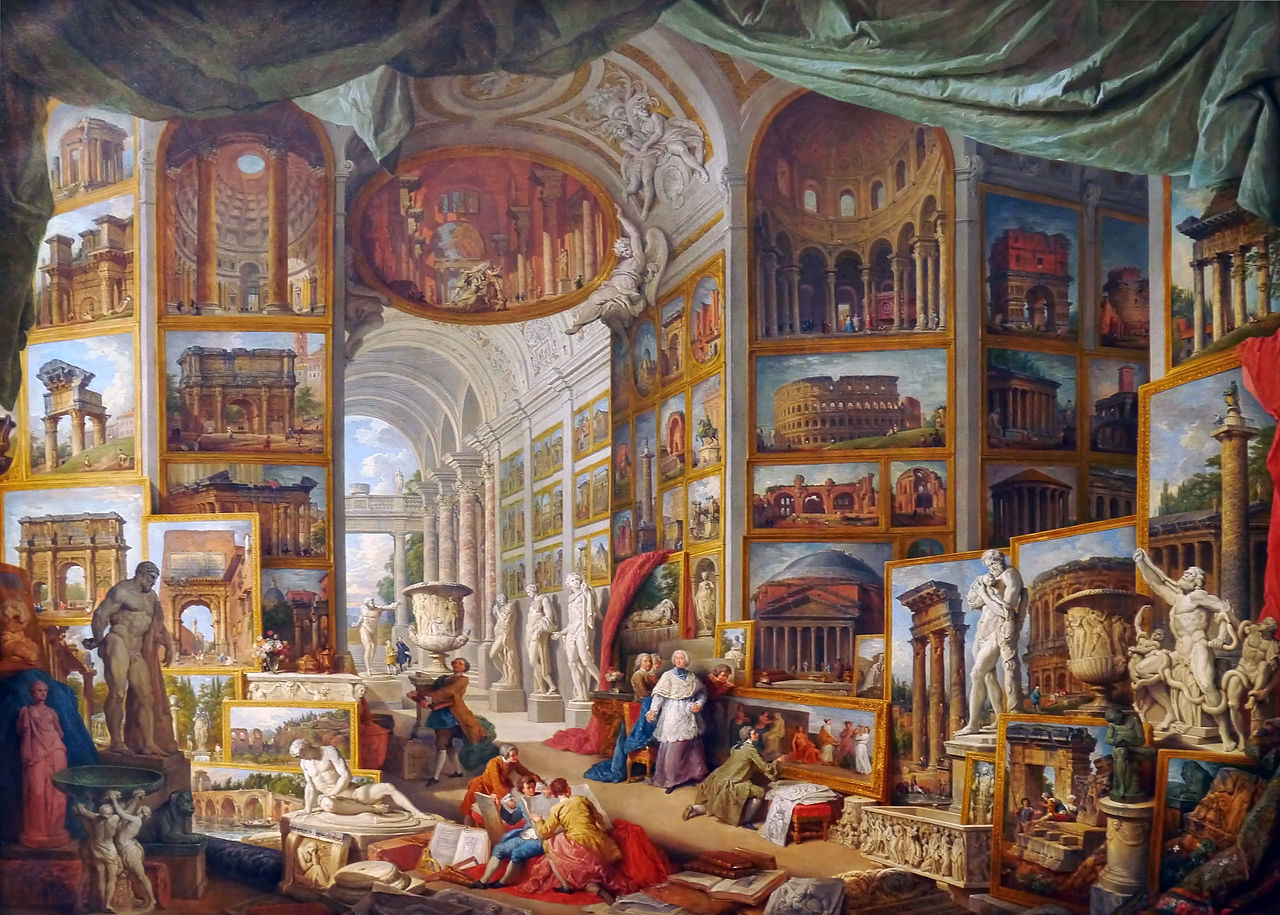
Pannini, Giovanni Paolo - Gallery of Views of Ancient Rome - 1758.JPG
Giovanni Pannini, Gallery Views of Ancient Rome

Atque in primis varietates urbis Rome, quas hic quidem usque ad curiositatem ridiculam prosecutus est figuras lune varias romano statui comparando, quasi Roma sola, et non urbes ac regna omnia, multoque magis singuli homines, mutentur assidue, et temporali vicissitudini tam diu simus obnoxii, donec pervenerimus ad eterna. Babilon illa vetustior funditus ruit, Troia itidem et Carthago, Athene insuper et Lacedemon et Chorintus, iamque nil penitus nisi nuda sunt nomina. Roma non in totum corruit, et quanquam graviter imminuta, adhuc tamen est aliquid preter nomen. Muri quidem et palatia ceciderunt: gloria nominis immortalis est.

Like Something Written By a Child: Self-Publishing Rich Guys

Pliny, Letters 4.7

To My Friend Catius Lepidus,

I have often told you about the force of Regulus. It is a wonder how he completes whatever he dreams up. It was to his taste to mourn his son, so he mourns as no one does. It was to his taste to have as many statues and images of him made as possible. He assigned this to all the shops: he makes boy in colors, the boy in wax, the boy in bronze, the boy in silver, the boy in gold, ivory, marble.

He also recently recited a book on the life of his son to a huge audience he had summoned. It was about he life of a boy, but he read it still. And then he send that same story copied out countless times through all of Italy and the provinces. He wrote openly to the members of the town leaderships so that the most eloquent of their number would read the book in public: it is done!

If he had used this force—or by whatever other name the desire to get what we want should be called—if he had focused on better things, how much good he could have accomplished! A good person is just less forceful than a bad one, as the saying goes, “ignorance makes you bold, thought makes you hesitate. A sense of propriety weakens right thinking people; depravity encourages rash daring.”

Regulus is a good example of this. His lungs are weak, his mouth is muddled, his tongue isn’t fluent, he is really slow at composing with a worthless memory and has nothing apart from a crazy wit. But his lack of shame has won him so much passion that he is considered an orator. For this reason, Herennius Senecio has marvelously altered that Catonian comment on an oratory for him: “This orator is a bad man, untrained at speaking.” My god, Cato himself did not define an orator as well as Senecio described Regulus!

Are you at all able of making a letter equal to this one in thanks? You are if you will write about whether any of my friends in your town—even you—has been forced to read out Regulus’ mournful book like a carnival barker in the forum or, putting it the way Demosthenes does, “crying out and harmonizing his voice”. For it is so ridiculous that it is as likely to elicit laughter as sorrow. You would think it was written by a boy not about one! Goodbye!

C. Plinius Catio Lepido Suo S.

Saepe tibi dico inesse vim Regulo. Mirum est quam efficiat in quod incubuit. Placuit ei lugere filium: luget ut nemo. Placuit statuas eius et imagines quam plurimas facere: hoc omnibus officinis agit, illum coloribus illum cera illum aere illum argento illum auro ebore marmore effingit. Ipse vero nuper adhibito ingenti auditorio librum de vita eius recitavit; de vita pueri, recitavit tamen. Eundem in exemplaria mille transcriptum per totam Italiam provinciasque dimisit. Scripsit publice, ut a decurionibus eligeretur vocalissimus aliquis ex ipsis, qui legeret eum populo: factum est. Hanc ille vim, seu quo alio nomine vocanda est intentio quidquid velis optinendi, si ad potiora vertisset, quantum boni efficere potuisset! Quamquam minor vis bonis quam malis inest, ac sicut ἀμαθíα μὲν θράσoς, λoγισμòς δὲ ὄκνoν φέρει, ita recta ingenia debilitat verecundia, perversa confirmat audacia. Exemplo est Regulus. Imbecillum latus, os confusum, haesitans lingua, tardissima inventio, memoria nulla, nihil denique praeter ingenium insanum, et tamen eo impudentia ipsoque illo furore pervenit, ut orator habeatur. Itaque Herennius Senecio mirifice Catonis illud de oratore in hunc e contrario vertit: “Orator est vir malus dicendi imperitus.” Non mehercule Cato ipse tam bene verum oratorem quam hic Regulum expressit. Habesne quo tali epistulae parem gratiam referas? Habes, si scripseris num aliquis in municipio vestro ex sodalibus meis, num etiam ipse tu hunc luctuosum Reguli librum ut circulator in foro legeris, ἐπάρας scilicet, ut ait Demosthenes, τὴν φωνὴν καì γεγηθὼς καì λαρυγγíζων. Est enim tam ineptus ut risum magis possit exprimere quam gemitum: credas non de puero scriptum sed a puero. Vale.

Image result for roman funeral masks

Days of Prosody and Rebellion

Lytton Strachey, Eminent Victorians:

The public schools of those days were still virgin forests, untouched by the hand of reform. Keate was still reigning at Eton; and we possess, in the records of his pupils, a picture of the public school education of the early nineteenth century, in its most characteristic state. It was a system of anarchy tempered by despotism. Hundreds of boys, herded together in miscellaneous boarding-houses, or in that grim ‘Long Chamber’ at whose name in after years aged statesmen and warriors would turn pale, lived, badgered and overawed by the furious incursions of an irascible little old man carrying a bundle of birch-twigs, a life in which licensed barbarism was mingled with the daily and hourly study of the niceties of Ovidian verse.

It was a life of freedom and terror, of prosody and rebellion, of interminable floggings and appalling practical jokes. Keate ruled, unaided—for the undermasters were few and of no account—by sheer force of character. But there were times when even that indomitable will was overwhelmed by the flood of lawlessness. Every Sunday afternoon he attempted to read sermons to the whole school assembled; and every Sunday afternoon the whole school assembled shouted him down. The scenes in Chapel were far from edifying; while some antique Fellow doddered in the pulpit, rats would be let loose to scurry among the legs of the exploding boys. But next morning the hand of discipline would reassert itself; and the savage ritual of the whipping-block would remind a batch of whimpering children that, though sins against man and God might be forgiven them, a false quantity could only be expiated in tears and blood.

Image result for studying ovid