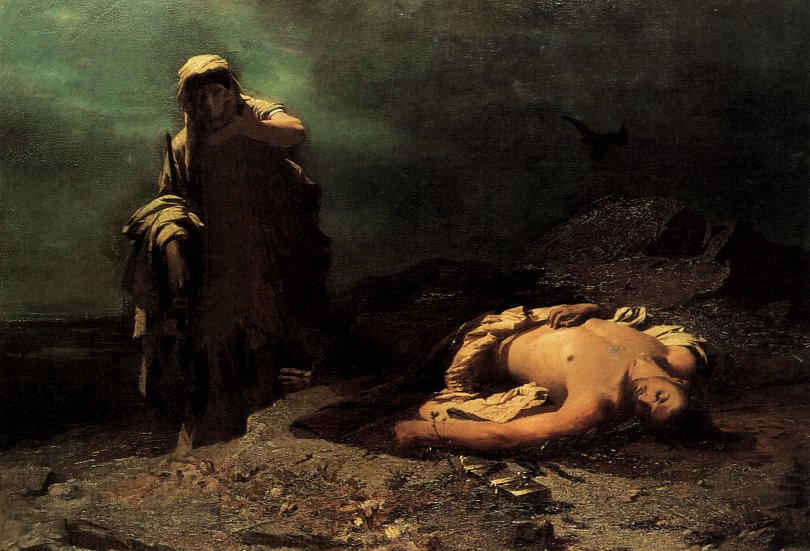
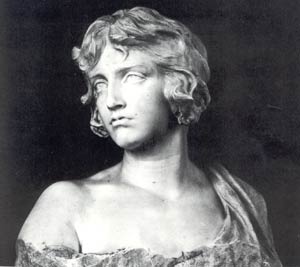
“At last, love is here—and the story I might have told to hide it
Would have caused me more shame than laying it bare.
Cytherea brought him right to me once I overwhelmed her
with my songs. Then she put him right in my lap.
She promised it and she did it. Let anyone tell the tale of my laughter
if they happen to have none of their own
I would never want to trust notes to anyone to sealed tablets,
Just in case someone else reads them before my love.
Ah, it is a pleasure to ‘sin’ and exhausting to hide my face
For rumor’s sake. Let me be known as a worthy woman with her worthy man.”
Tandem venit amor, qualem texisse pudori
quam nudasse alicui sit mihi fama magis.
exorata meis illum Cytherea Camenis
attulit in nostrum deposuitque sinum.
exsolvit promissa Venus: mea gaudia narret,
dicetur si quis non habuisse sua.
non ego signatis quicquam mandare tabellis,
ne legat id nemo quam meus ante, velim,
sed peccasse iuvat, vultus componere famae
taedet: cum digno digna fuisse ferar.
Martial, 10.35
“All girls who desire to please one man
Should read Sulpicia.
All husbands who desire to please one wife
Should read Sulpicia.
She doesn’t write the rage of the Colchian woman
Or repeat the dinners of dire Thyestes.
She doesn’t believe there ever was a Scylla, or Byblis
But she teaches chaste and honest love,
And games, both sweet and a little naughty.
Anyone who judges her poems well
Will say that there never was a cleverer girl,
There never was a girl more reverent!
I think that the jokes of Egeria
In Numa’s dark cave were something like this.
You would have been more humble and learned
With Sulpicia as a teacher or a peer, Sappho:
But if he had seen her by your side,
Harsh Phaon would have loved Sulpicia.
Uselessly: for she would not be wife of the Thunderer
Nor girlfriend to Bacchus or Apollo
Should she live after her Calenus was taken away.”
Omnes Sulpiciam legant puellae,
Uni quae cupiunt viro placere;
Omnes Sulpiciam legant mariti,
Uni qui cupiunt placere nuptae.
Non haec Colchidos adserit furorem 5
Diri prandia nec refert Thyestae;
Scyllam, Byblida nec fuisse credit:
Sed castos docet et probos amores,
Lusus, delicias facetiasque.
Cuius carmina qui bene aestimarit, 10
Nullam dixerit esse nequiorem,
Nullam dixerit esse sanctiorem.
Tales Egeriae iocos fuisse
Udo crediderim Numae sub antro.
Hac condiscipula vel hac magistra 15
Esses doctior et pudica, Sappho:
Sed tecum pariter simulque visam
Durus Sulpiciam Phaon amaret.
Frustra: namque ea nec Tonantis uxor
Nec Bacchi nec Apollinis puella 20
Erepto sibi viveret Caleno.
“Traveler, weep for the age of this dead girl—
For she left when she was only twelve, causing her friends much grief
And leaving behind immortal pain. The rest of it
This memorial announces to everyone who passes by.
Much-wept Hades, why did you take Kleoptolemê when she
Was still a girl, at an ill-fated age? Didn’t you feel any shame?
You left for her dear mother Mnêsô everlasting grief
In exchange for mortal misfortune.
Dear Mother and sisters and Meidotelês who fathered you
As a source of pain for himself, Kleoptolemê,–
They look forward only to grief, and not your bed-chamber, now that you’ve died,
but a lament instead of a husband, a funeral instead of a marriage.”
Nor truely doe I thinke the lives of these or of any other were ever correspondent, or in all points conformable unto their doctrines; it is evident that Aristotle transgressed the rule of his owne Ethicks; the Stoicks that condemne passion, and command a man to laugh in Phalaris his Bull, could not endure without a groane a fit of the stone or collick. The Scepticks that affirmed they know nothing, even in that opinion confute themselves, and thought they knew more than all the world beside. Diogenes I hold to bee the most vaineglorious man of his time, and more ambitious in refusing all honours, than Alexander in rejecting none. Vice and the Devill put a fallacie upon our reasons and provoking us too hastily to run from it, entangle and profound us deeper in it. The Duke of Venice, that weds himselfe unto the Sea, by a ring of Gold, I will not argue of prodigality, because it is a solemnity of good use and consequence in the State. But the Philosopher that threw his money into the Sea to avoyd avarice, was a notorious prodigal. There is no road or ready way to vertue, it is not an easie point of art to disentangle our selves from this riddle, or web of sin: To perfect vertue, as to Religion, there is required a Panoplia or compleat armour, that whilst we lye at close ward against one vice we lye open to the vennie of another: And indeed wiser discretions that have the thred of reason to conduct them, offend without a pardon; whereas under heads may stumble without dishonour.
There goe so many circumstances to piece up one good action, that it is a lesson to be good, and wee are forced to be vertuous by the booke. Againe, the practice of men holds not an equall pace, yea, and often runnes counter to their Theory; we naturally know what is good, but naturally pursue what is evill: the Rhetoricke wherewith I perswade another cannot perswade my selfe: there is a depraved appetite in us, that will with patience heare the learned instructions of Reason; but yet performe no farther than agrees to its owne irregular Humour. In briefe, we all are monsters, that is, a composition of man and beast, wherein we must endeavour to be as the Poets fancy that wise man Chiron, that is, to have the Region of Man above that of Beast, and sense to sit but at the feete of reason. Lastly, I doe desire with God, that all, but yet affirme with men, that few shall know salvation, that the bridge is narrow, the passage straite unto life; yet those who doe confine the Church of God, either to particular Nations, Churches, or Families, have made it farre narrower than our Saviour ever meant it.
Perictione, On a Woman’s “Harmony”[=Stob. 4.28.19 p. 688]
“A woman must recognize that harmony is full of thought and wisdom. For a mind must be thoroughly trained for virtue in order to be just, brave, thoughtful, improved by self-sufficiency, and hateful to empty opinion. From these qualities, a woman gains noble deeds for herself and her husband. Her children and home benefit too. Often there is also benefit for the state if a woman like this governs cities or peoples as we observe in kingdoms.
For the one who rules her own desires and passion becomes divine and harmonious. Lawless lusts do not pursue her and she will be able to maintain her husband, children, and whole household in friendship. Indeed, all the women who become seduced by foreign beds also become hostile to all those in their home who are free and dedicated to the family. A woman like this works up tricks against her husband and manufactures lies about him so that she alone might seem to stand apart for her good mind and her conduct of the household when she really loves laziness. Truly, this is the ruin of all the things that are common for her and her husband.
But I have said enough about these things. It is necessary to arrange the body to the measure of nature for food, clothes, bathing, anointing, hair-dos, and everything that comes from gold and stone for jewelry. For all the women who eat, drink, dress, and carry these expensive things are prepared to fall into the folly of complete wickedness in their beds and criminal behavior in other things too. It is right only to sate hunger and thirst with things which are simple and to keep off the cold with wool or some cloak of hair.
No small a vice is forsworn by staying far away from food either sold for a a lot or of great renown. And it is great foolishness to don excessively thin clothing or garments decorated with due from seashells or any other expensive color. For the body wants only not to be cold or naked for the sake of propriety, but it asks for nothing else. Human opinion longs for empty and useless things because of ignorance. Also, a woman should not wrap gold around her, or Indian stone or anything coming from another place; she will not braid her hair with excessive artifice, nor will she anoint herself with scents smelling of Arabia, nor color the face by making it whiter or making it blush or darkening her eyebrows and eyes, making her hair light with dyes nor take lots of baths. The one who pursues these strategies is looking for someone who admires feminine lack of control.
“Beauty comes from intelligence and not from those things—and it commends women who do well. Necessity should not compel nobility and wealth and coming from great city and the repute and friendship of famous and royal men. If she misses these things, she does not grieve; if she does not miss them, she does not press to seek them. For a thoughtful woman is not hindered from living apart from these things. If she allows those things which she has been allotted, her mind must never doubt at the great and wondrous things, but instead let her depart far from them. For when they fall into misfortune it harms more than it helps. Conspiracy, envy, and betrayal are proper to these things so that a woman of this sort would never be at peace. Instead one needs to revere the gods to gain the good hope of happiness and to obey her country’s laws and customs.
After these precepts, I advise a woman to honor and revere her parents. For they are equal to the gods in all ways and act on behalf of their relatives. In respect to her husband it is right that she live lawfully and rightly, keeping nothing private in her thoughts but watching and guarding their bed. Everything is common in this. She must endure everything from her husband—if he is unlucky and if he makes any mistakes because of ignorance, or sickness or drunkenness or has relationships with other women. For this fault is at home with men, but never women, and vengeance is set for it.
“She must preserve custom and not be jealous. She needs to endure anger, and cheapness, and faultfinding, and envy, and evil speech and anything else he has his nature and will put everything in a way that will be dear to him in her prudence. For a woman who is dear to her husband and works for him well is harmonious and loves her whole household and makes those outside of it well-intentioned toward it. When she does not love the home, she is not willing to see her household, or her own children, or her servants or the possessions she has safe, but in stead she curses them and prays for every kind of ruin, as if she were an enemy, and she prays for her husband to die, as if he is hateful to her so that she is a neighbor to others and hates all those who tend to him.
“I think that a woman like this is harmonious, if she is full of intelligence and prudence. For she will not only help her husband, but also her children and relatives and slaves and the whole household in which her possessions and friends, citizens and guests, reside. Her body supports things things by not being excessive, by pursuing and heeding noble actions, by following her husband in the practice of shared opinion in their common life, by following along with those he admits to their family and friendships and by believing the same things are sweet and bitter as her husband, she is not disharmonious in any way.”
“Reverent Hera, who often comes down
From the sky to gaze upon your fragrant Lakinian home.
Take the linen robe which Theophilos, the daughter of Kleokha
Wove for you with the help of her noble daughter Nossis.”
“These weapons the Brettian men hurled down from their unlucky shoulders
As they were overcome by the hands of the fast-battling Lokrians.
They are dedicated here singing the Lokrians glory in the temple of the gods.
They don’t long at all for the hands of the cowards they abandoned.”
“Pass by me, give an honest laugh, and speak over me
A loving word. I am Rhintho from Syracuse,
A minor nightingale of the Muses. But from my tragic
Nonsense poems, I made my own ivy crown.”
“There is nothing sweeter than love: all other blessings
Take second place. I even spit honey from my mouth.
This is what Nossis says. Whomever Kypris has not kissed,
Does not understand her flowers, what kinds of things roses are.”
“This frame has the picture of Thaumareta. The painter
Caught the form and the age of the soft-glancing woman well.
Your house dog, the little puppy, would paw at you if she saw this,
Believing that she was looking down at the lady of her home.”
In that country, no one finds vice amusing; nor is seducing or being seduced celebrated as a sign of the times. Even better are those communities where only virgins marry and a promise is made with the hope and vow of a wife. And so, they have only one husband just as each has one body and one life so that there may be no additional thought of it, no lingering desire, that they may not love the man so much as they love the marriage. It is considered a sin to limit the number of children or to eliminate the later born. There good customs are stronger than good laws.
There are children there naked and dirty in every house growing into the size of limbs and body at which we wonder. Each mother nourishes each child with her own breasts; they are not passed around to maids and nurses.”
nemo enim illic vitia ridet, nec corrumpere et corrumpi saeculum vocatur. melius quidem adhuc eae civitates, in quibus tantum virgines nubunt et cum spe votoque uxoris semel transigitur. sic unum accipiunt maritum quo modo unum corpus unamque vitam, ne ulla cogitatio ultra, ne longior cupiditas, ne tamquam maritum, sed tamquam matrimonium ament. numerum liberorum finire aut quemquam ex agnatis necare flagitium habetur, plusque ibi boni mores valent quam alibi bonae leges.In omni domo nudi ac sordidi in hos artus, in haec corpora, quae miramur, excrescunt. sua quemque mater uberibus alit, nec ancillis aut nutricibus delegantur.
It should not excite too much controversy to claim that the culture of academia is almost irredeemably dysfunctional. One may examine concrete examples of this by witnessing the UC system’s recent villainously asymmetric response to a graduate labor strike, by considering the likely collapse of what is clearly a pyramid scheme driven by the managerial class, and by looking at the history of systemic exclusion and reification of class distinctions which may, after all, have been a part of the goal of the university system to begin with.
But in addition to academia’s institutional problems, a casual scroll through Twitter will suggest that many scholars both inside and outside the academy struggle with establishing a work-life balance when we are cultured to believe that, in scholarship, work and life are fundamentally the same. When I was a sophomore in college, I was speaking with a professor and expressed my own disinclination to go to the beach over spring break. He was quick to encourage this nascent sense of vocational devotion, and told me that if anyone ever told me to “get a life,” I should respond to them, “This is my life.”
And so it is. While I am not a professional scholar or a member of the academy, I nevertheless internalized the lesson that any really serious person will devote every second of their free time to study. This idea has an old precedent. Consider what the younger Pliny relates about his uncle’s study habits:
Before daybreak, he would go to see the emperor Vespasian, who also liked to work at night, and then he would set about his assigned duty. Once he returned home, he gave the rest of his time up to study. Often, after eating (which, in the ancient way, was always light and sparing) he would lie in the summer sun if he had the leisure, and read a book which he annotated and excerpted from. He never read anything without at least making some notes: he was in the habit of saying that no book was so bad that it was not useful in at least some way. After the sun, he would wash in cold water, then eat and sleep a little bit; soon, as if it were a new day already, he would study again until dinnertime. While eating dinner, he would read and take notes in a cursory fashion. I remember that he was once reading out loud, and was asked by one of his friends to repeat what he had just recited; to this man, my uncle said, ‘Surely, you understood the meaning?’ When the friend said that he had, my uncle responded, ‘Why then did you ask me to repeat it? I have lost the time for reading ten more verses because of your interruption.’ Such was his parsimony of his time. In summer, he would leave the dinner table when it was still light out; in winter, within the first hour of night and as though he were compelled by some law.
He did all this amidst many labors, and the bustle of the city. In his retirement, the only time which he took away from his studies was in the bath-house (and when I say this, I mean the bath itself; when he was being oiled down or dried off, he would listen to or dictate something). When on the road, as though devoid of any other concerns, he had time for this alone: a secretary would be by his side with a book and some note-tablets, and this secretary would wear gloves in winter so that not even foul weather could snatch away any of his time for his studies. For this same reason, he was always carried in a chair when he was in Rome. I remember that one time, he asked me why I was walking. ‘You could have,’ he said, ‘avoided wasting these hours,’ for he thought that all time was wasted which was not spent on study. [Pliny, Letters 3.5]
Pliny’s attitude reflects the understanding of scholarship as intensely studious bibliomania, a trend which likely began in the first golden age of libraries during the Hellenistic age. The most widely encyclopedic author writing before that time, Herodotus, was not really much of a bookworm. But, as the oral culture of the centuries from Homer to Socrates gradually became an increasingly written culture, a new understanding of intelligence arose. Odysseus and the sophists shared in common a kind of quick-witted intelligence, which allowed them to respond nimbly to novel situations (or arguments) by recourse to clever stratagems and verbal tricks. But figures like Callimachus and Lycophron represent a new kind of encyclopedic intelligence which we would recognize in the stooped figure of the scholar today.
Indeed, it seems that from the 3rd century on, knowledge was something which people had to read themselves into. Even the decline of pagan literature was caused by a very definite shift toward religions of the book, for which textual scholarship and exegesis became essential skills not just for learning, but for salvation. And though individual authors might decry the tendency to spend too much time with texts, the model so clearly laid out by Pliny had been firmly set.
While it may have waxed and waned over the centuries, by the end of the Renaissance, the trend toward encyclopedism derived from heroic reading had certainly gained enough steam to propel it on through the social, political, and revolutions of the early modern world. Isaac Casaubon, whose bladder was monstrously distended from holding his urine to read just one more book without interruption, is an example of this voracious type of scholarship:
Casaubon thought every moment lost in which he was not acquiring knowledge. He resented intrusion as a cruel injury. To take up his time was to rob him of his only property. Casaubon’s imagination was impressed in a painful degree with the truth of the dictum ‘ars longa, vita brevis.’ [Isaac Casaubon, pp.28-29]
By the 18th century, encyclopedic antiquarianism was in full swing. And yet, as a counter to the Casaubons of previous centuries, the 18th saw the rise of enormously erudite writers like Dr. Johnson and Edward Gibbon, who made a pointed display of lectorial sprezzatura. Johnson regularly taunted his friends that he never read a book through, and recommended that anyone who had begun reading a book in the middle with interest should continue on reading without returning to the beginning. Despite his own wealth of erudition, he denied knowing anyone who had ever taken reading too seriously:
‘No, Sir; I do not believe he studied hard. I never knew a man who studied hard. I conclude, indeed, from the effects, that some men have studied hard, as Bentley and Clarke.’ [Boswell, Life of Johnson]
Gibbon emphasized the “free, desultory” character of his youthful reading, and notes that he did not go in for the scholar’s midnight lucubration:
My worthy tutor had the good sense and modesty to discern how far he could be useful: as soon as he felt that I advanced beyond his speed and measure, he wisely left me to my genius; and the hours of lesson were soon lost in the voluntary labour of the whole morning, and sometimes of the whole day. The desire of prolonging my time, gradually confirmed the salutary habit of early rising, to which I have always adhered, with some regard to seasons and situations; but it is happy for my eyes and my health, that my temperate ardour has never been seduced to trespass on the hours of the night. [Gibbon, Memoirs of My Life]
Of course, just as Pliny’s systematic habits of study involved a certain amount of ostentatious display, so too one is forced to suspect that figures like Johnson and Gibbon read quite a bit more than these quotes would suggest. It seems an affectation of a kind of gentlemanly amateurism in an age when only cursory application was all the rage.
Affectation or not, perhaps we should aim to adopt the model of Johnson and Gibbon. Pliny’s example may rouse in us a kind of admiration for his scholarly heroism, but it also seems both wildly unhealthy and, in a rapidly changing age, increasingly futile. Pliny had undoubtedly crammed his mind to the brim with a stock of erudition, much of which survives today in his Natural History. But what of the stock of learning which was lost? What of the scholars whose immense knowledge died with their bodies, written only in the remembering tablets of their mind? With the advent of digital textual databases, the kind of inhuman erudition attained by figures like Pliny seems (while still impressive) less of a service to humanity and more of a form of personal improvement.
I read every day because I want to, but also because I feel that I have to. There lingers somewhere deep in the very constitution of my conscience a sense that the time which is not spent reading and learning is, in some way, wasted. To be sure, I do plenty of other things; but like Casaubon, too much time away from my books will make me anxious that a certain opportunity for learning has been irretrievably lost. I know that I am not the only one who feels this way, so perhaps it is time to discard Pliny as our heroic model, and take another look at life.
But there will probably be those who, having no knowledge of Greek literature, will think that nothing is right unless it accords with their own customs. If they learn that the same things do not seem either right or wrong to all people, but that all things are judged by the precedent of one’s ancestors, they will not wonder that we have followed Greek customs in explaining Greek virtues. For it was not reckoned shameful for Cimon, a man of the highest reputation among the Athenians, to have married his very own sister, especially since many of his fellow citizens did the same thing. But indeed, that is considered unspeakably bad according to our ways.
In Crete, it is considered high praise for a young man to have as many lovers as possible. There is no widow in Sparta so noble that she would not take a fee and go to the mistress of the bawdy house. In all of Greece, it was a great honor to be named the victor in Olympia; at the same time, they considered it no shame to get onto the stage and become a spectacle for all. But among us, all of these things are in some way disreputable, in some way undignified, and removed entirely from nobility.
Sed hi erunt fere, qui expertes litterarum Graecarum nihil rectum, nisi quod ipsorum moribus conveniat, putabunt. Hi si didicerint non eadem omnibus esse honesta atque turpia, sed omnia maiorum institutis iudicari, non admirabuntur nos in Graiorum virtutibus exponendis mores eorum secutos. Neque enim Cimoni fuit turpe, Atheniensium summo viro, sororem germanam habere in matrimonio, quippe cum cives eius eodem uterentur instituto. At id quidem nostris moribus nefas habetur. Laudi in Creta ducitur adulescentulis quam plurimos habuisse amatores. Nulla Lacedaemoni vidua tam est nobilis, quae non ad lenam eat mercede conducta. Magnis in laudibus tota fere fuit Graecia victorem Olympiae citari; in scaenam vero prodire ac populo esse spectaculo nemini in eisdem gentibus fuit turpitudini. Quae omnia apud nos partim infamia, partim humilia atque ab honestate remota ponuntur.
THE FOLLOWING NOTES deal with the essays by Irving Babbitt and Paul Elmer More which appeared in the humanist symposium called Humanism and America.
Humanism: An Essay at Definition
By Irving Babbitt
(1) The law of measure on which it [humanism] depends becomes meaningless unless it can be shown to be one of the “laws unwritten in the heavens” of which Antigone had the immediate perception, laws that are <( not of to-day or yesterday,” that transcend in short the temporal process.
This seems to me a grotesque misapplication of the famous speech from Sophocles. Let me point out, in the first place, that what Antigone says is “ἄγραπτα κἀσφαλῆ θεῶν νόμιμα” “unwritten and unfailing laws of the gods” and that Professor Babbitt, in changing “gods” to “heavens” (which is particularly inappropriate in this case, since Antigone has just specified the gods of the underworld), is following the Victorian tradition of Jebb and Jowett, who, by substituting such Christian words as “God” and “heaven” for the pre-Christian conceptions of the Greeks, almost succeeded in giving Sophocles and Plato the aspect of pious English dons. But Babbitt has turned Sophocles into something worse and even more alien to his true nature: he has turned him into a Harvard humanist. In the scene in question, Antigone is not talking about the law of measure or anything remotely resembling it she has disobeyed Creon’s edict by performing funeral rites for her brother and she is justifying herself for her insubordinate conduct. There is no self-control about Antigone’s behavior: she has committed an act of passionate personal loyalty, regarded as excessively rash and wrong-headed by everybody else in the play, including her own sister, whose “inner check” is more highly developed than Antigone’s. When Creon demands how Antigone has dared to break the law, she answers fiercely that such a law as his edict is contrary to the laws of the gods.
The romantic might, in fact, turn this scene against the humanist with more appropriateness than the humanist can use it against the romantic. Antigone has the same hasty insolent intemperate nature as her father Oedipus we are told so explicitly in the play and she is asserting her individual will in defiance of law and expediency she is making an impulsive and desperate gesture. Aristotle “a true humanist,” according to Babbitt says of this passage, in showing the distinction between conventional and natural law, that Antigone vindicates the latter in asserting “ὅτι δίκαιον ἀπειρημένου θάψαι τὸν Πολυνείκη, ὡς φύσει ὂν τοῦτο δίκαιον” that her act, though it violated the prohibition, had the sanction of natural right, was “right according to nature.” Now Antigone, of course, is not a nineteenth-century romantic, and Aristotle does not mean by “nature” quite the same thing that Rousseau does. But what Rousseau means does have something in common with what Aristotle means that Antigone means, whereas what Antigone means can’t by any possible stretch be associated with Babbitt’s “law of measure.” Babbitt grossly misrepresents Sophocles when he applies Antigone’s speech in this way: “The laws unwritten in the heavens” is one of Babbitt’s favorite quotations: he has used it again and again in order to give us the impression that Sophocles has endorsed the humanist “will to refrain.” Yet, as I say, if it is a question of slinging classical texts, the old-fashioned romantic who is Babbitt’s bugbear if there be any such still alive might turn Antigone’s outburst against Babbitt and, relapsing into the truculence of the age of Bentley, which the manners of the humanists invite, might add, as Antigone does:
Σοὶ δ’ εἰ δοκῶ νῦν μῶρα δρῶσα τυγχάνειν,
σχεδόν τι μώρῳ μωρίαν ὀφλισκάνω.
Babbitt elsewhere in this essay says that Sophocles “ranks high among occidental humanists,” though he admits making reservations in regard to the opinion of Matthew Arnold that “perfect poise is no doubt impossible; not even Sophocles succeeded in seeing life steadily and seeing it whole.” I don’t know in precisely what respect Professor Babbitt considers Sophocles to have fallen short of perfect poise; but it is certainly true that Sophocles’ characters are usually remarkable for anything but poise – they are as violent and as harsh as the people in the plays of Eugene O’Neill. Where the “law of measure” comes in is certainly not in connection with the conduct of Sophocles’ people: the hot-headed overconfident Oedipus; the “fierce child of a fierce father,” Antigone; the relentless and morbid Electra, etc. but in Sophocles’ handling of his material the firmness of his intellectual grasp, the sureness of his sense of form, the range of psychological insight which enables him to put before us the rages, the ambitions, the loyal ties, of so many passionate persons, that spend themselves against one another and expire in the clear air, leaving only with the echo of their tirades the vibration of the taut verse. In a world dominated by the law of measure, there would, however, be humanist masterpieces such as the tragedies of Sophocles since Babbitt claims them, with reservations, as humanist masterpieces because there would be no violent passions to write about. This might be a good thing perhaps we ought to be glad to do without the Sophocleses if we could get rid of the unruly passions. But, on the other hand, we ought perhaps to think twice before letting ourselves in for a world where the sole masterpieces were humanist symposia.
Nossis is one of the best attested woman poets from the ancient world. Don’t feel bad if you haven’t heard of her.
Greek Anthology, 6.353
“Melinna herself is here. Look how her pure face
Seems to glance gently at me.
How faithfully she looks like her mother in every way.
Whenever children equal their parents it is beautiful.”
“Stranger, if you sail to the city of beautiful dances, Mytilene,
The city which fed Sappho, the the Graces’ flower,
Tell them that the land of Lokris bore for the Muses
A woman her equal, by the name of Nossis. Go!”
“I expect that Aphrodite will be pleased to receive
As an offering from Samutha, the band that held her hair.
For it is well made and smells sweetly of nektar,
That very nektar she uses to anoint beautiful Adonis.”
“Let’s leave for the temple and go to see Aphrodite’s
Sculpture—how it is made so finely in gold.
Polyarkhis dedicated it after she earned great
wealth from the native glory of her body.”