Nossis is one of the best attested woman poets from the ancient world. Don’t feel bad if you haven’t heard of her.
Greek Anthology, 6.353
“Melinna herself is here. Look how her pure face
Seems to glance gently at me.
How faithfully she looks like her mother in every way.
Whenever children equal their parents it is beautiful.”
“Stranger, if you sail to the city of beautiful dances, Mytilene,
The city which fed Sappho, the the Graces’ flower,
Tell them that the land of Lokris bore for the Muses
A woman her equal, by the name of Nossis. Go!”
“I expect that Aphrodite will be pleased to receive
As an offering from Samutha, the band that held her hair.
For it is well made and smells sweetly of nektar,
That very nektar she uses to anoint beautiful Adonis.”
“Let’s leave for the temple and go to see Aphrodite’s
Sculpture—how it is made so finely in gold.
Polyarkhis dedicated it after she earned great
wealth from the native glory of her body.”
25 “Among the Iberians there is a tribe [and] and in a certain festival they honor women with gifts, however so many demonstrate at that time that they can weave the most numerous and beautiful cloaks.”
27 “Among the Nasamoi in Libya it is the custom that on the first day a woman is married that she has sex with everyone who is present and then take gifts from them. After that, she has sex only with the one who marries her.”
45 “The Liburnians have shared wives and they raise their children in common for five years. When they make it to the eighth year, they compare the children for their similarity to the men and they distribute to each one who is similar. And that one keeps him as a son.”
51 “The Assyrians sell their daughters in the marketplace to whoever wants to settle down with them. First the most well-born and most beautiful and then the rest in order. Whenever they get to the least attractive, they announce how much someone is willing to take to live with them and they add this consolation price from the fee charged for the desirable girls to these [last ones].”
“Where did the soul come from and where will it go? For how much time will it be our companion? Are we capable of saying that its nature is? When did we receive it? Was it before we were born? But, we did not exist then. Was it after death? But, then, we will not be as we are now, conjoined to bodies, but we will rush towards rebirth, among the bodiless, without characteristics, without connections.
And even now as we live we are ruled rather than ruling and we are known rather than knowing. The soul knows us even if we do not know it. It issues orders which we necessarily obey just as slaves obey their mistress. And whenever it wants, it will demand from the judge a divorce from us and it will depart, leaving behind a home bereft of life. If we try to force it to stay, it will escape. Its nature is so fine, that it provides nowhere for the body to cling to.”
I confesse I have perused them all, and can discover nothing that may startle a discreet beliefe: yet are there heads carried off with the wind and breath of such motives. I remember a Doctor in Physick of Italy, who could not perfectly believe the immortality of the soule, because Galen seemed to make a doubt thereof. With another I was familiarly acquainted in France, a Divine and man of singular parts, that on the same point was so plunged and gravelled with three lines of Seneca, that all our Antidotes, drawne from both Scripture and Philosophy, could not expell the poyson of his errour.
There are a set of heads, that can credit the relations of Mariners, yet question the testimonies of Saint Paul; and peremptorily maintaine the traditions of Ælian or Pliny, yet in Histories of Scripture, raise Quere’s and objections, beleeving no more than they can parallel in humane Authors. I confesse there are in Scripture stories that doe exceed the fable of Poets, and to a captious Reader sound like Gargantua or Bevis: Search all the Legends of times past, and the fabulous conceits of these present, and ’twill bee hard to find one that deserves to carry the buckler unto Sampson, yet is all this of an easie possibility, if we conceive a divine concourse or an influence but from the little finger of the Almighty. It is impossible that either in the discourse of man, or in the infallible voyce of God, to the weakenesse of our apprehensions, there should not appeare irregularities, contradictions, and antinomies: my selfe could shew a catalogue of doubts never yet imagined nor questioned, as I know, which are not resolved at the first hearing, not fantastick Quere’s, or objections of ayre: For I cannot heare of Atoms in Divinity.
“Six multiplied by six, which makes the square of six, adds up to thirty-six days. When this is multiplied by ten, this makes three hundred and sixty days, which gives us our twelve lunar months. The solar year requires five more days and one quarter day to be completed, and this is why an additional say they call the bissextus is added every fourth year. So, additional days were added by ancient authorities to make the days align with the years. The Romans called these days intercalary.”
Sexiens autem seni, qui numerus quadratum senarium facit, triginta sex dies sunt, qui multiplicati deciens ad trecentos sexaginta perveniunt, id est duodecim menses lunares. Propter quinque dies enim reliquos quibus solaris annus impletur et diei quadrantem, propter quem quater ductum eo anno quo bissextum vocant unus dies adicitur, addebantur a veteribus postea dies ut occurreret numerus annorum, quos dies Romani intercalares vocabant.
Bissextus [or bissextile, bisextilis] was the name given in the Julian calendar because the day was added on the 24th of February in leap years as ante diem sextum Kalendas Martias or (a.d. vi Kal. Mart.), the twice-sixth day before the Kalends of March. Romans added time at the end of February because of a ritual accord following the winter solstice. Prior to the Julian calendar, when the year was set at 355 days, there could be an entire leap month added. According to our records, the calculations were so off in 45 BCE that Julius Caesar imposed 67 additional intercalary days.
“Aristophanes uses this instead of “great men” (megaloi) because he is describing those who take and use falsely the means of war, not because they are truly interested in it, but because they care about strength. For this reason he also called Megainetus “Manes”, not because he is barbaric but because he is stupid. [In the Frogs] he appropriately uses a compound word because this is Aeschylus’ habit.”
“There is a certain type of irony as well called sarcasm, which is when someone makes a criticism of someone else using opposites and with a fake smile…”
“Then cloud-gathering Zeus responded to Hera in answer,
‘Friend [daimoniê] you always know my thoughts, and I can never trick you—
Buy you can’t do anything about it….
“To steal is best”: the repetitive structure (symploke) is witty. For you also have “to commit adultery is best, and similar things”. It is a kind of sarcasm to praise an evil to excess.”
A sharp, bitter, or cutting expression or remark; a bitter gibe or taunt. Now usually in generalized sense: Sarcastic language; sarcastic meaning or purpose.
1579 E. K. in Spenser Shepheardes Cal. Oct. Gloss. Tom piper, an ironicall Sarcasmus, spoken in derision of these rude wits, whych [etc.].
1581 J. Bell tr. W. Haddon & J. Foxe Against Jerome Osorius 324 With this skoffe doth he note them..by a certayne figure called Sarcasmus.
1605 J. DoveConfut. Atheisme 38 He called the other Gods so, by a figure called Ironia, or Sarcasmus.
1621 R. BurtonAnat. Melancholyi.ii.iv. iv. 197 Many are of so petulant a spleene, and haue that figure Sarcasmus so often in their mouths,..that they must bite.
1661 O. FellthamResolves (rev. ed.) 284 Either a Sarcasmus against the voluptuous; or else, ’tis a milder counsel.
“Phanodikos says that Daidalos—on account of the aforementioned reasons—went on a ship as he was fleeing and when those who were pursuing him drew near, he spread wide a piece of cloth for gaining the help of the winds and escaped them in this way. When they got back, those who were following him said he had escaped them with wings.”
Phanodicos Deliacon Daedalum propter supradictas causas fugientem navem conscendisse et, cum imminerent qui eum sequebantur, intendisse pallium ad adiuvandum ventos et sic evasisse: illos vero qui insequebantur reversos nuntiasse pinnis illum evasisse.
Palaephatus, On Unbelievable Things 12
“People claim that Minos imprisoned Daidalos and Ikaros, his son, for a certain reason, but that Daidalos, after he fashioned wings as prosthetics for both of them, flew off with Ikaros. It is impossible to think that a person flies, even one who has prosthetic wings. What it really means, then, is the following kind of thing.
Daidalos, when he was in prison, escaped through a small window and hauled down his son too; once he got on a boat, he left. When Minos found out, he sent ships to pursue him. Then they understood that they were being pursued and there was a furious and driving wind, they seemed to be flying. And while they were sailing with the Kretan wind, they flipped over into the sea. While Daidalos survived onto land, Ikaros died. This is why the sea there is named Ikarion for him. His father buried him after he was tossed up by the waves.”
In Philosophy where truth seemes double-faced, there is no man more paradoxicall then my self; but in Divinity I love to keepe the road, and though not in an implicite, yet an humble faith, follow the great wheele of the Church, by which I move, not reserving any proper poles or motion from the epicycle of my own braine; by this meanes I leave no gap for Heresies, Schismes, or Errors, of which at present, I hope I shall not injure Truth, to say, I have no taint or tincture; I must confesse my greener studies have beene polluted with two or three, not any begotten in the latter Centuries, but old and obsolete, such as could never have been revived, but by such extravagant and irregular heads as mine; for indeed Heresies perish not with their Authors, but like the River Arethusa, though they lose their currents in one place, they rise up againe in another: one generall Councell is not able to extirpate one single Heresie, it may be canceld for the present, but revolution of time and the like aspects from Heaven, will restore it, when it will flourish till it be condemned againe; for as though there were a Metempsuchosis, and the soule of one man passed into another, opinions doe finde after certaine revolutions, men and mindes like those that first begat them. To see our selves againe wee neede not looke for Platoes yeare; every man is not onely himselfe; there have beene many Diogenes, and as many Timons, though but few of that name; men are lived over againe, the world is now as it was in ages past, there was none then, but there hath been some one since that parallels him, and is as it were his revived selfe.
“If you desire to be free of this and freedom seems truly attractive to you, and if you seek help for this reason alone—that it might be allowed for you to do this without constant trouble—how would the whole gang of Stoics fail to approve it? Every Zeno and Chrysippus will advise you about your moderation and honor. But if you keep turning your back so you can try to see how much you carry with you and how much money you need for leisure you will never find an end to it.
No one can swim to safety with their bags. Emerge to a better life with divine favor but let it not be in that way in which they are favorable to those people to whom they grant great evils with pleasant and pleasing glances—and they are excused for doing so because those things which burn and torture are given to those who beg for them.
I was already closing this letter with a seal, but it had to be opened again so that it may come to you with the dutiful contribution and bring some great saying to you. And look, here is something that comes to my mind which I don’t know if it is truer or more well-put. “Whose saying?” you ask? It is Epicurus, for I am still sewing my quilt from other people’s fragments. “Everyone leaves from life just as if they just had entered it”.
Grab anyone suddenly—a youth, an old man, someone in the middle—and you will find them equally afraid of death and without understanding of life. No one has finished anything, because we keep postponing everything we do to tomorrow. Nothing makes me happier in that quotation than the fact that it calls old men out for being babies.
“No one”, he says, “leaves the world differently from the way in which they were born.” This is false! We are worse when we die than when we are born. This is our fault, not nature’s. Nature ought to criticize us, saying, “What is this? I produced you without desires, without fear, without superstition, without treachery and these diseases! Leave as you were when you got here!”
Sed si deponere illam in animo est et libertas bona fide placuit, in hoc autem unum advocationem petis, ut sine perpetua sollicitudine id tibi facere contingat, quidni tota te cohors Stoicorum probatura sit? Omnes Zenones et Chrysippi moderata, honesta, tua suadebunt. Sed si propter hoc tergiversaris, ut circumspicias, quantum feras tecum et quam magna pecunia instruas otium, numquam exitum invenies. Nemo cum sarcinis enatat. Emerge ad meliorem vitam propitiis dis, sed non sic, quomodo istis propitii sunt, quibus bono ac benigno vultu mala magnifica tribuerunt, ad hoc unum excusati, quod ista, quae urunt, quae excruciant, optantibus data sunt.
13Iam inprimebam epistulae signum; resolvenda est, ut cum sollemni ad te munusculo veniat et aliquam magnificam vocem ferat secum, et occurrit mihi ecce nescio utrum verior an eloquentior. “Cuius?” inquis; Epicuri, adhuc enim alienas sarcinas adsero; “Nemo non ita exit e vita, tamquam modo intraverit.” Quemcumque vis occupa, adulescentem senem medium; invenies aeque timidum mortis, aeque inscium vitae. Nemo quicquam habet facti, in futurum enim nostra distulimus. Nihil me magis in ista voce delectat quam quod exprobratur senibus infantia. “Nemo,” inquit, “aliter quam qui modo natus est exit e vita.” Falsum est; peiores morimur quam nascimur. Nostrum istud, non naturae vitium est. Illa nobiscum queri debet et dicere: “Quid hoc est? Sine cupiditatibus vos genui, sine timoribus, sine superstitione, sine perfidia ceterisque pestibus; quales intrastis exite.”
“And what about you, Nikêratos—what kind of knowledge do you cherish?” And he said “My father, because he wished for me to be a good man, compelled me to memorize all of Homer. And now I can recite the whole Iliad and Odyssey.” Antisthenes said “Has it escaped you that all the rhapsodes know these epics too?”
Over the past few weeks there has been a bit of a frenzy over Oxford University’s potential move to drop Homer and Vergil from their required curriculum for Classics. We have heard the typical cries of “O Tempora, O Mores” in articles lamenting the fall of education and the decline of the west. This news even made The Blaze!, quoting only a student who calls it “a fatal mistake” because “Homer has been the foundation of the classical tradition since antiquity.”
(And you know that if a cultural question got Blazed. it is of real, deep, ethical concern.)
The ‘terrible’ nature of this decision is not just blamed on “diversity” but also on the inability of modern students to cope, supported by cherry-picked quotations from faculty. And this has also been characterized as part of a “diversity drive” with the adjective there used as a dog-whistle for cultural supremacists and not a sign of progressive, inclusive intent.
You know what I haven’t heard much of? People defending this proposal. Well, here I am, and that’s what I am going to do.
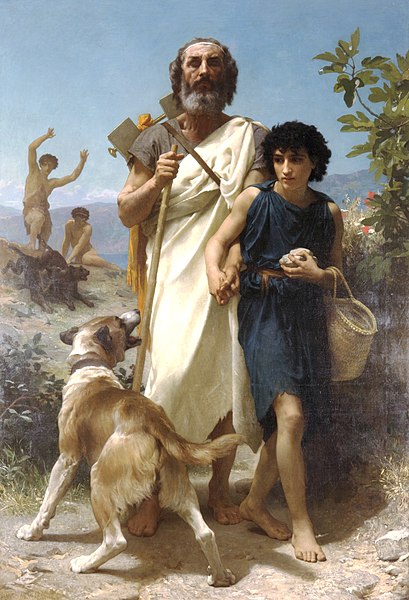
I am a Homerist. I have spent more than half my life reading, teaching, and writing on Homer. To say that I love the Homeric epics is such an understatement that it breaks my basic constative ability to do so. But this proposal makes sense. Let me tell you why.
Leonardo Bruni de Studiis et Litteris 21
“What is lacking in Homer, that we should not consider him to be the wisest man in every kind of wisdom? Some people claim that his poetry is a complete education for life, equally divided between times of war and peace.”
Quid Homero deest, quominus in omni sapientia sapientissimus existimari possit? Eius poesim totam esse doctrinam vivendi quidam ostendunt, in belli tempora pacisque divisa
First, the brouhaha mis-characterizes the proposal which is to make Homer and Vergil optional. From years of teaching Homer to undergraduates, I know that fewer are prepared to read something of this length and depth. They have read little in pre-collegiate classes of this length and intricacy. And we do not have the time in class to move from understanding a sentence to its relationship to the whole to its critical engagement with cultures over time.
The worst thing I see happening—and I know this happens at Oxford—is teaching Homer badly. Students don’t have the cultural frameworks, or the training to understand what they’re looking at. And this is in part because many people who teach Homer have a backwards idea of what the epics are and how they work.
These backwards ideas come from a teleological perspective that has over time selected from the past only works that conform to certain expectations and then force them to conform to others. Teaching Homer badly is objectively a bad thing. It turns students off to Homer; it gives them misconceptions about the ancient world; and it harmfully enforces the history of European literature.
Homer contains some nasty stuff. Taught in the wrong way, it glorifies violence, perpetuates misogyny, oversimplifies “heroes”, their faults, and gives terrible lessons on life and death. “Reading” a text is not merely passing one’s eyes over it or uttering the words aloud. It requires patience, contemplation, identification, alienation, communion with others and repetition
This is about the way we teach Homer as a holy, simple thing, with clear messages and heroes who can be understood in a few lessons. Homeric epics are dialogic, they are complex creations between audiences and the words themselves and without time, deep learning, and space, they function to advance a simplistic, but powerful policy of canon-enforcement
Henry David Thoreau, from his essay Walking (1862)
“The poet to-day, notwithstanding all the discoveries of science, and the accumulated learning of mankind, enjoys no advantage over Homer.”
Homer as often taught as canon—which is the main argument in many articles—is a product not of antiquity but of the time between antiquity and now. To disentangle the layers of interpretation and the centuries of misunderstandings that have accrued, students need sensitive reading skills and agile teachers.
Before reading Homer, students need to learn to read, to understand the relationship between text and audience, and the operation of literature—and especially the literary canon—as part of cultural discourse. We are better off by spending time teaching students a few poems by Sappho or lyric and elegiac poets, if what we want to learn about is Greek culture and poetry.
(And all of this sidesteps what modern program in Classical Studies is for. If we have only a small handful of credit hours to enlighten the mind and prepare it to engage fruitfully with the world it encounters, is slogging through an epic the best use of our time?)
But if you read even passively, the stalwart Homeric defenders aren’t really interested in the past. They are interested in Homer as a marker of their own culture. And look at the way people defend it! In one piece, the author cries that Homer is the beginning of a Trojan war story that made London “New Troy”. No cultural supremacy or appropriation there.
Yes, understanding Homer can be important for cultural literacy of the past, but it is not the only way to gain this (and most Renaissance paintings based on myth are not Homeric). Yes, Homer poses important questions about what it means to be a Human being—but Homeric universality is wildly overplayed. Who gets left out?
Werner Jager, Paideia (tr. Gilbert Highet, pp.35-36)
“We are right in feeling such bare utilitarianism to be repulsive to our aesthetic sense; but it is none the less certain that Homer (like all the great Greek poets) is something much more than a figure in the parade of literary history. He is the first and the greatest creator and shaper of Greek life and the Greek character.”
Homer, as taught in many places, is a ‘genius author’ who laid the foundations of western literature. Homer “wrote” the Iliad and the Odyssey and handed down the guidebook for mimetic narrative and human achievement. These ‘facts’ are demonstrably false and yet the way many teach Homer and position the epics as canon are based on these premises.
The ‘lie’ of Homer is an originary tale of ‘authenticity’ and cultural hegemony which intentionally overlooks that the Homeric epics are products and well as producers of this culture. This is deeply connected to how easily the Classics can be appropriated by white supremacists.
And the ‘Homer’ we possess is one of our own creation. There is a fundamental problem here in the concept of the word “authentic”, a quasi-religious belief and consequent search for the original, authoritative, and authentic form of Homer which goes back to antiquity (once “Homer” was separated from its performance context and reassembled by Hellensitic authors) and which is reborn and supercharged in that overlapping space between Classical and Biblical philology. M.L. West’s, an Oxford prodcut, posthumous text of the Odyssey, for example, operates on the principle that there was a single author and a single text and that the task of a textual critic—and philology at large—is to help us get closer to that original, that authentic, that divine genius.
And there is a Christian, revelationist stance in some of the philology that emerges from this background. In his recent commentary to Odyssey book 1, Simon Pulleyn, rejecting the idea of an oral tradition as critical to the epic we possess, tradition, revealingly combines belief in God with belief in Homer: “Just as the faith once put in God reposes nowadays largely in committees, so we are invited to see the epics not as masterpieces of an individual artist but as the product of numerous generations of bards each contributing their bit. We are asked to rid ourselves of anachronistic notions of the genius of individual authors” (2019 39).
Too much of what we call “classical studies” and canon are retrograde assumptions about the world and what it means to be human. They reduce everything to divinely-derived aesthetics and marginalize people and creeds who do not confirm to “Western” measures (as defined after the age in which the epics were formed). When we talk about what we should teach as the foundation of Classical Studies, we need to think about what our goals are, what we want students to be able to do when they are done.
“Why do we train our children in the liberal arts? It is not because these studies can grant someone virtue, but because they prepare the soul for accepting it.”
Quare ergo liberalibus studiis filios erudimus?” Non quia virtutem dare possunt, sed quia animum ad accipiendam virtutem praeparant.
Making Homer optional is not “watering down” the curriculum. It is opening up our education to do what we are supposed to do: critically and pointedly examine the past. Sure, advanced students, graduate students, professionals in the field, they should probably read Homer, but should everyone?
I am not saying that we should not have students reading Homer—but that if we only have a small collection of classes, they can acquire critical language, reading, reasoning, and cultural skills in other ways. This is important both in focusing on what our undergraduate learning goals are and in thinking about what we want classical studies to become in the future.
Are we going to merely perpetuate the same training, beliefs and ideas over and over again without reflecting on where they come from or what they mean? Are we going to ignore the fact that our histories of the Mediterranean have been figuratively and literally whitewashed in the service of colonial, nationalist, and racist discourse? Or are we a field where we train people to think critically, to re-frame the past, and then reclaim it?
As a Homerist, I think I’ve found myself in part by searching for “Homer”—and I think this is indeed one of the most salubrious effects of literature. But this is not the only goal and this is not the Aristotelian end for Classical Studies. We need students to enter with the world with the ability to question and reframe the worth of the pasts we have inherited.
Because if we keep doing the same thing over and over again, it is not going to turn out well. And soon.
Aeneas Silvius Piccolomini, de Liberorum Educatione
“The ancients decided that reading should begin from Homer and Vergil, though it requires a firm sense of judgment to understand their virtues.”
Veteres instituerunt, ut ab Homero atque Vergilio lectio inciperet, quamvis ad intelligendum eorum virtutes opus esset firmiori iudicio.




_-_Homer_and_his_Guide_(1874).jpg)