An Eyewitness to Useless Prayers

Thucydides 2.47-48

“And when they were in Attica for not very many days the disease first began to develop among the Athenians. It had allegedly emerged in many places before, especially around Lemnos and in other places. But so great a plague with such a high human mortality rate was not recorded as happening anywhere else. For the doctors were of no use at the beginning as caregivers because of ignorance, and they were dying especially because they were attending to sick people the most. And there was no other mortal means to approach it.

All the prayers in the temples and at oracles and those kinds of places amounted to nothing right up to the point they people stopped even trying them because they were overcome by the suffering.

The story goes that the sickness started in the part of Ethiopia above Egypt and then it moved to Egypt and Libya and then over most of the King’s land. When it suddenly fell on Athens, it afflicted people in the Piraeus first and it was there that it was said that the Peloponnesians must be throwing drugs into the cisterns, since there were no streams there. Later it spread to the higher part of the city where many more people begin to die.

Let each person who understands something about this, whether a doctor or a private citizen, speak about what its likely origin was and whatever causes he believes likely of such a great change. I will only say what kind of a disease it was and how someone might recognize it and be able not to be ignorant about it if it should appear again. I will describe it clearly because I was sick myself and I watched others suffering from it too.”

3] καὶ ὄντων αὐτῶν οὐ πολλάς πω ἡμέρας ἐν τῇ Ἀττικῇ ἡ νόσος πρῶτον ἤρξατο γενέσθαι τοῖς Ἀθηναίοις, λεγόμενον μὲν καὶ πρότερον πολλαχόσε ἐγκατασκῆψαι καὶ περὶ Λῆμνον καὶ ἐν ἄλλοις χωρίοις, οὐ μέντοι τοσοῦτός γε λοιμὸς οὐδὲ φθορὰ οὕτως ἀνθρώπων οὐδαμοῦ ἐμνημονεύετο γενέσθαι. [4] οὔτε γὰρ ἰατροὶ ἤρκουν τὸ πρῶτον θεραπεύοντες ἀγνοίᾳ, ἀλλ᾽ αὐτοὶ μάλιστα ἔθνῃσκον ὅσῳ καὶ μάλιστα προσῇσαν, οὔτε ἄλλη ἀνθρωπεία τέχνη οὐδεμία: ὅσα τε πρὸς ἱεροῖς ἱκέτευσαν ἢ μαντείοις καὶ τοῖς τοιούτοις ἐχρήσαντο, πάντα ἀνωφελῆ ἦν, τελευτῶντές τε αὐτῶν ἀπέστησαν ὑπὸ τοῦ κακοῦ νικώμενοι.

  1. ἤρξατο δὲ τὸ μὲν πρῶτον, ὡς λέγεται, ἐξ Αἰθιοπίας τῆς ὑπὲρ Αἰγύπτου, ἔπειτα δὲ καὶ ἐς Αἴγυπτον καὶ Λιβύην κατέβη καὶ ἐς τὴν βασιλέως γῆν τὴν πολλήν. [2] ἐς δὲ τὴν Ἀθηναίων πόλιν ἐξαπιναίως ἐσέπεσε, καὶ τὸ πρῶτον ἐν τῷ Πειραιεῖ ἥψατο τῶν ἀνθρώπων, ὥστε καὶ ἐλέχθη ὑπ᾽ αὐτῶν ὡς οἱ Πελοποννήσιοι φάρμακα ἐσβεβλήκοιεν ἐς τὰ φρέατα: κρῆναι γὰρ οὔπω ἦσαν αὐτόθι. ὕστερον δὲ καὶ ἐς τὴν ἄνω πόλιν ἀφίκετο, καὶ ἔθνῃσκον πολλῷ μᾶλλον ἤδη. [3] λεγέτω μὲν οὖν περὶ αὐτοῦ ὡς ἕκαστος γιγνώσκει καὶ ἰατρὸς καὶ ἰδιώτης, ἀφ᾽ ὅτου εἰκὸς ἦν γενέσθαι αὐτό, καὶ τὰς αἰτίας ἅστινας νομίζει τοσαύτης μεταβολῆς ἱκανὰς εἶναι δύναμιν ἐς τὸ μεταστῆσαι σχεῖν: ἐγὼ δὲ οἷόν τε ἐγίγνετο λέξω, καὶ ἀφ᾽ ὧν ἄν τις σκοπῶν, εἴ ποτε καὶ αὖθις ἐπιπέσοι, μάλιστ᾽ ἂν ἔχοι τι προειδὼς μὴ ἀγνοεῖν, ταῦτα δηλώσω αὐτός τε νοσήσας καὶ αὐτὸς ἰδὼν ἄλλους πάσχοντας.
The Plague of AthensMichiel Sweerts, c. 1652–1654


A Woman’s Party Invitation and a Girl’s Epitaph: Some Documentary Latin

Some more non-elite Latin provided by Brandon Conley.

A birthday invitation, excerpt (Vindolanda, Britain, 1st cent. CE)

Claudia Severa invites her friend Sulpicia Lepidina (wife of the prefect at Vindolanda) to a birthday party. Despite the use of soror, the two women are not believed to be sisters. With part of the document written by Severa herself, this (and the accompanying notes) is believed to be the earliest-known Latin written by a woman.

Side I

Cl(audia) · Seuerá Lepidinae [suae
[sa]l[u]tem
iii Idus Septembr[e]s soror ad diem
sollemnem natalem meum rogó
libenter faciás ut uenias
ad nos iucundiorem mihi

Side II

[diem] interuentú tuo facturá si
…s
Cerial[em t]uum salutá Aelius meus .[
et filiolus salutant …
… sperabo te soror
uale soror anima
mea ita ualeam
karissima et haue
 

(The italicized text was written by Severa herself)

“Claudia Severa to her Lepidina, greetings. On September 11, sister, for my birthday celebration, I ask you sincerely to make sure you come to (join) us, to make the day more fun for me by your arrival…Say hello to your Cerialis. My Aelius and little boy say hello. I await you, sister. Be well, sister, my dearest soul, so I may be well too. Hail.”

A Jewish child at Rome (Rome, c. 400 CE)

A sad text. Also a good one to use in class, it utilizes both Latin and Hebrew, and goes well with a discussion of diversity in the city and empire. It is also one of the latest dated texts in this document.

(H)Ic iacet Gaudi=
osa infantula
qui bissit annoru=
m plus minu(s) tre=
s requiebit in
pacem. שלום

“Here lies the child Gaudiosa, who lived around three years. She will rest in peace. Shalom (in Hebrew)

Tablet 291 leaf 1 (front) - click to launch image zooming viewer

Spartan Women Once Said…

This is the second part of the sayings attributed to women in the Gnomologium Vaticanum (568-576)

“Sayings of women and their thoughts”

᾿Αποφθέγματα γυναικῶν, ἤτοι φρονήματα.

“When a Spartan woman was speaking to her son who had been crippled in battle and was depressed because of that she said “don’t be sad, child—for each step recalls your private virtue”

Γυνὴ Λάκαινα τοῦ υἱοῦ αὐτῆς ἐν παρατάξει χωλωθέντος καὶ δυσφοροῦντος ἐπὶ τούτῳ „τέκνον”, εἶπε, „μὴ λυποῦ· καθ’ ἕκαστον γὰρ βῆμα τῆς ἰδίας <ἀρετῆς ὑπομνησθήσῃ.”>


“When a Spartan woman heard that her son died in the battle line she said “Child, you paid your country back well for your upbringing.”

Γυνὴ Λάκαινα ἀκούσασα τὸν υἱὸν αὐτῆς ἐν παρατάξει τεθνηκέναι „τέκνον”, εἶπεν, „ὡς καλὰ τροφεῖα τῇ πατρίδι ἀπέδωκας!”


“A Spartan woman said of her son who was thankful that he was the only one to survive a battle-line “why aren’t you ashamed that you’re the only one alive?”

Λάκαινα γυνὴ σεμνυνομένου τοῦ υἱοῦ αὐτῆς ἐπὶ τῷ μόνον ἐκ τῆς παρατάξεως σεσῶσθαι ἔφη· „τί οὖν οὐκ αἰσχύνῃ μόνος ζῶν;”

The website “Sharing Ancient Wisdom” is a really interesting and useful collection of proverbial sayings. Check it out.

Gifts of Chicks and Shells: The Fragment of the Poet Hedyle

Antiquity has left us only one fragment of the iambic poet Hedyle. It is not iambic!

Athenaeus 7.297b

“Hêdulos, the Samian or Athenian, says that Glaukos threw himself in the sea after he fell in love with Melicertes. Hêdulê, his mother and the daughter of the Athenian Moskhinê, was a composer of iambic lines. In her poem called “Skylla”, she records that Glaukos went into his own cave after he fell in love with Skylla

“Either carrying shells as gifts
From the Erythaian cliff
Or halcyon chicks still unwinged
Presents for the girl from an anxious man.
His Siren girl neighbor felt pity
For he was swimming toward that beach
And the regions close to Aitna.”

Ἡδύλος δ᾿ ὁ Σάμιος ἢ Ἀθηναῖος Μελικέρτου φησὶν ἐρασθέντα τὸν Γλαῦκον ἑαυτὸν ῥῖψαι εἰς τὴν | θάλατταν. Ἡδύλη δ᾿ ἡ τοῦ ποιητοῦ τούτου μήτηρ, Μοσχίνης δὲ θυγάτηρ τῆς Ἀττικῆς ἰάμβων ποιητρίας, ἐν τῇ ἐπιγραφομένῃ Σκύλλῃ ἱστορεῖ τὸν Γλαῦκον ἐρασθέντα Σκύλλης ἐλθεῖν αὐτῆς εἰς τὸ ἄντρον

Σκύλλα
ἢ κόγχους δωρήματ’ ᾿Ερυθραίης ἀπὸ πέτρης
ἢ τοὺς ἀλκυόνων παῖδας ἔτ’ ἀπτερύγους
τῇ νύμφῃ δύσπιστος ἀθύρματα. δάκρυ δ’ ἐκείνου
καὶ Σειρὴν γείτων παρθένος ᾠκτίσατο·
ἀκτὴν γὰρ κείνην ἀπενήχετο καὶ τὰ σύνεγγυς
Αἴτνης.

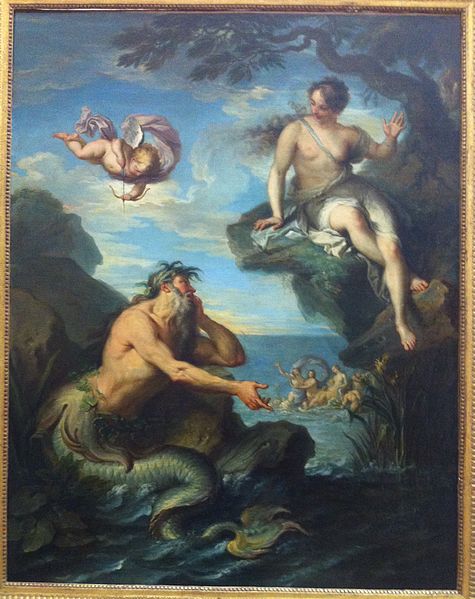
File:Glaucus et Scylla.jpg
Scylla and Glaucus

Scapegoating Foreigners for Plagues

Today I published a piece in the Conversation about the function of plagues in ancient myth as frameworks to think about human leadership and how we generally make things worse for ourselves because of our own stupidity, ignorance, or denial

Individuals and groups cope with trauma and fear by externalizing causality, by searching for people or things to blame apart from ourselves. This often takes the form of scapegoating–typically aimed at the weak or those we position as different from ourselves. In Athens’ calamitous plague, this happened too.

Thucydides, 2.48

“The story goes that the sickness started in the part of Ethiopia above Egypt and then it moved to Egypt and Libya and then over most of the King’s land. When it suddenly fell on Athens, it afflicted people in the Piraeus first and it was there that it was said that the Peloponnesians must be throwing drugs into the cisterns, since there were no streams there. Later it spread to the higher part of the city where many more people begin to die.”

  1. ἤρξατο δὲ τὸ μὲν πρῶτον, ὡς λέγεται, ἐξ Αἰθιοπίας τῆς ὑπὲρ Αἰγύπτου, ἔπειτα δὲ καὶ ἐς Αἴγυπτον καὶ Λιβύην κατέβη καὶ ἐς τὴν βασιλέως γῆν τὴν πολλήν. [2] ἐς δὲ τὴν Ἀθηναίων πόλιν ἐξαπιναίως ἐσέπεσε, καὶ τὸ πρῶτον ἐν τῷ Πειραιεῖ ἥψατο τῶν ἀνθρώπων, ὥστε καὶ ἐλέχθη ὑπ᾽ αὐτῶν ὡς οἱ Πελοποννήσιοι φάρμακα ἐσβεβλήκοιεν ἐς τὰ φρέατα: κρῆναι γὰρ οὔπω ἦσαν αὐτόθι. ὕστερον δὲ καὶ ἐς τὴν ἄνω πόλιν ἀφίκετο, καὶ ἔθνῃσκον πολλῷ μᾶλλον ἤδη.

As historians note, epidemics during the time of Justinian were similarly sourced to Africa and the Near East and Medieval people saw the Black Death as coming from the Levant. Thucydides recounts that ,in their desperation to find a cause, the Athenians blamed the Spartans for poisoning their wells, just as Northern Europeans scapegoated Jewish populations in the 14th Century for the bubonic plague (See Marchant, 1891 ad loc.). The Athenians realized that they were wrong about sabotage when the Spartans and their allies started dying too.

(There are accounts of biological warfare from the Ancient world. Ironically, the Athenians are the ones implicated.)

The sad truth of this is not distant to us: as recently as today Fox News’ poster boy for white stupidity, Tucker Carlson, is arguing that it is not racist to call COVID-19 the “Chinese Coronavirus” [not linked too, because, well, it’s stupid and racist). And, last night, our brilliant commander in chief banned travel to and from Europe for non-Americans. This means US Citizens can come home. Oh, and people from the UK can come too. As such, the travel ban is mere improvisational propaganda, an attempt to seem to do something which actually may be worse than doing nothing at all.

Say what you will about the cupidity and stupidity of Agamemnon in the Iliad–when faced with the facts, he understood the cause of the plague and sent Chryseis’ daughter home.

The Plague of AthensMichiel Sweerts, c. 1652–1654

Other plague posts:

Keep Your Hands Clean With This One Easy Trick!

The Worst Part of a Plague: Despair

The Wages of a Wicked Man: Plague, Broken Walls, Fallen Armies

PSA: An Epidemic’s First Acts

How Did Odysseus Marry Penelope?

A fragment of the mythographer Pherecydes provides an interesting account for how Odysseus came to be married to Penelope (hint: it wasn’t his choice):

Pherecydes, fr. 90 (= Fowler 129)

“Ikarios, the son of Oibalos, married Dôrodokhês, the daughter of Ortilokhos or, according to Pherecydes, Asterôdia, the daughter of Eurypylos, the son of Telestôr. When Laertes heard about Penelope—that she differed from all women in both her beauty and her intelligence, he arranged for her to marry his son Odysseus. She possessed so much virtue that she surpassed even Helen who was born from Zeus in some degree. This is the account of Philostephanos and Pherecydes.”

Schol. Homer. Odyss. Ο, 16: ᾿Ικάριος ὁ Οἰβάλου γαμεῖ Δωροδόχην τὴν ᾿Ορτιλόχου, ἢ κατὰ Φερεκύδην, ᾿Αστερωδίαν τὴν Εὐρυπύλου τοῦ Τελέστορος. Πυθόμενος δὲ Λαέρτης περὶ τῆς Πηνελόπης ὅτι καὶ τῷ κάλλει καὶ ταῖς φρεσὶ διαφέρει πασῶν τῶν καθ’ ἑαυτὴν γυναικῶν, ἄγεται αὐτὴν τῷ παιδὶ ᾿Οδυσσέϊ πρὸς γάμον· ἣ τοσαύτην εἶχεν ἀρετὴν, ὥστε καὶ τὴν ῾Ελένην τὴν ἐκ Διὸς οὖσαν τῷ τῆς ἀρετῆς ὑπερβάλλειν. ῾Η δὲ ἱστορία παρὰ Φιλοστεφάνῳ καὶ Φερεκύδῃ.

This story, of course, runs against a more famous version that isn’t exactly compatible (although one could imagine finding some way to match the two tales):

Apollodorus, 3.132

“When Tyndareus saw the mass of suitors, he feared that once one was selected the rest would start fighting. But then Odysseus promised that if he aided him in marrying Penelope, he would propose a way through which there would be no fight—and Tyndareus promised to help him. Odysseus said that he should have the suitors swear an oath to come to the aid if the man who was selected as bridegroom were done wrong by any other man regarding his marriage. After he heard that, Tyndareus had the suitors swear an oath and he himself chose Menelaos as the bride groom and he suited Penelope from Ikarios’ on Odysseus’ behalf.”

τούτων ὁρῶν τὸ πλῆθος Τυνδάρεως ἐδεδοίκει μὴ κριθέντος ἑνὸς στασιάσωσιν οἱ λοιποί. ὑποσχομένου δὲ ᾿Οδυσσέως, ἐὰν συλλάβηται πρὸς τὸν Πηνελόπης αὐτῷ γάμον, ὑποθήσεσθαι τρόπον τινὰ δι’ οὗ μηδεμία γενήσεται στάσις, ὡς ὑπέσχετο αὐτῷ συλλήψεσθαι ὁ Τυνδάρεως, πάντας εἶπεν ἐξορκίσαι τοὺς μνηστῆρας βοηθήσειν, ἐὰν ὁ προκριθεὶς νυμφίος ὑπὸ ἄλλου τινὸς ἀδικῆται περὶ τὸν γάμον. ἀκούσας δὲ τοῦτο Τυνδάρεως τοὺς μνηστῆρας ἐξορκίζει, καὶ Μενέλαον μὲν αὐτὸς αἱρεῖται νυμφίον, ᾿Οδυσσεῖ δὲ παρὰ ᾿Ικαρίου μνηστεύεται Πηνελόπην.

gettyimages-103765580-1024x1024

Joyce’s Homeric Scheme

Edmund Wilson, Axel’s Castle (VI. – James Joyce)

We possess Dublin, seen, heard, smelt and felt, brooded over, imagined, remembered.

Joyce’s handling of this immense material, his method of giving his book a shape, resembles nothing else in modern fiction. The first critics of “Ulysses” mistook the novel for a “slice of life” and objected that it was too fluid or too chaotic. They did not recognize a plot because they could not recognize a progression; and the title told them nothing. They could not even discover a pattern. It is now apparent, however, that “Ulysses” suffers from an excess of design rather than from a lack of it. Joyce has drawn up an outline of his novel, of which he has allowed certain of his commentators to avail them- selves, but which he has not allowed them to publish in its entirety (though it is to be presumed that the book on “Ulysses” which Mr. Stuart Gilbert has announced will include all the information contained in it); and from this outline it appears that Joyce has set himself the task of fulfilling the requirements of a most complicated scheme a scheme which we could scarcely have divined except in its more obvious features.

For even if we had known about the Homeric parallel and had identified certain of the correspondences if we had had no difficulty in recognizing the Cyclops in the ferocious professional Fenian or Circe in the brothel-keeper or Hades in the cemetery we should never have suspected how closely and how subtly the parallel had been followed we should never have guessed, for example, that when Bloom passes through the National Library while Stephen is having his discussion with the literary men, he is escaping, on the one hand, a Scylla that is, Aristotle, the rock of Dogma; and, on the other, a Charybdis Plato, the whirlpool of Mysticism; nor that, when Stephen walks on the seashore, he is reenacting the combat with Proteus in this case, primal matter, of whose continual trans- formations Stephen is reminded by the objects absorbed or washed up by the sea, but whose forms he is able to hold and fix, as the Homeric Proteus was held and vanquished, by power of the words which give him images for them. Nor should we have known that the series of phrases and onomatopoetic syllables placed at the beginning of the Sirens episode the singing in the Ormond Hotel and selected from the narrative which follows, are supposed to be musical themes and that the episode itself is a fugue; and though we may have felt the ironic effect of the specimens of inflated Irish journalism introduced at regular intervals in the conversation with the patriot in the pub we should hardly have understood that these had been produced by a deliberate technique of “gigantism” for, since the Citizen represents the Cyclops, and since the Cyclops was a giant, he must be rendered formidable by a parade of all the banalities of his patriotic claptrap swollen to gigantic proportions. We should probably never have guessed all this, and we should certainly never have guessed at the ingenuity which Joyce has expended in other ways.

Not only, we learn from the outline, is there an elaborate Homeric parallel in “Ulysses,” but there is also an organ of the human body and a human science or art featured in every episode. We look these up, a little incredulously, but there, we find, they all actually are buried and disguised beneath the realistic surface, but carefully planted, unmistakably dwelt upon. And if we are tipped off, we are able further to discover all sorts of concealed ornaments and emblems: in the chapter of the Lotos-Eaters, for example, countless references to flowers; in the Laestrygonians, to eating; in the Sirens, puns on musical terms; and in Aeolus, the newspaper office, not merely many references to wind but, according to Mr. Gilbert the art featured in this episode being Rhetoric some hundred different figures of speech.

Now the Homeric parallel in “Ulysses” is in general pointedly and charmingly carried out and justifies itself: it does help to give the story a universal significance and it enables Joyce to show us in the actions and the relations of his characters meanings which he perhaps could not easily have indicated in any other way since the characters themselves must be largely unaware of these meanings and since Joyce has adopted the strict objective method, in which the author must not comment on the action. And we may even accept the arts and sciences and the organs of the human body as making the book complete and comprehensive, if a little laboriously systematic the whole of man’s experience in a day. But when we get all these things together and further complicated by the virtuosity of the technical devices, the result is some- times baffling or confusing. We become aware, as we examine the outline, that when we went through “Ulysses” for the first time, it was these organs and arts and sciences and Homeric correspondences which sometimes so discouraged our interest. We had been climbing over these obstacles without knowing it, in our attempts to follow Dedalus and Bloom. The trouble was that, beyond the ostensible subject and, as it were, beneath the surface of the narrative, too many other subjects and too many different orders of subjects were being proposed to our attention.

Aeneas and the Old Benedict Arnold Maneuver

Dionysius of Halicarnassus, Roman Antiquities 1.48:

Menecrates of Xanthus says that Aeneas betrayed the city of Troy to the Greeks because of his hatred for Paris, and for this service the allowed him to save his household. He tells the story like this, beginning from the burial of Achilles: ‘Grief held the Greeks, and they thought that the head of the army had been removed. So, they took care of his funeral rites and then fought the war with all their strength, until Ilium was taken through Aeneas’ treachery. For Aeneas, being disrespected by Paris and excluded from his privileges, overthrew Priam. Having done this, he effectively became one of the Greeks.

Some others say that Aeneas simply happened to be loitering about the Trojan port at that time, and others say that he had already been sent with a band by Priam to Phrygia for some military purpose. Some people even give an account of his flight from Troy which lays a bit more in the mythological line. Let the story stand in whatever way you find persuasive.

9784ee2b64bc1da7f3e999763c5e47ea

Μενεκράτης δὲ ὁ Ξάνθιος προδοῦναι τοῖς ᾿Αχαιοῖς αὐτὸν ἀποφαίνει τὴν πόλιν τῆς πρὸς ᾿Αλέξανδρον ἔχθρας ἕνεκα, καὶ διὰ τὴν εὐεργεσίαν ταύτην ᾿Αχαιοὺς αὐτῷ συγχωρῆσαι διασώσασθαι τὸν οἶκον. σύγκειται δὲ αὐτῷ ὁ λόγος ἀρξαμένῳ ἀπὸ <τῆς> ᾿Αχιλλέως ταφῆς τὸν τρόπον τόνδε· ‘᾿Αχαιοὺς δ’ ἀνίη εἶχε καὶ ἐδόκεον τῆς στρατιῆς τὴν κεφαλὴν ἀπηράχθαι. ὅμως δὲ τάφον αὐτῷ δαίσαντες ἐπολέμεον βίῃ πάσῃ, ἄχρις ῎Ιλιος ἑάλω Αἰνείεω ἐνδόντος. Αἰνείης γὰρ ἄτιτος ἐὼν ὑπὸ ᾿Αλεξάνδρου καὶ ἀπὸ γερέων [ἱερῶν] ἐξειργόμενος ἀνέτρεψε Πρίαμον· ἐργασάμενος δὲ ταῦτα εἷς ᾿Αχαιῶν ἐγεγόνει’. ἄλλοι δέ τινες ἐπὶ τοῦ ναυστάθμου τοῦ Τρωικοῦ τυχεῖν αὐτὸν τηνικαῦτα διατρίβοντα λέγουσιν, οἱ δ’ εἰς Φρυγίαν ἀπεσταλμένον ὑπὸ Πριάμου μετὰ δυνάμεως ἐπί τινα χρείαν στρατιωτικήν· εἰσὶ δ’ οἳ μυθωδεστέραν αὐτοῦ ποιοῦσι τὴν ἔξοδον. ἐχέτω δ’ ὅπῃ τις αὑτὸν πείθει.

The Worst Part of a Plague: Despair

Thucydides 2.48

Let each person who understands something about this, whether a doctor or a private citizen, speak about what its likely origin was and whatever causes he believes likely of such a great change. I will only say what kind of a disease it was and how someone might recognize it and be able not to be ignorant about it if it should appear again. I will describe it clearly because I was sick myself and I watched others suffering from it too.”

  1.  λεγέτω μὲν οὖν περὶ αὐτοῦ ὡς ἕκαστος γιγνώσκει καὶ ἰατρὸς καὶ ἰδιώτης, ἀφ᾽ ὅτου εἰκὸς ἦν γενέσθαι αὐτό, καὶ τὰς αἰτίας ἅστινας νομίζει τοσαύτης μεταβολῆς ἱκανὰς εἶναι δύναμιν ἐς τὸ μεταστῆσαι σχεῖν: ἐγὼ δὲ οἷόν τε ἐγίγνετο λέξω, καὶ ἀφ᾽ ὧν ἄν τις σκοπῶν, εἴ ποτε καὶ αὖθις ἐπιπέσοι, μάλιστ᾽ ἂν ἔχοι τι προειδὼς μὴ ἀγνοεῖν, ταῦτα δηλώσω αὐτός τε νοσήσας καὶ αὐτὸς ἰδὼν ἄλλους πάσχοντας.

Thucydides, 2.51

“The most terrible feature of the sickness was the despair which came when anyone perceived they were getting sick. For when they fell into to this depression they surrendered much of their will and could not endure the thought of the disease. In addition people were dying like sheep, contracting the disease by caring for one another.

This caused the most fatalities. For If they were not willing to visit one another out of fear, then they died along and many households vanished because they lacked anyone to care for them. But if they did go to visit, then they were still dying. This happened the most with those who still tried to be virtuous. Shame would not let them spare themselves as they went to visit their friends, even as the cries of the people dying were ending and the whole family was exhausted, overcome by the sickness.

But it was those who had survived who pitied the dying and the struggling because they understood what it was like and no longer had fear for themselves. The same person didn’t get sick a second time to the point of dying.”

[4] δεινότατον δὲ παντὸς ἦν τοῦ κακοῦ ἥ τε ἀθυμία ὁπότε τις αἴσθοιτο κάμνων (πρὸς γὰρ τὸ ἀνέλπιστον εὐθὺς τραπόμενοι τῇ γνώμῃ πολλῷ μᾶλλον προΐεντο σφᾶς αὐτοὺς καὶ οὐκ ἀντεῖχον), καὶ ὅτι ἕτερος ἀφ᾽ ἑτέρου θεραπείας ἀναπιμπλάμενοι ὥσπερ τὰ πρόβατα ἔθνῃσκον: καὶ τὸν πλεῖστον φθόρον τοῦτο ἐνεποίει. [5] εἴτε γὰρ μὴ ‘θέλοιεν δεδιότες ἀλλήλοις προσιέναι, ἀπώλλυντο ἐρῆμοι, καὶ οἰκίαι πολλαὶ ἐκενώθησαν ἀπορίᾳ τοῦ θεραπεύσοντος: εἴτε προσίοιεν, διεφθείροντο, καὶ μάλιστα οἱ ἀρετῆς τι μεταποιούμενοι: αἰσχύνῃ γὰρ ἠφείδουν σφῶν αὐτῶν ἐσιόντες παρὰ τοὺς φίλους, ἐπεὶ καὶ τὰς ὀλοφύρσεις τῶν ἀπογιγνομένων τελευτῶντες καὶ οἱ οἰκεῖοι ἐξέκαμνον ὑπὸ τοῦ πολλοῦ κακοῦ νικώμενοι. [6] ἐπὶ πλέον δ᾽ ὅμως οἱ διαπεφευγότες τόν τε θνῄσκοντα καὶ τὸν πονούμενον ᾠκτίζοντο διὰ τὸ προειδέναι τε καὶ αὐτοὶ ἤδη ἐν τῷ θαρσαλέῳ εἶναι: δὶς γὰρ τὸν αὐτόν, ὥστε καὶ κτείνειν, οὐκ ἐπελάμβανεν.

Edvard Munch, “Despair” 1894

Keep Your Hands Clean With this One Easy trick!

Fragments of Old Comedy, 1146

“You need to start washing and you need to do it to music”

καταλαβεῖν σε τὴν πλύσιν δεῖ, δεῖ δὲ μὴ ’κτὸς μουσικοῦ

Aelian, Varia Historia 8

“…Some people with unclean hands were sailing with them…”

συμπλεόντων τινῶν οὐ καθαρῶν τὰς χεῖρας #Aelian

Aeschylus, Libation-Bearers 378

“Their leaders’ unclean hands…”

τῶν δὲ κρατούντων χέρες οὐχ ὅσιαι

Euripides, Hippolytus 1458

“Would you leave me with unwashed hands?”

ἦ τὴν ἐμὴν ἄναγνον ἐκλιπὼν χέρα;

Hand washing instructions accompanied by the opening lines of the Iliad in Greek
Created by Ryan Baumann


Newman
Dr. Matt Newman asks, “Is this all part of the plan of Zeus?”