Criticism Awed Into Silence

Henry Alford, Chapters on the Poets of Ancient Greece:

Meanwhile we would beg our readers whom these our essays may have interested, not to imagine that we are about to treat every poem which we shall notice, at as much length as we have done these two. These are the greatest extant monuments of human genius. Even the course of the ordinary narrative in them is full of points of beauty, which no popular poetical critic could allow himself to pass over. So that necessarily our chapters on the Iliad and Odyssey are little more than arguments, or tables of contents, with occasional translations interspersed. “Where the design is unapparent, and the work fragmentary, much of the taste of a commentator is superseded; and where the hoar of extreme antiquity has hallowed the edifice, criticism is awed into silence. Let us come into the company of the herd of poets, and, great and glorious spirits though they be, we shall breathe more freely, and judge less sparingly; but — there again, as sure as we look up, that grand old bust, blind and fillet-bound, is looking on us as we are writing; it is the concentration of human majesty, the type of the age of heroes; surely it has descended, with the poems, to bless our libraries with its venerable presence; and, be the critic’s doubts what they may, that brow meditated, that mouth uttered, these ancient songs. Reader, examine as thou wilt — judge as thou canst — convince as thou mayest, — but in thy ‘heart of hearts’ never call in question the identity or truth of THE IDEAL HOMER!

homer-9342775-1-402

What We Need in Isolation: Masturbating in Latin and Greek

Aristophanes, Peace 290-292

“Now comes the time of for Datis’ song
The one he sang once at midday as he masturbated
“How I am pleased and I enjoy this and I am finding delight!”

ΤΡ.                Νῦν, τοῦτ’ ἐκεῖν’, ἥκει τὸ Δάτιδος μέλος.
δεφόμενός ποτ’ ᾖδε τῆς μεσημβρίας·
«῾Ως ἥδομαι καὶ χαίρομαι κεὐφραίνομαι.»

The small LSJ defines δέφω as “to soften by working by the hand, to make supple, to tan hides.” The 1902 LSJ uses Latin to explain: “sensu obscoeno, v. Lat. Masturbari.”

The Suda (delta 297) cuts to the chase on this one with “dephein: grabbing someone by the genitals. Also, “rubbing” (Dephomenos) instead of “flogging your genitals.” (Δέφειν: τὸ τοῦ αἰδοίου τινὰ ἅπτεσθαι. καὶ Δεφόμενος, ἀντὶ τοῦ ἀποδέρων τὸ αἰδοῖον). So, the active vs. middle voice is an important distinction (echoing something I have emphasized in teaching Greek: active voice is something you do to someone else, middle is what you do to yourself…).

Here’s a nice passage that shows the difference in active and passive voice:

Artemidorus, Dream Interpretation 1.78: 74-80

“I know of a certain slave who dreamed that he was masturbating his master—and he then became the teacher and nurse of his children. For he was holding his master’s genitals in his hands which was a symbol of his children. And again, I know of another who dreamed he was being jerked off by his master, and, later he was bound to a pillar and then he received many blows…”

οἶδα δέ τινα δοῦλον, ὃς ἔδοξε τὸν δεσπότην αὐτοῦ δέφειν, καὶ ἐγένετο τῶν παίδων αὐτοῦ παιδαγωγὸς καὶ τροφός· ἔσχε γὰρ ἐν ταῖς χερσὶ τὸ τοῦ δεσπότου αἰδοῖον ὂν τῶν ἐκείνου τέκνων σημαντικόν. καὶ πάλιν αὖ οἶδά <τινα> ὃς ἔδοξεν ὑπὸ τοῦ δεσπότου δέφεσθαι, καὶ προσδεθεὶς κίονι πολλὰς ἔλαβε πληγάς….

Most of the extant uses of this verb appear in comedy. And, not surprisingly, this means Aristophanes:

Aristophanes, Knights 23-24

ΟΙ. Β′                                               Πάνυ καλῶς.
῞Ωσπερ δεφόμενός νυν ἀτρέμα πρῶτον λέγε
τὸ μολωμεν, εἶτα δ’ αὐτο, κᾆτ’ ἐπάγων πυκνόν.

“Excellent.
Just as if you were masturbating, say it first now gently
“let us hurry” and then again pushing on, quickly.”

[Here’s a link to the whole play. Soon, one of the interlocutors stops “because the skin is irritated by masturbation.” (῾Οτιὴ τὸ δέρμα δεφομένων ἀπέρχεται, 29)]

The verb is not common, to say the least, so later commentators found it necessary to gloss it and explain Aristophanes’ joke. Through the explanations of the joke, it immediately becomes less funny, and the language used in the commentaries.

Scholia in Knights:

[1] “ ‘Just like dephomenos’: instead of “flogging your genitals” (apodérôn to aidoion). For, when men touch their genitals they don’t complete as they began, but they move more eagerly towards the secretion of semen. This plays on that, he means start small at first but then go continuously.

[2]dephomenos’: “having intercourse’. Flogging genitals.

[3]dephomenos’: They mean handling the penis. For, when men take hold of their penises they don’t move towards ejaculation the way they began, but more eagerly over time, as they are inflamed by the continuity of movement.”

 ὥσπερ δεφόμενος: ἀντὶ τοῦ ἀποδέρων τὸ αἰδοῖον. οἱ γὰρ ἁπτόμενοι τῶν αἰδοίων οὐχ ὡς ἤρξαντο, ἀλλὰ σπουδαιότερον κινοῦσι πρὸς τῇ τῆς γονῆς ἐκκρίσει. τοῦτο οὖν λέγει, ὅτι πρῶτον κατὰ μικρόν, εἶτα συνεχῶς λέγε. RVEΓ2M

δεφόμενος] ξυνουσιάζων, ἀποδέρων τὸ αἰδοῖον. M

δεφόμενος] ἤγουν τοῦ μορίου ἁπτόμενος. οἱ γὰρ ἁπτόμενοι τοῦ μορίου
πρὸς ἔκκρισιν τῆς γονῆς οὐχ ὡς ἤρξαντο κινοῦσιν ἀλλὰ σπουδαιότερον, ἐκπυρούμενοι τῇ συνεχείᾳ τῆς κινήσεως. VatLh

Aristophanes, Ecclesiazusae, 705–709

“It is decreed that the ugly and the wretched
Get to fuck first.
Take your pleasure on the porch in the meantime
Handling your fig-leaves in the courtyard”

τοῖς γὰρ σιμοῖς καὶ τοῖς αἰσχροῖς
ἐψήφισται προτέροις βινεῖν,
ὑμᾶς δὲ τέως θρῖα λαβόντας
διφόρου συκῆς
ἐν τοῖς προθύροισι δέφεσθαι.

The Suda interprets this passage as meaning that someone is masturbating with a fig leaf. Henderson ( The Maculate Muse. New Haven 1975) explains that the “fig-leaves” are the foreskin and the “courtyard” means outside of a vagina.

Image result for ancient Greek Masturbating vase

And just in case one might worry about moral dimensions of masturbation, ancient philosophers have already tackled the question:

From Sextus Empiricus Pyrrhonian Hypotyposes, 3.206-207

“Similarly, this seems shameful to one of the sages but not to another. For us it is wrong to marry your own mother or sister. But the Persians, especially those of them who seem to pursue wisdom, the Magi, marry their mothers just as the Egyptians marry their sisters. The poet also says: “Zeus addressed Hera, his wife and sister…”

Zeno of Citium even says that it is not strange to rub your mother’s genitals with your own, just as no one would claim it is wrong to rub any other part of her body with your hand. Chrysippus approves in his Republic of a father getting children from his daughter, a mother from her son, and a brother from his sister. Plato insisted generally that wives should be held in common. Zeno also does not disapprove of masturbation, which is shameful in our culture. We have also learned that others practice this wicked habit as if it were a good thing.”

οὕτω καὶ τῶν σοφῶν ᾧ μὲν οὐκ αἰσχρόν, ᾧ δὲ αἰσχρὸν ἐδόκει τοῦτο εἶναι. ἄθεσμον τέ ἐστι παρ’ ἡμῖν μητέρα ἢ ἀδελφὴν ἰδίαν γαμεῖν· Πέρσαι δέ, καὶ μάλιστα αὐτῶν οἱ σοφίαν ἀσκεῖν δοκοῦντες, οἱ Μάγοι, γαμοῦσι τὰς μητέρας, καὶ Αἰγύπτιοι τὰς ἀδελφὰς ἄγονται πρὸς γάμον, καὶ ὡς ὁ ποιητής φησιν,

Ζεὺς ῞Ηρην προσέειπε κασιγνήτην ἄλοχόν τε.

ἀλλὰ καὶ ὁ Κιτιεὺς Ζήνων φησὶ μὴ ἄτοπον εἶναι τὸ μόριον τῆς μητρὸς τῷ ἑαυτοῦ μορίῳ τρῖψαι, καθάπερ οὐδὲ ἄλλο τι μέρος τοῦ σώματος αὐτῆς τῇ χειρὶ τρῖψαι φαῦλον ἂν εἴποι τις εἶναι. καὶ ὁ Χρύσιππος δὲ ἐν τῇ πολιτείᾳ δογματίζει τόν τε πατέρα ἐκ τῆς θυγατρὸς παιδοποιεῖσθαι καὶ τὴν μητέρα ἐκ τοῦ παιδὸς καὶ τὸν ἀδελφὸν ἐκ τῆς ἀδελφῆς. Πλάτων δὲ καὶ καθολικώτερον κοινὰς εἶναι τὰς γυναῖκας δεῖν ἀπεφήνατο. τό τε αἰσχρουργεῖν ἐπάρατον ὂν παρ’ ἡμῖν ὁ Ζήνων οὐκ ἀποδοκιμάζει· καὶ ἄλλους δὲ ὡς ἀγαθῷ τινι τούτῳ χρῆσθαι τῷ κακῷ πυνθανόμεθα.

Note that many of lexical metaphors for masturbation are shared by the two languages. Much of the following material is drawn from J.N. Adams. The Latin Sexual Vocabulary. 1982. Note, however, that many of the examples are not truly masturbatory.

As an important prefatory note, the Latin word masturbor (whence modern “masturbate”) has unclear and irregular use in Latin (discussed by Adams 209-211 with some rather strong attacks on J. P. Hallet’s 1976 “Masturbator, Mascarpio.” Glotta, vol. 54: 292–308.) The word occurs most prominently in an agentive form  in Martial (translated here with considerable license):

Martial, 14.203 Puella Gaditana

“She sways with such curves and oozes sex so deep
That she’d turn Hippolytus himself into a masturbating creep.”

Tam tremulum crisat, tam blandum prurit, ut ipsum
masturbatorem fecerit Hippolytum.

Adams mast

Other words and terms

Frico, “to rub, chafe”, cf. cont. vulg: “rub one out”

Petronius 91.11

“it is that much more advantageous to rub your groin rather than your genius”

tanto magis expedit inguina quam ingenia fricare

Sollicito, “to shake, stir, rouse, agitate, excite, urge” etc.

Despite Adam’s assertion, the primary examples he cites are about the manipulation of genitals by another party.

Ovid, Amores 3.7.73-4

“Despite this, my girl was not reluctant
To stroke me gently once she moved her hand down…”

Hanc etiam non est mea dedignata puella
molliter admota sollicitare manu;

Martial, 11.22.4

“Who denies this? This is too much. But let it be enough
Stop urging on their groins with that fucker of a hand.”

quis negat?—hoc nimium est. sed sit satis; inguina saltem
parce fututrici sollicitare manu.

Petronius 20.2

“She stirred up my groin which was cold already because of a thousand deaths.”

Sollicitavit inguina mea mille iam mortibus frigida

Cf. Maximianus 5.58 “she began to handle my dirty parts with her hand / and to excite me too with her fingers.” contrectare manu coepit flagrantia membra / meque etiam digitis sollicitare suis

Tango, “touch”, cf. Divinyls Classic “I Touch Myself”

Ovid, Ars Amatoria 2.719–720

“When you find those places where the lady delights at being touched,
Don’t let shame get in the way of you touching her.”

Cum loca reppereris, quae tangi femina gaudet,
Non obstet, tangas quo minus illa, pudor.

Tracto: “to draw, haul, handle, treat” cf. perhaps “to jerk [off]” or “wank”

Martial 11.29.8

“I don’t need a finger: handle me like this, Phyllis”

nil opus est digitis: sic mihi, Phylli, frica

Priapea 80.1-2

“But this limp dick is not long enough nor does it stand up strong enough,
Even if you play with it, do you think it can grow?”

At non longa bene est, non stat bene mentula crassa
et quam si tractes, crescere posse putes?

Adams 1982, 208:

adams

(de)glubo: “to skin, flay, peel” cf. “skin off”

Ausonius, Epigram 79 “Inscribed Beneath the Picture of a Lusty Lady”

Beyond the genial joining of authorized sex
Sinful lust has discovered unnatural modes of love:
What the Lemnian lack posited to the heir of Herakles,
Or what the plays of Afranius in Roman garb presented
Or the total depravity that marked the Nolan people.
Somehow, in a single body, Crispa practices all three!
She masturbates, fellates, and rides with either hole—
So that she might not die frustrated, leaving anything untried.

LXXIX.—Subscriptum Picturae Mulieris impudicae

Praeter legitimi genialia foedera coetus
repperit obscenas veneres vitiosa libido:
Herculis heredi quam Lemnia suasit egestas,
quam toga facundi scaenis agitavit Afrani
et quam Nolanis capitalis luxus inussit.
Crispa tamen cunctas exercet corpore in uno:
deglubit, fellat, molitur per utramque cavernam,
ne quid inexpertum frustra moritura relinquat.

Treating Sickness of the Mind

Cicero, Tusculan Disputations 3.1

“What can I think is the reason, Brutus, that since we consist of soul and body an art for the care and keeping of the body has been sought out and its utility has been accredited to the discovery of the immortal gods, but a art of healing for the soul as not as much been desired because its discover nor has it been practiced once it was known, nor has it been applauded with gratitude by so many, and has in fact been held with suspicion or anger by most?

Is this because we judge the body’s sickness and sorrow with the mind but we cannot use the body to sense sickness of the spirit? The outcome is that the mind must render judgment on itself at that moment when the very tool it needs to do this is sick.

But if nature had crafted us at birth to be able to see the soul itself and to perceive it with it as our guide to complete the course of life, there would clear be no one who would require argument and doctrine. As it stands we have received a tiny spark of understanding that we put out so fast because we are twisted by bad habits and opinions that none of nature’s light remains.

Truly, the seeds of virtue are implanted naturally within us and if we let them develop nature would guide us to a happy life. But, still, we find ourselves taken out into the light in a world of evil and the most twisted ideas possible so that it seems like we sucked down madness with our nurse’s milk. When we go with our parents and are given over to teachers, we have already been so steeped in different fallacies that truth has to yield to vanity and nature bows before the confirmation of opinions.”

Quidnam esse, Brute, causae putem cur, cum constemus ex animo et corpore, corporis curandi tuendique causa quaesita sit ars atque eius utilitas deorum immortalium inventioni consecrata, animi autem medicina nec tam desiderata sit, ante quam inventa, nec tam culta, postea quam cognita est, nec tam multis grata et probata, pluribus etiam suspecta et invisa? An quod corporis gravitatem et dolorem animo iudicamus, animi morbum corpore non sentimus? Ita fit ut animus de se ipse tum iudicet, cum id ipsum, quo iudicatur, aegrotet.

Quod si tales nos natura genuisset, ut eam ipsam intueri et perspicere eademque optima duce cursum vitae conficere possemus, haud erat sane quod quisquam rationem ac doctrinam requireret. Nunc parvulos nobis dedit igniculos, quos celeriter malis moribus opinionibusque depravati sic restinguimus, ut nusquam naturae lumen appareat. Sunt enim ingeniis nostris semina innata virtutum, quae si adolescere liceret, ipsa nos ad beatam vitam natura perduceret: nunc autem, simul atque editi in lucem et suscepti sumus, in omni continuo pravitate et in summa opinionum perversitate versamur, ut paene cum lacte nutricis errorem suxisse videamur. Cum vero parentibus redditi, dein magistris traditi sumus, tum ita variis imbuimur erroribus, ut vanitati veritas et opinioni confirmatae natura ipsa cedat.

File:Extraordinary Popular Delusions V1 page 79.png
From “Extraordinary Popular Delusions”

Stumbling After Pleasure Like a Drunk Looking for Home

Why not?

Boethius, Consolation of Philosophy III. 38-55

“Now all good things dependent upon the body may be understood as we have said. Strength and size seem to confer prominence; beauty and speed bring fame; health brings pleasure. It is clear that happiness alone is sought through all of these qualities. For whatever any man seeks foremost is the very thing he believes is the greatest good. But we have then defined the greatest good as happiness, which is why each man judges the state of happiness to be the very thing he desires beyond all else.

Therefore, you have laid bare before your eyes the basic shape of human happiness: wealth, honor, power, glory and pleasure. When Epicurus examined these things, he decided that his highest good was pleasure because all others seemed to bring enjoyment to the mind. But I return to human desires: for human minds even when the memory is hazy still seeks its own good but, just like a drunk, does not know which path will lead home. Certainly how can those who struggle not to lack anything seem to do wrong?”

Iam vero corporis bona promptum est ut ad superiora referantur. Robur enim magnitudoque videtur praestare valentiam, pulchritudo atque velocitas celebritatem, salubritas voluptatem; quibus omnibus solam beatitudinem desiderari liquet. Nam quod quisque prae ceteris petit, id summum esse iudicat bonum. Sed summum bonum beatitudinem esse definivimus; quare beatum esse iudicat statum quem prae ceteris quisque desiderat.

Habes igitur ante oculos propositam fere formam felicitatis humanae—opes, honores, potentiam, gloriam, voluptates. Quae quidem sola considerans Epicurus consequenter sibi summum bonum voluptatem esse constituit, quod cetera omnia iucunditatem animo videantur afferre. Sed ad hominum studia revertor, quorum animus etsi caligante memoria tamen bonum suum repetit, sed velut ebrius domum quo tramite revertatur ignorat. Num enim videntur errare hi qui nihilo indigere nituntur?


Image result for boethius

The Ideal Statesman and Pompey’s True Aims

Cicero, Letters to Atticus, Ep.  8.11 (27 Feb 49)

“I believe it is in his fifth book that Scipio says ‘Just as a favorable trip is a captain’s task, health is the doctor’s, victory is the generals, the duty of the leader of a state is the happy life of its citizens: strength for their safety, abundance for their goods, fame for their self-worth, and truth for their virtue. I wish for the accomplishment of the best men among us to be this.’

‘Our’ Gnaeus has never before thought about this, nor now in the present affair at all. Domination has been sought by both of them—nothing has been done for the happiness and honesty of the state. [Pompey] did not leave the city because he could not defend it nor Italy because he was driven away, but from the beginning he planned to attack every land and sea, to annoy foreign kings, and to bring alien peoples to Italy in arms—to raise the largest armies. He has been salivating for a long time for that type of Sullan rule—and many who follow him long for it to. Do you believe that there was no way for them to come to an agreement, that no pact was possible? It is possible today, but neither man cares whether we are happy. Both want to rule.”

nam sic quinto, ut opinor, in libro loquitur Scipio: ‘ut enim gubernatori cursus secundus, medico salus, imperatori victoria, sic huic moderatori rei publicae beata civium vita proposita est, ut opibus firma, copiis locuples, gloria ampla, virtute honesta sit; huius enim operis maximi inter homines atque optimi illum esse perfectorem volo.’ hoc Gnaeus noster cum antea numquam tum in hac causa minime cogitavit. dominatio quaesita ab utroque est, non id actum, beata et honesta civitas ut esset. nec vero ille urbem reliquit quod eam tueri non posset nec Italiam quod ea pelleretur, sed hoc a primo cogitavit, omnis terras, omnia maria movere, reges barbaros incitare, gentis feras in Italiam armatas adducere, exercitus conficere maximos. genus illud Sullani regni iam pridem appetitur, multis qui una sunt cupientibus. an censes nihil inter eos convenire, nullam pactionem fieri potuisse? hodie potest. sed neutri σκοπὸς est ille, ut nos beati simus; uterque regnare vult.

Image result for Cicero rome

I Knew That Marble Bled

James Elroy Flecker, Oak and Olive:

THOUGH I was born a Londoner,
And bred in Gloucestershire,
I walked in Hellas years ago
With friends in white attire:
And I remember how my soul
Drank wine as pure as fire.

And when I stand by Charing Cross
I can forget to hear
The crash of all those smoking wheels,
When those cold flutes and clear
Pipes with such fury down the street,
My hands grow moist with fear.

And there’s a hall in Bloomsbury
No more I dare to tread,
For all the stone men shout at me
And swear they are not dead;
And once I touched a broken girl
And knew that marble bled.

But when I walk in Athens town
That swims in dust and sun
Perverse, I think of London then
Where massive work is done,
And with what sweep at Westminster
The rayless waters run.

I ponder how from Attic seed
There grew an English tree,
How Byron like her heroes fell,
Fighting a country free,
And Swinburne took from Shelley’s lips
The kiss of Poetry.

And while our poets chanted Pan
Back to his pipes and power,
Great Verral, bending at his desk,
And searching hour on hour
Found out old gardens, where the wise
May pluck a Spartan flower.

When I go down the Gloucester lanes
My friends are dumb and blind:
Fast as they turn their foolish eyes
The Maenads leap behind,
And when I hear the fire-winged feet,
They only hear the wind.

Have I not chased the fluting Pan
Through Cranham’s sober trees?
Have I not sat on Painswick Hill
With a nymph upon my knees,
And she as rosy as the dawn,
And naked as the breeze?

But when I lie in Grecian fields,
Smothered in asphodel,
Or climb the blue and barren hills,
Or sing in woods that smell
With such hot spices of the South
As mariners might sell–

Then my heart turns where no sun burns,
To lands of glittering rain,
To fields beneath low-clouded skies
New-widowed of their grain,
And Autumn leaves like blood and gold
That strew a Gloucester lane.

Oh well I know sweet Hellas now,
And well I knew it then,
When I with starry lads walked out–
But ah, for home again!
Was I not bred in Gloucestershire,
One of the Englishmen!

https://reverberance.org/wp-content/uploads/2014/03/jameselroyflecker.jpg

A Miscarriage of Justice, an Avenging Plague

Scholia on Isokrates, Hypothesis to Oration 11 

“Some search for what the reason is that he did not enter the argument against him clearly, if he would spare his teacher. And we say that it is so that the Athenians would not be angered since they had recently convicted Socrates. Therefore, it seems through this as if he is rebuking them because they convicted him badly.

And, in fact, they did change their mind later on, believing that they had acted impiously in convicting Socrates and they were made a bit wiser to this because of a plague that struck them over the death of Socrates. He died during the archonship of Laches. For this reason they ordered that no one talk about Socrates in public, as in the theater.

This kind of thing is added in addition: Euripides desired to speak about him and even afraid shaped the plot of his Palamedes in order that he might have the chance to talk allegorical about Socrates and the Athenians. In this had had some figure speaking to the Greeks—when it was really Socrates speaking to the Athenians—that you have eliminated, you have eliminated the best of the Greeks,” which means, you murdered him. The whole audience wept together, because it was a coded reference to Socrates.”

ἐζήτησαν δέ τινες διὰ ποίαν αἰτίαν μὴ φανερῶς τὸν κατ’ αὐτοῦ λόγον εἰσῆλθεν, εἴ γε φείδεται τοῦ διδασκάλου. καὶ λέγομεν, ἵνα μὴ ὀργισθῶσιν οἱ Ἀθηναῖοι, ἀρτίως τοῦ Σωκράτους καταψηφισάμενοι. δοκεῖ οὖν διὰ τούτου ὥσπερ ἐλέγχειν αὐτοὺς ὡς κακῶς καταψηφισαμένους.

καὶ γὰρ καὶ αὐτοὶ ὥσπερ μετέγνωσαν ὕστερον,ὅτι ἀσεβῶς ἔπραξαν καταψηφισάμενοι Σωκράτους, εἶτα καὶ σωφρονισθέντες διὰ τοῦ λοιμοῦ τοῦ ἐγκατασκήψαντος αὐτοῖς διὰ τὸν Σωκράτους θάνατον. ἀπέθανε δὲ ἐπὶ Λάχητος ἄρχοντος. ὅθεν λοιπὸν ἐκέλευσαν μηδένα δημοσίᾳ, οἷον ἐν κοινῷ θεάτρῳ, λέγειν περὶ Σωκράτους.

ἀμέλει λέγεταί τι τοιοῦτον, ὡς [ὅτι] τοῦ Εὐριπίδου βουλομένου εἰπεῖν περὶ αὐτοῦ καὶ δεδιότος ἀναπλάσαι τὸ δρᾶμα τὸν Παλαμήδην, ἵνα διὰ τούτου σχοίη καιρὸν τοῦ αἰνίξασθαι εἰς τὸν Σωκράτην καὶ εἰς τοὺς Ἀθηναίους καὶ ποιήσαντός τινα πρὸς τοὺς Ἕλληνας λέγοντα, τὸ δὲ ἀληθὲς πρὸς Ἀθηναίους διὰ Σωκράτην ‘ἐκάνετε, ἐκάνετε τῶν Ἑλλήνων τὸν ἄριστον’, ὅ ἐστιν ἐφονεύσατε. καὶ νοῆσαν τὸ θέατρον ἅπαν ἐδάκρυσε, διότι περὶ Σωκράτους αἰνίττεται.

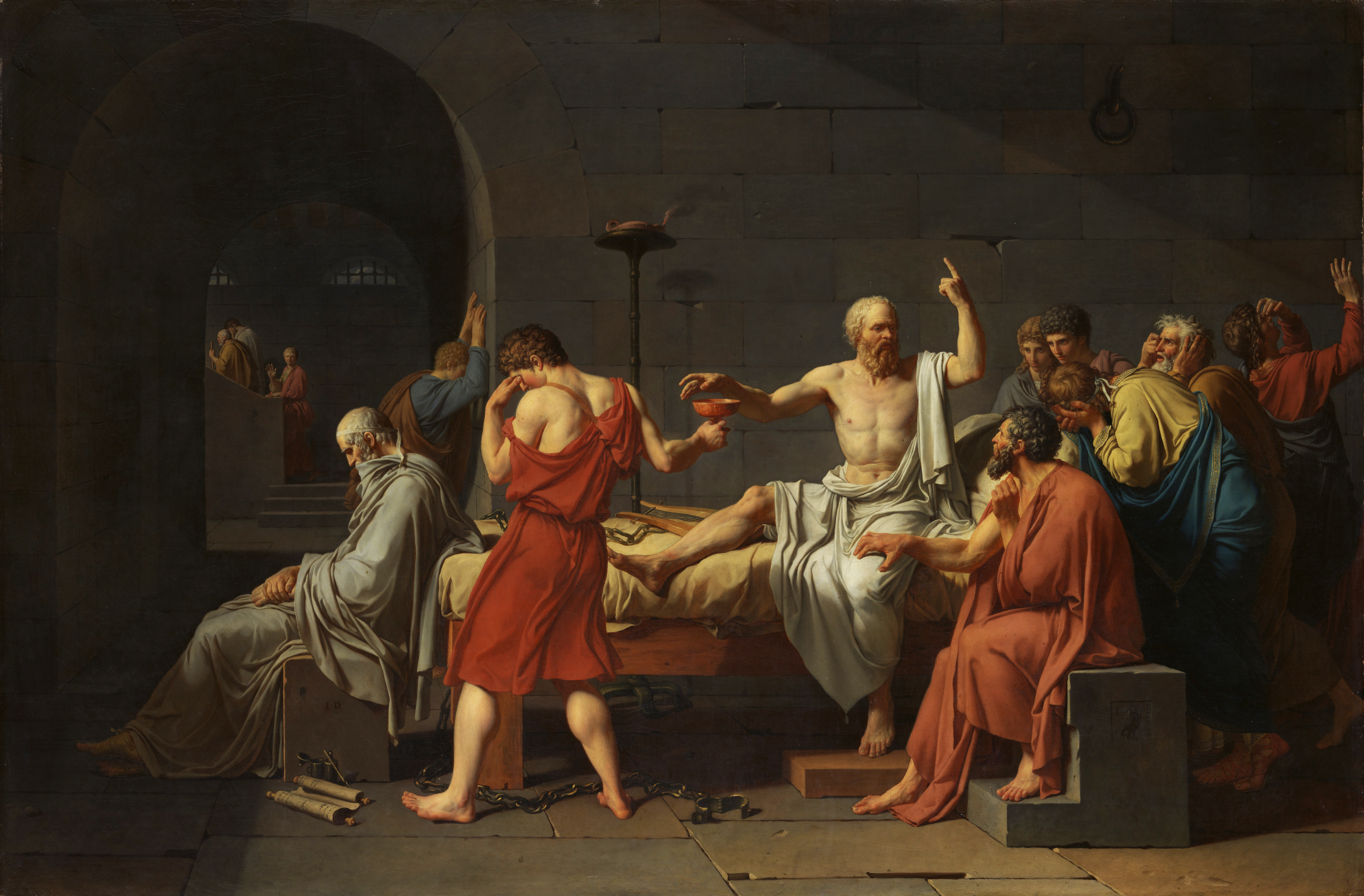
“The Death of Socrates” by Jacques-Louis David

Pliny’s Slightly Less Stupid Treatments for Sickness

Uncertain about injecting bleach or buying a tanning booth? Maybe try some Ancient Roman nonsense first!

Pliny the Elder Natural History, 28.33

“The treatment is for their hands to be washed in water first and then for that water to be sprinkled on patients. However, those who are struck at some point by a scorpion are never attacked again by wasps and bees. Someone who knows that clothes worn at a funeral are never touched by moths or that snakes are only with great labor pulled out out of their holes except by the left hand will not be shocked by this.

Of the discoveries of Pythagoras, this will not prove false: an unequal number of vowels foretells lameness, blindness, or some similar disability on the right side; an even number predicts this on the left. People claim that a difficult birth labor will result in an immediate delivery if a stone or a missile which has killed three animals with a single strike (a human, a boar and a bear) is thrown over the home containing the pregnant woman. This is done with more success with a spear that has been pulled from a human body and has not touched the ground. This works the same if the spear is carried inside.”

remedio est ablui prius manus eorum aquaque illa eos quibus medearis inspergi. rursus a scorpione aliquando percussi numquam postea a crabronibus, vespis apibusve feriuntur. minus miretur hoc qui sciat vestem a tineis non attingi quae fuerit in funere, serpentes aegre praeterquam laeva manu extrahi. e Pythagorae inventis non temere fallere, inpositivorum nominum inparem vocalium numerum clauditates oculive orbitatem ac similes casus dextris adsignare partibus, parem laevis. ferunt difficiles partus statim solvi, cum quis tectum in quo sit gravida transmiserit lapide vel missili ex his qui tria animalia singulis ictibus interfecerint, hominem, aprum,  ursum. probabilius id facit hasta velitaris evulsa corpori hominis, si terram non attigerit. eosdem enim inlata effectus habet.

Image result for medieval manuscript pliny natural history
From Arundel_ms_98_f085v

Being Human With Cicero

Cicero to his Wife, Ep. 14.4 (29 April 58 BCE)

“You encourage me to be brave and have hope of recuperating my safety—and I wish that the situation were so that we might rightly hope. For now, when may miserable me expect your letters? Who will carry them to me? I would have awaited them at Brundisium if the sailors had allowed it, though they did not wish to await a storm.

Whatever remains, endure with all of your great dignity, my Terentia. We have lived and flourished. It was not vice but virtue which has afflicted us! Nothing has been done wrong, other than not losing life with its accessories. But if this was better for our children, that we live, we will endure what remains even if they should not be endured. And, yet, as I urge you to stand firm, I cannot convince myself.”

Tu quod me hortaris ut animo sim magno et spem habeam reciperandae salutis, id velim sit eius modi ut recte sperare possimus. nunc miser quando tuas iam litteras accipiam? quis ad me perferet? quas ego exspectassem Brundisi si esset licitum per nautas, qui tempestatem praetermittere noluerunt.

Quod reliquum est, sustenta te, mea Terentia, ut potes honestissime. viximus, floruimus; non vitium nostrum sed virtus nostra nos adflixit. peccatum est nullum, nisi quod non una animam cum ornamentis amisimus. sed si hoc fuit liberis nostris gratius, nos vivere, cetera, quamquam ferenda non sunt, feramus. atqui ego, qui te confirmo, ipse me non possum.


Image result for Cicero Medieval

Murdered Immigrant Children and a Plague: A Different Medea Story

Child murder, worries about immigrants, and paranoia about drugs. Why are the ancients so weird?

Scholia B on Euripides, Medea 264

Parmeniskos writes as follows: “The story is that because the Korinthian women did not want to be ruled by a foreign woman and poison-user, they conspired against her and killed her children, seven male and seven female. Euripides says that Medea had only two. When the children were being pursued, they fled to the temple of Hera Akraia and sheltered in the shrine. But the Korinthians did not restrain themselves even there—they slaughtered the children over the altar.

Then a plague fell upon the city and many bodies were ruined by the disease. When they went to the oracle, it prophesied that they should appease the god for the slaughter of Medea’s children. For this reason, even in our day, the Korinthians send seven young men and seven young women from the most illustrious families each year to spend the year in the sanctuary to appease the rage of the children and the divine anger which arose because of them.”

But Didymos argues against this and provides Kreophylos’ writings: “For Medea is said to have killed the leader of Korinth at the time, Kreon, with drugs, when she was living there. Because she feared his friends and relatives, she fled to Athens, but left her sons who were too young and incapable of accompanying here, at the altar of Hera Akraia. She thought that their father would provide for their safety. But once Kreon’s relatives killed them they circulated the tale that Medea not only killed Kreon but murdered her own children too.”

1 Παρμενίσκος γράφει κατὰ λέξιν οὕτως·

« <…>1 ταῖς [δὲ] Κορινθίαις οὐ βουλομέναις ὑπὸ βαρβάρου καὶ φαρμακίδος γυναικὸς ἄρχεσθαι αὐτῆι τε ἐπιβουλεῦσαι καὶ τὰ τέκνα αὐτῆς ἀνελεῖν, ἑπτὰ μὲν ἄρσενα, ἑπτὰ δὲ θήλεα. [Εὐριπίδης δὲ δυσὶ μόνοις φησὶν αὐτὴν κεχρῆσθαι]. ταῦτα δὲ διωκόμενα καταφυγεῖν εἰς τὸ τῆς Ἀκραίας ῞Ηρας ἱερὸν καὶ ἐπὶ τὸ ἱερὸν καθίσαι· Κορινθίους δὲ αὐτῶν οὐδὲ οὕτως ἀπέχεσθαι, ἀλλ᾽ ἐπὶ τοῦ βωμοῦ πάντα ταῦτα ἀποσφάξαι. λοιμοῦ δὲ γενομένου εἰς τὴν πόλιν, πολλὰ σώματα ὑπὸ τῆς νόσου διαφθείρεσθαι· μαντευομένοις δὲ αὐτοῖς χρησμωιδῆσαι τὸν θεὸν ἱλάσκεσθαι τὸ τῶν Μηδείας τέκνων ἄγος. ὅθεν Κορινθίοις μέχρι τῶν καιρῶν τῶν καθ᾽ ἡμᾶς καθ᾽ ἕκαστον ἐνιαυτὸν ἑπτὰ κούρους καὶ ἑπτὰ κούρας τῶν ἐπισημοτάτων ἀνδρῶν ἐναπενιαυτίζειν ἐν τῶι τῆς θεᾶς τεμένει καὶ μετὰ θυσιῶν ἱλάσκεσθαι τὴν ἐκείνων μῆνιν καὶ τὴν δι᾽ ἐκείνους γενομένην τῆς θεᾶς ὀργήν. »

2 Δίδυμος δὲ ἐναντιοῦται τούτωι καὶ παρατίθεται τὰ Κρεωφύλου ἔχοντα οὕτως·

« τὴν γὰρ Μήδειαν λέγεται διατρίβουσαν ἐν Κορίνθωι τὸν ἄρχοντα τότε τῆς πόλεως Κρέοντα ἀποκτεῖναι φαρμάκοις. δείσασαν δὲ τοὺς φίλους καὶ τοὺς συγγενεῖς αὐτοῦ φυγεῖν εἰς ᾽Αθήνας, τοὺς δὲ υἱούς, ἐπεὶ νεώτεροι ὄντες οὐκ ἠδύναντο ἀκολουθεῖν, ἐπὶ τὸν βωμὸν τῆς ᾽Ακραίας ῞Ηρας καθίσαι, νομίσασαν τὸν πατέρα αὐτῶν φροντιεῖν τῆς σωτηρίας αὐτῶν. τοὺς δὲ Κρέοντος οἰκείους ἀποκτείναντας αὐτοὺς διαδοῦναι λόγον ὅτι ἡ Μήδεια οὐ μόνον τὸν Κρέοντα ἀλλὰ καὶ τοὺς ἑαυτῆς παῖδας ἀπέκτεινε. »

It has long been a favorite anecdote that Euripides was paid off by the Korinthians to make Medea look bad. For other accounts of Medea: Here’s one about her saving lives, another about her losing a beauty contest to Achilles’ mother Thetis, another account of it being Jason’s fault, an earlier scholion explaining how much the Korinthian women hated Medea, rationalizing accounts about Medea’s magic and her treatment of Pelias.

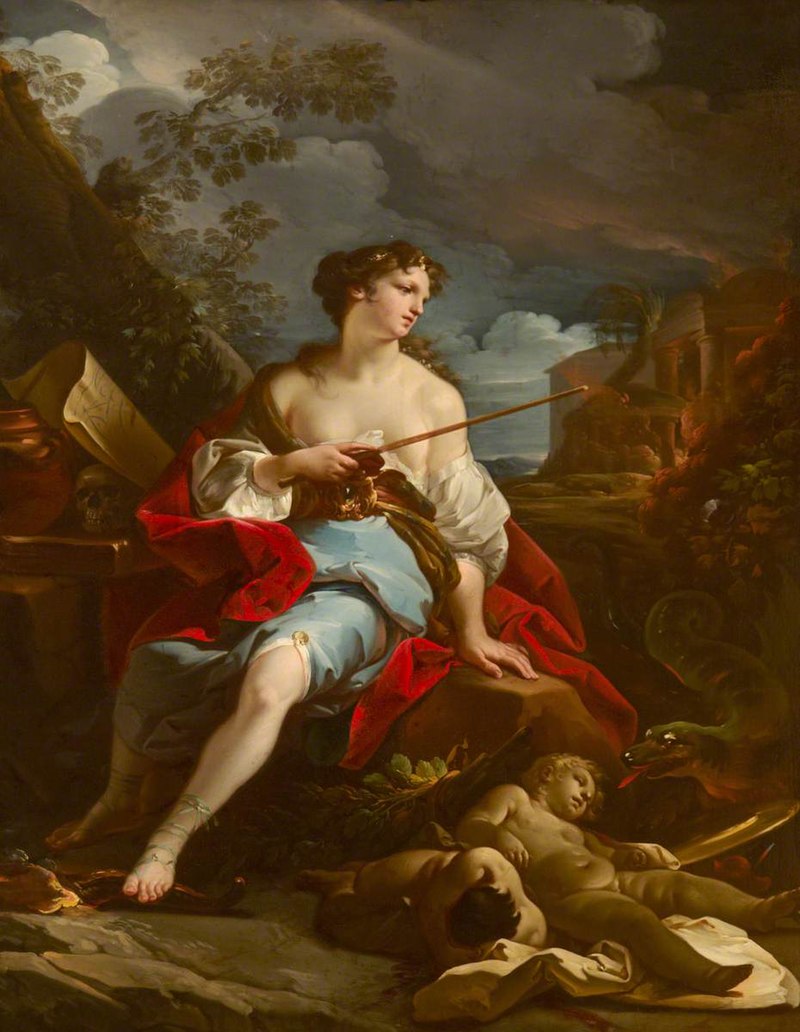
Medea by Corrado Giaquinto