“A Wolf…Chases Christ into the Rivers”: Some Latin Magnetic Poems

A friend of mine (not a classicist) found a vintage Latin Magnetic Poetry set and gave it to me.  It’s not so much for Latinists as it is for English-speakers familiar with Latin: it’s got all the familiar phrases from law (habeas corpus) and Catholicism (in nomine patris) and general fancy talk (caveat emptor).

I decided to give it a go, and see what syntactically coherent sentences and phrases I could put together in classical-ish Latin. I set myself the rule of using every word in the kit, and not reusing any word that wasn’t duplicated in the kit.  Don’t bother scanning them, as they’re not metrical, but who’s to say they aren’t Saturnians?

Photograph of Magnetic Poetry, in Latin: 18 small clusters of tiny white rectangular magnets with Latin text printed in black.  The rest of this blog post consists of a transcript of that text, with translations and a tiny bit of commentary.  The translations are colloquial rather than literal, but T. H. M. believes he can justify his colloquialisms (at least as long as every journal and book editor he's run into aren't the arbiter!).

some Magnetic Poetry, in Latin, assembled during a frantic semester teaching Latin Prose Composition

Some of them sound like they could plausibly have been written or at least thought by an actual historical Roman:

ars firma uitae est scientia in libris
life’s reliable skill is book-knowledge

homini est nihil beati
humankind has no share of happiness

Magna Mater omnes forma mala amat
the Great Mother loves everyone who has a bad body

uidi populum
facile errare
et labi ad bellum

I’ve seen the populace
easily going astray
and slipping towards war

aurea uox mea non est pura
my golden voice is not pure

sic ego rebus maximis gratias non emeritus sum
that’s why I haven’t earned thanks for my super-great accomplishments

Some had a feeling of banter that could, if you squint real hard, fit in a comedy of Plautus:

amor ab ipso bono
quem hominem amas;
te uici, Maria

I’m loved by the very nobleman
whom you love;
I’ve beaten you, Maria

idem sum
de quo delirium est
I’m the very guy
everyone’s crazy about

tu Brute carpe artes pauperes salis
dum gratia patris fiat tibi absurdo

you, Brutus, pick out the impoverished arts of wit
so long as you’ve got your dad’s good will, you ridiculous man

aue homo quid in curriculum uadis
de quo non bene cogito?

hey, dude, why are you wandering onto the racetrack
that I don’t think well of?

Others entered the danger zone, of either hanky panky or sacrilege:

ueni ad opus sub toga filii proximi
I got to work underneath the toga of the boy next door

coitus habeas tremens ante nauseam
may you, trembling, have sex to the point of nausea

pax alma mirabilis
pacifici Satanas domini beati
toto anno aureo
in cetera terra beata

the wondrous nourishing peace
of the peace-bringing blessed lord, o Satan,
within the entire golden year
in the remaining blessed land

nosce unum partum e culpa dei:
filius caueat de te pater
et de poena dura
et nomine minimo delicti

recognize one born out of God’s mistake:
the Son is on guard against you, Father,
and against harsh punishment
and against the slightest name of criminal action

But the best ones took me into the realm of the bizarre:

lupus bipes Christum in flumina sequitur
minima cum cura

a wolf walking on its hind legs chases Christ into the rivers
he don’t give a fuck

alter emptor lupi mortui exit e gloria populi
the dead wolf’s other buyer has lost the good reputation of the public

uiam inueniam
aut bona faciam absentia
nulla fide

I’ll find a way—
or I’ll make all my property disappear
with no regrets

mortem malo
sed corpus magnum uirile ago
per uitam
annum perpetuum

I prefer death
but I drag my giant manly body
through life
for an endless year

And in case it wasn’t clear what the whole Magnetic Poetry set was trying (with middling results) to do, notice that one standalone magnet at the top of the photo:
LATIN.

I managed to use every single word in the kit, which means this page has the sum of all Latin Magnetic Poetry options — so now it’s your turn to mix & match. Post your handiwork in the comments!

T. H. M. Gellar-Goad is Associate Professor of Classics and Zachary T. Smith Fellow at Wake Forest University. He is author of Laughing Atoms, Laughing Matter: Lucretius’ De Rerum Natura and Satire, and co-organizer of Feminism & Classics 2020 (err…2021? 2022?). Send quibbles, emendations, and scandalized expressions of dismay to him at thmgg@wfu.edu.

Satire’s Ire

“It is difficult not to write satire. For who is so willing to suffer this unjust city, so iron-clad, that they could restrain themselves?” [Juvenal]
difficile est saturam non scribere. nam quis iniquae tam patiens urbis, tam ferreus, ut teneat se

The story goes that when Henry Kissinger was offered a Nobel Peace Prize, Philip Roth thought that satire was effectively over. I had much the same thought as I drove by a crowded Applebee’s here in San Antonio, a city which has experienced record increases in new coronavirus cases over the past week. How can The Onion even stay in business when people are ready to sacrifice themselves for the ad blitz which will note that Applebee’s burgers are literally to die for. “Ours is essentially a tragic age, so we refuse to take it tragically.” This sentiment of Constance Chatterly, at the beginning of Lady Chatterly’s Lover, could be modified to suit our own time by noting that ours is essentially a self-satirizing age. It is tragic, to be sure; but all of the language of anger or despair has already been co-opted by the very sources of the tragedy itself.

It has become impossible to write anything meaningful about the collapse of culture and civilization in the 21st century without referring to the orange man, and I will not buck this trend. Some people have apparently been amused by comedic treatments of Trump, but it is hard to see what is so funny in them. Satire relies heavily on irony and exaggeration – but can that tumescent orange pustule be exaggerated any further? What fictionalized headline about him could be so preposterous that we wouldn’t believe it?

If we live in a post-satire world, it is only because we are living in the post-truth world, in which words don’t really seem to mean anything in particular. Stephen Colbert could be funny when coining the idea of “truthiness” because, in that era which now feels long-lost, there was at least some vestigial sense that facts existed and that it was the job of language to track and represent them with some accuracy. But who could have predicted that America’s expert epistemologist Rudy Giuliani would one day announce his revolutionary doctrine that truth isn’t truth? In such a world, truthiness just isn’t funny anymore.

As Juvenal seemed to sense in the opening lines of his first book of Satires, the beginning of satire lie in vexation:

Shall I never respond, vexed so often by the Theseid of rough-sounding Cordus?

numquamne reponam | uexatus totiens rauci Theseide Cordi?

Vexation is in ample supply. In an age as ridiculous as ours, it is hard to mock any of the agents of our suffering because they have already expressed themselves in the most ridiculous terms. Indeed, in every sense, they speak for themselves. What can we do to make a travesty of something which is already a parody of itself? Nothing. And so, we are left only with expressions of unalloyed rage, with no raillery to add zest to these wholly unpalatable truths.

Satire is more effective when the fools and villains in power make some attempt to disguise their malice. When they instead make an open show of their hypocrisy, they preclude the possibility for mockery, because they no longer even pay lip service to a standard to which they can be held. We all know that the politician and the CEO have no shame; but at least they used to have to act out a public ritual of pretending to feel shame when assailed by public opinion. Recognizing the hollowness of that gesture, they now simply “say the quiet part out loud” and rely on bolder sallies further into the fields of patent hypocrisy to flee from any reckoning. Delivering his opening monologue today, Shakespeare’s Richard III would simply announce to the whole cast of characters that he was determined to prove the villain.

Compare these two headlines:

With coronavirus cases climbing, Texas Gov. Greg Abbott says “no real need” to scale back business reopenings

City Enters Phase 4 Of Pretending Coronavirus Over

Very little separates the satirical from the reportorial here. But as we have seen during the reign of our circus clown in chief, the point at which evil and stupidity so exceed the bounds of credulity as to become parodies of themselves is the point at which they have removed themselves from public responsibility and become tyrants who need not answer to the anger or the mockery of the people. How nice it would be once again to live in a world where the fear and loathing of the people who run our lives could vent itself in jest.

Let such raise Palaces, and Manors buy,

Collect a Tax, or farm a Lottery,

With warbling eunuchs fill our Licensed Stage,

And lull to Servitude a thoughtless Age.

Heroes, proceed! What Bounds your Pride shall hold?

What Check restrain your Thirst of Pow’r and Gold?

Behold rebellious Virtue quite o’erthrown,

Behold our Fame, our Wealth, our Lives your own.

[Samuel Johnson, London 57-64]

Juvenalcrowned

A Wise Doctor, a Final Word

Sophocles, Ajax 581-582

“Close it quickly: it is not a sign of a wise doctor
To chant spells over a wound that needs cutting.”

πύκαζε θᾶσσον. οὐ πρὸς ἰατροῦ σοφοῦ
θρηνεῖν ἐπῳδὰς πρὸς τομῶντι πήματι.

691-2

“You, do what I advise and perhaps you will quickly learn
That even if I am unlucky, I have survived.”

ὑμεῖς δ᾿ ἃ φράζω δρᾶτε, καὶ τάχ᾿ ἄν μ᾿ ἴσως
πύθοισθε, κεἰ νῦν δυστυχῶ, σεσωμένον.

864-5

“This is the final word your Ajax ever says
I’ll tell the rest below in Hades to the dead.”

τοῦθ᾿ ὑμὶν Αἴας τοὔπος ὕστατον θροεῖ,
τὰ δ᾿ ἄλλ᾿ ἐν Ἅιδου τοῖς κάτω μυθήσομαι.

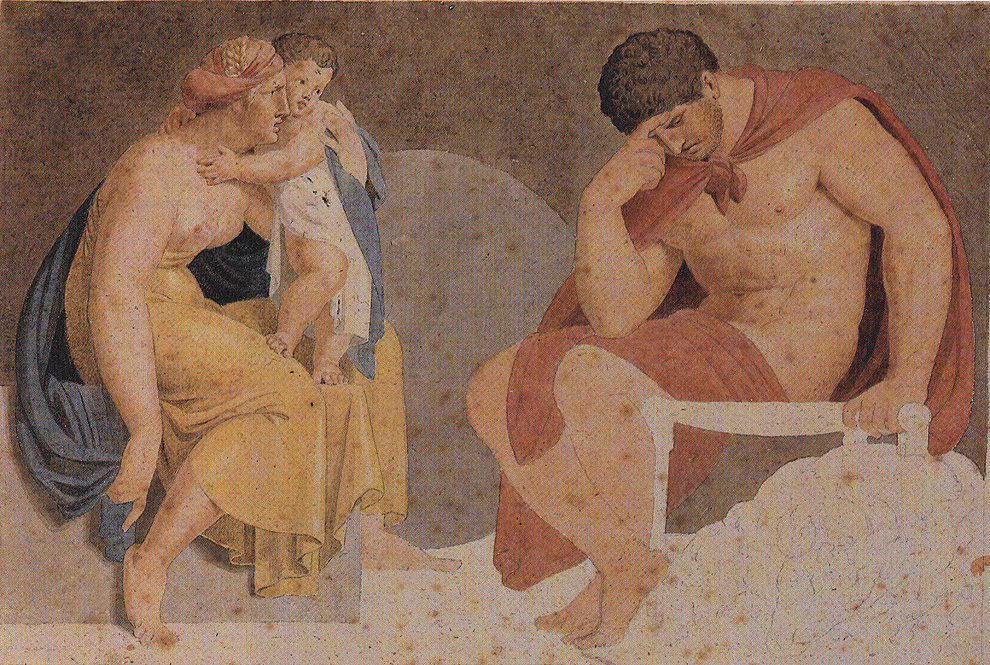
Ajax (Carstens).jpg
Asmus Jakob Carstens, Sorrowful Ajax with Termessa and Eurysakes

A Dedication to a Healer

Cometas Scholasticus, Greek Anthology 9.597

“I was struck immobile from my hips to the bottom of my feet
Completely denied my life’s work for so long,
Halfway between life and death, Hades’ neighbor,
Merely breathing, but a corpse in every other way.

But wise Philippos, whom you view in the picture,
Brought me back to life by healing the dread disease.
And Antoninus walks on the earth again as before!
I tread on it with my feet and I feel whole.”

Νωθρὸς ἐγὼ τελέθεσκον ἀπ᾿ ἰξύος ἐς πόδας ἄκρους
τῆς πρὶν ἐνεργείης δηρὸν ἀτεμβόμενος,
ζωῆς καὶ θανάτοιο μεταίχμιον, Ἄϊδι γείτων,
μοῦνον ἀναπνείων, τἄλλα δὲ πάντα νέκυς.
ἀλλὰ σοφός με Φίλιππος, ὃν ἐν γραφίδεσσι δοκεύεις,
ζώγρησεν, κρυερὴν νοῦσον ἀκεσσάμενος·
αὖθις δ᾿ Ἀντωνῖνος, ἅπερ πάρος, ἐν χθονὶ βαίνω:
καὶ ποσὶ πεζεύω, καὶ ὅλος αἰσθάνομαι.

Asklepios at Epidauros

Impermanence of Youth Etc. Etc.

Giovanni Marrasio, Angelinetum (6):

“Why do you rave, trusting too much in the boldness of youth? With a headlong dive, curved old age comes upon us. Look: the earth is not always clothed in green grass, nor is it always sun-scorched and firm; the land does not always bring forth golden and snowy colors alike along with the purple roses; the lilies often shine redolent with their gentle scent; often the sweet fruits weigh down their branches; the vine often gives us those sweet foods, the grapes. But take any tree you want – it doesn’t always have its fruits. Thus will beautiful, charming youth deceive you, though it’s now compliant with your desires.”

Botticelli-primavera.jpg
Botticelli, Primavera

Ad divam Angelinam.

Quid furis, audaci nimium confisa iuventa?

Praecipiti penna curva senecta venit

Aspice: non semper vestita est terra virenti

Gramine, nec semper solibus usta riget,

Nec semper rutilos producit terra colores

Et niveos pariter purpureasque rosas,

Lilia saepe nitent placido redolentia odore,

Saepe gravant ramos dulcia poma suos,

Dulces saepe cibos dat nobis pampinus uvas;

Non semper fructus quaelibet arbos habet.

Sic te decipiet formosa et blanda iuventus,

Quae nunc est votis obsequiosa tuis.

Pseudo-Scholarship and Profit

E.M. Forster, Aspects of the Novel

“The scholar, like the philosopher, can contemplate the river of time. He contemplates it not as a whole, but he can see the facts, the personalities, floating past him, and estimate the relations between them, and if his conclusions could be as valuable to us as they are to himself he would long ago have civilized the human race. As you know, he has failed. True scholarship is incommunicable, true scholars rare. There are a few scholars, actual or potential, in the audience today, but only a few, and there is certainly none on the platform. Most of us are pseudo-scholars, and I want to consider our characteristics with sympathy and respect, for we are a very large and quite a powerful class, eminent in Church and State, we control the education of the Empire, we lend to the Press such distinction as it consents to receive, and we are a welcome asset at dinner-parties.

Pseudo-scholarship is, on its good side, the homage paid by ignorance to learning. It also has an economic side, on which we need not be hard. Most of us must get a job before thirty, or sponge on our relatives, and many jobs can only be got by passing an exam. The pseudo-scholar often does well in examination (real scholars are not much good), and even when he fails he appreciates their innate majesty. They are gateways to employment, they have power to ban and bless. A paper on King Lear may lead somewhere, unlike the rather far-fetched play of the same name. It may be a stepping-stone to the Local Government Board. He does not often put it to himself openly and say ‘That’s the use of knowing things, they help you to get on.’ The economic pressure he feels is more often subconscious, and he goes to his exam, merely feeling that a paper on King Lear is a very tempestuous and terrible experience but an intensely real one. And whether he be cynical or naif, he is not to be blamed. As long as learning is connected with earning, as long as certain jobs can only be reached through exams, so long must we take the examination system seriously. If another ladder to employment was contrived, much so-called education would disappear, and no one be a penny the stupider.”

Image result for em forster

Presidential Latin Scholarship

John Adams to Mr. Marston, September 1st 1821:

“Dear Sir

The Roman dictator was Lucius Quintius Cincinnatus. His Master of the horse was Caius Servilius Ahala whose daring and dangerous exploit was killing Spurius Melius for aiming at royalty. The story is in Livy, Book 4th Chapter 13th In Rollin’s Roman History Vol 2 p 46 In Adam’s defence Vol 3 p 242 The Roman Antiquities of Dionisius Halicarnassensis come not down so low His account is lost but I presume the anecdote is to be found in every general Roman History.

Is it not remarkable that this most memorable of all the applications of the phrase Macte virtute esto is omitted in all the dictionaries Stephens Faber Ainsworth amidst all their learned lumber have forgotten this. They have quoted Virgil Ovid Cicero and even the wag Horace but overlooked Livy.

Horace the rogue in his first book of Satyres Satire 2 lines 21 22 [&c] puts these words into the mouth of Cato and applies them for a very curious moral purpose

“Macte virtute esto inquit sententia dia Catonis

Nam simul ac venas inflavit tetra libido

Huc juvenes aequum est descendere non alienas

Permolere uxores.”

Virgil in his ninth Aeneid has made Apollo Say to Ascanius, after his noble Juvenile exploit in killing Numanus

“Macte nova virtute, puer: Sic itur ad astra

Dis genite, et geniture deos.”

He afterwards descends from his cloud in the shape of old Butes, the Armor Bearer and Janitor and gives Iulus good advice,

“Sit satis Aeneada telis impune Numanum

Oppetisse tuis &c

Cætera parce puer bello.”

Servius’s commentary upon the word “Macte” is Magis aucte Et est sermo tractatus a sacris; quoties enim aut [Thus] aut Vinum [. . .] victimam fundebatur dicebat: Mactus est taurus vino vel thure hoc est cumulata et hostia et magis aucta.

In the Dauphin’s Edition the Note upon the Word “Macto is “Mactus[, Start insertion,, End,] quasi Mauctus id est magis auctus, hic herba adulta dicta est a Catone macta quia aucta. Hostiæ quoque mactie quia mola, Vino, thure Spaigebantur et quasi cumulabantur augebanturque ante Sacrificium; unde mactare pro cadere dictum fuit. Diis ippi in Sacrificiis exclamabunt: Macte hocce vino inferio esto; macte hacce dape esto quia sacrificiis augeri eorum felicitatem putabunt. Cicero dixit Nonio teste maitare aliquem honoribus. Plautus mactare infortunio, Hac formula vocativum adhib[etiri]Macte pro nominativo Mactus, more attico Macte ingenio este cæli interpretes Pliny. Macte virtutites estote Milites Romani.

Rollin in the second volume of his history page 261 translates the phrase Macte virtute est liberata Republica by commentary J’approve votre action et je vous [. . .] de votre zele Servilius Vous vene[z] de delivrer votre Patrie d’un tyran qui voulut la reduire en Servitude.

Livy’s narration of this whole transaction is ample in his fourth book Chapters 13 14 15 16.

There is in Livy another remarkable application of this phrase by Porsenna, In the second book of Livy Chap 11 12 13 14 is the romantic and miraculous Story of Caius Mucius Scævola and his attempt to kill the king of Etruria in his camp and tent Failing in his enterprise by killing the Secretary instead of the king and expecting death in torment he tormented himself by thrusting his hand into burning. Porsenna showedd soul equally great by pardoning him in these words “Tu vero abi in te mages quam in me hostilia ausus Iuberem macte vurtute esse si pro mea Patria ista virtus staret Nunc jure belli liberam te intactum inviolatum que dimitto.

Some Critics have pretended that Macte is an adverb and some that it is in the ablative case both absurdly.

In Ovid may be found the following phrases Mactare alequem duum Mactare animal Picaseo Mactare anseum hospitibus Dius Mactare catuun Mactare piraneam Mactare pivennas bid queqam Mactare orem pauti Mactaro ores Mactare [. . .] tot mactare & vinum Mactari ad ovas sacras victima Mactatuo racca Miuccor Mactatus ad aucas and many others but I am weary of this [per ducubital] amusement.

J. Adams

Image result for john adams

Taking the Cure in Isolation

Apuleius, Metamorphoses 4.1

“Around noon, when the sun’s flame was already hot, we turned off in some village to the home of some old men known well to the thieves. This was easy to understand for even a donkey thanks to the prolonged conversation and shared kisses. They also gave some gifts to them which I had carried on my back and seemed to relate that they were obtained through theft with secret whispers. Once we were unburdened of every bag, they left us to amble and eat in a field next to the home.

But I was not really drawn to a pastoral communion with either the ass or my old horse and I was also not quite used to eating grass. I could see a garden on the other side of the stable, so I broke into it, already wracked by hunger. I filled my stomach immediately with those vegetables, even though they were raw, and I was saying a little prayer to all the gods as I looked around the place, hoping I might find the light of rose bushes in the nearby gardens.

This isolation was providing me confidence I did not have before, if once I was away from the road and hidden by bushes, I could eat the medicine and rise from the curved-hoof of four-footed pack animal to stand straight like a man, while no one was looking.”

Diem ferme circa medium, cum iam flagrantia solis caleretur, in pago quodam apud notos ac familiares latronibus senes devertimus. Sic enim primus aditus et sermo prolixus et oscula mutua quamvis asino sentire praestabant. Nam et rebus eos quibusdam dorso meo depromptis munerabantur, et secretis gannitibus quod essent latrocinio partae videbantur indicare. Iamque nos omni sarcina levatos in pratum proximum passim libero pastui tradidere. Nec me cum asino vel equo meo compascuus coetus attinere potuit, adhuc insolitum alioquin prandere faenum; sed plane pone stabulum prospectum hortulum iam fame perditus fidenter invado, et quamvis crudis holeribus affatim tamen ventrem sagino, deosque comprecatus omnes cuncta prospectabam loca, sicubi forte conterminis in hortulis candens reperirem rosarium. Nam et ipsa solitudo iam mihi bonam fiduciam tribuebat, si devius et frutectis absconditus, sumpto remedio, de iumenti quadripedis incurvo gradu rursum erectus in hominem inspectante nullo resurgerem.

Nicolai Abildgaard – Fotis sees her Lover Lucius Transformed into an Ass. Motif from Apeleius’ The Golden Ass

Expect the Unexpected! Reading Euripides’ “Ion” Online

Euripides, Ion 1510-1511

“May no one ever believe that anything is unexpected,
thanks to the events that are happening now.”

μηδεὶς δοκείτω μηδὲν ἀνθρώπων ποτὲ
ἄελπτον εἶναι πρὸς τὰ τυγχάνοντα νῦν.

The Center for Hellenic Studies , the Kosmos Society and Out of Chaos Theatre has been presenting scenes from Greek tragedy on the ‘small screen’ with discussion and interpretation during our time of isolation and social distancing. As Paul O’Mahony, whose idea this whole thing was said in an earlier blog post, Since we are “unable to explore the outside world, we have no option but to explore further the inner one.

Each week we select scenes from a play, actors and experts from around the world, and put them all together for 90 minutes or so to see what will happen. This process is therapeutic for us; and it helps us think about how tragedy may have had similar functions in the ancient world as well.

RGTO.Ion.poster-01-1

This week, we turn to Euripides’ Ion, a play which centers around Apollo’s rape of Creusa, her exposure of the child, and the events which bring about the reunion of mother and child outside the Delphic oracle. In and amidst this plot, we witness reflections on divine caprice, a woman’s sufferings, anxiety about foreign nobles and indigenous power, and deep interest in ritual places and the foundation myths of Athens. And, of course, we have politics and power: this play was performed during the Peloponnesian War, after Athens had suffered a terrible setback during the Sicilian Expedition.

Euripides, Ion 129-135

“Apollo, my work for you
Is noble as I honor the seat of your prophecy,
Toiling in front of your home.
Oh, to work as a slave for the gods
Not mortals!
I never get tired pushing through
Labor of such good name.”

Φοῖβε, σοὶ πρὸ δόμων λατρεύω,
τιμῶν μαντεῖον ἕδραν·
κλεινὸς δ᾿ ὁ πόνος μοι
θεοῖσιν δούλαν χέρ᾿ ἔχειν
οὐ θνατοῖς ἀλλ᾿ ἀθανάτοις·
εὐφάμους δὲ πόνους
μοχθεῖν οὐκ ἀποκάμνω.

Scenes (Using this script)

236-391 Ion, Creusa, Chorus
429-451 Ion
517-607 Ion, Xuthus, Chorus
1122-1228 Servant
1261-1444 Ion, Creusa, Chorus, Priestess

Euripides, Ion 247-254

“Stranger, your way is not uncultured,
That you come into wonder at my tears.
Now that I look upon this home of Apollo’s
I have recalled some ancient memory.
While I was here, my mind remained someplace else.
Miserable women. Miserable deeds by the gods!
What do I do? To what court of appeal can I turn
When I’m ruined by the injustice of those who rule us?”

ὦ ξένε, τὸ μὲν σὸν οὐκ ἀπαιδεύτως ἔχει
ἐς θαύματ᾿ ἐλθεῖν δακρύων ἐμῶν πέρι·
ἐγὼ δ᾿ ἰδοῦσα τούσδ᾿ Ἀπόλλωνος δόμους
μνήμην παλαιὰν ἀνεμετρησάμην τινά·
ἐκεῖσε τὸν νοῦν ἔσχον ἐνθάδ᾿ οὖσά περ.
ὦ τλήμονες γυναῖκες· ὦ τολμήματα
θεῶν. τί δῆτα; ποῖ δίκην ἀνοίσομεν,
εἰ τῶν κρατούντων ἀδικίαις ὀλούμεθα;

Actors

Nathalie Armin
Tim Delap
Danai Epithymiadi
Evelyn Miller

Patrick Walshe McBride
Paul O’Mahony

Special Guests: Michael Scott and Lucia Athanassaki

Dramaturgical assistance: Emma Pauly

Direction: Paul O’Mahony

Posters: John Koelle

Technical, Moral, Administrative Support: Lanah Koelle, Allie Mabry, Janet Ozsolak, Helene Emeriaud, Sarah Scott, Keith DeStone

Euripides, Ion 1300

“You were trying to kill me because of fear of the future?”
κἄπειτα τοῦ μέλλειν μ᾿ ἀπέκτεινες φόβῳ;

Euripides, Ion 1311

“We will give pain to those who pained us”
λυπήσομέν τιν᾿ ὧν λελυπήμεσθ᾿ ὕπο

Upcoming Readings (Go here for the project page)

Euripides, Hecuba, June 24th

Aeschylus, Prometheus Bound, July 1st

Euripides, Andromache, July 8


Euripides, Ion 585-594

“Matters don’t have the same appearance
When seen from up close or from a distance.
I welcome this change of events,
Discovering you as my father. But hear me out.
They claim that some of the famous Athenians
Are native born to the soil itself, not immigrants.
I would suffer from two diseases among them,
As the bastard song of a foreign father
Because of this very insult, I would remain weak,
I would be the nothing son of nobodies.”

οὐ ταὐτὸν εἶδος φαίνεται τῶν πραγμάτων
πρόσωθεν ὄντων ἐγγύθεν θ᾿ ὁρωμένων.
ἐγὼ δὲ τὴν μὲν συμφορὰν ἀσπάζομαι,
πατέρα σ᾿ ἀνευρών· ὧν δὲ γιγνώσκω †πέρι†
ἄκουσον. εἶναί φασι τὰς αὐτόχθονας
κλεινὰς Ἀθήνας οὐκ ἐπείσακτον γένος,
ἵν᾿ ἐσπεσοῦμαι δύο νόσω κεκτημένος,
πατρός τ᾿ ἐπακτοῦ καὐτὸς ὢν νοθαγενής.
καὶ τοῦτ᾿ ἔχων τοὔνειδος, ἀσθενὴς μένων
<αὐτὸς τὸ> μηδὲν κοὐδένων κεκλήσομαι.

Videos of Earlier Sessions (Go here for the project page)
Euripides’ Helen, March 25th
Sophocles’ Philoktetes, April 1st
Euripides’ Herakles, April 8th
Euripides’ Bacchae, April 15th
Euripides’ Iphigenia , April 22nd
Sophocles, Trachinian Women, April 29th
Euripides, Orestes May 6th
Aeschylus, Persians, May 13th
Euripides, Trojan Women May 20th
Sophocles’ Ajax, May 27th
Sophocles, Oedipus Tyrannos, June 10th

Euripides, Ion 1522-1527

“Look, mom, could it be that you slipped in that sickness
Which often afflicts maidens into hidden affairs
And then laid the blame on the good?
Did you try to flee my disgrace by saying
That you conceived me with Apollo when it really wasn’t a god?”

ὅρα σύ, μῆτερ, μὴ σφαλεῖσ᾿ ἃ παρθένοις
ἐγγίγνεται νοσήματ᾿ ἐς κρυπτοὺς γάμους
ἔπειτα τῷ θεῷ προστίθης τὴν αἰτίαν,
καὶ τοὐμὸν αἰσχρὸν ἀποφυγεῖν πειρωμένη
Φοίβῳ τεκεῖν με φῄς, τεκοῦσ᾿ οὐκ ἐκ θεοῦ.

Cicero and Caesar: Destroyers of Latin Education

Edmund Wilson, Reflections on the Teaching of Latin:

It is still possible for a student to- day, as it was forty years ago, to have been through four or five years of Latin and yet, as I have recently had a chance to note, not to have learned, for example, the words for the commonest colors and animals, the parts of the body and the seasons of the year. Why?

The answer is: Caesar and Cicero – the military vocabulary of the one, the highfalutin rhetoric of the other. And what is the reason for prescribing these writers? The answer to this is that Caesar, at some now remote point of the past, was selected as the only example of classical Latin prose that was simple and straight-forward enough for a schoolboy to make his way through, and that Cicero represented the ideal of Latin diction at a time when it was thought essential for every educated man to write Latin. And why the years of grinding at grammar at the expense of learning to read? This is a part of the ancient tradition of abstract intellectual discipline. The justification for it is the same as the justification for piling problems of algebra on students who have no mathematical interests and will never have occasion to use algebra. Both at worst have a minimum of practical use. Latin syntax does give us some training in the relation of words in a sentence, as algebra gives us some idea of what is involved in mathematical method; but there is nevertheless a fallacy in this old ideal. It strikes us as rather monstrous when we read about how Karl Marx, that intellectual prodigy, used to exercise his mental muscles by committing to memory whole pages of languages he did not understand; yet actually our teaching of Latin inflicts something not very different. The student is made to memorize pages of declensions, conjugations, and rules for grammatical constructions that mean little or nothing to him as language.

Does the minimum of real Latin that he acquires in this way serve any useful purpose in later life? The lawyer hardly needs this instruction to pick up the Latin phrases of the law; the student in most scientific fields can learn the terminology of his subject without worrying about Cicero and Caesar.

Caesar, Cicero and 'The Best and Most Vigilant Consulship' « The ...