Pliny on the Utility of Gossip

Pliny, Epistle 18 to Fadius Rufinus 12

“You now have all the city’s rumors: for all our gossip is Tullus. His estate sale is hotly anticipated. For he had so much that on that day when he purchased the largest gardens he also filled them with the most and most ancient statues. These were works of finest beauty in which he had forgotten!

If you have any news you think is worthy of sharing, don’t keep it from me. For human ears are always pleased by news, and we use these examples to learn the art of living. Farewell.”

Habes omnes fabulas urbis; nam sunt omnes fabulae Tullus. Exspectatur auctio: fuit enim tam copiosus, ut amplissimos hortos eodem quo emerat die instruxerit plurimis et antiquissimis statuis; tantum illi pulcherrimorum operum in horreis quae neglegebat. Invicem tu, si quid istic epistula dignum, ne gravare. Nam cum aures hominum novitate laetantur, tum ad rationem vitae exemplis erudimur. Vale.

Gossip
BL MS Royal 6 E VII


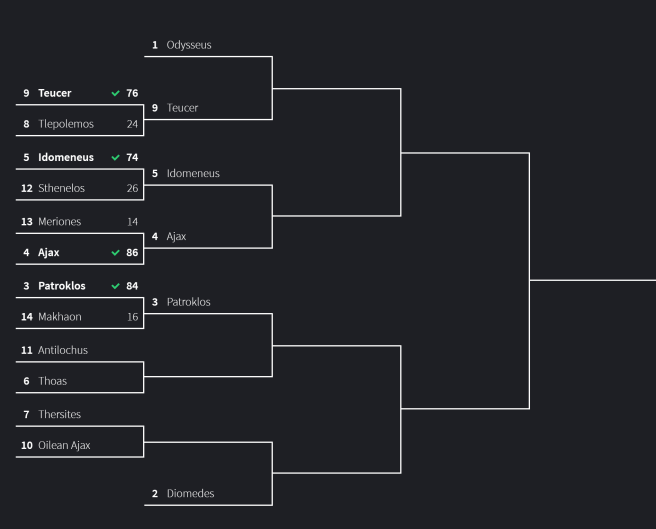
#NANAIHB Day 6: Thersites vs. Oilean Ajax

This is the 6th day of the Non-Atreid, Non-Achilles Iliadic Hero Bracket tournament to once and for all establish the second best of the Achaeans. 

What turned out to be the closest contest of this tournament of favorites drew some strong interest from the crowd. Odysseus gave the Aitolian Thoas some advice as he prepared to face Antilokhos who could not seem to get away from his father Nestor. Indeed, the match itself was almost called off as that old Gerenian horseman could be heard extolling the importance of deep breaths and visualizing success to his youngest son.

AvTh poll

Once he broke away from his father, he rushed straight at Thoas, dodging the first spear only to the second spear break straight through his shield and graze his thigh. The wound was minor, but Antilokhos slipped and fell on the ground, breaking his shield. For a moment, it looked like Antilokhos’ speed was nullified and in the stunned silence you could hear Achilles grumbling about how he should change his name to Antilakhos* since luck wasn’t on his side.

But as Thoas turned, dropped his shield and drew his sword, Antilokhos rolled quickly to his left where Thoas’ first spear had been deflected, and pulled it up just as Andraimon’s son tried to bring his sword down on him. Result? Aitolian with dislocated shoulder, and shredded muscles around the joint.

*lokhos means “ambush”, lakhos means “lot”.

NANAIHB Day 6a

This just might be the juiciest match-up of the first round. Indeed, there’s no way we’ll find another meeting of two potential wrestling heels: Thersites, a man so hated he unites Achilles, Agamemnon and Odysseus, and Ajax, son of Oileus, the Lokrian Homer sees fit to cover in cow-shit.

NANAIHB Day 6a (3)

Thersites, from Aitolia is the son of Agrios who was the brother of Oineus, the king of Aitolia. If you’re keeping track, that makes him a kinsman of sorts with both Thoas and Diomedes. He does not show up in the catalogue of ships and we never actually see him fight. But we do hear a bit about him. Homer doesn’t describe many of the heroes physically, but Thersites gets six lines (2.216-221):

And he was the most shameful man who came to Troy.
He was cross-eyed and crippled in one foot. His shoulders
Were curved, dragged in toward his chest. And on top
His head was misshaped, and the hair on his head was sparse.
He was most hateful to both Achilles and Odysseus
For he was always reproaching them.

….αἴσχιστος δὲ ἀνὴρ ὑπὸ ῎Ιλιον ἦλθε·
φολκὸς ἔην, χωλὸς δ’ ἕτερον πόδα· τὼ δέ οἱ ὤμω
κυρτὼ ἐπὶ στῆθος συνοχωκότε· αὐτὰρ ὕπερθε
φοξὸς ἔην κεφαλήν, ψεδνὴ δ’ ἐπενήνοθε λάχνη.
ἔχθιστος δ’ ᾿Αχιλῆϊ μάλιστ’ ἦν ἠδ’ ᾿Οδυσῆϊ·
τὼ γὰρ νεικείεσκε·

Modern scholars have written a lot about him too! Just because he’s most shameful does not mean he can’t be the second best too, does it? (The T scholion for this line helpfully notes: “most shameful: this is also said of an ape.” αἴσχιστος: τοῦτο καὶ ἐπὶ πιθήκου). The scholia report that Thersites fell off a cliff running from a boar and so his name—meaning “bold, audacious” might just be a joke. But in the criticisms he makes, another scholion also claims they say that [Thersites] is the poet’s agent, that he appropriates his essence ”Θερσίτης δ’ ἔτι: ἐπίτροπον τοῦ ποιητοῦ φασιν αὐτόν, σφετερισάμενον τὴν οὐσίαν. Because, Thersites may look scarier, but it is more frightening when you speak the Truth.
Ajax, the lesser: The son of Oileus. Also called Lokrian Ajax. Another hero Homer spends time describing physically:

“The fast son of Oileus was leading the Lokrians
Smaller, not in any way as big as Telamonian Ajax
But much smaler. He was small and wore linen armor.
But he surpassed All the Greeks and the Achaeans in spear-play.”

Λοκρῶν δ’ ἡγεμόνευεν ᾿Οϊλῆος ταχὺς Αἴας
μείων, οὔ τι τόσος γε ὅσος Τελαμώνιος Αἴας
ἀλλὰ πολὺ μείων· ὀλίγος μὲν ἔην λινοθώρηξ,
ἐγχείῃ δ’ ἐκέκαστο Πανέλληνας καὶ ᾿Αχαιούς·

So, the narrative takes pains to emphasize his smallness and his swiftness, but his character emerges elsewhere. He participates in the battles well and kills the “most” men at the end of book 13 thanks to his swiftness. But he argues nastily with Idomeneus during the chariot games, receiving in turn the address “Ajax, best at the quarrel, shit-for-brains…” (Αἶαν νεῖκος ἄριστε κακοφραδὲς…23.483.” And when he competes in the footrace, he slips in cow manure and falls in a pile of it (thanks to Athena). Of course, the assembled Greeks look on and laugh as he spits the shit from his mouth (23.780-784). Ajax is, of course, most famous for raping Kassandra on the altar of Athena and helping to derail the homecoming of the Achaeans. So, not a good guy.

So what’s the choice here? A bold-talker with no fighting history or a fast-running, linen-covered, creep-fest? And, to be honest, how much does it matter? The prize for this context is to get crushed by Diomedes.

Prejudice and Truth

Plato, Republic 6. 499e-500a

“Look, buddy,” I said, “Don’t accuse the majority so completely like this. They will have a different opinion if instead of being offensive, you show them the value of abandoning their prejudice against loving learning and make it clear what you mean when you mention philosophers, defining what they do and what there are like as we just did, so they they won’t believe you are talking about the people they suspect.”

Ὦ μακάριε, ἦν δ’ ἐγώ, μὴ πάνυ οὕτω τῶν πολλῶν κατηγόρει. ἀλλοίαν τοι δόξαν ἕξουσιν, ἐὰν αὐτοῖς μὴ φιλονικῶν ἀλλὰ παραμυθούμενος καὶ ἀπολυόμενος τὴν τῆς φιλομαθίας διαβολὴν ἐνδεικνύῃ οὓς λέγεις τοὺς φιλοσόφους, καὶ διορίζῃ ὥσπερ ἄρτι τήν τε φύσιν αὐτῶν καὶ τὴν ἐπιτήδευσιν, ἵνα μὴ ἡγῶνταί σε λέγειν οὓς αὐτοὶ οἴονται.

Cicero, Pro Cluentio 202

“Mob-rallies are the place for prejudice, the courts are the place for truth.”

…in contionibus esse invidiae locum, in iudiciis veritati

Plato, Apology, 19

“I must try to free you of the prejudice you have believed for a long time in so short a period.”

καὶ ἐπιχειρητέον ὑμῶν ἐξελέσθαι τὴν διαβολὴν ἣν ὑμεῖς ἐν πολλῷ χρόνῳ ἔσχετε ταύτην ἐν οὕτως ὀλίγῳ χρόνῳ.

Isocrates, On the Peace 142

“If we really want to get rid of the prejudices we have at this present time, we need to stop the pointless conflicts…”

δεῖ γὰρ ἡμᾶς, εἴπερ βουλόμεθα διαλύσασθαι μὲν τὰς διαβολὰς ἃς ἔχομεν ἐν τῷ παρόντι, παύσασθαι δὲ τῶν πολέμων τῶν μάτην γιγνομένων

Diogenes Laertius, Lives of the Eminent Philosophers: Epicurus 131

“When we say that pleasure is the goal, we are not talking about he pleasures of the insatiable or those sensuous ones, as those who are ignorant or disagree with us or are prejudiced against us believe; but instead we mean not feeling pain in the body nor trouble in the soul.”

“Ὅταν οὖν λέγωμεν ἡδονὴν τέλος ὑπάρχειν, οὐ τὰς τῶν ἀσώτων ἡδονὰς καὶ τὰς ἐν ἀπολαύσει κειμένας λέγομεν, ὥς τινες ἀγνοοῦντες καὶ οὐχ ὁμολογοῦντες ἢ κακῶς ἐκδεχόμενοι νομίζουσιν, ἀλλὰ τὸ μήτε ἀλγεῖν κατὰ σῶμα μήτε ταράττεσθαι κατὰ ψυχήν.

Image result for crowd on greek vase

Homer Spews, We Lick

Robert Burton, The Anatomy of Melancholy (Preface):

What a company of poets hath this year brought out, as Pliny complains to Sossius Sinesius. This April every day some or other have recited. What a catalogue of new books all this year, all this age (I say), have our Frankfort Marts, our domestic Marts brought out? Twice a year, Proferunt se nova ingenia et ostentant, we stretch our wits out, and set them to sale, magno conatu nihil agimus. So that which Gesner much desires, if a speedy reformation be not had, by some prince’s edicts and grave supervisors, to restrain this liberty, it will run on in infinitum. Quis tam avidus librorum helluo, who can read them?

As already, we shall have a vast chaos and confusion of books, we are oppressed with them, our eyes ache with reading, our fingers with turning. For my part I am one of the number, nos numerus sumus, (we are mere ciphers): I do not deny it, I have only this of Macrobius to say for myself, Omne meum, nihil meum, ’tis all mine, and none mine. As a good housewife out of divers fleeces weaves one piece of cloth, a bee gathers wax and honey out of many flowers, and makes a new bundle of all, Floriferis ut apes in saltibus omnia libant, I have laboriously collected this cento out of divers writers, and that sine injuria, I have wronged no authors, but given every man his own; which Hierom so much commends in Nepotian; he stole not whole verses, pages, tracts, as some do nowadays, concealing their authors’ names, but still said this was Cyprian’s, that Lactantius, that Hilarius, so said Minutius Felix, so Victorinus, thus far Arnobius: I cite and quote mine authors (which, howsoever some illiterate scribblers account pedantical, as a cloak of ignorance, and opposite to their affected fine style, I must and will use) sumpsi, non suripui; and what Varro, lib. 6. de re rust. speaks of bees, minime maleficae nullius opus vellicantes faciunt delerius, I can say of myself, Whom have I injured?

The matter is theirs most part, and yet mine, apparet unde sumptum sit (which Seneca approves), aliud tamen quam unde sumptum sit apparet, which nature doth with the aliment of our bodies incorporate, digest, assimilate, I do concoquere quod hausi, dispose of what I take. I make them pay tribute, to set out this my Maceronicon, the method only is mine own, I must usurp that of Wecker e Ter. nihil dictum quod non dictum prius, methodus sola artificem ostendit, we can say nothing but what hath been said, the composition and method is ours only, and shows a scholar. Oribasius, Aesius, Avicenna, have all out of Galen, but to their own method, diverso stilo, non diversa fide. Our poets steal from Homer; he spews, saith Aelian, they lick it up. Divines use Austin’s words verbatim still, and our story-dressers do as much; he that comes last is commonly best,

———donec quid grandius aetas
Postera sorsque ferat melior.———

Though there were many giants of old in physic and philosophy, yet I say with Didacus Stella, A dwarf standing on the shoulders of a giant may see farther than a giant himself; I may likely add, alter, and see farther than my predecessors; and it is no greater prejudice for me to indite after others, than for Aelianus Montaltus, that famous physician, to write de morbis capitis after Jason Pratensis, Heurnius, Hildesheim, &c., many horses to run in a race, one logician, one rhetorician, after another.

Robert Burton (scholar) - Wikipedia

One Country, One World

Meleager, Greek Anthology, 7.417

“My nurse was the Island of Tyre but the country which bore me
Was Atthis which rests in Assyrian Gadara.
I, Meleager, came as a shoot of the Muses from Eukrates
And I ran first in play with the Menippiean Graces.

If I am Syrian, why is it a surprise? Friend, we inhabit
One country, the world. One Khaos gave all mortals this life.

I inscribe these words on a tablet before my tomb, now very old.
For old age is Hades’ neighbor next door.
Offer a word to bid this chatty old man farewell,
And may you come to a chatty old age too.”

Νᾶσος ἐμὰ θρέπτειρα Τύρος· πάτρα δέ με τεκνοῖ
᾿Ατθὶς ἐν ᾿Ασσυρίοις ναιομένα Γαδάροις·
Εὐκράτεω δ’ ἔβλαστον ὁ σὺν Μούσαις Μελέαγρος
πρῶτα Μενιππείοις συντροχάσας Χάρισιν.
εἰ δὲ Σύρος, τί τὸ θαῦμα; μίαν, ξένε, πατρίδα κόσμον
ναίομεν, ἓν θνατοὺς πάντας ἔτικτε Χάος.
πουλυετὴς δ’ ἐχάραξα τάδ’ ἐν δέλτοισι πρὸ τύμβου·
γήρως γὰρ γείτων ἐγγύθεν ᾿Αίδεω.
ἀλλά με τὸν λαλιὸν καὶ πρεσβύτην σὺ προσειπὼν
χαίρειν εἰς γῆρας καὐτὸς ἵκοιο λάλον.

For more on “citizen of the world” in ancient literature, see this post.

Related image
Apamea, Greek City in Syria

A Program for Historical Reading

Aeneas Silvius Piccolomini, de Liberorum Educatione:

“Boys should also read the historians such as Livy and Sallust, though they may need to be further advanced in order to understand them. Justin and Quintus Curtius and Arrian, whom Petrus Paulus translated are true, and not fantastic stories. They ought to run through the deeds of Alexander. Valerius, the historian and philosopher, is not unworthy to be joined with these. But Suetonius ought not to be entrusted to boys. History may also be received with no small profit from the books of Kings, Maccabees, Judith, Esdra, Esther, the evangelists, and the Acts of the Apostles. ‘For history’, as Cicero says, ‘is a witness to the times, the light of the truth, the instructor of life, the messenger of antiquity.’ It is most useful, therefore, to have read as many histories as possible and to exercise oneself in them, so that you might know from the example of others how to pursue what is useful and avoid what is harmful. I would not, however, have you occupied with excessive labor, but it is enough to have learned the histories related by famous authors.On no account, if it were up to me, would I let the histories of the Bohemians or the Hungarians be given to a boy. For they are written by the uneducated, they contain a number of imbecilities, many lies, no notable thoughts, and no ornamentation. For, as Pliny says, ‘no book is so bad that some good may not be taken from it’, and on that account appears willing to grant anything written a reading over, the thought really ought to apply to those who are already learned, and not to children. For, unless children are steeped from the beginning in the best examples, they will never be able to attain good sense.”

piccolomini1

#NANAIHB Day 5: Antilokhos vs. Thoas

This is the fifth day of the Non-Atreid, Non-Achilles Iliadic Hero Bracket tournament to once and for all establish the second best of the Achaeans. 

PvMpoll

The Achaeans watched with only passing interest as Patroklos and Makhaon began their match. In truth, even the gods found something else to occupy their endless time as Makhaon’s two spears bounced of Patroklos’ (borrowed) shield. Patroklos, too, seemed half invested, quipping weakly, “Makhaon, even in healing you’re second best at the fight” (δεύτερον ἄριστος μάχεσθαι*). Patroklos landed his first javelin into Makhaon’s right shoulder and Asklepios’ son yielded the fight. His brother Podaleirios came over to tend the wound.

*A rather obvious pun since makhesthai (“to fight”) sounds like Makhaon. Achilles later told him that he could have joked about how he was better at using a blade (makhaira) to heal than fight.

NANAIHB Day 5


Now we turn to the best match of the tournament so far: Antilochus, Nestor’s son, vs. Thoas the Aitolian

NANAIHB Day 5 (2)

Antilochus, the son of Nestor kills his first man in book four of the Iliad (457), he fights alongside Menelaos (5.577) and is a major part of the Greek offensive throughout books 5 and 13: in book 15 Menelaos marks him out, saying “other Greek is younger than you / is faster on his feet or as brave in battle as you are!” (᾿Αντίλοχον δ’ ὄτρυνε βοὴν ἀγαθὸς Μενέλαος· /᾿Αντίλοχ’ οὔ τις σεῖο νεώτερος ἄλλος ᾿Αχαιῶν, 15.568-569). And his swift feet carry him out of the battle to carry Achilles the news of Patroklos’ death (book 17). He is also memorable for his appearance in the funeral games where he is the audience for his father’s enigmatic instructions about the chariot race (12.305-348). And then part of the drama comes from Menelaos accusing him of cheating (and replaying some of the themes from the argument between Achilles and Agamemnon in Iliad 1). Out side of the Iliad, he is famous from the lost Aethiopis where he dies saving his father from Memnon, inciting Achilles’ rage (leading to Achilles’ death before the walls of Troy).

Antilochus is fast, he’s got the advice of Nestor and the favor of Achilles

Thoas the Aitolian, son of Andraimon, may be the youngest of the council of elders (after Achilles) and one of the Iliad’s best kept secrets (I may have some money on this one). One might imagine him a kind of replacement Diomedes, since he rules in Aitolia (the kingdom Tydeus was expelled from) and has some murky mythographical ties to Odysseus. At a critical moment in the epic, he stands up and is marked out as “best of the Aitolians at the spear / and in close combat but few of the Achaeans / could conquer him in the agora, whenever the young men struggled over speeches” (Αἰτωλῶν ὄχ’ ἄριστος ἐπιστάμενος μὲν ἄκοντι / ἐσθλὸς δ’ ἐν σταδίῃ· ἀγορῇ δέ ἑ παῦροι ᾿Αχαιῶν / νίκων, ὁππότε κοῦροι ἐρίσσειαν περὶ μύθων· 15.281–285).

Two young heroes. One with ties to Achilles, another linked to Odysseus. Two Achaeans enter, one man leaves. Who will it be?


Reading Gibbon and His Naughty Footnotes

Winston Churchill, My Early Life:

“So I resolved to read history, philosophy, economics, and things like that; and I wrote to my mother asking for such books as I had heard of on these topics. She responded with alacrity, and every month the mail brought me a substantial package of what I thought were standard works. In history I decided to begin with Gibbon. Someone had told me that my father had read Gibbon with delight; that he knew whole pages of it by heart, and that it had greatly affected his style of speech and writing. So without more ado I set out upon the eight volumes of Dean Milman’s edition of Gibbon’s Decline and Fall of the Roman Empre. I was immediately dominated both by the story and the style. All through the long glistening middle hours of the Indian day, from when we quitted stables till the evening shadows proclaimed the hour of Polo, I devoured Gibbon. I rode triumphantly through it from end to end and enjoyed it all. I scribbled all my opinions on the margins of the pages, and very soon found myself a vehement partisan of the author against the disparagements of his pompous-pious editor. I was not even estranged by his naughty footnotes. On the other hand the Dean’s apologies and disclaimers roused my ire.”

Dying to Kill a Tyrant

Cod. Paris. Suppl. gr., Gnomologium Parisinum , 134f. 266v

“Phalaris, after Peristhenes sent him the wives of Euboulos and Aristophantes who had conspired against them so they might die, asked the women if they had known about the conspiracy their husbands planned. They said that not only did they know about it, but that they had begged them to kill the tyrant. And when he asked in turn what evil this was for, they responded, “It is nothing personal, but for a communal injustice. For it is a communal crime when a free state is enslaved.”

He followed up with another question, “What fate did you meet? For you would certainly pay a deserved penalty for your hatred…” and they interrupted, “if we died.” This stalled his anger because he was amazed by the extreme nobility of these answers and judged that women who were prepared to die with such uprightness should live instead of dying.”

Φάλαρις, Περισθένους τὴν Εὐβούλου καὶ τὴν ᾽Αριστοφάντου γυναῖκα τῶν ἐπιβουλευσάντων αὐτῶι πέμψαντος ὡς ἀπολουμένας, ἐπεὶ ἤιρετο, εἰ συνήιδεσαν τὴν ἐπιβουλὴν τοῖς ἀνδράσιν, αἱ δὲ ἔφασαν οὐ τοῦτο μόνον ἀλλὰ καὶ παροτρῦναι τυραννοκτονῆσαι. καὶ αὖθις ἐρομένου τοῦ Φαλάριδος ἀνθ᾽ ὅτου κακοῦ, αἱ δὲ εἶπον· ‘οὐδενὸς μὲν ἰδίου, τῆς δὲ κοινῆς ἀδικίας· κοινὴ γὰρ τὸ καταδουλοῦσθαι πόλιν ἐλευθέραν’. εἶθ᾽ αὖθις ἐπανερομένου ‘ὑμεῖς δὲ τί πεπόνθατε; τοιγαροῦν δίκην ἀποτίσαιτ’ ἄν μοι τοῦ μίσους τὴν κατ᾽ ἀξίαν᾽, αἱ δὲ προσέθησαν ‘ἀποθανοῦσαι’, ὑφήιρηκε τῆς ὀργῆς, ἀγασθεὶς τὸ ὑπερβάλλον τῆς εὐγενείας ἐν ταῖς ἀποκρίσεσι, καὶ ζῆν μᾶλλον ἢ τεθνάναι κρίνας τὰς μετὰ τοιαύτης ἀρετῆς ἀποθνήσκειν προηιρημένας.

Phalaris condemning the sculptor Perillus to the Bronze Bull, after Baldassare Peruzzi by Pierre Woeiriot

NANAIHB Day 4: Patroklos vs. Makhaon

This is the fourth day of the Non-Atreid, Non-Achilles Iliadic Hero Bracket tournament to once and for all establish the second best of the Achaeans. 

Very few of the Greeks paid much attention to yesterday’s match sending Meriones against the bulwark of the Achaeans, since most assumed that Meriones would be expire in no more than a few words.

The Cretan captain, however, saved his breath and tried to outdance the larger Salaminian. He darted left to right, throwing his spears and having them glance off the massive shield of Telamon’s son.  Ajax stood rather impassively, parrying thrusts and waiting until Meriones ran straight at him before he locked his hands together and swung them directly into the Cretan’s chest. The ax-swing blow launched him into the air. When he hit the ground, his armor rattled around him like dice in a jar.

As he struggled to get up to his elbows, Idomeneus bellowed with a laugh, “Charioteer, my brother, stay down before you get blood on the ground!*”

*A joke: in Greek, Idomeneus said… πρὶν ἐκχεῖν αἵμα ἐπ’ αἶαν, using the word aia-n for “ground” which sounds a lot like Aias, the son of Telamon.

NANAIHB Day 3

Now we turn to a strange match-up: Patroklos son of Menoitios vs. Makhaon the son of Asklepios. Perhaps this is why Apollo dislikes him?

NANAIHB Day 3 (2)

Patroklos: the son of Menoitios who fights alongside his angrier half, Achilles. He is not originally from Phthia, but grew up there in exile from Opos after he killed a child his own age in anger over a game of dice. He appears by Achilles’ side throughout the Iliad until he takes his place in battle and falls at Hektor’s hands (helped by Apollo and Euphorbos). He even patiently listens to Achilles’ singing (Πάτροκλος δέ οἱ οἶος ἐναντίος ἧστο σιωπῇ, / δέγμενος Αἰακίδην ὁπότε λήξειεν ἀείδων, 9.190-191).

Patroklos does everything for Achilles: he gives Briseis back, he makes food, he has a bed made up for Phoinix, he goes to see about Makhaon’s wound, and he leads the Myrmidons to Battle, and dies for him. (But he is not listed as one of the leaders of the Myrmidons in the Catalogue of Ships). In battle he’s a terror: he kills Sarpedon and almost breaks through the walls of Troy themselves. Before he dies he may just be the only one to temper Achilles’ rage: As a scholion states (Schol. BT a Il. 307b) “it is likely that Patroklos goes with Achilles when he is enraged for the purpose of calming his spirit. This is because he is kind, as is clear from the fact that he pities the Acheans” (εἰκότως τῷ ᾿Αχιλλεῖ θυμικῷ ὄντι ἤπιος ὢν Πάτροκλος πάρεστι πρὸς τὸ τὸν θυμὸν αὐτοῦ μαλάσσειν. ὅτι δὲ πρᾷός ἐστι, δῆλον ἐξ ὧν οἰκτείρει τοὺς ᾿Αχαιούς)

Makhaon, a healer and leader of the contingent from Oikhaliê, Trikke and Ithômê (yes, where?) is a son of Asklepios and led 30 ships to Troy. He administered his arts to Menelaos in the middle of battle (book 4) and was enjoying his own aristeia in book 11 until he was shot in the shoulder by Paris. He is so beloved by his companions that when Achilles witnesses his rescue in book 11 he sends Patroklos to inquire about him, setting off the sequence of events that will seal everyone’s fate. Also, Diogenes Laertius lets slip that he just might be Aristotle’s ancestor (Ἀριστοτέλης Νικομάχου καὶ Φαιστίδος Σταγειρίτης. ὁ δὲ Νικόμαχος ἦν ἀπὸ Νικομάχου τοῦ Μαχάονος τοῦ Ἀσκληπιοῦ, καθά φησιν Ἕρμιππος ἐν τῷ Περὶ Ἀριστοτέλους, 5.1).

Let’s be honest. This probably isn’t fair. But it just might come down to how mild a temper Patroklos actually has. Don’t take your feelings out about Aristotle on Makhaon. Diogenes might not trust his sources on this….