Madness, Philosophy, and the Natural Realm

Menander, Aspis 305-310

[Khairestratos]:
“Daos, boy, I am not well
I am depressed because of these events. By the gods
I am not under my own control. I am almost completely crazy.
That fine brother of mine is forcing me
To such insanity with his vile behavior.
He is about to get married!”

ΧΑΙΡΕΣΤΡΑΤΟΣ
Δᾶε παῖ, κακῶς ἔχω.
μελαγχολῶ τοῖς πράγμασιν· μὰ τοὺς θεούς,
οὐκ εἴμ᾿ ἐν ἐμαυτοῦ, μαίνομαι δ᾿ ἀκαρὴς πάνυ·
ὁ καλὸς ἀδελφὸς εἰς τοσαύτην ἔκστασιν
ἤδη καθίστησίν με τῇ πονηρίᾳ.
μέλλει γαμεῖν γὰρ αὐτός.

Cicero, De Finibus 1.64

“In this way strength is drawn from natural philosophy against death; so too is determination against the fears of religion and a calmness of mind once the ignorance of all natural mysteries has been removed. So too comes moderation, once the nature and number of desires have been explained. And, finally, as I was just arguing, we can learn how to divine a lie from the truth, since this philosophy provides the Rule or Judgment of knowledge.”

Sic e physicis et fortitudo sumitur contra mortis timorem et constantia contra metum religionis et sedatio animi, omnium rerum occultarum ignoratione sublata, et moderatio, natura cupiditatum generibusque earum explicatis, et, ut modo docui, cognitionis regula et iudicio ab eodem illo constituto veri a falso distinctio traditur.

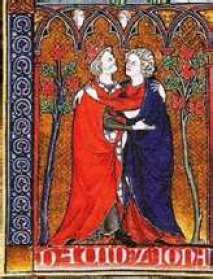
Image result for medieval manuscript marriage
Enter a caption

“Why Do I Recount Odysseus’ Troubles?”

In the following passage Kassandra prophesies Odysseus’ travails in returning home. Although she seems to refer to a few events not in our Odyssey (fast rocks, talking meat), what I find interesting is the possible poetic engagement with Kassandra’s presentation in the Odyssey where she is not mentioned as the cause of Athena’s anger or marked as a prophet. 

Euripides, Trojan Women 424–447

“Really, a clever servant. Why do heralds have
the name they have, when one hatred is common to people:
the servants of tyrants and their regimes?
You say that my mother will arrive at
Odysseus’ home? Where then are Apollo’s words
which say—when I have translated them—
that she will die here? I will not insult her with the rest.
The wretched man, he doesn’t know what suffering awaits him—
how even these Phrygian horrors of mine will seem
golden to him. For ten years after sailing out added to ten
spent here he will finally arrive at his fatherland alone
< >
where the swiftest rocks [make] the passage narrow,
and dreadful Charybdis, near the man-eating, cliff-walking [Skyla],
The Kyklops, and the Ligurian, swine-witch
Kirkê, and shipwrecks over the salted-sea,
lusts for lotus, and the sacred cattle of Helios,
whose flesh will sing in human voice one day
a bitter song for Odysseus—I will cut this short:
he will go into Hades still alive and though feeling the water’s flow
he will come home and find countless evils at home.
But why do I enumerate the toils of Odysseus?
Take me right away, let me marry a bridegroom for Hades’ home.
You are evil and you will be evilly buried at night, not at day
Captain of the Danaid women, believing you are doing something good.”

Κα. ἦ δεινὸς ὁ λάτρις. τί ποτ’ ἔχουσι τοὔνομα
κήρυκες, ἓν ἀπέχθημα πάγκοινον βροτοῖς,
οἱ περὶ τυράννους καὶ πόλεις ὑπηρέται;
σὺ τὴν ἐμὴν φὴις μητέρ’ εἰς ᾿Οδυσσέως
ἥξειν μέλαθρα; ποῦ δ’ ᾿Απόλλωνος λόγοι,
οἵ φασιν αὐτὴν εἰς ἔμ’ ἡρμηνευμένοι
αὐτοῦ θανεῖσθαι; τἄλλα δ’ οὐκ ὀνειδιῶ.
δύστηνος, οὐκ οἶδ’ οἷά νιν μένει παθεῖν·
ὡς χρυσὸς αὐτῶι τἀμὰ καὶ Φρυγῶν κακὰ
δόξει ποτ’ εἶναι. δέκα γὰρ ἐκπλήσας ἔτη
πρὸς τοῖσιν ἐνθάδ’ ἵξεται μόνος πάτραν
< >
†οὗ δὴ στενὸν δίαυλον ὤικισται πέτρας†
δεινὴ Χάρυβδις ὠμοβρώς τ’ ὀρειβάτης
Κύκλωψ Λιγυστίς θ’ ἡ συῶν μορφώτρια
Κίρκη θαλάσσης θ’ ἁλμυρᾶς ναυάγια
λωτοῦ τ’ ἔρωτες ῾Ηλίου θ’ ἁγναὶ βόες,
αἳ σαρξὶ φοινίαισιν ἥσουσίν ποτε
πικρὰν ᾿Οδυσσεῖ γῆρυν. ὡς δὲ συντέμω,
ζῶν εἶσ’ ἐς ῞Αιδου κἀκφυγὼν λίμνης ὕδωρ
κάκ’ ἐν δόμοισι μυρί’ εὑρήσει μολών.
ἀλλὰ γὰρ τί τοὺς ᾿Οδυσσέως ἐξακοντίζω πόνους;
στεῖχ’ ὅπως τάχιστ’· ἐν ῞Αιδου νυμφίωι γημώμεθα.
ἦ κακὸς κακῶς ταφήσηι νυκτός, οὐκ ἐν ἡμέραι,
ὦ δοκῶν σεμνόν τι πράσσειν, Δαναϊδῶν ἀρχηγέτα.
κἀμέ τοι νεκρὸν φάραγγες γυμνάδ’ ἐκβεβλημένην
ὕδατι χειμάρρωι ῥέουσαι νυμφίου πέλας τάφου
θηρσὶ δώσουσιν δάσασθαι, τὴν ᾿Απόλλωνος λάτριν.

Kassandra is most famous in ancient art and myth for the sexual violence she suffers at Oilean Ajax’s hands. But when there is an opportunity to refer to this, the Odyssey avoids it. Instead, it creates a new reason for Ajax to suffer:

Continue reading ““Why Do I Recount Odysseus’ Troubles?””

It Was Winter, It Was Snowing

Thucydides 4.103

“It was winter and it was snowing”

χειμὼν δὲ ἦν καὶ ὑπένειφεν…

Homer, Il. 3.222-3

“Yet, then a great voice came from his chest And [Odysseus’] words were like snowy storms”

ἀλλ’ ὅτε δὴ ὄπα τε μεγάλην ἐκ στήθεος εἵη καὶ ἔπεα νιφάδεσσιν ἐοικότα χειμερίῃσιν,

Hermippus 37 (Athenaeus 650e)

“Have you ever seen a pomegranate seed in drifts of snow?”

ἤδη τεθέασαι κόκκον ἐν χιόνι ῥόας;

Pindar, Pythian 1. 20

“Snowy Aetna, perennial nurse of bitter snow”

νιφόεσσ᾿ Αἴτνα, πάνετες χιόνος ὀξείας τιθήνα

Plutarch, Moralia 340e

“Nations covered in depths of snow”

καὶ βάθεσι χιόνων κατακεχωσμένα ἔθνη

Herodotus, Histories 4.31

“Above this land, snow always falls…

τὰ κατύπερθε ταύτης τῆς χώρης αἰεὶ νίφεται

Diodorus Siculus, 14.28

“Because of the mass of snow that was constantly falling, all their weapons were covered and their bodies froze in the chill in the air. Thanks to the extremity of their troubles, they were sleepless through the whole night”

διὰ γὰρ τὸ πλῆθος τῆς κατὰ τὸ συνεχὲς ἐκχεομένης χιόνος τά τε ὅπλα πάντα συνεκαλύφθη καὶ τὰ σώματα διὰ τὸν ἀπὸ τῆς αἰθρίας πάγον περιεψύχετο. διὰ δὲ τὴν ὑπερβολὴν τῶν κακῶν ὅλην τὴν νύκτα διηγρύπνουν·

Ammianus Marcellinus, History V. V. Gratianus 27.9

“He will tolerate sun and snow, frost and thirst, and long watches.”

solem nivesque et pruinas et sitim perferet et vigilias

Basil, Letter 48

“We have been snowed in by such a volume of snow that we have been buried in our own homes and taking shelter in our holes for two months already”

καὶ γὰρ τοσούτῳ πλήθει χιόνων κατενίφημεν, ὡς αὐτοῖς οἴκοις καταχωσθέντας δύο μῆνας ἤδη ταῖς καταδύσεσιν ἐμφωλεύειν.

Livy, 10.46

“The snow now covered everything and it was no longer possible to stay outside…”

Nives iam omnia oppleverant nec durari extra tecta poterat

Plautus, Stichus 648

“The day is melting like snow…”

quasi nix tabescit dies.

Seneca, De Beneficiis 4

“I will go to dinner just as I promised, even if it is cold. But I certainly will not if it begins to snow.”

Ad cenam, quia promisi, ibo, etiam si frigus erit; non quidem, si nives cadent.

Snowy Mountain

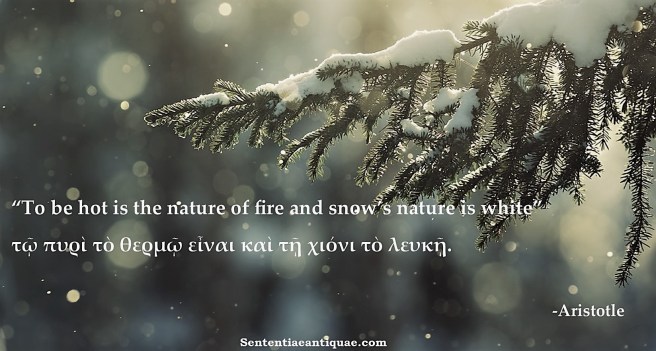
Snow istotle

The Sacrifice of the Lokrian Maidens: Four Sources

Aelian, fr. 47 on the Locrian Women (cf. Apd. E. 6.20-22 below)

De virginibus Locrensibus ob stupratam Cassandram Troiam missis.

“Apollo told the Locrians that the horror would not stop for them unless they sent two maidens to Troy every year as recompense to Athena for Kasandra, “until you have fully propitiated the goddess.”

And the maidens who were sent would grow old in Troy unless replacements came.

[Meanwhile] the women were giving birth to cripples and monsters. Those who had suffered forgetfulness of the outrages done sent [representatives] to Delphi. Then the oracle did not receive them, because the god was angry with them. When they managed to learn the cause of the anger, the oracle prophesied. And it told them what was required concerning the virgins.

And they, since they could not deny the command, submitted the issue for judgment to Antigonus, concerning which Locrian city should send the payment. And the king decreed that the very thing which was entrusted to him for judgment would be decided by vote.”

ὁ ᾿Απόλλων φησὶ πρὸς Λοκροὺς μὴ ἂν αὐτοῖς τὸ δεινὸν λωφῆσαι, εἰ μὴ πέμποιεν ἀνὰ πᾶν ἔτος δύο παρθένους ἐς τὴν ῎Ιλιον τῇ ᾿Αθηνᾷ, Κασάνδρας ποινήν, ‘ἕως ἂν ἱλεώσητε τὴν θεόν.’
καὶ αἵ γε πεμφθεῖσαι κατεγήρασαν ἐν τῇ Τροίᾳ, τῶν διαδόχων μὴ ἀφικνουμένων.
αἱ δὲ γυναῖκες ἔτικτον ἔμπηρα καὶ τέρατα· οἳ δὲ τῶν τετολμημένων σφίσι λήθην καταχέαντες ἧκον ἐς Δελφούς.οὔκ ουν ἐδέχετο αὐτοὺς τὸ μαντεῖον, τοῦ θεοῦ μηνίοντος αὐτοῖς. καὶ λιπαρούντων μαθεῖν τὴν αἰτίαν τοῦ κότου, ὀψέ ποτε χρῆσαι.
καὶ τὸ ἐλλειφθὲν κατὰ τὰς παρθένους προφέρει αὐτοῖς.
οἳ δὲ (οὐδὲ γὰρ ἔσχον ἀνήνασθαι τὸ πρόσταγμα) ἐπ’ ᾿Αντιγόνῳ τίθενται τὴν κρίσιν ὑπὲρ τοῦ τίνα χρὴ Λοκρικὴν πόλιν πέμπειν δασμόν.
ὁ δὲ βασιλεὺς ᾿Αντίγονος, ἐφεθέν οἱ δικάσαι προσέταξε κλήρῳ διακριθῆναι.

Plutarch, De Sera Numinis Vindicta 557c-d

“And, truly, it has not been so long since the Lokrians stopped sending their virgins to Troy, “the girls who like the lowest slaves, with naked feet / sweep Athena’s temple around the altar / and come to great old age without a veil”—for the crime of Ajax!”

καὶ μὴν οὐ πολὺς χρόνος ἀφ’ οὗ Λοκροὶ πέμποντες εἰς Τροίαν πέπαυν-
ται τὰς παρθένους,

‘αἳ καὶ ἀναμπέχονοι γυμνοῖς ποσὶν ἠύτε δοῦλαι
ἠοῖαι σαίρεσκον ᾿Αθηναίης περὶ βωμόν,
νόσφι κρηδέμνοιο, καὶ εἰ βαθὺ γῆρας ἱκάνοι,’

διὰ τὴν Αἴαντος ἀκολασίαν.

Timaios, FrGrH 555 F146b (=Schol. to Lyk. 1141)

“After Ajax of Lokros was shipwrecked near Guraia and buried in Tremont, in the land of Delos, the Locrians who were saved, barely, returned home. A plague and famine gripped Lokris for tree years because of Ajax’s lawless act against Kasandra. The god prophesied that they needed to propitiate the goddess Athena in Troy each year by sending two virgins by lot and vote. The Trojans who went out to meet the women who were sent, if they caught them, they would kill them, and they would burn their bones with wild, unfruited wood from the Traronian mountain near Troy and then through the ash into the sea. And the Lokrians would have to send other women. If any of them fled, once they returned secretly into Athena’s temple, they would sweep and clean it and they would not approach the goddess or exit the shrine unless if was night. They were shaven, wearing a single tunic, and barefoot.

The first of the Lokrian maidens were Periboia and Kleopatra. First they sent virgins, then the Locrians sent year-old infants with their nurses. When one thousand years had past, after the Phocian War, they stopped that type of sacrifice. This is according to the Sicilian, Timaios. The Cyrenian Kallimakhos also mentions this story.”

TZETZ. LYKOPHR. Al. 1141: Αἴαντος τοῦ Λοκροῦ περὶ τὰς Γυραίας ναυαγήσαντος καὶ ταφέντος ἐν Τρέμοντι χώραι τῆς Δήλου, οἱ Λοκροὶ μόλις σωθέντες ἦλθον εἰς τὴν οἰκείαν. φθορὰ δὲ καὶ λοιμὸς μετὰ τρίτον ἔτος ἔσχε τὴν Λοκρίδα διὰ τὴν εἰς Κασάνδραν ἀθέμιτον πρᾶξιν τοῦ Αἴαντος. ἔχρησε δὲ ὁ θεὸς ἱλάσκεσθαι τὴν θεὰν ᾿Αθηνᾶν τὴν ἐν ᾿Ιλίωι ἐπ’ ἔτη α, β παρθένους πέμποντας κλήρωι καὶ λαχήσει. πεμπομένας δὲ αὐτὰς προυπαντῶντες οἱ Τρῶες εἰ κατέσχον, ἀνήιρουν, καὶ καίοντες ἀκάρποις καὶ ἀγρίοις ξύλοις τὰ ὀστᾶ αὐτῶν ἀπὸ Τράρωνος ὄρους τῆς Τροίας τὴν σποδὸν εἰς θάλασσαν ἔρριπτον· καὶ πάλιν οἱ Λοκροὶ ἑτέρας ἔστελλον. εἰ δέ τινες ἐκφύγοιεν, ἀνελθοῦσαι λάθρα εἰς τὸ τῆς ᾿Αθηνᾶς ἱερόν, ἔσαιρον αὐτὸ καὶ ἔραινον, τῆι δὲ θεῶι οὐ προσήρχοντο οὔτε τοῦ ἱεροῦ ἐξήρχοντο, εἰ μὴ νύκτωρ. ἦσαν δὲ κεκαρμέναι, μονοχίτωνες καὶ ἀνυπόδητοι. πρῶται δὲ τῶν Λοκρίδων παρθένων Περίβοια καὶ Κλεοπάτρα ἀφίκοντο. καὶ πρῶτον μὲν τὰς παρθένους, εἶτα τὰ βρέφη ἐνιαύσια μετὰ τῶν τροφῶν αὐτῶν ἔπεμπον οἱ Λοκροί· χιλίων δ’ ἐτῶν παρελθόντων, μετὰ τὸν Φωκικὸν πόλεμον, ἐπαύσαντο τῆς τοιαύτης θυσίας 〚ὥς φησι Τίμαιος ὁ Σικελός〛. μέμνηται δὲ τῆς ἱστορίας καὶ ὁ Κυρηναῖος Καλλίμαχος (F 13d Schn = F 35 Pf).

Apollodorus 6.20–22

“The Lokrians barely made it back to their own land; three years later, a plague struck Lokris and they obtained an oracle to propitiate Athena in Troy by sending two maidens there for one thousand years. Periboia and Kleopatra were the first selected by lot.

But when they went to Troy, they were pursued by the local inhabitants until they entered the shrine. They did not approach the goddess, but they swept and sprinkled water on the temple. They did not exit the temple; their hair was cut, they wore single-tunics and no shoes.

When they died, the Lokrians sent others and they entered the city at night so that they would not be murdered if seen outside the precinct. Later, the Lokrians started sending infants with nurses. When one thousand years had passed, they stopped sening suppliants after the Phocian War.”

Λοκροὶ δὲ μόλις τὴν ἑαυτῶν καταλαβόντες, ἐπεὶ μετὰ τρίτον ἔτος τὴν Λοκρίδα κατέσχε φθορά, δέχονται χρησμὸν ἐξιλάσασθαι τὴν ἐν Ἰλίῳ Ἀθηνᾶν καὶ δύο παρθένους πέμπειν ἱκέτιδας ἐπὶ ἔτη χίλια. καὶ λαγχάνουσι πρῶται Περίβοια καὶ Κλεοπάτρα.

αὗται δὲ εἰς Τροίαν ἀφικόμεναι, διωκόμεναι παρὰ τῶν ἐγχωρίων εἰς τὸ ἱερὸν κατέρχονται: καὶ τῇ μὲν θεᾷ οὐ προσήρχοντο, τὸ δὲ ἱερὸν ἔσαιρόν τε καὶ ἔρραινον: ἐκτὸς δὲ τοῦ νεὼ οὐκ ἐξῄεσαν, κεκαρμέναι δὲ ἦσαν καὶ μονοχίτωνες καὶ ἀνυπόδετοι.

τῶν δὲ πρώτων ἀποθανουσῶν ἄλλας ἔπεμπον: εἰσῄεσαν δὲ εἰς τὴν πόλιν νύκτωρ, ἵνα μὴ φανεῖσαι τοῦ τεμένους ἔξω φονευθῶσι: μετέπειτα δὲ βρέφη μετὰ τροφῶν ἔπεμπον. χιλίων δὲ ἐτῶν παρελθόντων μετὰ τὸν Φωκικὸν πόλεμον ἱκέτιδας ἐπαύσαντο πέμποντες.

There is actually an inscription from the historical period making arrangements for this sacrifice.

womans-cult

Herd Immunity

Erasmus, Adagia 43:

Ἔβα καὶ ταῦρος ἀν᾽ ὕλαν, that is, Even the bull has set off into the forest. This is a pastoral proverb, an ugly little allegory, signifying the separation and neglect of an old girlfriend. Even if it will be permitted to draw it in this way into a more modest use, if it is accommodated by a joke to those who seem to neglect their earliest friends and to have become unaccustomed to the flock of their familiars and peers. It may also be applied to those who separate themselves from their usual pursuits and follow a different course of life. Theocritus in his Idyll, entitled Theonychus, relates it in the form of a proverb:

Αἶνος θην λέγεταί τις ‘ἔβα καὶ ταῦρος ἀν᾽ ὕλαν’,

that is,

It was once said that ‘the bull is withdrawing into the forest.’

For the lover is complaining that he was long ago left behind by his girlfriend, and he shows that it was a lot of time that Cynisca, that is Catella (for that was the girl’s name) was entertaining herself with a certain Lycus, and showed no inclination to return to her former way of life, in much the same way that bulls, who themselves occasionally wander off from the crowd of cows and either hang out with other bulls or wander in solitude through the groves, touched by no desire for women.

Pastors refer to that withdrawal and that divorce-like neglect with the peculiar word ‘ἀτιμαγελεῖν’ (‘herd-forsaking’), with a sense clearly composed ἐκ τοῦ ἀτιμεῖν, τὸ ἀτιμάζειν καὶ καταφρονεῖν, which is to say from ‘to dishonor, to neglect, and to rate as worthless,’ and from τοῦ ἀγέλη, which means the herd. Bulls are said to ‘forsake the herd’ when, having been set apart from interaction with the cows, care for them so little that they not only don’t seek intercourse with them, but they don’t even wish to use the same pastures. In his sixth book of On the Nature of Animals, Aristotle demonstrates the custom of this animal and the nature of the word given to this phenomenon with these words:

Ὁ δὲ ταῦρος ὅταν ὥρα τῆς ὀχείας ᾖ, τότε γίνεται σύννομος καὶ μάχεται τοῖς ἄλλοις. Τὸν δὲ πρότερον χρόνον μετ᾽ ἀλλήλων εἰσίν, ὃ καλεῖται ἀτιμαγελεῖν. Πολλάκις γὰρ οἵ γε ἐν τῇ Ἠπείρῳ οὐ φαίνονται τριῶν μηνῶν ὅλως δὲ τὰ ἄγρια πάντα ἢ τὰ πλεῖστα οὐ συννέμονται ταῖς θηλείαις πρὸ τῆς ὥρας τοῦ ὀχεύειν.

We will consider rather than number these words in this way:

‘But the bull, when it is time for intercourse, will then share the same pastures with the cows, and will fight with the other bulls. For, before that time, they were out to pasture with each other, and they call this ἀτιμαγελεῖν. Indeed, the bulls in the province of Epirus often do not appear for a space of three months; further, all wild beasts (or at least, certainly, most of them) do not congregate at shared pastures with the females of their species before it is time to procreate.

It seems to me worth noting in the version of Theodore of Gaza, for the word ἀτιμαγελεῖν, which Latin is unable to express properly, we find the word ‘coarmentari’ or ‘to herd together.’ That little piece of a word has poured a bit of fog over even the most learned men, such that they think that the passage in Aristotle is corrupt, and they bring to bear an entirely different interpretation on it by changing the reading, and they think that Theodore has hallucinated not a little in translating it. But I have weighed this matter out more diligently, and I seem to see the sense of Aristotle’s words to square exactly on this side of the change of any word. Clearly, a bull may spend time in the same pastures with cows when the time for breeding approaches, and may not come together with the other herds of bulls (but rather, wage war with them), while at other times bulls may enjoy the same pastures with other bulls and not pursue a life shared with the cows, choosing instead to spend time with each other, which is the case for pretty much all other animals. Clearly, this society of bulls with bills while the herds of cows are neglected is called ἀτιμαγελεῖν or ‘herd neglect’.

Now I ask, what scruple is there, why should we think that the reading of Aristotle must be changed, unless we are offended by the changed number of the words ‘bull’ and ‘are’, which is a common enough occurrence in that word of Aristotle. It can’t be doubted that the word ‘coarmentari’ here is not appropriate, but spurious, and has entered the work either from the carelessness of booksellers or the temerity of some person who possessed too little education. I suspect that we should read ‘dearmentari’ or ‘abarmentari’ (‘to be away from the herd’). I cannot be led to believe that Theodore, a man so perfect in every mode of learning, could have slipped so, especially in a word which is neither that unnatural or unusual in Greek authors, and one whose force and meaning is clearly indicated by etymology, and which is further read in Theocritus, an ultra famous and common author in his Νομεῖ ἢ Βωκόλοις, that is in his ‘Pastor or the Flocks’:

Χοἲ μὲν ἁμᾷ βόσκοιντο καὶ ἐν φύλλοισι πλανῷντο Οὐδὲν ἀτιμαγελεῦντες

that is,

But these are in the pasture at the same time, and they wander in the tall grasses, and they seek no separation from the flock.

In reference to this, the Suda has ταῦρον ἀτιμάγελον signifying τὸν τῆς ἀγέλης καταφρονοῦντα, that is, ‘one who neglects the herd. It seems to me that Vergil alluded somewhat to this in his Silenus:

Ah, unfortunate maiden, you know wander in the mountains. He, reclining his snowy side on soft hyacinth grazes on the pale grasses below a dark rock, or follows another cow in a large herd. Close, nymphs, Dictaean nymphs, now close the woodlands, if by chance the wandering tracks of a cow bear themselves before our eyes. Perhaps some cows may lead him, captured in the green grass or following the herd, to the Gortynian stables.

For, when he says

He, reclining his snowy side on soft hyacinth grazes on the pale grasses below a dark rock

he intimates that the bull is ἀτιμάγελον (‘herd forsaking’). The same is true when he describes the ‘wandering tracks of a cow.’ The poet, however, is talking about the bull whom Pasiphae loved, is engaged in herd forsaking in such a way that he neglects his own herd and follows other cows.

Further, on the fighting of bulls at the very time of copulation itself, Vergil writes in the third book of Georgics:

Nor is it the custom for the fighters to dwell together, but one goes away vanquished to an exile far away on distant shores, groaning much of his ignominy and the blows of the arrogant victor, and then complains of the loves which he has lost unavenged, and looking at his abode, departs from his ancestral kingdom.

For my part, I think that this expression, if it is bent a little bit, is proverbial, like the words καπροῦν et ἱππομανεῖν (‘to be lewd’ and ‘to be horse-mad’), and Theocritus seems to have reflected on that the most when he notes that it is said proverbially, Ἔβα καὶ ταῦρος ἀν᾽ ὕλαν’,  ‘And the bull has gone among the woods.’ The scholia on Theocritus have in this expression ἔβα κεν ταῦρος, with the conjunction καὶ changed to the explanatory κεν. They add that this is proverbially said of those who are absent and not likely to return. For if a bull flees once to the forest, he cannot be caught. For this reason, someone once elegantly said that a husband who has long been away from his wife is ‘herd-forsaking’, just as is a person who has ceased to visit his friends, and one who has abstained for a long time from the company of the Muses and his books. Similarly, one who abhors interaction with others and lives with himself may be called ‘herd-forsaking.’ And one who has wandered off and withdrawn from legitimate companionship will not wrongly be said to ‘forsake the herd.’ The expression of Aristophanes in Lysistrata is not far from this:

Οἴκοι δὲ ἀταυρώτη διάξω τὸν βίον,

that is,

I will live the celibate life at home, away from the bull.

For he has thus signified the celibate life of the woman neglecting the bull, that is, the husband. Thus Horace writes:

May Lesbia meet a bad end for showing you this impotent bull when you asked.

Ἔβα καὶ ταῦρος ἀν᾽ ὕλαν, id est Abiit et taurus in syluam. Pastorale prouerbium, allegoria subturpicula, significans diuortium ac neglectum veteris amicae.Tametsi licebit in vsum verecundiorem trahere hoc modo, si per iocum accommodabitur ad eos, qui pristinos amicos negligere videntur et a familiarium congerronumque grege desuescere. Aut in illos etiam, qui a solitis desciscunt studiis diuersumque vitae sequuntur institutum. Theocritus in Idyllio, cui titulus est Theonycho, nominatim etiam prouerbii vice refert:

 Αἶνος θην λέγεταί τις ‘ἔβα καὶ ταῦρος ἀν᾽ ὕλαν’,  id est Fertur et hoc olim in syluam secedere taurum.

Queritur autem amans se iam pridem ab amica relictum plurimumque iam esse temporis ostendit, quod Cynisca, id est Catella, nam id erat nomen puellae, sese Lyco quodam oblectet neque omnino curet ad pristinam redire consuetudinem, non magis quam tauri, qui et ipsi nonnunquam a vaccarum armentis secedunt et aut reliquis aggregantur tauris aut solitarii per nemora vagantur nullo foeminarum desiderio tacti.

Eum secessum eumque vaccarum neglectum quasique diuortium, pastores peculiari verbo vocant ἀτιμαγελεῖν voce nimirum composita ἐκ τοῦ ἀτιμεῖν, τὸ ἀτιμάζειν καὶ καταφρονεῖν, quod est despicere negligereque ac pro nihilo ducere, et ἐκ τοῦ ἀγέλη, quod armentum sonat. Ac tum ἀτιμαγελεῖν dicuntur tauri, cum segregati a vaccarum commercio adeo non curant illas, vt non modo coitum non appetant, sed ne pascuis quidem iisdem vti velint. Hunc animantis morem simulque vocem ipsam ei tributam rei demonstrat Aristoteles libro De natura animalium sexto his verbis: Ὁ δὲ ταῦρος ὅταν ὥρα τῆς ὀχείας ᾖ, τότε γίνεται σύννομος καὶ μάχεται τοῖς ἄλλοις. Τὸν δὲ πρότερον χρόνον μετ᾽ ἀλλήλων εἰσίν, ὃ καλεῖται ἀτιμαγελεῖν. Πολλάκις γὰρ οἵ γε ἐν τῇ Ἠπείρῳ οὐ φαίνονται τριῶν μηνῶν ὅλως δὲ τὰ ἄγρια πάντα ἢ τὰ πλεῖστα οὐ συννέμονται ταῖς θηλείαις πρὸ τῆς ὥρας τοῦ ὀχεύειν. Ea verba nos appendemus magis quam annumerabimus hoc modo:

At taurus, cum tempus coitus adfuerit, tum demum incipit communibus cum vaccis pascuis vti cumque  reliquis tauris dimicat. Nam ante id temporis inter sese pascuntur, quod quidem appellant ἀτιμαγελεῖν. Sane qui sunt in Epiro prouincia tauri, saepenumero trium mensium spacio non apparent; porro fera animantia aut omnia aut certepleraque ante tempus coeundi non aggregantur ad communes cum foeminis pascuas.

Illud admonitu dignum mihi visum est in versione Theodori Gazae pro Graeca voce ἀτιμαγελεῖν, quam Romana lingua nullo pacto reddere potest, scriptum esse coarmentari. Idque verbi doctis etiam viris non parum caliginis offudit, ita vt deprauatum apud Aristotelem locum existiment commutataque lectione longe diuersum sensum inducant putentque Theodorum in transferendo non mediocriter hallucinatum. At ego tota re diligentius pensiculata videre videor Aristotelicorum verborum sententiam citra vllius vocis commutationem adamussim quadrare: videlicet taurum aggregari cum vaccis et in iisdem versari pascuis appetente coitus tempore eumque non conuenire cum reliquis taurorum armentis, sed bellum cum aliis gerere, reliquis autem temporibus tauros cum tauris socialiter iisdem vti pascuis neque foeminarum conuictum sequi, sed inter sese agere, quod idem accidat in feris ferme omnibus. Hanc autem taurorum cum tauris societatem neglectis vaccarum armentis vocari ἀτιμαγελεῖν.

Quaeso quid hic scrupuli, cur Aristotelicam lectionem mutandam existimemus, nisi si quid offendit mutatus numerus in ταῦρος et εἰσίν, id quod Aristoteli praesertim eo in opere pene familiare deprehenditur. Dictionem autem illam coarmentari non germanam, sed supposititiam esse dubium non est, et aut librariorum incuria aut alicuius parum eruditi temeritate inductam. Suspicor enim legendum vel dearmentari vel abarmentari. Neque enim adduci possum, vt credam Theodorum hominem tam in omni doctrinae genere absolutum fuisse lapsum praesertim in voce neque magnopere prodigiosa nec inusitata Graecis autoribus, vtpote cuius vim vel ipsa statim indicat etymologia, praeterea quae apud Theocritum autorem vsqueadeo notum vulgatumque legatur ἐν Νομεῖ ἢ Βωκόλοις,  id est in Pastore siue Bubulcis:

  Χοἲ μὲν ἁμᾷ βόσκοιντο καὶ ἐν φύλλοισι πλανῷντο

 Οὐδὲν ἀτιμαγελεῦντες,  id est

 Atque hi pascuntur simul inque comantibus herbis

 Errant et non vlla gregis diuortia quaerunt.

Ad haec Suidas ostendit ταῦρον ἀτιμάγελον appellatum τὸν τῆς ἀγέλης καταφρονοῦντα, id est qui negligeret armentum. Huc mihi videtur nonnihil allusisse Vergilius in Sileno:

Ah virgo infelix, tu nunc in montibus erras.

 Ille latus niueum molli fultus hyacintho

 Ilice sub nigra pallentes ruminat herbas

 Aut aliquam in magno sequitur grege. Claudite, nymphae,

 Dictaeae nymphae, nemorum iam claudite saltus,

 Si qua forte ferant oculis sese obuia nostris

 Errabunda bouis vestigia; forsitan illum

 Aut herba captum viridi aut armenta secutum

 Perducant aliquae stabula ad Gortynia vaccae.

Cum enim ait,

 Ille latus niueum molli fultus hyacintho

 Ilice sub nigra pallentes ruminat herbas,

taurum innuit ἀτιμάγελον. Item cum ait: Errabunda bouis vestigia. Significat autem poeta taurum, quem adamabat Pasiphae, aut prorsus ἀτιμαγελεῖν aut eatenus ἀτιμαγελεῖν, vt suo armento neglecto vaccas alias sequeretur. Porro de pugna taurorum inter ipsos coitus tempore meminit idem Maro libro Georgicôn tertio:

 Nec mos bellantes vna stabulare, sed alter

 Victus abit longeque ignotis exulat oris

 Multa gemens ignominiam plagasque superbi

 Victoris, tum quos amisit inultus amores,

 Et stabula aspectans regnis excessit auitis.

Equidem arbitror hanc ipsam vocem, si deflectatur alio, prouerbialem esse, quemadmodum sunt et illae καπροῦν et ἱππομανεῖν, ad eamque potissimum respexisse Theocritum, cum ait prouerbio dici: Ἔβα καὶ ταῦρος ἀν᾽ ὕλαν. Scholia quae feruntur in Theocritum, habent ἔβα κεν ταῦρος pro καὶ coniunctione copulatiua mutata κεν expletiua; addunt esse prouerbium de his dici solitum, qui abessent non reuersuri. Taurus enim si semel aufugerit in syluam, capi non potest. Vnde non inconcinne quis dixerit maritum diutius ab vxore secubantem ἀτιμαγελεῖν et eum, qui familiares desierit inuisere, ἀτιμαγελεῖν et qui diutius a Musis ac librorum abstinuerit contubernio, ἀτιμαγελεῖν. Item qui a conuictu hominum abhorreat secumque viuat, ἀτιμάγελον licebit appellare. Et qui a legitimo contubernio aberrarit secesseritque, non inepte dicetur ἀτιμαγελεῖν. Nec prorsus abhorret ab hac forma, quod est apud Aristophanem in Lysistrata:

 Οἴκοι δὲ ἀταυρώτη διάξω τὸν βίον,  id est

 Domi absque tauro coelibem vitam exigam.

Sic enim significauit vitam coelibem foeminae negligentis taurum, id est maritum. Sic et Horatius:

 Pereat male quae te

 Lesbia quaerenti taurum monstrauit inertem.

Sleep, Pregnancy, and Head Wounds: Some Hippocratic Aphorisms

Hippocrates of Cos, Aphorisms

The aphorisms attributed to Hippocrates of Cos contain a range of medical ‘wisdom’. There are hundreds. Here are a handful.

2.3 “Sleep, or sleeplessness, should either come beyond moderation, can be bad.”

III. Ὕπνος, ἀγρυπνίη, ἀμφότερα μᾶλλον τοῦ μετρίου γινόμενα, κακόν.

2.7 “Bodies that have wasted away over a long amount of time should be healed slowly. Those that have declined quickly, should be healed quickly.”

VII. Τὰ ἐν πολλῷ χρόνῳ λεπτυνόμενα σώματα νωθρῶς ἐπανατρέφειν, τὰ δὲ ἐν ὀλίγῳ, ὀλίγως.

2.44 “People who are naturally rather fat die more quickly than the thin.”

XLIV. Οἱ παχέες σφόδρα κατὰ φύσιν, ταχυθάνατοιγίνονται μᾶλλον τῶν ἰσχνῶν.

5.38 “When a woman is pregnant and carrying twins, should either breast become thin, she loses one child. If the right breast thins, she loses the male child; if the left one does, the female.”

XXXVIII. Γυναικὶ ἐν γαστρὶ ἐχούσῃ ἢν ὁ ἕτερος μασθὸς ἰσχνὸς γένηται, δίδυμα ἐχούσῃ, θάτερον ἐκτιτρώσκει· καὶ ἢν μὲν ὁ δεξιὸς ἰσχνὸς γένηται, τὸ ἄρσεν· ἢν δὲ ὁ ἀριστερός, τὸ θῆλυ.

6.18 “A serious wound striking either the bladder, the head, the heard, the brain, some part of the smaller intestine, the stomach or the liver, is mortal.”

XVIII. Κυστιν διακοπέντι, ἢ ἐγκέφαλον, ἢ καρδίην, ἢ φρένας, ἢ τῶν ἐντέρων τι τῶν λεπτῶν, ἢ κοιλίην, ἢ ἧπαρ, θανατῶδες.

7.58 “Whenever the brain is concussed for any reason, people immediately become speechless.”

LVIII. Ὁκόσοισιν ἂν ὁ ἐγκέφαλος σεισθῇ ὑπό τινος προφάσιος, ἀνάγκη ἀφώνους γενέσθαι παραχρῆμα.

Image result for ancient greek medical practice
Physician treating a patient (Attic red-figurearyballos, 480–470 BC). Image taken from Wikipedia.

The Truth about Daedalus and Icarus

Servius Danielis,  Commentary on the Aeneid, 6, 14

“Phanodikos says that Daidalos—on account of the aforementioned reasons—went on a ship as he was fleeing and when those who were pursuing him drew near, he spread wide a piece of cloth for gaining the help of the winds and escaped them in this way. When they got back, those who were following him said he had escaped them with wings.”

Phanodicos Deliacon Daedalum propter supradictas causas fugientem navem conscendisse et, cum imminerent qui eum sequebantur, intendisse pallium ad adiuvandum ventos et sic evasisse: illos vero qui insequebantur reversos nuntiasse pinnis illum evasisse.

Palaephatus, On Unbelievable Things 12

“People claim that Minos imprisoned Daidalos and Ikaros, his son, for a certain reason, but that Daidalos, after he fashioned wings as prosthetics for both of them, flew off with Ikaros. It is impossible to think that a person flies, even one who has prosthetic wings. What it really means, then, is the following kind of thing.

Daidalos, when he was in prison, escaped through a small window and hauled down his son too; once he got on a boat, he left. When Minos found out, he sent ships to pursue him. Then they understood that they were being pursued and there was a furious and driving wind, they seemed to be flying. And while they were sailing with the Kretan wind, they flipped over into the sea. While Daidalos survived onto land, Ikaros died. This is why the sea there is named Ikarion for him. His father buried him after he was tossed up by the waves.”

[Περὶ Δαιδάλου καὶ ᾿Ικάρου.]

     Φασὶν ὅτι Μίνως Δαίδαλον καὶ ῎Ικαρον τὸν υἱὸν αὐτοῦ καθεῖρξε διά τινα αἰτίαν, Δαίδαλος δὲ  ποιήσας πτέρυγας ἀμφοτέροις προσθετάς, ἐξέπτη μετὰ τοῦ ᾿Ικάρου. νοῆσαι δὲ ἄνθρωπον πετόμενον, ἀμήχανον, καὶ ταῦτα πτέρυγας ἔχοντα προσθετάς. τὸ οὖν λεγόμενον ἦν τοιοῦτον. Δαίδαλος ὢν ἐν τῇ εἱρκτῇ, καθεὶς ἑαυτὸν διὰ θυρίδος καὶ τὸν υἱὸν κατασπάσας, σκαφίδι ἐμβάς, ἀπῄει. αἰσθόμενος

δὲ ὁ Μίνως πέμπει πλοῖα διώξοντα. οἱ δὲ ὡς ᾔσθοντο διωκόμενοι, ἀνέμου λάβρου καὶ φοροῦ ὄντος, πετόμενοι ἐφαίνοντο. εἶτα πλέοντες οὐρίῳ Κρητικῷ νότῳ ἐν τῷ πελάγει περιτρέπονται· καὶ ὁ μὲν Δαίδαλος περισῴζεται εἰς τὴν γῆν, ὁ δὲ ῎Ικαρος διαφθείρεται (ὅθεν ἀπ’ ἐκείνου ᾿Ικάριον πέλαγος ἐκλήθη), ἐκβληθέντα δὲ ὑπὸ τῶν κυμάτων ὁ πατὴρ ἔθαψεν.

Image result for daedalus and icarus image
Anthony Van Dyck, 1625 “Daedalus and Icarus”

In one of my favorite modern pieces, the poet Jack Gilbert explores the theme of flying and falling in “Failing And Flying” (from 2005’s wonderful Refusing Heaven) where he begins and ends with a meditation on Icarus. The sentiments seem apt (the text comes from poetryfoundation.org):

Everyone forgets that Icarus also flew.
It’s the same when love comes to an end,
or the marriage fails and people say
they knew it was a mistake, that everybody
said it would never work. That she was
old enough to know better. But anything
worth doing is worth doing badly.
Like being there by that summer ocean
on the other side of the island while
love was fading out of her, the stars
burning so extravagantly those nights that
anyone could tell you they would never last.
Every morning she was asleep in my bed
like a visitation, the gentleness in her
like antelope standing in the dawn mist.
Each afternoon I watched her coming back
through the hot stony field after swimming,
the sea light behind her and the huge sky
on the other side of that. Listened to her
while we ate lunch. How can they say
the marriage failed? Like the people who
came back from Provence (when it was Provence)
and said it was pretty but the food was greasy.
I believe Icarus was not failing as he fell,
but just coming to the end of his triumph.

I am You and You are Me

The Fragmentary “Gospel According to Eve”

“I stood on a high mountain and I saw one tall person and another short one. And I heard something like a thunder’s sound and I went closer to hear it. He addressed me and said: “I am you and you are me and wherever you are I am there; and I am implanted in all things. So you can gather me from wherever you want. And when you harvest me, you harvest yourself.”

ἔστην ἐπὶ ὄρους ὑψηλοῦ καὶ εἶδον ἄνθρωπον μακρὸν καὶ  ἄλλον κολοβὸν καὶ ἤκουσα ὡσεὶ φωνὴν βροντῆς καὶ ἤγγισα τοῦ ἀκοῦσαι καὶ ἐλάλησε πρός με καὶ εἶπεν· ἐγὼ σὺ καὶ σὺ ἐγώ, καὶ ὅπου ἐὰν ᾗς, ἐγὼ ἐκεῖ εἰμι καὶ ἐν ἅπασίν εἰμι  ἐσπαρμένος· καὶ ὅθεν ἐὰν θέλῃς, συλλέγεις με, ἐμὲ δὲ συλλέγων ἑαυτὸν συλλέγεις

Creation of Eve, Sistine Chapel, Michelangelo

Maintain Your Health: Read Cicero!

John Adams, Diary December 21 1758:

Yesterday and to day I have read loud, Tullius 4 Orations against Cataline. The Sweetness and Grandeur of his sounds, and the Harmony of his Numbers give Pleasure enough to reward the Reading if one understood none of his meaning. Besides I find it, a noble Exercise. It exercises my Lungs, raises my Spirits, opens my Porr[s], quickens the Circulations, and so contributes much to Health.

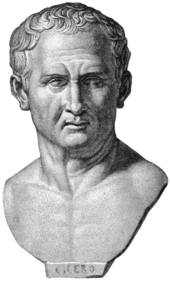
Cicero - Wikipedia

Your Gods Hate You: Clement’s Critique of the Greek Pantheon

Clement of Alexandria, Exhortation to the Greeks III

“Seriously, then, let us add this too: your gods are inhuman and people-hating demons who do not only delight in the madness of humanity but even revel in the slaughter of humans. They gather their incitements for pleasure first in the armed conflicts in stadia and then in the countless arguments in war so that they might be especially able to sate their thirst for human gore. Already they have demanded human sacrifices in cities and nations, falling upon them like plagues. This is why Aristomenes the Messenian killed three hundred men for Zeus of Ithôme, because he believed that these types and numbers of hekatombs bring good outcomes.”

Φέρε δὴ οὖν καὶ τοῦτο προσθῶμεν, ὡς ἀπάνθρωποι καὶ μισάνθρωποι δαίμονες εἶεν ὑμῶν οἱ θεοὶ καὶ οὐχὶ μόνον ἐπιχαίροντες τῇ φρενοβλαβείᾳ τῶν ἀνθρώπων, πρὸς δὲ καὶ ἀνθρωποκτονίας ἀπολαύοντες· νυνὶ μὲν τὰς ἐν σταδίοις ἐνόπλους φιλονεικίας, νυνὶ δὲ τὰς ἐν πολέμοις ἀναρίθμους φιλοτιμίας ἀφορμὰς σφίσιν ἡδονῆς ποριζόμενοι, ὅπως ὅτι μάλιστα ἔχοιεν ἀνθρωπείων ἀνέδην ἐμφορεῖσθαι φόνων· ἤδη δὲ κατὰ πόλεις καὶ ἔθνη, οἱονεὶ λοιμοὶ ἐπισκήψαντες, σπονδὰς ἀπῄτησαν ἀνημέρους. Ἀριστομένης γοῦν ὁ Μεσσήνιος τῷ Ἰθωμήτῃ Διὶ τριακοσίους ἀπέσφαξεν, τοσαύτας ὁμοῦ καὶ τοιαύτας καλλιερεῖν οἰόμενος ἑκατόμβας·

Image result for ancient greek gods vase slaughter