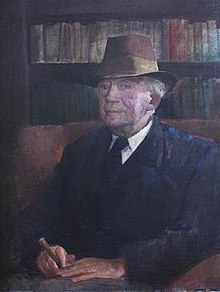
“Clearly, something must be published – ah, it would be best if I could just publish what I have already finished! (You may hear in this the wish of laziness.)”
Est enim plane aliquid edendum — atque utinam hoc potissimum quod paratum est! Audis desidiae votum
Here’s a list of some things I published this year. Email if you want digital copies of anything. Here’s 2018’s list and 2019’s
22. “And, look, Joseph was prepared to leave to Judea and there was trouble in Bethlehem. For the Magi had come from the East in Persia, saying, “Where is the child born King of the Jews? For we saw his start in the East and we have come to bow before him. When Herod heard this, he was upset and he sent attendants to the Magi and he also summoned the high priests and asked them, “Where has this “Christ” been born?” and they answered, “In Bethlehem of Judea—for it was written thus.” And he let them go. Then he questioned the Magi, saying to them, “What sign did you see for a king who was born?” And the magi said to him, we say the greatest start blazing among the these stars and making them seem dull. We knew from this that a king had been born for Israel. For this reason we came to bow before him.” And Herod responded, “Go and seek out the child carefully. And when he is found, send me news of it so that I can go and bow to him too.
And so the Magi left and, look, the star which they saw in the east led them on until they came to that place where the cave protected the child’s head. And when they saw him with his mother Mary, they bowed and took from their strongboxes the gifts they brought: gold, frankincense and myrrh. Because they had been warned by a sacred angel not to enter Judea near Herod, they took another route to return to their country.
22 But once Herod figured out that he had been evaded by the Magi, he was enraged and he sent assassins whom he ordered to kill all infants under two years. Once Mary heard that the infants were being killed, she took her child in fear and left to Egypt with Joseph, just as was predicated to them. But when Elisabeth took John and went into the hills and looked around for a place to hide him, there was no safe sanctuary. Then, she said as she cried, “Mountain, mountain—take a mother with her child. For she was not able to leave. And then suddenly, the mountain split into two and welcomed her. The mountain itself was alight for them and there was an angel of the lord looking over them.”
“Buck Mulligan frowned at the lather on his razorblade. He hopped down from his perch and began to search his trouser pockets hastily.
—Scutter! he cried thickly.
He came over to the gunrest and, thrusting a hand into Stephen’s upper pocket, said:
—Lend us a loan of your noserag to wipe my razor.
Stephen suffered him to pull out and hold up on show by its corner a dirty crumpled handkerchief. Buck Mulligan wiped the razorblade neatly. Then, gazing over the handkerchief, he said:
—The bard’s noserag! A new art colour for our Irish poets: snotgreen. You can almost taste it, can’t you?
He mounted to the parapet again and gazed out over Dublin bay, his fair oakpale hair stirring slightly.
—God! he said quietly. Isn’t the sea what Algy calls it: a great sweet mother? The snotgreen sea. The scrotumtightening sea. Epi oinopa ponton. Ah, Dedalus, the Greeks! I must teach you. You must read them in the original. Thalatta! Thalatta! She is our great sweet mother. Come and look.”
“I am going to let the flood of heretical opinion carry me yet further. For the purpose of composition, of the imitatio veterum, our reading in Greek—I speak of Oxford custom—is directed above all upon the Attic writers, prose and verse. When I taught Greek, I could not tell my pupils that these were the worst parts of Greek literature—that the fifth century B.C. marked (except for Plato) a progressive degeneration of language and style. I could not say that, but I believed it. Plato stands in his own circle of light; and the mystery of him—why he is not Attic—I have not the learning to penetrate. But when I read, first Homer, and then Pindar and the great lyrists, and then Herodotus (I think they are still my favourite Greek authors), when, after reading these, I turn to the Attics, I feel myself in a world comparatively mean and in parts of it dowdy. Atticism and the Attic— whether ancient or modern—I believe that in the heart of us we all hate it, or are all a little bored with it, and dare not say so.”
“You appear to think that happiness comes from delicacy and abundance. But I think that wanting nothing is godlike, that wanting as little as possible is next-best, that the divine is the highest goal and next-best the closest thing.”
“I believe that you will anticipate that I didn’t lose those books without some kind of a stomach ache…”
puto enim te existimaturum a me illos libros non sine aliquo meo stomacho esse relictos.
Cicero, Letters to Quintus 24
“Concerning the issue of supplementing your Greek library and trading books in order to acquire Latin ones, I would really like to help get this done, since these exchanges are to my benefit as well. But I don’t have anyone even for my own purposes whom I can trust with this. The kinds of books which are helpful are not for sale and they cannot be procured without a deeply learned person who has a serious work ethic.”
De bibliotheca tua Graeca supplenda, libris commutandis, Latinis comparandis, valde velim ista confici, praesertim cum ad meum quoque usum spectent. sed ego mihi ipsi ista per quem agam non habeo. neque enim venalia sunt, quae quidem placeant, et confici nisi per hominem et peritum et diligentem non possunt.
“The human race, then, labors uselessly and in vain
as we always consume our time in empty concerns
because we don’t understand that there’s a limit to having—
and there’s an end to how far true pleasure can grow.
This has dragged life bit by bit into the deep sea
and has stirred at its bottom great blasts of war.
But the guardian of the earth turns around the great sky
and teaches men truly that the year’s seasons come full circle
and that all must be endured with a sure reason and order.”
Ergo hominum genus in cassum frustraque laborat
semper et [in] curis consumit inanibus aevom,
ni mirum quia non cognovit quae sit habendi
finis et omnino quoad crescat vera voluptas;
idque minutatim vitam provexit in altum
et belli magnos commovit funditus aestus.
at vigiles mundi magnum versatile templum
sol et luna suo lustrantes lumine circum
perdocuere homines annorum tempora verti
et certa ratione geri rem atque ordine certo.
James Joyce, The Portrait of an Artist as a Young Man:
“Father Arnall came in and the Latin lesson began and he remained still leaning on the desk with his arms folded. Father Arnall gave out the themebooks and he said that they were scandalous and that they were all to be written out again with the corrections at once. But the worst of all was Fleming’s theme because the pages were stuck together by a blot: and Father Arnall held it up by a corner and said it was an insult to any master to send him up such a theme. Then he asked Jack Lawton to decline the noun mare and Jack Lawton stopped at the ablative singular and could not go on with the plural.
—You should be ashamed of yourself, said Father Arnall sternly. You, the leader of the class!
Then he asked the next boy and the next and the next. Nobody knew. Father Arnall became very quiet, more and more quiet as each boy tried to answer it and could not. But his face was blacklooking and his eyes were staring though his voice was so quiet. Then he asked Fleming and Fleming said that the word had no plural. Father Arnall suddenly shut the book and shouted at him:
—Kneel out there in the middle of the class. You are one of the idlest boys I ever met. Copy out your themes again the rest of you.
Fleming moved heavily out of his place and knelt between the two last benches. The other boys bent over their themebooks and began to write. A silence filled the classroom and Stephen, glancing timidly at Father Arnall’s dark face, saw that it was a little red from the wax he was in.
Was that a sin for Father Arnall to be in a wax or was he allowed to get into a wax when the boys were idle because that made them study better or was he only letting on to be in a wax? It was because he was allowed because a priest would know what a sin was and would not do it. But if he did it one time by mistake what would he do to go to confession? Perhaps he would go to confession to the minister. And if the minister did it he would go to the rector: and the rector to the provincial: and the provincial to the general of the jesuits. That was called the order: and he had heard his father say that they were all clever men. They could all have become high-up people in the world if they had not become jesuits. And he wondered what Father Arnall and Paddy Barrett would have become and what Mr McGlade and Mr Gleeson would have become if they had not become jesuits. It was hard to think what because you would have to think of them in a different way with different coloured coats and trousers and with beards and moustaches and different kinds of hats.
The door opened quietly and closed. A quick whisper ran through the class: the prefect of studies. There was an instant of dead silence and then the loud crack of a pandybat on the last desk. Stephen’s heart leapt up in fear.
—Any boys want flogging here, Father Arnall? cried the prefect of studies. Any lazy idle loafers that want flogging in this class?
He came to the middle of the class and saw Fleming on his knees.
—Hoho! he cried. Who is this boy? Why is he on his knees? What is your name, boy?
—Fleming, sir.
—Hoho, Fleming! An idler of course. I can see it in your eye. Why is he on his knees, Father Arnall?
—He wrote a bad Latin theme, Father Arnall said, and he missed all the questions in grammar.
—Of course he did! cried the prefect of studies, of course he did! A born idler! I can see it in the corner of his eye.
He banged his pandybat down on the desk and cried:
—Up, Fleming! Up, my boy!
Fleming stood up slowly.
—Hold out! cried the prefect of studies.
Fleming held out his hand. The pandybat came down on it with a loud smacking sound: one, two, three, four, five, six.
—Other hand!
The pandybat came down again in six loud quick smacks.
—Kneel down! cried the prefect of studies.
Fleming knelt down, squeezing his hands under his armpits, his face contorted with pain, but Stephen knew how hard his hands were because Fleming was always rubbing rosin into them. But perhaps he was in great pain for the noise of the pandybat was terrible. Stephen’s heart was beating and fluttering.
—At your work, all of you! shouted the prefect of studies. We want no lazy idle loafers here, lazy idle little schemers. At your work, I tell you. Father Dolan will be in to see you every day. Father Dolan will be in tomorrow.
He poked one of the boys in the side with his pandybat, saying:
—You, boy! When will Father Dolan be in again?
—Tomorrow, sir, said Tom Furlong’s voice.
—Tomorrow and tomorrow and tomorrow, said the prefect of studies. Make up your minds for that. Every day Father Dolan. Write away.”
19. And then I saw a woman walking from the hills and she said to me, “Man, where are you going? And I said to her, “I am looking for a midwife.” And she answered, “From Israel?” and I said to her, “Yes, mistress.” And She said to me, “Who is the woman who is giving birth in the cave?” and I said, “She is my betrothed.” And she responded, “She is not your wife?” and I said to her, “She is Mary and I drew her as my lot to be a wife, but she was raised in the Holiest of Holies. And she is not my wife, but she has become pregnant from the holy spirit. And she said, “Tell me the truth,” and I told her, “Come and see.” And she left with him.”
They stood were the cave was and there was a cloud shading over it. The midwife said, “My soul is ennobled this day because I recognize a new sight and a miracle—since a savior is born for Israel.” Then, immediately, the cloud withdrew from the cave and a great light appeared in it which our eyes could not bear. Soon, that light too receded until the infant appeared and took the breast of its mother Mary.
Then the midwife shouted out, “Today is a great day because I have seen a new wonder.” And then the midwife left the cave and met Salôme and said to her, “Salôme, Salôme, I have a new wonder to explain to you. A virgin gave birth, a thing which human nature does not allow.” And Salôme said, “As the Lord God lives, if I do not see this—if I do not put my hand into her—I will not believe that a virgin gave birth.”
And Salôme entered the cave and said, “Maria, prepare yourself, for no small test of you is at hand.” Then she examined her. And Salôme yelled out and cried, saying, “Oh, my lawlessness and lack of faith, that I tested the living God. And look, my hand is burning and falling away. Then Salôme bent her knees and said toward her Lord, “the God of our fathers, remember me, that I am the seed of Abraham, Isaac and Jakob—do not make an example of me before the sons of Israel, but return my poverty to me. And, look, an angel of the Lord appeared saying to Salôme, “Salôme, Salôme, the Lord God heard your prayer. Come near the child and lift him up and he will be your safety.”
Then Salôme went to the child and lifted him up and said, “Truly, a great king has been born to Israel.” Then she was suddenly healed and she left the cave filled with justice. And, look, a voice sounded out and said, “Salôme, Salôme, do not spread the news of the miracles you have witness around until the child enters Jerusalem.”
Erasmus, Adagia 47 – The Tired Ox Plants its Foot More Heavily
Saint Jerome took up this adage in the most marvelously elegant way, writing to St. Augustine and trying to prevent a young man from provoking an old man. It is because those who are as it were worn out by age are less readily excited to combat, but at the same time, they rage and press on with all the more gravity if ever their elderly virtue, being provoked, flares up again. He says, ”Remember Dares and Entellus and the popular saying, that the tired ox plants its foot more firmly. It seems to have been taken from the old custom of threshing, when the wagons were drawn by the oxen over the bushels and the grains were struck out partly by the wheels outfitted for this purpose, and partly by the oxen’s feet. And that Mosaic law which the apostle Paul cited in his Epistle to Timothy prohibits the mouth of the threshing ox from being bound.
And so, the tired ox, since it fixes its foot more firmly, is more suited to threshing. But the same is not true with a horse and running. It can be taken as alluding to the fact that young people excel in agility of body, while old people are superior in strength in stationary battle, as Vergil declares in the fight of Dares and Entellus. This is not out of tune with what I find in the collections of the Greeks, Ἀτρέμας βοῦς, which is to say, ‘Slowly the ox…’, where one is to understand, ‘moves his foot.’ For he moves gradually, but presses more heavily.
Threshing grain – Martiros Sarian
BOS LASSVS FORTIVS FIGIT PEDEM 47
Diuus Hieronymus oppido quam elegans adagium vsurpauit ad beatum Aurelium Augustinum scribens eumque deterrere cupiens, ne iuuenis senem prouocet. Propterea quod tardius quidem ad pugnam excitantur hi, qui iam sunt aetate quasi fessi, verum iidem grauius saeuiunt atque vrgent, si quando senilis illa virtus iritata recaluit: Memento, inquit, Daretis et Entelli et vulgaris
prouerbii, quod bos lassus fortius figat pedem. A veteri triturae more ductum apparet, cum circumactis a bubus super manipulos plaustris grana excutiebantur, partim a rotis in hoc armatis, partim a taurorum vngulis. Et lex illa Mosaica, quam citat apostolus Paulus ad Timotheum, vetat, ne boui trituranti os obligetur. Itaque bos lassus, quoniam grauius figit pedem, magis est ad trituram idoneus. At non item equus ad cursum. Potest allusum videri et ad hoc, quod iuuenes corporis agilitate praepollent, senes in stataria pugna ac viribus superiores sunt, id quod et Vergilius in Daretis et Entelli congressu declarat. Nec admodum hinc abludit illud, quod in Graecorum collectaneis positum reperio, Ἀτρέμας βοῦς, id est Lente bos, subaudiendum ‘mouet pedem’. Nam sensim quidem mouet, at grauius premit.
17. “Then there was a summons from Herod the King [or Augustus] to record how many people there were in Bethlehem of Judea. And Joseph was compelled to return from Nazareth to Bethlehem. So Joseph said, “I will record my sons, but what should I do about the girl? How will I record her? As my wife? I am ashamed to do that. But as my daughter? The sons of Israel know that she is not my daughter. This day of the Lord will accomplish as it wishes.
And he prepared a donkey and put the girl on it and his son led it as [Samuel and] he followed after. Once they came about three miles from the city, Joseph turned and say her looking despondent and said to himself, “Perhaps what is in her is causing her pain.” And then Joseph turned back again and say her laughing and said, “Mary, what is this that I see your face now in laughter and then suddenly in pain?” And she said, “Joseph, I see two people with my eyes, one weeping and mourning and one rejoicing and feeling glory.”
Then they arrived near the middle of the journey, and Mary said to him: “take me down from the donkey, for that which is within me is pressing me to come out.” And he took her down and said to her, “Where will I take you and hide your impropriety, since this place is empty?”
18. Then he found nearby a cave and took her into it and stationed his sons near her as he left to seek a Hebrew midwife in the area near Bethlehem. “Now I, Joseph, was walking and I was not walking. I looked up into the curve of heaven and I saw it stop still. And I looked into the sky and I saw it still, all the birds of the sky had deserted it. And I looked toward the earth and I saw a dish lying there and workmen were placing it there. Their hands were in the vessel. Those who were chewing were not showing and those who were lifting food were not lifting it and those who were pressing something to their mouth were not pressing it. But everyone had their faces looking upward. I saw flocks which were being driven, but the sheep stood still. And The shepherd raised his hand to strike them, but his hand did not come down again. And I looked at the flowing of the river and I saw kids there and even though they had their mouths right next to the water, they did not drink. And then, all of a sudden, everything returned to its normal course.
Seems like old Alex the son of Phillip the Great is in the news….
Aelian, Varia Historia 14.11
“Philiskos said to Alexander at some point, “Think about your reputation. Don’t be a plague or some great disease, but peace and health instead.” In saying plague he meant ruling violently and cruelly, seizing cities, and destroying peoples. In mentioning health, he meant planning for the safety of his constituents. These goods can come from peace.”
78 “When Alexander arrived in Troy and gazed upon the tomb of Achilles he stopped and said “Achilles, how lucky you were to have Homer as your great herald!” Anaximenes, who was present, said, “but I, lord, will tell your tale.” “By the gods”, Alexander responded, “I’d rather be Homer’s Thersites’ than your Achilles.”
94 “When some of his friends were encouraging him to wage war against the Amazons, Alexander said “it will not bring me honor to conquer women, but it will bring me dishonor if I lose to them”
104 “When Diogenes the Cynic was asking Alexander for a drachma he said “this is not a kingly gift.” When he then said, “give me a talent”, Alexander responded “That’s not a Cynic request.”
A transcript of a letter from Alexander to his mother Olympias; and what Olympias wrote back to him.
“In the majority of the records of the deeds of Alexander and rather recently in the book of Marcus Varro, which is called “Orestes” or “On Insanity”, we find that Olympias, the wife of Philipp, most cleverly replied to her son. For, when he wrote to his mother, “King Alexander, the son of Zeus Ammon, sends his greetings to his mother Olympias”, she said “My son, hush! lest you defame me or incriminate me before Juno! She will certainly allot me some great harm once you have confessed in your letters that I am her husband’s adultress.”
This courtesy from a wise and prudent woman to a boastful son moderately and elegantly warned him that his puffed-up belief, which he had inflated from great victories, the charms of praise and from successes beyond belief–the idea that he was the offspring of Zeus–ought to be abandoned.”
Descripta Alexandri ad matrem Olympiadem epistula; et quid Olympias festive ei rescripserit.
In plerisque monumentis rerum ab Alexandro gestarum et paulo ante in libro M. Varronis, qui inscriptus est Orestes vel de insania, Olympiadem Philippi uxorem festivissime rescripsisse legimus Alexandro filio. 2 Nam cum is ad matrem ita scripsisset: “Rex Alexander Iovis Hammonis filius Olympiadi matri salutem dicit”, Olympias ei rescripsit ad hanc sententiam: “Amabo”, inquit “mi fili, quiescas neque deferas me neque criminere adversum Iunonem; malum mihi prorsum illa magnum dabit, cum tu me litteris tuis paelicem esse illi confiteris”. 3 Ea mulieris scitae atque prudentis erga ferocem filium comitas sensim et comiter admonuisse eum visa est deponendam esse opinionem vanam, quam ille ingentibus victoriis et adulantium blandimentis et rebus supra fidem prosperis inbiberat, genitum esse sese de Iove.
Plutarch, Life of Alexander 26.4
“When a small box was brought to him—which seem more valuable than the rest of the possessions and baggage they had taken from Dareios, [Alexander] asked his friends what thing seem especially worthy of being put in it. Although many of them made many suggestions, Alexander said that he would keep the Iliad safe by placing it inside. Not a few of the most credible sources claim this.
If, as the Alexandrians say is true—since they believe Herakleides—Homer was no lazy or unprofitable travel companion…”
This passage refers to an earlier moment in the Life. Coincidentally, I also sleep the same way…
8.4
“[Alexander] was also naturally a lover of language, a lover of learning, and a lover of reading. Because he believed that the Iliad was a guidebook for military excellence—and called it that too—he took a copy of it which had been edited by Aristotle which they used to refer to as “Iliad-in-a-Box”. He always kept it with his dagger beneath his pillow—as Onêsikritos tells us.
When there were no other books in certain lands, he sent to Harpalos for some more. Then Harpalus sent him Philistos’ books along with some tragedies of Euripides, Sophokles and Aeschylus and the dithyrambs of Telestes and Philoxenos.”
“He asked again, “What is greater, land or the sea.?” And one responded, “Land, for the sea rests upon the earth.” Then he asked “Which of all the beasts is the most capable?” And another answered, “man…” Then he said to another, “Whom can we not deceive but must always present with the truth?” And he answered, “God: for we cannot deceive one who knows everything?” And then he said to them, “What do you want to ask of me?” And he said “Immortality.” Alexander said, “I do not have this wealth—for I too am merely mortal.” And they said, “Since you are mortal, why do you make so much war? Is it so that you may seize everything and carry it off somewhere? You will leave them to others in turn.”
And Alexander said to them, “These things depend on the will of those above—and we are but servants of their assignment. The sea will not move unless the wind blows. The trees will not dance unless the air strikes them. Man accomplishes nothing without the will of those above. Even though I wish to stop warring, the tyrant of my mind does not allow it. If we were all in agreement; the universe would be sluggish, the sea would not fill; the land would not be farmed; marriages would not be completed, and there would be no child-bearing. How many met misfortune in the wars I waged by losing all their possessions? Well, how many profited from their losses? For all who steal from others eventually leave their possessions to others still. Nothing belongs to anyone.” After he said this, Alexander walked away…”