A Woman’s Party Invitation and a Girl’s Epitaph: Some Documentary Latin

Some more non-elite Latin provided by Brandon Conley.

A birthday invitation, excerpt (Vindolanda, Britain, 1st cent. CE)

Claudia Severa invites her friend Sulpicia Lepidina (wife of the prefect at Vindolanda) to a birthday party. Despite the use of soror, the two women are not believed to be sisters. With part of the document written by Severa herself, this (and the accompanying notes) is believed to be the earliest-known Latin written by a woman.

Side I

Cl(audia) · Seuerá Lepidinae [suae
[sa]l[u]tem
iii Idus Septembr[e]s soror ad diem
sollemnem natalem meum rogó
libenter faciás ut uenias
ad nos iucundiorem mihi

Side II

[diem] interuentú tuo facturá si
…s
Cerial[em t]uum salutá Aelius meus .[
et filiolus salutant …
… sperabo te soror
uale soror anima
mea ita ualeam
karissima et haue
 

(The italicized text was written by Severa herself)

“Claudia Severa to her Lepidina, greetings. On September 11, sister, for my birthday celebration, I ask you sincerely to make sure you come to (join) us, to make the day more fun for me by your arrival…Say hello to your Cerialis. My Aelius and little boy say hello. I await you, sister. Be well, sister, my dearest soul, so I may be well too. Hail.”

A Jewish child at Rome (Rome, c. 400 CE)

A sad text. Also a good one to use in class, it utilizes both Latin and Hebrew, and goes well with a discussion of diversity in the city and empire. It is also one of the latest dated texts in this document.

(H)Ic iacet Gaudi=
osa infantula
qui bissit annoru=
m plus minu(s) tre=
s requiebit in
pacem. שלום

“Here lies the child Gaudiosa, who lived around three years. She will rest in peace. Shalom (in Hebrew)

Tablet 291 leaf 1 (front) - click to launch image zooming viewer

Korinna’s Song: A Poetic Competition Between Mountains

The following fragment is from a poem whose central conceit is a singing contest between Mt. Kithairon and Mt. Helikon. The former wins; the latter loses. Mountains leave happy and sad….

Korinna, Fr. 654. 15-34 [P. Berol. 284, prim. ed. Wilamowitz, B.K.T. v 2 (1907)]

“…the Kouretes
Sheltered the sacred offspring
Of the goddess in secret
From crooked-monded Kronos
When blessed Rhea stole him
And earned great honor among
The immortal gods….”
He sang those things.
Immediately the Muses told
The gods to cast their secret
Votes into the gold-gleaming urns.
They all rose up at once.

Then Kithairôn took the greater number.
Hermes quickly announced
By shouting that he had won
His longed-for victory
And the gods decorated him
With garlands[…]
And his mind filled with joy.

But the other, Helikon,
Overcome by hard griefs,
Ripped out a smooth rock
and the mountain [shook].
He broke it from on high
Painfully into ten thousand stones…”

τες ἔκρου]ψ̣αν δάθιο̣[ν θι]ᾶς
βρέφο]ς ἄντροι, λαθρά[δα]ν ἀγ-
κο]υλομείταο Κρόνω, τα-
()νίκά νιν κλέψε μάκηρα ῾Ρεία
μεγ]άλαν τ’ [ἀ]θανάτων ἔσ-
ς] ἕλε τιμάν· τάδ’ ἔμελψεμ·
μάκαρας δ’ αὐτίκα Μώση
φ]ερέμεν ψᾶφον ἔ[τ]αττον
κρ]ουφίαν κάλπιδας ἐν χρου-
()σοφαῖς· τὺ δ’ ἅμα πάντε[ς] ὦρθεν·
πλίονας δ’ εἷλε Κιθηρών·
τάχα δ’ ῾Ερμᾶς ἀνέφαν[έν
νι]ν ἀούσας ἐρατὰν ὡς
ἕ]λε νίκαν στεφ[ά]νυσιν
…].(.)ατώ.ανεκόσμιον
()μάκα]ρες· τῶ δὲ νόος γεγάθι·
ὁ δὲ λο]ύπησι κά[θ]εκτος
χαλεπ]ῆσιν vελι[κ]ὼν ἐ-
…..] λιττάδα [π]έτραν
…..]κ̣εν δ’ ὄ[ρο]ς· ὐκτρῶς
…..]ων οὑψ[ό]θεν εἴρι-
()σέ νιν ἐ]μ μου[ρι]άδεσσι λάυς·

It is a little known fact that this fragment was the inspiration for the following animated short [*this is speculation. Ok, this is pure fiction].

This song was also not inspired by Korinna’s fragment

Mountains can sing at a great distance. They sing lower and at a slower pace than Ents.

Image result for Mt. Cithaeron map


I like this article about the fragment: https://www.jstor.org/stable/10.1086/664026?seq=1#page_scan_tab_contents


Vergados, A. (2012). Corinna’s Poetic Mountains: PMG 654 col. i 1–34 and Hesiodic Reception. Classical Philology, 107(2), 101-118


Gifts of Chicks and Shells: The Fragment of the Poet Hedyle

Antiquity has left us only one fragment of the iambic poet Hedyle. It is not iambic!

Athenaeus 7.297b

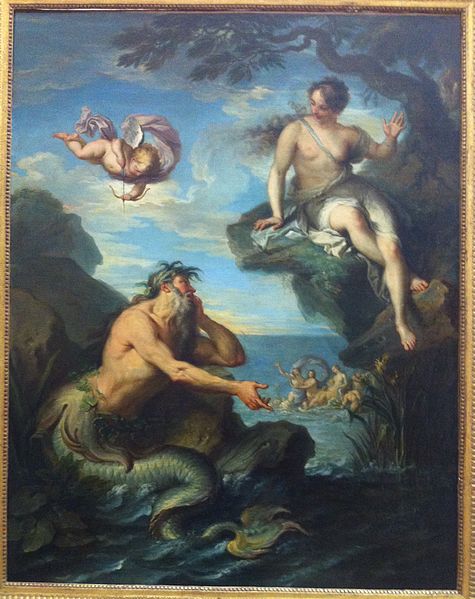
“Hêdulos, the Samian or Athenian, says that Glaukos threw himself in the sea after he fell in love with Melicertes. Hêdulê, his mother and the daughter of the Athenian Moskhinê, was a composer of iambic lines. In her poem called “Skylla”, she records that Glaukos went into his own cave after he fell in love with Skylla

“Either carrying shells as gifts
From the Erythaian cliff
Or halcyon chicks still unwinged
Presents for the girl from an anxious man.
His Siren girl neighbor felt pity
For he was swimming toward that beach
And the regions close to Aitna.”

Ἡδύλος δ᾿ ὁ Σάμιος ἢ Ἀθηναῖος Μελικέρτου φησὶν ἐρασθέντα τὸν Γλαῦκον ἑαυτὸν ῥῖψαι εἰς τὴν | θάλατταν. Ἡδύλη δ᾿ ἡ τοῦ ποιητοῦ τούτου μήτηρ, Μοσχίνης δὲ θυγάτηρ τῆς Ἀττικῆς ἰάμβων ποιητρίας, ἐν τῇ ἐπιγραφομένῃ Σκύλλῃ ἱστορεῖ τὸν Γλαῦκον ἐρασθέντα Σκύλλης ἐλθεῖν αὐτῆς εἰς τὸ ἄντρον

Σκύλλα
ἢ κόγχους δωρήματ’ ᾿Ερυθραίης ἀπὸ πέτρης
ἢ τοὺς ἀλκυόνων παῖδας ἔτ’ ἀπτερύγους
τῇ νύμφῃ δύσπιστος ἀθύρματα. δάκρυ δ’ ἐκείνου
καὶ Σειρὴν γείτων παρθένος ᾠκτίσατο·
ἀκτὴν γὰρ κείνην ἀπενήχετο καὶ τὰ σύνεγγυς
Αἴτνης.

File:Glaucus et Scylla.jpg
Scylla and Glaucus

Ruffian Poets and Dido’s Snub

T.S. Eliot, What is a Classic?

Virgil’s maturity of mind, and the maturity of his age, are exhibited in this awareness of history. With maturity of mind I have associated maturity of manners and absence of provinciality. I suppose that, to a modern European suddenly precipitated into the past, the social behavior of the Romans and the Athenians would seem indifferently coarse, barbarous and offensive. But if the poet can portray something superior to contemporary practice, it is not in the way of anticipating some later, and quite different code of behaviour, but by an insight into what the conduct of his own people at his own time might be, at its best. House parties of the wealthy, in Edwardian England, were not exactly what we read of in the pages of Henry James: but Mr. James’s society was an idealization, of a kind, of that society, and not an anticipation of any other. I think that we are conscious, in Virgil more than in any other Latin poet – for Catullus and Propertius seem ruffians, and Horace somewhat plebeian by comparison – of a refinement of manners springing from a delicate sensibility, and particularly in that test of manners, private and public conduct between the sexes.

It is not for me, in a gathering of people, all of whom may be better scholars than I, to review the story of Aeneas and Dido. But I have always thought the meeting of Aeneas with the shade of Dido, in Book VI, not only one of the most poignant, but one of the most civilized passages in poetry. It is complex in meaning and economical in expression, for it not only tells us about the attitude of Dido – still more important is what it tells us about the attitude of Aeneas. Dido’s behaviour appears almost as a projection of Aeneas’ own conscience: this, we feel, is the way in which Aeneas’ conscience would expect Dido to behave to him. The point, it seems to me, is not that Dido is unforgiving – though it is important that, instead of railing at him, she merely snubs him – perhaps the most telling snub in all poetry: what matters most is, that Aeneas does not forgive himself – and this, significantly, in spite of the fact of which he is well aware, that all that he has done has been in compliance with destiny, or in consequence of the machinations of the gods who are themselves, we feel, only instruments of a greater inscrutable power.

Here, what I chose as an instance of civilized manners, proceeds to testify to civilized consciousness and conscience: but all of the levels at which we may consider a particular episode, belong to one whole. It will be observed, finally, that the behaviour of Virgil’s characters (I might except Turnus, the man without a destiny) never appears to be according to some purely local or tribal code of manners: it is in its time, both Roman and European. Virgil certainly, on the plane of manners, is not provincial.

File:Pasinelli Aeneas and Dido.jpg

The Loss of a Son and a Daughter

“My child’s death has affected me so greatly that I feel the loss as bitterly as on the first day. My wife is also completely broken down.”

—Letter from Karl Marx to Friedrich Engels, 1856

Callimachus 37 (Gow-Page edition)

At dawn we laid to rest Melanippus.
At sunset the unwed girl, Basilo,
Died by her own hand.
To live, when her brother’s on the pyre,
That she could not bear.
The house of their father, Aristippus,
Has seen a two-fold evil.
All Cyrene grieved at the sight of a home
Once blessed with children now barren.

Ἠῶιοι Μελάνιππον ἐθάπτομεν, ἠελίου δέ
δυομένου Βασιλὼ κάτθανε παρθενική
αὐτοχερί: ζώειν γὰρ ἀδελφεὸν ἐν πυρὶ θεῖσα
οὐκ ἔτλη. δίδυμον δ᾽ οἶκος ἐπεῖδε κακόν
5πατρὸς Ἀριστίπποιο, κατήφησεν δὲ Κυρήνη
πᾶσα τὸν εὔτεκνον χῆρον ἰδοῦσα δόμον.

Marble grave stele of a little girl.
Circa 450-440 BC.
Metropolitan Museum of Art.

Larry Benn has a B.A. in English Literature from Harvard College, an M.Phil in English Literature from Oxford University, and a J.D. from Yale Law School. Making amends for a working life misspent in finance, he’s now a hobbyist in ancient languages and blogs at featsofgreek.blogspot.com.

Spartan Women Once Said…

This is the second part of the sayings attributed to women in the Gnomologium Vaticanum (568-576)

“Sayings of women and their thoughts”

᾿Αποφθέγματα γυναικῶν, ἤτοι φρονήματα.

“When a Spartan woman was speaking to her son who had been crippled in battle and was depressed because of that she said “don’t be sad, child—for each step recalls your private virtue”

Γυνὴ Λάκαινα τοῦ υἱοῦ αὐτῆς ἐν παρατάξει χωλωθέντος καὶ δυσφοροῦντος ἐπὶ τούτῳ „τέκνον”, εἶπε, „μὴ λυποῦ· καθ’ ἕκαστον γὰρ βῆμα τῆς ἰδίας <ἀρετῆς ὑπομνησθήσῃ.”>


“When a Spartan woman heard that her son died in the battle line she said “Child, you paid your country back well for your upbringing.”

Γυνὴ Λάκαινα ἀκούσασα τὸν υἱὸν αὐτῆς ἐν παρατάξει τεθνηκέναι „τέκνον”, εἶπεν, „ὡς καλὰ τροφεῖα τῇ πατρίδι ἀπέδωκας!”


“A Spartan woman said of her son who was thankful that he was the only one to survive a battle-line “why aren’t you ashamed that you’re the only one alive?”

Λάκαινα γυνὴ σεμνυνομένου τοῦ υἱοῦ αὐτῆς ἐπὶ τῷ μόνον ἐκ τῆς παρατάξεως σεσῶσθαι ἔφη· „τί οὖν οὐκ αἰσχύνῃ μόνος ζῶν;”

The website “Sharing Ancient Wisdom” is a really interesting and useful collection of proverbial sayings. Check it out.

Which Road to Hell?

Epictetus. Disc 2. 6.17-19

 “But if you say these things are annoying, what annoyance does the thing that existed experience in perishing? The tool of destruction is a blade, a wheel, the sea, a tile, or a tyrant. What does it matter to you what road you take to hell? All the paths there are equal in the end.

εἰ δ᾿ ὡς δύσκολα καλεῖς, ποίαν δυσκολίαν ἔχει τὸ γενόμενον φθαρῆναι; τὸ δὲ φθεῖρον ἢ μάχαιρά ἐστιν ἢ τροχὸς ἢ θάλασσα ἢ κεραμὶς ἢ τύραννος. τί σοι μέλει, ποίᾳ ὁδῷ καταβῇς εἰς Ἅιδου; ἴσαι πᾶσαί εἰσιν.

Miniature from the Hours of Catherine of Cleves, Morgan Library & Museum, MS M.945, f. 107r

To the Nymphs of the River: Two Poems from Moero

Moero (Moirô) of Byzantium is from the Hellenistic period.

Greek Anthology, 6.119

“You lie there beneath Aphrodite’s golden ceiling,
Grapes, full with Dionysus’ drink.
Your mother, the vine, will no longer wrap her love branch around you
And protect your head beneath her sweet leaf.”

Κεῖσαι δὴ χρυσέαν ὑπὸ παστάδα τὰν Ἀφροδίτας,
βότρυ, Διωνύσου πληθόμενος σταγόνι·
οὐδ᾿ ἔτι τοι μάτηρ ἐρατὸν περὶ κλῆμα βαλοῦσα
φύσει ὑπὲρ κρατὸς νεκτάρεον πέταλον.

6.189

“Anigrian Nymphs, daughters of the river, you ambrosial
Creatures who always step on the depths with rosy feet.
Say hello to and preserve Kleonymos who set out for you goddesses
These wooden images beneath the pines.”

Νύμφαι Ἀνιγριάδες, ποταμοῦ κόραι, αἳ τάδε βένθη
ἀμβρόσιαι ῥοδέοις στείβετε ποσσὶν ἀεί,
χαίρετε καὶ σώζοιτε Κλεώνυμον, ὃς τάδε καλὰ
εἵσαθ᾿ ὑπαὶ πιτύων ὔμμι, θεαί, ξόανα.

Image result for ancient greek grapes on vase

This is Not a Love Poem

CW: Sexual assault, rape

5.199 in the Greek Anthology

Wine and toasts, the ploys, have put Aglaonike to sleep–
And the sweet love of Nicagoras has too.
Her things, all still dripping with perfume,
Are dedicated by her to Cypris,
The delicate spoils of a virgin’s passions:
Sandals and the soft garments which covered her breasts.
Witnesses to sleep and its occasional interruptions.

In Jean-Baptiste Greuze’s 1756 painting, Broken Eggs, the young woman’s loss of virginity Is represented by scattered, broken eggs. Not the eggs per se, but what they represent, accounts for the anxious expressions on the faces of the figures. The painting is in the collection of the Metropolitan Museum of Art in New York City.

οἶνος καὶ προπόσεις κατεκοίμισαν Ἀγλαονίκην
αἱ δόλιαι, καὶ ἔρως ἡδὺς ὁ Νικαγόρεω,
ἧς πάρα Κύπριδι ταῦτα μύροις ἔτι πάντα μυδῶντα
κεῖνται, παρθενίων ὑγρὰ λάφυρα πόθων,
σάνδαλα, καὶ μαλακαί, μαστῶν ἐνδύματα, μίτραι.
ὕπνου καὶ σκυλμῶν τῶν τότε μαρτύρια.

Alongside the familiar topoi of broken oaths, frustrated desires, and the like, the “love” epigrams of the Greek Anthology record crude renderings of sex, and sexual assault. The disturbing subject of the poem below is in tension with the elegance of its construction. That should prompt us to think hard about what an elegant facade makes it possible to say (under the breath, as it were) in the most seemingly benign of the love poems.

Larry Benn has a B.A. in English Literature from Harvard College, an M.Phil in English Literature from Oxford University, and a J.D. from Yale Law School. Making amends for a working life misspent in finance, he’s now a hobbyist in ancient languages and blogs at featsofgreek.blogspot.com.

Cicero, Always Chirping about the Ides of March

Previously we have posted about Cicero’s comments about the Ides of March to Brutus. Here is a letter from Brutus complaining about Cicero.

Letters: Brutus to Atticus, I.17

“You write to me that Cicero is amazed that I say nothing about his deeds. Since you are hassling me, I will write you what I think thanks to your coaxing.

I know that Cicero has done everything with the best intention. What could be more proved to me than his love for the republic? But certain things seem to me, what can I say, that the most prudent man has acted as if inexperienced or ambitiously, this man who was not reluctant to take on Antony as an enemy when he was strongest?

I don’t know what to write to you except a single thing: the boy’s desire and weakness have been increased rather than repressed by Cicero and that he grinds on so far in his indulgence that he does not refrain from invectives that rebound in two ways. For he too has killed many and he must admit that he is an assassin before what he objects to Casca—in which case he acts the part of Bestia to Casca—

Or because we are not tossing about every hour the Ides of March the way he always has the Nones of December in his mouth, will Cicero find fault in the most noble deed from a better vantage point than Bestia and Clodius were accustomed to insult his consulship?

Our toga-clad friend Cicero brags that he has stood up to Antony’s war. How does it profit me if the cost of Antony defeated is the resumption of Antony’s place?  Or if our avenger of this evil has turned out to be the author of another—an evil which has a foundation and deeper roots, even if we concede <whether it is true or not> those things which he does come from the fact that he either fears tyranny or Antony as a tyrant?

 But I don’t have gratitude for anyone who does not protest the situation itself provided only that he serves one who is not raging at him. Triumphs, stipends, encouragement with every kind of degree so that it does not shame him to desire the fortune of the man whose name he has taken—is that a mark of a Consular man, of a Cicero?

1Scribis mihi mirari Ciceronem quod nihil significem umquam de suis actis; quoniam me flagitas, coactu tuo scribam quae sentio.

Omnia fecisse Ciceronem optimo animo scio. quid enim mihi exploratius esse potest quam illius animus in rem publicam? sed quaedam mihi videtur—quid dicam? imperite vir omnium prudentissimus an ambitiose fecisse, qui valentissimum Antonium suscipere pro re publica non dubitarit inimicum? nescio quid scribam tibi nisi unum: pueri et cupiditatem et licentiam potius esse irritatam quam repressam a Cicerone, tantumque eum tribuere huic indulgentiae ut se maledictis non abstineat iis quidem quae in ipsum dupliciter recidunt, quod et pluris occidit uno seque prius oportet fateatur sicarium quam obiciat Cascae quod obicit et imitetur in Casca Bestiam. an quia non omnibus horis iactamus Idus Martias similiter atque ille Nonas Decembris suas in ore habet, eo meliore condicione Cicero pulcherrimum factum vituperabit quam Bestia et Clodius reprehendere illius consulatum soliti sunt?

Sustinuisse mihi gloriatur bellum Antoni togatus Cicero noster. quid hoc mihi prodest, si merces Antoni oppressi poscitur in Antoni locum successio et si vindex illius mali auctor exstitit alterius fundamentum et radices habituri altiores, si patiamur, ut iam <dubium sit utrum>ista quae facit dominationem an dominum [an] Antonium timentis sint? ego autem gratiam non habeo si quis, dum ne irato serviat, rem ipsam non deprecatur. immo triumphus et stipendium et omnibus decretis hortatio ne eius pudeat concupiscere fortunam cuius nomen susceperit, consularis aut Ciceronis est?

Image result for Ancient Roman Cicero