Plutarch’s Advice on Being a Good Father

Plutarch, On the Education of Children 20

“Once I add a few more things, I will complete my proposals. Beyond all other things, it is necessary that fathers, by avoiding transgressions and doing everything that is required, offer themselves as a clear example to their children, so that when looking at their father’s life as if in a mirror they may turn away from shameful deeds and words. Whoever makes the same mistakes as those for which they punish their sons become their own accusers under their sons’ names without realizing it . Men who live life poorly in every way do not possess the right to criticize their slaves, much less their sons. In addition, they could become their sons’ advisors and teachers of crime. For whenever old men behave shamefully, it is by necessity that their young are the most shameless.”

Βραχέα δὲ προσθεὶς ἔτι περιγράψω τὰς ὑποθήκας. πρὸ πάντων γὰρ δεῖ τοὺς πατέρας τῷ μηδὲν ἁμαρτάνειν ἀλλὰ πάνθ’ ἃ δεῖ πράττειν ἐναργὲς αὑτοὺς παράδειγμα τοῖς τέκνοις παρέχειν, ἵνα πρὸς τὸν τούτων βίον ὥσπερ κάτοπτρον ἀποβλέποντες ἀποτρέπωνται τῶν αἰσχρῶν ἔργων καὶ λόγων. ὡς οἵτινες τοῖς ἁμαρτάνουσιν υἱοῖς ἐπιτιμῶντες τοῖς αὐτοῖς ἁμαρτήμασι περιπίπτουσιν, ἐπὶ τῷ ἐκείνων ὀνόματι λανθάνουσιν ἑαυτῶν κατήγοροι γιγνόμενοι• τὸ δ’ ὅλον φαύλως ζῶντες οὐδὲ τοῖς δούλοις παρρησίαν ἄγουσιν ἐπιτιμᾶν, μή τί γε τοῖς υἱοῖς. χωρὶς δὲ τούτων γένοιντ’ ἂν αὐτοῖς τῶν ἀδικημάτων σύμβουλοι καὶ διδάσκαλοι. ὅπου γὰρ γέροντές εἰσιν ἀναίσχυντοι, ἐνταῦθ’ ἀνάγκη καὶ νέους ἀναιδεστάτους εἶναι.


Father

This my fifth father’s day since my father’s passing. His example(s), though fading, remain.

“Peace in Our Time… and on Our Terms”

Montesquieu, Considerations Regarding the Causes of the Greatness of the Romans and their Decline (§4):

Carthage, which made war with its wealth in contrast to the poverty of Rome, experienced even from this fact some disadvantage; gold and silver can be exhausted; but virtue, constancy, force, and poverty are never drained.

The Romans were ambitious from pride, the Carthaginians from avarice; the former wished to command, the latter to acquire; and these last, calculating constantly about profit and cost, always made war without loving it.

Lost battles, the reduction of the population, the weakening of commerce, the exhaustion of the public treasury, and the uprising of neighboring countries, could make Carthage accept the harshest conditions of peace. But Rome was not managed by feelings of good and ill; it was determined by nothing but its own glory, and, as it could not imagine that it could exist if it did not command, there was no hope nor fear which could oblige it to make a peace which it had not imposed.

Carthage, qui faisait la guerre avec son opulence contre la pauvreté romaine, avait par cela même du désavantage; l’or et l’argent s’épuisent; mais la vertu, la constance, la force et la pauvreté ne s’épuisent jamais.

Les Romains étaient ambitieux par orgueil, et les Carthaginois, par avarice ; les uns voulaient commander, les autres voulaient acquérir; et ces derniers, calculant sans cesse la recette et la dépense, firent toujours la guerre sans l’aimer.

Des batailles perdues, la diminution du peuple, l’affaiblissement du commerce, l’épuisement du trésor public, le soulèvement des nations voisines, pouvaient faire accepter à Carthage les conditions de paix les plus dures. Mais Rome ne se conduisait point par le sentiment des biens et des maux: elle ne se déterminait que par sa gloire, et, comme elle n’imaginait point qu’elle pût être si elle ne commandait pas, il n’y avait point d’espérance ni de crainte qui pût l’obliger à faire une paix qu’elle n’aurait point imposée.

How Things Will Turn Out

Solon, fr.13 33-70

“And so as mortals whether we are noble or not
Each cling to the idea that life is going well
Until we suffer in some way. Then we mourn.
But until then we each take pleasure clutching at empty hopes.

Whoever is overcome by harsh disease
Thinks he will be healthy, he doesn’t take it seriously.
Another believes that he is noble when he’s not,
Or he’s pretty when his appearance has no charm.

Someone who lacks means and poverty wears down
Believes that he will somehow make a lot of money.
People hurry in different directions: one wanders over the sea
Hoping to bring home profit in ships,
Drawn across the harsh waves for fish
Giving almost no concern for his life.

Another carves up a land with many trees laboring
All year long, keeping the curved plow dear to his thoughts.
And another learns the works of Athena and crafty Hephaistos
To try to scrape together a living with his hands.

A different person has received the gifts of the Olympian Muses
And has learned the measure of longed-for wisdom.
Lord Apollo the far-shooter has made another person a prophet
to recognize disaster approaching someone for afar,
When the gods are at their side—but if things are wholly fated
No bird omen or sacrifice will keep them away.

Others—doctors—acquire the art of Paion, of many medicines,
And there is no real end to the work they do.
Often a great pain will develop from minor aches,
And they can’t even relieve the patient by giving them drugs.
Other times they can bring health suddenly with a touch
When someone is being tortured by evil, wretched diseases.

Fate brings good and ill to mortals, certainly,
And the gifts of the immortal gods must not be refused.
But in every act there is danger and no one knows
How it will turn out when each thing begins.

A person who tries to act well but does not think ahead
Falls into great and horrible ruin.
Then the god will give everything to someone who acts wrongly,
A great success, relief from his stupidity.”

θνητοὶ δ᾿ ὧδε νοέομεν ὁμῶς ἀγαθός τε κακός τε,
†ἐν δηνην† αὐτὸς δόξαν ἕκαστος ἔχει,
πρίν τι παθεῖν· τότε δ᾿ αὖτις ὀδύρεται· ἄχρι δὲ τούτου
χάσκοντες κούφαις ἐλπίσι τερπόμεθα.

χὤστις μὲν νούσοισιν ὑπ᾿ ἀργαλέῃσι πιεσθῇ,
ὡς ὑγιὴς ἔσται, τοῦτο κατεφράσατο·
ἄλλος δειλὸς ἐὼν ἀγαθὸς δοκεῖ ἔμμεναι ἀνήρ,
καὶ καλὸς μορφὴν οὐ χαρίεσσαν ἔχων·

εἰ δέ τις ἀχρήμων, πενίης δέ μιν ἔργα βιᾶται,
κτήσεσθαι πάντως χρήματα πολλὰ δοκεῖ.
σπεύδει δ᾿ ἄλλοθεν ἄλλος· ὁ μὲν κατὰ πόντον ἀλᾶται
ἐν νηυσὶν χρῄζων οἴκαδε κέρδος ἄγειν
ἰχθυόεντ᾿ ἀνέμοισι φορεόμενος ἀργαλέοισιν,
φειδωλὴν ψυχῆς οὐδεμίαν θέμενος·

ἄλλος γῆν τέμνων πολυδένδρεον εἰς ἐνιαυτὸν
λατρεύει, τοῖσιν καμπύλ᾿ ἄροτρα μέλει·
ἄλλος Ἀθηναίης τε καὶ Ἡφαίστου πολυτέχνεω
ἔργα δαεὶς χειροῖν ξυλλέγεται βίοτον,

ἄλλος Ὀλυμπιάδων Μουσέων πάρα δῶρα διδαχθείς,
ἱμερτῆς σοφίης μέτρον ἐπιστάμενος·
ἄλλον μάντιν ἔθηκεν ἄναξ ἑκάεργος Ἀπόλλων,
ἔγνω δ᾿ ἀνδρὶ κακὸν τηλόθεν ἐρχόμενον,
ᾧ συνομαρτήσωσι θεοί· τὰ δὲ μόρσιμα πάντως
οὔτε τις οἰωνὸς ῥύσεται οὔθ᾿ ἱερά·

ἄλλοι Παιῶνος πολυφαρμάκου ἔργον ἔχοντες
ἰητροί· καὶ τοῖς οὐδὲν ἔπεστι τέλος·
πολλάκι δ᾿ ἐξ ὀλίγης ὀδύνης μέγα γίγνεται ἄλγος,
κοὐκ ἄν τις λύσαιτ᾿ ἤπια φάρμακα δούς·
τὸν δὲ κακαῖς νούσοισι κυκώμενον ἀργαλέαις τε
ἁψάμενος χειροῖν αἶψα τίθησ᾿ ὑγιῆ.

Μοῖρα δέ τοι θνητοῖσι κακὸν φέρει ἠδὲ καὶ ἐσθλόν,
δῶρα δ᾿ ἄφυκτα θεῶν γίγνεται ἀθανάτων.
πᾶσι δέ τοι κίνδυνος ἐπ᾿ ἔργμασιν, οὐδέ τις οἶδεν
ᾗ μέλλει σχήσειν χρήματος ἀρχομένου·

ἀλλ᾿ ὁ μὲν εὖ ἔρδειν πειρώμενος οὐ προνοήσας
ἐς μεγάλην ἄτην καὶ χαλεπὴν ἔπεσεν,
τῷ δὲ κακῶς ἔρδοντι θεὸς περὶ πάντα δίδωσιν
συντυχίην ἀγαθήν, ἔκλυσιν ἀφροσύνης.

IONIAN UNIVERSITY - Seafarers in Ancient Greece - Pirates, Sailors ...

Dishonoring the Gods

Sophocles, Antigone 280–288

“Stop speaking before you fill me with rage!
And you’re revealed as a fool as well as an old man.

You speak of unendurable things, claiming that the gods
Have some plan for this corpse.
Did they do it to honor him so greatly for his fine work,
Concealing him, the man who came here
To burn their temples and their statutes,
To ruin their land and their laws?
Do you see the gods honoring evil people?”

παῦσαι, πρὶν ὀργῆς καί με μεστῶσαι λέγων,
μὴ ᾿φευρεθῇς ἄνους τε καὶ γέρων ἅμα.
λέγεις γὰρ οὐκ ἀνεκτὰ δαίμονας λέγων
πρόνοιαν ἴσχειν τοῦδε τοῦ νεκροῦ πέρι.
πότερον ὑπερτιμῶντες ὡς εὐεργέτην
285ἔκρυπτον αὐτόν, ὅστις ἀμφικίονας
ναοὺς πυρώσων ἦλθε κἀναθήματα
καὶ γῆν ἐκείνων καὶ νόμους διασκεδῶν;
ἢ τοὺς κακοὺς τιμῶντας εἰσορᾷς θεούς;

 Sophocles, Antigone 72–77

“It is noble for me to do this and then die.
I will lie with him because I belong to him, with him,
Once I have completed my sacred crimes. There’s more time
When I must please those below than those here,
Since I will lie there forever. You? Go head,
Dishonor what the gods honor if it seems right.”

… καλόν μοι τοῦτο ποιούσῃ θανεῖν.
φίλη μετ᾿ αὐτοῦ κείσομαι, φίλου μέτα,
ὅσια πανουργήσασ᾿· ἐπεὶ πλείων χρόνος
ὃν δεῖ μ᾿ ἀρέσκειν τοῖς κάτω τῶν ἐνθάδε·
ἐκεῖ γὰρ αἰεὶ κείσομαι. σὺ δ᾿ εἰ δοκεῖ
τὰ τῶν θεῶν ἔντιμ᾿ ἀτιμάσασ᾿ ἔχε.

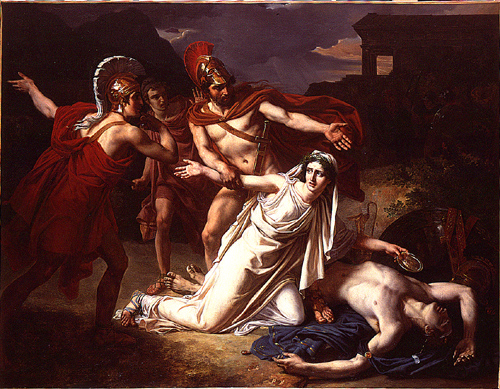
Sébastien Norblin, Antigone donnant la sépulture à Polynice

Scoundrels, Fools, and Failing States

Antisthenes, fr. 103 [=Diogenes Laertius 6.11]

“He used to say that states fail when they cannot distinguish fools from serious men.”

τότ’ ἔφη τὰς πόλεις ἀπόλλυσθαι, ὅταν μὴ δύνωνται τοὺς φαύλους ἀπὸ τῶν σπουδαίων διακρίνειν.

Fr.104

“He used to say that it is strange that we sift out the chaff from the wheat and those useless for war, but we do not forbid scoundrels in politics.”

ἄτοπον ἔφη τοῦ μὲν σίτου τὰς αἴρας ἐκλέγειν καὶ ἐν τῷ πολέμῳ τοὺς ἀχρείους, ἐν δὲ πολιτείᾳ τοὺς πονηροὺς μὴ παραιτεῖσθαι.

Hesychius

“Phaulos: evil, tricky, mean; simple, dumb. Ridiculous”

φαῦλος· κακός, δόλιος, χαλεπός. εὐτελής, ἁπλοῦς. καταγέλαστος

Phaulos lsj

Apostolius Paroemiographus, 9.18.12

“Fish start to stink at the top”: [this is a proverb] applied to people who have scoundrels for leaders.”

᾿Ιχθὺς ἐκ τῆς κεφαλῆς ὄζειν ἄρχεται: ἐπὶ τῶν ἐπιστάτας φαύλους ἐχόντων.

Stobaeus, 2.3.4

“When Plato saw that someone was doing evil things, but claiming that he was carrying out justice for other people, he said. “This man carries his mind on his tongue.”

᾿Ιδών τινα Πλάτων φαῦλα μὲν πράττοντα, δίκας δὲ ὑπὲρ ἑτέρων λέγοντα, εἶπεν, Οὗτος νοῦν „ἐπὶ γλώσσῃ φέρει”.

2.14.3 Mousonius

“[He said] that associating with wise people is worth a lot, but that you should avoid scoundrels and the uneducated.”

῞Οτι χρὴ περὶ πολλοῦ ποιεῖσθαι τὰς τῶν σοφῶν συνουσίας, ἐκκλίνειν δὲ τοὺς φαύλους καὶ ἀπαιδεύτους

Menander fr. 274

“It is much better to have learned one thing well,
Than to cast about for many deeds foolishly.”

Πολὺ κρεῖττόν ἐστιν ἓν καλῶς μεμαθηκέναι,
ἢ πολλὰ φαύλως περιβεβλῆσθαι πράγματα.

From Beekes 2010

phaulos Beekes 1Phaulos beekes 2

Democritus fr. 234

“Associating with scoundrels frequently increases the possession of wickedness.”

Φαύλων ὁμιλίη ξυνεχὴς ἕξιν κακίης συναέξει.

Socrates, Stobaeus 2.45.3

“It is the same thing to attach your boat to a weak anchor and your hopes to foolish judgment.”

Ταὐτὸν ἐξ ἀσθενοῦς ἀγκυρίου σκάφος ὁρμίζειν καὶ ἐκ φαύλης γνώμης ἐλπίδα.


Eusebius, fr. 7 [=Stobaeus 3.4.104]

“Foolish people honor and wonder at those who have a lot of money and are scoundrels, and hold serious people in contempt when they see that they are poor.”

Οἱ μάταιοι τῶν ἀνθρώπων τοὺς μὲν μεγάλα χρήματα ἔχοντας καὶ φαύλους ἐόντας τιμῶσί τε καὶ τεθωυμάκασι· τῶν δὲ σπουδαίων, ἐπειδὰν ἀχρηματίην καταγνῶσιν, ὑπερφρονέουσιν.

Image result for dirty rotten scoundrels

Vergil, Seduced by Imitation

From Samuel Johnson’s, The Rambler No. 121:

Yet, whatever Hope may persuade, or Reason evince, Experience can boast of very few Additions to ancient Fable. The Wars of Troy and the Travels of Ulysses have furnished almost all succeeding Poets with Incidents, Characters, and Sentiments. The Romans are confessed to have attempted little more than to display in their own Tongue the Fictions of the Greeks. There is in all their Writings such a perpetual Recurrence of Allusions to the Tales of the fabulous Age, that they must be confessed often to want that Power of giving Pleasure which Novelty supplies; nor can we wonder that they excelled so much in the Graces of Diction, when we consider how little they were employed in Search of new Thoughts.

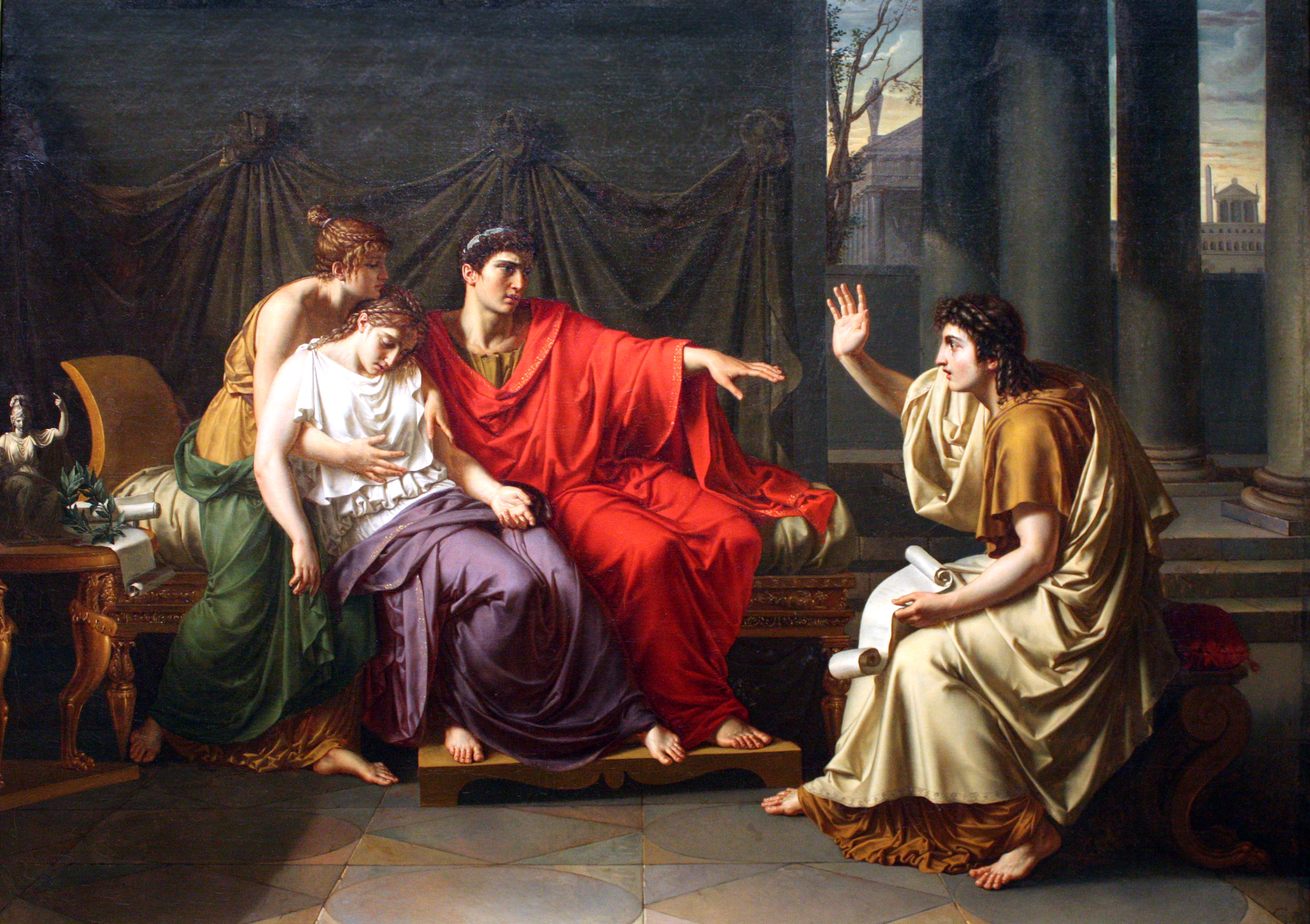
The warmest Admirers of the great Mantuan Poet can extol him for little more than the Skill with which he has, by making his Hero both a Traveller and a Warrior, united the Beauties of the Iliad and Odyssey in one Composition; yet his Judgment was perhaps sometimes overborn by his Avarice of the Homeric Treasures, and for fear of suffering a sparkling Ornament to be lost, has inserted it where it cannot shine with its original Splendor. When Ulysses visited the infernal Regions, he found among the Heroes who died at Troy, his Competitor Ajax, who, when the Arms of Achilles were adjudged to Ulysses, died by his own Hand in the Madness of Disappointment. He still appeared to resent, as on Earth, his Loss and Disgrace. Ulysses endeavoured to pacify him with Praises and Submission; but Ajax walked away without Reply. This Passage has always been considered as eminently beautiful, because Ajax the haughty Chief, the unlettered Soldier, of unshaken Courage, of immoveable Constancy, but without the Power of recommending his own Virtues by Eloquence, or enforcing his Assertions by any other Argument than the Sword, had no way of making his Resentment known but by gloomy Sullenness and dumb Ferocity. He therefore naturally showed his Hatred of a Man whom he conceived to have defeated him only by Volubility of Tongue, by Silence more contemptuous and affecting than any Words that so rude an Orator could have found, and which gave his Enemy no Opportunity of exerting the only Power in which he was superior. When Aeneas is sent by Virgil into the Regions below, he meets with Dido the Queen of Carthage, whom his Perfidy had hurried to the Grave; he accosts her with Tenderness and Excuses, but the Lady turns away like Ajax in mute Anger. She turns away like Ajax, but she resembles him in none of those Qualities which give either Dignity or Propriety to Silence. She might, without any Departure from the Tenour of her Conduct, have burst out like other injured Ladies into Clamour, Reproach, and Denunciation; but Virgil had his Imagination full of Ajax, and therefore could not prevail on himself to teach Dido any other Mode of Resentment.

If Virgil could be thus seduced by Imitation there will be little Hope that common Wits should escape; and accordingly we find, that besides the universal and acknowledged Practice of copying the Ancients, there has prevailed in every Age a particular Species of Fiction. At one Time all Truth was conveyed in Allegory; at another nothing was seen but in a Vision; at one Period all the Poets followed Sheep, and every Event produced a Pastoral; at another they busied themselves wholly in giving Directions to a Painter.

Wealth and the Death of Culture

Plutarch, Moralia 832 [On Borrowing]

“Why do we need to talk about these guys when the lyric poet Philoxenos who had a share of the land in a Sicilian colony—safeguarding his lifestyle and his home and giving him a lot extra—when he saw that luxury and pleasure, and lack of the arts rose up together, said “By the gods, these good possessions will not ruin me! I should lose them!” He left his goods to others and sailed away.

People who are in debt are forced to beg, to be harvested for interest, enslaved and robbed-they hold on like Phineus, feeding winged Harpies who steal their food and swallow it whole, purchasing their grain, not at the right time, but before it is even harvested, buying up all the oil before the olives are picked.

“Well, I have wine,” he says, “for this much money” and gives an IOU for its cost. The grapes hang on the vine still and linger for the rising of Arcturus.”

καὶ τί δεῖ τούτους λέγειν, ὅπου Φιλόξενος ὁ μελοποιὸς ἐν ἀποικίᾳ Σικελικῇ, κλήρου μετασχὼν καὶ βίου καὶ οἴκου πολλὴν εὐπορίαν ἔχοντος, ὁρῶν δὲ τρυφὴν καὶ ἡδυπάθειαν καὶ ἀμουσίαν ἐπιχωριάζουσαν “μὰ τοὺς θεούς,” εἶπεν, “ἐμὲ ταῦτα τἀγαθὰ οὐκ ἀπολεῖ, ἀλλ᾿ ἐγὼ ταῦτα· καὶ καταλιπὼν ἑτέροις τὸν κλῆρον ἐξέπλευσεν.

οἱ δ᾿ ὀφείλοντες ἀπαιτούμενοι δασμολογούμενοι δουλεύοντες ὑπαργυρεύοντες ἀνέχονται, καρτεροῦσιν, ὡς ὁ Φινεύς, Ἁρπυίας τινὰς ὑποπτέρους βόσκοντες, αἳ φέρουσι τὴν τροφὴν καὶ διαρπάζουσιν, οὐ καθ᾿ ὥραν ἀλλὰ πρὶν θερισθῆναι τὸν σῖτον ὠνούμενοι, καὶ πρὶν ἢ πεσεῖν τὴν ἐλαίαν ἀγοράζοντες τοὔλαιον· καὶ “τὸν οἶνον ἔχω,” φησί, “τοσούτου” καὶ πρόσγραφον ἔδωκε τῆς τιμῆς· ὁ δὲ βότρυς κρέμαται καὶ προσπέφυκεν ἔτι τὸν ἀρκτοῦρον ἐκδεχόμενος.

Venus and Arcturus, by Paul van de Velde, 2018

Humankind’s Slow Upbringing and What Fathers See

Plutarch, On Affection for Offspring 496e-497a

“The one who planted grapes at the spring equinox harvests them in the fall; he sowed wheat when the Pleaides were setting and reaped them as they rose. Cows, horses, and birds bear young who are already useful—but humankind’s offspring grows slowly and with much toil; our excellence is far away and most fathers die before we attain it.

Neokles did not see Themistokles’ Salamis; Miltiades’ did not witness Cimon’s Eurymedon; Xanthippus never heard Perikles addressing the people nor did Aristôn hear Plato’s philosophy. The fathers of Euripides and Sophokles did not know the victories of their sons. But they did hear their lisping and their first syllables; and they saw their parties, and drinking, and crazy loves—whatever kind of nonsense young men pursue…”

ἀμπελῶν᾿ ἰσημερίας ἐαρινῆς σκάψας μετοπωρινῆς ἐτρύγησε, πυρὸν ἔσπειρε δυομένης Πλειάδος εἶτ᾿ ἀνατελλούσης θερίζει, βόες καὶ ἵπποι καὶ ὄρνιθες ἕτοιμα τίκτουσιν ἐπὶ τὰς χρείας· ἀνθρώπου δ᾿ ἡ μὲν ἐκτροφὴ πολύπονος ἡ δ᾿ αὔξησις βραδεῖα, τῆς δ᾿ ἀρετῆς μακρὰν οὔσης προαποθνήσκουσιν οἱ πλεῖστοι πατέρες. οὐκ ἐπεῖδε τὴν Σαλαμῖνα Νεοκλῆς τὴν Θεμιστοκλέους οὐδὲ τὸν Εὐρυμέδοντα Μιλτιάδης τὸν Κίμωνος, οὐδ᾿ ἤκουσε Περικλέους Ξάνθιππος δημηγοροῦντος οὐδ᾿ Ἀρίστων Πλάτωνος φιλοσοφοῦντος, οὐδ᾿ Εὐριπίδου καὶ Σοφοκλέους νίκας οἱ πατέρες ἔγνωσαν· ψελλιζόντων καὶ συλλαβιζόντων ἠκροῶντο καὶ κώμους καὶ πότους καὶ ἔρωτας αὐτῶν οἷα νέοι πλημμελούντων ἐπεῖδον…

Plutarch, On the Education of Children 20

“Once I add a few more things, I will complete my proposals. Beyond all other things, it is necessary that fathers, by avoiding transgressions and doing everything that is required, offer themselves as a clear example to their children, so that when looking at their father’s life as if in a mirror they may turn away from shameful deeds and words. Whoever makes the same mistakes as those for which they punish their sons become their own accusers under their sons’ names without realizing it . Men who live life poorly in every way do not possess the right to criticize their slaves, much less their sons. In addition, they could become their sons’ advisers and teachers of crime. For whenever old men behave shamefully, it is by necessity that their young are the most shameless.”

Βραχέα δὲ προσθεὶς ἔτι περιγράψω τὰς ὑποθήκας. πρὸ πάντων γὰρ δεῖ τοὺς πατέρας τῷ μηδὲν ἁμαρτάνειν ἀλλὰ πάνθ’ ἃ δεῖ πράττειν ἐναργὲς αὑτοὺς παράδειγμα τοῖς τέκνοις παρέχειν, ἵνα πρὸς τὸν τούτων βίον ὥσπερ κάτοπτρον ἀποβλέποντες ἀποτρέπωνται τῶν αἰσχρῶν ἔργων καὶ λόγων. ὡς οἵτινες τοῖς ἁμαρτάνουσιν υἱοῖς ἐπιτιμῶντες τοῖς αὐτοῖς ἁμαρτήμασι περιπίπτουσιν, ἐπὶ τῷ ἐκείνων ὀνόματι λανθάνουσιν ἑαυτῶν κατήγοροι γιγνόμενοι• τὸ δ’ ὅλον φαύλως ζῶντες οὐδὲ τοῖς δούλοις παρρησίαν ἄγουσιν ἐπιτιμᾶν, μή τί γε τοῖς υἱοῖς. χωρὶς δὲ τούτων γένοιντ’ ἂν αὐτοῖς τῶν ἀδικημάτων σύμβουλοι καὶ διδάσκαλοι. ὅπου γὰρ γέροντές εἰσιν ἀναίσχυντοι, ἐνταῦθ’ ἀνάγκη καὶ νέους ἀναιδεστάτους εἶναι.

Euripides, Supp. 1101-2

“Nothing is sweeter to an old father than a daughter”

πατρὶ δ᾽ οὐδὲν †ἥδιον†

γέροντι θυγατρός

Image result for medieval manuscript fathers

Frying Fish and Accepting People as they Are

Terence, Adelphoe 420-432

“JFC, I don’t have the time to listen to you.
I have the fish I was thinking about and now
My main concern is that they don’t go bad.
That would be as big a crime on our part, Demea,
As ignoring everything you were just talking about.

As far as I can, I give my fellow enslaved friends this advice
“Too much salt or overcooked or undercleaned, ooh that’s perfect–
Remember what you did next time!
I am serious about giving them as much wisdom as I can.

Finally, I say “gaze into the saucepan as if into a mirror!”
And I tell them what they should do as practice.

I know that all these things we do are foolish—
But what would you do? You need to take each person as they are.
What else do you want?”

… non hercle otiumst
nunc mi auscultandi. piscis ex sententia
nactus sum. hi mihi ne corrumpantur cautiost.
nam id nobis tam flagitiumst quam illa, Demea,
non facere vobis quae modo dixti. et quod queo
conservis ad eundem istunc praecipio modum.
“hoc salsumst, hoc adustumst, hoc lautumst parum.
illud recte, iterum sic memento.” sedulo
moneo quae possum pro mea sapientia.
postremo tamquam in speculum in patinas, Demea,
inspicere iubeo et moneo quid facto usu’ sit.
inepta haec esse nos quae facimus sentio.
verum quid facias? ut homost, ita morem geras.
numquid vis?

color photograph of a fish filet fried brown on a skillet

Stealing from Homer – A Difficult Task!

Donatus, Vita Vergilii

“Asconius Pedianus wrote a book against Vergil’s detractors, but he nevertheless adds some objections of his own, mostly dealing with Vergil’s narration and the fact that he had taken much from Homer. But he also says that Vergil was accustomed to refute this latter criticism thus: ‘Why did they themselves not try to do take some verses from Homer? To be sure, they would learn that it easier to take Hercules’ club than to lift a verse from Homer.’ Yet, Asconius adds that he decided to retire so that he could do everything to the satisfaction of his malicious critics.”

Asconius Pedianus libro, quem contra obtrectatores Vergiliis scripsit, pauca admodum obiecta ei proponit eaque circa historiam fere et quod pleraque ab Homero sumpsisset; sed hoc ipsum crimen sic defendere adsuetum ait: cur non illi quoque eadem furta temptarent? Verum intellecturos facilius esse Herculi clavam quam Homero versum subripere”; et tamen destinasse secedere ut omnia ad satietatem malevolorum decideret.