The Dream of Love that Lingers

Anacreonta, 1

“That Teian singer, Anacreon,
saw me in a dream
as I was running to kiss and embrace him,
He spoke to me.

He was an old man, but still fine,
Fine and loving still,
His lips scented with wine.
And as he trembled, Love

Led him by the hand.
He lifted the flowers from his crown
And gave them to me–
Oh, they smelled of Anacreon!

Just like the fool I am, I took them
And placed them on my brow
And thanks to that, I never stopped loving
right up to now.”

Ἀνακρέων ἰδών με
ὁ Τήιος μελῳδὸς
ὄναρ λέγων προσεῖπεν,
κἀγὼ δραμὼν πρὸς αὐτὸν

περιπλάκην φιλήσας.
γέρων μὲν ἦν, καλὸς δέ,
καλὸς δὲ καὶ φίλευνος·
τὸ χεῖλος ὦζεν οἴνου,
τρέμοντα δ᾿ αὐτὸν ἤδη

Ἔρως ἐχειραγώγει.
ὁ δ᾿ ἐξελὼν καρήνου
ἐμοὶ στέφος δίδωσι·
τὸ δ᾿ ὦζ᾿ Ἀνακρέοντος.
ἐγὼ δ᾿ ὁ μωρὸς ἄρας

ἐδησάμην μετώπῳ·
καὶ δῆθεν ἄχρι καὶ νῦν
ἔρωτος οὐ πέπαυμαι.

Henri Rousseau. The Dream. 1910. MOMA

The Travails of an Untimely Tongue

A greek proverb, ascribed to an unknown poet

Strabo, Geography 1.14

“It certainly wasn’t proper for Hesiod to never speak nonsense but to pursue
Established opinions while Homer “sang whatever occurred to an untimely tongue”

ἢ καὶ Ἡσιόδῳ μὲν ἔπρεπε μὴ φλυαρεῖν ἀλλὰ ταῖς κατεχούσαις δόξαις ἀκολουθεῖν, Ὁμήρῳ δὲ
πᾶν ὅττι κεν ἐπ᾿ ἀκαιρίμαν
γλῶσσαν ἴῃ κελαδεῖν;

Athenaeus, Deipnosophists 5.217c

“Plato clearly makes a lot of chronological errors in many examples. For, in the words of the poet, “he follows an untimely tongue” and writes things down without discrimination.”

ὁ Πλάτων παρὰ τοὺς χρόνους ἁμαρτάνει δῆλόν ἐστιν ἐκ πολλῶν· κατὰ γὰρ τὸν εἰπόντα ποιητήν
ὅττι κεν ἐπ᾿ ἀκαιρίμαν
γλῶτταν ἔλθῃ,
τοῦτο μὴ διακρίνας γράφει. οὐ γὰρ ἀγράφως τι ἔλεγεν,

Dionysus of Halicarnassus, On Literary Composition 1

“Students need a great deal of thoughtful oversight and instruction if they are going to avoid writing “whatever word comes to an untimely tongue” and composing randomly any sudden thoughts, instead selecting words that are clear and sophisticated, fitting them together in a way that mixes pleasure with pride.”

οἷς πολλῆς πάνυ καὶ ἔμφρονος δεῖ τῆς πρώτης ἐπιστάσεώς τε καὶ ἀγωγῆς, εἰ μέλλουσι μὴ πᾶν ‘ὅ τι κεν ἐπ’ ἀκαιρίμαν γλῶσσαν ἔπος ἔλθῃ᾿ λέγειν μηδ᾿ εἰκῇ συνθήσειν τὰ προστυχόντα ἀλλήλοις, ἀλλ᾿ ἐκλογῇ τε χρήσεσθαι καθαρῶν ἅμα καὶ γενναίων ὀνομάτων καὶ συνθέσει ταῦτα κοσμήσειν μεμιγμένον ἐχούσῃ τῷ σεμνῷ τὸ ἡδύ.

Lucian, A Professor of Public Speaking 18

“Whenever someone also asks you to speak and others present propose some topics and starting points for the conversation, complain about the difficult ones and mock them as wholly unmanly. When the conversation has started, don’t delay in saying “whatever comes to your untimely tongue…”

“Ἐπειδὰν δὲ καὶ δέῃ λέγειν καὶ οἱ παρόντες ὑποβάλωσί τινας ὑποθέσεις καὶ ἀφορμὰς τῶν λόγων, ἅπαντα μὲν ὁπόσα ἂν ᾖ δυσχερῆ, ψεγέσθω καὶ ἐκφαυλιζέσθω ὡς οὐδὲν ὅλως ἀνδρῶδες αὐτῶν. ἑλομένων δέ, μὴ μελλήσας λέγε ὅττι κεν ἐπ᾿ ἀκαιρίμαν γλῶτταν ἔλθῃ,

Gnomologium Vaticanum 382

“[Kratês] the Cynic used to say that it is better to slip with your foot than your tongue.”

῾Ο αὐτὸς ἔφη κρεῖττον εἶναι τῷ ποδὶ ὀλισθῆσαι ἢ τῇ γλώττῃ.

Life & Death at the Tip of the Tongue (painting) by Omer Toledano, 2001

The Ancients Say Talk Less

Hesiod, Works & Days 760-764.

Do this: stay clear of men’s awful talk.
Talk’s evil: airy and easy to take up,
But trouble to sustain, and hard to put down.
No talk ever dies once the bulk of men
Get going. In a way Talk too is a god.

ὧδ᾽ ἔρδειν: δεινὴν δὲ βροτῶν ὑπαλεύεο φήμην:
φήμη γάρ τε κακὴ πέλεται, κούφη μὲν ἀεῖραι
ῥεῖα μάλ᾽, ἀργαλέη δὲ φέρειν, χαλεπὴ δ᾽ ἀποθέσθαι.
φήμη δ᾽ οὔτις πάμπαν ἀπόλλυται, ἥν τινα πολλοὶ
λαοὶ φημίξουσι: θεός νύ τίς ἐστι καὶ αὐτή.

Heraclitus Fragments:
#47

Let’s not join in speaking breezily about the most important things.

μὴ εἰκῆ περὶ τῶν μεγίστων συμβαλλώμεθα

#87

A foolish person loves to be distracted by all that’s said.

βλὰξ ἄνθρωπος ἐπὶ παντὶ λόγῳ ἐπτοῆσθαι φιλεῖ

Mosaic of Hesiod. 3rd Century CE.
Rhineland Museum, Trier Germany.

Larry Benn has a B.A. in English Literature from Harvard College, an M.Phil in English Literature from Oxford University, and a J.D. from Yale Law School. Making amends for a working life misspent in finance, he’s now a hobbyist in ancient languages and blogs at featsofgreek.blogspot.com.

In Praise of Old Heads

Lionel Trilling, On the Teaching of Modern Literature:

In one of his poems, Yeats mocks the literary scholars, the “bald heads forgetful of their sins,” the “old, learned, respectable bald heads,” who edit the poems of the fierce and passionate young men.

Lord, what would they say

Did their Catullus walk this way?

Yeats, of course, is thinking of his own future fate, and no doubt there is all the radical and comical discrepancy that he sees between the poet’s passions and the scholars’ close-eyed concentration on the text. Yet for my own part, when I think of Catullus, I am moved to praise the tact of all those old heads, from Heinsius and Bentley to Munro and Postgate, who worked on Codex G and Codex O and drew conclusions about the lost Codex V – for doing only this and for not trying to realize and demonstrate the true intensity and the true quality and the true cultural meaning of Catullus’s passion and managing to bring it somehow into eventual accord with their respectability and baldness. Nowadays we who deal with books in universities live in fear that the World, which we imagine to be a vital, palpitating, reality-loving World, will think of us as old, respectable, and bald, and we see to it that in our dealings with Yeats (to take him as the example) his wild cry of rage and sexuality is heard by our students and quite thoroughly understood by them as – what is it that we usually call it? – a significant expression of our culture. The exasperation of Lawrence and the subversiveness of Gide, by the time we have dealt with them boldly, and straightforwardly, are notable instances of the alienation of modern man as exemplified by the artist.

Dio Chrysostom on Preferring Even Unpleasant Lies to the Truth

Dio Chrysostom, Oration 11 (“On the Fact that Troy Was Never Sacked”)

“I know with some certainly that it is hard to teach all people, but easy to deceive them. And if they learn anything, they scarcely learn it from the few who do really know, while they are easily deceived by many who know nothing, and not only by others, but by themselves too. For the truth is bitter and unpleasant to the ignorant; a lie, however, is sweet and appealing. In the same way, I suppose, light is unpleasant for those with diseased eyes to see, while the darkness is harmless and dear, even if they cannot see. Or, how else would lies often be stronger than the truth, unless they prevailed because of pleasure? Although it is hard to teach, as I was saying, it is harder in every way to re-teach when people have heard lies for a long time and, even worse, when they have not been alone in their delusion, but their fathers, grandfathers and nearly every forebear has been deceived with them.

For it is not easy to take a false belief from them, not even if someone should refute it completely. Similarly, I imagine that, when children have been raised with superstitious beliefs, it is hard for someone to speak the truth later regarding the very things they would not have accepted if someone had just told them in the beginning. This impulse is so strong that many prefer wicked things and agree that they belong to them properly, if they have previously believed so, instead of good things they hear later on.”

Image result for Trojan Horse ancient Greek

Οἶδα μὲν ἔγωγε σχεδὸν ὅτι διδάσκειν μὲν ἀνθρώπους ἅπαντας χαλεπόν ἐστιν, ἐξαπατᾶν δὲ ῥᾴδιον. καὶ μανθάνουσι μὲν μόγις, ἐάν τι καὶ μάθωσι, παρ’ ὀλίγων τῶν εἰδότων, ἐξαπατῶνται δὲ  τάχιστα ὑπὸ πολλῶν τῶν οὐκ εἰδότων, καὶ οὐ μόνον γε ὑπὸ τῶν ἄλλων, ἀλλὰ καὶ αὐτοὶ ὑφ’ αὑτῶν. τὸ μὲν γὰρ ἀληθὲς πικρόν ἐστι καὶ ἀηδὲς τοῖς ἀνοήτοις, τὸ δὲ ψεῦδος γλυκὺ καὶ προσηνές. ὥσπερ οἶμαι καὶ τοῖς νοσοῦσι τὰ ὄμματα τὸ μὲν φῶς ἀνιαρὸν ὁρᾶν, τὸ δὲ σκότος ἄλυπον καὶ φίλον, οὐκ ἐῶν βλέπειν. ἢ πῶς ἂν ἴσχυε τὰ ψεύδη πολλάκις πλέον τῶν ἀληθῶν, εἰ μὴ δι’ ἡδονὴν ἐνίκα;

χαλεποῦ δέ, ὡς ἔφην, ὄντος τοῦ διδάσκειν, τῷ παντὶ χαλεπώτερον τὸ  μεταδιδάσκειν, ἄλλως τε ὅταν πολύν τινες χρόνον ὦσι τὰ ψευδῆ ἀκηκοότες καὶ μὴ μόνον αὐτοὶ ἐξηπατημένοι, ἀλλὰ καὶ οἱ πατέρες αὐτῶν καὶ οἱ πάπποι καὶ σχεδὸν πάντες οἱ πρότερον. οὐ γάρ ἐστι ῥᾴδιον τούτων ἀφελέσθαι τὴν δόξαν, οὐδ’ ἂν πάνυ τις ἐξελέγχῃ. καθάπερ οἶμαι τῶν τὰ ὑποβολιμαῖα παιδάρια θρεψάντων χαλεπὸν ὕστερον ἀφελέσθαι τἀληθῆ λέγοντα ἅ γε ἐν ἀρχῇ, εἴ τις αὐτοῖς ἔφρασεν, οὐκ ἄν ποτε ἀνείλοντο. οὕτω δὲ τοῦτο ἰσχυρόν ἐστιν ὥστε πολλοὶ τὰ κακὰ μᾶλλον προσποιοῦνται καὶ ὁμολογοῦσι καθ’ αὑτῶν, ἂν ὦσι πεπεισμένοι πρότερον, ἢ τἀγαθὰ μετὰ χρόνον ἀκούοντες.


“I would not even be surprised, Trojan men, that you believed Homer was more trustworthy when he told the harshest lies about you than me when I told that truth—since you believe him to be a divine man and wise and you have taught your children epic right from the beginning, even though he has only curses for your city, and untrue ones at that. But you wouldn’t accept that I describe things as they are and have been, because I am many years younger than Homer. Certainly, most people say that time is also the best judge of affairs, and, whenever they hear something after a long time, they disbelieve it for this very reason.

If I were dare to speak against Homer among the Argives and to show in addition that his poetry was false concerning the greatest matters, chances are they would be rightfully angry with me and expel me from the city if I appeared to be erasing and cleansing their fame. But it is right that you have some gratitude towards me and listen eagerly. I have stood in defense of your ancestors. I say at the outset to you that these stories have by necessity already been recited by others and that many have learned them. Some of those men will not understand them; others will pretend to discount them, even though they do not, and still others will try to refute them, especially, I think, those ill-fated sophists. But I know clearly that they will not be pleasing to you. For most men have their minds corrupted by fame to the extent that they would prefer to be infamous for the greatest failures rather than be unknown and suffer no evil.”

οὐκ ἂν οὖν θαυμάσαιμι καὶ ὑμᾶς, ἄνδρες ᾿Ιλιεῖς, εἰ πιστότερον ἡγήσασθαι ῞Ομηρον τὰ χαλεπώτατα ψευσάμενον καθ’ ὑμῶν ἢ ἐμὲ τἀληθῆ λέγοντα, κἀκεῖνον μὲν ὑπολαβεῖν θεῖον ἄνδρα καὶ σοφόν, καὶ τοὺς παῖδας εὐθὺς ἐξ ἀρχῆς τὰ ἔπη διδάσκειν οὐθὲν ἄλλο ἢ κατάρας ἔχοντα κατὰ τῆς πόλεως, καὶ ταύτας οὐκ ἀληθεῖς, ἐμοῦ δὲ μὴ ἀνέχοισθε τὰ ὄντα καὶ γενόμενα λέγοντος, ὅτι πολλοῖς ἔτεσιν ὕστερον ῾Ομήρου γέγονα. καίτοι φασὶ μὲν οἱ πολλοὶ τὸν χρόνον τῶν πραγμάτων * καὶ κριτὴν ἄριστον εἶναι, ὅτι δ’ ἂν ἀκούωσι μετὰ πολὺν χρόνον, διὰ τοῦτο ἄπιστον νομίζουσιν. εἰ μὲν οὖν παρ’ ᾿Αργείοις ἐτόλμων ἀντιλέγειν ῾Ομήρῳ, καὶ τὴν ποίησιν αὐτοῦ δεικνύναι ψευδῆ περὶ τὰ μέγιστα, τυχὸν ἂν εἰκότως ἤχθοντό μοι καὶτῆς πόλεως ἐξέβαλλον εἰ τὴν παρ’ ἐκείνων δόξαν ἐφαινόμην ἀφανίζων καὶ καθαιρῶν· ὑμᾶς δὲ δίκαιόν ἐστί μοι χάριν εἰδέναι καὶ ἀκροᾶσθαι προθύμως· ὑπὲρ γὰρ τῶν ὑμετέρων προγόνων ἐσπούδακα. προλέγω δὲ ὑμῖν ὅτι τοὺς λόγους τούτους ἀνάγκη καὶ  παρ’ ἑτέροις ῥηθῆναι καὶ πολλοὺς πυθέσθαι· τούτων δὲ οἱ μέν τινες οὐ συνήσουσιν, οἱ δὲ προσποιήσονται καταφρονεῖν, οὐ καταφρονοῦντες αὐτῶν, οἱ δέ τινες ἐπιχειρήσουσιν ἐξελέγχειν, [μάλιστα δὲ οἶμαι τοὺς κακοδαίμονας σοφιστάς.] ἐγὼ δὲ ἐπίσταμαι σαφῶς ὅτι οὐδὲ ὑμῖν πρὸς ἡδονὴν ἔσονται. οἱ γὰρ πλεῖστοι τῶν ἀνθρώπων οὕτως ἄγαν εἰσὶν ὑπὸ δόξης διεφθαρμένοι τὰς ψυχὰς ὥστε μᾶλλον ἐπιθυμοῦσι περιβόητοι εἶναι ἐπὶ τοῖς μεγίστοις ἀτυχήμασιν ἢ μηδὲν κακὸν ἔχοντες ἀγνοεῖσθαι.


“For I think that the Argives themselves would not wish for the matters concerning Thyestes, Atreus and the descendants of Pelops to have been any different, but would be severely angry if someone were to undermine the myths of tragedy, claiming that Thyestes never committed adultery with Atreus wife, nor did the other kill his brother’s children, cut them up, and set them out as feast for Thyestes, and that Orestes never killed his mother with his own hand. If someone said all of these things, they would take it harshly as if they were slandered.

I imagine that things would go the same among the Thebans, if someone were to declare that their misfortunes were lies, that Oedipus never killed his father nor had sex with his mother, nor then blinded himself, and that his children didn’t die in front of the wall at each other’s hands, and the Sphinx never came and ate their children. No! instead, they take pleasure in hearing that the Sphinx came and ate their children, sent to them because of Hera’s anger, that Laios was killed by his own son, and Oedipus did these things and wandered blind after suffering, or how the children of previous king of theirs and founder of the city, Amphion, by Artemis and Apollo because they were the most beautiful men. They endure musicians and poets singing these things in their presence at the theater and they make contests for them, whoever can sing or play the most stinging tales about them. Yet they would expel a man who claimed these things did not happen. The majority has gone so far into madness that their obsession governs them completely. For they desire that there be the most stories about them—and it does not matter to them what kind of story it is. Generally, men are not willing to suffer terrible things because of cowardice, because they fear death and pain. But they really value being mentioned as if they suffered.”


αὐτοὺς γὰρ οἶμαι τοὺς ᾿Αργείους μὴ ἂν ἐθέλειν ἄλλως γεγονέναι τὰ περὶ τὸν Θυέστην καὶ τὸν ᾿Ατρέα καὶ τοὺς Πελοπίδας, ἀλλ’ ἄχθεσθαι σφόδρα, ἐάν τις ἐξελέγχῃ τοὺς μύθους τῶν τραγῳδῶν, λέγων ὅτι οὔτε Θυέστης ἐμοίχευσε τὴν τοῦ ᾿Ατρέως οὔτε ἐκεῖνος ἀπέκτεινε τοὺς τοῦ ἀδελφοῦ παῖδας οὐδὲ κατακόψας εἱστίασε τὸν Θυέστην οὔτε ᾿Ορέστης αὐτόχειρ ἐγένετο τῆς μητρός. ἅπαντα ταῦτα εἰ λέγοι τις, χαλεπῶς ἂν φέροιεν ὡς λοιδορούμενοι.

τὸ δὲ αὐτὸ τοῦτο κἂν Θηβαίους οἶμαι παθεῖν, εἴ τις τὰ παρ’ αὐτοῖς ἀτυχήματα ψευδῆ ἀποφαίνοι, καὶ οὔτε τὸν πατέρα Οἰδίπουν ἀποκτείναντα οὔτε τῇ μητρὶ συγγενόμενον οὔθ’ ἑαυτὸν τυφλώσαντα οὔτε τοὺς παῖδας αὐτοῦ πρὸ τοῦ τείχους ἀποθανόντας ὑπ’ ἀλλήλων, οὔθ’ ὡς ἡ Σφὶγξ ἀφικομένη κατεσθίοι τὰ τέκνα αὐτῶν, ἀλλὰ τοὐναντίον ἥδονται ἀκούοντες καὶ τὴν Σφίγγα ἐπιπεμφθεῖσαν αὐτοῖς διὰ χόλον ῞Ηρας καὶ τὸν Λάϊον ὑπὸ τοῦ υἱέος ἀναιρεθέντα καὶ τὸν Οἰδίπουν ταῦτα ποιήσαντα καὶ παθόντα τυφλὸν ἀλᾶσθαι, καὶ πρότερον ἄλλου βασιλέως αὐτῶν καὶ τῆς πόλεως οἰκιστοῦ, ᾿Αμφίονος, τοὺς παῖδας, ἀνθρώπων καλλίστους γενομένους, κατατοξευθῆναι ὑπὸ ᾿Απόλλωνος καὶ ᾿Αρτέμιδος· καὶ ταῦτα καὶ αὐλούντων καὶ ᾀδόντων ἀνέχονται παρ’ αὑτοῖς ἐν τῷ θεάτρῳ, καὶ τιθέασιν ἆθλα περὶ τούτων, ὃς ἂν οἰκτρότατα εἴπῃ περὶ αὐτῶν ἢ αὐλήσῃ· τὸν δὲ εἰπόντα ὡς οὐ γέγονεν οὐδὲν αὐτῶν ἐκβάλλουσιν. εἰς τοῦτο μανίας οἱ πολλοὶ ἐληλύθασι καὶ οὕτω πάνυ ὁ τῦφος αὐτῶν κεκράτηκεν. ἐπιθυμοῦσι γὰρ ὡς πλεῖστον ὑπὲρ αὐτῶν γίγνεσθαι λόγον· ὁποῖον δέ τινα, οὐθὲν μέλει αὐτοῖς. ὅλως δὲ πάσχειν μὲν οὐ θέλουσι τὰ δεινὰ  διὰ δειλίαν, φοβούμενοι τούς τε θανάτους καὶ τὰς ἀλγηδόνας· ὡς δὲ παθόντες μνημονεύεσθαι περὶ πολλοῦ ποιοῦνται.

A Failure of Education: Commodus’ Cruelty

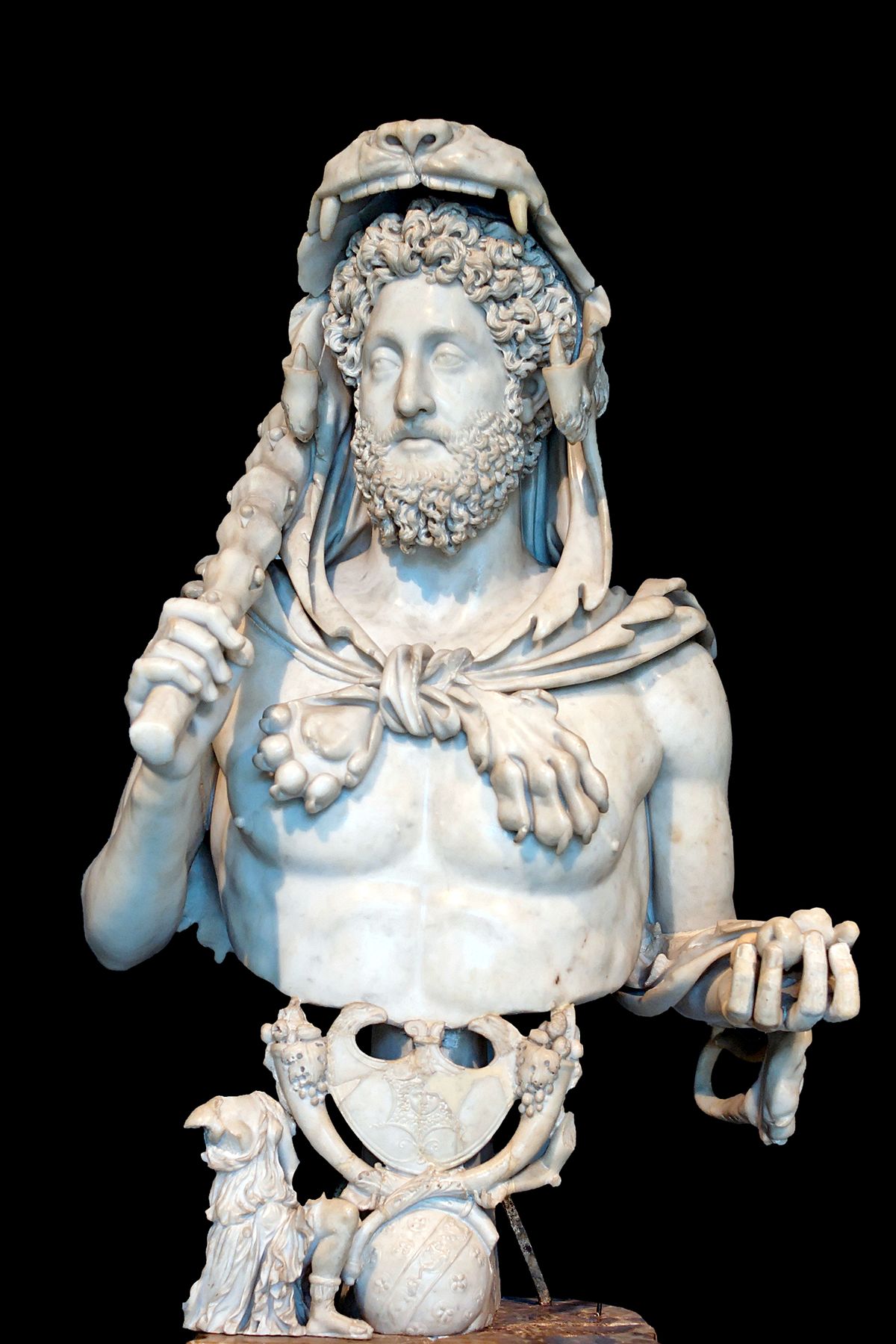
From the Historia Augusta on Commodus, 1

“Therefore, when his brother had passed, Marcus tried to educate Commodus with his own writings and those of famous and prominent men. As teachers he had Onesicrates for Greek literature, Antistius Capella for Latin and Ateius Sanctus for rhetoric.

But teachers of so many disciplines were useless in his case—such was the power of his native character or of those who were kept as instructors in the palace. For from his early childhood, Commodus was nasty, dishonest, cruel, desirous, foul-mouthed, and corrupted. For he was already a craftsman in those things which were not proper to the imperial class, such as making chalices, dancing, singing, whistling, playing a fool, and acting the perfect gladiator.

When he was twelve years old, he provided an omen of his cruelty at Centumcellae. For, when his bath was accidentally too cool, he ordered that the bath-slave be thrown into the furnace. Then, the slave who was ordered this, burned a sheep’s skin into the furnace, so that he might convince the punishment was performed through the foulness of the smell.”

mortuo igitur fratre Commodum Marcus et suis praeceptis et magnorum atque optimorum virorum erudire conatus est. habuit litteratorem Graecum Onesicratem, Latinum Capellam Antistium; orator ei Ateius Sanctus fuit.

Sed tot disciplinarum magistri nihil ei profuerunt. tantum valet aut ingenii vis aut eorum qui in aula institutores habentur. nam a prima statim pueritia turpis, improbus, crudelis, libidinosus, ore quoque pollutus et constupratus fuit. iam in his artifex, quae stationis imperatoriae non erant, ut calices fingeret, saltaret, cantaret, sibilaret, scurram denique et gladiatorem perfectum ostenderet. auspicium crudelitatis apud Centumcellas dedit anno aetatis duodecimo. nam cum tepidius forte lautus esset, balneatorem in fornacem conici iussit; quando a paedagogo, cui hoc iussum fuerat, vervecina pellis in fornace consumpta est, ut fidem poenae de foetore nidoris impleret.


Image result for Commodus

Are You Down with O.P.P. (Other Peoples’ Pimples)?

Seneca, De Vita Beata 27

“You have the free time to track down everyone else’s faults and pass judgment on anyone you please? ‘Why does this philosopher have such a big home? Why does that one eat so richly?’ These are the things you say. You stare at other people’s pimples when you’re afflicted with oozing sores!

This is the same thing as if someone who is covered by a gross disease points and laughs at blemishes and warts on the most beautiful bodies. Attack Plato because he looked for money, Aristotle because he took it, Democritus because he ignored it, and Epicurus because he spent it all!

Sure, yell at me about Alcibiades and Phaedrus even though it would be the happiest day in your life if you copied my vices!”

Vobis autem vacat aliena scrutari mala et sententias ferre de quoquam? “Quare hic philosophus laxius habitat? Quare hic lautius cenat?” Papulas observatis alienas, obsiti plurimis ulceribus. Hoc tale est, quale si quis pulcherrimorum corporum naevos aut verrucas derideat, quem foeda scabies 5depascitur. Obicite Platoni, quod petierit pecuniam Aristoteli, quod acceperit, Democrito, quod neglexerit, Epicuro, quod consumpserit; mihi ipsi Alcibiadem et Phaedrum obiectate, evasuri maxime felices, cum primum vobis imitari vitia nostra contigerit!

Paolo Veronese, “Young Man between Vice and Virtue” c. 1581

All the Simons You’ll Ever Need

Diogenes Laertius, Lives of the Eminent Philosophers 2.13: Simon

“Simon was an Athenian and a leather-worker. Socrates used to go to his workshop and talk to him and he wrote down everything he remembered. This is why people call his dialogues “leathered”. There are thirty of them in one book.

[list of dialogues]

People say that Simon was the first person to have dialogues in the Socratic fashion. When Pericles said he would fund him and asked him to join his side, Simon said “I would never sell my freedom of speech”. Another Simon composed speeches On Rhetoric; a second was a doctor around the time of Seleukos Nicanor; a third was a sculptor.”

Σίμων Ἀθηναῖος, σκυτοτόμος. οὗτος ἐρχομένου Σωκράτους ἐπὶ τὸ ἐργαστήριον καὶ διαλεγομένου τινά, ὧν ἐμνημόνευεν ὑποσημειώσεις ἐποιεῖτο· ὅθεν σκυτικοὺς αὐτοῦ τοὺς διαλόγους καλοῦσιν. εἰσὶ δὲ τρεῖς καὶ τριάκοντα ἐν ἑνὶ φερόμενοι βιβλίῳ·

Οὗτος, φασί, πρῶτος διελέχθη τοὺς λόγους τοὺς Σωκρατικούς. ἐπαγγειλαμένου δὲ Περικλέους θρέψειν αὐτὸν καὶ κελεύοντος ἀπιέναι πρὸς αὐτόν, οὐκ ἂν ἔφη τὴν παρρησίαν ἀποδόσθαι.

Γέγονε δὲ καὶ ἄλλος Σίμων ῥητορικὰς τέχνας γεγραφώς· καὶ ἕτερος ἰατρὸς κατὰ Σέλευκον τὸν Νικάνορα· καί τις ἀνδριαντοποιός.

From Michael Apostolios, Paroemiographer

“I know Simôn and Simôn knows me.” There were two leaders, Nikôn and Simôn. Simon overpowered him because he was a man of the worst ways and it is said that he erased all memory of Nikôn. This proverb is used for people who recognize the evil in one another.”

Οἶδα Σίμωνα καὶ Σίμων ἐμέ: δύο ἐγένοντο ἡγεμόνες, Νίκων καὶ Σίμων. ὑπερίσχυσε δὲ ὁ Σίμων κακοτροπώτατος ὢν, ὥστε καὶ τὴν ἐπὶ Νίκωνα φήμην ἀπαλεῖψαι. λεχθείη δ’ ἂν ἡ παροιμία ἐπὶ τῶν ἀλλήλους ἐπὶ κακίᾳ γινωσκόντων.

From the Suda,  tau 293

“Telkhines: evil gods. Or jealous and harmful humans. There were two Telkhines, Simôn and Nikôn. Nikôn overpowered and erase dthe memory of Simôn. So, there is the proverb, “I know Simon and Simon knows me. This is used for those who recognize evil in one another.”

Τελχῖνες: πονηροὶ δαίμονες. ἢ ἄνθρωποι φθονεροὶ καὶ βάσκανοι. δύο ἐγένοντο Τελχῖνες, Σίμων καὶ Νίκων. ὑπερίσχυσε δὲ ὁ Νίκων τὴν ἐπὶ Σίμωνι φήμην ἀπαλεῖψαι. καὶ παροιμία· οἶδα Σίμωνα καὶ Σίμων ἐμέ. ἐπὶ τῶν ἀλλήλους ἐπὶ κακίᾳ γινωσκόντων.

Zenobius explains it all

“I know Simôn and Simôn knows me”: There were two leaders who were evil Telkhinians by birth—for they were making the land infertile by spraying it with water from the Styx. They were Simôn and Nikôn. Simon overpowered because he was the most evil in his ways with the result that he erased any memory of Nikôn. For this reason in the proverb they only name Simôn. The proverb is applied to those who recognize the evil in one another.”

Οἶδα Σίμωνα καὶ Σίμων ἐμέ: Τελχίνων φύσει βασκάνων ὄντων, (καὶ γὰρ τῷ τῆς Στυγὸς ὕδατι τὴν  γῆν καταῤῥαίνοντες ἄγονον ἐποίουν,) δύο ἐγένοντο ἡγεμόνες, Σίμων καὶ Νίκων. ῾Υπερίσχυε δὲ ὁ Σίμων κακοτροπώτατος ὢν, ὥστε τὴν ἐπὶ Νίκωνι φήμην ἀπαλεῖψαι. Διόπερ οἱ παροιμιαζόμενοι μόνον τὸν Σίμωνα ὀνομάζουσι. Λεχθείη δ’ ἂν ἡ παροιμία ἐπὶ τῶν ἀλλήλους ἐπὶ κακίᾳ γινωσκόντων.

Sigma 447 [A completely different Simon]

“Simôn, Simonos: a proper name and also a proverb: “No one is more thieving than Simôn.” And Aristophanes adds that whenever [people] see Simôn, they immediately turn into wolves. He was a Sophist who took public property for his own. Simôn and Theoros and Kleonymos are perjurers. Aristophanes has, “if a thunderbolt hits perjurers, how did it not burn Simôn, or Kleônumos or Theôros?”

Σίμων, Σίμωνος: ὄνομα κύριον. καὶ παροιμία· Σίμωνος ἁρπακτικώτερος. ᾿Αριστοφάνης· ὅταν ἴδωσι Σίμωνα, λύκοι ἐξαίφνης γίνονται. σοφιστὴς δὲ ἦν, ὃς τῶν δημοσίων ἐνοσφίζετο. Σίμων καὶ Θέωρος καὶ Κλεώνυμος, οὗτοι ἐπίορκοι. ᾿Αριστοφάνης· εἴπερ βάλλει τοὺς ἐπιόρκους ὁ κεραυνός, πῶς δῆτ’ οὐχὶ Σίμων’ ἐνέπρησεν οὐδὲ Κλεώνυμον οὐδὲ Θέωρον; καί τοι σφόδρα γ’ εἰσὶν ἐπίορκοι.

Plato Says It’s Like We’re Drunk All The Time

Plato Phadeo 79c2-c8

“Therefore, weren’t we saying this long before that the mind, whenever it uses the body for examining anything—either through seeing or hearing or any other kind of perception, since examining a thing through the body is to examine it through the senses—at that moment the mind is dragged down by body towards things that never exist in the same way and it wanders and is troubled and gets dizzy as if it’s drunk, since it has been contaminated by those sorts of things.”

Οὐκοῦν καὶ τόδε πάλαι ἐλέγομεν, ὅτι ἡ ψυχή, ὅταν μὲν τῷ σώματι προσχρῆται εἰς τὸ σκοπεῖν τι ἢ διὰ τοῦ ὁρᾶν ἢ διὰ τοῦ ἀκούειν ἢ δι’ ἄλλης τινὸς αἰσθήσεως—τοῦτο γάρ ἐστιν τὸ διὰ τοῦ σώματος, τὸ δι’ αἰσθήσεως σκοπεῖν τι—τότε μὲν ἕλκεται ὑπὸ τοῦ σώματος εἰς τὰ οὐδέποτε κατὰ ταὐτὰ ἔχοντα, καὶ αὐτὴ πλανᾶται καὶ ταράττεται καὶ εἰλιγγιᾷ ὥσπερ μεθύουσα, ἅτε τοιούτων ἐφαπτομένη;

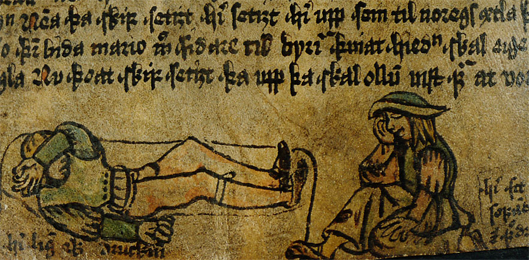
Illumination from AM 147 4to of two intoxicated 15th century Icelanders

Scholarly Severance Package

Historia Augusta, Hadrian (16):

He loved, further, the ancient style of speaking and declaimed some controversies himself. He preferred Cato to Cicero, Ennius to Vergil, Caelius to Sallust, and with this same reckless swagger he made his judgments about Homer and Plato. He thought himself so skilled in astrology that he wrote late on the Kalends of January what could happen to him in the whole year such that in the year that he died, he had written would he would do up to the very hour of his death. But although he was rather breezy in censuring musicians, tragedians, comedians, grammarians, rhetors, and orators, yet he honored all professors and made them rich, though he often hassled them with his inquiries. And although he himself was the author of the fact that many withdrew from him in sadness, he used to say that he bore it badly if he ever saw someone sad. He held the philosophers Epictetus and Heliodorus and, not to name them all individually, the grammarians, rhetors, musicians, geometers, painters, and astrologers in the highest friendship, with Favorinus occupying the chief spot above the rest. He dismissed the teachers, who seemed unsuited to their task, from their profession after rewarding and honoring them.

Amavit praeterea genus vetustum dicendi, controversias declamavit. Ciceroni Catonem, Vergilio Ennium, Salustio Coelium praetulit eademque iactatione de Homero ac Platone iudicavit. Mathesin sic scire sibi visus est, ut sero kalendis Ianuariis scripserit, quid ei toto anno posset evenire, ita ut eo anno, quo perit, usque ad illam horam, qua est mortuus, scripserit, quid acturus esset. Sed quamvis esset in reprehendendis musicis, tragicis, comicis, grammaticis, rhetoribus, oratoribus facilis, tamen omnes professores et honoravit et divites fecit, licet eos quaestionibus semper agitaverit. Et cum ipse auctor esset, ut multi ab eo tristes recederent, dicebat se graviter ferre, si quem tristem videret. In summa familiaritate Epictetum et Heliodorum philosophos et, ne nominatim de omnibus dicam, grammaticos, rhetores, musicos, geometras, pictores, astrologos habuit, prae ceteris, ut multi adserunt, eminente Favorino. Doctores, qui professioni suae inhabiles videbantur, dilatos honoratosque a professione dimisit.