The Downward Rush

Montesquieu, Considerations Concerning the Causes of the Greatness of the Romans and their Decline (14)

There is no crueler tyranny than the one which is exercised in the shadow of the law with the colors of justice, when one comes, as it were, to drown the unfortunate under the same board on which they were saved.

And, since it is never happened that a tyrant was lacking instruments for his tyranny, Tiberius found at all times judges prepared to condemn as many people as he was able to suspect. At the time of the Republic, the Senate, which did not as a body judge private affairs, learned from a delegation of the people about crimes which were imputed to allies. Similarly, Tiberius delegated to it the judgment of everything which he called the crime of lèse-majesté against himself. This deliberative body fell into a state of baseness which cannot be expressed. The senators went out to meet with their servitude; under the favor of Sejanus, the most illustrious members of them went into business as informers.

Il n’y a point de plus cruelle tyrannie que celle que l’on exerce à l’ombre des lois et avec les couleurs de la justice, lorsqu’on va, pour ainsi dire, noyer des malheureux sur la planche même sur laquelle ils s’étaient sauvés.

Et, comme il n’est jamais arrivé qu’un tyran ait manqué d’instruments de sa tyrannie, Tibère trouva toujours des juges prêts à condamner autant de gens qu’il en put soupçonner. Du temps de la république, le Sénat, qui ne jugeait point en corps les affaires des particuliers, connaissait, par une délégation du peuple, des crimes qu’on imputait aux alliés. Tibère lui renvoya de même le jugement de tout ce qu’il appelait crime de lèse-majesté contre lui. Ce corps tomba dans un état de bassesse qui ne peut s’exprimer : les sénateurs allaient au-devant de la servitude ; sous la faveur de Séjan, les plus illustres d’entre eux faisaient le métier de délateurs.

Ivory Tower vs. Iron Fist

Historia Augusta, Hadrian (§14-15):

Hadrian was excessively devoted to poems and literature, and thoroughly read-up on arithmetic, geometry, and paining. He also made a big show of his knowledge of the cithara and of singing. He was excessive in his pleasures, for he even composed many things in verse about his passions. (He wrote love poems.) This same man was most skilled in arms and most knowledgeable about military affairs, and even handled gladiatorial weapons. One and the same man was severe and happy, charming and grave, quick yet delaying, stingy yet liberal, unaffected yet lying, savage yet merciful, and in all things hard to pin down.
[…]
And although he could easily pour forth either verse or prose and was incredibly skilled in all the arts, yet he mocked, despised, and degraded the professors of all of them. He often battled with these professors and philosophers in books or poems which he published in his turn. And a certain Favorinus stopped using a a word that he liked because Hadrian had censured it, and he was able to excite much laughter among his friends who argued that he did wrong in yielding to Hadrian’s opinion about a word which many perfectly fine writers had employed. For Favorinus said, ‘Friends, you are not counseling me well if you do not allow me to believe that the man who has thirty legions is more learned than everyone else.’


Fuit enim poematum et litterarum nimium studiosissimus. Arithmeticae, geometriae, picturae peritissimus. Iam psallendi et cantandi scientiam prae se ferebat. In voluptatibus nimius. Nam et de suis dilectis multa versibus composuit. (amatoria carmina scripsit.) Idem armorum peritissimus et rei militaris scientissimus, gladiatoria quoque arma tractavit. Idem severus laetus, comis gravis, lascivus cunctator, tenax liberalis, <simplex> simulator, saevus clemens et semper in omnibus varius.
[…]
Et quamvis esset oratione et versu promtissimus et in omnibus artibus peritissimus, tamen professores omnium artium semper ut doctior risit, contempsit, obtrivit. Cum his ipsis professoribus et philosophis libris vel carminibus invicem editis saepe certavit. Et Favorinus quidem, cum verbum eius quondam ab Hadriano reprehensum esset atque ille cessisset, arguentibus amicis, quod male cederet, Hadriano de verbo, quod idonei auctores usurpassent, risum iocundissimum movit; ait enim : “non recte suadetis, familiares, qui non patimini me illum doctiorem omnibus credere, qui habet triginta legiones.”

Stacks of Cash from the Lecture Circuit

Dio Chrysostom, The Fifty-Fourth Discourse: On Socrates 1

“Hippias of Elis, Gorgias of Leontini, along with the sophists Polos and Prodikos were prominent in Greece at a certain time and earned a fantastic reputation, not merely in the rest of the cities, but in Sparta and Athens too. They made a lot of money, both at public expense in some states and from certain aristocrats, kings, and private citizens, to the extent that each was able.

Yet, they gave many public presentations that didn’t have the smallest shred of thought to them, but were the kinds of words from which one can harvest money from fools. There was another man from Abdera, who was so far from gaining wealth from others was not only destroying his own inheritance bit by bit, but he eventually lost all his wealth pursuing philosophy. It is clear that he was foolishly searching for something that brought him no advantage.

Ἱππίας ὁ Ἠλεῖος καὶ Γοργίας ὁ Λεοντῖνος καὶ Πῶλος καὶ Πρόδικος οἱ σοφισταὶ χρόνον τινὰ ἤνθησαν ἐν τῇ Ἑλλάδι καὶ θαυμαστῆς ἐτύγχανον φήμης, οὐ μόνον ἐν ταῖς ἄλλαις πόλεσιν, ἀλλὰ καὶ ἐν τῇ Σπάρτῃ καὶ παρ᾿ Ἀθηναίοις, καὶ χρήματα πολλὰ συνέλεξαν, δημοσίᾳ τε παρὰ τῶν πόλεων1 καὶ παρὰ δυναστῶν τινων καὶ βασιλέων καὶ ἰδιωτῶν, ὡς ἕκαστος ἔχοι δυνάμεως. ἔλεγον δὲ πολλοὺς μὲν λόγους, νοῦν δὲ οὐκ ἔχοντας οὐδὲ βραχύν· ἀφ᾿ ὧν ἔστιν, οἶμαι, χρήματα πορίζειν καὶ ἀνθρώπους ἠλιθίους ἀρέσκειν.

ἄλλος δέ τις ἀνὴρ Ἀβδηρίτης οὐχ ὅπως ἀργύριον παρ᾿ ἑτέρων ἐλάμβανεν, ἀλλὰ καὶ διέφθειρε τὴν οὐσίαν τὴν αὑτοῦ συχνὴν οὖσαν καὶ ἀπώλεσε φιλοσοφῶν, ἀναισθήτως δῆλον ὅτι, καὶ ζητῶν ὧν οὐδὲν ὄφελος αὐτῷ.

Plato, Hippias Major. 282d–e

“If you knew how much money I made, you’d freak out. This one time, I went to Sicily when Protagoras was visiting–he was well-known then and older than me–and while I was less experienced, I made more than 150 minas in a little time. In one small town alone–Inukon–I made over 20!

When I went home with that much I shocked and awed my father and the rest of our neighbors. I think I made more cash than any other two sophists put together.”

[ΙΠ.] εἰ γὰρ εἰδείης ὅσον ἀργύριον εἴργασμαι ἐγώ, θαυμάσαις ἄν· καὶ τὰ μὲν ἄλλα ἐῶ, ἀφικόμενος δέ ποτε εἰς Σικελίαν Πρωταγόρου αὐτόθι ἐπιδημοῦντος καὶ εὐδοκιμοῦντος καὶ πρεσβυτέρου ὄντος πολὺ νεώτερος ὢν ἐν ὀλίγῳ χρόνῳ πάνυ πλέον ἢ πεντήκοντα καὶ ἑκατὸν μνᾶς εἰργασάμην, καὶ ἐξ ἑνός γε χωρίου πάνυ σμικροῦ Ἰνυκοῦ πλέον ἢ εἴκοσι μνᾶς· καὶ τοῦτο ἐλθὼν οἴκαδε φέρων τῷ πατρὶ ἔδωκα, ὥστε ἐκεῖνον καὶ τοὺς ἄλλους πολίτας θαυμάζειν τε καὶ ἐκπεπλῆχθαι. καὶ σχεδόν τι οἶμαι ἐμὲ πλείω χρήματα εἰργάσθαι ἢ ἄλλους σύνδυο οὕστινας βούλει τῶν σοφιστῶν.

According to this estimate, a mina in modern terms would be around $500.00 USD. So, Hippias may have made c. $75,000.00 on his Sicilian tour.

Leaders, Corrupting the State for their Own Profit

Theognis, Elegies 39–52

“Kyrnos, this city is pregnant and I am afraid she will bear a man
Meant to correct our evil arrogance.
The citizens are still sane, but the leaders have changed
And have fallen into great evil.

Good people, Kyrnos, have never yet destroyed a city,
But whenever it pleases wicked men to commit outrage,
They corrupt the people and issue legal judgment in favor of the unjust,
For the sake of their own private profit and power.

Don’t expect this city to stay peaceful for very long
Even if it is not at a moment of great peace now,
When these deeds are dear to evil men,
As their profit accrues with public harm.

Civil conflicts and murder of kin comes from this,
And tyrants do too: may this never bring our city pleasure.”

Κύρνε, κύει πόλις ἥδε, δέδοικα δὲ μὴ τέκηι ἄνδρα
εὐθυντῆρα κακῆς ὕβριος ἡμετέρης.
ἀστοὶ μὲν γὰρ ἔθ’ οἵδε σαόφρονες, ἡγεμόνες δέ
τετράφαται πολλὴν εἰς κακότητα πεσεῖν.
οὐδεμίαν πω, Κύρν’, ἀγαθοὶ πόλιν ὤλεσαν ἄνδρες,
ἀλλ’ ὅταν ὑβρίζειν τοῖσι κακοῖσιν ἅδηι
δῆμόν τε φθείρουσι δίκας τ’ ἀδίκοισι διδοῦσιν
οἰκείων κερδέων εἵνεκα καὶ κράτεος·
ἔλπεο μὴ δηρὸν κείνην πόλιν ἀτρεμέ’ ἧσθαι,
μηδ’ εἰ νῦν κεῖται πολλῆι ἐν ἡσυχίηι,
εὖτ’ ἂν τοῖσι κακοῖσι φίλ’ ἀνδράσι ταῦτα γένηται,
κέρδεα δημοσίωι σὺν κακῶι ἐρχόμενα.
ἐκ τῶν γὰρ στάσιές τε καὶ ἔμφυλοι φόνοι ἀνδρῶν·
μούναρχοι δὲ πόλει μήποτε τῆιδε ἅδοι.

Image result for ancient greece megara ruins

Filth vs. Philosophy

Seneca, Letters to Lucullus (1.5):

I approve of the fact and even rejoice that you are diligently striving and, all else neglected, are doing this one thing: to make yourself better every day. I not only urge you, I even beg you to continue. But I do warn you not to do anything which might stand out in your appearance or mode of life, in the manner of those who wish not to succeed but to be seen. Avoid the shagginess, the uncut hair, the neglected beard, the pronounced hostility to money, the elbow placed on the ground, and whatever else ambition may pursue on a decidedly twisted path. The name of philosophy itself, even if it is conducted in a reasonable manner, inspires envy. What then if we should begin to withdraw ourselves from human interaction? Inwardly, all things are dissimilar, but our outward appearance should at least be suited to the masses. Your toga may not shine, but at least don’t let it go filthy; we may not have silver inlaid with gold, but let us not think it a mark of frugality to be without silver and gold altogether. Let us see to it that we pursue a better life than the crowd, but not a contrary one. Otherwise, we will chase away and repel those whom we wish to fix, and we will bring it about that they don’t wish to imitate anything of ours, fearing that they must imitate it all.

Quod pertinaciter studes et omnibus omissis hoc unum agis, ut te meliorem cotidie facias, et probo et gaudeo, nec tantum hortor ut perseveres sed etiam rogo. Illud autem te admoneo, ne eorum more qui non proficere sed conspici cupiunt facias aliqua quae in habitu tuo aut genere vitae notabilia sint; asperum cultum et intonsum caput et neglegentiorem barbam et indictum argento odium et cubile humi positum et quidquid aliud ambitio nempe perversa via sequitur evita. Satis ipsum nomen philosophiae, etiam si modeste tractetur, invidiosum est: quid si nos hominum consuetudini coeperimus excerpere? Intus omnia dissimilia sint, frons populo nostra conveniat. Non splendeat toga, ne sordeat quidem; non habeamus argentum in quod solidi auri caelatura descenderit, sed non putemus frugalitatis indicium auro argentoque caruisse. Id agamus ut meliorem vitam sequamur quam vulgus, non ut contrariam: alioquin quos emendari volumus fugamus a nobis et avertimus; illud quoque efficimus, ut nihil imitari velint nostri, dum timent ne imitanda sint omnia.


Edward Gibbon, The Decline and Fall of the Roman Empire (Chp. XXII):

But with the fopperies, Julian affected to renounce the decencies, of dress; and seemed to value himself for his neglect of the laws of cleanliness. In a satirical performance, which was designed for the public eye, the emperor descants with pleasure, and even with pride, on the length of his nails, and the inky blackness of his hands; protests that, although the greatest part of his body was covered with hair, the use of the razor was confined to his head alone; and celebrates with visible complacency, the shaggy and populous beard, which he fondly cherished after the example of the philosophers of Greece. Had Julian consulted the simple dictates of reason, the first magistrate of the Romans would have scorned the affectation of Diogenes as well as that of Darius.

Wannabe Politicians and Lords of Lies

Euripides, Hecuba 251-257

“Don’t you engage in true evil in these plans
When you even admit that I treated you well
But instead of helping me you do as much harm as possible?

You are a thankless brood, you mob of wannabe
Politicians. I wish I didn’t know you
When you don’t care about harming your friends
As long as you say something the masses will like.”

οὔκουν κακύνῃ τοῖσδε τοῖς βουλεύμασιν,
ὃς ἐξ ἐμοῦ μὲν ἔπαθες οἷα φῂς παθεῖν,
δρᾷς δ᾿ οὐδὲν ἡμᾶς εὖ, κακῶς δ᾿ ὅσον δύνᾳ;
ἀχάριστον ὑμῶν σπέρμ᾿, ὅσοι δημηγόρους
ζηλοῦτε τιμάς· μηδὲ γιγνώσκοισθέ μοι,
οἳ τοὺς φίλους βλάπτοντες οὐ φροντίζετε,
ἢν τοῖσι πολλοῖς πρὸς χάριν λέγητέ τι.

Euripides, Andromache 445-450

“Inhabitants of Sparta, most hateful of mortals
To all people, masters of tricks,
Lords of lies, devious plotters of evils,
You never have a healthy thought but everything
Is twisted—oh, it is wrong that you’re lucky in Greece.
What don’t you do? Don’t you have the most murders?”

πᾶσιν ἀνθρώποισιν ἔχθιστοι βροτῶν
Σπάρτης ἔνοικοι, δόλια βουλευτήρια,
ψευδῶν ἄνακτες, μηχανορράφοι κακῶν,
ἑλικτὰ κοὐδὲν ὑγιὲς ἀλλὰ πᾶν πέριξ
φρονοῦντες, ἀδίκως εὐτυχεῖτ᾿ ἀν᾿ Ἑλλάδα.
τί δ᾿ οὐκ ἐν ὑμῖν ἐστιν; οὐ πλεῖστοι φόνοι;

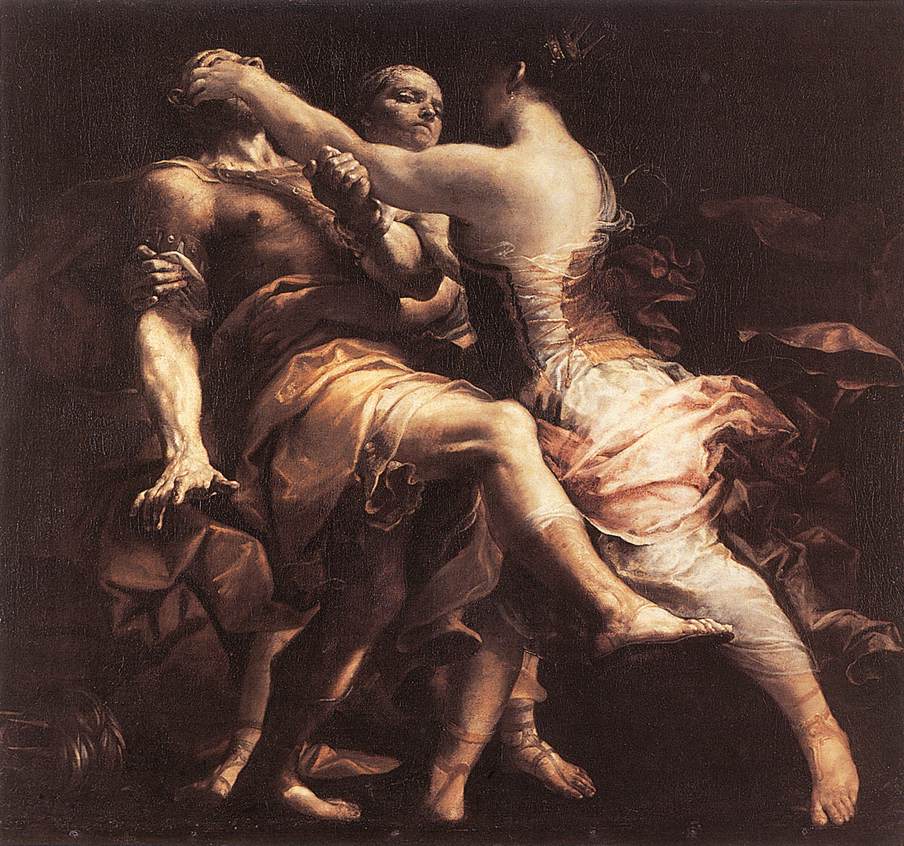
Hecuba kills Polymestor by Giuseppe maria Crespi

Cicero Says August Is the Start of a Whole New Year!

Cicero, Letters to Atticus, 5.15 [=LCL 108]

“I made it to Laodicea on July 31st: you will start the reckoning of the year from this day. Nothing was lacking or unexpected in my arrival, but it is amazing how much this work wears me out. It provides me far too little space for my intellectual curiosity and the work for which I have earned my position.”

Laodiceam veni prid. Kal. Sext.; ex hoc die clavum anni movebis. nihil exoptatius adventu meo, nihil c<>arius; sed est incredibile quam me negoti taedeat, non habeat satis magnum campum ille tibi non ignotus cursus animi et industriae meae, praeclara opera cesset.

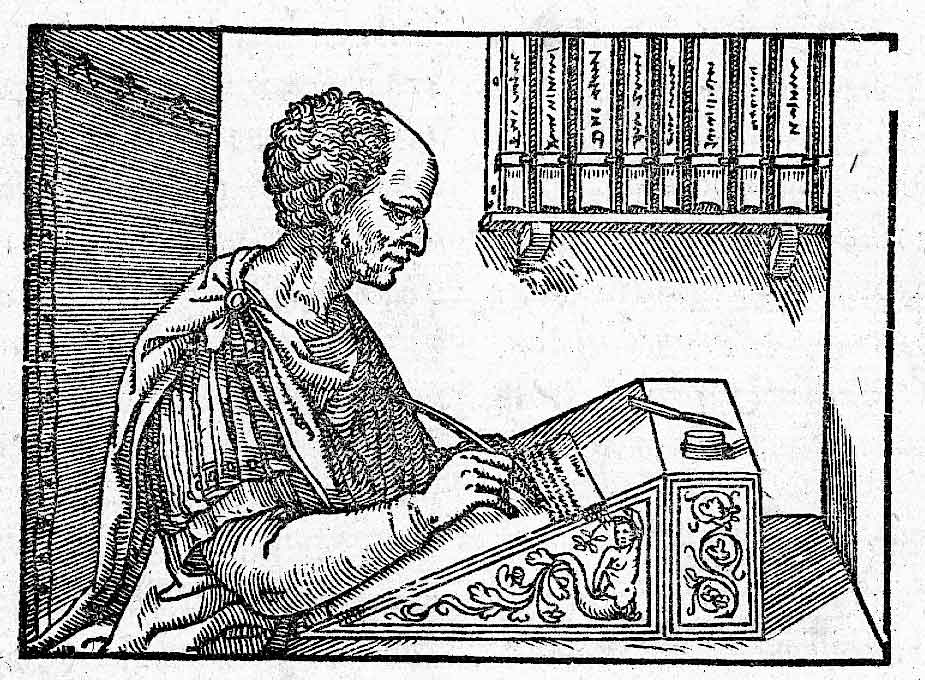
Cicero writing his letters, woodcut 1547

Carpe Diem is Too Late

Seneca, Consolation ad Marciam 10.5

“The spirit must be warned that it loves things which will one day leave—no, they are already leaving. Whatever is granted to you by fortune, take it as if it has no guaranty. Seize up the pleasures of your children and allow your children to enjoy you in turn. And drink down every bit of joy without stopping.

Nothing is promised to you for this evening—I have granted too much a pledge—nothing is promised for this hour. You must hurry, we are being chased from behind. Soon this friend will be elsewhere, soon these friendships will be lost lost when the battle’s cry is raised. In truth, everything is stolen away. Poor are you fools who do not know how to live in flight.”

Saepe admonendus est animus, amet ut recessura, immo tamquam recedentia. Quicquid a fortuna datum est, tamquam exempto auctore possideas. Rapite ex liberis voluptates, fruendos vos in vicem liberis date et sine dilatione omne gaudium haurite; nihil de hodierna nocte promittitur—nimis magnam advocationem dedi—, nihil de hac hora. Festinandum est, instatur a tergo. Iam disicietur iste comitatus, iam contubernia ista sublato clamore solventur. Rapina verum omnium est; miseri nescitis in fuga vivere!

It's #MorbidMonday and here comes death riding a skeletal horse @BLMedieval Yates Thompson 6 f. 137
@BLMedieval Yates Thompson 6 f. 137

Dominion for Dummies

Montesquieu, Considerations Concerning the Greatness of the Romans and their Decline (XIII):

I believe that Octavian is alone among Roman leaders who gained the affection of the soldiers in giving them, without interruption, tokens of natural cowardice. In those times, the soldiers made more of a case of the liberality of their general than of his courage. Perhaps even it was a good thing that he did not have that valor which could give him the empire, and maybe that very fact brought him power, because people were less afraid of him. It is not impossible that the things which dishonored him the most were those which served him the best. If he had shown, from the beginning, a great spirit, the whole world would have distrusted him, and if he had had any audacity, he would not have given Antony the time to engage in all the extravagances which ruined him.

Guercino, ‘Cleopatra and Octavian’

Je crois qu’Octave est le seul de tous les capitaines romains qui ait gagné l’affection des soldats en leur donnant sans cesse des marques d’une lâcheté naturelle. Dans ces temps-là, les soldats faisaient plus de cas de la libéralité de leur général que de son courage. Peut-être même que ce fut un bonheur pour lui de n’avoir point eu cette valeur qui peut donner l’empire, et que cela même l’y porta: on le craignit moins. Il n’est pas impossible que les choses qui le déshonorèrent le plus aient été celles qui le servirent le mieux: s’il avait d’abord montré une grande âme, tout le monde se serait méfié de lui, et, s’il eût eu de la hardiesse, il n’aurait pas donné à Antoine le temps de faire toutes les extravagances qui le perdirent.

Evict the Rich, Feed Everyone?

Cicero, Pro Sestio 103

“The people were certain that their freedom was at risk. Their leaders did not agree. As far as a matter concerned the safety of the aristocrats, they were afraid of the rashness of the masses and the liberty in the vote. Tiberius Gracchus was introducing his agrarian law. It was welcomed by the people since it appeared to firm up the fortunes of the lower classes. The aristocrats were against it because they believed it created unrest and imagined that the State would be disarmed of its greatest protectors once the rich were evicted from their long-term holdings. Gaius Gracchus was introducing a grain law. It was also welcome to the people for it provided plentiful food without labor. The Nobles were aghast because they believed that such a law disincentivized work in favor of laziness and that it would drain the treasury.”

Populus libertatem agi putabat suam. Dissentiebant principes et in salute optimatium temeritatem multitudinis et tabellae licentiam pertimescebant. Agrariam Ti. Gracchus legem ferebat. Grata erat populo; fortunae constitui tenuiorum videbantur. Nitebantur contra optimates, quod et discordiam excitari videbant et, cum locupletes possessionibus diuturnis moverentur, spoliari rem publicam propugnatoribus arbitrabantur. Frumentariam legem C. Gracchus ferebat. Iucunda res plebei; victus enim suppeditabatur large sine labore. Repugnabant boni, quod et ab industria plebem ad desidiam avocari putabant et aerarium exhauriri videbant.

Agrarian Law: Tiberius Gracchus  introduced a law in 133 BCE that no holder of public land (ager publicus populi Romani) should have more than 500 iugera and that land should be re-distributed to the poor.

Not to ruin it, but things did not turn out well for the Gracchi

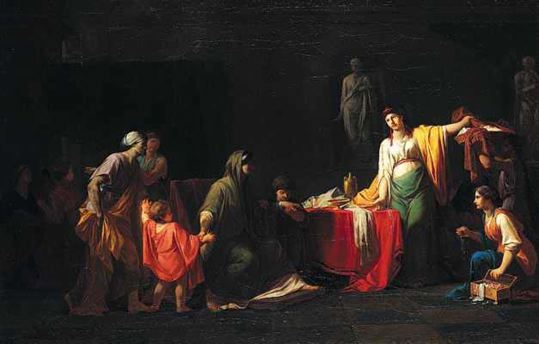
Cornelia, Mother of the Gracchi