Happy Halloween: Werewolves in Greek and Roman Culture

full speed down a lykanthropic rabbit-hole in the annual tradition.

Did the Wolf Win or Lose this FIght?
Did the Wolf Win or Lose this Fight?

Here are the sources I’ve gathered in rough chronological order. Most of the material is mentioned in the Oxford Classical Dictionary, although the entry says nothing about the medical texts.

  1. Herodotus’ Histories: A Description of the Neuri, a tribe near the Skythians who could turn into wolves and back.
  2. Plato’s Republic: Lycanthropy is used as a metaphor for the compulsive behavior of tyrants.
  3. Pliny the Elder’s Natural History: Pliny describes the origins of ideas about lycanthropy and blames the traditions on the credulity of the Greeks!
  4. Petronius’ Satyricon: A character tells the story of a companion transforming into a wolf at night and back at day.
  5. Pausanias’ Geography of Greece: Like Pliny, Pausanias tells the story of the human sacrifice performed by Lykaon as an origin of lycanthropic narratives.
  6. Greek Medical Treatises on the Treatment of Lycanthropy: Medical authors from the time of Marcus Aurelius to the fall of Byzantium treat lycanthropy as a mental illness.
  7. Augustine of Hippo, City of God:  St. Augustine (5th Century CE) gives an account similar to Pliny’s, but attributes it to Varro.
  8. Michael Psellus, Poemata 9.841:An 11th century CE monk wrote a book of didactic poems about medicine. His description of lycanthropy is clearly influenced by the Greek medical treatises.

What I have learned from these texts:

  1. The early Greek tradition is harmonious with some structural aspects of Greek myth.  Lycanthropy is related to sacrilegious eating–in a system where what you eat communicates who you are, human flesh is taboo (monsters eat it).  In the Greek lycanthropic tradition, this is non mono-directional. Werewolves who abstain from human flesh can turn back again.
  2. The later ‘folkloric’ tradition (e.g. Petronius) is separate from this structural logic. in the earlier tradition, men transform for 9-10 years (in something of a purificatory period). The other tradition has shorter periods (nightly) that don’t correlate with sacrilege: Petronius’ werewolf doesn’t eat human flesh (that we know of).
  3. The moon-association may be a later accretion on the tradition. All of the medical texts associate werewolves with the night; the Roman texts agree. The lunar cycle may be implied in the Petronius tale (where the transformation happens when the light is almost as bright as day) or in the later medical texts vis a vis the connection with menstrual cycles.
  4. There is one hint of a dog-bite being associated with lycanthropy, but no foundational notion that you contract lycanthropy from a werewolf.  In addition, there are no specific suggestions or methods for how to kill a werewolf.

Continue reading “Happy Halloween: Werewolves in Greek and Roman Culture”

Byzantine Verse on Lycanthropy for Werewolf Week

There is a Byzantine didactic poem based on Greek medical treatises. Thankfully, it does not skip the good stuff.

Master Psellos, What can you tell us about wolves about men and anything else you embellish?

The poem is from a collection of didactic verses attributed to Michael Psellos of Constantinople who lived and worked in the 11th century CE. The text comes from the Teubner edition of his poems edited by L. G. Westernik (1982).

Poemata 9.841

“One kind of melancholy is lykanthropy.
And it is clearly a type of misanthropy.
Mark thus a man who rushes from the day
When you see him at night running round graves,
With a pale face, dumb dry eyes, not a care in his rage.”

Μελάγχολόν τι πρᾶγμα λυκανθρωπία·
ἔστι γὰρ αὐτόχρημα μισανθρωπία,
καὶ γνωριεῖς ἄνθρωπον εἰσπεπτωκότα
ὁρῶν περιτρέχοντα νυκτὸς τοὺς τάφους,
ὠχρόν, κατηφῆ, ξηρόν, ἠμελημένον.


Werewolf Week, Religious Returns: St. Augustine on Lycanthropy

In discussing tales of Diomedes’ companions being turned into birds, Augustine in De Civitate Dei (City of God) discusses werewolves (18.17, the full text):

“In order to make this seem more likely, Varro reports other fantastic tales concerning the infamous witch Circe, who transformed Odysseus’ companions into beasts, and concerning the Arcadians, who were by chance transformed when they swam across a certain lake in which they were turned into wolves. Then, they lived as wolves in the same region. If they did not eat human flesh, then they would be returned to human form after swimming across the same lake again.

werewolf-histories

And he also specifies that a certain Demanaetus tasted of the sacrifice which the Arcadians used to make to the Lycaean god, after the child was burned on the altar, and that he transformed into a wolf and, once he became a man again, competing in boxing at the Olympian games and achieved a victory. Varro does not believe for this reason that Pan or Jupiter were given the name “Lykaios” in Arcadia for any other reason than their ability to turn men into wolves, since they did not believe that this could happen except through divine power. As you know, a wolf is called lykos in Greek, and this is where the name Lykaian comes from. Varro adds that the Roman Luperci arose from their own mysteries similarly.

But what can we who talk about these things say about this kind of deceit by the devil’s forces?”

Augustine goes on to object to these tales and discuss Apuleius’ Golden Ass. I started translating this, but it is a bit of a Halloween buzzkill..

No Room For Werewolves in this city...
No Room For Werewolves in this city…

[XVII] Hoc Varro ut astruat, commemorat alia non minus incredibilia de illa maga famosissima Circe, quae socios quoque Vlixis mutauit in bestias, et de Arcadibus, qui sorte ducti tranabant quoddam stagnum atque ibi conuertebantur in lupos et cum similibus feris per illius regionis deserta uiuebant. Si autem carne non uescerentur humana, rursus post nouem annos eodem renatato stagno reformabantur in homines.

Denique etiam nominatim expressit quendam Demaenetum gustasse de sacrificio, quod Arcades immolato puero deo suo Lycaeo facere solerent, et in lupum fuisse mutatum et anno decimo in figuram propriam restitutum pugilatum sese exercuisse et Olympiaco uicisse certamine. Nec idem propter aliud arbitratur historicus in Arcadia tale nomen adfictum Pani Lycaeo et Ioui Lycaeo nisi propter hanc in lupos hominum mutationem, quod eam nisi ui diuina fieri non putarent. Lupus enim Graece *lu/kos dicitur, unde Lycaei nomen apparet inflexum. Romanos etiam Lupercos ex illorum mysteriorum ueluti semine dicit exortos.

Sed de ista tanta ludificatione daemonum nos quid dicamus…

Responses to Monstrosity

Sophocles. Oedipus Tyrannus. 1297-1306. Chorus:

O Calamity, awful for people to see!
By far the most awful I’ve come upon yet!
Hapless man, what madness visited you?
What god has leapt farther than the farthest bound
Onto your jinxed life?
Alas, alas, disaster of a man!
I haven’t the strength to look at you,
Though there’s much I want to ask and hear.
I gawk instead–you make me shudder so.

Freud. The ‘Uncanny.’

The uncanny: “It undoubtedly belongs to all that is terrible–to all that arouses dread and creeping horror.”

“Everything is uncanny that ought to have remained hidden and secret, and yet comes to light.”

ὦ δεινὸν ἰδεῖν πάθος ἀνθρώποις,
ὦ δεινότατον πάντων ὅσ᾽ ἐγὼ
προσέκυρσ᾽ ἤδη. τίς σ᾽, ὦ τλῆμον,
προσέβη μανία; τίς ὁ πηδήσας
μείζονα δαίμων τῶν μακίστων
πρὸς σῇ δυσδαίμονι μοίρᾳ;
φεῦ φεῦ, δύσταν᾽:
ἀλλ᾽ οὐδ᾽ ἐσιδεῖν δύναμαί σε, θέλων
πόλλ᾽ ἀνερέσθαι, πολλὰ πυθέσθαι,
πολλὰ δ᾽ ἀθρῆσαι:
τοίαν φρίκην παρέχεις μοι.

white theater mask crying tears of blood

Larry Benn has a B.A. in English Literature from Harvard College, an M.Phil in English Literature from Oxford University, and a J.D. from Yale Law School. Making amends for a working life misspent in finance, he’s now a hobbyist in ancient languages and blogs at featsofgreek.blogspot.com.

“A Ball Game With Body Parts”: The Death of Pentheus

Euripides, Bacchae 1125-1136

“[Agave] grabbed his left hand in her arms
As she tread onto the ribs of that unlucky man
And then ripped his arm from his shoulder, not with her own strength
But the power which the god placed in her hands.
Ino was working through his other side,
Breaking apart his flesh, and Autonoê and the whole mob
Of the Bacchae was attacking—there was just a single cry everywhere.
He was moaning out as much of the breath he happened to have,
And they were exulting. One woman was holding an arm;
Another had a foot still in its shoes; his sides were stripped
Nude, with flesh gone. Every woman’s hands were bloodied
As they played a ball game with Pentheus’ body’s parts.”

λαβοῦσα δ’ ὠλέναισ’ ἀριστερὰν χέρα,
πλευροῖσιν ἀντιβᾶσα τοῦ δυσδαίμονος
ἀπεσπάραξεν ὦμον, οὐχ ὑπὸ σθένους
ἀλλ’ ὁ θεὸς εὐμάρειαν ἐπεδίδου χεροῖν.
᾿Ινὼ δὲ τἀπὶ θάτερ’ ἐξηργάζετο
ῥηγνῦσα σάρκας, Αὐτονόη τ’ ὄχλος τε πᾶς
ἐπεῖχε βακχῶν· ἦν δὲ πᾶσ’ ὁμοῦ βοή,
ὁ μὲν στενάζων ὅσον ἐτύγχαν’ ἐμπνέων,
αἱ δ’ ὠλόλυζον. ἔφερε δ’ ἡ μὲν ὠλένην,
ἡ δ’ ἴχνος αὐταῖς ἀρβύλαις, γυμνοῦντο δὲ
πλευραὶ σπαραγμοῖς, πᾶσα δ’ ἡιματωμένη
χεῖρας διεσφαίριζε σάρκα Πενθέως.

Image result for agave pentheus vase
From here
Image result for agave pentheus vase
Death Pentheus Louvre G445

Hesiod’s House of Horrors

Hesiod: Theogony 720-744

. . . As far as heaven is from earth
Just as far is earth from gloomy Tartarus.
Bronze space junk would tumble through the sky
Nine nights and days, reaching earth on the tenth;
And so a bronze anvil tumbling from earth would fall
Nine nights and days, reaching Tartarus on the tenth.

A bronze wall was thrown up around Tartarus.
Triple-layered night was poured around its neck,
And the roots of earth and barren sea grew above it.
It’s there the Titan gods were locked away
—the will of Zeus, cloud gatherer—
In gloomy darkness, damp musty place
At the vast earth’s distant end.

They cannot leave.
Poseidon set bronze doors in place,
And a wall encircled the whole.
There Gyes and Cottus established themselves,
And great-hearted Obriareus did too,
Trusted watchmen for aegis-bearing Zeus.

The source and limit of everything
Line up there: that of dark earth,
Gloomy Tartarus, the barren sea,
And the star-studded sky.
Horrid damp musty—even the gods detest it.

A huge pit, this: you couldn’t reach bottom
in a year, assuming you got within its gates.
No, bruising squall after squall would carry you
This way and that. A Terrible monstrosity,
Even to the deathless gods.

. . . ὅσον οὐρανός ἐστ᾽ ἀπὸ γαίης:
τόσσον γάρ τ᾽ ἀπὸ γῆς ἐς Τάρταρον ἠερόεντα.
ἐννέα γὰρ νύκτας τε καὶ ἤματα χάλκεος ἄκμων
οὐρανόθεν κατιὼν δεκάτῃ κ᾽ ἐς γαῖαν ἵκοιτο:
ἐννέα δ᾽ αὖ νύκτας τε καὶ ἤματα χάλκεος ἄκμων
ἐκ γαίης κατιὼν δεκάτῃ κ᾽ ἐς Τάρταρον ἵκοι.
τὸν πέρι χάλκεον ἕρκος ἐλήλαται: ἀμφὶ δέ μιν νὺξ
τριστοιχεὶ κέχυται περὶ δειρήν: αὐτὰρ ὕπερθεν
γῆς ῥίζαι πεφύασι καὶ ἀτρυγέτοιο θαλάσσης.
ἔνθα θεοὶ Τιτῆνες ὑπὸ ζόφῳ ἠερόεντι
κεκρύφαται βουλῇσι Διὸς νεφεληγερέταο
χώρῳ ἐν εὐρώεντι, πελώρης ἔσχατα γαίης.
τοῖς οὐκ ἐξιτόν ἐστι. θύρας δ᾽ ἐπέθηκε Ποσειδέων
χαλκείας, τεῖχος δὲ περοίχεται ἀμφοτέρωθεν.
ἔνθα Γύης Κόττος τε καὶ Ὀβριάρεως μεγάθυμος
ναίουσιν, φύλακες πιστοὶ Διὸς αἰγιόχοιο.
ἔνθα δὲ γῆς δνοφερῆς καὶ Ταρτάρου ἠερόεντος
πόντου τ᾽ ἀτρυγέτοιο καὶ οὐρανοῦ ἀστερόεντος
ἑξείης πάντων πηγαὶ καὶ πείρατ᾽ ἔασιν
ἀργαλέ᾽ εὐρώεντα, τά τε στυγέουσι θεοί περ,
χάσμα μέγ᾽, οὐδέ κε πάντα τελεσφόρον εἰς ἐνιαυτὸν
οὖδας ἵκοιτ᾽, εἰ πρῶτα πυλέων ἔντοσθε γένοιτο,
ἀλλά κεν ἔνθα καὶ ἔνθα φέροι πρὸ θύελλα θυέλλῃ
ἀργαλέη: δεινὸν δὲ καὶ ἀθανάτοισι θεοῖσι
τοῦτο τέρας. . . .

Ancient sources attest that this sign was prominently displayed on the gates of Tartarus.

Larry Benn has a B.A. in English Literature from Harvard College, an M.Phil in English Literature from Oxford University, and a J.D. from Yale Law School. Making amends for a working life misspent in finance, he’s now a hobbyist in ancient languages and blogs at featsofgreek.blogspot.com.

A Costume to Scare the Cicero Right Out of You

Inspired by a rather amusing collection of Classics-themed Halloween costumes, I have been wondering what might put the scare into ancient Greeks and Romans. One answer was easy. Well, if you trust what Marcus says in his speeches…

Cicero calls lots of people monsters (immanis, belva, monstrum) but his favorite beast to burden is Marcus Antonius. Here is a sampling of the monstrous things he says about him.

Philippic 4.1

“Your affair, Romans, is not with a criminal and evil man, but with a twisted, enormous beast who should be overcome now that he has fallen in a trap.

Non est vobis res, Quirites, cum scelerato homine ac nefario, sed cum immani taetraque belua quae, quoniam in foveam incidit, obruatur.

Philippic 7.27

“Beware lest you allow this twisted and pestilential beast who has been constrained by labors.”

taetram et pestiferam beluam ne inclusam et constrictam dimittatis cavete.


Philippic 13. 21

“Who was ever such a barbarian, such a beast, such an animal?”

Quis tam barbarus umquam, tam immanis, tam ferus?


Philippic 13.28

“But who can bear this most twisted beast, or how could they? What exists in Antonius apart from lust, cruelty, immaturity, and arrogance?”

 Hanc vero taeterrimam beluam quis ferre potest aut quo modo? Quid est in Antonio praeter libidinem, crudelitatem, petulantiam, audaciam?


Philippic 8.13

“Since you were also accustomed to complain about a person, what do you think you would do about a beast?”

 Quin etiam de illo homine queri solebas: quid te facturum de belua putas?

Image result for Ancient Roman sculpture Marcus Antonius
Pssst…how do you say “trick or treat” in Latin?

Ritual Sacrifice and Lycanthropy: Pausanias for Werewolf Week

In the second century CE, Pausanias composed ten books on the sights and wonders of ancient Greece. His text provides some of the only accounts of architecture, art and culture that have been lost in intervening centuries.  In his eighth book, he turns to Arcadia and starts by discussing the rituals performed in honor of Lykian Zeus.

The story, mentioned by Plato too, is one of those ‘original sin’ tales from Greek myth–like the story of Tantalos and Pelops, it hearkens back to a golden age when gods and men hung out together. Its details about werewolves are similar to those offered by Pliny (especially the 9-10 year period as a wolf).

It turns out that recent archaeological studies may support human sacrifice at the site!

Hendrik Goltzius' 1589 engraving of Lycaon

Pausanias, 8.2.3-7

“Cecrops was the first to declare Zeus the Highest god and he thought it wrong to sacrifice anything that breathed, so he burned on the altar the local cakes which the Athenians call pelanoi even today. But Lykaon brought a human infant to the altar of Lykaian Zeus, sacrificed it, spread its blood on the altar, and then, according to the tale, turned immediately from a man into a wolf.

This tale convinces me for the following reasons: it has circulated among the Arcadians since antiquity and it also seems probable. For in those days men were guests and tablemates of the gods because of their just behavior and reverence. Those who were good received honor openly from the gods; divine rage fell upon the unjust—then, truly, gods were created from men, gods who have rites even today such as Aristaios, Britomartis the Cretan, Herakles the son of Alkmene, Amphiaros the son of Oicles and, finally, Kastor and Polydeukes.

For this reason we should entertain that Lykaon was turned into a beast and that Niobe became a stone. In our time, when wickedness has swelled to its greatest size and looms over every land and city, no god can come from men, except in the blandishment offered to rulers. Today, divine rage lies in wait for the wicked when they leave for the lower world.

In every age many ancient events—and even those that are current—end up disbelieved because of those who create lies by using the truth. Men report that since the time of Lykaon a man always transforms from a human into a wolf at the sacrifice of Lykaian Zeus, but that he doesn’t remain a wolf his whole life.  Whenever someone turns into a wolf, if he refrains from human flesh, people say he can become a man again ten years later. But if he does taste it, he will always remain a beast.”

ὁ μὲν γὰρ Δία τε ὠνόμασεν ῞Υπατον πρῶτος, καὶ ὁπόσα ἔχει ψυχήν, τούτων μὲν ἠξίωσεν οὐδὲν θῦσαι, πέμματα δὲ ἐπιχώρια ἐπὶ τοῦ βωμοῦ καθήγισεν, ἃ πελάνους καλοῦσιν ἔτι καὶ ἐς  ἡμᾶς ᾿Αθηναῖοι· Λυκάων δὲ ἐπὶ τὸν βωμὸν τοῦ Λυκαίου Διὸς βρέφος ἤνεγκεν ἀνθρώπου καὶ ἔθυσε τὸ βρέφος καὶ ἔσπεισεν ἐπὶ τοῦ βωμοῦ τὸ αἷμα, καὶ αὐτὸν αὐτίκα ἐπὶ τῇ θυσίᾳ γενέσθαι λύκον φασὶν ἀντὶ ἀνθρώπου.

καὶ ἐμέ γε ὁ λόγος οὗτος πείθει, λέγεται δὲ ὑπὸ ᾿Αρκάδων ἐκ παλαιοῦ, καὶ τὸ εἰκὸς αὐτῷ πρόσεστιν. οἱ γὰρ δὴ τότε ἄνθρωποι ξένοι καὶ ὁμοτράπεζοι θεοῖς ἦσαν ὑπὸ δικαιοσύνης καὶ εὐσεβείας, καί σφισιν ἐναργῶς ἀπήντα παρὰ τῶν θεῶν τιμή τε οὖσιν ἀγαθοῖς καὶ ἀδικήσασιν ὡσαύτως ἡ ὀργή, ἐπεί τοι καὶ θεοὶ τότε ἐγίνοντο ἐξ ἀνθρώπων, οἳ γέρα καὶ ἐς τόδε ἔτι ἔχουσιν ὡς ᾿Αρισταῖος καὶ Βριτόμαρτις ἡ Κρητικὴ καὶ ῾Ηρακλῆς ὁ ᾿Αλκμήνης καὶ ᾿Αμφιάραος ὁ ᾿Οικλέους, ἐπὶ δὲ αὐτοῖς Πολυδεύκης τε καὶ Κάστωρ.

οὕτω πείθοιτο ἄν τις καὶ Λυκάονα θηρίον καὶ τὴν Ταντάλου Νιόβην γενέσθαι λίθον. ἐπ’ ἐμοῦ δὲ—κακία γὰρ δὴ ἐπὶ πλεῖστον ηὔξετο καὶ γῆν τε ἐπενέμετο πᾶσαν καὶ πόλεις πάσας—οὔτε θεὸς ἐγίνετο οὐδεὶς ἔτι ἐξ ἀνθρώπου, πλὴν ὅσον λόγῳ καὶ κολακείᾳ πρὸς τὸ ὑπερέχον, καὶ ἀδίκοις τὸ μήνιμα τὸ ἐκ τῶν θεῶν ὀψέ τε καὶ ἀπελθοῦσιν ἐνθένδε ἀπόκειται. ἐν δὲ τῷ παντὶ αἰῶνι πολλὰ μὲν πάλαι συμβάντα, <τὰ> δὲ καὶ ἔτι γινόμενα ἄπιστα εἶναι πεποιήκασιν ἐς τοὺς πολλοὺς οἱ τοῖς ἀληθέσιν ἐποικοδομοῦντες ἐψευσμένα. λέγουσι γὰρ δὴ ὡς Λυκάονος ὕστερον ἀεί τις ἐξ ἀνθρώπου λύκος γίνοιτο ἐπὶ τῇ θυσίᾳ τοῦ Λυκαίου Διός, γίνοιτο δὲ οὐκ ἐς ἅπαντα τὸν βίον· ὁπότε δὲ εἴη λύκος, εἰ μὲν κρεῶν ἀπόσχοιτο ἀνθρωπίνων, ὕστερον ἔτει δεκάτῳ  φασὶν αὐτὸν αὖθις ἄνθρωπον ἐκ λύκου γίνεσθαι, γευσάμενον δὲ ἐς ἀεὶ μένειν θηρίον.

Fear of Ghosts in Imperial Rome

Pliny, Natural History 27.98

“For treatment against night terrors and fear of ghosts it is suggested that a string of big teeth will help”

contra nocturnos pavores umbrarumque terrorem unus e magnis dentibus lino alligatus succurrere narratur.

Seneca, Moral Epistle 82.16

“Death should be hated more than it is customarily. For we believe many things about death. There has been a struggle among geniuses to increase its bad reputation. The world below is depicted as a prison and the region is oppressed by eternal night where:

“The huge guardian of death / laying upon half-eaten bones in his gory cave / horrifies the bloodless ghosts with eternal barking”*

Even if you can persuade someone that these are stories and that there is nothing there for the dead to fear, another fright comes over you. For they fear going to the underworld no less than they fear going nowhere.”

Mors contemni debet magis quam solet. Multa enim de illa credidimus. Multorum ingeniis certatum est ad augendam eius infamiam. Descriptus est carcer infernus et perpetua nocte oppressa regio, in qua

Ingens ianitor Orci

Ossa super recubans antro semesa cruento,

Aeternum latrans exsangues terreat umbras.

Etiam cum persuaseris istas fabulas esse nec quicquam defunctis superesse, quod timeant, subit alius metus. Aeque enim timent, ne apud inferos sint, quam ne nusquam.

*From Vergil’s Aeneid.

Image result for Ancient Roman Ghost

A Ghost Story from Petronius for Werewolf Week

Earlier  we saw how Plato makes being a tyrant equivalent to a type of lycanthropy. The Romans were also into that kind of thing. One of our oldest werewolf tales comes from Petronius’ Satyricon (61-62):

“Trimalchio turned to Niceros and said: “You used to be more pleasant company—I don’t know why you are now so quiet and subdued. If you want to make me happy, please tell us what happened to you.

Niceros, excited at his friend’s request, replied: “May all profit escape me, if I cannot deflate your joy—when I see how you are. Nevertheless, may happiness be ours, even if I am afraid that these scholars will laugh at me. Let them look on: I will tell the story nonetheless, what difference is it to me? It is better to tell a joke than be one.”
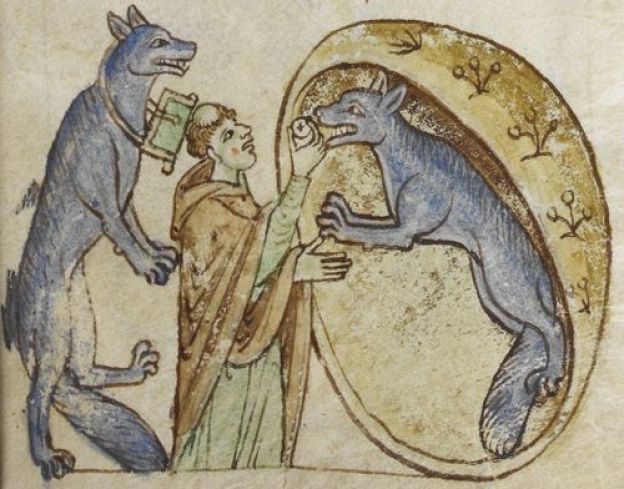
werewolf

Once he had uttered these words, he began the following tale:

‘When I was a slave, we were living in a narrow street where the home of Gavus is now. There is was where the gods decided I would fall in love with the wife of Terence the Innkeeper. You do remember Melissa from Tarentum—that most beautiful little package? By god, I loved her less for her body and sexcapades than I did for her fine morals. She didn’t deny me anything I sought. She made a penny, I got half! I put everything I had into her lap, and I was never cheated.

Her husband passed away at the inn one day. As you can imagine, I risked Skylla and Charybdis so I could get to her: for, as they say, Friends are present in times of need.

By chance, my master was visiting Capua in pursuit of some business. I took my chance and compelled a guest to accompany me to the fifth milestone. He was a soldier and as strong as Orcus. We blundered off around the time of the cock’s crow while the moon was shining as bright as midday. We went among the graves and my friend went among the stones to defecate. I sat singing and counting gravemarkers. And then, as I looked for my companion, he appeared and placed all his clothes near the road.

My breath nearly jumped out my nose—I was standing like a corpse. But he pissed around his clothes and suddenly became a wolf! Don’t you dare imagine I am joking, that I am lying. I make up nothing for such an inheritance as this! But, back to what I started to say, after he turned into a wolf, he began to howl and fled into the forest. At first, I didn’t remember where I was: then I went to gather up his clothes, but they had transformed into stones! What could I do but die from fear?

I drew my sword and struck all the shadows before me until I made it to my girlfriend’s home. I entered as pale as a ghost with sweat rushing down to my groin, my eyes nearly dead. I could hardly regain myself. My Melissa was at first surprised because I had gone out so late. And then she said “I wish you had come earlier, you could have helped us: a wolf entered the house and loosed more blood from the ship than a butcher! He escaped, but he didn’t laugh: an older slave tore his throat with a spear.”

Once I heard these words, I could not sleep any longer. At first light I fled the home of Gaius like an angry landlord. But once I came to the place where his clothing had turned into stone, I found nothing but blood. Honestly, I went home and my soldier was lying like a bull on his bed as a doctor was tending to his neck. I knew that he was a shapeshifter* then, and I wouldn’t have been able to share a meal with him even if you threatened to kill me. Let these men believe what they want about this, but if I am lying, let the gods hate me.”

*”shapeshifter”: Latin, versipellis (lit. “pelt-changer”) is used several times for form-changing in Latin literature. Often, this example and that of Pliny EN 8.80 (cf. LSJ s.v.) are translated as “werewolf”. I chose the more general sense.

[LXI] … Trimalchio ad Nicerotem respexit et: “Solebas, inquit, suavius esse in convictu; nescio quid nunc taces nec muttis. Oro te, sic felicem me videas, narra illud quod tibi usu venit.” Niceros delectatus affabilitate amici: “Omne me, inquit, lucrum transeat, nisi iam dudum gaudimonio dissilio, quod te talem video. Itaque hilaria mera sint, etsi timeo istos scolasticos ne me rideant. Viderint: narrabo tamen, quid enim mihi aufert, qui ridet? satius est rideri quam derideri.”

Haec ubi dicta dedit talem fabulam exorsus est:

“Cum adhuc servirem, habitabamus in vico angusto; nunc Gavillae domus est. Ibi, quomodo dii volunt, amare coepi uxorem Terentii coponis: noveratis Melissam Tarentinam, pulcherrimum bacciballum. Sed ego non mehercules corporaliter aut propter res venerias curavi, sed magis quod benemoria fuit. Si quid ab illa petii, nunquam mihi negatum; fecit assem, semissem habui; in illius sinum demandavi, nec unquam fefellitus sum. Huius contubernalis ad villam supremum diem obiit. Itaque per scutum per ocream egi aginavi, quemadmodum ad illam pervenirem: nam, ut aiunt, in angustiis amici apparent.

[LXII] “Forte dominus Capuae exierat ad scruta scita expedienda. Nactus ego occasionem persuadeo hospitem nostrum, ut mecum ad quintum miliarium veniat. Erat autem miles, fortis tanquam Orcus. Apoculamus nos circa gallicinia; luna lucebat tanquam meridie. Venimus inter monimenta: homo meus coepit ad stelas facere; sedeo ego cantabundus et stelas numero. Deinde ut respexi ad comitem, ille exuit se et omnia vestimenta secundum viam posuit. Mihi anima in naso esse; stabam tanquam mortuus. At ille circumminxit vestimenta sua, et subito lupus factus est. Nolite me iocari putare; ut mentiar, nullius patrimonium tanti facio. Sed, quod coeperam dicere, postquam lupus factus est, ululare coepit et in silvas fugit. Ego primitus nesciebam ubi essem; deinde accessi, ut vestimenta eius tollerem: illa autem lapidea facta sunt. Qui mori timore nisi ego? Gladium tamen strinxi et umbras cecidi, donec ad villam amicae meae pervenirem. In larvam intravi, paene animam ebullivi, sudor mihi per bifurcum volabat, oculi mortui; vix unquam refectus sum. Melissa mea mirari coepit, quod tam sero ambularem, et: ‘Si ante, inquit, venisses, saltem nobis adiutasses; lupus enim villam intravit et omnia pecora tanquam lanius sanguinem illis misit. Nec tamen derisit, etiamsi fugit; senius enim noster lancea collum eius traiecit’. Haec ut audivi, operire oculos amplius non potui, sed luce clara Gai nostri domum fugi tanquam copo compilatus; et postquam veni in illum locum, in quo lapidea vestimenta erant facta, nihil inveni nisi sanguinem. Vt vero domum veni, iacebat miles meus in lecto tanquam bovis, et collum illius medicus curabat. Intellexi illum versipellem esse, nec postea cum illo panem gustare potui, non si me occidisses. Viderint quid de hoc alii exopinissent; ego si mentior, genios vestros iratos habeam.”