The Universality of Human Misery

Petrarch, Invective Against a Man of High Rank (33-34):

The human race lives for a few. Nay, and these few for whom the whole human race is said to live are not more frightening to the people than the people are to them. Thus, almost no one is free. Everywhere there is servitude, the prison, the noose, unless some rare person somehow dissolves the knots of the world with the aid of some heavenly virtue.

Just turn your attention wherever you’d like: no place is free of tyranny. Wherever there are no tyrants, the people tyrannize. When you seem to have escaped the iron fist of one, you fall into the tyranny of the many, unless you can show me some place ruled by a just and merciful king. If you can do that, I will move my home there and migrate with all of my luggage. Neither my love of my country, nor the charm and nobility of Italy will keep me here. I will go to India, to China, to the remotest reaches of Africa just to find this place and this king.

But the search is in vain – these things exist nowhere. Thanks to our age. Since it has made everything almost equal, it has spared us the work of trying to find somewhere better. To merchants examining grain, it is enough to take up a fistful, examine it, and judge the whole heap from that. One needn’t go skim the farthest coasts or pentrate to the remotest lands. Languages, clothing, and appearances are all different, but desires, minds, and customs are so similar wherever you go that those lines from Juvenal never seem more truly spoken:

To one who wishes to know the ways of all the human race

One house alone should do the trick.

Even when there were no people, you could still find tyrants.

Humanum paucis vivit genus; quin et hi pauci quibus humanum genus vivere dicitur, non formidolosiores populis quam populi illis sunt. Ita fere nullus est liber; undique servitus et carcer et laquei, nisi fortasse rarus aliquis rerum nodos adiuta celitus animi virtute discusserit.

Verte te quocunque terrarum libet: nullus tyrannide locus vacat; ubi enim tyranni desunt, tyrannizant populi; atque ita ubi unum evasisse videare, in multos incideris, nisi forsan iusto mitique rege regnatum locum aliquem michi ostenderis. Quod cum feceris, eo larem illico transferam, cumque omnibus sarcinulis commigrabo. Non me amor patrie, non decor ac nobilitas Italie retinebit; ibo ad Indos ac Seres et ultimos hominum Garamantes, ut hunc locum inveniam et hunc regem.

Sed frustra queritur quod nusquam est. Gratias etati nostre, que cum cunta pene paria fecerit, hunc nobis eripuit laborem. Frumenta mercantibus satis modicum pugno excipere, illud examinant, inde notitiam totius capiunt acervi. Non est opus oras ultimas rimari et terrarum abdita penetrare: lingue, habitus, vultusque alii, vota, animi, moresque adeo similes, quocunque perveneris, ut nunquam verius fuisse videatur illud Satyrici ubi ait:

Humani generis mores tibi nosse volenti,

sufficit una domus.
Renaissance Stagecoach Verse

Coleridge, Biographia Literaria  (XVI):

Not otherwise is it with the more polished poets of the fifteenth and sixteenth centuries, especially those of Italy. The imagery is almost always general: sun, moon, flowers, breezes, murmuring streams, warbling songsters, delicious shades, lovely damsels cruel as fair, nymphs, naiads, and goddesses, are the materials which are common to all, and which each shaped and arranged according to his judgment or fancy, little solicitous to add or to particularize. If we make an honourable exception in favour of some English poets, the thoughts too are as little novel as the images; and the fable of their narrative poems, for the most part drawn from mythology, or sources of equal notoriety, derive their chief attractions from the manner of treating them; from impassioned flow, or picturesque arrangement.

In opposition to the present age, and perhaps in as faulty an extreme, they placed the essence of poetry in the art. The excellence, at which they aimed, consisted in the exquisite polish of the diction, combined with perfect simplicity. This their prime object they attained by the avoidance of every word, which a gentleman would not use in dignified conversation, and of every word and phrase, which none but a learned man would use; by the studied position of words and phrases, so that not only each part should be melodious in itself, but contribute to the harmony of the whole, each note referring and conducting to the melody of all the foregoing and following words of the same period or stanza; and lastly with equal labour, the greater because unbetrayed, by the variation and various harmonies of their metrical movement.

Their measures, however, were not indebted for their variety to the introduction of new metres, such as have been attempted of late in the Alonzo and Imogen, and others borrowed from the German, having in their very mechanism a specific overpowering tune, to which the generous reader humours his voice and emphasis, with more indulgence to the author than attention to the meaning or quantity of the words; but which, to an ear familiar with the numerous sounds of the Greek and Roman poets, has an effect not unlike that of galloping over a paved road in a German stage-waggon without springs. On the contrary, the elder bards both of Italy and England produced a far greater as well as more charming variety by countless modifications, and subtle balances of sound in the common metres of their country. A lasting and enviable reputation awaits that man of genius, who should attempt and realize a union;—who should recall the high finish, the appropriateness, the facility, the delicate proportion, and above all, the perfusive and omnipresent grace, which have preserved, as in a shrine of precious amber, the Sparrow of Catullus, the Swallow, the Grasshopper, and all the other little loves of Anacreon; and which, with bright, though diminished glories, revisited the youth and early manhood of Christian Europe, in the vales of Arno, and the groves of Isis and of Cam; and who with these should combine the keener interest, deeper pathos, manlier reflection, and the fresher and more various imagery, which give a value and a name that will not pass away to the poets who have done honour to our own times, and to those of our immediate predecessors.

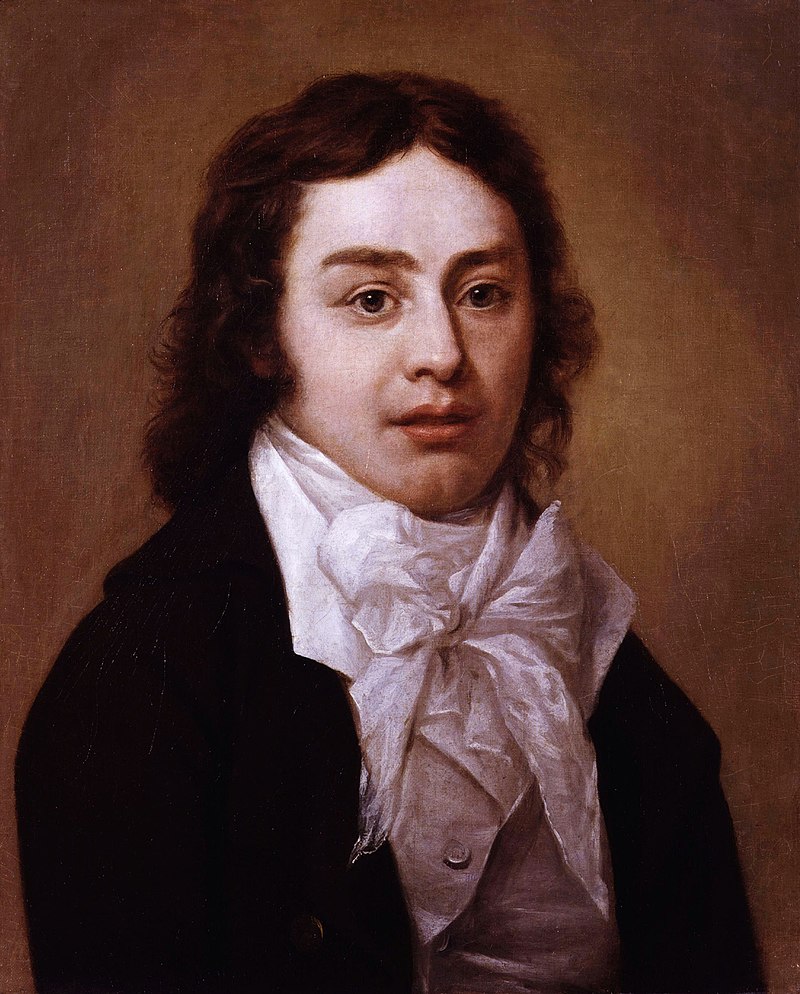
Coleridge in 1795

Sophomore Sophistry

Boswell, Life of Samuel Johnson:

The truth, however, is, that he loved to display his ingenuity in argument; and therefore would sometimes in conversation maintain opinions which he was sensible were wrong, but in supporting which, his reasoning and wit would be most conspicuous. He would begin thus: ‘Why, Sir, as to the good or evil of card-playing—’ ‘Now, (said Garrick,) he is thinking which side he shall take.’ He appeared to have a pleasure in contradiction, especially when any opinion whatever was delivered with an air of confidence; so that there was hardly any topick, if not one of the great truths of Religion and Morality, that he might not have been incited to argue, either for or against.

Flavio Biondo, On the Words of Roman Speech, (I):

There is a great dispute among the learned people of our time, and a contention in which I have often been involved, whether it is the maternal and as it were, among the rude and unlettered mass in our age vulgar idiom, or by the use of grammatical art, which we call Latin, that the Romans were accustomed to employ as their established mode of speaking.

Arguments are not lacking to those who either impugn or defend one side or the other of this debate. If I were to draw them into the fray, it would become apparent on what foundations each side rests, and there will be material for this dispute so tossed before the eyes of all that any fool ignorant of the laws of speaking, or, as the Florentines are in the habit of calling him, a market-stall judge, would not hesitate to bring forth his opinion easily and ex tempore.

Which I would yet maintain must be born by the judgment of the learned and most knowledgeable in Roman things if for no other reason than so that, when you and many others, the ornaments of the age in judgment, seem to dissent in turn, I alone, in a situation where such great men either entertain contradictions or feel uncertainly, would dare to affirm it for sure.

Magna est apud doctos aetatis nostrae homines altercatio, et cui saepenumero interfuerim contentio, maternone et passim apud rudem indoctamque multitudinem aetate nostra vulgato idiomate, an grammaticae artis usu, quod latinum appellamus, instituto loquendi more Romani orare fuerint soliti.

Nec desunt argumenta utramque vel impugnantibus vel defendentibus partem; quae si in medium adduxero, qualibus utrique nitantur fundamentis apparebit; eritque omnium oculis adeo subiecta huiusce disceptationis materies, ut quilibet iurisdicundi ignarus, sive, ut dicere Florentini solent, iudex emporinus, faciliter et ex tempore sententiam ferre non dubitet.

Quam tamen et docti et rerum romanarum callentissimi iudicio vel ea ratione servaverim ferendam, ne, cum tu pluresque alii, omnium iudicio saeculi ornamenta, invicem dissentire videamini, ego unus, in quo tales viri vel contraria sentiant vel addubitent, id ausim affirmare.

Platonic Despotism

John Addington Symonds,

Renaissance in Italy: The Age of the Despots (Chp. 3)

What I have said about Italian despotism is no mere fancy picture. The actual details of Milanese history, the innumerable tragedies of Lombardy, Romagna, and the Marches of Ancona, during the ascendency of despotic families, are far more terrible than any fiction; nor would it be easy for the imagination to invent so perplexing a mixture of savage barbarism with modern refinement. Savonarola’s denunciations and Villani’s descriptions of a despot read like passages from Plato’s Republic, like the most pregnant of Aristotle’s criticisms upon tyranny. The prologue to the sixth book of Matteo Villani’s Chronicle may be cited as a fair specimen of the judgment passed by contemporary Italian thinkers upon their princes (Libro Sesto, cap. i.): ‘The crimes of despots always hinder and often neutralize the virtues of good men. Their pleasures are at variance with morality. By them the riches of their subjects are swallowed up. They are foes to men who grow in wisdom and in greatness of soul in their dominions. They diminish by their imposts the wealth of the peoples ruled by them. Their unbridled lust is never satiated, but their subjects have to suffer such outrages and insults as their fancy may from time to time suggest. But inasmuch as the violence of tyranny is manifested to all eyes by these and many other atrocities, we need not enumerate them afresh. It is enough to select one feature, strange in appearance but familiar in fact; for what can be more extraordinary than to see princes of ancient and illustrious lineage bowing to the service of despots, men of high descent and time-honored nobility frequenting their tables and accepting their bounties? Yet if we consider the end of all this, the glory of tyrants often turns to misery and ruin. Who can exaggerate their wretchedness? They know not where to place their confidence; and their courtiers are always on the lookout for the despot’s fall, gladly lending their influence and best endeavors to undo him in spite of previous servility. This does not happen to hereditary kings, because their conduct toward their subjects, as well as their good qualities and all their circumstances, are of a nature contrary to that of tyrants. Therefore the very causes which produce and fortify and augment tyrannies, conceal and nourish in themselves the sources of their overthrow and ruin. This indeed is the greatest wretchedness of tyrants.’

Did We Become Stoics or Assholes?

Giovanni Pico, Letter to Angelo Poliziano:

But what should I say about the humor of your Epictetus? A delightful thing, and worthy of Catonian laughter! He was hardly in the threshold, when he opened his cloak and said ‘Behold these obeloi, behold these arrows if you do not know Greek! Behold me ready to strike if any of you is feeling bold.’ Who could have held back their laughter to hear a Stoic joke so pleasantly? We abstained from our weapons, to be sure, both because he had threatened that he would repay the injury and because his skin had grown so hard that it would not be affected by such light blows. We thus received the old man with the veneration which was appropriate.

As soon as he sat down next to us, he began to philosophize about character, and did so in Latin not so much because he was among Latins (because there were in that conference those who knew Greek), but more because he could make his wisdom shine more clearly in Latin thanks to you. He did not waste his labor, because he no sooner ceased to speak than he converted us from Peripatetics to Stoics, and we all approved his apathy. Now it is possible to see people who were a little earlier of the most delicate constitutions and are now the most tolerant of suffering; we who used to be harmed by others are now only harmed by ourselves; now we never fight against fate, and we wish those things which are not ours to turn out as the gods would have them, and we never blame or accuse the gods for anything; we feel no pain, we complain about nothing, we know neither to be slaves nor to be conquered; we philosophize not in word but in deed.

poliziano2

Hey Poindexter, You Don’t Know Sh*t!

Petrarch, On His Own Ignorance (32):

“I don’t say these things in an effort to avoid their judgment, but so that they who are ignorant may feel some shame (if they are capable of it) in making their judgment. For, on this subject, I do not just embrace the opinion of friendly jealousy, but even the judgment of hostile hatred, and in sum, if someone pronounces that I am ignorant, I agree with him! When I myself think over how many things are lacking to me, toward which my mind, eager for knowledge, exerts itself, I sadly and silently recognize my own ignorance. But in the meantime, while the end of my present exile is near, at which point this imperfection (from whence our knowledge derives) will be terminated, I am consoled by the thought of our shared nature. I think that it happens to all good and modest minds, that they learn about themselves and derive consolation therefrom. For those who get hold of great knowledge (I am speaking according to the standards of human learning), it is always small when considered in itself, but it becomes great in light of the narrow circumstances from which it is derived, and certainly looks great when compared to others. Otherwise, I ask you, how small and insignificant is the knowledge granted to one mind? Nay, how much like nothing is the knowledge of any one person, whoever they be, when it is compared not just to the knowledge of God, but to one’s own fund of ignorance?”

Petrarch-engraving

Non hec dico, ut declinem forum, sed ut pudeat, siquis est pudor, iudicasse qui nesciunt. Ego etenim de hac re non modo sententiam amicabilis amplector invidie, sed hostilis odii, et ad summam, quisquis ignarum me pronuntiat, mecum sentit. Nam et ego ipse recogitans quam multa michi desint ad id quo sciendi avida mens suspirat, ignorantiam meam dolens ac tacitus recognosco. Sed me interim, dum presentis exilii finis adest, quo nostra hec imperfectio terminetur, qua ex parte nunc scimus, nature communis extimatione consolor. Idque omnibus bonis ac modestis ingeniis evenire arbitror, ut agnoscant se pariter ac solentur; his etiam quibus ingens obtigit scientia — secundum humane scientie morem loquor — que in se semper exigua, pro angustiis quibus excipitur, et collata aliis ingens fit. Alioquin quantulum, queso, est, quantumcunque est, quod nosse uni ingenio datum est? Imo quam nichil est scire hominis, quisquis sit, si non dicam scientie Dei, sed sui ipsius ignorantie comparetur?

Mind Bending Poetry

Cristoforo Landino, Preface to Vergil in a Florentine Gymnasium (Part 5)

But, in order to finally return from such distant regions to Italy and Latium specifically, we should in no way think, my lords, that before Livy who (as Cicero has it) in the 410th year after the foundation of the republic first published the story that there was no poet among the Latins, when Marcus Cato in his Origins wrote that it was the most ancient custom for the notable deeds of excellent men to be sung to the tibia at dinner parties. Livy however, the truest historian of all, related that song was established in sacred ceremonies by Numa Pompilius. But I think that it has now been demonstrated by the most obvious arguments that there was no type of writers by which the poets were surpassed in antiquity.

But now, lest anything which we proposed be omitted, consider in the briefest account how much utility and pleasantness they offer both publicly and privately. But, since amidst such an abundance of material it is far more difficult to find the end than the beginning, I cannot find what I should say first, and what later. But in order to begin from that eloquence by whose strength nearly everything is ruled and which is rightly called “mind-bending”, who could be found with such a dull mind, that he doesn’t see how much spirit, how much splendor, how much dignity the poet offers to the orator? Who is ignorant of how sublime they are in the greatest matters, how moderated in the middling ones, how elegant in trifles? Let their exordia be attended to, let their narrations be read, their divisions be numbered, let their affirmations and refutations be weighed out carefully, and finally let their conclusions and epilogues not be passed over: you will understand, surely, that nothing could be found more accommodated to fostering good will, nothing more brief or clear for the purpose of narrating, nothing more indissoluble for division, nothing weightier in proof nor more forceful in refutation, nothing finally more abundant or ornate for delivering a conclusion. But all of these things pertain to oratorical arguments. Who handled philosophy itself more splendidly? Not only do poets select diverse passages from it and adorn them with a certain wondrous sweetness, but they even encompassed the whole business most totally, as we see among the Greeks Pittacus of Mytilene, Xenophanes, Parmenides, Empedocles, and many others from the family of the Pythagoreans; and among the Latins Lucretius, and Marcus Varro, whom Jerome called the most learned of all the Romans.

Sed ut quandoque ex tam longinquis regionibus in Italiam Latiumque redeamus, nullo pacto existimandum est, domini viri, ante Livium illum qui, ut est apud Ciceronem, decimo et quadringentesimo post conditam urbem anno primus fabulam edidit, nullum apud Latinos poetam fuisse, cum M. Cato in suis Originibus scriptum reliquerit vetustissimam fuisse consuetudinem, ut in conviviis egregia excellentium virorum facta ad tibiam canerentur. Livius autem, historicus omnium verissimus, a Numa Pompilio carmen in sacris cerimoniis institutum refert. Sed iam nullum esse scriptorum genus, a quo poetae antiquitate superentur, manifestissimis argumentationibus demonstratum esse arbitror.

Nunc vero, ne quid ex iis quae a nobis proposita sunt omittatur, quantum illi utilitatis, quantum etiam iocunditatis publice privatimque afferant, brevissimis accipite. Verum, quoniam in tanta rerum copia multo difficilius est finem quam initium invenire, quid prius, quid posterius dicam non reperio. Sed ut ab ea, cuius vi pene omnia reguntur quaeque iure «flexianima» appellata est, eloquentia exordiar, quis adeo hebeti erit ingenio, ut quantum spiritus, quantum splendoris, quantum dignitatis oratori poeta afferat non viderit? Quis quantum illi in maximis rebus sublimes, in mediocribus temperati, in humilibus elegantes sint ignoraverit? Attendantur exordia, legantur narrationes, enumerentur divisiones, pendantur diligentius confirmationes et confutationes, denique conclusiones epilogique non praetereantur: intelligetis profecto neque ad captandam benivolentiam accomodatius neque ad narrandum brevius et apertius neque ad dividendum absolutius neque ad confirmandum gravius neque ad confutandum vehementius neque postremo ad concludendum copiosius ornatiusque quicquam inveniri. Sed haec ad oratorias argumentationes pertinent. Philosophiam vero ipsam quis splendidius tractavit? Neque enim solum diversos ex ea locos decerpunt atque mira quadam suavitate condiunt poetae, verum etiam totam rem absolutissime perscripserunt, quemadmodum apud Graecos Pittacum Mytilenaeum, Xenophanem, Parmenidem, Empedoclem et plerosque alios ex Pythagoreorum familia, apud vero Latinos Lucretium et quem Romanorum omnium doctissimum Hieronymus appellavit M. Varronem videmus.

Ultra-Ancient Poetic Authority

Cristoforo Landino, Preface to Vergil in a Florentine Gymnasium (Part 4)

But why should I go on about the Greeks when, among the Hebrews, the most ancient people of all (as they themselves have it and we acknowledge as true), their king David wrote the poems which they call Psalms? Nor should we deny that he is to be numbered among the ancients, since indeed he lived while Codrus ruled in Athens, more than four hundred years before the founding of Rome. Indeed, it is even agreed that both Deuteronomy and Isaiah are the products of his son Solomon – Josephus and Origen, the most serious authorities, attest to this. Indeed, in earlier times, even Moses, a man most distinguished for both war and learning, who freed the Egyptians from the Ethiopians and the Hebrews from the Egyptians, and who, since he was the first (according to the Greek author Eupolemus) to have discovered letters, was called Hermes Trismegistus by the Egyptians; Moses, I say, was hardly an ignoble poet, as is evident from his writings. He was a man so ancient that, when in his eightieth year he lead the Hebrews from captivity, Cecrops was ruling in Athens, and all of the wonderful things which are related by the Greeks of their own history happened after Cecrops. But even before Moses there was Job of Edom who, as can be gleaned from his own book, lived three ages after Israel, and wrote a consolation of hexameter and pentameter verses.

Sed quid plura de Graecis, cum apud Hebraeos populum, ut ipsi volunt et nos concedimus, omnium antiquissimum, David eorum rex quos Psalmos appellant carmine scripserit? Neque est quod in priscis hunc enumerandum negemus, siquidem, Codro Athenis regnante, supra quadringentos annos ante Romam conditam fuit. Quin, et eius filii Salomonis et Deuteronomii et Isaiae canticum versibus constare et Iosophus et Origenes gravissimi auctores testantur. Verum prioribus saeculis Moyses etiam vir et bello et doctrina praestantissimus, qui et Aegyptios ab Aethiopibus et ab Aegyptiis Hebraeos liberavit quique cum primus, ut ait E<u>pulemus Graecus scriptor, litteras adinvenisset, ab Aegyptiis Mercurius Trimegistus appellatus est; Moyses, inquam, poeta, ut ex eius scriptis apparet, haud ignobilis fuit. Vir adeo priscus ut, cum iam octoginta annos natus Hebraeos ex captivitate deduceret, Cecrops Athenis regnaret: omnia vero quae apud Graecos mira traduntur post Cecropem fuerunt. Sed et ante Moysem Idumaeus Iob qui, ut ex suo libro colligitur, tribus fere aetatibus post Israel fuit, consolationem exametro pentametroque versu scripsit.

Poetry, Our Oldest Pursuit

Cristoforo Landino, Preface to Vergil in a Florentine Gymnasium (Part 3)

We have said therefore both what the art of poetry is and where the poet got a name for himself, and from where that name drew its origins. But now take this in the briefest possible words about the antiquity of poetry itself. You will find no nation so old, nor any republic so antique in the monuments of literature that it didn’t flourish from its very beginning with poets. Greece had no historians still, when heroic times and the Trojan War were being described by Homer. No philosophers were yet disputing about life and ethics when that same poet was explaining all the precepts which urge us on to living well and blessedly. Nor did he explain only those things which make us more learned in governing the republic or leading an army, but he also set out most excellently those things which set us up in private and leisured life. That most celebrated land of Greece was not yet glorying in its Seven Sages when it had already been made illustrious by Orpheus, Linus, Musaeus, and Amphion. Nor was any theologian found in this most learned nation who set down divine things in letters before the birth of Hesiod and some other poets. So, if we wish to speak more truly and to follow the thought of Aristotle, a poet is nothing other than a theologian. The faculty of speech did no sooner show how much skill in speaking, how much sweetness in delighting, nor indeed how much strength in persuading it had, before the speeches of Ulysses, and Phoenix, and the other heroes had been expressed in a poetic composition.

Penn Libraries call number: Inc B-720

Diximus ergo et quid ars poetica sit et unde sibi nomen vendicaverit poeta, unde etiam originem suam traxerit. Nunc vero de antiquitate ipsius brevissimis accipite. Neque enim ullam aut nationem adeo vetustam aut rem publicam adeo priscam litterarum monumentis reperies, quae vel ab ipso statim initio poetis non floruerit. Nullos enim adhuc Graecia historicos habuerat, quando ab Homero heroica tempora et Troiana bella describebantur. Nulli adhuc philosophi de vita et moribus disputabant, cum vel idem vates omnia praecepta, quae ad bene beateque vivendum nos adhortantur, explicabat; neque solum quae aut in re publica temperanda aut in exercitu ductitando nos doctiores reddunt, verum et ea quae in privata atque ociosa vita nos instituunt, optime exposuerat. Nondum septem sapientibus celebratissima illa Graecia gloriabatur, et iam ab Orpheo, Lino, Musaeo, Amphione illustrata fuerat; neque apud hanc tam doctam nationem quisquam theologus invenitur qui, nisi post natum Hesiodum et non nullos alios poetas, divinas res litteris mandasset. Quin, si verius loqui et Aristotelis sententiam sequi volumus, nil aliud poeta est quam theologus. Facultas vero oratoria neque quantum acuminis in dicendo neque quantum suavitatis in delectando neque postremum quantum vehementiae in permovendo habeat, antea ostendit quam orationes Ulyssis et Phoenicis aliorumque heroum poetico carmine expressae essent.

Wouldn’t You Know It, We’re All Poets!

Cristoforo Landino, Preface to Vergil in a Florentine Gymnasium (Part 2)

But there are many who, if they can do anything with the modulations of their voice, think straightaway that they have completed a task perfectly. These, however, are entirely condemned by Plato as trifling and common musicians, especially those who, even though they provide a sweet sensation for the ears, are able to offer up nothing magnificent besides. Others however, and these are indeed more rare (for all noble things are uncommon), who, imitating the divine harmony with a graver and firmer sense of judgment express the lofty and intimate senses of the mind in an elegant song, and blown up by that divine madness, they often produce things so miraculous and so far beyond human strength with a certain rather grand spirit that, when that spirit relaxes a little later, they marvel at and are struck dumb by themselves.

For this reason, they are not just fawned upon by the ears of their listeners, but even soak their minds with the sweetest nectar and divine ambrosia. These are therefore divine poets and the sacred priests of the Muses, these are called “sanctified” by Ennius with just cause; it has been divinely granted to these alone to mix in their songs the deepest gravity with the highest delight, not without the stupor of the listeners; these, finally, are able not just to express and narrate, but even with a certain miraculous art to polish and illuminate all of the disciplines of all the good arts, which have been found and developed in various ages.

On that account, and from a certain rather violent activation of their minds, they are called ‘vates’ by the Latins. The Greeks have however called them poets, for in their language they say poiein for “to make.” For although other writers are considered poets of (that is, creators of) their own volumes, nevertheless, since these alone far surpass others with a certain marvelous artifice in speech and even an almost unlimited supply of material, have appropriated for themselves the name which could have been common to all.

Sed sunt plerique qui, si vocum solummodo modulationibus quicquam valeant, negocium se statim absolutissime perfecisse putent: sed hi a Platone tanquam leviores vulgaresque musici omnino contemnuntur, quippe qui, etsi aurium sensum demulceant, nihil praeterea magnificum praestare possunt. Alii autem, et hi quidem rariores (omnia enim praeclara rara), qui graviori ac firmiori iudicio divinam harmoniam imitati, altos intimosque mentis sensus eleganti carmine exprimunt atque, divino ipso furore afflati, res saepe adeo mirabiles adeoque supra humanas vires constitutas grandiori quodam spiritu proferunt, ut paulo post cum iam furor ille resederit, ipsi se ipsos admirentur atque obstupescant: quapropter non auribus solum auditorum adulantur, sed suavissimo nectare atque divina ambrosia mentes perfundunt. Hi igitur divini vates sunt et sacri Musarum sacerdotes, hi iure optimo «sancti» ab Ennio appellantur, his solum divinitus concessum est, ut suis carminibus summae iocunditati summam gravitatem, non sine auditorum stupore, permisceant, hi denique omnes omnium bonarum artium disciplinas, quae variis aetatibus ab hominibus inventae absolutaeque sunt, non solum exprimere atque enarrare, verum etiam miro quodam artificio expolire atque illustrare valent. Quapropter a Latinis ex vehementiori quadam mentis concitatione vates appellantur. Graeci autem eos poetas nominarunt: poiein enim facere illi dicunt. Nam quanvis reliqui quoque scriptores suorum voluminum poetae, idest effectores, iure habeantur, nihilominus, quoniam hi soli cum mirifico quodam dicendi artificio tum infinita pene rerum copia ceteros longe superant, nomen id quod omnibus comune esse poterat, tanquam proprium sibique addictum vendicaverunt.