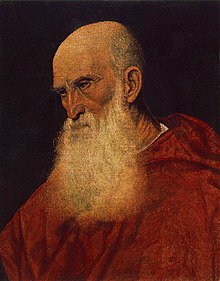
Pietro Bembo, Letter to Pico della Mirandola (1530)
We cannot say the same thing about Vergil, namely, that he is fit to be emulated by everyone who takes pleasure in his poems. For those who write elegies or lyric poems, or those who are held by an enthusiasm for writing comedies or tragedies, will find very little help from the Vergilian structure, meter, or poetic program. Rather, they should imitate those whom they consider to be the chief poets in each individual genre of writing, and should give themselves wholly to the project of following them and even overcoming them. To be sure, I myself have done this. In writing my elegies, I imitated the poet who seemed to me to be the best in that genre. But for the poet who commits himself to heroic verse, then surely Vergil is to be learned, drunk in, and expressed as much as possible, as I had once personally told you was my opinion on the matter.
De Virgilio vero non idem possumus dicere, ut idoneus sit, quem, qui carminibus delectantur, imitari omnes queant. Neque enim qui aut elegos aut lyricos conficiunt versus, quique vel comoediarum vel tragoediarum scribendarum studio detinentur, horum ullos Virgiliana carminum structura, numerus, ratio ipsa multum iuvabit. Sed imitentur ii quidem eos quos habent principes singulis in scriptorum generibus singulos atque illis assequendis superandisque dedant. Quod profecto nos aliquando fecimus, ut in elegis pangendis, qui optimus eo in genere poematis nobis visus est, eum imitaremur. Heroicis autem conscribendis carminibus qui se dederit, huic certe erit Virgilius ediscendus, ebibendus et quam maxime fieri poterit exprimendus, quemadmodum coram tibi dixeram mihi videri.
To be sure, both Greek and Latin were effectively innate to the ancients, but we must seek these languages from their books, and thus we should receive a greater accession of legitimate praise for learning them. For they, even if they were unwilling, spoke Greek in Greece and Latin in Italy; but we Italians who speak Latin (not to mention Greek) have earned and acquired that skill through our industry. Thus it will happen that, should our age happen to get a fair judge of these matters, those who now speak even in a fairly middling way will be justly preferred to those outstanding champions of old, since the men of today, having had commerce with the Goths, Vandals, and the Huns, yet retain that ancient mode of speech worn down by so many centuries, or at any rate they attempt to retain it through continual imitation, in which pursuit there is perchance a marvelous – nay, even excessive mental subtlety.
Lingua certe veteribus illis cum Graeca tum Latina quasi nativa adfuit, quam ab eorum libris petere nos oportet, quibus maior ea de re legitimae laudis accesio. Illi enim vel nolentes et in Hellade Graece et in Italia Latine loquebantur; nobis Italis qui Latine loquamur, nedum Graece, id nostra est partum et elaboratum industria. Inde fiet aequum rerum aestimatorem si sortiatur nostra aetas, posse eos qui nunc mediocriter loquuntur praecipuis illis et antesignanis iure praeferri, qui scilicet inter Gothos, Vandalos, Hunnosque versati priscam illam et tot saeculis abolitam dicendi rationem aut teneant aut tenere conentur imitatione continua, qua etiam in re mira subtilitas et forte nimia.
“When I want to relax my mind, I take into my hands the writings of that man, who recently published Martial’s Amphitheatrum and Persius. I never laugh more sweetly than when I see something published by that Tuscan. I often marvel that he read so many books that he no longer knew anything. How often he raves! Yet, he has his admirers. Let them have them, but let them be Parisians.”
Quum animum remittere volo, assumo in manus scripta illius, qui Amphitheatrum Martialis et Persium nuper κατακέχοδεν. Nam nunquam suavius rideo, quam cum aliquid ejus lucumonis video. Saepe mirari soleo illum tantum scriptorum legisse, ideo ut nihil sciret. Quam saepe delirat! Et tamen habet admiratores. Habeat igitur, sed Parisienses.
“It is well that we should be alive to the price at which knowledge must be purchased. Day by day, night by night, from the age of twenty upwards, Casaubon is at his books. He realised Boeckh’s ideal, who has told us that in classical learning ‘dies diem docet, ut perdideris quam sine linea transmiseris.’ When he is not at his books, his mind is in them. Reading is not an amusement filling the languid pauses between the hours of action ; it is the one pursuit engrossing all the hours and the whole mind. ‘ The day, with part of the night added, is not long enough.
His life, regarded from the exterior, seems adapted to deter, rather than to invite imitation. A life of hardship, in circumstances humble, almost sordid, short of want, but pinched by poverty; Casaubon renounced action, pleasure, ease, society, health, life itself— killing himself at fifty-six. Shall we say that he did this for the sake of fame ? Fame there was, but it reached him in but faint echoes. Even what there was, was all dashed by the loud slander of the dominant ecclesiastical party, and the whispered suspicion of the vanquished. At best, the limits of such fame must always be circumscribed. To the great, the fashionable, the gay, and the busy, the grammarian is a poor pedant, and no famous man. The approbation of our fellows may be a powerful motive of conduct. It is powerful to generate devotion to their service. It is not powerful enough to sustain a life of research. No other extrinsic motive is so. The one only motive which can support the daily energy called for in the solitary student’s life, is the desire to know. Every intelligence, as such, contains a germ of curiosity. In some few this appetence is developed into a yearning, an eagerness, a passion, an exigency, an ‘inquietude poussante,’ to use an expression of Leibnitz, which dominates all others, and becomes the rule of life.”
Aldus Manutius, Preface to Joannes Crastonus’ Greek Dictionary
“I had originally designed not to publish the Greek lexica (which we can call dictionaries in Latin) from our press before I had them sufficiently abundant and correct. But I changed my mind about this when I recognized that it was difficult in the extreme, not just for me – a man burdened by family obligations and my printing business – but even for an unencumbered person thoroughly knowledgeable of both languages, as well as the liberal arts, medicine, and all of the sciences. Indeed it is proper to know all, and to interpret all of the words according to their most proper sense, but I doubt whether anyone of our own time other than a stray person here and there has achieved excellence in this matter, when Greek and Latin literature – though they are thriving more than in many previous years – nevertheless languish in some obscurity.
For, who really knows the liberal arts? Who is thoroughly learned in the most simple things which are necessary in medicine? Alas – it is a shame to say, we hardly recognize lettuce, cabbage, and the herb which shows itself even to the blind. When I think about this, even though I cannot grieve about it too vehemently, I not only refrain from giving way to my pain, but I gird myself night and day to remedy the situation while avoiding no labor, so that I may hope that it will soon come to pass that the people of our age will know all the good arts and even have some fine skill in medicine, and that each scholar will have the strength to contend with antiquity as long as they not fail themselves. If there are any haters, imbeciles, or barbarians, then let them grieve, let them criticize, let them stand in the way as much and as long as they want. But this will turn out beautifully – it will.”
“Emanuel Chrysoloras, who first brought Greek literature back to Italy seven hundred years after it had been driven out by various barbarian invasions, was endowed with such humanity of liberal intellect in his teaching, that his famous image seems worthy of being placed first among the images of Greeks of exceptional merit, although no monuments of his weighty learning remain except some rules on the art of grammar. He was an indefatigable teacher, but he is open to the charge of having been lazy in writing, since the other part of the glory which we have chosen was sought by his useful profession.
He was sent from Byzantium by the emperor John to seek aid for Greece, which was on the verge of collapse, by pleading with all of the kings of Europe. He completed this task with such diligent traveling that he finally stopped in Italy when Greece was liberated from fear, since Tamerlane – the terror of the East – had captured alive near Mount Stella the Ottoman sultan Bayezid I (who had received the epithet of “Lightning” from the incredible swiftness of his movements). And so Chrysoloras, delighted that Greece had been freed from such an awful enemy, first in Venice, then in Florence, Rome, and finally in Pavia, which was under the rule of Giangaleazzo Visconti, managed to excite such a zeal for Greek literature that there sprang from his school minds worthy of the highest honor which on that account will never perish. Among these were Leonardo Bruni, Francesco Barbaro, Francesco Filelfo, Guarino Veronese, and Poggio Bracciolini. Later, when the synod which was called for resolving the controversy surrounding the pseudo-pontificate roused with desire to see such a spectacle, when Baldassare Cossa was deposed. Chrysoloras died in Constance. Poggio Bracciolini decorated his tomb with these lines:
‘Here lies Manuel Chrysoloras, the ornament of the Attic tongue, who came here to seek help for his afflicted country. Italy, this was a fortunate event for you, for he restored to you the grace of the Greek language, so long hidden. This was a fortunate event for you, Emanuel, for you found on Italian soil the honor which Greece never gave you – Greece, ruined in war.'”
Petrarch, On His Own and Many Other People’s Ignorance (IV):
If I’m not mistaken, I have read all of Aristotle’s Ethics, and I even heard some of them in lectures. But before my ignorance was uncovered for all to see, I had seemed to understand a thing or two, and even appeared more learned than a few of these guys. But I did not, as was proper, find myself become a better person. I often complained to myself and others that in reality there was no fulfillment of that promise, which Aristotle himself had professed at the beginning of his Ethics, that we learn that whole branch of philosophy not for the sake of knowledge, but so that we can become good. To be sure, I see that old Aristotle defined, distinguished, and handled the subject of virtue well, and considered what was proper to virtue and what proper to vice. Since I learned all of that, I know a little bit more than I used to; but my mind is the same, my will is the same, and I am the same.
For it is one thing to know and another to love; one thing to understand and another to will. He teaches – I don’t deny it! – what virtue is. But the goads to virtue, the torches of words by which the mind if urged and inflamed to love of virtue and hatred of vice – reading Aristotle doesn’t have any of this, or has very little of it. If you want any of that stuff, you will find it in our authors, especially in Cicero and Seneca, and (though you might think it wild) even in Horace, who might have a rough pen, but is actually pretty delightful when you look at his thought.
What good will it do to know what virtue is if it isn’t loved once recognized? What good will the understanding of sin do if it isn’t shirked when recognized? I mean goddammit, if your will is depraved, the difficulty of virtue and the licentious ease of vice can impel a lazy and nodding soul into a worse state whenever it notes them. But one shouldn’t wonder if he is a bit sparing in exciting and straightening souls to virtue, since he once called Socrates, the father of ethical philosophy, a “morality merchant,” if I may use his words. And if we can trust Cicero, Aristotle even despised Socrates, though it seems that Socrates reciprocated the sentiment.**
** [This is a little hard to credit, given that Aristotle was born fifteen years after Socrates’ death. Cicero discusses enmity between Isocrates and Aristotle, so this is just a howler from half-digested reading.]
“And finally, when Aristotle is born, tell him that I hate him!”
Omnes morales, nisi fallor, Aristotilis libros legi, quosdam etiam audivi, et antequam hec tanta detegeretur ignorantia, intelligere aliquid visus eram, doctiorque his forsitan nonnunquam, sed non — qua decuit — melior factus ad me redii, et sepe mecum et quandoque cum aliis questus sum illud rebus non impleri, quod in primo Ethicorum philosophus idem ipse prefatus est, eam scilicet philosophie partem disci, non ut sciamus, sed ut boni fiamus. Video nempe virtutem ab illo egregie diffiniri et distingui tractarique acriter, et que cuique sunt propria, seu vitio, seu virtuti. Que cum didici, scio plusculum quam sciebam; idem tamen est animus qui fuerat, voluntasque eadem, idem ego.
Aliud est enim scire atque aliud amare, aliud intelligere atque aliud velle. Docet ille, non infitior, quid est virtus; at stimulos ac verborum faces, quibus ad amorem virtutis vitiique odium mens urgetur atque incenditur, lectio illa vel non habet, vel paucissimos habet. Quos qui querit, apud nostros, precipue Ciceronem atque Anneum, inveniet, et, quod quis mirabitur, apud Flaccum, poetam quidem stilo hispidum, sed sententiis periocundum.
Quid profuerit autem nosse quid est virtus, si cognita non ametur? Ad quid peccati notitia utilis, si cognitum non horretur? Imo hercle, si voluntas prava est, potest virtutum difficultas et vitiorum illecebrosa facilitas, ubi innotuerit, in peiorem partem pigrum nutantemque animum impellere. Neque est mirari si in excitandis atque erigendis ad virtutem animis sit parcior, qui parentem philosophie huius Socratem «circa moralia negotiantem», ut verbo eius utar, irriserit, et, si quid Ciceroni credimus, contempserit; quamvis eum ille non minus.
Among the friends of Cosimo, to whose personal influence at Florence the Revival of Learning owed a vigorous impulse, Niccolo de’ Niccoli claims our earliest attention.The part he took in promoting Greek studies has been already noticed, and we have seen that his private library formed the nucleus of the Marcian collection. Of the eight hundred volumes bequeathed to his executors, the majority had been transcribed by his own hand; for he was assiduous in this labour, and plumed himself upon his skill in cursive as well as printed character. His whole fortune was expended long before his death in buying manuscripts or procuring copies from a distance. ‘If he heard of any book in Greek or Latin not to be had in Florence, he spared no cost in getting it; the number of the Latin books which Florence owes entirely to his generosity cannot be reckoned.
Great, therefore, must have been the transports of delight with which he welcomed on one occasion a manuscript containing seven tragedies of Sophocles, six of Æschylus, and the ‘Argonautica’ of Apollonius Rhodius. Nor was he only eager in collecting for his own use. He lent his books so freely that, at the moment of his death, two hundred volumes were out on loan and, when it seemed that Boccaccio’s library would perish from neglect, at his own cost he provided substantial wooden cases for it in the Convent of S. Spirito.
We must not, however, conclude that Niccolo was a mere copyist and collector. On the contrary, he made a point of collating the several MSS. of an author on whose text he was engaged, removed obvious errors, and suggested emendations, helping thus to lay the foundations of modern criticism. His judgment in matters of style was so highly valued that it was usual for scholars to submit their essays to his eyes before they ventured upon publication. Thus Leonardo Bruni sent him his ‘Life of Cicero,’ calling him ‘the censor of the Latin tongue.’ Notwithstanding his fine sense of language, Niccolo never appeared before the world of letters as an author. His enemies made the most of this reluctance, averring that he knew his own ineptitude, while his friends referred his silence to an exquisite fastidiousness of taste. It may have been that he remembered the Tacitean epigram on Galba—omnium consensu capax imperii nisi imperâsset—and applied it to himself.
Certainly his reserve, in an age noteworthy for arrogant display, has tended to confer on him distinction. The position he occupied at Florence was that of a literary dictator. All who needed his assistance and advice were received with urbanity. He threw his house open to young men of parts, engaged in disputations with the curious, and provided the ill-educated with teachers. Foreigners from all parts of Italy and Europe paid him visits: ‘the strangers who came to Florence at that time, if they missed the opportunity of seeing him at home, thought they had not been in Florence.’ The house where he lived was worthy of his refined taste and cultivated judgment; for he had formed a museum of antiquities—inscriptions, marbles, coins, vases, and engraved gems. There he not only received students and strangers, but conversed with sculptors and painters, discussing their inventions as freely as he criticised the essays of the scholars. It is probable that the classicism of Brunelleschi and Donatello, both of whom were among his intimate friends, may be due in part at least to his discourses on the manner of the ancients. Pliny, we know, was one of his favourite authors; for, having heard that a complete codex of the ‘Natural Histories’ existed at Lübeck, he left no stone unturned till it had been transferred to Florence.
What Salutato accomplished for the style of public documents, Gasparino da Barzizza effected for familiar correspondence. After teaching during several years at Venice and Padua, he was summoned to Milan in 1418 by Filippo Maria Visconti, who ordered him to open a school in that capital. Gasparino made a special study of Cicero’s Letters, and caused his pupils to imitate them as closely as possible, forming in this way an art of fluent letter-writing known afterwards as the ars familiariter scribendi. Epistolography in general, considered as a branch of elegant literature, occupied all the scholars of the Renaissance, and had the advantage of establishing a link of union between learned men in different parts of Italy. We therefore recognise in Gasparino the initiator, after Petrarch, of a highly important branch of Italian culture. This, when it reached maturity, culminated in the affectations of the Ciceronian purists.
It must be understood that neither Salutato nor Gasparino attained to real polish or freedom of style. Compared even with the Latinity of Poggio, theirs is heavy and uncouth; while that of Poggio seems barbarous by the side of Poliziano’s, and Poliziano in turn yields the palm of mere correctness to Bembo. It was only by degrees that the taste of the Italians formed itself, and that facility was acquired in writing a lost language. The fact that mediæval Latin was still used in legal documents, in conversation, in the offices of the Church, and in the theological works which formed the staple of all libraries, impeded the recovery of a classic style. When the Italians had finally learned how to polish prose, it was easy to hand on the art to other nations; while to sneer at their pedantry, as Erasmus did, was no matter of great difficulty. By that time their scrupulous and anxious preoccupation with purity of phrase threatened danger to the interests of liberal learning. [p. 106, 1888 Henry Holt edition]
“I don’t say these things in an effort to avoid their judgment, but so that they who are ignorant may feel some shame (if they are capable of it) in making their judgment. For, on this subject, I do not just embrace the opinion of friendly jealousy, but even the judgment of hostile hatred, and in sum, if someone pronounces that I am ignorant, I agree with him! When I myself think over how many things are lacking to me, toward which my mind, eager for knowledge, exerts itself, I sadly and silently recognize my own ignorance. But in the meantime, while the end of my present exile is near, at which point this imperfection (from whence our knowledge derives) will be terminated, I am consoled by the thought of our shared nature. I think that it happens to all good and modest minds, that they learn about themselves and derive consolation therefrom. For those who get hold of great knowledge (I am speaking according to the standards of human learning), it is always small when considered in itself, but it becomes great in light of the narrow circumstances from which it is derived, and certainly looks great when compared to others. Otherwise, I ask you, how small and insignificant is the knowledge granted to one mind? Nay, how much like nothing is the knowledge of any one person, whoever they be, when it is compared not just to the knowledge of God, but to one’s own fund of ignorance?”
Non hec dico, ut declinem forum, sed ut pudeat, siquis est pudor, iudicasse qui nesciunt. Ego etenim de hac re non modo sententiam amicabilis amplector invidie, sed hostilis odii, et ad summam, quisquis ignarum me pronuntiat, mecum sentit. Nam et ego ipse recogitans quam multa michi desint ad id quo sciendi avida mens suspirat, ignorantiam meam dolens ac tacitus recognosco. Sed me interim, dum presentis exilii finis adest, quo nostra hec imperfectio terminetur, qua ex parte nunc scimus, nature communis extimatione consolor. Idque omnibus bonis ac modestis ingeniis evenire arbitror, ut agnoscant se pariter ac solentur; his etiam quibus ingens obtigit scientia — secundum humane scientie morem loquor — que in se semper exigua, pro angustiis quibus excipitur, et collata aliis ingens fit. Alioquin quantulum, queso, est, quantumcunque est, quod nosse uni ingenio datum est? Imo quam nichil est scire hominis, quisquis sit, si non dicam scientie Dei, sed sui ipsius ignorantie comparetur?