Misreading the Ancients

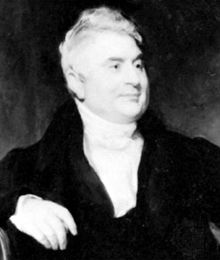
John Ruskin, Queen of the Air (1.17):

“The minor expressions by the Greeks in word, in symbol, and in religious service, of this faith, are so many and so beautiful, that I hope some day to gather at least a few of them into a separate body of evidence respecting the power of Athena, and of its relations to the ethical conception of the Homeric poems, or, rather, to their ethical nature; for they are not conceived didactically, but are didactic in their essence, as all good art is. There is an increasing insensibility to this character, and even an open denial of it, among us now which is one of the most curious errors of modernism,—the peculiar and judicial blindness of an age which, having long practised art and poetry for the sake of pleasure only, has become incapable of reading their language when they were both didactic; and also, having been itself accustomed to a professedly didactic teaching, which yet, for private interests, studiously avoids collision with every prevalent vice of its day (and especially with avarice), has become equally dead to the intensely ethical conceptions of a race which habitually divided all men into two broad classes of worthy or worthless,—good, and good for nothing.

And even the celebrated passage of Horace about the Iliad is now misread or disbelieved, as if it were impossible that the Iliad could be instructive because it is not like a sermon. Horace does not say that it is like a sermon, and would have been still less likely to say so if he ever had had the advantage of hearing a sermon. ‘I have been reading that story of Troy again” (thus he writes to a noble youth of Rome whom he cared for), “quietly at Præneste, while you have been busy at Rome; and truly I think that what is base and what is noble, and what useful and useless, may be better learned from that, than from all Chrysippus’ and Crantor’s talk put together.’ Which is profoundly true, not of the Iliad only, but of all other great art whatsoever; for all pieces of such art are didactic in the purest way, indirectly and occultly, so that, first, you shall only be bettered by them if you are already hard at work in bettering yourself; and when you are bettered by them, it shall be partly with a general acceptance of their influence, so constant and subtile that you shall be no more conscious of it than of the healthy digestion of food; and partly by a gift of unexpected truth, which you shall only find by slow mining for it,—which is withheld on purpose, and close-locked, that you may not get it till you have forged the key of it in a furnace of your own heating.

And this withholding of their meaning is continual, and confessed, in the great poets. Thus Pindar says of himself: ‘There is many an arrow in my quiver, full of speech to the wise, but, for the many, they need interpreters.’ And neither Pindar, nor Æschylus, nor Hesiod, nor Homer, nor any of the greater poets or teachers of any nation or time, ever spoke but with intentional reservation; nay, beyond this, there is often a meaning which they themselves cannot interpret,—which it may be for ages long after them to interpret ,—in what they said, so far as it recorded true imaginative vision. For all the greatest myths have been seen by the men who tell them, involuntarily and passively,—seen by them with as great distinctness (and in some respects, though not in all, under conditions as far beyond the control of their will) as a dream sent to any of us by night when we dream clearest; and it is this veracity of vision that could not be refused, and of moral that could not be foreseen, which in modern historical inquiry has been left wholly out of account; being indeed the thing which no merely historical investigator can understand, or even believe; for it belongs exclusively to the creative or artistic group of men, and can only be interpreted by those of their race, who themselves in some measure also see visions and dream dreams.”
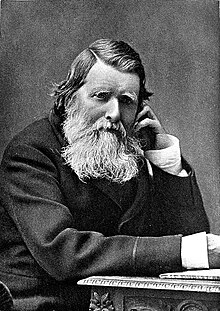
Image result for john ruskin

Why Study Latin? To Learn Greek!

Thomas Babington Macaulay, The London University:

“The Latin language is principally valuable as an introduction to the Greek, the insignificant portico of a most chaste and majestic fabric. On this subject, our Confession of Faith will, we trust, be approved by the most orthodox scholar. We cannot refuse our admiration to that most wonderful and perfect machine of human thought, to the flexibility, the harmony, the gigantic power, the exquisite delicacy, the infinite wealth of words, the incomparable felicity of expression, in which are united the energy of the English, the neatness of the French, the sweet and infantine simplicity of the Tuscan. Of all dialects, it is the best fitted for the purposes both of science and of elegant literature. The philosophical vocabularies of ancient Rome, and of modern Europe, have been derived from that of Athens. Yet none of the imitations has ever approached the richness and precision of the original. It traces with ease distinctions so subtle, as to be lost in every other language. It draws lines where all the other instruments of the reason only make blots. Nor is it less distinguished by the facilities which it affords to the poet. There are pages even in the Greek Dictionaries over which it is impossible to glance without delight. Every word suggests some pleasant or striking image, which, wholly unconnected as it is with that which precedes or that which follows, gives the same, sort of pleasure with that which we derive from reading the Adonais of poor Shelley, or from looking at those elegant, though unmeaning friezes, in which the eye wanders along a line of beautiful faces, graceful draperies, stags, chariots, altars, and garlands. The literature is not unworthy of the language. It may boast of four poets of the very first order, Homer, Æschylus. Sophocles, and Aristophanes,—of Demosthenes, the greatest of orators—of Aristotle, who is perhaps entitled to the same rank among philosophers, and of Plato, who, if not the most satisfactory of philosophers, is at least the most fascinating. These are the great names of Greece; and to these is to be added a long list of ingenious moralists, wits, and rhetoricians, of poets who, in the lower departments of their art, deserve the greatest praise, and of historians who, at least in the talent of narration, have never been equalled.”

Image result for tb macaulay

The Vanity of Virtue: Contemporary Pseudo-Stoicism

In an age which is rapidly becoming a parody of itself, it is nearly impossible to distinguish sincere utterance from satire. And so, the distance from Trump to Trimalchio is bridged readily enough. Anyone who reads this New York Times piece on Silicon Valley and Stoicism may be forced to pause and confirm that they are not perusing the pages of The Onion. (Though, perhaps this is a testament to the satirical skill of that publication, which has not so much mocked the world as predicted its future.)

The article offers a glimpse at the strange obsession among Silicon Valley’s monsters with the ancient philosophy of Stoicism. There may be some irony in the fact that the technocratic capitalist-engineer class which directs the tech world is in large part responsible for the rapid devaluation of and divestment in meaningful humanities education at all levels. Billionaires can purchase self-satisfied virtue readily enough through philanthropy and shopping at Whole Foods, but nothing will assure one’s reputation for moral rectitude and intellectual seriousness quite so well as embracing a “life philosophy”, ideally one covered over with the pleasing patina of venerable antiquity. Just as these captains of industry who have addicted the rest of humanity to the ephemeral pleasures and pressures of the cyber world are able (i.e. have the capital and the time) to go on device-free retreats, so too they are able to idly subject themselves to salutary forms of self-sacrifice in the spiritual retreat of a recondite philosophy about which few ordinary people know or care.

Of all the passages in the article, this is the one which reads most like outright parody:

“We’re kept in constant comfort,” said Kevin Rose, the founder of Digg, in an interview on Daily Stoic, a popular blog for the tech-Stoic community. Mr. Rose said he tries to incorporate practices in his life that “mimic” our ancestors’ environments and their daily challenges: “This can be simple things like walking in the rain without a jacket or wearing my sandals in the December snow when I take the dog out in the mornings.”

What could be more patently absurd than wearing sandals in the snow in order to rid oneself of “constant comfort”? One can readily re-imagine this interview:

As we approached the already-open automatic sliding doors of his office building, he veered right and manually opened the traditional handle-and-hinge door directly adjacent to it. When I asked him why, he responded, “My life has become too frictionless, and I like to be maximally inconvenienced at times of my choice.”

For much of the world, suffering is still very much a part of daily life even though our material circumstances have been substantially improved. To be sure, we may not need to trudge through the snow barefoot to get to work, but sitting through a painfully long commute in gridlock while contributing to global catastrophe for the sake of ploughing through a soul-crushing grind at work is perhaps enough suffering for one person, though it involves no physical pain. What more disgusting sign of privilege than announcing that one is too comfortable, and then proudly undertaking to suffer something wholly unnecessary while couching it in the language of ancient philosophy?

Nellie Bowles, the author of the article, fudges on some of the basic tenets of Stoicism:

Instead, Stoics believed that everything in the universe is already perfect and that things that seem bad or unjust are secretly good underneath. The philosophy is handy if you already believe that the rich are meant to be rich and the poor meant to be poor.

This makes Stoics sound like the precursors of Dr. Pangloss. Stoic thought is intimately wrapped up with the notion that the world is not an ideal place. Otherwise, what is the purpose of cultivating virtue and fortitude under suffering? It serves to note that Stoic thought, especially in the hands of Seneca, was used to enhance the Roman cult of the noble suicide. Consider this typical anecdote from Seneca:

“When a certain man was recently being brought in a wagon under guard to a morning spectacle, he nodded off as though sinking under the weight of sleep, and let his head droop so far that he inserted it between the spokes of the wheel. He held himself in the seat long enough to break his neck from the rotation of the wheel. And so, he fled his punishment in the same vehicle which was carrying him to it.”

Cum adveheretur nuper inter custodias quidam ad matutinum spectaculum missus, tamquam somno premente nutaret, caput usque eo demisit donec radiis insereret, et tamdiu se in sedili suo tenuit donec cervicem circumactu rotae frangeret; eodem vehiculo quo ad poenam ferebatur effugit. [Epistulae AD Lucilium, 70]

I have written before that antiquity should be an object of study, not of emulation. Reading too deeply in ancient literature may give one the sense that it serves as useful life advice because of its constant recourse to paradigmatic exempla. Ancient Stoics may have admired Cato for tearing his wounds open and spilling his guts onto the floor, but who among even the most fanatical of modern Stoics would counsel or even calmly approve of such a course of action? However fashionable it may be, or however likely to increase one’s clout, there are serious problems with employing any ancient philosophy to grapple with modern life.

As Joel points out in his conversation in the most recent Itinera podcast, Nestor’s advice to the Achaeans fails to persuade them because the exempla no longer map meaningfully onto the contemporary world. So too, the world conjured up in the exempla of the ancient stoics is no longer our own, and much of the moralizing advice ultimately rings hollow. Whatever the continuities in human nature, the structure and rhythms of modern life are so wholly different from those of antiquity as to create an unbridgeable gap between the contemporary and the ancient. Scholarship is meant to help us bridge this gap in our minds, not to summon that world back to life.

Cicero, Seneca, and Marcus Aurelius are among the ancients on whom the new Stoics seem most keen. (Why do they so rarely cite Greeks?) These modern Stoics have, at any rate, one thing in common with these ancient forebears: in all of their proud and horn-tooting display of virtue and fortitude, they reveal how out of touch they are with the real suffering of mundane existence, and remind us that it’s easy to play at suffering when you’re on top of the world.

Image result for cato suicide
Johann Michael Rottmayr, The Suicide of Cato

Good Reading Outside the Classics

George Eliot, Daniel Deronda:

‘Sir Hugo appeared not to notice anything peculiar in Daniel’s manner, and presently went on with his usual chatty liveliness.

“I am glad you have done some good reading outside your classics, and have got a grip of French and German. The truth is, unless a man can get the prestige and income of a Don and write donnish books, it’s hardly worth while for him to make a Greek and Latin machine of himself and be able to spin you out pages of the Greek dramatists at any verse you’ll give him as a cue. That’s all very fine, but in practical life nobody does give you the cue for pages of Greek. In fact, it’s a nicety of conversation which I would have you attend to—much quotation of any sort, even in English is bad. It tends to choke ordinary remark. One couldn’t carry on life comfortably without a little blindness to the fact that everything had been said better than we can put it ourselves. But talking of Dons, I have seen Dons make a capital figure in society; and occasionally he can shoot you down a cart-load of learning in the right place, which will tell in politics. Such men are wanted; and if you have any turn for being a Don, I say nothing against it.”

“I think there’s not much chance of that. Quicksett and Puller are both stronger than I am. I hope you will not be much disappointed if I don’t come out with high honors.”

“No, no. I should like you to do yourself credit, but for God’s sake don’t come out as a superior expensive kind of idiot, like young Brecon, who got a Double First, and has been learning to knit braces ever since. What I wish you to get is a passport in life. I don’t go against our university system: we want a little disinterested culture to make head against cotton and capital, especially in the House. My Greek has all evaporated; if I had to construe a verse on a sudden, I should get an apoplectic fit. But it formed my taste. I dare say my English is the better for it.”‘

Image result for george eliot

Irrational Imitation and Phrasemongery

W. Johnson, On the Education of the Reasoning Faculties:

“With many oscillations, and much infirmity of purpose, I have for twenty-two years, with classes of sixty, of forty, of thirty, with sets of pupils varying from twenty to three, and also with single pupils, cultivated what is called taste, or the art of expression, in conformity with an excellent tradition, and in obedience to academical authorities of the highest order. Nor is it in this paper asserted or implied that propriety of language is not a more attainable result of classical training than correctness of thought. But it has of late years become manifest, that what was taken for classical taste by those who did battle against useful knowledge was, to a great extent irrational imitation and phrase-mongery. Taste after all is not a mere cultivated instinct or perception, like an ear for music. It is discrimination, a kind of reasoning.

A logician need not be ashamed to study those curious artifices by which Virgil heightens the effect of his statements; in ‘hypallage’ and ‘hendiadys’ there is scope for rational choice. It is one thing to put together dissimilar words, as Tacitus does, for poetical effect; another thing to use two similar words where one will do, as Cicero does, for mere copiousness of sound. The monstrous fatuities which disfigure Aeschylus are condemned by the clear head of an Aristophanes, and can be proved to be bad. Amongst the worthies whose names are used as bludgeons to beat us with, there was at least one whose taste was inextricably combined with his reasoning powers, — Mr. Fox. He would not have abetted the defenders of the classical faith in teaching boys to wrap their truisms in the drapery of Cicero; but he would have encouraged them to state a case or tell a story like Herodotus, Euripides, and Ovid.

Think and write like Mr. Fox, and you will use Latin unaffectedly and straightforwardly to do justice to your subject: you will not choose a subject which will enable you to bring in your stored phrases. The desire of doing at schools what is done at our universities has led to very absurd results with ordinary schoolmasters, who have made it their object to get Greek verses written, like the Porson prize exercises, by tesselating bits of Attic idiom, and have broken their hearts in hopeless attempts to get Latin prose written as it is written by Oxford professors.”

Image result for medieval manuscript school

Educating Daughters and Reading Plato

Diogenes Laertius Cleobulus, 1.6 91

“He used to say that daughters should be settled down when they are maidens in age but women in thought: by this he meant that it was right that girls be educated too.”

ἔφη δὲ δεῖν συνοικίζειν τὰς θυγατέρας, παρθένους μὲν τὴν ἡλικίαν, τὸ δὲ φρονεῖν γυναῖκας· ὑποδεικνὺς ὅτι δεῖ παιδεύεσθαι καὶ τὰς παρθένους.


From Stobaeus  III. 6, 58 (from the Memorabilia of Epictetus, fr. 15)

“In Rome, the women keep Plato’s Republic in their hands because he believes that women are worthy of sharing the state. In this, they pay attention to the words but not the man’s meaning: for he actually tells people not to marry or live together as one man and one woman and then plan for women in a community. No, he eliminates that kind of marriage and introduces some different kind in its place. As a general rule, people take pleasure providing excuses for their own faults. Truly, philosophy tells us that it is not right to stretch out even a finger at random!”

Ἐκ τῶν Ἐπικτήτου ἀπομνημονευμάτων.

Ἐν Ῥώμῃ αἱ γυναῖκες μετὰ χεῖρας ἔχουσι τὴν Πλάτωνος Πολιτείαν, ὅτι κοινὰς ἀξιοῖ εἶναι τὰς γυναῖκας. τοῖς γὰρ ῥήμασι προσέχουσι τὸν νοῦν, οὐ τῇ διανοίᾳ τἀνδρός, ὅτι οὐ γαμεῖν κελεύων καὶ συνοικεῖν ἕνα μιᾷ εἶτα κοινὰς εἶναι βούλεται τὰς γυναῖκας, ἀλλ᾿ ἐξαιρῶν τὸν τοιοῦτον γάμον καὶ ἄλλο τι εἶδος γάμου εἰσφέρων. καὶ τὸ ὅλον οἱ ἄνθρωποι χαίρουσιν ἀπολογίας τοῖς ἑαυτῶν ἁμαρτήμασι πορίζοντες· ἐπεί τοι φιλοσοφία φησίν, ὅτι οὐδὲ τὸν δάκτυλον ἐκτείνειν εἰκῆ προσήκει.

Image result for women greek vase
Black Figure Hydria from the MET

The Elegant Imbecility of Classical Learning

Sydney Smith, Professional Education:

“The English clergy, in whose hands education entirely rest, bring up the first young men of the country as if they were all to keep grammar-schools in little country-towns; and a nobleman, upon whose knowledge and liberality the honour and welfare of his country may depend, is diligently worried, for half his life, with the small pedantry of longs and shorts. There is a timid and absurd apprehension, on the part of ecclesiastical tutors, of letting out the minds of youth upon difficult and important subjects. They fancy that mental exertion must end in religious skepticism; and, to preserve the principles of their pupils, they confine them to the safe and elegant imbecility of classical learning.

A genuine Oxford tutor would shudder to hear his young men disputing upon moral and political truth, forming and pulling down theories, and indulging in all the boldness of youthful discussion. He would augur nothing from it but impiety to God and treason to kings. And yet, who vilifies both more than the holy poltroon who carefully averts from them the searching eye of reason, and who knows no better method of teaching the highest duties, than by extirpating the finest qualities and habits of the mind? If our religion is a fable the sooner it is exploded the better. If our government is bad, it should be amended. But we have no doubt of the truth of the one, or of the excellence of the other; and are convinced that both will be placed on a firmer basis in proportion as the minds of men are more trained to the investigation of truth. At present, we act with the minds of our young men as the Dutch did with their exuberant spices. An infinite quantity of talent is annually destroyed in the universities of England by the miserable jealousy and littleness of ecclesiastical instructors. It is in vain to say we have produced great men under this system. We have produced great men under all systems. Every Englishman must pass half his life in learning Latin and Greek; and classical learning is supposed to have produced the talents which it has not been able to extinguish. It is scarcely possible to prevent great, men from rising up under any system of education, however bad. Teach men demonology or astrology, and you will still have a certain portion of original genius, in spite of these or any other branches of ignorance and folly.”

Image result for rev. sydney smith

A Woman’s Party Invitation and a Girl’s Epitaph: Some Documentary Latin

Some more non-elite Latin provided by Brandon Conley.

A birthday invitation, excerpt (Vindolanda, Britain, 1st cent. CE)

Claudia Severa invites her friend Sulpicia Lepidina (wife of the prefect at Vindolanda) to a birthday party. Despite the use of soror, the two women are not believed to be sisters. With part of the document written by Severa herself, this (and the accompanying notes) is believed to be the earliest-known Latin written by a woman.

Side I

Cl(audia) · Seuerá Lepidinae [suae
[sa]l[u]tem
iii Idus Septembr[e]s soror ad diem
sollemnem natalem meum rogó
libenter faciás ut uenias
ad nos iucundiorem mihi

Side II

[diem] interuentú tuo facturá si
…s
Cerial[em t]uum salutá Aelius meus .[
et filiolus salutant …
… sperabo te soror
uale soror anima
mea ita ualeam
karissima et haue
 

(The italicized text was written by Severa herself)

“Claudia Severa to her Lepidina, greetings. On September 11, sister, for my birthday celebration, I ask you sincerely to make sure you come to (join) us, to make the day more fun for me by your arrival…Say hello to your Cerialis. My Aelius and little boy say hello. I await you, sister. Be well, sister, my dearest soul, so I may be well too. Hail.”

A Jewish child at Rome (Rome, c. 400 CE)

A sad text. Also a good one to use in class, it utilizes both Latin and Hebrew, and goes well with a discussion of diversity in the city and empire. It is also one of the latest dated texts in this document.

(H)Ic iacet Gaudi=
osa infantula
qui bissit annoru=
m plus minu(s) tre=
s requiebit in
pacem. שלום

“Here lies the child Gaudiosa, who lived around three years. She will rest in peace. Shalom (in Hebrew)

Tablet 291 leaf 1 (front) - click to launch image zooming viewer

Let Us Be Noble Examples!

Seneca, Epistulae Morales (98)

“Say to yourself that of those things which seem terrible to you, none is insuperable. Many people have overcome them individually: Mucius overcame fire, Regulus survived torture, Socrates took his poison, Rutilius made it through exile, and Cato suffered the death which he undertook by the dagger. Let us overcome something too. Again, those pleasant and happy things which attract the common people have been scorned often by many. Fabricius the general rejected wealth, and noted them as censor. Tubero thought that poverty was fitting both for him and for the Capitoline, when by using earthenware cups in a public dinner he showed that humans ought to be content with those things which the gods use even now. Sextius, who was born in such a state that he ought to take the republic in hand, refused honors, and did not accept the broad purple band when Caesar offered it to him, because he knew that what could be given could also be taken away. We, too, should do something with spirit! Let us be among the examples!”

Image result for mucius scaevola

Dic tibi ex istis quae terribilia videntur nihil est invictum’. Singula vicere iam multi, ignem Mucius, crucem Regulus, venenum Socrates, exilium Rutilius, mortem ferro adactam Cato: et nos vincamus aliquid. Rursus ista quae ut speciosa et felicia trahunt vulgum a multis et saepe contempta sunt. Fabricius divitias imperator reiecit, censor notavit; Tubero paupertatem et se dignam et Capitolio iudicavit, cum fictilibus in publica cena usus ostendit debere iis hominem esse contentum quibus di etiamnunc uterentur. Honores reppulit pater Sextius, qui ita natus ut rem publicam deberet capessere, latum clavum divo Iulio dante non recepit; intellegebat enim quod dari posset et eripi posse. Nos quoque aliquid et ipsi faciamus animose; simus inter exempla.


F**k Donatus, Shakespeare’s Got Talent

John Williams, Stoner (Chp. 9): 

“Charles Walker fiddled for a moment with the sheaf of papers on the desk before him and allowed the remoteness to creep back into his face. He tapped the forefinger of his right hand on his manuscript and looked toward the corner of the room away from where Stoner and Katherine Driscoll sat, as if he were waiting for something. Then, glancing every now and then at the sheaf of papers on the desk, he began.

‘Confronted as we are by the mystery of literature, and by its inenarrable power, we are behooved to discover the source of the power and mystery. And yet, finally, what can avail? The work of literature throws before us a profound veil which we cannot plumb. And we are but votaries before it, helpless in its sway. Who would have the temerity to lift that veil aside, to discover the undiscoverable, to reach the unreachable? The strongest of us are but the puniest weaklings, are but tinkling cymbals and sounding brass, before the eternal mystery.’

His voice rose and fell, his right hand went out with its fingers curled supplicatingly upward, and his body swayed to the rhythm of his words; his eyes rolled slightly upward, as if he were making an invocation. There was something grotesquely familiar in what he said and did. And suddenly Stoner knew what it was. This was Hollis Lomax—or, rather, a broad caricature of him, which came unsuspected from the caricaturer, a gesture not of contempt or dislike, but of respect and love.

Walker’s voice dropped to a conversational level, and he addressed the back wall of the room in a tone that was calm and equable with reason. ‘Recently we have heard a paper that, to the mind of academe, must be accounted most excellent. These remarks that follow are remarks that are not personal. I wish to exemplify a point. We have heard, in this paper, an account that purports to be an explanation of the mystery and soaring lyricism of Shakespeare’s art. Well, I say to you’—and he thrust a forefinger at his audience as if he would impale them— ‘I say to you, it is not true.’ He leaned back in his chair and consulted the papers on the desk. ‘We are asked to believe that one Donatus—an obscure Roman grammarian of the fourth century A.D.— we are asked to believe that such a man, a pedant, had sufficient power to determine the work of one of the greatest geniuses in all of the history of art. May we not suspect, on the face of it, such a theory? Must we not suspect it?’

Anger, simple and dull, rose within Stoner, overwhelming the complexity of feeling he had had at the beginning of the paper. His immediate impulse was to rise, to cut short the farce that was developing; he knew that if he did not stop Walker at once he would have to let him go on for as long as he wanted to talk. His head turned slightly so that he could see Katherine Driscoll’s face; it was serene and without any expression, save one of polite and detached interest; the dark eyes regarded Walker with an unconcern that was like boredom. Covertly, Stoner looked at her for several moments; he found himself wondering what she was feeling and what she wished him to do. When he finally shifted his gaze away from her he had to realize that his decision was made. He had waited too long to interrupt, and Walker was rushing impetuously through what he had to say.

‘ … the monumental edifice that is Renaissance literature, that edifice which is the cornerstone of the great poetry of the nineteenth century. The question of proof, endemic to the dull course of scholarship as distinguished from criticism, is also sadly at lack. What proof is offered that Shakespeare even read this obscure Roman grammarian? We must remember it was Ben Jonson’—he hesitated for a brief moment—’it was Ben Jonson himself, Shakespeare’s friend and contemporary, who said he had little Latin and less Greek. And certainly Jonson, who idolized Shakespeare this side of idolatry, did not impute to his great friend any lack. On the contrary, he wished to suggest, as do I, that the soaring lyricism of Shakespeare was not attributable to the burning of the midnight oil, but to a genius natural and supreme to rule and mundane law. Unlike lesser poets, Shakespeare was not born to blush unseen and waste his sweetness on the desert air; partaking of that mysterious source to whence all poets go for their sustenance, what need had the immortal bard of such stultifying rules as are to be found in a mere grammar? What would Donatus be to him, even if he had read him? Genius, unique and a law unto itself, needs not the support of such a ‘tradition’ as has been described to us, whether it be generically Latin or Donatan or whatever. Genius, soaring and free, must …’

After he became used to his anger Stoner found a reluctant and perverse admiration stealing over him. However florid and imprecise, the man’s powers of rhetoric and invention were dismayingly impressive; and however grotesque, his presence was real. There was something cold and calculating and watchful in his eyes, something  needlessly reckless and yet desperately cautious. Stoner became aware that he was in the presence of a bluff so colossal and bold that he had no ready means of dealing with it.”

Related image