Latin vs. Philology: Part X

Francesco Filelfo, Letter to Lorenzo Medici (Part 10)

“And there are some, Lorenzo Medici, so stubborn and obstinate that they consider Latin and grammatical speech to be the same.

Therefore it will not be out of place to add those words which we find written in the same book: ‘There were those to whom Curio seemed to be the third of his age because he used words which were perhaps rather splendid, and because he spoke Latin fairly well with a kind of domestic practice, as it seems: for he knew nothing of literature! But it makes a big difference whom one hears every day at home, with whom one speaks from childhood, and how fathers, teachers, and mothers speak. We can read the letters of Cornelia, the mother of the Gracchi, and it appears that the sons were brought up not so much in their mother’s lap as in her speech!’

How much utility in speaking can be conferred by domestic speech which is not corrupted but correct and thoroughly Latin is shown by several women, but with great praise by Hortensia, the daughter of Quintus Hortensius. For when the triumvirs had burdened the order of matrons with a greater tax than was fair and no patron would dare to take on their case, Hortensia faced the extraordinary indignity of the thing and did not hesitate to undertake the pleading of the case herself. She therefore pleaded with the triumvirs herself in such a constant and learned way that they, admiring the eloquence inherited from her father in such a noble and modest daughter remitted the greater part of the tax which had been imposed.”

https://upload.wikimedia.org/wikipedia/commons/thumb/1/10/Hortensia_speech.gif/220px-Hortensia_speech.gif

Et sunt nonnulli, Laurenti Medices, adeo pervicaces, adeo cervicosi atque insolentes, ut eandem esse velint latinam atque grammaticam locutionem.

Quare non erit intempestivum ea quoque verba adiecisse, quae eodem in libro scripta legimus: “Erant tamen quibus videretur illius aetatis tertius Curio, quia splendidioribus fortasse verbis utebatur, et quia latine non pessime loquebatur, usu, credo, aliquo domestico; nam litterarum admodum nihil sciebat. Sed magni interest quos quisque audiat quottidie domi, quibuscum loquatur a puero, quemadmodum patres, pedagogi, matres etiam loquantur. Legimus epistolas Corneliae matris Gracchorum, apparet filios non tam in gremio educatos quam in sermone matris”.

Quantum autem utilitatis afferat ad dicendum sermo domesticus, qui non inquinatus sit, sed emendatus ac latinus, cum aliae nonnullae mulieres, tum Hortensia, Q. Hortensii filia, sua magna cum laude ostendit. Cum enim triumviri graviore tributo quam par esset matronarum ordinem onerassent, nec patronus ullus earum causam capessere auderet, Hortensia, tantam rei indignitatem intuta, eiusmodi subire patrocinium non dubitavit. Oravit igitur pro matronarum ordine apud triumviros Hortensia et constanter et perdiserte adeo, ut ii, paternam facundiam in nobili pudicissimaque filia <…>, sententiam mutarint, maiorem imperatae pecuniae partem remittentes.
Latin vs Philology: Part IX

Francesco Filelfo, Letter to Lorenzo Medici (Part 9)

“The ancients also used to affect the use of ollum and ollam where we use illum and illam, as Vergil in this place, that lover of antiquity, used olli in the dative case for illi whenever it occurred, as in the first book of The Aeneid: ‘Olli subridens hominum sator atque deorum Vultu, quo coelum tempestatesque serenat, Oscula libavit nate.’

So I say that we should use Latin speech, and speech which is as little obscure and subtle as can be. For what other reason did the commentaries of Publius Hygidius, who was a contemporary of Varro and Cicero, not come into common use, if it were not because of their obscurity and unusual subtlety? One should always speak Latin, and never depart from pure and familiar diction.

As Cicero advises in that same book, ‘The very act of speaking Latin is to be held in high esteem, not so much on its own account as because it is neglected by so many: for it is not as noble to know Latin as it is shameful not to know it, nor does it seem as important for a good orator as it does for a good Roman citizen.’”

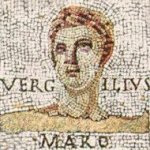
https://upload.wikimedia.org/wikipedia/commons/1/1b/Vergilius.jpg

Et ollum et ollam apud antiquos usurpabant, cum nos illum et illam dicimus, tametsi Virgilius hoc loco amator antiquitatis olli dativo casu pro illi quandoque est usus, ut in primo Aeneidos libro: “Olli subridens hominum sator atque deorum Vultu, quo coelum tempestatesque serenat, Oscula libavit nate”.

Latino, inquam, nobis sermone utendum est, eoque minime obscuro subtilioreve quam oporteat. Quae enim alia fuit causa ut P. Hygidii, qui Marco Varroni atque Ciceroni coaetaneus fuit, commentationes in vulgus non exierint, quam earum obscuritas inusitataque subtilitas? Latine semper loquendum est, et ab usitata puraque dictione nunquam discedendum.

“Nam ipsum latine loqui”, ut eodem in libro Cicero praecipit, “est illud quidem in magna laude ponendum, sed non tam sua sponte, quam quod est a plaerisque neglectum: non enim tam praeclarum est scire latine quam turpe nescire, neque tam id mihi oratoris boni quam civis romani proprium videtur”.

Latin vs. Philology: Part VIII

Francesco Filelfo, Letter to Lorenzo Medici (Part 8)

“Not long afterward, he instructs us about what happened concerning a new word of Sisenna: ‘Sisenna, though, as if he wished to be a corrector of familiar speech, was unable to be deterred by the accuser Gaius Rusius from using unfamiliar words.’ For when Gaius Rusius was accusing Gaius Hirtilius, Sisenna, who was defending Hirtilius, said that some of his charges were to be spitonable [to be spit on]. He used this word, I think, because the charges were to be spurned and rejected as the image of spit. Gaius Rusius joked about this new and unfamiliar word saying, ‘I will be surrounded, judges, if you don’t help me. I won’t know what Sisenna is saying – I fear an ambush! Spitonable, what is that? I know what spit is, but I don’t know onable.’ Therefore, it was not absurd that the greatest laughter was excited, though Sisenna thought that he spoke Latin correctly when he spoke in a strange manner.

Therefore, Caesar was wise to suggest in his first book de Analogia that ‘you should avoid an unheard and unusual word like a sailor avoids a reef.’

Who could find fault with the fact that he was subjected to laughter, when he held this speech in front of the city prefect: ‘This Roman knight eats apluda and drinks floces.’ Ancient yokels used to call the bran of grains apluda, and they called the dregs of wine floces.

So we read in Caecilius, ‘Goddammit, I don’t want the froth or the dregs, I want WINE!’

https://sententiaeantiquae.com/wp-content/uploads/2017/09/13404-drinkingrome.jpg

Nec multo post, quid de novo Sisennae verbo acciderit, docet: “Sisenna autem quasi emendator sermonis usitati cum esse vellet, ne a G. Rusio quidem accusatore deterreri potuit quo minus inusitatis verbis uteretur”. Nam G. Rusio accusante C. Hirtilium Sisenna, qui illum defendebat, dixit “quaedam eius sputatilica esse crimina”; hoc ea nomine appellans, ut existimo, quod sputorum instar contemnenda reiiciendaque forent. Ad quod quidem verbum et inusitatum et novum cavillatus, G. Rusius: “Circumvenior” inquit “iudices, nisi subvenitis. Sisenna quid dicat nescio, metuo insidias. Sputatilica, quid est hoc? Sputa, quid sit, scio, tilica nescio”. Non igitur absurde maximi risus commoti sunt, cum Sisenna putaret recte loqui latine cum inusitate loqueretur.

Prudenter igitur Caesar, libro primo de analogia, “tanquam scopulum” inquit “sic fugias inauditum atque insolens dictum”.

Quis enim vituperet eum iure habitum risui, qui apud urbis praefectum orationem habens: “Hic eques romanus” ait “apludam edit et floces bibit”. Apludas frumenti furfures prisci rustici dixere, floces vero vini fecem.

Itaque apud Caecilium legitur: “Edepol ego neque florem neque floces volo, mihi vinum volo”.

Tawdry Tuesday Returns: A Priapic Poem That’s A Tad Too Defensive

Warning: this is potentially just awful trash.

Carmina Priapea, 28

“Mercury’s form has the power to please.
And Apollo’s body sticks out especially.
Lyaeus in pictures has a shapely line,
And Cupid is still finest of the fine.

My body lacks a certain beauty, I confess
But, look, my dick’s a jewel beyond the rest.
Any girl should prefer it to the gods I named,
And if she doesn’t, then a greedy pussy’s to blame.”

Forma Mercurius potest placere,
forma conspiciendus est Apollo,
formosus quoque pingitur Lyaeus,
formosissimus omnium est Cupido.
me pulchra fateor carere forma,
verum mentula luculenta nostra est:
hanc mavult sibi quam deos priores,
si qua est non fatui puella cunni.

Woman painting a statue of Priapus, from a fresco at Pompeii

Science This! Some Ancient Theories on Eclipses

N.B. This selection is by no means exhaustive.

Xenophanes, fr.  D34

“Xenophanes [says eclipses] come from flames going out and that a different one happens again in the east. He reports in addition that there was an eclipse for an entire month and also a total eclipse that made the day seem like night.”

D34 (A41) Aët. 2.24.4 (Ps.-Plut.) [περὶ ἐκλείψεως ἡλίου]

Ξενοφάνης κατὰ σβέσιν· ἕτερον δὲ πάλιν πρὸς ταῖς ἀνατολαῖς γίνεσθαι· παριστόρηκε δὲ καὶ ἔκλειψιν ἡλίου ἐφ᾽ ὅλον μῆνα καὶ πάλιν ἔκλειψιν ἐντελῆ, ὥστε τὴν ἡμέραν νύκτα φανῆναι.

Xenophanes fr. D35

“Xenophanes says that there are many suns and moons arrayed along the earth’s latitudes, segments and zones. At certain times, he says, the disk falls out of the sky to some uninhabited place of the earth and an eclipse appears because it left empty space.”

D35 =(Stob.; cf. Ps.-Plut.) [περὶ ἐκλείψεως ἡλίου]

Ξενοφάνης· πολλοὺς εἶναι ἡλίους καὶ σελήνας κατὰ τὰ κλίματα τῆς γῆς καὶ ἀποτομὰς καὶ ζώνας. κατὰ δέ τινα καιρὸν ἐκπίπτειν τὸν δίσκον εἴς τινα ἀποτομὴν τῆς γῆς οὐκ οἰκουμένην ὑφ’ ἡμῶν καὶ οὕτως ὡσπερεὶ κενεμβατοῦντα ἔκλειψιν ὑποφαίνειν [. . . = D31].

Anaximander, Fr. 26

“Anaximander says that the [moon] is a wheel nineteen times larger than the earth, like the wheel of a chariot it has a hollow rim filled with fire similar to that of the sun, situated at an angle, like that one. It has a single exhalation point like the mouth of bellows. An eclipse happens when the wheel turns.”

Aët. 2.25.1 (Stob., cf. Ps.-Plut.)

Ἀναξίμανδρος κύκλον εἶναι ἐννεακαιδεκαπλασίονα τῆς γῆς, ὅμοιον ἁρματείῳ τροχῷ κοίλην ἔχοντι τὴν ἁψῖδα καὶ πυρὸς πλήρη καθάπερ τὸν τοῦ ἡλίου, κείμενον λοξόν, ὡς κἀκεῖνον, ἔχοντα μίαν ἐκπνοὴν οἷον πρηστῆρος αὐλόν. ἐκλείπειν δὲ κατὰ τὰς ἐπιστροφὰς τοῦ τροχοῦ.

Heraclitus Fr. 20 (=Stob)

“Herakleitos and Hekateios say that the sun is a burning specter from the sea and that it is bowl-shaped and curved on one-side. They say an eclipse happens because of the turn of the bowl shape so that the hollow side turns up and the curved side turns down to our vision.”

     ῾Ηράκλειτος καὶ ῾Εκαταῖος ἄναμμα νοερὸν τὸ ἐκ θαλάττης εἶναι τὸν ἥλιον. —Σκαφοειδῆ δ’ εἶναι, ὑπόκυρτον. —Γίνεσθαι δὲ τὴν ἔκλειψιν κατὰ τὴν τοῦ σκαφοειδοῦς στροφήν, ὥστε τὸ μὲν κοῖλον ἄνω γίγνεσθαι, τὸ δὲ κυρτὸν κάτω πρὸς τὴν ἡμετέραν ὄψιν.

Empedocles, Fr. D133

“Empedocles says that an eclipse happens when the moon moves under the sun”

D133 = Aët. 2.24.7 (Stob.) [περὶ ἐκλείψεως ἡλίου]

ἔκλειψιν δὲ γίνεσθαι σελήνης αὐτὸν ὑπερχομένης.

Antiphon fr. D21 and D24

 “Antiphon says that [the sun] is made of fire that feeds on the wet mist around the earth and that its rising and setting come from it leaving air that has been consumed as it attaches to air with moisture.”

     ᾿Αντιφῶν πῦρ ἐπινεμόμενον μὲν τὸν περὶ τὴν γῆν ὑγρὸν ἀέρα, ἀνατολὰς δὲ καὶ δύσεις ποιούμενον, τῷ τὸν  μὲν ἐπικαιόμενον αἰεὶ προλείπειν, τοῦ δ’ ὑπονοτιζομένου πάλιν ἀντέχεσθαι.

 “And Antiphon says [lunar eclipses] happen because of the turn of the bowl-like celestial body and its angles.”

 Ἀντιφῶν κατὰ τὴν τοῦ σκαφοειδοῦς στροφὴν καὶ τὰς περικλίσεις

Anaxagoras, fr. D4.7

“Anaxagoras says that the moon eclipses when the earth is in the way and sometimes because of the celestial bodies below the moon; the sun eclipses because the moon gets in the way during its new phase.”

D4 (< A42) Ps.-Hippolytus, Refutation of All Heresies

ἐκλείπειν δὲ τὴν σελήνην γῆς ἀντιφραττούσης, ἐνίοτε δὲ καὶ τῶν ὑποκάτω τῆς σελήνης, τὸν δὲ ἥλιον ταῖς νουμηνίαις σελήνης ἀντιφραττούσης.

Aristotle, Posterior Analytics, II 90a (On Lunar Eclipses)

“What is an eclipse? The stealing of light from the moon by the superposition of the earth. Saying “what is an eclipse” is the same thing as saying “why does the moon eclipse”. Because the light of the sun leaves it when the earth gets in the way.”

τί ἐστιν ἔκλειψις; στέρησις φωτὸς ἀπὸ σελήνης ὑπὸ γῆς ἀντιφράξεως. διὰ τί ἔστιν ἔκλειψις, ἢ διὰ τί ἐκλείπει ἡ σελήνη; διὰ τὸ ἀπολείπειν τὸ φῶς ἀντιφραττούσης τῆς γῆς.

Seneca the Younger, Natural Questions 7

“The sun has no audience unless it starts to disappear. No one looks at the moon unless it is eclipsing. Then, cities scream together and everyone makes a ruckus because of silly superstition.”

Sol spectatorem, nisi deficit, non habet. Nemo observat lunam nisi laborantem; tunc urbes conclamant, tunc pro se quisque superstitione vana strepitat.

Image result for ancient greek astronomy

Latin vs. Philology: Part VII

Francesco Filelfo, Letter to Lorenzo Medici (Part 7)

“But Cicero long ago showed that that fault occurred not only among the Romans, that is the Latins – for Rome is in Latium – but even among the Greeks: ‘But age certainly makes this worse both in Rome and in Greece. For many have come to Athens and into this city from various places speaking poorly.’

And so he advises: ‘all the more should our speech be purified, and we should not use that most depraved standard, customary use.’ Certainly, Cicero is not speaking of the speech of the grammarians, which was the rarest and most exquisite? Rather, he is speaking of the vulgar speech common to all.

He said, ‘As boys we saw Titus Flaminius, who was consul with Quintus Metellus; he was thought to speak Latin well, but he did not know literature.’”

Cicero - Wikipedia

Id autem vitii non apud Romanos solum, idest Latinos – nam Roma in Latio sita est – verumetiam apud Graecos accidisse, iampridem ostendit Cicero, cum sequitur: “Sed hanc certe rem deteriorem vetustas fecit et Romae et in Graecia. Confluxerunt enim et Athenas et in hanc urbem multi inquinate loquentes ex diversis locis”.

Itaque monet “eo magis expurgandum esse sermonem, nec pravissima utendum consuetudinis regula”. Num de sermone grammaticorum loquitur Cicero, qui rarissimus erat apud Romanos, nec admodum exquisitus, an de vulgari et omnibus communi?

“Titum” inquit “Flaminium, qui cum Q. Metello consul fuit, pueri vidimus: existimabatur bene latine loqui, sed litteras nesciebat”.

Latin vs. Philology: Part VI

Francesco Filelfo, Letter to Lorenzo Medici (Part 6)

“Perhaps they used to use a degenerate kind of Latin, as we see in Terence, when he says that he does not wish to die [emori] in the third conjugation, but then uses emoriri in the fourth. Or as in The Eunuch, Thrasus says, ‘For all who were present to die from laughter.’ Here, though, as it is meant as a stupid sentence for an inept and ridiculous person, so he ascribes a faulty word  to him as a foreigner in light of his ignorance of Latin. But Phaedria, who was an Athenian citizen, used each language incorruptly as though his own, and said, ‘I would prefer to die [mori]’, and not ‘moriri.’

Again, in Heautontimoroumenos, that is, The Self Punisher, the Attic youth Clytipho says, ‘I want to die [emori]’.

Pomponius then follows up and says, ‘But almost everyone in those times, who had never lived outside of the city and who had never been stained by barbarism at home used to speak correctly.’”

https://upload.wikimedia.org/wikipedia/commons/b/b7/Portrait_of_Terence_from_Vaticana%2C_Vat._lat.jpg

Utebantur enim illi forsitan depravata latinitate, qualem videmus apud Terentium, cum non emori dicit secundum tertiam coniugationem, sed emoriri secundum quartam: ut in Eunucho, loquente Thrasone: “Risu omnes qui aderant emoriri”. Hic enim ut stultam sententiam homini inepto ac ridiculo, ita etiam pro latinitatis imperitia, ut peregrino, verbum vitiosum ascripsit, emoriri inquiens; at Phedria atheniensis, qui civis esset, linguaque uteretur vernacula atque incorrupta: “Mori me” inquit “malim”, et non “moriri” dixit.

Et rursus in Heautontimoroumeno, Heautontimorumeno, hoc est se ipsum cruciantem, atticus adolescens Clytipho: “Emori cupio”.

Prosequitur deinceps Pomponius: “Sed omnes tum fere, qui neque extra urbem hanc vixerant neque eos aliquae barbariae, in domestica, infuscarant, recte loquebantur”.

Sergius, Victor Over Fortune

Pliny, Natural History 7.104-106

“Even though the great accomplishments of Sergio’s virtue are clear in these deeds, the impact of fortune is greater. I do not think that anyone can justly rank any person higher than Marcus Sergius—even with his great-grandson Catiline undermining his name.

Sergius lost his right hand in his second expedition; in two campaigns he received twenty-three wounds and even though he was disabled in both hands and both feet, his spirit was still whole and he still served on many campaigns despite his disabilities. He was captured twice by Hannibal—for he was no regular enemy at all—and escaped twice from his chains even though he was guarded in bonds or shackles every day for 20 months.

He fought only with his left hand four times and had two horses he was riding on killed under him. He made an iron right had for himself and with that tied on, he ended the siege at Cremona, rescued Placentia, and seized twelve hostile camps in Gaul. All these exploits are told in his speech during his quaestorship when his senatorial colleagues wanted to expel him from the sacrifices because he was disabled—this man who would have made a heap of wreaths had he faced a different enemy. How much a difference the times in which your virtue emerges matters! What civic rewards were offered by Trebbia, Ticinus or Trasimine? What crowns were earned after Cannae, where the greatest virtue was flight? Others were victors over men, only Sergius conquered fortune.”

Verum in his sunt quidem virtutis opera magna, sed maiora fortunae: M. Sergio, ut equidem arbitror, nemo quemquam hominum iure praetulerit, licet pronepos Catilina gratiam nomini deroget. secundo stipendio dextram manum perdidit, stipendiis duobus ter et vicies vulneratus est, ob id neutra manu, neutro pede satis utilis, animo tantum salvo, plurimis postea stipendiis debilis miles. bis ab Hannibale captus—neque enim cum quolibet hoste res fuit—,bis vinculorum eius profugus, in viginti mensibus nullo non die in catenis aut compedibus custoditus. sinistra manu sola quater pugnavit, duobus equis insidente eo suffossis. dextram sibi ferream fecit, eaque religata proeliatus Cremonam obsidione exemit, Placentiam tutatus est, duodena castra hostium in Gallia cepit, quae omnia ex oratione eius apparent habita cum in praetura sacris arceretur a collegis ut debilis, quos hic coronarum acervos constructurus hoste mutato! etenim plurimum refert in quae cuiusque virtus tempora inciderit. quas Trebia Ticinusve aut Trasimenus civicas dedere? quae Cannis corona merita, unde fugisse virtutis summum opus fuit? ceteri profecto victores hominum fuere, Sergius vicit etiam fortunam

Image result for roman iron hand

As the amazing Dr. Liv Yarrow recently let me know, there is a coin commemorating Sergius. Check out her post. She also wrote an awesome follow-up.

Latin vs. Philology: Part V

Francesco Filelfo, Letter to Lorenzo Medici (Part 5)

“I wish that you would apply the argument to yourselves, since you are a renowned colony of the Romans. What about when you need to say something accurately and splendidly in the senate, or among the decemvirs or other magistrates, or in that most turbulent assembly of all the citizens? Do you take refuge in grammar, or do you rather use your mother tongue and Tuscan speech?

For of that Latin, which received its name from Latium, if the entire memory of Festus Pompeius had been overturned so that hardly a scrap of it remained unharmed, what mention would I make of it?

Especially given that long before the times of Festus Pompeius, Latin speech had begun to be depraved, as one can see laid out in these words in Cicero’s The Orator, to Brutus: ‘But go on, Pomponius, about Caesar, and give up what remains. You see that the ground, he said, and as it were the foundation of the orator is an emended and Latin mode of speech, and anyone who has received praise for it up until this point received it not for their reasoning or their knowledge, but for their good usage.’ Therefore, correct and Latin speaking was not a matter of literature, but of common usage.

He adds immediately, ‘I omit Gaius Lellius [Laelius] and Publius Scipio: the praise of their age was almost their innocence of speaking Latin thus – though this does not apply to everyone, for we see their contemporaries Caecilius and Pacuvius speaking like shit.’

Velim de vobisipsis, qui Romanorum colonia estis inclyta, argumentum capiatis. Cum quid vobis vel in senatu, vel apud decenviros, vel apud alios magistratus, aut in ipsa etiam totius populi turbulentissima concione de re magna accuratius est splendidiusque dicendum, ad grammaticamne confugitis, an materna potius utimini ac ethrusca oratione?

Nam latina illa, quae a Latio nomen accepit, si Festi Pompeii memoria tota iam adeo versa erat, ut vix ulla pars eius maneret innoxia, quam de illa fecero mentionem?
Praesertim cum multo ante Festi Pompeii tempora sermo latinus coeperat depravari, quod eius rei ex Oratore Ciceronis ad Brutum hisce verbis licet intelligi: “Sed perge, Pomponii, de Caesare, et redde quae restant. Solum quoddam, inquit ille, et quasi fundamentum oratoris vides locutionem emendatam et latinam, cuius penes quos laus adhuc fuit, non fuit rationis aut scientiae, sed quasi bonae consuetudinis”. Locutio igitur emendata latinaque non erat litteraturae, sed consuetudinis vulgaris.

Subditque continuo: “Mitto G. Lellium P. Scipionem: aetatis illius ista fuit laus tanquam innocentiae sic latine loquendi – nec omnium tamen, nam illorum aequales Caecilium et Pacuvium male locutos videmus”.

“Their Only God is Money”

The following is a spurious letter from the wild Historia Augusta. This is filled with religious confusion, some hate, and an odd detail about cups.

Historia Augusta, 29.7

“Hadrianus Augustus greets Servianus the Consul.

Dearest Servianus, that Egypt you were praising to me is completely light of learning, volatile, and swinging toward every little rumor. The people there who follow Serapis are Christians and those who claim to be followers of Christ are actually worshipers of Serapis. There’s no one in charge of the synagogue of the Jews, there’s no Samaritans, no Christian presbyter who is not also an astrologer, a psychic or some baptist. Even the Patriarch, when he has come to Egypt, is made to worship Serapis by some and Christ by others.

These people are the most traitorous, the most vain, most likely to injure while their state is wealthy, showy, fertile and a place where no one is without work. Some people blow glass; paper is made by others; everyone weaves some kind of linen or are part of some kind of craft. The lame have things they do; eunuchs have things they do as do the blind and even those with crippled hands are not without work among them.

Money is their only god—Christians, Jews, every people and race worship him. I wish that this place had a better nature, for it is truly worthy because of its size and richness to be the chief place of all Egypt. I conceded everything to it; I returned its ancient rights and added new ones so that the people thanked me while I was there. But, then, the moment I left, they said many things against my son Verus and I believe that you have learned what they said about Antinoos.

I wish nothing for them except that they live on their own chickens which they raise in a way that is shameful to speak. I am sending you some cups which are decorated with changing colors and were given to me by the priest of a temple but are now dedicated to you and my sister. I want you to use them on feast days. Be careful that our companion Africanus does not use them as he wants.”

VIII. “Hadrianus Augustus Serviano consuli salutem. Aegyptum, quam mihi laudabas, Serviane carissime, totam didici levem, pendulam et ad omnia famae momenta volitantem. illic3 qui Serapem colunt Christiani sunt, et devoti sunt Serapi qui se Christi episcopos dicunt. nemo illic archisynagogus Iudaeorum, nemo Samarites, nemo Christianorum presbyter non mathematicus, non haruspex, non aliptes. ipse ille patriarcha cum Aegyptum venerit, ab aliis Serapidem adorare, ab aliis cogitur Christum. genus hominum seditiosissimum, vanissimum, iniuriosissimum; civitas opulenta, dives, fecunda, in qua nemo vivat otiosus. alii vitrum conflant, aliis charta conficitur, omnes certe linyphiones aut cuiuscumque artis esse videntur; et habent podagrosi quod agant, habent praecisi quod agant, habent caeci quod faciant, ne chiragrici quidem apud eos otiosi vivunt. unus illis deus nummus est. hunc Christiani, hunc Iudaei, hunc omnes venerantur et gentes. et utinam melius esset morata civitas, digna profecto quae pro sui fecunditate, quae pro sui magnitudine totius Aegypti teneat principatum. huic ego cuncta concessi, vetera privilegia reddidi, nova sic addidi ut praesenti gratias agerent. denique ut primum inde discessi, et in filium meum Verum multa dixerunt, et de Antinoo quae dixerint comperisse te credo. nihil illis opto, nisi ut suis pullis alantur, quos quemadmodum fecundant, pudet dicere. calices tibi allassontes versicolores transmisi, quos mihi sacerdos templi obtulit, tibi et sorori meae specialiter dedicatos; quos tu velim festis diebus conviviis adhibeas. caveas tamen ne his Africanus noster indulgenter utatur.”

An image of Serapis, not of Christ
Serapis