Overblown Nautical Danger

James Howell, Familiar Letters (27):

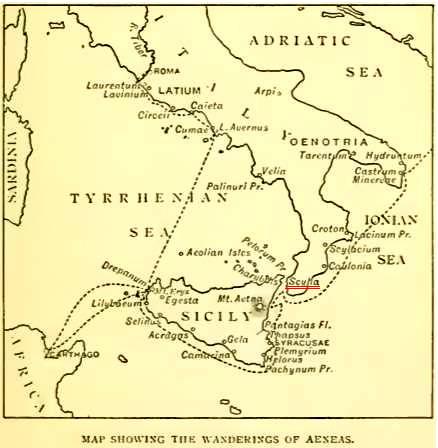
“In this voyage we passed through, at least touched, all those seas, which Horace and other poets sing of so often, as the Ionian, the Aegean, the Icarian, the Tyrrhene, with others, and now we are in the Adrian Sea, in the mouth whereof Venice stands like a gold ring in a bear’s muzzle. We passed also by Aetna, by the infames Scopulos, Acroceraunia, and through Scylla and Charybdis, about which the ancient poets, both Greek and Latin, keep such a coil, but they are nothing so horrid or dangerous, as they make them to be: they are two white keen-pointed rocks, that lie under water diametrically opposed, and like two dragons defying one another, and there are pilots, that in small shallops, are ready to steer all ships that pass. This amongst divers other, may serve for an instance that the old poets used to heighten and hoist up things by their airy fancies above the reality of truth.”

The Sickness of the Soul: Cicero on Irrational Hate

Cicero, Tusculan Disputations 5.25-6

“Furthermore, for these things it is believed that their opposites are born from fear, just as in hatred of women as in the Misogunos of Atilius or that against the whole race of humankind which we have heard that Timon who is called the Misanthrope felt or even being inhospitable. All these diseases of the soul develop from a special fear of those things which people fear and then hate. They define a disease of the soul, moreover, as a vehement belief about a thing which is not desired even though it is anticipated powerfully, a belief which is constant and deeply held.”

Quae autem sunt his contraria, ea nasci putantur a metu, ut odium mulierum, quale in Μισογύνῳ Atilii1 est, ut in hominum universum genus, quod accepimus de Timone, qui μισάνθρωπος appellatur, ut inhospitalitas est: quae omnes aegrotationes animi ex quodam metu nascuntur earum rerum, quas fugiunt et oderunt. Definiunt autem animi aegrotationem opinationem vehementem de re non expetenda, tamquam valde expetenda sit, inhaerentem et penitus insitam.

Royal 15 D V   f. 107v
2nd half of the 15th century, Royal MS 15 D V, f. 107v

Latin vs. Philology, Part XII

Francesco Filelfo, Letter to Lorenzo Medici (Part 12)

“We read in Cicero’s first book of Tusculan Disputations something like this: ‘Since bodies fell into the earth and were then covered by the ground [humus], from which we get the phrase ‘to bury’ [humari], they used to think that the rest of the life of the dead was led underground. Great errors have followed this opinion, and poets have increased them. A great crowd in the theater, in which crowd some women are to be found, is moved by hearing such a grand song: I am here and I have scarcely arrived from Acheron by a deep and arduous road, a cave strewn with the greatest suspended crags, where the thick smoke of the dead stands firm. So strong has the error grown, which seems to me to have been dispelled, that even though they knew that bodies were burned, they pretended that things happened in the underworld which could not occur nor be understood without physical bodies. Indeed, spirits living entirely of themselves could not be comprehended by the mind – they were seeking some kind of form and figure.’

And how came it that the women were so moved by those verses, nay even terrified, if they did not understand what was being recited?

Another tragedy was put on at the Ludi Apollinares, and Gnaeus Pompey was there with the rest of the people. In his presence, the tragedian Diphilus, as he came in the performance to the verse with the meaning, ‘He has grown great from your misery,’ did not fear to hold out his hands toward Pompey the Great and to pronounce the verse with great pity, and as he was called back by the people somewhat, again without any hesitation he did not cease to demonstrate that he was in the conduct of things a man of excessive and intolerable power, and he came to this verse employing the same perseverance, ‘There will come a time when you will greatly bewail that very virtue.’ Could Diphilus have been so frequently recalled by the people as though applauding if it had only poorly heard and understood what he was singing?”

Murderer of Gnaeus Pompeius Magnus, 106 BC - 48 BC, Pompey, (Murderer of Gnaeus Pompeius Magnus, 106 BC - 48 BC, Pompey, Pompey the Great, a military and...)

Legimus apud M. Tullium Ciceronem, libro primo Quaestionum Tusculanarum, huiusmodi verba: “In terram enim cadentibus corporibus iisque humo tectis, e quo dictum est humari, sub terra censebant reliquam vitam agi mortuorum. Quam eorum opinionem consecuti magni errores sunt, quos auxerunt poetae. Frequens enim consessus theatri in quo sunt mulierculae movetur audiens tam grande carmen: ‘Adsum atque advenio Acheronte vix via alta atque ardua, spelunca saxis structa asperis pendentibus maximis, ubi rigida constat crassa caligo inferum’. Tantumque invaluit error, qui mihi quidem iam sublatus videtur, ut corpora cremata cum scirent, tamen ea fieri apud inferos fingerent, quae sine corporibus neque fieri possent neque intelligi. Animos enim per se ipsos viventis non poterant mente complecti, formam aliquam figuramque quaerebant”.

Et quo pacto mulierculae versibus illis commotae essent, perinde atque perterritae, ni quae recitabantur intellexissent?

Agebatur alia tragoedia ludis Apollinaribus, intereratque una cum universo populo G. Pompeius Magnus. Quo quidem praesente non est veritus Diphilus tragoedus, cum inter agendum ad illum venisset versum quo sententia haec continebatur: “Miseria vestra magnus est”, directis in Pompeium Magnum manibus, miserabiliter eum pronunciare, ut aliquotiens revocatus a populo, sine ulla rursus cunctatione nimiae illum et intolerabilis potentiae rerum gestu perseveranter demonstrare non destitit, ad eum usque locum eadem usus perseverantia: “Virtutem istam, Veniet tempus cum graviter gemas”. Num Diphilus fuisset totiens a populo tanquam applaudenti revocatus, si minus quae canebantur et audisset et cognovisset?

Send Me Something Good to Read

Marcus Antoninus to Fronto, 161 CE

“…I have read just a little bit from Coelius and from a speech of Cicero, but pretty much in secret and only in bits. One worry trips over another so much that meanwhile my sole respite is to take a book to hand. For our young daughters are staying in town with Matidia—therefore they cannot come to visit me in the evening because of the sharpness of the air….[ …]

Send me something which seems to you to be particularly well-written so I may read it, either your own or someone from Cato, Cicero, Salust, Gracchus, or from some other poet—for I need a rest—and especially that kind of reading which will raise my spirit and shake me from the worries which have fallen over me. Also, if you have any excerpts from Lucretius or Ennius—euphonious lines or those which give a good sense of character.”

…<legi ex Coe>|lio paululum et ex Ciceronis oratione, sed quasi furtim, certe quidem raptim: tantum instat aliud ex alio curarum, quom interim requies una librum in manus sumere. Nam parvolae nostrae nunc apud Matidiam in oppido hospitantur: igitur vespera ad me ventitare non possunt propter aurae rigorem…

Mitte mihi aliquid quod tibi disertissimum videatur, quod legam, vel tuum aut Catonis aut Ciceronis aut Sallustii aut Gracchi aut poetae alicuius, χρῄζω γὰρ ἀναπαύλης, et maxime hoc genus, quae me lectio extollat et diffundat ἐκ τῶν κατειληφυιῶν φροντίδων; etiam si qua Lucretii aut Ennii excerpta habes εὔφωνα <στίχι>α1et sicubi ἤθους ἐμϕάσεις.

Opening of the 1483 manuscript copy of De rerum natura by Girolamo di Matteo de Tauris

Long Term Effects of Anger and Hate

Valerius Maximus, Memorable Words and Deeds 9.3. Praef.

“Anger, also, or hatred may inspire great waves of emotion in human hearts. The onset of the first is faster, but the second is more lasting in the desire to cause harm. Either feeling is full of turbulence and is never violent without some self-torture because it suffers pain when it wants to cause it, anxious from its bitter obsession that it might not win vengeance.

But there are the most clear examples of the particular property of these emotions which the gods themselves have desired be evident in famous individuals through something said or done rather rashly. Think of how great Hamilcar’s hate for the Roman people was! When he was gazing at his four sons when they were boys, he used to say that he was raising lion cubs of that number for the ruin of our empire! Instead, they converted their upbringing to the destruction of their own country, as it turned out.

That is how great the hate was in a boy’s heart, but it was equally fierce in a woman’s too. For the Queen of the Assyrians, Semiramis, when it was announced to her that Babylon was in rebellion as she was having her hair done, went out right away to put down the revolt with part of her hair still undone and she did not put her hair back in order before she regained power over the city. This is why there is a statue of her in Babylon where she is shown reaching for vengeance in wild haste.”

Ira quoque aut odium in pectoribus humanis magnos fluctus excitant, procursu celerior illa, nocendi cupidine hoc pertinacius, uterque consternationis plenus adfectus ac numquam sine tormento sui violentus, quia dolorem, cum inferre vult, patitur, amara sollicitudine ne non contingat ultio anxius. sed proprietatis eorum certissimae sunt imagines, quas <di> ipsi in claris personis aut dicto aliquo aut facto vehementiore conspici voluerunt.

Quam vehemens deinde adversus populum Romanum Hamilcaris odium! quattuor enim puerilis aetatis filios intuens, eiusdem numeri catulos leoninos in perniciem imperii nostri alere se praedicabat. digna nutrimenta quae in exitium patriae suae, ut evenit, <se> converterent!

ext. In puerili pectore tantum vis odii potuit, sed in muliebri quoque aeque multum valuit: namque Samiramis, Assyriorum regina, cum ei circa cultum capitis sui occupatae nuntiatum esset Babylona defecisse, altera parte crinium adhuc soluta protinus ad eam expugnandam cucurrit, nec prius decorem capillorum in ordinem quam urbem in potestatem suam redegit. quocirca statua eius Babylone posita est, illo habitu quo ad ultionem exigendam celeritate praecipiti tetendit.

Dishekel hispano-cartaginés-2.jpg
Carthaginian Coin

Art, Science, Humanity

Francis Kelsey, Is There A Science Of Classical Philology?

“I have spoken of classical philology a science; but do not misunderstand me, I mean no pyramid of bricks. Bit by bit evidence is collected, sifted, and pieced together; but larger combinations are effected, as in all sciences, by the constructive imagination, and a final test of every reconstruction of antiquity is its vitality. If we can gain the point of view of the Greek or the Roman, with his heredity, his atmosphere, his superstitions, his ambitions, his inquisitiveness, his sensitiveness to beauty of form, and his ethical ideals, Athens and Rome will for us be no longer peopled with lay figures, and we shall have taken a long step toward our goal.

In one respect the American classical student has a peculiar coign of vantage. From our kindred across the sea we have the tradition of the classics as humanities, that they should be read primarily to be enjoyed, and for their refining influence; thence, too, from time to time come books in our own tongue that manifest an appreciation of ancient literature so delicate and yet so deep that they are at the same time a revelation and an inspiration. But side by side with this humane ideal we have the scientific, introduced from the German university, which we have sought to superimpose upon the American college of English origin. The function of art in all its forms is to please ; and he who is lacking in appreciation of art whether manifested in the literary masterpiece or in the monument is thereby disqualified for the scientific study of either, because unable to comprehend its purpose. Herein lies the opportunity, the call of American classical scholarship, that it blend together into one both the humane ideal and the scientific, and thus create a new type, which shall be as strong in sympathy and appreciation as it is broad, exact, and thorough.”

Guillaume Budé and lady Philology writing the Institution of a Christian prince.

Latin vs. Philology: Part XI

Francesco Filelfo, Letter to Lorenzo Medici (Part 11)

“And what else does Cicero call popular and forensic speech except that which was vulgar and common to all? Before it had been degraded, learned and unlearned alike used it and it was called Latin.

Why then do we say that the people came together to the theater so that they could see, not so that they could hear and understand?

It appears that it was otherwise from the poet Terence, in the prologue to his Andria, when he writes, ‘Favor us, attend with a fair mind, and learn what’s going on here, so that you can see what hope is left: whether the new comedies which he writes are to be seen or driven off.’

He also says in the prologue of The Eunuch, ‘Therefore it is fair for you to recognize and pardon it if new poets do the things which the ancients did. Apply yourselves, and attend in silence, so that you can see what the Eunuch is about!’

Again, in the Adelphoe, that is The Brothers, ‘We are about to act it anew. Decide whether theft has been committed, or whether we have reprised something which was overlooked by negligence.

And finally, Terence in his Hecyra, by which stepfather is meant, left us this: ‘Hecyra is the name of this play. When this was given as a new play, a new fault and calamity intervened, so that it could neither be seen nor understood.’

Then, a bit later, ‘You’re acquainted with his other plays – please get a load of this one!’

He perhaps did not say said that comic poets are easier to understand because their writings do not differ much from prose: there is hardly a controversy about verse, but about Latinity, which I affirm (when it has not been corrupted) to have been both in common use and understood by everyone.

And so tragic verses are brought into the middle so that it appears that the people came to the theater not just to see, but far more to hear and to understand.”

Image result for francesco filelfo

Et quam aliam appellat Cicero orationem popularem et forensem, praeter eam quae et vulgaris erat et omnibus communis? Hac vero non depravata aeque docti indoctique utebantur, vocabaturque latina.

Quid ergo dicimus convenisse populum in theatrum ut spectaret, non ut audiret atque intelligeret?

Nam id secus esse patet ex Terentio poeta, in Andriae comoediae prologo, cum ait: “Favete, adeste aequo animo et rem cognoscite, Ut pernoscatis ecquid spei sit reliquum, Posthac quas faciet de integro comoedias, Spectandae an exigendae sint vobis prius”.
Et idem in Eunuchi prologo: “Qua re aequum est vos cognoscere atque ignoscere Quae veteres factitarunt si faciunt novi. Date operam, et cum silentio animadvertite Ut pernoscatis quid sibi Eunuchus velit”.

Terentius rursus in Adelphois, Adelphoes, hoc est fratribus: “Eam nos acturi sumus novam: pernoscite Furtumne factum existimetis an locum Reprehensum qui praeteritus negligentia est”.

Et ad postremum idem Terentius in Hekura, Ecyra, quo nomine socrus significatur, ita reliquit scriptum: “Ecyra est huic nomen fabulae. Haec cum data est Nova, novum intervenit vitium et calamitas Ut neque spectari neque cognosci potuerit”.
Et rursus paulo post: “Alias cognostis eius: quaeso hanc cognoscite”.

Et neque fortasse dixerit comicos poetas iccirco esse facilis intellectu, quod eorum scripta non multum discrepent a soluta oratione: haud de versu nobis est controversia, sed de latinitate, quam affirmo, ubi depravata non fuerit, et vulgarem extitisse et ab omnibus intellectam.

Itaque afferantur in medium versus etiam tragici, ut appareat convenisse populum in theatra non solum ut spectaret, verum multo magis quo et audiret et intelligeret.

Terence on His Haters

Terence, The Woman of Andros Prologue 15-23

“These people attack the poem and deny
That it is proper to ruin stories in this way.
But aren’t they showing that they understand nothing in being so clever?
When they criticize me, they accuse Naevius, Plautus and Ennius,
Those authorities I hold as my my own,
Since it is better to take their negligence as a model
Than to copy the pedantic diligence of those fools.
I warn them to be quiet from now on and stop
Talking shit unless they want to own up to their own failings.”

id isti vituperant factum atque in eo disputant
contaminari non decere fabulas.
faciuntne intellegendo ut nil intellegant?
qui quom hunc accusant, Naevium, Plautum, Ennium
accusant, quos hic noster auctores habet,
quorum aemulari exoptat neglegentiam
potius quam istorum obscuram diligentiam.
dehinc ut quiescant porro moneo et desinant
maledicere, malefacta ne noscant sua.


Aeriportus Virumque Cano: Trump’s Revolutionary War Airports

An ancient Roman fragment about Revolutionary War airports was discovered buried under a liquefied bag of parsley and several desiccated carrots in a vegetable drawer. Here is the Latin text that Trump translated and quoted in his Fourth of July speech. Latin transcribed by Dani Bostick. Translation by Donald Trump.

Nostri milites caelum complent. Partes arietis arietant.  Aeriportus occupant. Peragenda peragunt. Et in monte Capitrolino, per falaricarum cruentam lucem, nihil nisi victoriam habent. Et cum Aurora venit,  Signum Sideribus Splendens ferociter fluitat.

Our Army manned the air, it rammed the ram parts. It took over the airports. It did everything it had to do. And at Fort McHendry, under the rockets’ red glare, it had nothing but victory. And when dawn came, their Star Spangled Banner waved defiant.


Fort_McHenry_1812.jpg


Dead Languages a Mere Requirement

Charles Francis Adams, A College Fetich:

“But in pursuing Greek and Latin we had ignored our mother tongue. We were no more competent to pass a really searching examination in English literature and English composition than in the languages and literature of Greece and Rome. We were college graduates; and yet how many of us could follow out a line of sustained, close thought, expressing ourselves in clear, concise terms? The faculty of doing this should result from a mastery of well selected fundamentals. The difficulty was that the fundamentals were not well selected, and they had never been mastered. They had become a tradition. They were studied no longer as a means, but as an end, — the end being to get into college. Accordingly, thirty years ago there was no real living basis of a Harvard education. Honest, solid foundations were not laid. The superstructure, such as it was, rested upon an empty formula. The reason of all this I could not understand then, though it is clear enough to me now. I take it to be simply this: The classic tongues were far more remote from our world than they had been from the world our fathers lived in. They are much more remote from the world of to-day than they were from the world of thirty years ago.

The human mind, outside of the cloisters, is occupied with other and more pressing things. Especially is it occupied with a class of thoughts — scientific thoughts — which do not find their nutriment in the remote past. They are not in sympathy with it. Accordingly, the world turns more and more from the classics to those other and living sources, in which alone it finds what it seeks. Students come to college from the hearthstones of the modern world. They have been brought up in the new atmosphere. They are consequently more and more disposed to regard the dead languages as a mere requirement to college admission. This reacts upon the institution. The college does not change, — there is no conservatism I have ever met, so hard, so unreasoning, so impenetrable, as the conservatism of professional educators about their methods! — the college does not change, it only accepts the situation. The routine goes on, but superficiality is accepted as of course; and so thirty years ago, as now, a surface acquaintance with two dead languages was the chief requirement for admission to Harvard; and to acquiring it, years of school life were devoted.”

Engraving Photograph - Harvard University Campus 19th Century by Kean Collection