“The Cheapness of Our Tongue”: Three Latin Passages on Translation

Seneca the Elder, Contr. 9.14

“People who teach translation have never made a lot of money”

numquam magnas mercedes accepisse eos qui hermeneumata docerent.

Pliny, Letters C. Plinius Arrio Antonino Suo S.

“How could I give you a greater sign of how much I want to copy you and admire you than the fact that I am trying to translate your Greek epigrams to Latin? Still, this is a decline. I bring to it the feebleness of my own ability, and add to this the poverty, or what Lucretius calls “the cheapness of our own language.” Nevertheless, if these Latin translations of mine seem at all charming to you, you will know how much pleasure your Greek originals brought me! Farewell.”

Quemadmodum magis adprobare tibi possum, quanto opere mirer epigrammata tua Graeca, quam quod quaedam Latine aemulari et exprimere temptavi? in deterius tamen. Accidit hoc primum imbecillitate ingenii mei, deinde inopia ac potius, ut Lucretius ait, egestate patrii sermonis. Quodsi haec, quae sunt et Latina et mea, habere tibi aliquid venustatis videbuntur, quantum putas inesse iis gratiae, quae et a te et Graece proferuntur! Vale.

Cicero, de optime genere oratorum 18

“Two kinds of objections are possible for this task. The first is: “It is better in Greek.” One can answer such people by asking if they can make anything better in Latin. Another is: “Why should I read this translation rather than the Greek?” Well, the same people often embrace a Latin Andria, Synephebi, and even an Andromache, Antiope and Epigonoi. Why is there so much intolerance for speeches translated from Greek when there is none for translated poems?

Huic labori nostro duo genera reprehensionum opponuntur. Unum hoc: “Verum melius Graeci.” A quo quaeratur ecquid possint ipsi melius Latine? Alterum: “Quid istas potius legam quam Graecas?” Idem Andriam et Synephebos nec minus Andromacham aut Antiopam aut Epigonos Latinos recipiunt. Quod igitur est eorum in orationibus e Graeco conversis fastidium, nullum cum sit in versibus?
Image
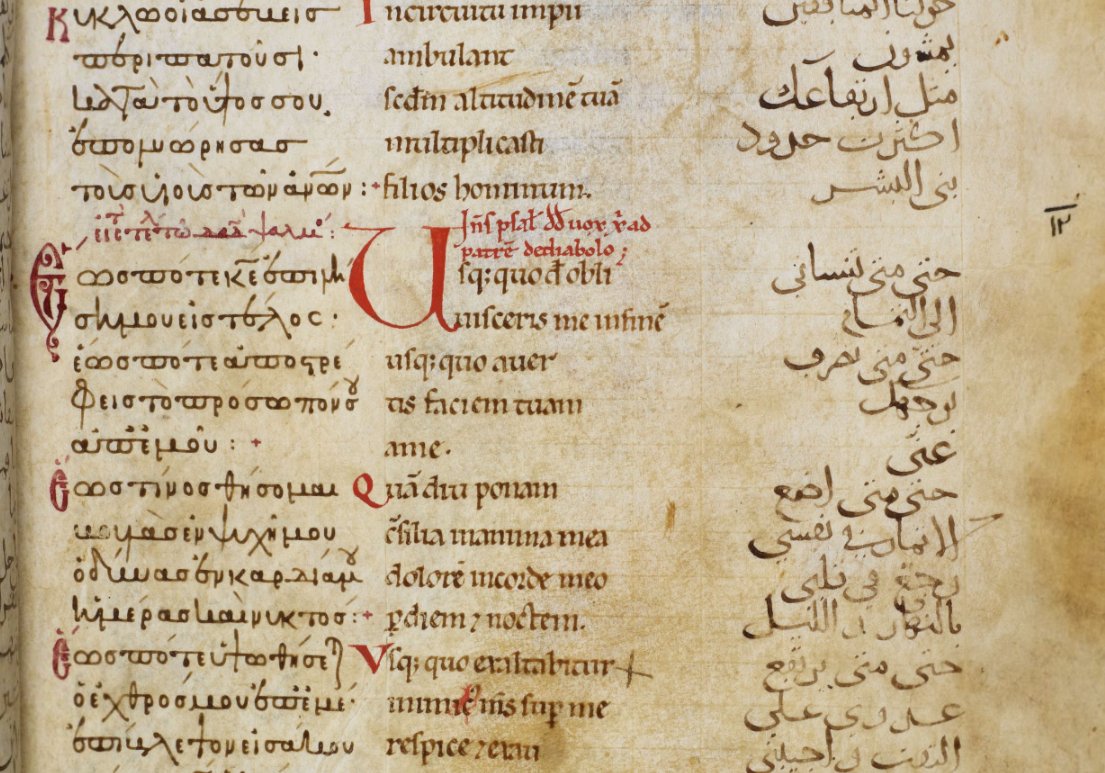
Greek, Latin and Arabic

The Highest Good: Friendship

Some Latin passages on Friendship

Seneca, De Tranquilitate Animi

“Still nothing lightens the spirit as much as sweet and faithful friendship. What a good it is when hearts have been made ready in which every secret may be safely deposited, whose understanding of yourself you worry about less than your own, whose conversation relieves your fear, whose opinion hastens your plans, whose happiness dispels your sadness, and whose very sight delights you!”

Nihil tamen aeque oblectaverit animum, quam amicitia fidelis et dulcis. Quantum bonum est, ubi praeparata sunt pectora, in quae tuto secretum omne descendat, quorum conscientiam minus quam tuam timeas, quorum sermo sollicitudinem leniat, sententia consilium expediat, hilaritas tristitiam dissipet, conspectus ipse delectet!

Image result for Ancient Roman Friendship

Boethius, On the Consolation of Philosophy 3.35

“The most sacred thing of all is friends, something not recorded as luck but as virtue, since the rest of the goods are embraced with a view toward power or pleasure.”

amicorum vero quod sanctissimum quidem genus est, non in fortuna sed in virtute numeratur, reliquum vero vel potentiae causa vel delectationis assumitur

Cicero, De Finibus 1.64

“A subject remains which is especially important to this debate, that is friendship which, as you believe, will completely disappear if pleasure is the greatest good. Concerning friendship, Epicurus himself says that of all the paths to happiness wisdom has prepared, there is none greater, more productive, or more enchanting than this one. And he did not advocate for friendship in speech alone but much more through his life, his deeds and his customs.

Myths of the ancients illustrate how great friendship is—in those tales however varied and numerous you seek from the deepest part of antiquity and you will find scarcely three pairs of friends, starting with Theseus and up to Orestes. But, Epicurus in one single and quite small home kept so great a crowd of friends united by the depth of their love. And this is still the practice among Epicureans.”

XX Restat locus huic disputationi vel maxime necessarius, de amicitia, quam si voluptas summum sit bonum affirmatis nullam omnino fore; de qua Epicurus quidem ita dicit, omnium rerum quas ad beate vivendum sapientia comparaverit nihil esse maius amicitia, nihil uberius, nihil iucundius. Nec vero hoc oratione solum sed multo magis vita et factis et moribus comprobavit. Quod quam magnum sit fictae veterum fabulae declarant, in quibus tam multis tamque variis, ab ultima antiquitate repetitis, tria vix amicorum paria reperiuntur, ut ad Orestem pervenias profectus a Theseo. At vero Epicurus una in domo, et ea quidem angusta, quam magnos quantaque amoris conspiratione consentientes tenuit amicorum greges! quod fit etiam nunc ab Epicureis.

Herodotus 5.24.2

“An intelligent and well-disposed friend is the finest of all possessions.”

κτημάτων πάντων ἐστὶ τιμιώτατον ἀνὴρ φίλος συνετός τε καὶ εὔνοος

You Know What You Should Do More? THINK ABOUT DEATH!

Petrarch, Secretum 3.17:

Don’t let the abundance of days and the contrived distinction of the age fool you. All of human life, however much it may be extended, is like a single day, and not even a whole one. You should frequently call back to mind Aristotle’s comparison, which I noticed pleases you a lot, and which you can scarcely read or hear without it making a real impression on your mind. You can find it put in more sparkling language (and certainly more apt to persuade) in Cicero’s Tusculan Disputations: ‘Aristotle says that certain little beasts which live for only one day are born near the Hypanis, which flows from part of Europe into the Black Sea. One of these who dies at sunrise dies as a youth; one who dies at noon has already achieved an advanced age; but one who departs at the setting of the sun dies old, especially if it is the solstice. Compare the entirety of our life with eternity, and we will be found to exist for just as short a time as that animal.’

This claim seems to me so true that it was diffused from the mouths of philosophers into common use. For have you not seen that even rude and ignorant people have drawn it into their daily parlance, as when they see a boy and say, ‘The sun rises for him,’ then see a man and say, ‘He’s reaching noon, and that guy is at his ninth hour,’ and when they see an old person, ‘That guy has come all the way to the evening and sunset of his life.’ I would then, my dear boy, having you revolve these things in your mind along with anything else of the sort which occurs to you (and I have no doubt that there is much of it). But these are the things which have obtruded themselves upon me at the moment. I beg you for one thing further. Contemplate with more diligence the graves of the ancients, but of those who lived with you, in the certainty that the very same seat and eternal reception hall will be prepared for you. All of us bend our course that way. This is the final home for everyone.


Trionfo della morte, già a palazzo sclafani, galleria regionale di Palazzo Abbatellis, palermo (1446) , affresco staccato.jpg
The Triumph of Death, fresco in Palermo

Nec te fallat dierum pluralitas et etatis operosa distinctio: tota hominum vita, quantumlibet extendatur, diei unius instar habet, eiusque vix integri. Crebro ante oculos revoca aristotelicam quandam similitudinem, quam animadverti tibi admodum placere, vixque unquam sine gravi mentis impulsu legi solere vel audiri; quam clariori eloquio et ad persuadendum aptiori in Tusculano quidem a Cicerone relatam invenies, aut his verbis aut profecto similibus, neque enim libri nunc illius copia est “Apud Hypanim” inquit “fluvium, qui ab Europe parte in Pontum influit, bestiolas quasdam nasci scribit Aristotiles, que unum diem vivant; harum que oriente sole moritur, iuvenis moritur; que vero sub meridie, iam etate provectior, at que sole occidente senex abit, eoque magis si solstitiali die. Confer universam etatem nostram cum eternitate, in eadem propemodum brevitate reperiemur ac ille”. Que quidem assertio meo iudicio tam vera est, ut ex ore philosophorum iampridem in vulgus diffusa sit. Nunquid enim rudes etiam et ignaros homines in quotidiani sermonis usum deduxisse vides, ut puerum aspicientes dicant: “Huic sol oritur”, virum autem: “Hic meridiem attigit; hic nonam”; senem vero decrepitum: “Ad vesperam atque ad solis occasum iste pervenit”. Hec igitur, fili carissime, tecum volve et, siqua huius generis occurrunt alia, que multa esse non dubito; sed hec erant que ex tempore se se obtulerunt. Unum preterea obsecro. Sepulcra veterum, sed eorum qui tecum vixere, diligentius, contemplare, certus eandem tibi sedem ac perennem aulam fore preparatam. Tendimus huc omnes. Hec est domus ultima cuntis.

Grammar & Music

Quintilian, Institutio Oratoria 1.10:

Let us move on to the fact that grammar and music were once conjoined. Indeed, Archytas and Euenus thought that grammar was subject to music, and Sophron (a writer of mimes, one of whom Plato approved so much that he is thought to have had his books under his pillow when he was dying) has shown that each of these men was a professor of both music and grammar. Eupolis makes the same point: he says that Prodamus taught both music and literature, and that Maricas (that is, Hyperbolus) confessed that he knew nothing of music but the literary part of it.

Even Aristophanes in one of his books demonstrates that boys were formerly accustomed to be educated thus, and among Menander’s writings we have the old man in Hypobolimaeus, who in trying to explain to a father asking his son for the reason for all of the expense which he had laid out on his education, responded that he had paid out a load of money on dancing and geometry.

Hence came the habit of passing a lyre around after dinner at parties. When Themistocles confessed that he was unable to play the instrument, he was (to use the words of Cicero) considered a bit uneducated.

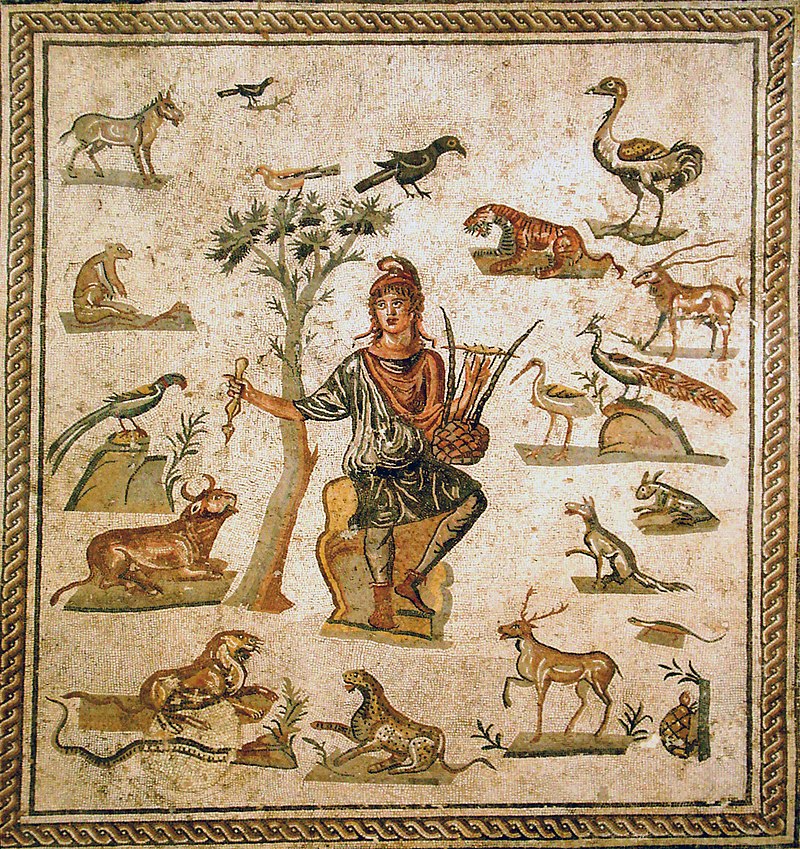
DSC00355 - Orfeo (epoca romana) - Foto G. Dall'Orto.jpg
Professor Orpheus will now move on to grammar.

transeamus igitur id quoque, quod grammatice quondam ac musice iunctae fuerunt; siquidem Archytas atque Euenus etiam subiectam grammaticen musicae putaverunt, et eosdem utriusque rei praeceptores fuisse cum Sophron ostendit, mimorum quidem scriptor sed quem Plato adeo probavit, ut suppositos capiti libros eius, cum moreretur, habuisse credatur, tum Eupolis, apud quem Prodamus et musicen et litteras docet, et Maricas, qui est Hyperbolus, nihil se ex musice scire nisi litteras confitetur.

Aristophanes quoque non uno libro sic institui pueros antiquitus solitos esse demonstrat, et apud Menandrum in Hypobolimaeo senex, qui reposcenti filium patri velut rationem impendiorum, quae in educationem contulerit, exponens, psaltis se et geometris multa dicit dedisse.

unde etiam ille mos, ut in conviviis post cenam circumferretur lyra; cuius cum se imperitum Themistocles confessus esset ut verbis Ciceronis utar, est habitus indoctior.

Pity the Cruel

Boethius, Consolation 3.140-150

“Evil people themselves, too, if they were allowed to catch some sight of the virtue they left through a small imperfection, and they could note that they would put down the filth of their vices thanks to the tortures of their punishments, once they weighed them against the value of acquiring goodness, they would not consider them torturous at all, but they would refuse the aid of defense attorneys and surrender themselves fully to their accusers and judges.

If this happened, there would be no place among wise men any longer for hatred. For who hates good people except for complete fools? But hating the wicked lacks reason too. For if, just as feeling faint is a sickness of the body, in the same way vice is a kind of sickness of minds. And since we should think those sick in body worthy less of hatred than of pity, so much more should those who are sick in mind not be attacked but be pitied, those whose minds are afflicted by a wickedness more cruel than any frailty.”

Ipsi quoque improbi, si eis aliqua rimula virtutem relictam fas esset aspicere vitiorumque sordes poenarum cruciatibus se deposituros viderent, compensatione adipiscendae probitatis nec hos cruciatus esse ducerent defensorumque operam repudiarent ac se totos accusatoribus iudicibusque permitterent. Quo fit ut apud sapientes nullus prorsus odio locus relinquatur. Nam bonos quis nisi stultissimus oderit? Malos vero odisse ratione caret. Nam si, uti corporum languor, ita vitiositas quidam est quasi morbus animorum, cum aegros corpore minime dignos odio sed potius miseratione iudicemus, multo magis non insequendi sed miserandi sunt quorum mentes omni languore atrocior urget improbitas.

Image result for boethius

Tipsy Tuesday: Some BULLSHIT Advice on Temperance

Aeneas Silvius Piccolomini, On the Education of Boys (19):

Since the delight of taste holds back many people in both drink and in food, you should take care that you don’t become fond either of drinking too much or drinking wine which is too good. You should avoid every drink which can make you drunk. Let your drinking be moderate, of the sort which will not depress the mind, but will bear away your thirst. Nothing is more shameful than a boy who is keen on wine. ‘The use of wine,’ according to Valerius, ‘was unknown to Roman women at one time.’ What about the boys? Shall we suffer the minds of our boys to go fully Dionysian, or shall we destroy the rising mind with undiluted drink? Though it be entirely unpardonable in Teutonic custom to mix water with wine, I can in no way be persuaded that strong wine should ever be placed at a boy’s table unless it be corrected with the addition of water.

File:Monk sneaking a drink.jpg
British Library manuscript Sloane 2435, f. 44v.

Verum, cum delectatio gustus plerosque non minus in potu quam in cibo detineat, cavendum est, tibi ne vel multi bibulus vel optimi bibulus fias. Omnem quae potest inebriare potionem vitabis. Sit moderata bibitio; non quae mentem gravet, sed quae sitim auferat. Multum succi in pueris est; lacte sunt et sanguine pleni raroque sitim sentiunt. Appetitore vini puero nihil turpius est. ‘Usus vini’ sicut Valerius ait, ‘Romanis olim feminis ignotus fuit.’ Quid pueris? Feremusne puerorum bacchari mentes aut vini surgentem ingenii iugulabimus mero? Quamvis Teutonico more nefas sit aquam misceri vino, mihi tamen nulla ratione persuasum fuerit fumosum vinum, nisi aqua castigatum, puerorum mensis apponi debere.

Charlatans With Unjustified Confidence and Unmeasured Words

M. Cornelius Fronto to Marcus Aurelius (c. 139 CE)

“I believe that a lack of experience and learning is completely preferable in all arts to partial experience and incomplete education. For one who knows that he has no experience in an art tries less and fails less thanks to that. In fact, such hesitation limits arrogance. But whenever anyone uses knowing something lightly as expertise he makes many mistakes because of false confidence.

So, people claim that it is better to never taste Philosophy than to sample it lightly, as it is said, with just the lips. Those men turn out to be the most malicious kind, who travel to a discipline’s entrance and turn away rather than going completely inside. It is still possible in other arts that you can play a part for a while and seem experienced in what you do not know. But in how to choose and arrange words, one shines through immediately when he cannot provide any words but those that show his ignorance of them, that he judges them poorly, provides them rashly, and cannot know either their usage or their strength.”

1. Omnium artium, ut ego arbitror, imperitum et indoctum omnino esse praestat quam semiperitum ac semidoctum. Nam qui sibi conscius est artis expertem esse minus adtemptat, eoque minus praecipitat; diffidentia profecto audaciam prohibet. At ubi quis leviter quid cognitum pro comperto | ostentat, falsa fiducia multifariam labitur. Philosophiae quoque disciplinas aiunt satius esse numquam adtigisse quam leviter et primoribus, ut dicitur, labiis delibasse, eosque provenire malitiosissimos, qui in vestibulo artis obversati prius inde averterint quam penetraverint. Tamen est in aliis artibus ubi interdum delitescas et peritus paulisper habeare quod nescias. In verbis vero eligendis conlocandisque ilico dilucet, nec verba dare diu quis1 potest, quin se ipse indicet verborum ignarum esse, eaque male probare et temere existimare et inscie contrectare, neque modum neque pondus verbi internosse.


Image result for Head of Mercury Pompeii wall painting
Fresco, Mercury (Pompeii)


Life In Exchange for Burning Your Books?

The following piece from the elder Seneca (Yes, Seneca the Elder, not the Younger) is based upon the imaginary story that Marcus Antonius offered to preserve Cicero’s life in exchange for the destruction of all his books. 

Seneca the Elder, Suasoria 7

Cicero Deliberates whether to burn all his writings since Antony has promised his safety if he did so

Deliberat Cicero an scripta sua conburat, promittente Antonio incolumitatem si fecisset, 11

Here the conditions [of the agreement] were intolerable. For nothing is so intolerable as to burn up the proofs of your own genius. In addition, this was an insult to the Roman people, whose language Cicero had elevated so that their eloquence outstripped the knowledge of arrogant Greece as much as their fortune in war. This would be a crime against humanity! Cicero would regret breaths bought at so high a price, since he would have to grow old as a slave using his eloquence only for one thing: praising Antony. This was a wretched sentence: to be granted life, but surrender genius.

Pompeius Silo proceeded to argue that Antony was not negotiating but instead was mocking Cicero. This was a not a condition, it was an insult: For even after the books were burned he would still kill him. Antony was not so foolish that he believed that burning the books was a concern to Cicero, a man whose writings were already famous over the whole world. Antony did not seek this thing he could do himself, unless of course he did not have the power over Cicero’s books which he had over Cicero. He sought nothing other than to kill Cicero after reducing him to a state of shame because he had spoken bravely and often about his contempt for death. Hence, Antony was not giving him life on a condition, but he was seeking his death in dishonor. Thus, Cicero ought to suffer bravely now what he would certainly suffer later in shame.

Hic condiciones intolerabiles. <Nihil tam intolerabile> esse quam monumenta ingenii sui ipsum exurere. Iniuriam illum facturum populo Romano, cuius linguam huc ipse extulisset ut insolentis Graeciae studia tanto antecederet eloquentia quantofortuna; iniuriam facturum generi humano. Paenitentiam illum acturum tam care spiritus empti, cum in servitute senescendum fuisset <et> in hoc unum eloquentia utendum, ut laudaret Antonium. Male cum illo agi: dari vitam, eripi ingenium.

Silo Pompeius sic egit ut diceret Antonium non pacisci sed inludere: non esse illam condicionem sed contumeliam; combustis enim libris nihilominus occisurum; non esse tam stultum Antonium ut putaret ad rem pertinere libros a Cicerone conburi, cuius scripta per totum orbem terrarum celebrarentur, nec hoc petere eum, quod posset ipse facere, nisi forte non esset in scripta Ciceronis ei ius cui esset in Ciceronem; quaeri nihil aliud quam ut ille Cicero multa fortiter de mortis contemptu locutus ad turpes condiciones perductus occideretur. Antonium illi non vitam cum condicione promittere, sed mortem sub infamia quaerere. Itaque quod turpiter postea passurus esset, nunc illum debere fortiter pati.


Image result for Ancient Rome Cicero and Marcus Antonius
Not a fan of Cicero.

Read Greek & Latin for Gastrointestinal Health

Pliny, Letters 9.36:

Around the fourth or fifth hour of the day, (you know, the time was not certain and clearly marked off) as the day urged me, I took myself into the colonnade or the covered portico, where I would think on the rest and dictate my thoughts. I get up into my carriage. There too I do the same thing as when walking or lying down; my application to my work continues, renewed even by this change. I take a little nap, then I walk, then I read aloud a Greek or Latin oration clearly and with attention less for the sake of my voice than for the sake of my stomach; of course, the voice still gains just as much from this exercise.

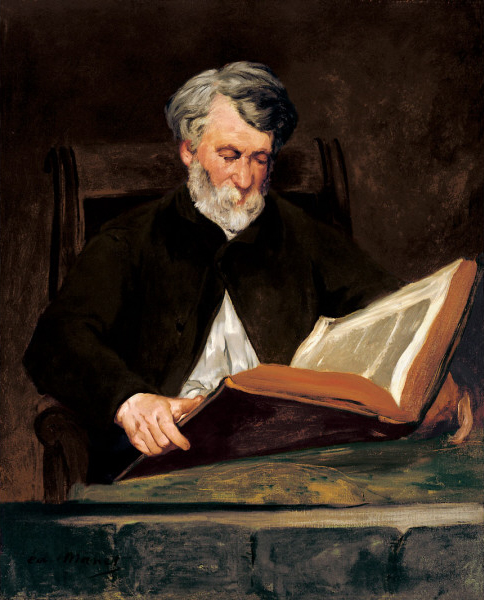
File:Edouard Manet - The Reader.jpg
Edouard Manet, The Reader

Ubi hora quarta vel quinta – neque enim certum dimensumque tempus -, ut dies suasit, in xystum me vel cryptoporticum confero, reliqua meditor et dicto. Vehiculum ascendo. Ibi quoque idem quod ambulans aut iacens; durat intentio mutatione ipsa refecta. Paulum redormio, dein ambulo, mox orationem Graecam Latinamve clare et intente non tam vocis causa quam stomachi lego; pariter tamen et illa firmatur.

Research Advice: Exercise. Then Read and Write in Turns

Seneca, Moral Epistles 84

“I believe that these journeys which remove my languor are good for both my strength and my researches. How they profit my health is clear: my love of literature makes me lazy, neglectful of my body. On a journey, I may exercise incidentally.

I can show you how this helps my research too. But I in no way take a break from reading. My reading, I believe, is necessary: first, it ensures I will not be satisfied with myself as I am; second, once I have understood what others have learned, I may judge what has been discovered and what still must be thought out.

Reading feeds the mind and replenishes it when it is worn from studying—even though it is not without work itself. We should not restrict ourselves to writing or to reading:  endless writing saps our strength and then exhausts it. Too much reading can puff up or dilute our ability. Most commendable is to take them in their turn, to mix one with the other, so that the seeds of one’s reading may be grown anew with the pen.”

Itinera ista, quae segnitiam mihi excutiunt, et valitudini meae prodesse iudico et studiis. Quare valitudinem adiuvent, vides: cum pigrum me et neglegentem corporis litterarum amor faciat, aliena opera exerceor; studio quare prosint, indicabo: a lectionibus nihil recessi. Sunt autem, ut existimo, necessariae, primum ne sim me uno contentus; deinde ut, cum ab aliis quaesita cognovero, tum et de inventis iudicem et cogitem de inveniendis. Alit lectio ingenium et studio fatigatum, non sine studio tamen, reficit. Nec scribere tantum nec tantum legere debemus; altera res contristabit vires et exhauriet, de stilo dico, altera solvet ac diluet. Invicem hoc et illo commeandum est et alterum altero temperandum, ut quicquid lectione collectum est, stilus redigat in corpus.

I was reminded of this passage while contemplating Paul Holdengraber’s regular injunction not to read bad writing:

Seneca offers good advice for anyone working on a long project, but especially for graduate students or anyone working on a thesis.  As we have mentioned before, this resonates with Leonardo de Bruni’s warning about reading trash. Of course, the statement should probably be tempered by Pliny the Elder’s suggestion that “no book is so bad it doesn’t have something to offer”.

Related image