Scholarship vs. Skill

Thomas De Quincey, Confessions of an English Opium Eater:

I return to my own inaugural examination. On this day, memorable to myself, as furnishing the starting- point for so long a series of days, saddened by haughty obstinacy on one side, made effective by folly on the other, no sooner had my guardian retired, than Mr. Lawson produced from his desk a volume of the Spectator, and instructed me to throw into as good Latin as I could some paper of Steele’s — not the whole, but perhaps a third part. No better exercise could have been devised for testing the extent of my skill as a Latinist.

And here I ought to make an explanation. In the previous edition of these Confessions, writing sometimes too rapidly, and with little precision in cases of little importance, I conveyed an impression which I had not designed, with regard to the true nature of my pretensions as a Grecian; and something of the same correction will apply to that narrower accomplishment which was the subject of my present examination.

Neither in Greek nor in Latin was my knowledge very extensive; my age made that impossible; and especially because in those days there were no decent guides through the thorny jungles of the Latin language, far less of the Greek. When I mention that the Port Royal Greek Grammar translated by Dr. Nugent was about the best key extant in English to the innumerable perplexities of Greek diction; and that, for the res metrica, Moreli’s valuable Thesaurus, having then never been reprinted, was rarely to be seen, the reader will conclude that a schoolboy’s knowledge of Greek could not be other than slender. Slender indeed was mine. Yet stop! What was slender? Simply my knowledge of Greek; for that knowledge stretches by tendency to the infinite; but not therefore my command of Greek. The knowledge of Greek must always hold some gross proportion to the time spent upon it, probably, therefore, to the age of the student; but the command over a language, the power of adapting it plastically to the expression of your own thoughts, is almost exclusively a gift of nature, and has very little connection with time.

Take the supreme trinity of Greek scholars that flourished between the English Revolution of 1688 and the beginning of the nineteenth century — which trinity I suppose to be confessedly, Bentley, Valckenaer, and Porson — such are the men, it will be generally fancied, whose aid should be invoked, in the event of our needing some eloquent Greek inscription on a public monument. I am of a different opinion. The greatest scholars have usually proved to be the poorest composers in either of the classic languages. Sixty years ago, we had, from four separate doctors, four separate Greek versions of Gray’s Elegy all unworthy of the national scholarship. Yet one of these doctors was actually Porson’s predecessor in the Greek chair at Cambridge. But as he (Dr. Cooke) was an obscure man, take an undeniable Grecian, of punctilious precision — viz., Richard Dawes, the well-known author of the  Miscellanea Critica. This man, a very martinet in the delicacies of Greek composition, — and who should have been a Greek scholar of some mark, since often enough he flew at the throat of Richard Bentley, — wrote and published a specimen of a Greek Paradise Lost, and also two most sycophantic idyls addressed to George II on the death of his ‘august’ papa. It is difficult to imagine anything meaner in conception or more childish in expression than these attempts. Now, against them I will stake in competition a copy of iambic verses by a boy, who died, I believe, at sixteen — viz., a son of Mr. Pitt’s tutor, Tomline, Bishop of Winchester. Universally I contend that the faculty of clothing the thoughts in a Greek dress is a function of natural sensibility, in a great degree disconnected from the extent or the accuracy of the writer’s grammatical skill in Greek.

Divine Truth and Mortal Belief

Parmenides, Fr. D4

“Greetings! No evil fate sent you to journey
By this road—for indeed it is far off from mortal paths—
But it was Law and Justice. You need to learn everything:
Both the immovable heart of persuasive Truth
And the beliefs of mortals which have no true faith.
But you should also learn these things too: how beliefs
Must be credible because they pervade all things.”

χαῖρ’, ἐπεὶ οὔτι σε μοῖρα κακὴ προὔπεμπε νέεσθαι
τήνδ’ ὁδόν (ἦ γὰρ ἀπ’ ἀνθρώπων ἐκτὸς πάτου ἐστίν),
ἀλλὰ Θέμις τε Δίκη τε. χρεὼ δέ σε πάντα πυθέσθαι
ἠμὲν Ἀληθείης εὐπειθέος ἀτρεμὲς ἦτορ
ἠδὲ βροτῶν δόξας, ταῖς οὐκ ἔνι πίστις ἀληθής.
ἀλλ’ ἔμπης καὶ ταῦτα μαθήσεαι, ὡς τὰ δοκοῦντα
χρῆν δοκίμως εἶναι διὰ παντὸς πάντα *περῶντα.

*περῶντα also appears as περ ὄντα. This variant reading might mean something like “even when they are completely true”.

This passage with its reference to the isolated path and the distinction between mortal belief and immortal truth reminds me of Hesiod:

Theogony 26-28

“Rustic shepherds, wretched reproaches, nothing but bellies,
We know how to say many lies similar to the truth
And we know how to speak the truth when we want to.”

“ποιμένες ἄγραυλοι, κάκ’ ἐλέγχεα, γαστέρες οἶον,
ἴδμεν ψεύδεα πολλὰ λέγειν ἐτύμοισιν ὁμοῖα,
ἴδμεν δ’ εὖτ’ ἐθέλωμεν ἀληθέα γηρύσασθαι.”

Odyssey 19.203

“He was like someone speaking many lies similar to the truth

ἴσκε ψεύδεα πολλὰ λέγων ἐτύμοισιν ὁμοῖα·

Elsewhere on this blog and in forthcoming work I explore this as the difference between coherence and correspondence in memory. Here it seems clearly to be on the surface a difference between mortal and divine ways of seeing. These domains do not cancel each other out….

Busto di Parmenide.jpg
Bust of Parmenides from Wikimedia Commons

Against Mosquitoes, A Love Poem

Greek Anthology 5.151: Meleager to Zenophila, his lover

“Sharp-buzzing mosquitoes, shameless suckers
Of human blood, wing-borne predators of the night,
I beg you to leave Zenophila alone for a while to sleep
In peace. Come here, fill yourselves on my limbs.
Ah, but why do I uselessly cry out loud: Unfeeling beasts
Also delight to find warmth in her delicate skin.
But I am warning you, evil things, do not be bold
Or you will learn the power of my envious hands.”

5.151 ΜΕΛΕΑΓΡΟΥ
εἰς Ζηνοφίλαν τὴν αὐτοῦ ἐρωμένην
Ὀξυβόαι κώνωπες, ἀναιδέες αἵματος ἀνδρῶν
σίφωνες, νυκτὸς κνώδαλα διπτέρυγα,
βαιὸν Ζηνοφίλαν, λίτομαι, πάρεθ᾽ ἥσυχον ὕπνῳ
εὕδειν, τἀμὰ δ᾽, ἰδού, σαρκοφαγεῖτε μέλη.
καίτοι πρὸς τί μάτην αὐδῶ; καὶ θῆρες ἄτεγκτοι
τέρπονται τρυφερῷ χρωτὶ χλιαινόμενοι.
ἀλλ᾽ ἔτι νῦν προλέγω, κακὰ θρέμματα, λήγετε τόλμης,
ἢ γνώσεσθε χερῶν ζηλοτύπων δύναμιν.

These are bees, but they are still terrifying. From bestiary.ca

Thinking of Classical Parallels

E.M. Forster, The Longest Journey (Chp. 4):

Mr. Pembroke remarked to himself that Frederick was improving.

“If a man shoots straight and hits straight and speaks straight, if his heart is in the right place, if he has the instincts of a Christian and a gentleman—then I, at all events, ask no better husband for my sister.”

“How could you get a better?” he cried. “Do you remember the thing in ‘The Clouds’?” And he quoted, as well as he could, from the invitation of the Dikaios Logos, the description of the young Athenian, perfect in body, placid in mind, who neglects his work at the Bar and trains all day among the woods and meadows, with a garland on his head and a friend to set the pace; the scent of new leaves is upon them; they rejoice in the freshness of spring; over their heads the plane-tree whispers to the elm, perhaps the most glorious invitation to the brainless life that has ever been given.

“Yes, yes,” said Mr. Pembroke, who did not want a brother-in-law out of Aristophanes. Nor had he got one, for Mr. Dawes would not have bothered over the garland or noticed the spring, and would have complained that the friend ran too slowly or too fast.

“And as for her—!” But he could think of no classical parallel for Agnes. She slipped between examples. A kindly Medea, a Cleopatra with a sense of duty—these suggested her a little. She was not born in Greece, but came overseas to it—a dark, intelligent princess. With all her splendour, there were hints of splendour still hidden—hints of an older, richer, and more mysterious land. He smiled at the idea of her being “not there.” Ansell, clever as he was, had made a bad blunder. She had more reality than any other woman in the world.

Socrates in a basket.jpg

Libanius, Upon Facing Another Monday

Libanius, Autobiography 246

“And the affair followed and these were my fears, leaving me with a desire for nothing but death. And my conversations with everyone nearby were about this as were my prayers to the gods. One who mentioned baths was my enemy; anyone who mentioned dinner was my enemy.

And I fled in exile from the books which contained the classical texts of my toil; I fled from writing and composition of my lectures. I lost my ability to speak even though my students were shouting for me. Whenever I tried, I was taken off track like a boat facing an opposing wind. Even though they harbored hopes of hearing me, I still went silent. My doctors were telling me to seek healing somewhere else because there were no medicines for these kinds of ills in their craft.”

καὶ εἵπετο δὲ τὸ ἔργον, φόβοι τε ἐκεῖνοι καὶ πλὴν τελευτῆς οὐδενὸς ἐπιθυμία. ἀλλὰ περὶ τούτου λόγοι τε πρὸς τοὺς ἀεὶ παρόντας εὐχαί τε πρὸς θεούς. ἐχθρὸς μὲν ὁ λουτροῦ μεμνημένος, ἐχθρὸς δὲ ὁ δείπνου, καὶ φυγὴ ἀπὸ βιβλίων ἐν οἷς οἱ τῶν ἀρχαίων πόνοι, φυγὴ δὲ ἀπὸ γραφῆς τε καὶ ποιήσεως λόγων, κατελέλυτο δὲ τὸ λέγειν, καὶ ταῦτα τῶν νέων βοαῖς τοῦτο ἀπαιτούντων. ὁπότε γὰρ δὴ πρὸς αὐτὸ γιγνοίμην ἀπεφερόμην ὥσπερ ἀκάτιον ἐναντίῳ πνεύματι, καὶ οἱ μὲν εἶχον ἀκροάσεως ἐλπίδας, ἐγὼ δ᾿ ἂν1ἐσίγων. ἰατροὶ δὲ τὴν τούτων ἴασιν ἄλλοθι ζητεῖν ἐκέλευον, ὡς οὐκ ὄντων σφίσι τῶν τοιούτων ἐν τῇ τέχνῃ φαρμάκων.

mondays

Curricular Compulsion

Roger Ascham, The Scholemaster:

Yes forsothe: as wise as they be, either in other mens opinion, or in their owne conceite, I will bring the contrarie iudgement of him, who, they them selues shall confesse, was as wise as they are, or else they may be iustlie thought to haue small witte at all: and that is Socrates, whose iudgement in Plato is plainlie this in these wordes: which, bicause they be verie notable, I will recite them in his owne tong, ouden mathema meta douleias chre manthanein: οὐδὲν μάθημα μετὰ δουλείας τὸν ἐλεύθερον χρὴ μανθάνειν. οἱ μὲν γὰρ τοῦ σώματος πόνοι βίᾳ πονούμενοι χεῖρον οὐδὲν τὸ σῶμα ἀπεργάζονται, ψυχῇ δὲ βίαιον οὐδὲν ἔμμονον μάθημα: in Englishe thus, No learning ought to be learned with bondage: For bodelie labors, wrought by compulsion, hurt not the bodie: but any learning learned by compulsion, tarieth not long in the mynde: And why? For what soeuer the mynde doth learne vnwillinglie with feare, the same it doth quicklie forget without care.

And lest proude wittes, that loue not to be contraryed, but haue lust to wrangle or trifle away troth, will say, that Socrates meaneth not this of childrens teaching, but of som other higher learnyng, heare, what Socrates in the same place doth more plainlie say: Μὴ τοίνυν βίᾳ, εἶπον, ὦ ἄριστε, τοὺς παῖδας ἐν τοῖς μαθήμασιν ἀλλὰ παίζοντας τρέφε, that is to say, and therfore, my deare frend, bring not vp your children in learning by compulsion and feare, but by playing and pleasure. And you, that do read Plato, as ye shold, do well perceiue, that these be no Questions asked by Socrates, as doutes, but they be Sentences, first affirmed by Socrates, as mere trothes, and after, giuen forth by Socrates, as right Rules, most necessarie to be marked, and fitte to be folowed of all them, that would haue children taughte, as they should.

And in this counsell, iudgement, and authoritie of Socrates I will repose my selfe, vntill I meete with a man of the contrarie mynde, whom I may iustlie take to be wiser, than I thinke Socrates was. Fonde scholemasters, neither can vnderstand, nor will folow this good counsell of Socrates, but wise ryders, in their office, can and will do both: which is the onelie cause, that commonly, the yong ientlemen of England, go so vnwillinglie to schole, and run so fast to the stable: For in verie deede fond scholemasters, by feare, do beate into them, the hatred of learning, and wise riders, by ientle allurements, do breed vp in them, the loue of riding. They finde feare, & bondage in scholes, They feele libertie and freedome in stables: which causeth them, vtterlie to abhore the one, and most gladlie to haunt the other. And I do not write this, that in exhorting to the one, I would dissuade yong ientlemen from the other: yea I am sorie, with all my harte, that they be giuen no more to riding, then they be: For, of all outward qualities, to ride faire, is most cumelie for him selfe, most necessarie for his contrey, and the greater he is in blood, the greater is his praise, the more he doth excede all other therein. It was one of the three excellent praises, amongest the noble ientlemen the old Percians, Alwaise to say troth, to ride faire, and shote well: and so it was engrauen vpon Darius tumbe, as Strabo beareth witnesse.

    Darius the king, lieth buried here,

          Who in riding and shoting had neuer peare.

But, to our purpose, yong men, by any meanes, leesing the loue of learning, whan by tyme they cum to their owne rule, they carie commonlie, from the schole with them, a perpetuall hatred of their master, and a continuall contempt of learning. If ten Ientlemen be asked, why they forget so sone in Court, that which they were learning so long in schole, eight of them, or let me be blamed, will laie the fault on their ill handling, by their scholemasters.

Roger Ascham - Project Gutenberg eText 12788.png

Blessed Isles and Denial: Some Etymological Notes

Photios, Lexikon, Μακάρων νῆσος

“the Isle of the Blessed. The Acropolis of Boiotian Thebes in ancient times, according to Armenidas.”

Μακάρων νῆσος· ἡ ἀκρόπολις τῶν ἐν Βοιωτίαι Θηβῶν τὸ παλαιόν, ὡς ᾽Αρμεν<ί>δας.

Hesychius s.v. βουλεψίη

“Boulepsiê: This word is in Xanthos. For he says that when they give birth to a male, they gouge out his eyes with their own hands.”

βουλεψίη· ἡ λέξις παρὰ Ξάνθωι. λέγει δὲ τὰς ᾽Αμαζόνας ἐπειδὰν τέκωσιν ἄρρεν, ἐξορύσσειν αὐτοῦ τοὺς ὀφθαλμοὺς αὐτοχειρίαι.

BNJ 453 F 1a (=Etym. Magn. S.v. ῞Αρνη)

“Arnê: A nymph and nurse of Poseidon. The nymph Sinoessa is also named Arnê, reportedly, because when she received Poseidon from Rhea to raise him, she denied it (aparnêsato) when Kronos came asking about him. For this she was called Arnê [denial]. That’s the account of Theseus in the third book of his Korinthian Affairs.”

῎Αρνη· νύμφη, τροφὸς Ποσειδῶνος. εἴρηται δὲ καὶ ῎Αρνη ἡ νύμφη Σινόεσσα καλουμένη, ὅτι τὸν Ποσειδῶνα λαβοῦσα παρὰ τῆς ῾Ρέας ἐκτρέφειν, πρὸς τὸν Κρόνον ζητοῦντα ἀπηρνήσατο, καὶ ἐντεῦθεν ῎Αρνη ὠνομάσθη. οὕτω Θησεὺς ἐν Κορινθιακῶν τρίτωι.

Hieronymus Löschenkohl Joseph II. im Elysium.jpg
Hieronymus Löschenkohl (1753–1807): Ankunft Josephs II. in Elysium, kolorierter Stich, 1790

Poetry’s Manifest Superiority

Sir Phlip Sidney, The Defense of Poesy:

And first, truly, to all them that, professing learning, inveigh against poetry, may justly be objected that they go very near to ungratefulness, to seek to deface that which, in the noblest nations and languages that are known, has been the first light-giver to ignorance, and first nurse, whose milk by little and little enabled them to feed afterwards of tougher knowledges. And will they now play the hedgehog, that, being received into the den, drove out his host? Or rather the vipers, that with their birth kill their parents? Let learned Greece in any of her manifold sciences be able to show me one book before Musæus, Homer, and Hesiod, all three nothing else but poets. Nay, let any history be brought that can say any writers were there before them, if they were not men of the same skill, as Orpheus, Linus, and some other are named, who, having been the first of that country that made pens deliver of their knowledge to their posterity, may justly challenge to be called their fathers in learning. For not only in time they had this priority—although in itself antiquity be venerable—but went before them as causes, to draw with their charming sweetness the wild untamed wits to an admiration of knowledge. So as Amphion was said to move stones with his poetry to build Thebes, and Orpheus to be listened to by beasts,—indeed stony and beastly people. So among the Romans were Livius Andronicus and Ennius; so in the Italian language the first that made it aspire to be a treasure-house of science were the poets Dante, Boccace, and Petrarch; so in our English were Gower and Chaucer, after whom, encouraged and delighted with their excellent foregoing, others have followed to beautify our mother-tongue, as well in the same kind as in other arts.

This did so notably show itself, that the philosophers of Greece durst not a long time appear to the world but under the masks of poets. So Thales, Empedocles, and Parmenides sang their natural philosophy in verses; so did Pythagoras and Phocylides their moral counsels; so did Tyrtæus in war matters, and Solon in matters of policy; or rather they, being poets; did exercise their delightful vein in those points of highest knowledge which before them lay hidden to the world. For that wise Solon was directly a poet it is manifest, having written in verse the notable fable of the Atlantic Island which was continued by Plato. And truly even Plato whosoever well considers, shall find that in the body of his work though the inside and strength were philosophy, the skin as it were and beauty depended most of poetry. For all stands upon dialogues; wherein he feigns many honest burgesses of Athens to speak of such matters that, if they had been set on the rack, they would never have confessed them; besides his poetical describing the circumstances of their meetings, as the well-ordering of a banquet, the delicacy of a walk, with interlacing mere tales, as Gyges’ Ring and others, which who knows not to be flowers of poetry did never walk into Apollo’s garden.

And even historiographers, although their lips sound of things done, and verity be written in their foreheads, have been glad to borrow both fashion and perchance weight of the poets. So Herodotus entitled his history by the name of the nine Muses; and both he and all the rest that followed him either stole or usurped of poetry their passionate describing of passions, the many particularities of battles which no man could affirm, or, if that be denied me, long orations put in the mouths of great kings and captains, which it is certain they never pronounced.

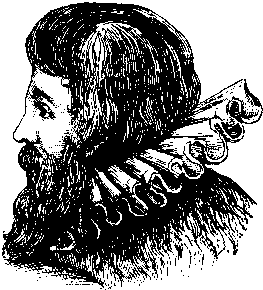
Sir Philip Sidney from NPG.jpg

A Poem to a Jug of Wine

Greek Anthology 5.135 Anonymous

“Curved, well-turned, with a single ear on a long neck,
Slim-throated, speaking through lips close-kept,
You happy server of Bacchus, the Muses, and Aphrodite,
Our party’s delightful mistress, laughing sweetly.
Why are you drunk when I’m sober, but when I’m trashed,
You’re sober? You break the rules of the drinker’s pact.”

εἰς λάγυνον ὁμοίως οἰνηράν

Στρογγύλη, εὐτόρνευτε, μονούατε, μακροτράχηλε,
ὑψαύχην, στεινῷ φθεγγομένη στόματι,
Βάκχου καὶ Μουσέων ἱλαρὴ λάτρι καὶ Κυθερείης,
ἡδύγελως, τερπνὴ συμβολικῶν ταμίη,
5τίφθ᾽, ὁπόταν νήφω, μεθύεις σύ μοι, ἢν δὲ μεθυσθῶ,
ἐκνήφεις; ἀδικεῖς συμποτικὴν φιλίην.


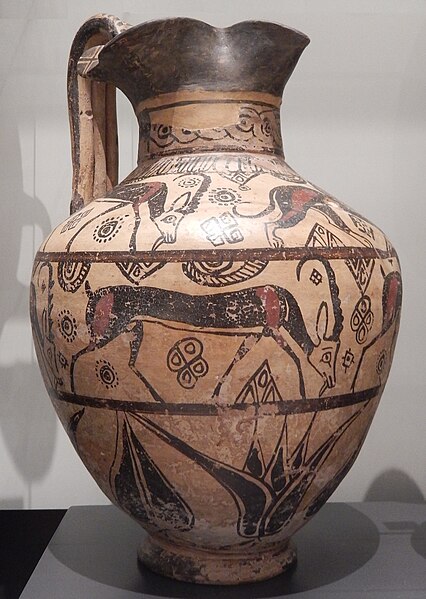
File:East Greek wine jug in Wild Goat style.jpg
Wild Goat Style Greek Wine Jug, 6th Century BCE

Tom Paxton, “Bottle of Wine” (1968)

Bottle of wine, fruit of the vine
When you gonna let me get sober
Leave me along, let me go home
I wann’a go back and start over

Screwing Up, Some Proverbs

Euripides, Hippolyus 916

“Oh humanity! You pointlessly fuck up so often!”

ὦ πόλλ᾽ ἁμαρτάνοντες ἄνθρωποι μάτην


Arsenius, Proverbs 68a

“If one must screw up, it is more righteous to die unjustly than to kill unjustly”

Εἰ δέοι τι ἁμαρτεῖν, τὸ ἀδίκως ἀπολῦσαι ὁσιώτερον τοῦ
ἀδίκως ἀπολέσαι.

12 97a

“A person who does the most messes up the most.”

῾Ο πλεῖστα πράσσων πλεῖστ’ ἁμαρτάνει βροτῶν.

13 39 h

“You can’t fuck-up twice in a war

Οὐκ ἔστιν ἐν πολέμῳ δὶς ἁμαρτάνειν


Lysias, fr. 267 [=Stobaeus 3.12.20]

“Lying the easiest thing for those who mess up frequently.”

Ψεύδεσθαι προχειρότατον τοῖς πολλάκις ἁμαρτάνουσιν.


Michael Apostolios, Proverbs

1.70

“A citizen’s screw-up is the state’s shame”

Αἰσχύνη πόλεως πολίτου ἁμαρτία: ἐξ ἀποφθέγματος.


8.52

“A nail for a nail. Also, to hammer a nail with a nail. This is for those who try to fix a mistake with another one.

῟Ηλος τὸν ἧλον: καί· Πάτταλος τὸν πάτταλον
ἐξέκρουσεν: ἐπὶ τῶν ἰωμένων δι’ ἁμαρτήματος ἁμάρτημα.

File:Northern France or Flanders, St. Omer or Thèrouanne, 14th century - Leaf from a Psalter- Initial D- A Fool Rebuked by God - 2011.55 - Cleveland Museum of Art.tif
God rebukes a fool