“What Kinds of Things Are Roses”: More Poems from Nossis

Yesterday I posted some fragments from Nossis. Here are some more.

Greek Anthology, 6. 265

“Reverent Hera, who often comes down
From the sky to gaze upon your fragrant Lakinian home.
Take the linen robe which Theophilos, the daughter of Kleokha
Wove for you with the help of her noble daughter Nossis.”

Ἥρα τιμήεσσα, Λακίνιον ἃ τὸ θυῶδες
πολλάκις οὐρανόθεν νεισομένα καθορῇς,
δέξαι βύσσινον εἷμα, τό τοι μετὰ παιδὸς ἀγαυᾶς
Νοσσίδος ὕφανεν Θευφιλὶς ἁ Κλεόχας.

6.138

“These weapons the Brettian men hurled down from their unlucky shoulders
As they were overcome by the hands of the fast-battling Lokrians.
They are dedicated here singing the Lokrians glory in the temple of the gods.
They don’t long at all for the hands of the cowards they abandoned.”

Ἔντεα Βρέττιοι ἄνδρες ἀπ᾿ αἰνομόρων βάλον ὤμων,
θεινόμενοι Λοκρῶν χερσὶν ὕπ᾿ ὠκυμάχων,
ὧν ἀρετὰν ὑμνεῦντα θεῶν ὑπ᾿ ἀνάκτορα κεῖνται,
οὐδὲ ποθεῦντι κακῶν πάχεας, οὓς ἔλιπον.

7.414

“Pass by me, give an honest laugh, and speak over me
A loving word. I am Rhintho from Syracuse,
A minor nightingale of the Muses. But from my tragic
Nonsense poems, I made my own ivy crown.”

Καὶ καπυρὸν γελάσας παραμείβεο, καὶ φίλον εἰπὼν
ῥῆμ᾿ ἐπ᾿ ἐμοί. Ῥίνθων εἴμ᾿ ὁ Συρακόσιος,
Μουσάων ὀλίγη τις ἀηδονίς· ἀλλὰ φλυάκων
ἐκ τραγικῶν ἴδιον κισσὸν ἐδρεψάμεθα.

Greek Anthology, 5.170

“There is nothing sweeter than love: all other blessings
Take second place. I even spit honey from my mouth.
This is what Nossis says. Whomever Kypris has not kissed,
Does not understand her flowers, what kinds of things roses are.”

Ἅδιον οὐδὲν ἔρωτος· ἃ δ᾽ ὄλβια, δεύτερα πάντα
ἐστίν· ἀπὸ στόματος δ᾽ ἔπτυσα καὶ τὸ μέλι.
τοῦτο λέγει Νοσσίς· τίνα δ᾽ ἁ Κύπρις οὐκ ἐφίλασεν,
οὐκ οἶδεν τήνας τἄνθεα, ποῖα ῥόδα.

Greek Anthology, 9.604

“This frame has the picture of Thaumareta. The painter
Caught the form and the age of the soft-glancing woman well.
Your house dog, the little puppy, would paw at you if she saw this,
Believing that she was looking down at the lady of her home.”

Θαυμαρέτας μορφὰν ὁ πίναξ ἔχει· εὖ γε τὸ γαῦρον
τεῦξε τό θ᾿ ὡραῖον τᾶς ἀγανοβλεφάρου.
σαίνοι κέν σ᾿ ἐσιδοῖσα καὶ οἰκοφύλαξ σκυλάκαινα,
δέσποιναν μελάθρων οἰομένα ποθορῆν.

Sappho’s Equal? Some Epigrams Assigned to the Poet Nossis

Nossis is one of the best attested woman poets from the ancient world. Don’t feel bad if you haven’t heard of her.

Greek Anthology, 6.353

“Melinna herself is here. Look how her pure face
Seems to glance gently at me.
How faithfully she looks like her mother in every way.
Whenever children equal their parents it is beautiful.”

Αὐτομέλιννα τέτυκται· ἴδ᾿ ὡς ἀγανὸν τὸ πρόσωπον
ἁμὲ ποτοπτάζειν μειλιχίως δοκέει·
ὡς ἐτύμως θυγάτηρ τᾷ ματέρι πάντα ποτῴκει.
ἦ καλὸν ὅκκα πέλῃ τέκνα γονεῦσιν ἴσα.

7.718

“Stranger, if you sail to the city of beautiful dances, Mytilene,
The city which fed Sappho, the the Graces’ flower,
Tell them that the land of Lokris bore for the Muses
A woman her equal, by the name of Nossis. Go!”

Ὦ ξεῖν᾿, εἰ τύ γε πλεῖς ποτὶ καλλίχορον Μυτιλάναν,
τὰν Σαπφὼ χαρίτων ἄνθος ἐναυσαμέναν,
εἰπεῖν, ὡς Μούσαισι φίλαν τήνᾳ τε Λοκρὶς γᾶ
τίκτεν ἴσαν ὅτι θ᾿ οἱ τοὔνομα Νοσσίς· ἴθι.

6.275

“I expect that Aphrodite will be pleased to receive
As an offering from Samutha, the band that held her hair.
For it is well made and smells sweetly of nektar,
That very nektar she uses to anoint beautiful Adonis.”

Χαίροισάν τοι ἔοικε κομᾶν ἄπο τὰν Ἀφροδίταν
ἄνθεμα κεκρύφαλον τόνδε λαβεῖν Σαμύθας·
δαιδαλέος τε γάρ ἐστι, καὶ ἁδύ τι νέκταρος ὄσδει,
τοῦ, τῷ καὶ τήνα καλὸν Ἄδωνα χρίει.

9.332

“Let’s leave for the temple and go to see Aphrodite’s
Sculpture—how it is made so finely in gold.
Polyarkhis dedicated it after she earned great
wealth from the native glory of her body.”

Ἐλθοῖσαι ποτὶ ναὸν ἰδώμεθα τᾶς Ἀφροδίτας
τὸ βρέτας, ὡς χρυσῷ διαδαλόεν τελέθει.
εἵσατό μιν Πολυαρχίς, ἐπαυρομένα μάλα πολλὰν
κτῆσιν ἀπ᾿ οἰκείου σώματος ἀγλαΐας.

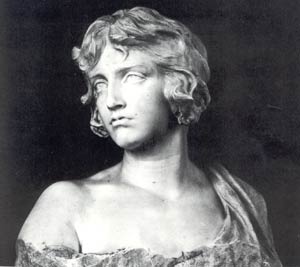
Nossis.jpg
Bust by Francesco Jerace

Tacitus on Germanic Standards for Women and Child-Rearing

Some of the rhetoric here seems a bit familiar...

Tacitus, Germania 19-20

In that country, no one finds vice amusing; nor is seducing or being seduced celebrated as a sign of the times. Even better are those communities where only virgins marry and a promise is made with the hope and vow of a wife. And so, they have only one husband just as each has one body and one life so that there may be no additional thought of it, no lingering desire, that they may not love the man so much as they love the marriage. It is considered a sin to limit the number of children or to eliminate the later born. There good customs are stronger than good laws.

There are children there naked and dirty in every house growing into the size of limbs and body at which we wonder. Each mother nourishes each child with her own breasts; they are not passed around to maids and nurses.”

nemo enim illic vitia ridet, nec corrumpere et corrumpi saeculum vocatur. melius quidem adhuc eae civitates, in quibus tantum virgines nubunt et cum spe votoque uxoris semel transigitur. sic unum accipiunt maritum quo modo unum corpus unamque vitam, ne ulla cogitatio ultra, ne longior cupiditas, ne tamquam maritum, sed tamquam matrimonium ament. numerum liberorum finire aut quemquam ex agnatis necare flagitium habetur, plusque ibi boni mores valent quam alibi bonae leges.In omni domo nudi ac sordidi in hos artus, in haec corpora, quae miramur, excrescunt. sua quemque mater uberibus alit, nec ancillis aut nutricibus delegantur.

Image result for medieval manuscript Tacitus germania

Festivals for Women and Different Marriage Customs

Paradoxographus Vaticanus, 25-28, 45

25 “Among the Iberians there is a tribe [and] and in a certain festival they honor women with gifts, however so many demonstrate at that time that they can weave the most numerous and beautiful cloaks.”

Παρὰ τοῖς ῎Ιβηρσιν ἔθνος ἐστὶ ἐν ἑορτῇ τινι τὰς γυναῖκας τιμῶν δώροις, ὅσαι ἂν πλεῖστα καὶ κάλλιστα ἱμάτια ὑφήνασαι τότε ἐπιδείξωσιν.

26 “Among the Krobuzoi it is the custom to mourn when an infant is born and consider the one who dies lucky”

Παρὰ Κροβύζοις ἔθος ἐστὶ τὸ μὲν γεννώμενον βρέφος θρηνεῖν, τὸν δὲ θανόντα εὐδαιμονίζειν.

27 “Among the Nasamoi in Libya it is the custom that on the first day a woman is married that she has sex with everyone who is present and then take gifts from them. After that, she has sex only with the one who marries her.”

Παρὰ Νασαμῶσι τοῖς ἐν Λιβύῃ νόμος ἐστὶ τὴν γαμουμένην τῇ πρώτῃ ἡμέρᾳ συγγίνεσθαι πᾶσι τοῖς παροῦσι καὶ παρ’ αὐτῶν δῶρα λαμβάνειν καὶ μετὰ τοῦτο τῷ γήμαντι μόνῳ μίγνυσθαι.

28 “The women of the Sauromatoi do not get married unless they kill an enemy man.”

Αἱ τῶν Σαυροματῶν γυναῖκες οὐ πρότερον γαμοῦνται, ἂν μὴ ἄνδρα κτάνωσι πολέμιον.

45 “The Liburnians have shared wives and they raise their children in common for five years. When they make it to the eighth year, they compare the children for their similarity to the men and they distribute to each one who is similar. And that one keeps him as a son.”

Λιβύρνιοι κοινὰς τὰς γυναῖκας ἔχουσι καὶ τὰ τέκνα ἐν κοινῷ τρέφουσι μέχρι ἐτῶν πέντε· εἶτα τῷ ἔκτῳ συνενέγκαντες ἅπαντα τὰ παιδία τὰς ὁμοιότητας πρὸς τοὺς ἄνδρας εἰκάζουσι, καὶ ἑκάστῳ τὸν ὅμοιον ἀποδιδόασι, καὶ λοιπὸν ἐκεῖνος ὡς υἱὸν ἔχει.

51 “The Assyrians sell their daughters in the marketplace to whoever wants to settle down with them. First the most well-born and most beautiful and then the rest in order. Whenever they get to the least attractive, they announce how much someone is willing to take to live with them and they add this consolation price from the fee charged for the desirable girls to these [last ones].”

᾿Ασσύριοι τὰς παρθένους ἐν ἀγορᾷ πωλοῦσι τοῖς θέλουσι συνοικεῖν, πρῶτον μὲν τὰς εὐγενεστάτας καὶ καλλίστας, εἶτα τὰς λοιπὰς ἐφεξῆς· ὅταν δὲ ἔλθωσι ἐπὶ τὰς φαυλοτάτας, κηρύττουσι πόσον τις θέλει προσλαβὼν ταύταις συνοικεῖν, καὶ τὸ συναχθὲν ἐκ τῆς τῶν εὐπρεπῶν τιμῆς ταύταις προστίθενται [ταῖς παρθένοις].

Image result for ancient greek wedding

Cleobulina’s Poetic Riddles

The following is not really a single poem but rather a collection of lines cited in Athenaeus, Plutarch and others and attributed to Cleobulina

Cleobulina fr. 3.1

“I have seen a man fashioning bronze on another man with fire
Fitting it so well that he joined them in the blood.
I saw a man stealing and deceiving violently—
To accomplish this with violence is the most just thing.
A donkey corpse struck me on the ear with its horny shin.”

ἄνδρ’ εἶδον πυρὶ χαλκὸν ἐπ’ ἀνέρι κολλήσαντα
οὕτω συγκόλλως ὥστε σύναιμα ποιεῖν.
ἄνδρ’ εἶδον κλέπτοντα καὶ ἐξαπατῶντα βιαίως,
καὶ τὸ βίαι ῥέξαι τοῦτο δικαιότατον.
κνήμηι νεκρὸς ὄνος με κερασφόρωι οὖας ἔκρουσεν·

These lines are poetic riddles: the first one, according to Athenaeus, is about using a cupping glass to draw blood to the surface of the skin) the last one is about a Phrygian flute (which was made from a donkey bone)

Cleobulina 4bpblogspotcomk3VU9hBtRk0T5b6PfaiZzIAAAAAAA

Sulpicia’s Song, At Last

The poems of Sulpicia are translated on Diotima. Note: in a particularly characteristic treatment, the Loeb digital library does not have a separate author entry for Sulpicia. Here is a nice summary about her with a few bibliographical links.

Sulpicia 13 (= Tib. 3.13)

 “At last, love is here—and the story I might have told to hide it
Would have caused me more shame than laying it bare.
Cytherea brought him right to me once I overwhelmed her
with my songs. Then  she put him right in my lap.

She promised it and she did it. Let anyone tell the tale of my laughter
if they happen to have none of their own
I would never want to trust notes to anyone to sealed tablets,
Just in case someone else reads them before my love.

Ah, it is a pleasure to ‘sin’ and exhausting to hide my face
For rumor’s sake. Let me be known as a worthy woman with her worthy man.”

Tandem venit amor, qualem texisse pudori
quam nudasse alicui sit mihi fama magis.
exorata meis illum Cytherea Camenis
attulit in nostrum deposuitque sinum.
exsolvit promissa Venus: mea gaudia narret,
dicetur si quis non habuisse sua.
non ego signatis quicquam mandare tabellis,
ne legat id nemo quam meus ante, velim,
sed peccasse iuvat, vultus componere famae
taedet: cum digno digna fuisse ferar.

Martial, 10.35

“All girls who desire to please one man
Should read Sulpicia.
All husbands who desire to please one wife
Should read Sulpicia.
She doesn’t write the rage of the Colchian woman
Or repeat the dinners of dire Thyestes.
She doesn’t believe there ever was a Scylla, or Byblis
But she teaches chaste and honest love,
And games, both sweet and a little naughty.
Anyone who judges her poems well
Will say that there never was a cleverer girl,
There never was a girl more reverent!
I think that the jokes of Egeria
In Numa’s dark cave were something like this.
You would have been more humble and learned
With Sulpicia as a teacher or a peer, Sappho:
But if he had seen her by your side,
Harsh Phaon would have loved Sulpicia.
Uselessly: for she would not be wife of the Thunderer
Nor girlfriend to Bacchus or Apollo
Should she live after her Calenus was taken away.”

Omnes Sulpiciam legant puellae,
Uni quae cupiunt viro placere;
Omnes Sulpiciam legant mariti,
Uni qui cupiunt placere nuptae.
Non haec Colchidos adserit furorem 5
Diri prandia nec refert Thyestae;
Scyllam, Byblida nec fuisse credit:
Sed castos docet et probos amores,
Lusus, delicias facetiasque.
Cuius carmina qui bene aestimarit, 10
Nullam dixerit esse nequiorem,
Nullam dixerit esse sanctiorem.
Tales Egeriae iocos fuisse
Udo crediderim Numae sub antro.
Hac condiscipula vel hac magistra 15
Esses doctior et pudica, Sappho:
Sed tecum pariter simulque visam
Durus Sulpiciam Phaon amaret.
Frustra: namque ea nec Tonantis uxor
Nec Bacchi nec Apollinis puella 20
Erepto sibi viveret Caleno.

Martial is not referring to the first Sulpicia (whose poetry is recorded with that of Tibullus, book 3) but a second Sulpicia from the time of Domitian.


Français 599, fol. 72

Telesilla: Argive Woman, Warrior Poet

From Pausanias,  2.20.8-10

“Beyond the theater is the shrine of Aphrodite. In front of the foundation is a stele on which Telesilla, a poet of lyric, is depicted. Her books are tossed near her feet while she looks at the helmet she holds in her hand as she is about to put it on her head. Telesilla was famous among women and especially honored for her poetry.

But a greater story about her comes from when the Argives were bested by Kleomenes the son of Alexandrides and the Lakedaimonians. Some Argives died during the battle itself and however many fled to the grove of Ares died there too—at first they left the grove under an armistice but they realized they were deceived and were burned with the rest in the grove. As a result, Kleomenes led the Spartans to an Argos bereft of men.

But Telesilla stationed on the wall of the city all the slaves who were unable to bear arms because of youth or old age and, after collecting however many weapons had been left in homes or in the shrines, she armed all the women at the strongest age and once she had armed herself they took up posts were the army was going to attack.

When the Spartans came near and the women were not awestruck by their battle-cry but waited and were fighting bravely, then the Spartans, because they reasoned that if they killed the women the victory would be ill-rumored even as their own defeat would come with great insult, yielded to the women.

The Pythian priestess had predicted this contest earlier in the prophecy relayed by Herodotus who may or may not have understood it (6.77):

But when the female conquers the male
And drives him away and wins glory for the Argives,
It will make many Argive women tear their cheeks.

These are the words of the oracle on the women’s accomplishment.”

ὑπὲρ δὲ τὸ θέατρον ᾿Αφροδίτης ἐστὶν ἱερόν, ἔμπροσθεν δὲ τοῦ ἕδους Τελέσιλλα ἡ ποιήσασα τὰ ᾄσματα ἐπείργασται στήλῃ· καὶ βιβλία μὲν ἐκεῖνα ἔρριπταί οἱ πρὸς τοῖς ποσίν, αὐτὴ δὲ ἐς κράνος ὁρᾷ κατέχουσα τῇ χειρὶ καὶ ἐπιτίθεσθαι τῇ κεφαλῇ μέλλουσα. ἦν δὲ ἡ Τελέσιλλα καὶ ἄλλως ἐν ταῖς γυναιξὶν εὐδόκιμος καὶ μᾶλλον ἐτιμᾶτο ἔτι ἐπὶ τῇ ποιήσει. συμβάντος δὲ ᾿Αργείοις ἀτυχῆσαι λόγου μειζόνως πρὸς Κλεομένην τὸν ᾿Αναξανδρίδου καὶ Λακεδαιμονίους, καὶ τῶν μὲν ἐν αὐτῇ πεπτωκότων τῇ μάχῃ, ὅσοι δὲ ἐς τὸ ἄλσος τοῦ ῎Αργου κατέφευγον διαφθαρέντων καὶ τούτων, τὰ μὲν πρῶτα ἐξιόντων κατὰ ὁμολογίαν, ὡς δὲ ἔγνωσαν ἀπατώμενοι συγκατακαυθέντων τῷ ἄλσει τῶν λοιπῶν, οὕτω τοὺς Λακεδαιμονίους Κλεομένης ἦγεν ἐπὶ ἔρημον ἀνδρῶν τὸ ῎Αργος. Τελέσιλλα δὲ οἰκέτας μὲν καὶ ὅσοι διὰ νεότητα ἢ γῆρας ὅπλα ἀδύνατοι φέρειν ἦσαν, τούτους μὲν πάντας ἀνεβίβασεν ἐπὶ τὸ τεῖχος, αὐτὴ δὲ ὁπόσα ἐν ταῖς οἰκίαις ὑπελείπετο καὶ τὰ ἐκ τῶν ἱερῶν ὅπλα ἀθροίσασα τὰς ἀκμαζούσας ἡλικίᾳ τῶν γυναικῶν ὥπλιζεν, ὁπλίσασα δὲ ἔτασσε κατὰ τοῦτο ᾗ τοὺς πολεμίους προσιόντας ἠπίστατο. ὡς δὲ <ἐγγὺς> ἐγίνοντο οἱ Λακεδαιμόνιοι καὶ αἱ γυναῖκες οὔτε τῷ ἀλαλαγμῷ  κατεπλάγησαν δεξάμεναί τε ἐμάχοντο ἐρρωμένως, ἐνταῦθα οἱ Λακεδαιμόνιοι, φρονήσαντες ὡς καὶ διαφθείρασί σφισι τὰς γυναῖκας ἐπιφθόνως τὸ κατόρθωμα ἕξει καὶ σφαλεῖσι μετὰ ὀνειδῶν γενήσοιτο ἡ συμφορά, ὑπείκουσι ταῖς γυναιξί. πρότερον δὲ ἔτι τὸν ἀγῶνα τοῦτον προεσήμηνεν ἡ Πυθία, καὶ τὸ λόγιον εἴτε ἄλλως εἴτε καὶ ὡς συνεὶς ἐδήλωσεν ῾Ηρόδοτος·

ἀλλ’ ὅταν ἡ θήλεια τὸν ἄρρενα νικήσασα
ἐξελάσῃ καὶ κῦδος ἐν ᾿Αργείοισιν ἄρηται,
πολλὰς ᾿Αργείων ἀμφιδρυφέας τότε θήσει.

τὰ μὲν ἐς τὸ ἔργον τῶν γυναικῶν ἔχοντα τοῦ χρησμοῦ ταῦτα ἦν·

Telesilla

Plutarch, On the Virtues of Women 245d-f6 reports a version of this tale; the Suda (s.v. Telesilla) likely takes its account from Pausanias.

“Telesilla, a poetess. On a stele her books are tossed around and she has placed a helmet on her head. And When the Lakedaimonians slaughtered the Argives who had fled to a shrine and were heading to the city to sack it, then Telesilla armed the women of the right age and set them against where they were marching. When the Lakedaimonians saw this, they turned back because they believed it shameful to fight against women whom it would be inglorious to conquer but a great reproached to be defeated by….” [the oracle is listed next”

Τελέσιλλα, ποιήτρια. ἐπὶ στήλης τὰ μὲν βιβλία ἀπέρριπτε, κράνος δὲ τῇ κεφαλῇ περιέθηκε. καὶ γὰρ ὅτε Λακεδαιμόνιοι τοὺς ἐν τῷ ἱερῷ τοῦ ῎Αργους καταφυγόντας διέφθειρον καὶ πρὸς τὴν πόλιν ᾔεσαν ὡς αἱρήσοντες, τότε Τελέσιλλα τὰς ἐν ἡλικίᾳ γυναῖκας ὁπλίσασα ὑπήντησεν οἷ προσῄεσαν. ὅπερ ἰδόντες οἱ Λακεδαιμόνιοι ἐς τοὐπίσω ὑπέστρεψαν, αἰσχρὸν νομίσαντες γυναιξὶ πολεμεῖν, ἃς καὶ τὸ νικᾶν ἄδοξον καὶ ἡττᾶσθαι μέγα ὄνειδος. ἐς τοῦτο καὶ ὁ χρησμὸς πεπλήρωτο, ᾿Αργείοις λέγων· ἀλλ’ ὅταν ἡ θήλεια τὸν ἄρρενα νικήσασα ἐξελάσῃ καὶ κῦδος ᾿Αργείοισιν ἄρηται, πολλὰς ᾿Αργείων ἀμφιδρυφέας τότε θήσει.

The extant fragments of Telesilla are not much to work with (each line is a separate fragment:

ἁ δ’ ῎Αρτεμις, ὦ κόραι,

φεύγοισα τὸν ᾿Αλφεόν

φιληλιάς,

†βελτιώτας

δῖνον.

οὐλοκίκιννε

〚ποιητριαν〛

〚Τελεσ̣ι̣λ̣λα̣ν̣〛

It Is Good For Women to Exercise Too! (But for Predictable, Instrumental Reasons)

Philostratus, Gymnasticus 27

“And there is also a notion older than this which seemed right to Lykourgos for Sparta. Because he meant to provide warrior-athletes for Sparta, he said, “Let the girls exercise and permit them to run in public. Certainly this strengthening of their bodies was for the sake of good childbearing and that they would have better offspring.

For one who comes from this training to her husband’s home will not hesitate to carry water or to mill grain because she has prepared from her youth. And if she is joined together with a youth who has joined her in rigorous exercise, she will provide better offspring—for they will be tall, strong and rarely sick. Sparta became so preeminent in war once her marriages were prepared in this way.”

Καίτοι καὶ πρεσβύτερον τούτου, ὃ καὶ Λυκούργῳ ἐδόκει τῷ Σπαρτιάτῃ· παριστάμενος γὰρ τῇ Λακεδαίμονι πολεμικοὺς ἀθλητὰς, “γυμναζέσθων,” φησὶν, “αἱ κόραι καὶ ἀνείσθων δημοσίᾳ τρέχειν.” ὑπὲρ εὐπαιδίας δήπου καὶ τοῦ τὰ ἔκγονα βελτίω τίκτειν ὑπὸ τοῦ ἐρρῶσθαι τὸ σῶμα· ἀφικομένη γὰρ ἐς ἀνδρὸς ὑδροφορεῖν οὐκ ὀκνήσει οὐδὲ ἀλεῖν διὰ τὸ ἠσκῆσθαι ἐκ νέας· εἰ δὲ καὶ νέῳ καὶ συγγυμναζομένῳ συζυγείη, βελτίω τὰ ἔκγονα ἀποδώσει, καὶ γὰρ εὐμήκη καὶ ἰσχυρὰ καὶ ἄνοσα. καὶ ἐγένετο ἡ Λακεδαίμων τοσαύτη κατὰ πόλεμον, ἐπειδὴ τὰ γαμικὰ αὐτοῖς ὧδε ἐπράττετο.

Image result for ancient greek female athletes

Helen’s Serving Girl Wrote the First Greek Sex Manual

From the Suda

Astuanassa: A handmaid of Helen, Menelaos’ wife. She first discovered positions for intercourse and wrote On Sexual Positions. Philainis and Elephantinê rivaled her in this later—they were women who danced out these sorts of wanton acts.

Ἀστυάνασσα, Ἑλένης τῆς Μενελάου θεράπαινα: ἥτις πρώτη τὰς ἐν τῇ συνουσίᾳ κατακλίσεις εὗρε καὶ ἔγραψε περὶ σχημάτων συνουσιαστικῶν: ἣν ὕστερον παρεζήλωσαν Φιλαινὶς καὶ Ἐλεφαντίνη, αἱ τὰ τοιαῦτα ἐξορχησάμεναι ἀσελγήματα.

Photius Bibl. 190.149a 27-30

We have learned about this embroidered girdle, that Hera took it from Aphrodite and gave it to Helen. Her handmaid Astuanassa stole it but Aphrodite took it back from her again.

Περὶ τοῦ κεστοῦ ἱμάντος ὡς λάβοιμὲν αὐτὸν ῞Ηρα παρὰ ᾿Αφροδίτης, δοίη δ’ ῾Ελένῃ, κλέψοι δ’ αὐτὸν ἡ ῾Ελένης θεράπαινα ᾿Αστυάνασσα, ἀφέλοι δ’ αὐτὸν ἐξ αὐτῆς πάλιν ᾿Αφροδίτη.

Hesychius, sv. Astuanassa

Astuanassa: A handmaiden of Helen and the first to discover Aphrodite and her licentious positions.

᾿Αστυάνασσα· ῾Ελένης θεράπαινα ἥτις πρώτη ἐξεῦρεν ᾿Αφροδίτην καὶ ἀκόλαστα σχήματα
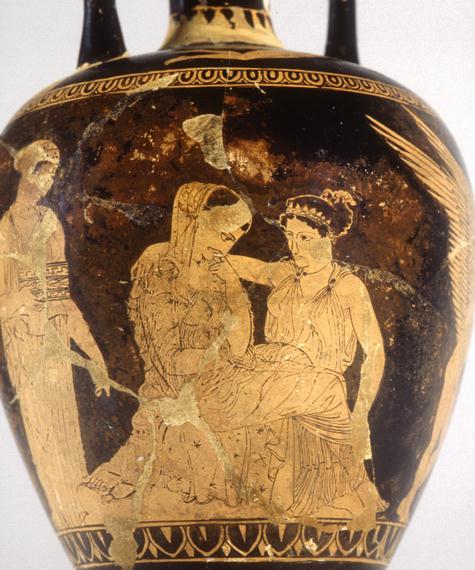
Image result for Ancient Greek Helen vase

As is largely unsurprising from the perspective of Greek misogyny, excessive interest in sexual behavior is projected a female quality. Expertise beyond interest is made the province of female ‘professionals’ (slaves) who may act as scapegoats and marginal figures for the corruption of both men and women. There is a combination of such interest with an excessive emphasis on eating (and eating really well) in Athenaeus where the pleasures of the body are combined.

Athenaeus, Deipnosophists 8.335c

“Dear men, even though I have great admiration for Chrysippus as the leader of the Stoa, I praise him even more because he ranks Arkhestratos, well-known for his Science of Cooking along with Philainis who is credited with a licentious screed about sexual matters—even though the iambic poet of Samos, Aiskhriôn, claims that Polycrates the sophist started this slander of her when she was really quite chaste. The lines go like this:

“I, Philainis, circulated among men
Lie here thanks to great old age.
Don’t laugh, foolish sailor, as your trace the cape
Nor make me a target of mockery or insult
For, by Zeus and his sons in Hell
I was never a slut with men nor a public whore.
Polykrates, Athenian by birth,
A bit clever with words and with a nasty tongue,
Wrote what he wrote. I don’t know anything about it.”

But the most amazing Chrysippus combines in the fifth book of his On Goodness and Pleasure that both “the books of Philianis and the Gastronomiai of Arkhestratos and forces of erotic and sexual nature, and in the same way slave-girls who are expert at these kinds of movements and positions and who are engaged in their practice.” He adds that they learn this type of material completely and then thoroughly possess what has been written on these topics by Philainis and Arkhestratos and those who have written on similar topics. Similarly, in his seventh book, he says ‘As you cannot wholly learn the works of Philianis and Arkhestratos’ Gastronomia because they do have something to offer for living better.’ “

Χρύσιππον δ᾿, ἄνδρες φίλοι, τὸν τῆς στοᾶς ἡγεμόνα κατὰ πολλὰ θαυμάζων ἔτι μᾶλλον ἐπαινῶ τὸν πολυθρύλητον ἐπὶ τῇ Ὀψολογίᾳ Ἀρχέστρατον αἰεί ποτε μετὰ Φιλαινίδος κατατάττοντα, εἰς ἣν ἀναφέρεται τὸ περὶ ἀφροδισίων ἀκόλαστον cσύγγραμμα, ὅπερ φησὶ | ποιῆσαι Αἰσχρίων ὁ Σάμιος ἰαμβοποιὸς Πολυκράτη τὸν σοφιστὴν ἐπὶ διαβολῇ τῆς ἀνθρώπου σωφρονεστάτης γενομένης. ἔχει δὲ οὕτως τὰ ἰαμβεῖα·

ἐγὼ Φιλαινὶς ἡ ᾿πίβωτος ἀνθρώποις
ἐνταῦθα γήρᾳ τῷ μακρῷ κεκοίμημαι.
μή μ᾿, ὦ μάταιε ναῦτα, τὴν ἄκραν κάμπτων
χλεύην τε ποιεῦ καὶ γέλωτα καὶ λάσθην.
ὐ γὰρ μὰ τὸν Ζῆν᾿, οὐ μὰ τοὺς κάτω κούρους, |
dοὐκ ἦν ἐς ἄνδρας μάχλος οὐδὲ δημώδης.
Πολυκράτης δὲ τὴν γενὴν Ἀθηναῖος,
λόγων τι παιπάλημα καὶ κακὴ γλῶσσα,
ἔγραψεν οἷ᾿ ἔγραψ᾿· ἐγὼ γὰρ οὐκ οἶδα.

ἀλλ᾿ οὖν ὅ γε θαυμασιώτατος Χρύσιππος ἐν τῷ πέμπτῳ Περὶ τοῦ Καλοῦ καὶ τῆς Ἡδονῆς φησι· καὶ βιβλία τά τε Φιλαινίδος καὶ τὴν τοῦ Ἀρχεστράτου Γαστρονομίαν καὶ δυνάμεις ἐρωτικὰς καὶ συνουσιαστικάς, ὁμοίως δὲ καὶ τὰς θεραπαίνας ἐμπείρους τοιῶνδε κινήσεών τε καὶ σχημάτων καὶ περὶ τὴν eτούτων μελέτην γινομένας. καὶ πάλιν· ἐκμανθάνειν | τ᾿ αὐτοὺς τὰ τοιαῦτα καὶ κτᾶσθαι τὰ περὶ τούτων γεγραμμένα Φιλαινίδι καὶ Ἀρχεστράτῳ καὶ τοῖς τὰ ὅμοια γράψασιν. κἀν τῷ ἑβδόμῳ δέ φησι· καθάπερ γὰρ οὐκ ἐκμανθάνειν τὰ Φιλαινίδος καὶ τὴν Ἀρχεστράτου Γαστρονομίαν ἔστιν ὡς φέροντά τι πρὸς τὸ ζῆν ἄμεινον.

Words of Mourning: Some Poems of Anyte of Tegea

The following epigrams are attributed to the poet Anyte of Tegea, one of a handful of Hellenistic women preserved in the Greek Anthology.

Gr. Anth. 7.490

“I mourn for the virgin Antibia, to whose father’s home
Many suitors came longing to marry,
Thanks to the fame of her beauty and wisdom.
But ruinous fate made all their hopes turn in the dust.”

Παρθένον Ἀντιβίαν κατοδύρομαι, ἇς ἐπὶ πολλοὶ
νυμφίοι ἱέμενοι πατρὸς ἵκοντο δόμον,
κάλλευς καὶ πινυτᾶτος ἀνὰ κλέος· ἀλλ᾿ ἐπὶ πάντων
ἐλπίδας οὐλομένα Μοῖρ᾿ ἐκύλισε πρόσω.

7.208

“Dâmis built this grave for his battle-fierce but dead
Horse, after murderous Ares pierce his chest.
The blood spurted black from his thick-hided skin
And he dyed the earth with his painful life’s blood.”

Μνᾶμα τόδε φθιμένου μενεδαΐου εἵσατο Δᾶμις
ἵππου, ἐπεὶ στέρνον τοῦδε δαφοινὸς Ἄρης
τύψε· μέλαν δέ οἱ αἷμα ταλαυρίνου διὰ χρωτὸς
ζέσσ᾿, ἐπὶ δ᾿ ἀργαλέᾳ βῶλον ἔδευσε φονᾷ.

7.724

“Your courage, Proarkhos, killed you in the fight and dying
You put the home of your father Pheidias into dark grief.
Yet this rock above you sings out a noble song:
That you died in a struggle for your dear homeland.”

Ἦ ῥα μένος σε, Πρόαρχ᾿, ὄλεσ᾿ ἐν δαΐ, δῶμά τε πατρὸς
Φειδία ἐν δνοφερῷ πένθει ἔθου φθίμενος·
ἀλλὰ καλόν τοι ὕπερθεν ἔπος τόδε πέτρος ἀείδει,
ὡς ἔθανες πρὸ φίλας μαρνάμενος πατρίδος.

7.538

“When he was alive this man was once Manês.
But now that’s dead, he can be equal to great Dareios.”

Μάνης οὗτος ἀνὴρ ἦν ζῶν ποτέ· νῦν δὲ τεθνηκὼς
ἶσον Δαρείῳ τῷ μεγάλῳ δύναται.

Image result for Ancient tegea
Tegea from Wikipedia