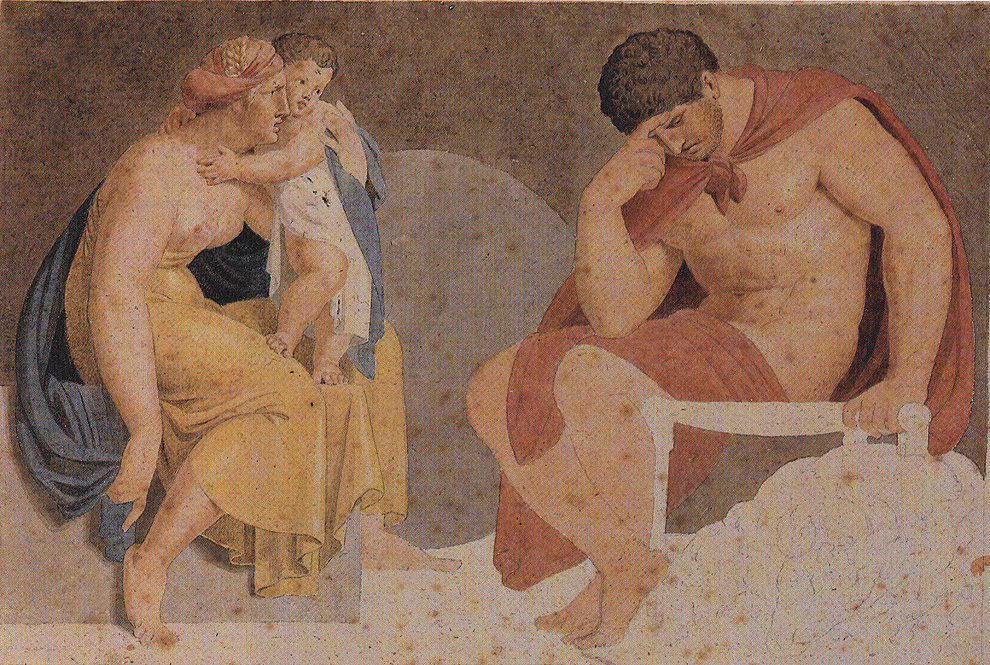
Law & Human Pliancy

Law and the administration of law are distinct things. The latter can undermine the former and it can be at odds with a certain conception of justice.

Hegel reflects on the interplay of law, the execution of law, and justice in his early essay “The Spirit of Christianity and its Fate” (Der Geist des Christentums und sein Schicksal).

This triad of themes figures prominently in Antigone of course. In what follows I find in the tragedy analogues to Hegel’s early ideas, ideas separate from those developed in his later, (in)famous reading of Antigone in The Phenomenology of Spirit.

The law is the law

Hegel:

“The law cannot waive punishment. It cannot be lenient. For then it would annul itself. [When] the law has been broken by the transgressor, its content no longer exists for him; he has annulled it . . .”

“[D]as Gesetz kann die Strafe nicht schenken, nicht gnädig sein, denn es höbe sich selbst auf; das Gesetz ist vom Verbrecher gebrochen worden, sein Inhalt ist nicht mehr für ihn, er hat ihn aufgehoben . . .”

Antigone:

This is a defining dilemma in Antigone. Creon’s edict prohibits, on pain of death, the burial of Polynices. In knowingly violating the edict, Antigone denies the new law respect. The Law is fixed but its execution is inconstant and alterable.

Hegel:

“The living being who has united his power with the law, the law’s administrator, . . . is not abstract justice. Rather, he is a person, and justice is only one of his aspects.

Transgression of the law automatically merits punishment; that’s established. But the execution of justice is not automatic. And because justice is only an aspect of the administrator, that aspect can give way and another aspect can appear. In this respect justice is contingent.”

“[D]as Lebendige, dessen Macht sich mit dem Gesetze vereinigt hat, der Exekutor, . . . ist nicht die abstrakte Gerechtigkeit, sondern ein Wesen, und Gerechtigkeit nur seine Modifikation. Die Notwendigkeit des Verdienens der Strafe steht fest, aber die Übung der Gerechigkeit ist nichts Notwendiges, weil sie als Modifikation eines Lebendigen auch vergehen, eine andere Modifikation eintreten kann; und so wird Gerechtigkeit etwas Zufälliges . . .”

Antigone:
Haemon recognizes that Creon makes the law but is not identical with it. He can be separated from the law; that is to say, he can be persuaded to waive its execution (705-718):

Don’t dress yourself in only one way of thinking,
Believing that you, but no one else, is right . . .
Instead, retreat from anger and be open to changing.

μή νυν ἓν ἦθος μοῦνον ἐν σαυτῷ φόρει,
ὡς φὴς σύ, κοὐδὲν ἄλλο, τοῦτʼ ὀρθῶς ἔχειν . . .
ἀλλʼ εἶκε καὶ θυμῷ μετάστασιν δίδου.

And Creon does ultimately demonstrates the distance which exists between law and its administration. In speaking with the chorus he first waivers (1102):

Is this what you recommend? Should I back down?
καὶ ταῦτʼ ἐπαινεῖς καὶ δοκεῖς παρεικαθεῖν;

And then he retreats outright (1111-1112):

My decision is now reversed,
and since it was I who imprisoned her,
I will be there to set her free.

ἐγὼ δʼ, ἐπειδὴ δόξα τῇδʼ ἐπεστράφη,
αὐτός τʼ ἔδησα καὶ παρὼν ἐκλύσομαι.

Color photograph of an oil painting of Hegel

Larry Benn has a B.A. in English Literature from Harvard College, an M.Phil in English Literature from Oxford University, and a J.D. from Yale Law School. Making amends for a working life misspent in finance, he’s now a hobbyist in ancient languages and blogs at featsofgreek.blogspot.com.

Tyranny, Terror, and Mutilation

CW: Violence, torture, killing

Homer, Odyssey 22.474-477 

“They took Melanthios out through the hall and into the courtyard.
They cut off his nose and ears with pitiless bronze.
Then they cut off his balls and fed them raw to the dogs;
And they cut off his hands and feet with an enraged heart.”

ἐκ δὲ Μελάνθιον ἦγον ἀνὰ πρόθυρόν τε καὶ αὐλήν·
τοῦ δ’ ἀπὸ μὲν ῥῖνάς τε καὶ οὔατα νηλέϊ χαλκῷ
τάμνον μήδεά τ’ ἐξέρυσαν, κυσὶν ὠμὰ δάσασθαι,
χεῖράς τ’ ἠδὲ πόδας κόπτον κεκοτηότι θυμῷ.

Ekhetos is mentioned again at 18.116 and 21.308.

Od. 18.83-87

“If this one defeats you and proves stronger,
I will send you to the shore, throw you in a black ship,
And ship you off to king Ekhetos, the most wicked man of all.
He will cut off your nose and ears with pitiless bronze
And after severing your balls, he will feed them raw to his dogs.”

αἴ κέν σ’ οὗτος νικήσῃ κρείσσων τε γένηται,
πέμψω σ’ ἤπειρόνδε, βαλὼν ἐν νηῒ μελαίνῃ,
εἰς ῎Εχετον βασιλῆα, βροτῶν δηλήμονα πάντων,
ὅς κ’ ἀπὸ ῥῖνα τάμῃσι καὶ οὔατα νηλέϊ χαλκῷ
μήδεά τ’ ἐξερύσας δώῃ κυσὶν ὠμὰ δάσασθαι.”

Schol ad. Hom. Od. 18.85 QV

“Ekhetos was the son of Boukhetos, after whom there is also a city named in Sicily. He is said to have been tyrant of the Sicilians. The story is that he did every kind of mischief to the inhabitants of his land and killed foreigners by mutilating them. He exhibited so much wickedness that even those who lived far off would send people to him to kill when they wanted to punish someone. He developed all kinds of unseemly methods. This is why the people would not endure so bitter a tyranny, and they killed him by stoning.”

εἰς ῎Εχετον βασιλῆα] ῎Εχετος ἦν μὲν υἱὸς Βουχέτου, ἀφ’ οὗ καὶ ἐν Σικελίᾳ πόλις Βούχετος καλεῖται. Σικελῶν δὲ τύραννος λέγεται. τοῦτον τοὺς μὲν ἐγχωρίους κατὰ πάντα τρόπον σίνεσθαι, τοὺς δὲ ξένους ἀναιρεῖν λωβώμενον· τοσαύτην δὲ κακίαν ἔχειν ὡς καὶ τοὺς μακρὰν οἰκοῦντας ὅτε θέλοιεν σφόδρα τινὰ τιμωρῆσαι καὶ ξένῳ περιβαλεῖν θανάτῳ ἐκπέμπειν αὐτῷ. πολλὰς γὰρ μηχανὰς ἐξευρεῖν τοῦτον αἰκίας. ὅθεν τὸν λαὸν οὐχ ὑπομένειν τὴν πικρὰν ταύτην τυραννίδα, λίθοις δὲ αὐτὸν ἀνελεῖν.

A lingering interpretive problem for the Odyssey is why the epic  introduces this torture and attributes it to a very bad person, only to have Odysseus commit the very same act later in the epic. A pressing question for modern readers of Homer is why so few of us have bothered to worry about this at all.

Combined with the hanging of the enslaved women, this should be an indictment of Odysseus and support for the rebellion against him in book 24.

From the Suda:

“Tyrannos: The poets before the Trojan War used to name kings (basileis) tyrants, but later during the time of Archilochus, this word was transferred to the Greeks in general, just as the sophist Hippias records. Homer, at least, calls the most lawless man of all, Ekhetos, a king, not a tyrant. Tyrant is a a name that derives from the Tyrrenians because these men were quite severe pirates.* None of the other poets uses the name tyrant in any of their works. But Aristotle in the Constitution of the Cumaeans says that tyrants were once called aisumnêtai, because this name is a bit of a euphemism.”

Τύραννος: οἱ πρὸ τῶν Τρωϊκῶν ποιηταὶ τοὺς βασιλεῖς τυράννους προσηγόρευον, ὀψέ ποτε τοῦδε τοῦ ὀνόματος εἰς τοὺς Ἕλληνας διαδοθέντος κατὰ τοὺς Ἀρχιλόχου χρόνους, καθάπερ Ἱππίας ὁ σοφιστής φησιν. Ὅμηρος γοῦν τὸν πάντων παρανομώτατον Ἔχετον βασιλέα φησί, καὶ οὐ τύραννον. προσηγορεύθη δὲ τύραννος ἀπὸ Τυρρηνῶν: χαλεποὺς γὰρ περὶ λῃστείας τούτους γενέσθαι. οὐδεὶς δὲ οὐδὲ ἄλλος τῶν ποιητῶν ἐν τοῖς ποιήμασιν αὐτοῦ μέμνηται τὸ τοῦ τυράννου ὄνομα. ὁ δὲ Ἀριστοτέλης ἐν Κυμαίων πολιτείᾳ τοὺς τυράννους φησὶ τὸ πρότερον αἰσυμνήτας καλεῖσθαι. εὐφημότερον γὰρ ἐκεῖνο τὸ ὄνομα. ὅτι καὶ ἕτεροι ἐτυράννησαν, ἀλλ’ ἡ τελευταία καὶ μεγίστη κάκωσις πάσαις ταῖς πόλεσιν ἡ Διονυσίου τυραννὶς ἐγένετο.

Theodor van Thulden, 1606 – 1669,

Ignorance of Animals

In the world of Sophocles’s Antigone, birds and dogs are instruments of defilement associated with the corpse of Polynices:

Creon to the Chorus (203-206):

Regarding this man, it’s been proclaimed to this city
That no one honor him with burial or mourn him,
And his body be left unburied for the birds
And dogs, ravaged fare, and for all to see.

τοῦτον πόλει τῇδʼ ἐκκεκήρυκται τάφῳ
μήτε κτερίζειν μήτε κωκῦσαί τινα,
ἐᾶν δʼ ἄθαπτον καὶ πρὸς οἰωνῶν δέμας
καὶ πρὸς κυνῶν ἐδεστὸν αἰκισθέν τʼ ἰδεῖν.

Tiresias to Creon (1015-1018):

There’s plague in the city because of what you concocted.
All our altars and hearths are clogged
With the carcass scraps, carried by dogs and birds,
Of the ill-fated, fallen son of Oedipus.

καὶ ταῦτα τῆς σῆς ἐκ φρενὸς νοσεῖ πόλις.
βωμοὶ γὰρ ἡμῖν ἐσχάραι τε παντελεῖς
πλήρεις ὑπʼ οἰωνῶν τε καὶ κυνῶν βορᾶς
τοῦ δυσμόρου πεπτῶτος Οἰδίπου γόνου.

Wild animals can trouble corpses too, but in Antigone they are associated with corpses other than Polynices’. Wild animals are absent from Creon’s prescription for Polynices’ remains and absent from Tiresias’s account of what befell them.

Dogs and birds are certainly a threat to all unburied corpses, but the involvement of wild animals marks corpses as not-Polynices’:

Tiresias to Creon (1080-1083):

All the cities are vibrating with hate:
Bits and pieces of their dead have been hallowed
By dogs, wild animals, or some winged bird transporting
The unholy stench into the hearth-bearing city.

ἐχθραὶ δὲ πᾶσαι συνταράσσονται πόλεις,
ὅσων σπαράγματʼ ἢ κύνες καθήγνισαν
ἢ θῆρες ἤ τις πτηνὸς οἰωνός, φέρων
ἀνόσιον ὀσμὴν ἑστιοῦχον ἐς πόλιν.

If this is a plausible reading of dogs, birds, and wild animals, then something must be said about the guard.

The guard, a curious figure in many respects, speaks of Polynices’ corpse in relation to wild animals and dogs, a combination absent from the authoritative discourses of Creon and Tiresias:

The guard to Creon (253-258):

When the first watch of the day showed us,
Amazement hard to grasp came over us all:
The man could not be seen! He was not entombed,
But there was fine dust on him.
It was as if someone had done it to avoid pollution.
Also, there were no signs a wild animal
Or dogs had come and torn the body.

ὅπως δʼ ὁ πρῶτος ἡμὶν ἡμεροσκόπος
δείκνυσι, πᾶσι θαῦμα δυσχερὲς παρῆν.
ὁ μὲν γὰρ ἠφάνιστο, τυμβήρης μὲν οὔ,
λεπτὴ δʼ, ἄγος φεύγοντος ὥς, ἐπῆν κόνις·
σημεῖα δʼ οὔτε θηρὸς οὔτε του κυνῶν
ἐλθόντος, οὐ σπάσαντος ἐξεφαίνετο.

I’m going to suggest the guard’s invocation of animals is at odds with Creon’s and Tiresias’s precisely because the guard does not know the identity of his dead charge.

That is why the guard speaks of “the corpse” (τὸν νεκρόν), “he” (ὁ), “the man” (τὸν ἄνδρʼ), and “a body” (σῶμα). He never says “Polynices,” “the son of Oedipus,” or anything of the kind.

Consistent with that, the guard also does not know the identity of the woman he’s arrested. That is why he says “she” (ἦ), “this woman” (ταύτην), and “the girl” (ἡ παῖς). He never says “Antigone,” “the dead man’s sister,” or anything of the kind.

Black and white bird sitting on back of german shepherd

Larry Benn has a B.A. in English Literature from Harvard College, an M.Phil in English Literature from Oxford University, and a J.D. from Yale Law School. Making amends for a working life misspent in finance, he’s now a hobbyist in ancient languages and blogs at featsofgreek.blogspot.com.

Antigone, Dragging

Pausanias, Description of Greece: Boeotia 25

“Not too far off from Menoeceus’ grave is where people claim that Oedipus’ sons fought each other in single combat and died at each other’s hands. The battle is commemorated by a pillar on top of which is a stone shield. They also mark out the place where the Thebans claim Hera was tricked by Zeus into nursing Herakles as a child.

The whole area is called Antigone’s Drag. When she realized that she did not have the strength to carry her brother’s body, even though she wanted to, she came up with the back-up plan of dragging him. So she hauled him right up to Eteokles’ burning pure and pushed him on top.”

 τοῦ δὲ Μενοικέως οὐ πόρρω τάφου τοὺς παῖδας λέγουσιν Οἰδίποδος μονομαχήσαντας ἀποθανεῖν ὑπὸ ἀλλήλων· σημεῖον δὲ τῆς μάχης αὐτῶν κίων, καὶ ἀσπὶς ἔπεστιν ἐπ᾿ αὐτῷ λίθου. δείκνυται δέ τι χωρίον ἔνθα Ἥραν Θηβαῖοί φασιν Ἡρακλεῖ παιδὶ ἔτι ἐπισχεῖν γάλα κατὰ δή τινα ἀπάτην ἐκ Διός· καλεῖται δὲ ὁ σύμπας οὗτος τόπος1 Σῦρμα Ἀντιγόνης· ὡς γὰρ τὸν τοῦ Πολυνείκους ἄρασθαί οἱ προθυμουμένῃ νεκρὸν οὐδεμία ἐφαίνετο ῥᾳστώνη, δεύτερα ἐπενόησεν ἕλκειν αὐτόν, ἐς ὃ εἵλκυσέ τε καὶ ἐπέβαλεν ἐπὶ τοῦ Ἐτεοκλέους ἐξημμένην τὴν πυράν.

Juvenal, Satire 8 227-230

“Have the ancestors’ statues wear the prizes from your voice.
Put on your long Thyestes outfit in front of Domitius’ feet
Or maybe the mask of Antigone or Melanippe
And hang your lyre from a marble colossus.”

maiorum effigies habeant insignia vocis,
ante pedes Domiti longum tu pone Thyestae
syrma vel Antigones aut personam Melanippes,
et de marmoreo citharam suspende colosso.

Greek Anthology, 8.37.5-8

“You have obtained a blessed station! What about the mask
Of the girl in your hand, what play is she from?

Call her Antigone if you want or Electra–you’re not wrong either way
For both are at the peak of the playwright’s achievement.”

Ὄλβιος, ὡς ἁγνὴν ἔλαχες στάσιν· ἡ δ᾿ ἐνὶ χερσὶν
κούριμος, ἐκ ποίης ἥδε διδασκαλίης;
α. Εἴτε σοι Ἀντιγόνην εἰπεῖν φίλον, οὐκ ἂν ἁμάρτοις,
εἴτε καὶ Ἠλέκτραν· ἀμφότεραι γὰρ ἄκρον.

Sallustius, Arg, in Soph Ant ii.

‘There’s some conflict in the stories about the heroine Antigone and her sister Ismene. For example, Ion claims in his dithyrambs that both sisters were burned to death in the temple of Hera by Laodamas, Eteocles’ son. Mimnermus, however, insists that Ismene was killed by Tydeus at Athena’s direction as she had sex with Periklymenos. These are the strange stories recorded about the heroines.”

στασιάζεται δὲ τὰ περὶ τὴν ἡρωίδα ἱστορούμενα καὶ τὴν ἀδελφὴν αὐτῆς Ἰσμήνην. ὁ μὲν γὰρ Ἴων ἐν τοῖς διθυράμβοις) καταπρησθῆναί φησιν ἀμφοτέρας ἐν τῷ ἱερῷ τῆς Ἥρας ὑπὸ Λαοδάμαντος τοῦ Ἐτεοκλέους· Μίμνερμος δέ φησι τὴν μὲν Ἰσμήνην προσομιλοῦσαν Περικλυμένῳ ὑπὸ Τυδέως κατὰ Ἀθηνᾶς ἐγκέλευσιν τελευτῆσαι. ταῦτα μὲν οὖν ἐστιν τὰ ξένως περὶ τῶν ἡρωίδων ἱστορούμενα.

Nikiforos Lyrtras, “Antigone in front of the dead Polynices” 1865

Culture v Control

F.A. Hayek. Individualism: True and False, in Individualism and Economic Order.

“Quite as important . . . are the traditions and conventions which evolve in a free society and which, without being enforceable, establish flexible but normally observed rules . . . The readiness ordinarily to submit to the products of a social process which nobody has designed and the reasons for which nobody may understand is also an indispensable condition if it is to be possible to dispense with compulsion.”

Below are three voices from Antigone: dictatorial power, submission to such power, and customs-based resistance to it.

Sophocles, Antigone.
Creon to Haemon (666-672):

You must heed the man the city puts in charge–
On small matters, just things,
Things neither small nor just . . .
No evil is greater than having no one in charge.

ἀλλʼ ὃν πόλις στήσειε τοῦδε χρὴ κλύειν
καὶ σμικρὰ καὶ δίκαια καὶ τἀναντία . . .
ἀναρχίας δὲ μεῖζον οὐκ ἔστιν κακόν.

Ismene to Antigone (59-67):

We will die in the worst way
If, the power of custom notwithstanding,
We transgress a tyrant’s decree or power . . .
Since I’m acting under compulsion,
I will obey the men in charge.

ὅσῳ κάκιστ᾿ ὀλούμεθ᾿, εἰ νόμου βίᾳ
ψῆφον τυράννων ἢ κράτη παρέξιμεν . . .
ὡς βιάζομαι τάδε,
τοῖς ἐν τέλει βεβῶσι πείσομαι . . .

Antigone to Creon (453-457):

I did not believe your proclamations,
Mortal things, had strength enough
To trump customs credited to the gods.
These customs are alive,
Not today, not yesterday, but always,
And no one knows how long ago they appeared.

οὐδὲ σθένειν τοσοῦτον ᾠόμην τὰ σὰ
κηρύγμαθʼ, ὥστʼ ἄγραπτα κἀσφαλῆ θεῶν
νόμιμα δύνασθαι θνητὸν ὄνθʼ ὑπερδραμεῖν.
οὐ γάρ τι νῦν γε κἀχθές, ἀλλʼ ἀεί ποτε
ζῇ ταῦτα, κοὐδεὶς οἶδεν ἐξ ὅτου ʼφάνη.

picture of a smiling older man with a mustache, white receding hair, and glasses

Liberal squish, F.A. Hayek.

A Wise Doctor, a Final Word

Sophocles, Ajax 581-582

“Close it quickly: it is not a sign of a wise doctor
To chant spells over a wound that needs cutting.”

πύκαζε θᾶσσον. οὐ πρὸς ἰατροῦ σοφοῦ
θρηνεῖν ἐπῳδὰς πρὸς τομῶντι πήματι.

691-2

“You, do what I advise and perhaps you will quickly learn
That even if I am unlucky, I have survived.”

ὑμεῖς δ᾿ ἃ φράζω δρᾶτε, καὶ τάχ᾿ ἄν μ᾿ ἴσως
πύθοισθε, κεἰ νῦν δυστυχῶ, σεσωμένον.

864-5

“This is the final word your Ajax ever says
I’ll tell the rest below in Hades to the dead.”

τοῦθ᾿ ὑμὶν Αἴας τοὔπος ὕστατον θροεῖ,
τὰ δ᾿ ἄλλ᾿ ἐν Ἅιδου τοῖς κάτω μυθήσομαι.

Ajax (Carstens).jpg
Asmus Jakob Carstens, Sorrowful Ajax with Termessa and Eurysakes

Such Unexpected Pain

Aeschylus Persians, 93-100

“What mortal person will escape
A god’s crooked deception?
Who steps with a light enough foot
To leap away through the air?

For destruction seems at first friendly, even fawning
As it draws someone aside into a trap
From which it is impossible for any mortal to escape
Or even avoid.”

δολόμητιν δ᾿ ἀπάταν θεοῦ
τίς ἀνὴρ θνατὸς ἀλύξει;
τίς ὁ κραιπνῷ ποδὶ πηδή-
ματος εὐπετέος ἀνάσσων;
φιλόφρων γὰρ ποτισαίνουσα τὸ πρῶτον παράγει
βροτὸν εἰς ἀρκύστατ᾿ Ἄτα,
τόθεν οὐκ ἔστιν ὑπὲκ θνατὸν ἀλύξαντα φυγεῖν.

167-166

“Light does not shine on the poor no matter how strong they are
Nor do the masses honor undefended wealth.”

μήτ᾿ ἀχρημάτοισι λάμπειν φῶς, ὅσον σθένος πάρα,
μήτε χρημάτων ἀνάνδρων πλῆθος ἐν τιμῇ σέβειν

290-295

“I have been silent for a while, struck with pains
By these evils. The disaster runs over all bounds
of speaking or asking about its suffering.
Still, necessity forces mortals to endure the pains
The gods send us. Pull yourself together,
Tell us everything that happened…”

σιγῶ πάλαι δύστηνος ἐκπεπληγμένη
κακοῖς· ὑπερβάλλει γὰρ ἥδε συμφορά,
τὸ μήτε λέξαι μήτ᾿ ἐρωτῆσαι πάθη.
ὅμως δ᾿ ἀνάγκη πημονὰς βροτοῖς φέρειν
θεῶν διδόντων· πᾶν δ᾿ ἀναπτύξας πάθος
λέξον καταστάς, κεἰ στένεις κακοῖς ὅμως·

262-264

“This old life has seemed
to have run too long,
To witness such unexpected pain.”

ἦ μακροβίοτος ὅδε γέ τις αἰ-
ὼν ἐφάνθη γεραιοῖς, ἀκού-
ειν τόδε πῆμ᾿ ἄελπτον.

588-603

“Friends, whoever gains some practice in troubles
Understands that when a wave of troubles come
We mortals tend to fear everything.
But when a god makes things easy, you think
You’ll always sail under the same favorable wind.”

φίλοι, κακῶν μὲν ὅστις ἔμπειρος κυρεῖ,
ἐπίσταται βροτοῖσιν ὡς ὅταν κλύδων
κακῶν ἐπέλθῃ, πάντα δειμαίνειν φιλεῖ,
ὅταν δ᾿ ὁ δαίμων εὐροῇ, πεποιθέναι
τὸν αὐτὸν αἰὲν ἄνεμον οὐριεῖν τύχης.

TOMB OF XERXES;KING;NAGSH-E-ROSTAM;nima boroumand; نيما برومند

Leaving, Forgetting Troy

Euripides, Trojan Women, 25-27

“I am leaving famous Ilion and my altars.
Whenever terrible isolation overtakes a city
The gods’ places turn sick and don’t want to receive worship”

λείπω τὸ κλεινὸν Ἴλιον βωμούς τ᾽ ἐμούς:
ἐρημία γὰρ πόλιν ὅταν λάβῃ κακή,
νοσεῖ τὰ τῶν θεῶν οὐδὲ τιμᾶσθαι θέλει.

357-360

“That famous lord of the Achaeans, Agamemnon
Will make me a wife harder to handle than Helen:
I will kill him. I will destroy his home
And take vengeance for my brothers and father…”

Ἑλένης γαμεῖ με δυσχερέστερον γάμον
ὁ τῶν Ἀχαιῶν κλεινὸς Ἀγαμέμνων ἄναξ.
κτενῶ γὰρ αὐτόν, κἀντιπορθήσω δόμους
ποινὰς ἀδελφῶν καὶ πατρὸς λαβοῦσ᾽ ἐμοῦ…

384-386

“Their army has earned this kind of praise:
Silence is better for shame, may my Muse
Never be a singer who recalls their terrible deeds.”

ἦ τοῦδ᾽ ἐπαίνου τὸ στράτευμ᾽ ἐπάξιον. —
σιγᾶν ἄμεινον τᾀσχρά, μηδὲ μοῦσά μοι
γένοιτ᾽ ἀοιδὸς ἥτις ὑμνήσει κακά.

395-399

“Listen how it is with Hektor’s mournful tale:
He died, leaving a reputation as the best man.
The coming of the Greeks made this happen.
If they had stayed home, his value would have stayed hidden.”

τὰ δ᾽ Ἕκτορός σοι λύπρ᾽ ἄκουσον ὡς ἔχει:
δόξας ἀνὴρ ἄριστος οἴχεται θανών,
καὶ τοῦτ᾽ Ἀχαιῶν ἵξις ἐξεργάζεται:
εἰ δ᾽ ἦσαν οἴκοι, χρηστὸς ὢν ἐλάνθανεν.

1165-66

“You fear a child this young? I can’t praise fear
When someone is frightened without examining why.”

βρέφος τοσόνδ᾽ ἐδείσατ᾽: οὐκ αἰνῶ φόβον,
ὅστις φοβεῖται μὴ διεξελθὼν λόγῳ.

Jean-Joseph Benjamin Constant, La mort d’Astyanax, 1868

The Tale of the Lion Cub

Aeschylus, Agamemnon 717-736

Chorus:
“A man raised a lion cub in his house. The cub was motherless but needed the teat. When young, it was gentle; it liked children a lot; and it charmed the old folks. The cub was often in the man’s arms, a normal thing for a baby of nursing age. It would set its bright eyes on the man’s hand and beg for its belly’s necessities.

In time, however, the animal exhibited its parents’ character. That is to say, in return for the household’s kindness, it prepared a feast no one had asked for by slaughtering the sheep with frenzy. The house was splattered with blood. The destruction was enormous and violent. A god is to blame for a minister of Disaster having been raised in the house.”

ἔθρεψεν δὲ λέοντος ἶ-
νιν δόμοις ἀγάλακτον οὕ-
τως ἀνὴρ φιλόμαστον,
ἐν βιότου προτελείοις
ἅμερον, εὐφιλόπαιδα,
καὶ γεραροῖς ἐπίχαρτον.
πολέα δ ἔσκ ἐν ἀγκάλαις
νεοτρόφου τέκνου δίκαν,
φαιδρωπὸς ποτὶ χεῖρα σαί-
νων τε γαστρὸς ἀνάγκαις.

χρονισθεὶς δʼ ἀπέδειξεν ἦ-
θος τὸ πρὸς τοκέων: χάριν
γὰρ τροφεῦσιν ἀμείβων
μηλοφόνοισι σὺν ἄταις
δαῖτ ἀκέλευστος ἔτευξεν:
αἵματι δʼ οἶκος ἐφύρθη,
ἄμαχον ἄλγος οἰκέταις,
μέγα σίνος πολύκτονον:
ἐκ θεοῦ δʼ ἱερεύς τις Ἄ-
τας δόμοις προσεθρέφθη.

color photograph of a boxer sparring with an adult tiger
Just a boxer in his undies playing with
his tiger.

Larry Benn has a B.A. in English Literature from Harvard College, an M.Phil in English Literature from Oxford University, and a J.D. from Yale Law School. Making amends for a working life misspent in finance, he’s now a hobbyist in ancient languages and blogs at featsofgreek.blogspot.com.

Justice & Real Estate

Aeschylus, Agamemnon, 763-781

Chorus:
Old wrong has a way of begetting new wrong
In the lives of bad people.
It happens unexpectedly,
Whenever the day marked for the birth comes.
Old wrong then begets a god
Indomitable and unyielding;
black Calamity for houses,
Profane in her audacity.
She is the image of her parents.

In contrast, Justice shines
In smoke-choked homes
and honors the upright man.
Gold-daubed mansions, unclean hands within,
These she quits, eyes averted, for pious houses.
She does not honor wealth’s tinsel might with praise.
She brings all things to their conclusion.

φιλεῖ δὲ τίκτειν ὕβρις
μὲν παλαιὰ νεά-
ζουσαν ἐν κακοῖς βροτῶν
ὕβριν τότ ἢ τόθ, ὅτε τὸ κύ-
ριον μόλῃ φάος τόκου,
δαίμονά τε τὰν ἄμαχον ἀπόλεμον,
ἀνίερον θράσος μελαί-
νας μελάθροισιν Ἄτας,
εἰδομέναν τοκεῦσιν.

Δίκα δὲ λάμπει μὲν ἐν
δυσκάπνοις δώμασιν,
τὸν δʼ ἐναίσιμον τίει.
τὰ χρυσόπαστα δʼ ἔδεθλα σὺν
πίνῳ χερῶν παλιντρόποις
ὄμμασι λιποῦσ ὅσια προσέβα
του δύναμιν οὐ σέβουσα πλού-
του παράσημον αἴνῳ:
πᾶν δʼ ἐπὶ τέρμα νωμᾷ.

color photograph of oil painting. a ramshackle old house at twilight, in mostly yellows and browns
Vincent van Gogh. The Cottage.
Oil on Canvas. 1885.
Van Gogh Museum. Amsterdam.

Larry Benn has a B.A. in English Literature from Harvard College, an M.Phil in English Literature from Oxford University, and a J.D. from Yale Law School. Making amends for a working life misspent in finance, he’s now a hobbyist in ancient languages and blogs at featsofgreek.blogspot.com.