The Illegal, Murderous Rapist: Herodotus Subtweets a Tyrant

Herodotus, Histories 3.80

“Otanês was first urging the Persians to entrust governing to the people, saying these things: “it seems right to me that we no longer have a monarchy. For it is neither pleasing nor good. For you all know about the arrogance of Kambyses and you were a party to the insanity of the Magus. How could monarchy be a fitting thing when it permits an unaccountable person to do whatever he pleases? Even if you put the best of all men into this position he might go outside of customary thoughts. For hubris is nurtured by the fine things present around him, and envy is native to a person from the beginning.

The one who has these two qualities possesses every kind of malice. For one who is overfilled does many reckless things, some because of arrogance and some because of envy. Certainly, it would be right for a man who is a tyrant at least to have no envy at all, since he has all the good things. Yet he becomes the opposite of this towards his citizens: for he envies those who are best around him and live, and he takes pleasure in the worst of the citizens—he is the best at encouraging slanders.

He becomes the most disharmonious of all people—for if you admire him only moderately, then he is upset because you do not support him ardently. But if someone supports him excessively, he is angry at him for being a toady. The worst things are still to be said: he overturns traditional laws, he rapes women, and kills people without reason.”

᾿Οτάνης μὲν ἐκέλευε ἐς μέσον Πέρσῃσι καταθεῖναι τὰ πρήγματα, λέγων τάδε· «᾿Εμοὶ δοκέει ἕνα μὲν ἡμέων μούναρχον μηκέτι γενέσθαι· οὔτε γὰρ ἡδὺ οὔτε ἀγαθόν. Εἴδετε μὲν γὰρ τὴν Καμβύσεω ὕβριν ἐπ’ ὅσον ἐπεξῆλθε, μετεσχήκατε δὲ καὶ τῆς τοῦ μάγου ὕβριος. Κῶς δ’ ἂν εἴη χρῆμα κατηρτημένον μουναρχίη, τῇ ἔξεστι ἀνευθύνῳ ποιέειν τὰ βούλεται; Καὶ γὰρ ἂν τὸν ἄριστον ἀνδρῶν πάντων στάντα ἐς ταύτην τὴν ἀρχὴν ἐκτὸς τῶν ἐωθότων νοημάτων στήσειε. ᾿Εγγίνεται μὲν γάρ οἱ ὕβρις ὑπὸ τῶν παρεόντων ἀγαθῶν, φθόνος δὲ ἀρχῆθεν ἐμφύεται ἀνθρώπῳ. Δύο δ’ ἔχων ταῦτα ἔχει πᾶσαν κακότητα· τὰ μὲν γὰρ ὕβρι κεκορημένος ἔρδει πολλὰ καὶ ἀτάσθαλα, τὰ δὲ φθόνῳ. Καίτοι ἄνδρα γε τύραννον ἄφθονον ἔδει εἶναι, ἔχοντά γε πάντα τὰ ἀγαθά· τὸ δὲ ὑπεναντίον τούτου ἐς τοὺς πολιήτας πέφυκε· φθονέει γὰρ τοῖσι ἀρίστοισι περιεοῦσί τε καὶ ζώουσι, χαίρει δὲ τοῖσι κακίστοισι τῶν ἀστῶν, διαβολὰς δὲ ἄριστος ἐνδέκεσθαι.

᾿Αναρμοστότατον δὲ πάντων· ἤν τε γὰρ αὐτὸν μετρίως θωμάζῃς, ἄχθεται ὅτι οὐ κάρτα θεραπεύεται, ἤν τε θεραπεύῃ τις κάρτα, ἄχθεται ἅτε θωπί. Τὰ δὲ δὴ μέγιστα ἔρχομαι ἐρέων· νόμαιά τε κινέει πάτρια καὶ βιᾶται γυναῖκας κτείνει τε ἀκρίτους.

Macedonians attacked by “dent-tyrant” (or odontotyrannus[1])

The Tyranny is Our Fault Too

Anonymous of Iamblichus 12-14

“Tyranny happens—even though it is so great an evil in scope and kind—from nothing else but lawlessness. All people who think incorrectly believe that tyranny develops from some other cause and that people lose their freedom without being responsible for it because they were forced by the tyrant who came to power. But they do not reason correctly.

Whoever believes that a king or tyrant arises for any other reason than a disregard for the laws and greed is a fool. Whenever everyone focuses on base motives, then this is how it turns out. It is impossible for people to live without laws and justice. When these two things are neglected by the majority of the people—the law and justice—then their oversight and safety is transferred to a single person. For how could a monarchy fall to a single person unless the law which was common and advantageous to all were removed?”

γίνεται δὲ καὶ ἡ τυραννίς, κακὸν τοσοῦτόν τε καὶ τοιοῦτον, οὐκ ἐξ ἄλλου τινὸς ἢ ἀνομίας. οἴονται δέ τινες τῶν ἀνθρώπων, ὅσοι μὴ ὀρθῶς συμβάλλονται, τύραννον ἐξ ἄλλου τινὸς καθίστασθαι καὶ τοὺς ἀνθρώπους στερίσκεσθαι τῆς ἐλευθερίας οὐκ αὐτοὺς αἰτίους ὄντας, ἀλλὰ βιασθέντας ὑπὸ τοῦ κατασταθέντος τυράννου, οὐκ ὀρθῶς ταῦτα λογιζόμενοι· ὅστις γὰρ ἡγεῖται βασιλέα ἢ τύραννον ἐξ ἄλλου τινὸς γίγνεσθαι ἢ ἐξ ἀνομίας τε καὶ πλεονεξίας, μωρός ἐστιν. ἐπειδὰν γὰρ ἅπαντες ἐπὶ κακίαν τράπωνται, τότε τοῦτο γίγνεται· οὐ γὰρ οἷόν τε ἀνθρώπους ἄνευ νόμων καὶ δίκης ζῆν. ὅταν οὖν ταῦτα τὰ δύο ἐκ τοῦ πλήθους ἐκλίπῃ, ὅ τε νόμος καὶ ἡ δίκη, τότε ἤδη εἰς ἕνα ἀποχωρεῖν τὴν ἐπιτροπίαν τούτων καὶ φυλακήν. πῶς γὰρ ἂν ἄλλως εἰς ἕνα μοναρχία περισταίη, εἰ μὴ τοῦ νόμου ἐξωσθέντος τοῦ τῷ πλήθει συμφέροντος;

Allegoria del Cattivo Governo e i suoi effetti in città, particolare del volto demoniaco di Tyrannides

A Tyranny is Our Fault Too

Anonymous of Iamblichus 12-14

“Tyranny happens—even though it is so great an evil in scope and kind—from nothing else but lawlessness. All people who think incorrectly believe that tyranny develops from some other cause and that people lose their freedom without being responsible for it because they were forced by the tyrant who came to power. But they do not reason correctly.

Whoever believes that a king or tyrant arises for any other reason than a disregard for the laws and greed is a fool. Whenever everyone focuses on base motives, then this is how it turns out. It is impossible for people to live without laws and justice. When these two things are neglected by the majority of the people—the law and justice—then their oversight and safety is transferred to a single person. For how could a monarchy fall to a single person unless the law which was common and advantageous to all were removed?”

γίνεται δὲ καὶ ἡ τυραννίς, κακὸν τοσοῦτόν τε καὶ τοιοῦτον, οὐκ ἐξ ἄλλου τινὸς ἢ ἀνομίας. οἴονται δέ τινες τῶν ἀνθρώπων, ὅσοι μὴ ὀρθῶς συμβάλλονται, τύραννον ἐξ ἄλλου τινὸς καθίστασθαι καὶ τοὺς ἀνθρώπους στερίσκεσθαι τῆς ἐλευθερίας οὐκ αὐτοὺς αἰτίους ὄντας, ἀλλὰ βιασθέντας ὑπὸ τοῦ κατασταθέντος τυράννου, οὐκ ὀρθῶς ταῦτα λογιζόμενοι· ὅστις γὰρ ἡγεῖται βασιλέα ἢ τύραννον ἐξ ἄλλου τινὸς γίγνεσθαι ἢ ἐξ ἀνομίας τε καὶ πλεονεξίας, μωρός ἐστιν. ἐπειδὰν γὰρ ἅπαντες ἐπὶ κακίαν τράπωνται, τότε τοῦτο γίγνεται· οὐ γὰρ οἷόν τε ἀνθρώπους ἄνευ νόμων καὶ δίκης ζῆν. ὅταν οὖν ταῦτα τὰ δύο ἐκ τοῦ πλήθους ἐκλίπῃ, ὅ τε νόμος καὶ ἡ δίκη, τότε ἤδη εἰς ἕνα ἀποχωρεῖν τὴν ἐπιτροπίαν τούτων καὶ φυλακήν. πῶς γὰρ ἂν ἄλλως εἰς ἕνα μοναρχία περισταίη, εἰ μὴ τοῦ νόμου ἐξωσθέντος τοῦ τῷ πλήθει συμφέροντος;

Allegoria del Cattivo Governo e i suoi effetti in città, particolare del volto demoniaco di Tyrannides

Cicero Says August Is the Start of a Whole New Year!

Cicero, Letters to Atticus, 5.15 [=LCL 108]

“I made it to Laodicea on July 31st: you will start the reckoning of the year from this day. Nothing was lacking or unexpected in my arrival, but it is amazing how much this work wears me out. It provides me far too little space for my intellectual curiosity and the work for which I have earned my position.”

Laodiceam veni prid. Kal. Sext.; ex hoc die clavum anni movebis. nihil exoptatius adventu meo, nihil c<>arius; sed est incredibile quam me negoti taedeat, non habeat satis magnum campum ille tibi non ignotus cursus animi et industriae meae, praeclara opera cesset.

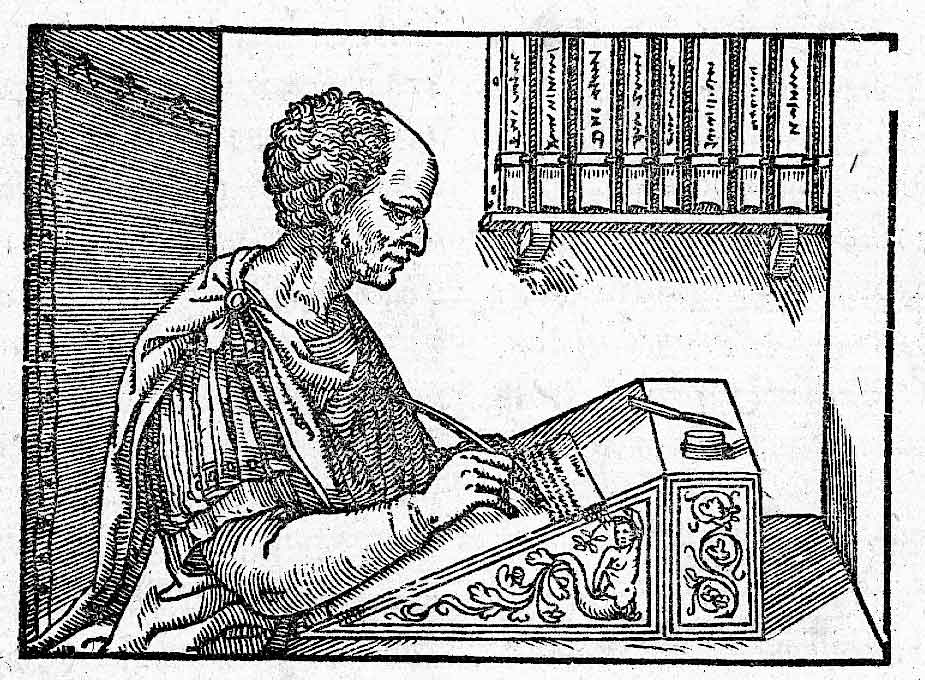
Cicero working on his letters, a woodcut

Trying to Deter the Criminals Among Us

Cicero, Letters to Brutus 23.10-11

“That’s plenty said about honors. Now we need to talk a bit about punishments. I have truly understood from your letters that you want to be praised for the clemency you have shown to those you have conquered. Well, I think that everything you do is done wisely! But, speaking for myself, I consider forgiving the punishment of crimes–which is what pardoning really is–is tolerable in other matters, but insidious in this war. There has been no civil war in our state to my knowledge that did not present some kind of future constitution regardless of which side won.

But in this conflict, I can’t be sure about what order the state will have if we win, but there surely won’t be any at all if we lose. This is why I advocated for harsh punishments for Antony and Lepidus too, not in as much for the sake of vengeance as to deter the other criminals among us from attacking the state right now and to offer a clear example for the future so that no one will be inspired to imitate such madness.”

Satis multa de honoribus. nunc de poena pauca dicenda sunt. intellexi enim ex tuis saepe litteris te in iis quos bello devicisti clementiam tuam velle laudari. existimo equidem nihil a te nisi sapienter. sed sceleris poenam praetermittere (id enim est quod vocatur ignoscere), etiam si in ceteris rebus tolerabile est, in hoc bello perniciosum puto. nullum enim bellum civile fuit in nostra re publica omnium quae memoria mea fuerunt, in quo bello non, utracumque pars vicisset, tamen aliqua forma esset futura rei publicae: hoc bello victores quam rem publicam simus habituri non facile adfirmarim, victis certe nulla umquam erit. dixi igitur sententias in Antonium, dixi in Lepidum severas, neque tam ulciscendi causa quam ut et in praesens sceleratos civis timore ab impugnanda patria deterrerem et in posterum documentum statuerem ne quis talem amentiam vellet imitari. 

Relief with the punishment of Ixion (2nd century) in the Side Archaeological Museum (Side, Turkey).

Sleep & Commodities

Aristotle, On Divination in Sleep, Chapter 2

What follows from the inequality of people:

“In brief, since some other creatures also dream, things seen in sleep might not come from god . . . Dreams, to be sure, have a divine element, but that is because nature has a divine element without being divine itself. 

The evidence [that prophetic dreams do not come from god]: since people of little worth foresee things [in sleep] and dream vividly, things seen in sleep cannot come from god.” 

Ὅλως δ’ ἐπεὶ καὶ τῶν ἄλλων ζῴων ὀνειρώττει τινά, θεόπεμπτα μὲν οὐκ ἂν εἴη τὰ ἐνύπνια . . .; δαιμόνια μέντοι· ἡ γὰρ φύσις δαιμονία, ἀλλ’ οὐ Θεία. Σημεῖον δέ· πάνυ γὰρ εὐτελεῖς ἄνθρωποι προορατικοί εἰσι καὶ εὐθυόνειροι, ὡς οὐ θεοῦ πέμποντος . . . 

Karl Marx. Capital. I. Part I. Chapter 1. Section 3.3.

What Aristotle could not see because of his belief in inequality: 

“When expressed in commodity form, all labor is equal human labor and therefore of equal quality. 

Aristotle could not discern this in the value form because Greek society rested on slave labor, and therefore the inequality of persons and their labor power formed its natural foundation. 

The secret of this way of expressing value–i.e., equality and the equal validity of all labor, simply because it is human labor–can only be deciphered when the concept of human equality already has the strength of a popular prejudice.”   

 Daß aber in der Form der Warenwerte Alle Arbeiten als gleiche menschliche Arbeit und daher als gleich ausgedrückt sind geltend konnte Aristoteles nicht aus der Wertform selbst herauslesen, weil die griechische Gesellschaft auf der Sklavenarbeit beruhte, daher die Ungleichheit der Menschen und ihrer Arbeitskräfte zur Naturbasis hatte. Das Geheimnis des Wertausdrucks, die Gleichheit und gleiche Gültigkeit aller Arbeiten, weil und insofern sie menschliche Arbeit überhaupt sind, kann nur entziffert werden, sobald der Begriff der menschlichen Gleichheit bereits die Festigkeit eines Volksvorurteils besitzt.

Larry Benn has a B.A. in English Literature from Harvard College, an M.Phil in English Literature from Oxford University, and a J.D. from Yale Law School. Making amends for a working life misspent in finance, he’s now a hobbyist in ancient languages and blogs at featsofgreek.blogspot.com.

Cicero Says August Is the Start of a Whole New Year!

Cicero, Letters to Atticus, 5.15 [=LCL 108]

“I made it to Laodicea on July 31st: you will start the reckoning of the year from this day. Nothing was lacking or unexpected in my arrival, but it is amazing how much this work wears me out. It provides me far too little space for my intellectual curiosity and the work for which I have earned my position.”

Laodiceam veni prid. Kal. Sext.; ex hoc die clavum anni movebis. nihil exoptatius adventu meo, nihil c<>arius; sed est incredibile quam me negoti taedeat, non habeat satis magnum campum ille tibi non ignotus cursus animi et industriae meae, praeclara opera cesset.

Cicero writing his letters, woodcut 1547

Nothing Colonialist About the Classics….

Plutarch, On the Fortune of Alexander (Moralia 328d-f)

“When Alexander the great was taming Asia, Homer was being read and the children of the Persians, Susianans, and Gedrosians learned to sing the tragedies of Euripides and Sophocles. Shoot, even though Socrates, when he was prosecuted for bringing a foreign god to the Athenains, lost his case to those Athenian sycophants, Baktria and the Caucasus learned to kneel before Greek gods.

While Plato wrote a book about a single constitution, he persuaded no one to use it because of its severity; but Alexander created more than seventy cities among barbarian tribes and plated Greek institutions all over Asia and conquered their harsh and uncivilized ways. Few of us have even read Plato’s Laws, but countless thousands have followed Alexander’s and still used them.

Really, those who were conquered by Alexander are luckier than those who resisted him—they had no one who could help them change their pathetic lives; but the champion taught those conquered how to be happy.”

ἀλλ᾿ Ἀλεξάνδρου τὴν Ἀσίαν ἐξημεροῦντος Ὅμηρος ἦν ἀνάγνωσμα, καὶ Περσῶν καὶ Σουσιανῶν καὶ Γεδρωσίων παῖδες τὰς Εὐριπίδου καὶ Σοφοκλέους τραγῳδίας ᾖδον. καὶ Σωκράτης ὡςμὲν ξένα παρεισάγων δαιμόνια δίκην τοῖς Ἀθήνησιν ὠφλίσκανε συκοφάνταις· διὰ δ᾿ Ἀλέξανδρον τοὺς Ἑλλήνων θεοὺς Βάκτρα καὶ Καύκασος προσεκύνησε. Πλάτων μὲν γὰρ μίαν Eγράψας πολιτείαν οὐδένα πέπεικεν αὐτῇ χρῆσθαι διὰ τὸ αὐστηρόν· Ἀλέξανδρος δ᾿ ὑπὲρ ἑβδομήκοντα πόλεις βαρβάροις ἔθνεσιν ἐγκτίσας καὶ κατασπείρας τὴν Ἀσίαν Ἑλληνικοῖς τέλεσι, τῆς ἀνημέρου καὶ θηριώδους ἐκράτησε διαίτης. καὶ τοὺς μὲν Πλάτωνος ὀλίγοι νόμους ἀναγιγνώσκομεν, τοῖς δ᾿ Ἀλεξάνδρου μυριάδες ἀνθρώπων ἐχρήσαντο καὶ χρῶνται· μακαριώτεροι τῶν διαφυγόντων Ἀλέξανδρον οἱ κρατηθέντες γενόμενοι· τοὺς μὲν γὰρ οὐδεὶς ἔπαυσεν ἀθλίως ζῶντας, τοὺς δ᾿ ἠνάγκασεν εὐδαιμονεῖν ὁ νικήσας.

Color photograph of oil painting showing a Roman styled alexander pointing out the building of the city of alexandria
http://art.thewalters.org/detail/30203/alexander-the-great-founding-alexandria/

What is amazing about this passage is the quick but clear elision between culture as a marker of value and brute force to impose cultural supremacy. Similar themes are common in European treatises from Plutarch to today.

I mean, if Homer is so great, why does he need Alexander to take him to Asia?

Punish The Insurrectionists

Dionysius of Halicarnassus, Roman Antiquities 4.64

“I’ll try to explain in brief who the leaders of the insurrection were and how they came to this point of affairs.”

οἵτινες δ᾿ ἦσαν οἱ τῆς ἐπαναστάσεως ἄρξαντες καὶ δι᾿ οἵων τρόπων ἦλθον ἐπὶ τὰ πράγματα, δι᾿ ὀλίγων πειράσομαι διελθεῖν.

Dio Chrysostom, Oration 34

“If you believe these people are harming you, raising an insurrection and other chaos too, then you should drive them out and not admit them into your assemblies.”

οὓς εἰ μὲν οἴεσθε βλάπτειν ὑμᾶς καὶ στάσεως ἄρχειν καὶ ταραχῆς, ὅλως ἐχρῆν ἀπελάσαι καὶ μὴ παραδέχεσθαι ταῖς ἐκκλησίαις·

Aristotle, Constitution of the Athenians 17

“If any people rise in insurrection to install a tyrant or assist in creating a tyranny, that person and their family will be disenfranchised.”

ἐάν τινες τυραννεῖν ἐπανιστῶνται [ἐπὶ τυραννίδι] ἢ συγκαθιστῇ τὴν τυραννίδα ἄτιμον εἶναι αὐτὸν καὶ γένος.

Strabo, Geography  15.12

‘When there is insurrection, as frequently happens even in our time, sometimes it turns out some ways, other times it turns out differently and not the same for everyone. A disturbance is advantageous for some people but it disappoints the expectations of others.”

στασιαζόντων δέ, ὅπερ συμβαίνει πολλάκις, καὶ δὴ καὶ ἐφ᾿ ἡμῶν, ἄλλοτ᾿ ἄλλως συμβαίνει καὶ οὐ τὰ αὐτὰ πᾶσι· τοῖς μὲν γὰρ συνήνεγκεν ἡ ταραχή, τοῖς δὲ παρὰ γνώμην ἀπήντησεν.

David Gilmour Blythe, “Lincoln Crushing the Dragon of Rebellion,” 1862

The Five Categories of the Soul

Aristotle, Nicomachean Ethics 1139b

“Let’s discuss about these matters, starting from a deeper point. Let it stand that the soul has five categories in which to establish or deny the truth: these are skill, knowledge, prudence, wisdom, and intelligence. The mind is likely to deceive itself through supposition or opinion.”

Ἀρξάμενοι οὖν ἄνωθεν περὶ αὐτῶν πάλιν λέγωμεν. ἔστω δὴ οἷς ἀληθεύει ἡ ψυχὴ τῷ καταφάναι ἢ ἀποφάναι πέντε τὸν ἀριθμόν· ταῦτα δ᾿ ἐστὶ τέχνη, ἐπιστήμη, φρόνησις, σοφία, νοῦς· ὑπολήψει γὰρ καὶ δόξῃ ἐνδέχεται διαψεύδεσθαι.

Aristotle, On the Soul 404a

“Thus Anaxagoras also said that the soul makes movement—along with the rest who argued that the soul moved everything—but not exactly the same way as Democritus. For Democritus simply said that the soul and mind are the same and that truth is as things appear [subjective]. For this reason, he thinks that Homer described well when he has “Hektor lying there thinking differently”. He does not use the word “mind” [noos] as the power for discerning the truth, but he says that the soul and the mind are the same.”

Ὁμοίως δὲ καὶ Ἀναξαγόρας ψυχὴν εἶναι λέγει τὴν κινοῦσαν, καὶ εἴ τις ἄλλος εἴρηκεν ὡς τὸ πᾶν ἐκίνησε νοῦς, οὐ μὴν παντελῶς γ᾿ ὥσπερ Δημόκριτος. ἐκεῖνος μὲν γὰρ ἁπλῶς ταὐτὸν ψυχὴν καὶ νοῦν· τὸ γὰρ ἀληθὲς εἶναι τὸ φαινόμενον· διὸ καλῶς ποιῆσαι τὸν Ὅμηρον ὡς “Ἕκτωρ κεῖτ᾿ ἀλλοφρονέων.” οὐ δὴ χρῆται τῷ νῷ ὡς δυνάμει τινὶ περὶ τὴν ἀλήθειαν, ἀλλὰ ταὐτὸ λέγει ψυχὴν καὶ νοῦν.

“Aristotle” by Justus van Gent (1476)