On Rivers and Poets: Quintilian And Callimachus

Quintilian, An Orator’s Education 10.1.47

“Hence, as Aratus believes that we must begin with Zeus, we think that it is right to begin with Homer. For, truly, just as what he says about the ocean, which he says is the source and the force of every river and stream, so too does Homer furnish the model and origin for every type of eloquence. No one has exceeded him for sublimity in the large themes or quiet sense in the personal ones. At the same time he is ebullient and terse, joyful and severe, a source of wonder for his expansions and his brevity—preeminent by far for both his poetic and rhetorical mastery.”

Igitur, ut Aratus ab Iove incipiendum putat, ita nos rite coepturi ab Homero videmur. Hic enim, quem ad modum ex Oceano dicit ipse 〈omnium〉 amnium fontiumque cursus initium capere, omnibus eloquentiae partibus exemplum et ortum dedit. Hunc nemo in magnis rebus sublimitate, in parvis proprietate superaverit. Idem laetus ac pressus, iucundus et gravis, tum copia tum brevitate mirabilis, nec poetica modo sed oratoria virtute eminentissimus.

Callimachus, Hymn to Apollo 2.108-112

“Envy spoke surreptitiously into Apollo’s ears:
“I don’t love the singer who doesn’t sing as wide as the sea”
Apollo then kicked Envy with his foot and said this:
“The flowing of the Assyrian river is huge, but it carries a great deal
Of trash from the earth and hauls garbage with its water.
The bees do not carry water from just anywhere to Demeter
But only that which is clean and unmixed and flows down
From a sacred fountain, a little stream from a high peak.”

ὁ Φθόνος ᾿Απόλλωνος ἐπ’ οὔατα λάθριος εἶπεν·
‘οὐκ ἄγαμαι τὸν ἀοιδὸν ὃς οὐδ’ ὅσα πόντος ἀείδει.’
τὸν Φθόνον ὡπόλλων ποδί τ’ ἤλασεν ὧδέ τ’ ἔειπεν·
‘᾿Ασσυρίου ποταμοῖο μέγας ῥόος, ἀλλὰ τὰ πολλά
λύματα γῆς καὶ πολλὸν ἐφ’ ὕδατι συρφετὸν ἕλκει.
Δηοῖ δ’ οὐκ ἀπὸ παντὸς ὕδωρ φορέουσι μέλισσαι,
ἀλλ’ ἥτις καθαρή τε καὶ ἀχράαντος ἀνέρπει
πίδακος ἐξ ἱερῆς ὀλίγη λιβὰς ἄκρον ἄωτον.’

Image result for Okeanos ancient Greek

Sparta Banned Archilochus. Enough Said.

Sparta has some problems (and a wildly unjustifiable popularity). Here’s another one.

Valerius Maximas, 6.3 Ext 1

“Although it is possible to use the whole planet to offer examples of Roman cruelty, it is not useless to learn of foreign instances in summary. The Spartans ordered that the books of Archilochus were to be expelled from their state because they believed that they were insufficiently modest and were also shameful reading.

They did not want their children’s minds to be filled with these ideas in case they might harm their characters more than it sharpened their wits. For this reason they exiled the greatest or nearly greatest poet because he wounded a household he hated with vulgar curses.”

Ceterum etsi Romanae severitatis exemplis totus terrarum orbis instrui potest, tamen externa summatim cognosse fastidio non sit. Lacedaemonii libros Archilochi e civitate sua exportari iusserunt, quod eorum parum verecundam ac pudicam lectionem arbitrabantur: noluerunt enim ea liberorum suorum animos imbui, ne plus moribus noceret quam ingeniis prodesset. itaque maximum poetam aut certe summo proximum, quia domum sibi invisam obscenis maledictis laceraverat, carminum exsilio multarunt.

The Chiggi Vase

Valerius Maximus’ account is somewhat different from the story most people know. Where he seems to take issue with Archilochus’ invective and his salacious content, others claim the issue was his cowardice. Plutarch claims that Archilochus was expelled from Sparta for this poem:

Fr. 5

“Some Saian takes joy the the shield, that blameless weapon
I left next to a bush unwillingly.
But I rescued myself. What does that shield matter to me?
Fuck it. I’ll buy no worse a shield next time.”

ἀσπίδι μὲν Σαΐων τις ἀγάλλεται, ἣν παρὰ
θάμνῳ, ἔντος ἀμώμητον, κάλλιπον οὐκ ἐθέλων·
αὐτὸν δ᾿ ἐξεσάωσα. τί μοι μέλει ἀσπὶς ἐκείνη;
ἐρρέτω· ἐξαῦτις κτήσομαι οὐ κακίω.

Plutarch also reports:

Spartan Sayings, 241f6

“Another spartan woman as she was passing her son his shield advised him, “child, [come home] either with this or on it.”

῎Αλλη προσαναδιδοῦσα τῷ παιδὶ τὴν ἀσπίδα καὶ παρακελευομένη ‘τέκνον’ ἔφη, ‘ἢ ταύταν ἢ ἐπὶ ταύτας.’

Sappho’s Equal? Some Epigrams Assigned to the Poet Nossis

Nossis is one of the best attested woman poets from the ancient world. Don’t feel bad if you haven’t heard of her.

Greek Anthology, 6.353

“Melinna herself is here. Look how her pure face
Seems to glance gently at me.
How faithfully she looks like her mother in every way.
Whenever children equal their parents it is beautiful.”

Αὐτομέλιννα τέτυκται· ἴδ᾿ ὡς ἀγανὸν τὸ πρόσωπον
ἁμὲ ποτοπτάζειν μειλιχίως δοκέει·
ὡς ἐτύμως θυγάτηρ τᾷ ματέρι πάντα ποτῴκει.
ἦ καλὸν ὅκκα πέλῃ τέκνα γονεῦσιν ἴσα.

7.718

“Stranger, if you sail to the city of beautiful dances, Mytilene,
The city which fed Sappho, the flower of the muses,
Tell them that the land of Lokris bore for the Muses
A woman her equal, by the name of Nossis. Go!”

Ὦ ξεῖν᾿, εἰ τύ γε πλεῖς ποτὶ καλλίχορον Μυτιλάναν,
τὰν Σαπφὼ χαρίτων ἄνθος ἐναυσαμέναν,
εἰπεῖν, ὡς Μούσαισι φίλαν τήνᾳ τε Λοκρὶς γᾶ
τίκτεν ἴσαν ὅτι θ᾿ οἱ τοὔνομα Νοσσίς· ἴθι.

6.275

“I expect that Aphrodite will be pleased to receive
As an offering from Samutha, the band that held her hair.
For it is well made and smells sweetly of nektar,
That very nektar she uses to anoint beautiful Adonis.”

Χαίροισάν τοι ἔοικε κομᾶν ἄπο τὰν Ἀφροδίταν
ἄνθεμα κεκρύφαλον τόνδε λαβεῖν Σαμύθας·
δαιδαλέος τε γάρ ἐστι, καὶ ἁδύ τι νέκταρος ὄσδει,
τοῦ, τῷ καὶ τήνα καλὸν Ἄδωνα χρίει.

9.332

“Let’s leave for the temple and go to see Aphrodite’s
Sculpture—how it is made so finely in gold.
Polyarkhis dedicated it after she earned great
wealth from the native glory of her body.”

Ἐλθοῖσαι ποτὶ ναὸν ἰδώμεθα τᾶς Ἀφροδίτας
τὸ βρέτας, ὡς χρυσῷ διαδαλόεν τελέθει.
εἵσατό μιν Πολυαρχίς, ἐπαυρομένα μάλα πολλὰν
κτῆσιν ἀπ᾿ οἰκείου σώματος ἀγλαΐας.

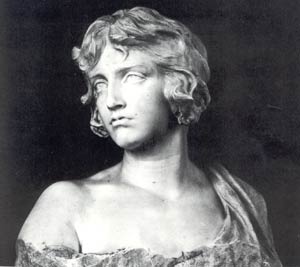
Nossis.jpg
Bust by Francesco Jerace

Cleobulina’s Poetic Riddles

The following is not really a single poem but rather a collection of lines cited in Athenaeus, Plutarch and others and attributed to Cleobulina

Cleobulina fr. 3.1

“I have seen a man fashioning bronze on another man with fire
Fitting it so well that he joined them in the blood.
I saw a man stealing and deceiving violently—
To accomplish this with violence is the most just thing.
A donkey corpse struck me on the ear with its horny shin.”

ἄνδρ’ εἶδον πυρὶ χαλκὸν ἐπ’ ἀνέρι κολλήσαντα
οὕτω συγκόλλως ὥστε σύναιμα ποιεῖν.
ἄνδρ’ εἶδον κλέπτοντα καὶ ἐξαπατῶντα βιαίως,
καὶ τὸ βίαι ῥέξαι τοῦτο δικαιότατον.
κνήμηι νεκρὸς ὄνος με κερασφόρωι οὖας ἔκρουσεν·

These lines are poetic riddles: the first one, according to Athenaeus, is about using a cupping glass to draw blood to the surface of the skin) the last one is about a Phrygian flute (which was made from a donkey bone)

Cleobulina 4bpblogspotcomk3VU9hBtRk0T5b6PfaiZzIAAAAAAA

One Without a Greedy Heart: Horace’s Minor Madness

Horace, Epistles 2.118-125

“This mistake, this minor madness, still possesses
This many advantages—consider them. The poet is
Not one with a greedy heart. He loves his lines, and desires
This alone. He mocks lost money, the flight of slaves and fires
There’s no thought of fraud against his friend or his ward
He lives as well as thin gruel and dry bread can afford.
Although he’s slow and a bad soldier, he’s still of use,
If you believe this: that grand affairs are helped by small matters too.

Hic error tamen et levis haec insania quantas
virtutes habeat, sic collige. vatis avarus
non temere est animus; versus amat, hoc studet unum;
detrimenta, fugas servorum, incendia ridet;
non fraudem socio puerove incogitat ullam
pupillo; vivit siliquis et pane secundo;
militiae quamquam piger et malus, utilis urbi,
si das hoc, parvis quoque rebus magna iuvari.

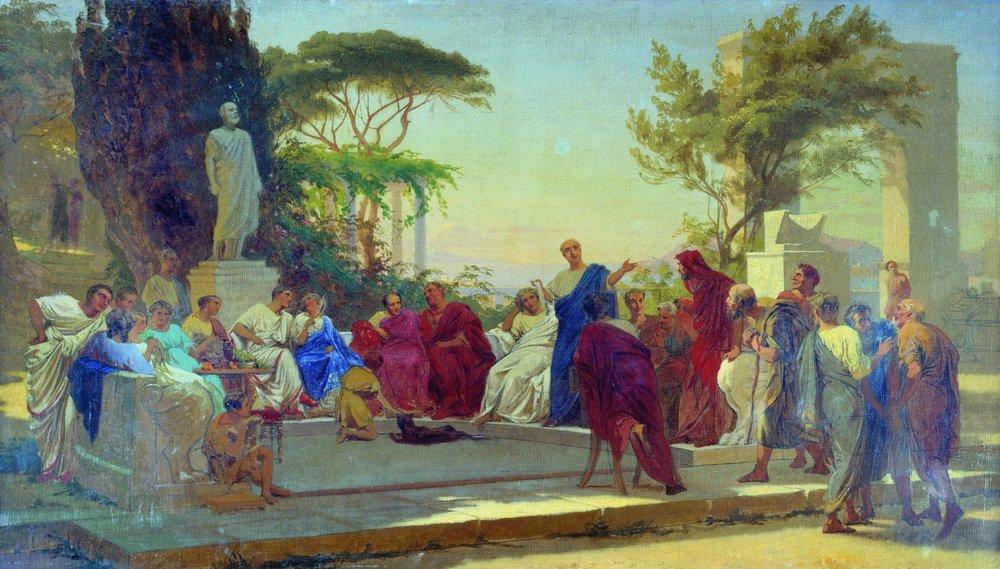
Horace reads before Maecenas, by Fyodor Bronnikov

“An Equal Amount is Better than More”

Diodorus Siculus, History 9.12

“There is also the story that when the people of Mitylene allowed Pittacus to have half the land over which he fought in single combat, he would not take it. Instead, he assigned an equal portion to each man, saying that an “equal amount is greater than more”. For, since he took the measure of what was greater by fairness not by profit, he judged wisely. He believed that fame and safety would follow equality while gossip and fear followed greed, and they would have quickly reclaimed his gift.”

12. Ὅτι τῶν Μιτυληναίων διδόντων τῷ Πιττακῷ τῆς χώρας ὑπὲρ ἧς ἐμονομάχησε τὴν ἡμίσειαν οὐκ ἐδέξατο, συνέταξε δὲ ἑκάστῳ κληρῶσαι τὸ ἴσον, ἐπιφθεγξάμενος ὡς τὸ ἴσον ἐστὶ τοῦ πλείονος πλεῖον. μετρῶν γὰρ ἐπιεικείᾳ τὸ πλεῖον, οὐ κέρδει, σοφῶς ἐγίνωσκεν· τῇ μὲν γὰρ ἰσότητι δόξαν καὶ ἀσφάλειαν ἀκολουθήσειν, τῇ δὲ πλεονεξίᾳ βλασφημίαν καὶ φόβον, δι᾿ ὧν ταχέως ἂν αὐτοῦ τὴν δωρεὰν ἀφείλαντο.

Cf. Diogenes Laertius, Lives of the Philosophers 1.75

“Then, the Mityleneans honored Pittakos powerfully and gave the rule of the state to him alone. During the ten years he held power, he also corrected the constitution and then surrendered power even though he lived ten years more. The Mityleneans gave him some land, but he donated it as sacred. The plot is called after his name even today. Sôsicrates says that he cut off a little bit for himself, saying that “half is greater than the whole.”

[75] Τότε δ᾽ οὖν τὸν Πιττακὸν ἰσχυρῶς ἐτίμησαν οἱ Μυτιληναῖοι, καὶ τὴν ἀρχὴν ἐνεχείρισαν αὐτῷ. ὁ δὲ δέκα ἔτη κατασχὼν καὶ εἰς τάξιν ἀγαγὼν τὸ πολίτευμα, κατέθετο τὴν ἀρχήν, καὶ δέκα ἐπεβίω ἄλλα. καὶ χώραν αὐτῷ ἀπένειμαν οἱ Μυτιληναῖοι: ὁ δὲ ἱερὰν ἀνῆκεν, ἥτις νῦν Πιττάκειος καλεῖται. Σωσικράτης δέ φησιν ὅτι ὀλίγον ἀποτεμόμενος ἔφη τὸ ἥμισυ τοῦ παντὸς πλεῖον εἶναι. ἀλλὰ καὶ Κροίσου διδόντος χρήματα οὐκ ἐδέξατο, εἰπὼν ἔχειν ὧν ἐβούλετο διπλάσια: ἄπαιδος γὰρ τἀδελφοῦ τελευτήσαντος κεκληρονομηκέναι.

The idea of “half being greater than the whole” is likely proverbial, showing up as well in Hesiod’s Works and Days where the narrator uses it when he complains about how the judges act unfairly in their evaluation of cases (by taking bribes): “the fools don’t know how much greater the half is than the whole” νήπιοι, οὐδὲ ἴσασιν ὅσῳ πλέον ἥμισυ παντὸς.
Diodorus Siculus’ statement that “an equal part is greater than more” is probably a clever departure from the Hesiodic statement. Hesiod’s statement seems to be about greed (wanting more than your due), as glossed by Michael Apostolius

13.77

“They don’t know how much greater the half is than the whole”: [this is a proverb used] for those who desire more and lose what they have.

Οὐδ’ ἴσασιν ὅσῳ πλέον ἥμισυ παντός: ὅτι οἱ τῶν πλειόνων ἐπιθυμοῦντες καὶ ἃ ἔχουσιν ἀποβάλλουσιν.

A unifying theme between the two versions is that in early Greek culture that which is isos is not fair in terms of being equal but it possesses equity in terms of being proper to the recipient’s social status. So, Diodorus’ isos share can map out onto Hesiod’s “half” share.

Image result for pittacus

Magic Men: Poets, Healers, Prophets and Mages, Another Wondrous Wednesday

Apollonios the Paradoxographer is credited with a text of 51 anecdotes usually dated to the 3rd or 2nd century BCE.

Apollonios Paradoxographus,  Historiae Mirabiles 3

1 Epimenides of Crete is said to have been sent by his father and uncles to the field to bring sheep to the city. Once night came upom him he varied his custom and slept for 57 years as many others have written and Theopompos records this in his histories about amazing things in regions.

After this it happened that Epimenides’ family believed he was dead in the intervening years. When he woke from sleep he went in search of the sheep he had been sent for. When he did not find it he went to the field. He was imagining that he had woken on the same day on which he went to sleep. When he came upon a ruined field and a a decaying shelter, he went to the city. After he arrived at he home he recognized everyone there among those who were there in the time when he disappeared.

The Cretans claim—as Theopompos says—that he lived 150 years and then died. There are not a few other impossible stories told about the same man.”

᾿Επιμενίδης ὁ Κρὴς λέγεται ὑπὸ τοῦ πατρὸς καὶ τῶν ἀδελφῶν τοῦ πατρὸς ἀποσταλεὶς εἰς ἀγρὸν πρόβατον ἀγαγεῖν εἰς τὴν πόλιν· καταλαβούσης αὐτὸν νυκτὸς παραλλάξαι τῆς τρίβου καὶ κατακοιμηθῆναι ἔτη ἑπτὰ καὶ πεντήκοντα, καθάπερ ἄλλοι τε πολλοὶ εἰρήκασιν, ἔτι <δὲ> καὶ Θεόπομπος ἐν ταῖς ἱστορίαις ἐπιτρέχων τὰ κατὰ τόπους θαυμάσια.

ἔπειτα συμβῆναι ἐν τῷ μεταξὺ χρόνῳ τοὺς μὲν οἰκείους τοῦ ᾿Επιμενίδου ἀποθανεῖν, αὐτὸν δὲ ἐγερθέντα ἐκ τοῦ ὕπνου ζητεῖν ἐφ’ ὃ ἀπεστάλη πρόβατον, μὴ εὑρόντα δὲ πορεύεσθαι εἰς τὸν ἀγρόν—ὑπελάμβανεν δὲ ἐγηγέρθαι τῇ αὐτῇ ἡμέρᾳ, ᾗπερ ἔδοξεν κεκοιμῆσθαι—καὶ καταλαβόντα τὸν ἀγρὸν πεπραμένον καὶ τὴν σκευὴν ἠλλαγμένην ἀπαίρειν εἰς τὴν πόλιν. καὶ εἰσελθὼν εἰς τὴν οἰκίαν ἐκεῖθεν πάντα ἔγνω, ἐν οἷς καὶ τὰ περὶ τοῦ χρόνου, καθ’ ὃν ἀφανὴς ἐγένετο.

λέγουσι δὲ οἱ Κρῆτες, ὥς φησιν ὁ Θεόπομπος, ἔτη βιώσαντα αὐτὸν ἑκατὸν πεντήκοντα <καὶ ἑπτὰ> ἀποθανεῖν.  λέγεται δὲ περὶ τοῦ ἀνδρὸς τούτου καὶ ἄλλα οὐκ ὀλίγα παράδοξα.

Epimenides is famous for his sleeping trick in the ancient world–but he was also known for composing a Cretan Theogony.

2 “It is said that Aristeas the Prokonnesian died on some early morning in Prokennesos and on that same day and hour was seen by many in Sicily teaching reading. From there, because this sort of thing occurred with him and he appeared over many years and the phenomenon grew more frequent, the Sicilians built a temple to him an sacrificed to him as a god.”

2᾿Αριστέαν δὲ ἱστορεῖται τὸν Προκοννήσιον ἔν τινι γναφείῳ τῆς Προκοννήσου τελευτήσαντα ἐν τῇ αὐτῇ ἡμέρᾳ καὶ ὥρᾳ ἐν Σικελίᾳ ὑπὸ πολλῶν θεωρηθῆναι γράμματα διδάσκοντα. ὅθεν, πολλάκις αὐτῷ τοῦ τοιούτου συμβαίνοντος καὶ περιφανοῦς γιγνομένου διὰ πολλῶν ἐτῶν καὶ πυκνότερον ἐν τῇ Σικελίᾳ φανταζομένου, οἱ Σικελοὶ ἱερόν τε καθιδρύσαντο αὐτῷ καὶ ἔθυσαν ὡς ἥρωϊ.

Aristeas is also believed to have been an epic poet who traveled great distances.

I have posted Apollonios’ similar tales about Hermotimos (Wonder 3) and Pythagoras (Wonder 7) before.

4 “Abaris was from the Hyperboreans and he himself was a theologer. He also composed oracles as he traveled around the lands, and these survive even to our times. That guy also prophesied earthquakes and famines and similar things and events in the sky.

It is said that he appeared in Lakedaimon and told the Lakonians to make some preventive sacrifices to the gods. And from that time on there was no famine in Lakedaimon.”

4῎Αβαρις δὲ ἐξ ῾Υπερβορέων ἦν μὲν καὶ αὐτὸς τῶν θεολόγων, ἔγραφε δὲ καὶ χρησμοὺς τὰς χώρας περιερχόμενος, οἵ εἰσιν μέχρι τοῦ νῦν ὑπάρχοντες· προέλεγεν δὲ καὶ οὗτος σεισμοὺς καὶ λοιμοὺς καὶ τὰ παραπλήσια καὶ τὰ γιγνόμενακατ’ οὐρανόν. λέγεται δὲ τοῦτον εἰς Λακεδαίμονα παραγενόμενον εἰρηκέναι τοῖς Λάκωσι κωλυτήρια θῦσαι τοῖς θεοῖς, καὶ ἐκ τούτου ὕστερον ἐν Λακεδαίμονι λοιμὸς οὐκ ἐγένετο.

Abaris was also a poet and healer.

5 “Some tales like the following are presented concerning Pherecydes. Once on the island Suros when he was thirsty he  asked for water from one of his relatives. While he was drinking, he said that there would be an earthquake on the island on the third day. Because this happened, the man earned great fame.

When he was returning to Samos to see the temple of Hera and his ship was being taken into the harbor, he said to his fellow passengers that the ship would not make it into the harbor.  As he was still saying this, the darkness fell all around and finally the ship disappeared.”

5 Τὰ δὲ περὶ Φερεκύδην τοιαῦτά τινα ἱστορεῖται. ἐν Σύρῳ ποτὲ τῇ νήσῳ διψῶντα ὑδάτιον αἰτῆσαι παρά τινος τῶν γνωρίμων· τὸν δὲ πιόντα εἰπεῖν σεισμὸν ἐσόμενον ἐν τῇ νήσῳ μετὰ τρίτην ἡμέραν. τούτου δὲ συμβάντος μεγάλην δόξαν αὐτὸν ἀπενέγκασθαι.

πάλιν δὲ εἰς Σάμον πορευόμενον εἰς τὸ τῆς ῞Ηρας ἱερὸν ἰδεῖν πλοῖον εἰς τὸν λιμένα καταγόμενον, καὶ εἰπεῖν τοῖς συνεστῶσιν, ὡς οὐκ εἰσελεύσεται ἐντὸς τοῦ λιμένος· ἔτι δὲ λέγοντος αὐτοῦ καταρραγῆναι γνόφον καὶ τέλος ἀφανισθῆναι τὴν ναῦν.

Like Epimenides, Pherecydes was credited with composing a cosmogony.

Pherecydes.jpg


“My Soul Tried to Cross Our Lips”: More Platonic Love

Two more love poems attributed to Plato

Diogenes Laertius Vita Phil 1.3 [Plato 31] and Athenaeus 589e

“I have a lover from Kolophôn named Arkheanassa—
Potent lust rests even on her wrinkles
Poor wretches who met her during the first sailing
Of her youth—what a conflagration you passed through!”

Ἀρχεάνασσαν ἔχω τὴν ἐκ Κολοφῶνος ἑταίραν,
ἧς καὶ ἐπὶ ῥυτίδων ἕζετο δριμὺς ἔρως.
ἆ δειλοὶ νεότητος ἀπαντήσαντες ἐκείνης
πρωτοπλόου, δι᾿ ὅσης ἤλθετε πυρκαϊῆς.

The Greek Anth. 7.217 attributes a slightly different version to Asclepiades

“I have Arkheanassa, a lover from Kolophôn—
Sweet lust rests even on her wrinkles
Oh lovers who harvested the fruit of her youth
At first bloom—what a conflagration you passed through!”

Ἀρχεάνασσαν ἔχω, τὰν ἐκ Κολοφῶνος ἑταίραν,
ἇς καὶ ἐπὶ ῥυτίδων ὁ γλυκὺς ἕζετ᾿ Ἔρως.
ἆ νέον ἥβης ἄνθος ἀποδρέψαντες ἐρασταὶ
πρωτοβόλου, δι᾿ ὅσης ἤλθετε πυρκαϊῆς.

D. L = Gr. Anth. 7.78

“When kissing Agathon I felt my soul at my lips.
The wretch—for she was trying to cross between us.”

τὴν ψυχὴν Ἀγάθωνα φιλῶν ἐπὶ χείλεσιν εἶχον·
ἦλθε γὰρ ἡ τλήμων ὡς διαβησομένη.

According to Aelian, Plato’s career as a poet was cut short (Varia Historia 2.30); but note, though there is mention of epic and tragedy, the anecdote makes no claims for lyric and elegy:

“Plato, the son of Ariston, at first pursued poetry and used to write heroic verse. But he soon burned it all because he despised it, since he reckoned that his poetry was far inferior when compared to Homer’s. He then tried tragedy and even completed a tetralogy, and he was about to enter the competition, even to the point of giving the verses to actors. But right before the Dionysia, he went and heard Socrates; and once he was seized by that Siren, he not only withdrew from the competition, but he also gave up the writing of tragedy for good to immerse himself in philosophy.”

Πλάτων ὁ ᾿Αρίστωνος τὰ πρῶτα ἐπὶ ποιητικὴν ὥρμησε, καὶ ἡρωϊκὰ ἔγραφε μέτρα• εἶτα αὐτὰ κατέπρησεν ὑπεριδὼν αὐτῶν, ἐπεὶ τοῖς ῾Ομήρου αὐτὰ ἀντικρίνων ἑώρα κατὰ πολὺ ἡττώμενα. ἐπέθετο οὖν τραγῳδίᾳ, καὶ δὴ καὶ τετραλογίαν εἰργάσατο, καὶ ἔμελλεν ἀγωνιεῖσθαι, δοὺς ἤδη τοῖς ὑποκριταῖς τὰ ποιήματα. πρὸ τῶν Διονυσίων δὲ παρελθὼν ἤκουσε Σωκράτους, καὶ ἅπαξ αἱρεθεὶς ὑπὸ τῆς ἐκείνου σειρῆνος, τοῦ ἀγωνίσματος οὐ μόνον ἀπέστη τότε, ἀλλὰ καὶ τελέως τὸ γράφειν τραγῳδίαν ἀπέρριψε, καὶ ἀπεδύσατο ἐπὶ φιλοσοφίαν.

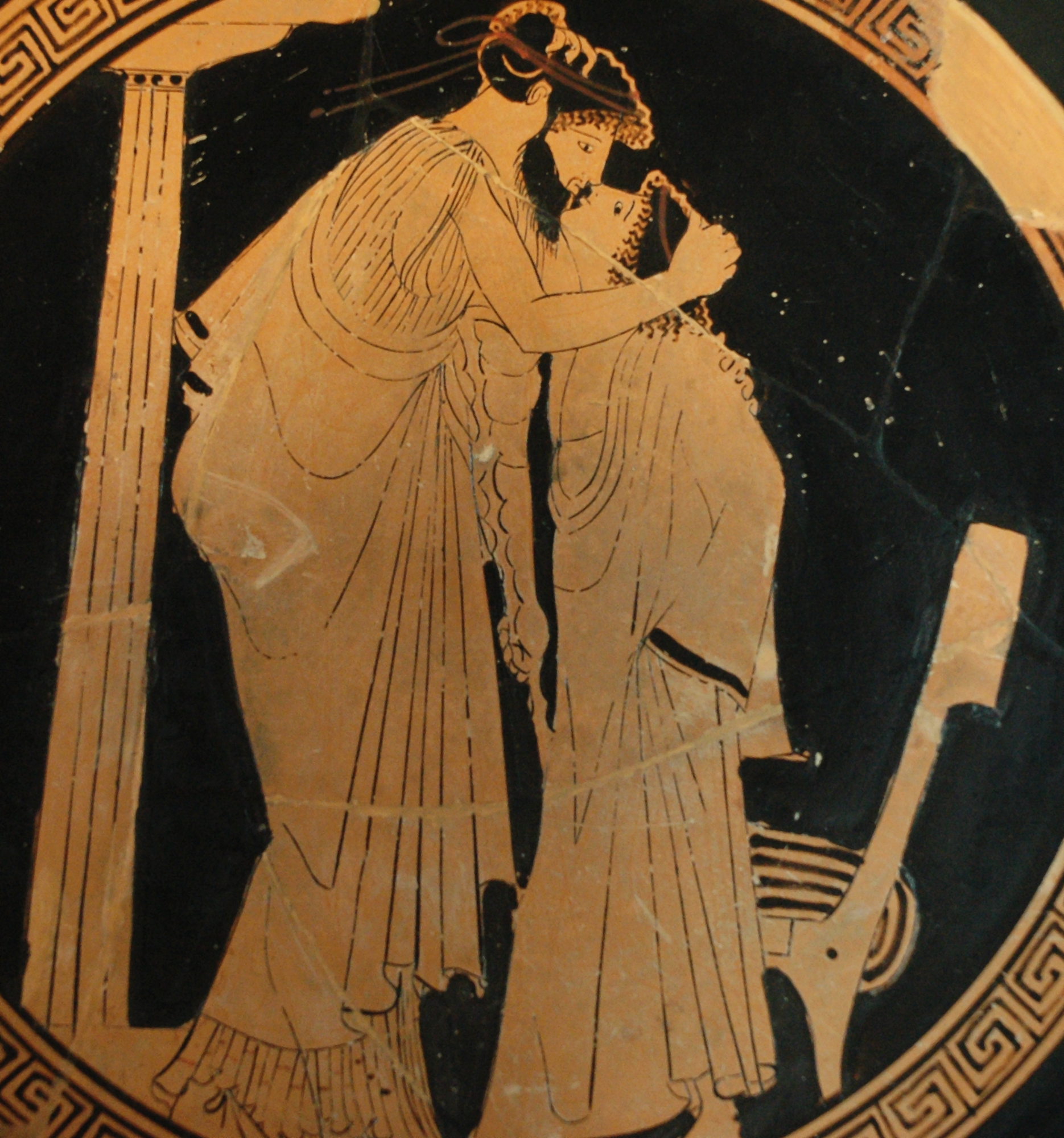
Image result for ancient greek kissing vase
Louvre G 278 Attributed to Briseis Painter

On Rivers and Poets: Quintilian And Callimachus

Quintilian, An Orator’s Education 10.1.47

“Hence, as Aratus believes that we must begin with Zeus, we think that it is right to begin with Homer. For, truly, just as what he says about the ocean, which he says is the source and the force of every river and stream, so too does Homer furnish the model and origin for every type of eloquence. No one has exceeded him for sublimity in the large themes or quiet sense in the personal ones. At the same time he is ebullient and terse, joyful and severe, a source of wonder for his expansions and his brevity—preeminent by far for both his poetic and rhetorical mastery.”

Igitur, ut Aratus ab Iove incipiendum putat, ita nos rite coepturi ab Homero videmur. Hic enim, quem ad modum ex Oceano dicit ipse 〈omnium〉 amnium fontiumque cursus initium capere, omnibus eloquentiae partibus exemplum et ortum dedit. Hunc nemo in magnis rebus sublimitate, in parvis proprietate superaverit. Idem laetus ac pressus, iucundus et gravis, tum copia tum brevitate mirabilis, nec poetica modo sed oratoria virtute eminentissimus.

Callimachus, Hymn to Apollo 2.108-112

“Envy spoke surreptitiously into Apollo’s ears:
“I don’t love the singer who doesn’t sing as wide as the sea”
Apollo then kicked Envy with his foot and said this:
“The flowing of the Assyrian river is huge, but it carries a great deal
Of trash from the earth and hauls garbage with its water.
The bees do not carry water from just anywhere to Demeter
But only that which is clean and unmixed and flows down
From a sacred fountain, a little stream from a high peak.”

ὁ Φθόνος ᾿Απόλλωνος ἐπ’ οὔατα λάθριος εἶπεν·
‘οὐκ ἄγαμαι τὸν ἀοιδὸν ὃς οὐδ’ ὅσα πόντος ἀείδει.’
τὸν Φθόνον ὡπόλλων ποδί τ’ ἤλασεν ὧδέ τ’ ἔειπεν·
‘᾿Ασσυρίου ποταμοῖο μέγας ῥόος, ἀλλὰ τὰ πολλά
λύματα γῆς καὶ πολλὸν ἐφ’ ὕδατι συρφετὸν ἕλκει.
Δηοῖ δ’ οὐκ ἀπὸ παντὸς ὕδωρ φορέουσι μέλισσαι,
ἀλλ’ ἥτις καθαρή τε καὶ ἀχράαντος ἀνέρπει
πίδακος ἐξ ἱερῆς ὀλίγη λιβὰς ἄκρον ἄωτον.’

Image result for Okeanos ancient Greek

Poets and Audiences, Some Pithy Sayings

The following anecdotes are taken from the Gnomologium Vaticanum

106

“When Antagoras the poet had a performance at Thebes and obtained no honor, he said “Thebans, Odysseus screwed up when he covered his companions’ ears as he was sailing by the Sirens. It would have been right for him to hire you as sailors.”

᾿Ανταγόρας ὁ ποιητὴς ἀκρόασιν παρέχων ἐν Θήβαις καὶ μηδεμιᾶς τυγχάνων τιμῆς εἶπεν· „ὦ ἄνδρες Θηβαῖοι· ἥμαρτεν ᾿Οδυσσεὺς ἐμφράξας τῶν ἑταίρων τὰς ἀκοάς, ὅτε τὰς Σειρῆνας παρέπλει· ἔδει γὰρ αὐτὸν ὑμᾶς ναύτας μισθώσασθαι.”


109

“When Antagoras the Rhodian epic poet was reading his composition the Thebais in Thebes and no one was applauding him, he took the book and said, “You are rightly called Boiotians, for you all have cows’ ears!”

᾿Ανταγόρας ὁ ῾Ρόδιος ἐποποιὸς ἐν Θήβαις ἀναγινώσκων τὸ τῆς Θηβαΐδος σύγγραμμα, ὡς οὐδεὶς ἐπεσημαίνετο, εἱλήσας τὸ βιβλίον εἶπεν· „δικαίως καλεῖσθε Βοιωτοί· βοῶν γὰρ ὦτα ἔχετε.”


454

“When Persinos the poet was asked who the best poet is he says “each poet is to himself, but Homer to everyone else.”

Περσῖνος ὁ ποιητὴς ἐρωτηθεὶς τίς ἄριστός ἐστι ποιητὴς „παρ’ ἑαυτῷ μὲν ἕκαστος”, <εἶπε>, „παρὰ δὲ τοῖς ἄλλοις ῞Ομηρος”.


468

“Protagoras, when he was slandered by some poet because he didn’t take his poems, said “Wretch—it’s better for me to be slandered by you than to listen to your poems.”

Πρωταγόρας ἐποποιοῦ τινος αὐτὸν βλασφημοῦντος ἐπὶ τῷ μὴ ἀποδέχεσθαι τὰ ποιήματα αὐτοῦ „ὦ τάν”, ἔφη· „κρεῖττόν μοι ἐστι κακῶς ἀκούειν ὑπό σου ἢ τῶν σῶν ποιημάτων ἀκούειν”.


Image result for Ancient Greek vase poet performance