Choosing a Captain on the Ship of Fools

Plato, Republic 6 488a7-89a2

[This was inspired by the “Ship of Fools” post at LitKicks]

Consider this how this could turn out on many ships or even just one: there is a captain of some size and strength beyond the rest of the men in the ship, but he is deaf and similarly limited at seeing, and he knows as much about sailing as these qualities might imply. So, the sailors are struggling with one another about steering the ship, because each one believes that he should be in charge, even though he has learned nothing of the craft nor can indicate who his teacher was nor when he had the time to learn. Some of them are even saying that it is not teachable, and that they are ready to cut down the man who says it can be taught.

They are always hanging all over the captain asking him and making a big deal of the fact that he should entrust the rudder to them. There are times when some of them do not persuade him, and some of them kill others or kick them off the ship, and once they have overcome the noble captain through a mandrake, or drugs, or something else and run the ship, using up its contents drinking, and partying, and sailing just as such sort of men might. In addition to this, they praise as a fit sailor, and call a captain and knowledgeable at shipcraft the man who is cunning at convincing or forcing the captain that they should be in charge. And they rebuke as useless anyone who is not like this.

Such men are unaware what a true helmsman is like, that he must be concerned about the time of year, the seasons, the sky, the stars, the wind and everything that is appropriate to the art, if he is going to be a leader of a ship in reality, how he might steer the ship even if some desire it or not, when they believe that it is not possible to obtain art or practice about how to do this, something like an art of ship-steering. When these types of conflicts are occurring on a ship, don’t you think the one who is a true helmsman would be called a star-gazer, a blabber, or useless to them by the sailors in the ships organized in this way?


νόησον γὰρ τοιουτονὶ γενόμενον εἴτε πολλῶν νεῶν πέρι εἴτε μιᾶς· ναύκληρον μεγέθει μὲν καὶ ῥώμῃ ὑπὲρ τοὺς ἐν τῇ νηὶ πάντας, ὑπόκωφον δὲ καὶ ὁρῶντα ὡσαύτως βραχύ τι καὶ γιγνώσκοντα περὶ ναυτικῶν ἕτερα τοιαῦτα, τοὺς δὲ ναύτας στασιάζοντας πρὸς ἀλλήλους περὶ τῆς κυβερνήσεως, ἕκαστον οἰόμενον δεῖν κυβερνᾶν, μήτε μαθόντα πώποτε τὴν τέχνην μέτε ἔχοντα ἀποδεῖξαι διδάσκαλον ἑαυτοῦ μηδὲ χρόνον ἐν ᾧ ἐμάνθανεν, πρὸς δὲ τούτοις φάσκοντας μηδὲ διδακτὸν εἶναι, ἀλλὰ καὶ τὸν λέγοντα ὡς διδακτὸν ἑτοίμους κατατέμνειν, αὐτοὺς δὲ αὐτῷ ἀεὶ τῷ ναυκλήρῳ περικεχύσθαι δεομένους καὶ πάντα ποιοῦντας ὅπως ἂν σφίσι τὸ πηδάλιον ἐπιτρέψῃ, ἐνίοτε δ’ ἂν μὴ πείθωσιν ἀλλὰ ἄλλοι μᾶλλον, τοὺς μὲν ἄλλους ἢ ἀποκτεινύντας ἢ ἐκβάλλοντας ἐκ τῆς νεώς, τὸν δὲ γενναῖον ναύκληρον μανδραγόρᾳ ἢ μέθῃ ἤ τινι ἄλλῳ συμποδίσαντας τῆς νεὼς ἄρχειν χρωμένους τοῖς ἐνοῦσι, καὶ πίνοντάς τε καὶ εὐωχουμένους πλεῖν ὡς τὸ εἰκὸς τοὺς τοιούτους, πρὸς δὲ τούτοις ἐπαινοῦντας ναυτικὸν μὲν καλοῦντας καὶ κυβερνητικὸν καὶ ἐπιστάμενον τὰ κατὰ ναῦν, ὃς ἂν συλλαμβάνειν δεινὸς ᾖ ὅπως ἄρξουσιν ἢ πείθοντες ἢ βιαζόμενοι τὸν ναύκληρον, τὸν δὲ μὴ τοιοῦτον ψέγοντας ὡς ἄχρηστον, τοῦ δὲ ἀληθινοῦ κυβερνήτου πέρι μηδ’ ἐπαΐοντες, ὅτι ἀνάγκη αὐτῷ τὴν ἐπιμέλειαν ποιεῖσθαι ἐνιαυτοῦ καὶ ὡρῶν καὶ οὐρανοῦ καὶ ἄστρων καὶ πνευμάτων καὶ πάντων τῶν τῇ τέχνῃ προσηκόντων, εἰ μέλλει τῷ ὄντι νεὼς ἀρχικὸς ἔσεσθαι, ὅπως δὲ κυβερνήσει ἐάντε τινες βούλωνται ἐάντε μή, μήτε τέχνην τούτου μήτε μελέτην οἰόμενοι δυνατὸν εἶναι λαβεῖν ἅμα καὶ τὴν κυβερνητικήν. τοιούτων δὴ περὶ τὰς ναῦς γιγνομένων τὸν ὡς ἀληθῶς κυβερνητικὸν οὐχ ἡγῇ ἂν τῷ ὄντι μετεωροσκόπον τε καὶ ἀδολέσχην καὶ ἄχρηστόν σφισι καλεῖσθαι ὑπὸ τῶν ἐν ταῖς οὕτω κατεσκευασμέναις ναυσὶ πλωτήρων;

Lending, Buying, Loving Books: Passages for #WorldBookDay

Callimachus

μέγα βιβλίον μέγα κακόν

“Big book, big problem.”


Cicero on Lending Books, Letters to Atticus, 8

“Beware of lending your books to anyone; save them for me, as you write that you will. The greatest excitement for them has gripped me, along with a contempt for everything else.”

libros vero tuos cave cuiquam tradas; nobis eos, quem ad modum scribis, conserva. summum me eorum studium tenet, sicut odium iam ceterarum rerum.


Vergerio, a Lament on the Books We’ve Lost: de ingenuis moribus et liberalibus adulescentiae studiis, XXXVIII:

“Letters and books are a record of things and the common treasury of all knowable things. Therefore, if we ourselves are unable to produce anything of our own, we ought to take care that we transmit those which we have received from earlier generations to posterity intact and uncorrupted. By this we can lend counsel to those who will come after us, and we will in this one way repay the labors of those who have come before us. In this matter, we may justly censure a certain age and the ages which immediately succeeded it. Indeed, we may feel indignant (though we accomplish nothing in so doing) that these earlier ages have allowed so many notable works of famous authors to perish. Of certain of these, indeed, only the names, though decorated with the highest praise, have come down to us. Of others, parts and fragments have come to us. Then, from the splendor of the praises and the noted name, we desire their works as well. We may be indignant that the rest of their labors have perished when we consider the excellence and dignity of those which survive; though it must be conceded that they are in many places so corrupt, cut up, and mangled, that it would almost be better if nothing of them had survived to our day.”

Nam sunt litterae quidem ac libri certa rerum memoria et scibilium omnium communis apotheca. Idque curare debemus ut quos a prioribus accepimus, si nihil ipsi ex nobis gignere forte possumus, integros atque incorruptos posteritati transmittamus, eoque pacto et his qui post nos futuri sunt utiliter consulemus et his qui praeterierunt vel unam hanc suorum laborum mercedem repensabimus. In quo iuste forsitan possumus quoddam saeculum proximasque superiores aetates accusare. Indignari quidem licet, proficere autem nihil, quod tam multa illustrium auctorum praeclara opera deperire passi sunt. Et quorundam quidem nomina sola, summis tamen laudibus ornata, aliorum etiam pars vigiliarum et fragmenta quaedam ad nos pervenerunt. Unde fit ut ex splendore laudum ac nominis opera desideremus illorum. Horum vero reliquos labores deperisse indignemur ex earum rerum quae superant adhuc excellentia ac dignitate, tametsi ea ipsa in plerisque partium suarum tam vitiose corrupta, quaedam etiam intercisa ac mutilata suscepimus, ut paene melius fuerit ex his nihil ad nos pervenisse.

Plato’s Book Purchases: Aulus Gellius, Attic Nights 3.16

  • This too has been entrusted to history by the most trustworthy men: Plato bought three books of Philolaus the Pythagorean and Aristotle acquired a few volumes of the philosopher Speusippus at inconceivable prices.

It has been said that the philosopher Plato was a man without great financial resources; yet he nevertheless purchased three books of the Pythagorean Philolaus for ten thousand denarii. That amount, some write, Dio of Syracuse, his friend, gave to him.  Aristotle too is said to have bought a few books of the philosopher Speusippus after his death for three Attic talents. That is as much as seventy-two thousand sesterces!

The acerbic Timon wrote a very libelous book which is called the Sillos [i.e. “Lampoon”]. In that book, he takes on Plato insultingly for the fact that he bought the book of Pythagorean philosophy for so high a price and that he cobbled together that noble dialogue the Timaeus from it. Here are Timon’s lines on the matter:

And You, Plato: the desire of education seized you
And you bought a small book for a vast sum,
This book is where you learned to write a Timaios.”

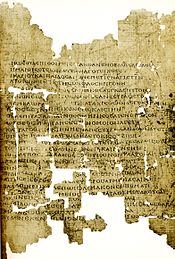
 P.Oxy. XI 1362

XVII. Id quoque esse a gravissimis viris memoriae mandatum, quod tris libros Plato Philolai Pythagorici et Aristoteles pauculos Speusippi philosophi mercati sunt pretiis fidem non capientibus. 

1Memoriae mandatum est Platonem philosophum tenui admodum pecunia familiari fuisse atque eum tamen tris Philolai Pythagorici libros decem milibus denarium mercatum. 2 Id ei pretium donasse quidam scripserunt amicum eius Dionem Syracosium. 3 Aristotelem quoque traditum libros pauculos Speusippi philosophi post mortem eius emisse talentis Atticis tribus; ea summa fit nummi nostri sestertia duo et septuaginta milia. 4 Timon amarulentus librum maledicentissimum conscripsit, qui sillos inscribitur. 5 In eo libro Platonem philosophum contumeliose appellat, quod inpenso pretio librum Pythagoricae disciplinae emisset exque eo Timaeum, nobilem illum dialogum, concinnasset. Versus super ea re Timonos hi sunt (fr. 828):

καὶ σύ, Πλάτων· καὶ γάρ σε μαθητείης πόθος ἔσχεν,
πολλῶν δ’ ἀργυρίων ὀλίγην ἠλλάξαο βίβλον,
ἔνθεν ἀπαρχόμενος τιμαιογραφεῖν ἐδιδάχθης.

Image result for ancient books

On Not Confusing the Author with His Book: Martial, Epigrams Book 11.15

“I do have drafts that Cato’s wife
And those dreadful Sabine women might read:
But I want this whole little book to laugh
and to be dirtier than other little books.
Let it soak up wine and not shudder
To be died dark with Cosmian ink,
Let it play with the boys and love the girls
And let it just name directly that ‘thing’
From which we are born, the parent of all
Which holy Numa called a little dick.
Remember still, Apollinoris, that
These verses are Saturnalian.
This little book’s morals aren’t mine!”

Sunt chartae mihi quas Catonis uxor
et quas horribiles legant Sabinae:
hic totus volo rideat libellus
et sit nequior omnibus libellis.
Qui vino madeat nec erubescat
pingui sordidus esse Cosmiano,
ludat cum pueris, amet puellas,
nec per circuitus loquatur illam,
ex qua nascimur, omnium parentem,
quam sanctus Numa mentulam vocabat.
Versus hos tamen esse tu memento
Saturnalicios, Apollinaris:
mores non habet hic meos libellus.


Love Keeps the World Together: Get Philosophical About Valentine’s Day

Empedocles, fr. 17.23-33

“Come, listen to my stories: for learning will certainly improve your thoughts.
As I said before when I declared the outline of my speeches,
I will speak a two-fold tale. Once, first, the one alone grew
Out of many and then in turn it grew apart into many from one.
Fire, and Water, and Earth and the invincible peak of Air,
Ruinous strife as well, separate from these, equal to every one,
And Love was among them, equal as well in length and breadth.
Keep Love central in your mind, don’t sit with eyes in a stupor.
She is known to be innate to mortal bodies,
She causes them to think of love and complete acts of peace,
Whether we call her Happiness or Aphrodite as a nickname….”

ἀλλ’ ἄγε μύθων κλῦθι· μάθη γάρ τοι φρένας αὔξει·
ὡς γὰρ καὶ πρὶν ἔειπα πιφαύσκων πείρατα μύθων,
δίπλ’ ἐρέω· τοτὲ μὲν γὰρ ἓν ηὐξήθη μόνον εἶναι
ἐκ πλεόνων, τοτὲ δ’ αὖ διέφυ πλέον’ ἐξ ἑνὸς εἶναι,
πῦρ καὶ ὕδωρ καὶ γαῖα καὶ ἠέρος ἄπλετον ὕψος,
Νεῖκός τ’ οὐλόμενον δίχα τῶν, ἀτάλαντον ἁπάντηι,
καὶ Φιλότης ἐν τοῖσιν, ἴση μῆκός τε πλάτος τε·
τὴν σὺ νόωι δέρκευ, μηδ’ ὄμμασιν ἧσο τεθηπώς·
ἥτις καὶ θνητοῖσι νομίζεται ἔμφυτος ἄρθροις,
τῆι τε φίλα φρονέουσι καὶ ἄρθμια ἔργα τελοῦσι,
Γηθοσύνην καλέοντες ἐπώνυμον ἠδ’ ᾿Αφροδίτην·

Plato,  Symposium 192d-193a

“Love is the name for the desire and pursuit of that oneness, that ancient nature we shared when we were whole.”

τοῦτο γάρ ἐστι τὸ αἴτιον, ὅτι ἡ ἀρχαία φύσις ἡμῶν ἦν αὕτη καὶ ἦμεν ὅλοι: τοῦ ὅλου οὖν τῇ ἐπιθυμίᾳ καὶ διώξει ἔρως ὄνομα

Euripides, fr. 388

“But mortals truly have a different kind of love,
One of a just, prudent, and good soul.
It would be better if it were the custom among mortals,
of reverent men and all those with reason,
To love this way, and to leave Zeus’ daughter Cypris alone.”

ἀλλ’ ἔστι δή τις ἄλλος ἐν βροτοῖς ἔρως
ψυχῆς δικαίας σώφρονός τε κἀγαθῆς.
καὶ χρῆν δὲ τοῖς βροτοῖσι τόνδ’ εἶναι νόμον
τῶν εὐσεβούντων οἵτινές τε σώφρονες
ἐρᾶν, Κύπριν δὲ τὴν Διὸς χαίρειν ἐᾶν.

Alexis (fr.386k from his Phaedrus; found at Athenaeus 13.13)

“As I was walking from the Peiraios beset
By troubles and despair, philosophy came over me.
And all the painters now seem to me to be ignorant
About love, and, to put it simply, so is everyone else
Who fashions images of him as a god.
For he is neither female nor male, and again,
He is not a god or mortal; nor is he foolish
Or wise, but he is drawn together from everywhere
And carries many shapes in one form.
For he has a man’s boldness with a woman’s restraint;
he has the senselessness of madness
But the reason of a thinker; he has a beast’s ferocity,
The toil of the unbreakable, and the avarice of a god.
Indeed, by Athena and the gods, I do not understand
What love is, but still it is the type of thing
I have said only without this name.”

πορευομένῳ δ᾽ ἐκ Πειραιῶς ὑπὸ τῶν κακῶν
καὶ τῆς ἀπορίας φιλοσοφεῖν ἐπῆλθέ μοι.
καί μοι δοκοῦσιν ἀγνοεῖν οἱ ζωγράφοι
τὸν Ἔρωτα, συντομώτατον δ᾽ εἰπεῖν, ὅσοι
τοῦ δαίμονος τούτου ποιοῦσιν εἰκόνας.
ἐστὶν γὰρ οὔτε θῆλυς οὔτ᾽ ἄρσην, πάλιν
οὔτε θεὸς οὔτ᾽ ἄνθρωπος, οὔτ᾽ ἀβέλτερος
οὔτ᾽ αὖθις ἔμφρων, ἀλλὰ συνενηνεγμένος
πανταχόθεν ἑνὶ τύπῳ <τε> πόλλ᾽ εἴδη φέρων.
ἡ τόλμα μὲν γὰρ ἀνδρός, ἡ <δὲ> δειλία
γυναικός, ἡ δ᾽ ἄνοια μανίας, ὁ δὲ λόγος
φρονοῦντος, ἡ σφοδρότης δὲ θηρός, ὁ δὲ πόνος
ἀδάμαντος, ἡ φιλοτιμία δὲ δαίμονος.
καὶ ταῦτ᾽ ἐγώ, μὰ τὴν Ἀθηνᾶν καὶ θεούς,
οὐκ οἶδ᾽ ὅ τι ἐστίν, ἀλλ᾽ ὅμως ἔχει γέ τι
τοιοῦτον, ἐγγύς τ᾽ εἰμὶ τοὐνόματος.

Demosthenes, Erotic Essay 10-16

“I will begin to praise first what people see first—the way everyone recognizes you, your beauty, the complexion by which your limbs and your whole body shines. When I search for something to compare it to, I see nothing. But it remains my right to ask those who read this speech to look at you and witness this so that I may be forgiven for providing no comparison.

What similarity could someone offer when something mortal fills its witnesses with immortal desire, whose seeing never tires, and when absent stays remembered? How, when this has a nature in human form yet worthy of the gods, so like a flower in its good form, beyond even a whiff of fault? Truly, it is not possible to seek out even those things in your appearance which have marred many others who had their share of beauty. For either they have disturbed their natural form through some tremor of character or because of some bad luck they have undermined their natural beauty to the same end.

No, we couldn’t find your beauty touched by anything like this. Whoever of the gods planned out your appearance guarded so earnestly against every type of chance that you have no feature worthy of critique—he made you entirely exceptional. Moreover, since the face is the most conspicuous of all the parts that are seen, and on that face, the eyes stand out in turn, here the divine showed it had even more good will toward you.

For not only did he provide you with eyes sufficient for seeing—and even though it is not possible to recognize virtue when some men act–he showed the noblest character by signaling through your eyes, making your glance soft and kind to those who see it, dignified and solemn to those you spend time which, and brave and wise to all.

Someone might wonder at this next thing especially. Although other men are taken as harsh because of their docility, or brash because of their solemnity, or arrogant because of their bravery, or they seem rather dull because they are quiet, chance has gathered these opposite qualities together and granted them all in agreement in you, just as if answering a prayer or deciding to make an example for others, but not crafting just a mortal, as she usually does.

If, then, it were possible to approach your beauty in speech  or if these were the only of your traits worthy of praise, we would think it right to pass over  no part of your advantages. But I fear that we might not trust our audience to hear the rest and that we may wear ourselves out about this in vain. How could one exaggerate your appearance when not even works made by the best artists could match them? And it is not wondrous—for artworks have an immovable appearance, so that it is unclear how would they appear if they had a soul. But your character increases the great beauty of your body with everything you do. I can praise your beauty this much, passing over many things.”

῎Αρξομαι δὲ πρῶτον ἐπαινεῖν, ὅπερ πρῶτον ἰδοῦσιν  ἅπασιν ἔστιν γνῶναί σου, τὸ κάλλος, καὶ τούτου τὸ χρῶμα, δι’ οὗ καὶ τὰ μέλη καὶ ὅλον τὸ σῶμα φαίνεται. ᾧ τίν’ ἁρμόττουσαν εἰκόν’ ἐνέγκω σκοπῶν οὐχ ὁρῶ, ἀλλὰ παρίσταταί μοι δεῖσθαι τῶν ἀναγνόντων τόνδε τὸν λόγον σὲ θεωρῆσαι καὶ ἰδεῖν, ἵνα συγγνώμης τύχω μηδὲν ὅμοιον ἔχων εἰπεῖν.

τῷ γὰρ <ἂν> εἰκάσειέ τις, ὃ θνητὸν ὂν ἀθάνατον τοῖς ἰδοῦσιν ἐνεργάζεται πόθον, καὶ ὁρώμενον οὐκ ἀποπληροῖ, καὶ μεταστὰν μνημονεύεται, καὶ τὴν τῶν θεῶν ἀξίαν ἐπ’ ἀνθρώπου φύσιν ἔχει, πρὸς μὲν τὴν εὐπρέπειαν ἀνθηρόν, πρὸς δὲ τὰς αἰτίας ἀνυπονόητον; ἀλλὰ μὴν οὐδὲ ταῦτ’ ἔστιν αἰτιάσασθαι [πρὸς] τὴν σὴν ὄψιν, ἃ πολλοῖς ἄλλοις ἤδη συνέπεσεν τῶν κάλλους μετασχόντων. ἢ γὰρ δι’ἀρρυθμίαν τοῦ σχήματος ἅπασαν συνετάραξαν τὴν ὑπάρχουσαν εὐπρέπειαν, ἢ δι’ ἀτύχημά τι καὶ τὰ καλῶς πεφυκότα συνδιέβαλον αὐτῷ.

ὧν οὐδενὶ τὴν σὴν ὄψιν εὕροιμεν ἂν ἔνοχον γεγενημένην· οὕτω γὰρ σφόδρ’ ἐφυλάξατο πάσας τὰς τοιαύτας κῆρας ὅστις ποτ’ ἦν θεῶν ὁ τῆς σῆς ὄψεως προνοηθείς, ὥστε μηδὲν μέμψεως ἄξιον, τὰ δὲ πλεῖστα περίβλεπτά σου καταστῆσαι. καὶ μὲν δὴ καὶ τῶν ὁρωμένων ἐπιφανεστάτου μὲν ὄντος τοῦ προσώπου, τούτου δ’ αὐτοῦ τῶν ὀμμάτων, ἔτι μᾶλλον ἐν τούτοις ἐπεδείξατο τὴν εὔνοιαν ἣν εἶχεν εἰς σὲ τὸ δαιμόνιον. οὐ γὰρ μόνον πρὸς τὸ τὰ κατεπείγονθ’ ὁρᾶν αὐτάρκη παρέσχηται, ἀλλ’ ἐνίων οὐδ’ ἐκ τῶν πραττομένων γιγνωσκομένης τῆς ἀρετῆς, σοῦ διὰ τῶν τῆς ὄψεως σημείων τὰ κάλλιστα τῶν ἠθῶν ἐνεφάνισεν,  πρᾶον μὲν καὶ φιλάνθρωπον τοῖς ὁρῶσιν, μεγαλοπρεπῆ δὲ καὶ σεμνὸν τοῖς ὁμιλοῦσιν, ἀνδρεῖον δὲ καὶ σώφρονα πᾶσιν ἐπιδείξας.

ὃ καὶ μάλιστ’ ἄν τις θαυμάσειεν· τῶν γὰρ ἄλλων ἐπὶ μὲν τῆς πραότητος ταπεινῶν, ἐπὶ δὲ τῆς σεμνότητος αὐθαδῶν ὑπολαμβανομένων, καὶ διὰ μὲν τὴν ἀνδρείαν θρασυτέρων, διὰ δὲ τὴν ἡσυχίαν ἀβελτέρων εἶναι δοκούντων, τοσαύτας ὑπεναντιώσεις πρὸς ἄλληλα λαβοῦσ’ ἡ τύχη πρὸς τὸ δέον ἅπανθ’ ὁμολογούμεν’ ἀπέδωκεν, ὥσπερ εὐχὴν ἐπιτελοῦσ’ ἢ παράδειγμα τοῖς ἄλλοις ὑποδεῖξαι βουληθεῖσα, ἀλλ’ οὐ θνητήν, ὡς εἴθιστο, φύσιν συνιστᾶσα.

εἰ μὲν οὖν οἷόν τ’ ἦν ἐφικέσθαι τῷ λόγῳ τοῦ κάλλους τοῦ σοῦ, ἢ τοῦτ’ ἦν μόνον τῶν σῶν ἀξιέπαινον, οὐδὲν ἂν παραλιπεῖν ᾠόμεθα δεῖν ἐπαινοῦντες τῶν προσόντων· νῦν δὲ δέδοικα μὴ πρός <τε> τὰ λοίπ’ ἀπειρηκόσι χρησώμεθα τοῖς ἀκροαταῖς, καὶ περὶ τούτου μάτην τερθρευώμεθα. πῶς γὰρ ἄν τις ὑπερβάλοι τῷ λόγῳ τὴν σὴν ὄψιν, ἧς μηδ’ ἃ τέχνῃ πεποίηται τῶν ἔργων τοῖς ἀρίστοις δημιουργοῖς δύναται ὑπερτεῖναι; καὶ θαυμαστὸν οὐδέν· τὰ μὲν γὰρ ἀκίνητον ἔχει τὴν θεωρίαν, ὥστ’ ἄδηλ’ εἶναι τί ποτ’ ἂν ψυχῆς μετασχόντα φανείη, σοῦ δὲ τὸ τῆς γνώμης ἦθος ἐν πᾶσιν οἷς ποιεῖς μεγάλην εὐπρέπειαν ἐπαυξάνει τῷ σώματι. περὶ μὲν οὖν τοῦ κάλλους πολλὰ παραλιπών, τοσαῦτ’ ἐπαινέσαι ἔχω.

Be Smart, Don’t Fart: The Pythagorean Prohibition of Beans

Cicero, de Divinatione 1.30:

“Plato therefore encourages people to go to sleep with their bodies thus disposed that there be nothing which could introduce any wandering from or disturbance of sleep. From which it is thought that the Pythagoreans prohibited the consumption of beans, because that food causes a great flatulence which is contrary to the tranquility of a mind seeking the truth.”

Iubet igitur Plato sic ad somnum proficisci corporibus adfectis, ut nihil sit, quod errorem animis perturbationemque adferat. Ex quo etiam Pythagoreis interdictum putatur, ne faba vescerentur, quod habet infiationem magnam is cibus tranquillitati mentis quaerenti vera contrariam.


More Crazy Etymology!

Plato, Cratylus 399c

“Here is what the word human (anthropos) means: no other animals examine, consider, or observe closely those things which they have seen, but a human, as soon as he has seen something – that is, “opope” – he observes closely and considers that which he has seen (opopen). Therefore, humans alone of all animals rightly deserve the name “anthropos”, because they observe closely what they have seen (anathron ha opope).”

σημαίνει τοῦτο τὸ ὄνομα ὁ ‘ἄνθρωπος’ ὅτι τὰ μὲν ἄλλα θηρία ὧν ὁρᾷ οὐδὲν ἐπισκοπεῖ οὐδὲ ἀναλογίζεται οὐδὲ ἀναθρεῖ, ὁ δὲ ἄνθρωπος ἅμα ἑώρακεν—τοῦτο δ᾽ ἐστὶ τὸ ‘ὄπωπε’ —καὶ ἀναθρεῖ καὶ λογίζεται τοῦτο ὃ ὄπωπεν. ἐντεῦθεν δὴ μόνον τῶν θηρίων ὀρθῶς ὁ ἄνθρωπος ‘ἄνθρωπος’ ὠνομάσθη, ἀναθρῶν ἃ ὄπωπε

Orestes the Mountaineer

Plato, Cratylus, 394e

“Similarly so, my dear Hermogenes, it seems likely that the name of Orestes is properly founded, whether it be some chance which gave him his name, or some poet, who wished by that appellation to mark out the brutality, furor, and rugged mountain-man spirit (OREINON) of his nature.”

Carl Rahr, Orestes Pursued by the Furies

῞Ωσπερ γε καὶ ὁ “᾿Ορέστης,” ὦ ῾Ερμόγενες, κινδυνεύει ὀρθῶς ἔχειν, εἴτε τις τύχη ἔθετο αὐτῷ τὸ ὄνομα εἴτε καὶ ποιητής τις, τὸ θηριῶδες τῆς φύσεως καὶ τὸ ἄγριον αὐτοῦ
καὶ τὸ ὀρεινὸν ἐνδεικνύμενος τῷ ὀνόματι.

Adventures in Preposterous Etymology

Plato, Cratylus 397d:

“It seems to me that the earliest people in Greece had a notion of only those gods whom the majority of barbarians now recognize: the Sun, the Earth, the Stars, and the Sky. Now, because they noticed that these things were always moving in a circle and ‘running’ (theonta), they called them gods (theous) from the nature of that running (thein). Later, once they came to acknowledge the existence of other gods, they continued to use the same word, ‘gods’ for them as well.”

φαίνονταί μοι οἱ πρῶτοι τῶν ἀνθρώπων τῶν περὶ τὴν ῾Ελλάδα τούτους μόνους
[τοὺς θεοὺς] ἡγεῖσθαι οὕσπερ νῦν πολλοὶ τῶν βαρβάρων,
ἥλιον καὶ σελήνην καὶ γῆν καὶ ἄστρα καὶ οὐρανόν• ἅτε οὖν
αὐτὰ ὁρῶντες πάντα ἀεὶ ἰόντα δρόμῳ καὶ θέοντα, ἀπὸ ταύτης
τῆς φύσεως τῆς τοῦ θεῖν “θεοὺς” αὐτοὺς ἐπονομάσαι• ὕστε-
ρον δὲ κατανοοῦντες τοὺς ἄλλους πάντας ἤδη τούτῳ τῷ ὀνό-
ματι προσαγορεύειν.

“Stories Shape the Mind”: Heraclitus, Hesiod and Plato

Heraclitus, Fr. B57
“Hesiod is the teacher of the most; they believe that he knows the most, the one who cannot distinguish day and night. For they are one.”

διδάσκαλος δὲ πλείστων ῾Ησίοδος· τοῦτον ἐπίστανται πλεῖστα εἰδέναι, ὅστις ἡμέρην καὶ εὐφρόνην οὐκ ἐγίνωσκεν· ἔστι γὰρ ἕν.

Cf. fr. 40

“Knowing much doesn’t teach you how to think. For it would have taught Hesiod and Pythagoras, or even Xenophanes and Hekataios.”

πολυμαθίη νόον ἔχειν οὐ διδάσκει· ῾Ησίοδον γὰρ ἂν ἐδίδαξε καὶ Πυθαγόρην αὖτίς τε Ξενοφάνεά τε καὶ ῾Εκαταῖον.

Fr. 109

“Concerning unlucky days, and whether it is right that Heraclitus attacked Hesiod for making some days good and some days bad, since he was ignorant that the nature of every day is one and the same, that is discussed elsewhere.”

[Cf. Seneca, “one day is the same as every other”]

PLUT. Camill. 19 περὶ δ’ ἡμερῶν ἀποφράδων εἴτε χρὴ τίθεσθαί τινας εἴτε ὀρθῶς ῾Ηράκλειτος ἐπέπληξεν ῾Ησιόδωι τὰς μὲν ἀγαθὰς ποιουμένωι, τὰς δὲ φαύλας [Opp. 765ff.], ὡς ἀγνοοῦντι φύσιν ἡμέρας ἁπάσης μίαν οὖσαν, ἑτέρωθι διηπόρηται [vgl. B 40. 57]. SENECA Ep. 12, 7 unus dies par omni est.

hesiod

Plato, Republic, 377c

“We must begin, it seems, by selecting among the storytellers—they must be judged by what they do well or not. We will authorize those who make the cut for nurses and mothers to tell to children since these stories shape their minds more than they can shape their bodies with their hands. But we must reject most of the stories we tell now,

What kinds of stories?

In the greater stories, we will also find [the nature of] the worse ones. For it is necessary that the greater and the lesser stories have the same shape and do the same thing, don’t you think?

I do. But I don’t know what these greater stories you mention are.

I mean those stories which Hesiod and Homer tell to us along with the other poets. For these poets used to tell and continue to tell people stories made up of lies.

What sort of stories are you criticizing in saying this?

The very thing which ought to be censured first and foremost: apart from everything else, when a lie is told improperly.”

Πρῶτον δὴ ἡμῖν, ὡς ἔοικεν, ἐπιστατητέον τοῖς μυθοποιοῖς, καὶ ὃν μὲν ἂν καλὸν [μῦθον] ποιήσωσιν, ἐγκριτέον, ὃν δ’ ἂν μή, ἀποκριτέον. τοὺς δ’ ἐγκριθέντας πείσομεν τὰς τροφούς τε καὶ μητέρας λέγειν τοῖς παισίν, καὶ πλάττειν τὰς ψυχὰς αὐτῶν τοῖς μύθοις πολὺ μᾶλλον ἢ τὰ σώματα ταῖς χερσίν· ὧν δὲ νῦν λέγουσι τοὺς πολλοὺς ἐκβλητέον.
Ποίους δή; ἔφη.
᾿Εν τοῖς μείζοσιν, ἦν δ’ ἐγώ, μύθοις ὀψόμεθα καὶ τοὺς ἐλάττους. δεῖ γὰρ δὴ τὸν αὐτὸν τύπον εἶναι καὶ ταὐτὸν δύνασθαι τούς τε μείζους καὶ τοὺς ἐλάττους. ἢ οὐκ οἴει;
῎Εγωγ’, ἔφη· ἀλλ’ οὐκ ἐννοῶ οὐδὲ τοὺς μείζους τίνας λέγεις.
Οὓς ῾Ησίοδός τε, εἶπον, καὶ ῞Ομηρος ἡμῖν ἐλεγέτην καὶ οἱ ἄλλοι ποιηταί. οὗτοι γάρ που μύθους τοῖς ἀνθρώποις ψευδεῖς συντιθέντες ἔλεγόν τε καὶ λέγουσι.
Ποίους δή, ἦ δ’ ὅς, καὶ τί αὐτῶν μεμφόμενος λέγεις;
῞Οπερ, ἦν δ’ ἐγώ, χρὴ καὶ πρῶτον καὶ μάλιστα μέμφεσθαι, ἄλλως τε καὶ ἐάν τις μὴ καλῶς ψεύδηται.

Socrates’ Dream-Bird

From Diogenes Laertius’ Lives of the Philosophers 3.5-7

“[Plato] learned his basic grammar at Dionysius’ school, which he also recalls in his dialogue the Lovers. He exercised at the wrestling school of Ariston the Argive which is where he was nicknamed ‘Platôn’ because of his fine body. Before, he was called Aristokles after his grandfather, according to Alexandros in his Diadokhai. There are some who claim he was named this because of the breadth [platutêta] of his interpretive ability or that it was because of the width of his forehead, as Neanthes claims. There are also those who say that he wrestled at the Isthmus, according to Dikaiarkhos too in the first book of his Lives. He is also said to have pursued a passion for painting; he wrote poetry, first dithyrambs, then lyric, and tragedy.

Plato had a strong voice, they claim, as Timotheus attests too in his book on Lives. It is reported that Socrates had a dream of holding a swan chick in his lap: after it grew wings it immediately flew away, uttering a sweet cry. On the next day, Plato joined him; and Socrates said that he was the bird.

Plato began philosophizing in the Akademia and then moved into a garden at Colonos, as Alexander records in his Successions, according to Herakleitos. When he was going to compete in tragedy, once he had heard Socrates in front of the Dionysian theater, he burned all his poems, saying “Hephaestos, come here, Plato needs you now…”

plato

Καὶ ἐπαιδεύθη μὲν γράμματα παρὰ Διονυσίῳ, οὗ καὶ μνημονεύει ἐν τοῖς ᾿Αντερασταῖς (Amat. 132a). ἐγυμνάσατο δὲ παρὰ ᾿Αρίστωνι τῷ ᾿Αργείῳ παλαιστῇ· ἀφ’ οὗ καὶ Πλάτων διὰ τὴν εὐεξίαν μετωνομάσθη, πρότερον ᾿Αριστοκλῆς ἀπὸ τοῦ πάππου καλούμενος [ὄνομα], καθά φησιν ᾿Αλέξανδρος ἐν Διαδοχαῖς (FGrH

273 F 88). ἔνιοι δὲ διὰ τὴν πλατύτητα τῆς ἑρμηνείας οὕτως ὀνομασθῆναι· ἢ ὅτι πλατὺς ἦν τὸ μέτωπον, ὥς φησι Νεάνθης (FGrH 84 F 21). εἰσὶ δ’ οἳ καὶ παλαῖσαί φασιν αὐτὸν ᾿Ισθμοῖ, καθὰ καὶ Δικαίαρχος ἐν πρώτῳ Περὶ βίων (Wehrli i, fg. 40), καὶ

γραφικῆς ἐπιμεληθῆναι καὶ ποιήματα γράψαι, πρῶτον μὲν διθυράμβους, ἔπειτα καὶ μέλη καὶ τραγῳδίας. ἰσχνόφωνός τε, φασίν, ἦν, ὡς καὶ Τιμόθεός φησιν ὁ ᾿Αθηναῖος ἐν τῷ Περὶ βίων (FHG iv. 523). λέγεται δ’ ὅτι Σωκράτης ὄναρ εἶδε κύκνου νεοττὸν ἐν

τοῖς γόνασιν ἔχειν, ὃν καὶ παραχρῆμα πτεροφυήσαντα ἀναπτῆναι ἡδὺ κλάγξαντα· καὶ μεθ’ ἡμέραν Πλάτωνα αὐτῷ συστῆναι, τὸν δὲ τοῦτον εἰπεῖν εἶναι τὸν ὄρνιν.

᾿Εφιλοσόφει δὲ τὴν ἀρχὴν ἐν ᾿Ακαδημείᾳ, εἶτα ἐν τῷ κήπῳ τῷ παρὰ τὸν Κολωνόν, ὥς φησιν ᾿Αλέξανδρος ἐν Διαδοχαῖς (FGrH 273 F 89), καθ’ ῾Ηράκλειτον. ἔπειτα μέντοι μέλλων ἀγωνιεῖσθαι τραγῳδίᾳ πρὸ τοῦ Διονυσιακοῦ θεάτρου Σωκράτους ἀκούσας κατέφλεξε τὰ ποιήματα εἰπών·

῞Ηφαιστε, πρόμολ’ ὧδε· Πλάτων νύ τι σεῖο χατίζει.

Socrates Was No Fool

“In another passage (Apol. 21a), Plato says that Chaerophon asked the Pythia if anyone was wiser than Socrates and that she answered that no one was. In this, as well, Xenophon says something different (Apol.14): “When Chaerophon once asked about me at Delphi, Apollo answered that no one of the present men was more just or wise.”

How is it sensible or persuasive that Socrates, who agreed that he knew nothing, was declared the wisest of all men by the god who knows everything? If this is wisdom, knowing nothing, then knowing everything is foolishness. What need was there for Chaerophon to ask the god about Socrates? It is because itwas right to Believe Socrates when he said about himself that he was not wise. “For the man who would ask such things of a god is a fool”.

Is this the face of a fool?

κἀν ἄλλοις δ’ ὁ Πλάτων φησὶ (apol. p. 21 a) Χαιρεφῶντα ἐρωτῆσαι τὴν Πυθίαν εἴ τις εἴη Σωκράτους σοφώτερος· καὶ τὴν ἀνελεῖν μηδένα. κἀν τούτοις δὲ μὴ συμφωνῶν Ξενοφῶν φησι (apol. 14)· ‘Χαιρεφῶντος γάρ ποτε ἐπερωτήσαντος ἐν Δελφοῖς ὑπὲρ ἐμοῦ, ἀνεῖλεν ὁ ᾿Απόλλων <πολλῶν> παρόντων μηδένα εἶναι ἀνθρώπων ἐμοῦ μήτε δικαιότερον μήτε σωφρονέστερον.’ πῶς οὖν εὔλογον ἢ πιθανὸν Σωκράτη τὸν ὁμολογοῦντα μηδὲν ἐπίστασθαι σοφώτατον ἁπάντων ὑπὸ τοῦ πάντα ἐπισταμένου θεοῦ ἀναρρηθῆναι; εἰ γὰρ τοῦτό ἐστι σοφία, τὸ μηδὲν εἰδέναι, τὸ πάντα εἰδέναι φαυλότης ἂν εἴη. τίς δ’ ἦν χρεία τῷ Χαιρεφῶντι παρενοχλεῖν τὸν θεὸν περὶ Σωκράτους πυνθανόμενον; αὐτὸς γὰρ ἦν ἀξιόπιστος ὑπὲρ αὑτοῦ λέγων ὡς οὔκ ἐστι σοφός. ‘βλὰξ γάρ τις ἦν τοιαῦτ’ ἐρωτῶν τὸν θεόν,’


Plato Apology 21d 6-7


“I think that I am wiser by this very small bit: I don’t pretend to know what I don’t know.”

ἔοικα γοῦν τούτου γε σμικρῷ τινι αὐτῷ τούτῳ σοφώτερος εἶναι, ὅτι ἃ μὴ οἶδα οὐδὲ οἴομαι εἰδέναι.


The full text.

Socrates 1.5-7: This Philosopher is Ready to Die.

“Do you really find it shocking if it seems better to the god that I die now? Don’t you know that before today I would never agree that any man has lived better than I have? This is the greatest pleasure, to know that my entire life has been lived righteously and justly. For this reason I have regarded myself well and I have found that those who know me feel the same way. Now, if this age were to proceed, I know that I would have to pay the price of old age: that my vision would be worse, my hearing weaker and I would be poor at learning and, worse, more forgetful of the things I have learned. If I sense myself becoming worse and I fault myself for it, how would I be able to live well? Perhaps, as an act of kindness, the god is granting that I end my life not just at the right age, but also in the easiest manner.”

῏Η θαυμαστὸν νομίζεις εἰ καὶ τῷ θεῷ δοκεῖ ἐμὲ βέλτιον εἶναι ἤδη τελευτᾶν; οὐκ οἶσθα ὅτι μέχρι μὲν τοῦδε οὐδενὶ ἀνθρώπων ὑφείμην βέλτιον ἐμοῦ βεβιωκέναι; ὅπερ γὰρ ἥδιστόν ἐστιν, ᾔδειν ὁσίως μοι καὶ δικαίως ἅπαντα τὸν βίον βεβιωμένον• ὥστε ἰσχυρῶς ἀγάμενος ἐμαυτὸν ταὐτὰ ηὕρισκον καὶ τοὺς ἐμοὶ συγγιγνομένους γιγνώσκοντας περὶ ἐμοῦ. νῦν δὲ εἰ ἔτι προβήσεται ἡ ἡλικία, οἶδ’ ὅτι ἀνάγκη ἔσται τὰ τοῦ γήρως ἐπιτελεῖσθαι καὶ ὁρᾶν τε χεῖρον καὶ ἀκούειν ἧττον καὶ δυσμαθέστερον εἶναι καὶ ὧν ἔμαθον ἐπιλησμονέστερον. ἂν δὲ αἰσθάνωμαι χείρων γιγνόμενος καὶ καταμέμφωμαι ἐμαυτόν, πῶς ἄν, εἰπεῖν, ἐγὼ ἔτι ἂν ἡδέως βιοτεύοιμι; ἴσως δέ τοι, φάναι αὐτόν, καὶ ὁ θεὸς δι’ εὐμένειαν προξενεῖ μοι οὐ μόνον τὸ ἐν καιρῷ τῆς ἡλικίας καταλῦσαι τὸν βίον, ἀλλὰ καὶ τὸ ᾗ ῥᾷστα.