Against Plato for Homer: The Doctrine of Ideas Is Ridiculous

Heraclitus, Homeric Problems 78

“It is therefore appropriate that Homer’s message is the life of heroes and Plato’s dialogues are the loves of young men. Everything in Homer overflows with noble virtue; Odysseus is prudent; Ajax is brave; Penelope is chaste; Nestor is just in all things; and Telemachus is reverent towards his father while Achilles is most loyal in his friendships. What of these things remain in Plato, the philosopher? Unless we were to claim that there was some useful honor in the sacred chirpings of his ‘ideas’, mocked even by his student Aristotle! For this reason, I imagine he suffered worthy punishment for his words about Homer, that man “who has an unhindered tongue, the most shameful sickness” [Eur. Or. 10] just like Tantalos or Kapaneus, who suffered endless misfortunes because of their grievous tongue.

Plato often wore himself out going to the doors of tyrants and he submitted a free body to a slave’s fortune, even being sold. No one is ignorant about Pollis the Spartan* or how Plato was saved by a Libyan’s deed when his price had been set at twenty minae, cheap for a slave. These events were the punishment he owed for his slandering of Homer and for his ungoverned and unguarded tongue. Even though I could say more still against Plato, I’ll let it be because I respect the name of Socratic wisdom.”

*Dionysius the Tyrant of Syracuse gave Plato to Pollis as a slave


         Τοιγαροῦν εἰκότως ὁ μὲν ῾Ομήρου λόγος ἡρώων ἐστὶ βίος, οἱ δὲ Πλάτωνος διάλογοι μειρακίων ἔρωτες.  Καὶ πάντα τὰ παρ’ ῾Ομήρῳ γεννικῆς ἀρετῆς γέμει· φρόνιμος ᾿Οδυσσεύς, ἀνδρεῖος Αἴας, σώφρων Πηνελόπη, δίκαιος ἐν ἅπασι Νέστωρ, εὐσεβὴς εἰς πατέρα Τηλέμαχος, ἐν φιλίαις πιστότατος ᾿Αχιλλεύς·  ὧν <τί> παρὰ Πλάτωνι  τῷ φιλοσόφῳ; πλὴν εἰ μὴ νὴ Δία τιμὴν <καὶ> ὠφέλ<ειαν φ>ήσομεν εἶναι τὰ σεμνὰ τῶν ἰδεῶν τερετίσματα καὶ παρ’ ᾿Αριστοτέλει τῷ μαθητῇ γελώμενα.  Διὰ τοῦτ’ ἀξίας οἶμαι τῶν καθ’ ῾Ομήρου λόγων δίκας ὑπέσχεν,

          “ἀκόλαστον ἔχων γλῶσσαν, αἰσχίστην νόσον,

ὡς Τάνταλος, ὡς Καπανεύς, ὡς οἱ διὰ γλωσσαλγίαν μυρίαις κεχρημένοι συμφοραῖς.     Πολλάκις ἐπὶ τὰς τυραννικὰς ἐφθείρετο θύρας, ἐν ἐλευθέρῳ δὲ σώματι δουλικὴν τύχην ἠνέσχετο καὶ μέχρι πράσεως·  οὐδὲ εἷς γὰρ ἀγνοεῖ τὸν Σπαρτιάτην Πόλλιν, [ᾧ] οὐδ’ ὡς Λιβυκοῦ χάριν ἐλέου σέσωσται, καὶ μνῶν εἴκοσι καθάπερ ἀνδράποδον εὐτελὲς ἐτιμήθη.  τῶν εἰς ῞Ομηρον ἀσεβημάτων ὀφειλομένην τιμωρίαν τῆς ἀχαλίνου καὶ ἀπυλώτου γλώττης.  Πρὸς μὲν οὖν Πλάτωνα καὶ πλείω λέγειν δυνάμενος ἐῶ, τοὔνομα τῆς Σωκρατικῆς σοφίας αἰδούμενος.

Image result for Plato ancient greek


The Danger of Students without Teaching: Against Illiterate Literacy


Plato, Phaedrus 274e-275a (go here for the full dialogue)

Socrates is telling a story of the invention of writing in Egypt

“When it came to the written letters, Theuth said, ‘This training, King, will make Egyptians wiser and will give them stronger memories: for it is a drug for memory and wisdom!’ But the king replied, “Most inventive Theuth, one man is able to create technology, but another judges how much harm and benefit it brings to those who use it. Just so now you, who are father of letters, declare the opposite of what they are capable because of your enthusiasm. This craft will engender forgetfulness in the minds of those who learn it from the disuse of the memory since they will trust external writing struck by others, no longer recalling their own thoughts within them. You have discovered a drug for reminding, not one for memory; you will offer students the reputation of wisdom but not the true thing. For many who become students without instruction will seem to know a lot when they are mostly ignorant and difficult to be around, since they have become wise for appearance instead of wise.’

Ph. Socrates, you can easily make up any story about Egypt that you want to”

ἐπειδὴ δ’ ἐπὶ τοῖς γράμμασιν ἦν, Τοῦτο δέ, ὦ βασιλεῦ, τὸ μάθημα, ἔφη ὁ Θεύθ,

σοφωτέρους Αἰγυπτίους καὶ μνημονικωτέρους παρέξει, μνήμης τε γὰρ καὶ σοφίας φάρμακον εὑρέθη. ῾Ο δ’ εἶπεν, ῏Ω τεχνικώτατε Θεύθ, ἄλλος μὲν δυνατὸς τεκεῖν τὰ τέχνης, ἄλλος δὲ κρῖναι, τίν’ ἔχει μοῖραν βλάβης τε καὶ ὠφελείας τοῖς μέλλουσι χρῆσθαι. Καὶ νῦν σὺ πατὴρ ὢν γραμμάτων δι’ εὔνοιαν τοὐναντίον εἶπες ἢ δύναται. Τοῦτο γὰρ τῶν μαθόντων λήθην μὲν ἐν ψυχαῖς παρέξει, μνήμης ἀμελετησίᾳ, ἅτε διὰ πίστιν γραφῆς ἔξωθεν ὑπ’ ἀλλοτρίων τύπων, οὐκ ἔνδοθεν αὐτοὺς ὑφ’ αὑτῶν ἀναμιμνησκομένους. Οὐκοῦν οὐ μνήμης ἀλλ’ ὑπομνήσεως φάρμακον εὗρες, σοφίας δὲ τοῖς μαθηταῖς δόξαν οὐκ ἀλήθειαν πορίζεις. πολυήκοοι γάρ σοι γενόμενοι ἄνευ διδαχῆς πολυγνώμονες εἶναι δόξουσιν, ἀγνώμονες ὡς ἐπὶ πλῆθος ὄντες καὶ χαλεποὶ ξυνεῖναι, δοξόσοφοι γεγονότες ἀντὶ σοφῶν.

ὦ Σώκρατες, ῥᾳδίως σὺ Αἰγυπτίους καὶ ὁποδαποὺς ἂν ἐθέλῃς λόγους ποιεῖς.

Image result for Ancient Egyptian writing

Two Fragments from Plutarch Pertaining to Political Rhetoric

Plutarch, Fr. 186 (Isidorus of Pelusium, Letters, ii. 42)

“According to Plutarch, real Atticism is a clear and straight-forward style—for, he says, their politicians spoke in this way. Gorgias of Leonini first inserted that disease into public speeches, by polishing them with elevated language and poetic devices and muddying up their clarity. This very sickness—Plutarch says—afflicted even the wondrous Plato.”

Πλουτάρχῳ δὲ δοκεῖ τὸ σαφὲς καὶ λιτὸν γνήσιον εἶναι Ἀττικισμόν· οὕτω γάρ, φησίν, ἐλάλησαν οἱ ῥήτορες. Γοργίας δ᾿ ὁ Λεοντῖνος πρῶτος τὴν νόσον ταύτην εἰς τοὺς πολιτικοὺς λόγους εἰσήγαγε τὸ ὑψηλὸν καὶ τροπικὸν ἀσπασάμενος καὶ τῇ σαφηνείᾳ λυμηνάμενος. ἥψατό τε, φησίν, ἡ νόσος αὕτη καὶ τοῦ θαυμαστοῦ Πλάτωνος.

Fr. 197 (Prolegomenon in Hermogenis περὶ στάσεων Appendices)

Ἐκ τῶν Πλουτάρχου εἰς τὸν Πλάτωνος Γοργίαν·

From Plutarch’s Commentary on Plato’s Gorgias

The field of rhetoric according to Gorgias: Rhetoric is the art which has power over speeches—it is an instrument of public persuasion in political speeches about any idea which is targeted, it is about belief and not about teaching. [Gorgias] says that its particular concern [should be] just and unjust matters, noble and ignoble, beautiful and shameful affairs.”

Ὅρος ῥητορικῆς κατὰ Γοργιάν· ῥητορική ἐστι τέχνη περὶ λόγους τὸ κῦρος ἔχουσα, πειθοῦς δημιουργὸς ἐν πολιτικοῖς λόγοις περὶ παντὸς τοῦ προτεθέντος πιστευτικῆς καὶ οὐ διδασκαλικῆς· εἶναι δὲ αὐτῆς τὴν πραγματείαν ἰδίαν μάλιστα περὶ δίκαια καὶ ἄδικα ἀγαθά τε καὶ κακὰ καλά τε καὶ αἰσχρά.

Image result for Ancient Greek Rhetoric

Epitaphioi: Teaching the Living By Praise of the Dead

Epitaphios: A speech performed annually in honor of those who have died in war. The most famous that remains is Thucydides’ version of Perikles’ funeral oration (2.35-46).

Thucydides, 2.35

“Many of those who have spoken here already praised the one who made this speech law, that it is a noble thing to speak over the burials of those who died in war.  But honors paid in deeds for deeds performed by good men would seem to be sufficient to me—the acts which you see performed now by the public at this burial. The virtues of many should not be risked by entrusting them to the good or poor speaking of one man alone. For it is hard to speak reasonably on something upon which faith in the truth is only partly firm.

For the one who knows the story and is a well-informed listener may take it rather harshly compared to what he wants, knows and believes should be said. Someone inexperienced of the events may find fault because of envy if he hears anything behind his own nature. For praise spoken of others is endurable only to the point that each person believes that he is capable of achieving what he has heard. People envy and disbelieve those who surpass them.

But since it was believed noble to do these things by our forefathers, it is right that I follow the law and try as much as possible to fulfill each of your desire and expectation.”

‘Οἱ μὲν πολλοὶ τῶν ἐνθάδε ἤδη εἰρηκότων ἐπαινοῦσι τὸν προσθέντα τῷ νόμῳ τὸν λόγον τόνδε, ὡς καλὸν ἐπὶ τοῖς ἐκ τῶν πολέμων θαπτομένοις ἀγορεύεσθαι αὐτόν. ἐμοὶ δὲ ἀρκοῦν ἂν ἐδόκει εἶναι ἀνδρῶν ἀγαθῶν ἔργῳ γενομένων ἔργῳ καὶ δηλοῦσθαι τὰς τιμάς, οἷα καὶ νῦν περὶ τὸν τάφον τόνδε δημοσίᾳ παρασκευασθέντα ὁρᾶτε, καὶ μὴ ἐν ἑνὶ ἀνδρὶ πολλῶν ἀρετὰς κινδυνεύεσθαι εὖ τε καὶ χεῖρον εἰπόντι πιστευθῆναι. χαλεπὸν γὰρ τὸ μετρίως εἰπεῖν ἐν ᾧ μόλις καὶ ἡ δόκησις τῆς ἀληθείας βεβαιοῦται. ὅ τε γὰρ ξυνειδὼς καὶ εὔνους ἀκροατὴς τάχ’ ἄν τι ἐνδεεστέρως πρὸς ἃ βούλεταί τε καὶ ἐπίσταται νομίσειε δηλοῦσθαι, ὅ τε ἄπειρος ἔστιν ἃ καὶ  πλεονάζεσθαι, διὰ φθόνον, εἴ τι ὑπὲρ τὴν αὑτοῦ φύσιν ἀκούοι. μέχρι γὰρ τοῦδε   ἀνεκτοὶ οἱ ἔπαινοί εἰσι περὶ ἑτέρων λεγόμενοι, ἐς ὅσον ἂν καὶ αὐτὸς ἕκαστος οἴηται ἱκανὸς εἶναι δρᾶσαί τι ὧν ἤκουσεν· τῷ δὲ ὑπερβάλλοντι αὐτῶν φθονοῦντες ἤδη καὶ ἀπιστοῦσιν. ἐπειδὴ δὲ τοῖς πάλαι οὕτως ἐδοκιμάσθη ταῦτα καλῶς ἔχειν, χρὴ καὶ ἐμὲ ἑπόμενον τῷ νόμῳ πειρᾶσθαι ὑμῶν τῆς ἑκάστου βουλήσεώς τε καὶ δόξης τυχεῖν ὡς ἐπὶ πλεῖστον.

Lysias, Epitaphios 1-3

“If I believed it were possible, men in attendance, to make clear in this speech the virtue of the men who lie buried here, I would complain to those who summoned me to speak with only a few days’ notice. But since the whole of time would not be enough for all men together to prepare a speech worthy of these deeds, for this reason the city seems to take pity on those who speak here in making their assignment late–since it knows that the speakers will have the pardon of their audiences.

Yet, though my speech is about those men, my struggle is not with their deeds but with those who have spoken for them before. For their virtue has provided such an abundance both in those able to compose poetry and those who are selected to speak, that even though many fine things have been said about them by my predecessors and many other things have been omitted by them, it is still the case that enough remains for those who follow them to say. For there is no land or sea unknown by these men; and in every direction among all peoples even those who suffered at their hands sing their praises.

First, therefore, I will recite the ancient trials of our forefathers, procuring for us a reminder from their fame. For it is right for all men to remember them, praising them in songs and recalling their names in the praise of good men, honoring them on occasions such as this, and teaching the living through the deeds of the dead.

Εἰ μὲν ἡγούμην οἷόν τε εἶναι, ὦ ἄνδρες οἱ παρόντες ἐπὶ τῷδε τῷ τάφῳ, λόγῳ δηλῶσαι τὴν τῶν ἐνθάδε κειμένων [ἀνδρῶν] ἀρετήν, ἐμεμψάμην ἂν τοῖς ἐπαγγείλασιν ἐπ’ αὐτοῖς ἐξ ὀλίγων ἡμερῶν λέγειν· ἐπειδὴ δὲ πᾶσιν ἀνθρώποις ὁ πᾶς χρόνος οὐχ ἱκανὸς λόγον ἴσον παρασκευάσαι τοῖς τούτων ἔργοις, διὰ τοῦτο καὶ ἡ πόλις μοι δοκεῖ, προνοουμένη τῶν ἐνθάδε λεγόντων, ἐξ ὀλίγου τὴν πρόσταξιν ποιεῖσθαι, ἡγουμένη οὕτως ἂν μάλιστα συγγνώμης αὐτοὺς παρὰ τῶν ἀκουσάντων τυγχάνειν. ὅμως δὲ ὁ μὲν λόγος μοι περὶ τούτων, ὁ δ’ ἀγὼν οὐ πρὸς τὰ τούτων ἔργα ἀλλὰ πρὸς τοὺς πρότερον ἐπ’ αὐτοῖς εἰρηκότας. τοσαύτην γὰρ ἀφθονίαν παρεσκεύασεν ἡ τούτων ἀρετὴ καὶ τοῖς ποιεῖν δυναμένοις καὶ τοῖς εἰπεῖν βουληθεῖσιν, ὥστε καλὰ μὲν πολλὰ τοῖς προτέροις περὶ αὐτῶν εἰρῆσθαι, πολλὰ δὲ καὶ ἐκείνοις παραλελεῖφθαι, ἱκανὰ δὲ καὶ τοῖς ἐπιγιγνομένοις ἐξεῖναι εἰπεῖν·οὔτε γὰρ γῆς ἄπειροι οὔτε θαλάττης οὐδεμιᾶς, πανταχῇ δὲ καὶ παρὰ πᾶσιν ἀνθρώποις οἱ τὰ αὑτῶν πενθοῦντες κακὰ τὰς τούτων ἀρετὰς ὑμνοῦσι.

Πρῶτον μὲν οὖν τοὺς παλαιοὺς κινδύνους τῶν προγόνων δίειμι, μνήμην παρὰ τῆς φήμης λαβών· ἄξιον γὰρ πᾶσιν ἀνθρώποις κἀκείνων μεμνῆσθαι, ὑμνοῦντας μὲν ἐν ταῖς ᾠδαῖς, λέγοντας δ’ ἐν τοῖς τῶν ἀγαθῶν ἐγκωμίοις, τιμῶντας δ’ ἐν τοῖς καιροῖς τοῖς τοιούτοις, παιδεύοντας δ’ ἐν τοῖς τῶν τεθνεώτων ἔργοις τοὺς ζῶντας.

In Plato’s Menexenus (236dff), Socrates recites an epitaphios given by Aspasia:

“In deed, these men have what is required for them materially—now that they have obtained it, they proceed along the fated path: they have been carried out in common by the city and in private by their families.  But in speech it is necessary to pay out the remaining rite which custom assigns us. For, when deeds have been performed well, memory and glory come from the audience through a speech nobly spoken. Whoever will praise the dead rightly and advise the living favorably needs this type of speech: calling upon progeny and brothers to imitate their virtue and assuaging their parents and any elders they have left behind.

What sort of speech would this seem like for us? Should we begin correctly by praising them as good men who while alive impressed their friends with their virtue and who exchanged their death for the safety of the survivors? It seems right to me to praise them in the order of nature, how they became good men. They were good men because they came from good men. So first, let us praise their families, then the way they were raised and trained. And then we will show the character of their deeds, how they proved themselves to be noble and worthy.”

῎Εργῳ μὲν ἡμῖν οἵδε ἔχουσιν τὰ προσήκοντα σφίσιν αὐτοῖς, ὧν τυχόντες πορεύονται τὴν εἱμαρμένην πορείαν, προπεμφθέντες κοινῇ μὲν ὑπὸ τῆς πόλεως, ἰδίᾳ δὲ ὑπὸ τῶν οἰκείων· λόγῳ δὲ δὴ τὸν λειπόμενον κόσμον ὅ τε νόμος προστάττει ἀποδοῦναι τοῖς ἀνδράσιν καὶ χρή. ἔργων γὰρ εὖ πραχθέντων λόγῳ καλῶς ῥηθέντι μνήμη καὶ κόσμος τοῖς πράξασι γίγνεται παρὰ τῶν ἀκουσάντων· δεῖ δὴ τοιούτου τινὸς λόγου ὅστις τοὺς μὲν τετελευτηκότας ἱκανῶς ἐπαινέσεται, τοῖς δὲ ζῶσιν εὐμενῶς παραινέσεται, ἐκγόνοις μὲν καὶ ἀδελφοῖς μιμεῖσθαι τὴν τῶνδε ἀρετὴν παρακελευόμενος, πατέρας δὲ καὶ μητέρας καὶ εἴ τινες τῶν ἄνωθεν ἔτι προγόνων λείπονται, τούτους δὲ  παραμυθούμενος.

τίς οὖν ἂν ἡμῖν τοιοῦτος λόγος φανείη; ἢ πόθεν ἂν ὀρθῶς ἀρξαίμεθα ἄνδρας ἀγαθοὺς ἐπαινοῦντες, οἳ ζῶντές τε τοὺς ἑαυτῶν ηὔφραινον δι’ ἀρετήν, καὶ τὴν τελευτὴν ἀντὶ τῆς τῶν ζώντων σωτηρίας ἠλλάξαντο; δοκεῖ μοι χρῆναι κατὰ φύσιν, ὥσπερ ἀγαθοὶ ἐγένοντο, οὕτω καὶ ἐπαινεῖν αὐτούς. ἀγαθοὶ δὲ ἐγένοντο διὰ τὸ φῦναι ἐξ ἀγαθῶν. τὴν εὐγένειαν οὖν πρῶτον αὐτῶν ἐγκωμιάζωμεν, δεύτερον δὲ τροφήν τε καὶ παιδείαν· ἐπὶ δὲ τούτοις τὴν τῶν ἔργων πρᾶξιν ἐπιδείξωμεν, ὡς καλὴν καὶ ἀξίαν τούτων ἀπεφήναντο.

Demosthenes, Epitaphios (speech 60)

“Since it seems right to the state to bury those lying in this grave publicly because they proved themselves noble in war and it has been assigned to me to deliver the customary speech on their behalf, I immediately began to examine how others have crafted the appropriate praise. But while I was considering and examining this, I realized that speaking worthily of the dead is one of those things that is impossible for men. For because they have abandoned that desire to live that is natural to all men and they have decided to die well rather than continue living and watch Greece fare badly, how have they not left behind an accomplishment beyond the expression of any speech?

But, nevertheless, it seems right to me to speak the way those who have spoken here before. How serious our city is about those who have died in war is can be seen from other affairs and especially from this law by which someone is selected who will speak over the public burial. For, since we know that among noble men the possession of money and the acquisition of pleasures in life are dismissed and that they have a great desire for virtue and praise, so that they might gain these things especially, we have thought it right to honor them so that what good repute they acquired while living, might also be granted to them even now that they are dead.

If I saw that courage alone was sufficient of those traits that lead to virtue, I would praise that and forget the rest of my speech. But because it is true that they were born nobly, educated prudently, and lived honorably—all reasons they were eager to act rightly—I would be ashamed if I moved on without saying something about these things. So I will start from the beginning of their ancestry.”

᾿Επειδὴ τοὺς ἐν τῷδε τῷ τάφῳ κειμένους, ἄνδρας ἀγαθοὺς ἐν τῷ πολέμῳ γεγονότας, ἔδοξεν τῇ πόλει δημοσίᾳ θάπτειν καὶ προσέταξεν ἐμοὶ τὸν νομιζόμενον λόγον εἰπεῖν ἐπ’ αὐτοῖς, ἐσκόπουν μὲν εὐθὺς ὅπως τοῦ προσήκοντος ἐπαίνου τεύξονται, ἐξετάζων δὲ καὶ σκοπῶν ἀξίως εἰπεῖν τῶν τετελευτηκότων ἕν τι τῶν ἀδυνάτων ηὕρισκον ὄν. οἳ γὰρ τὴν ὑπάρχουσαν πᾶσιν ἔμφυτον τοῦ ζῆν ὑπερεῖδον ἐπιθυμίαν, καὶ τελευτῆσαι καλῶς μᾶλλον ἠβουλήθησαν ἢ ζῶντες τὴν ῾Ελλάδ’ ἰδεῖν ἀτυχοῦσαν, πῶς οὐκ ἀνυπέρβλητον παντὶ λόγῳ τὴν αὑτῶν ἀρετὴν καταλελοίπασιν;

ὁμοίως μέντοι διαλεχθῆναι τοῖς πρότερόν ποτ’ εἰρηκόσιν ἐνθάδ’ εἶναι μοι δοκεῖ. ὡς μὲν οὖν ἡ πόλις σπουδάζει περὶ τοὺς ἐν τῷ πολέμῳ τελευτῶντας, ἔκ τε τῶν ἄλλων ἔστιν ἰδεῖν καὶ μάλιστ’ ἐκ τοῦδε τοῦ νόμου, καθ’ ὃν αἱρεῖται τὸν ἐροῦντ’ ἐπὶ ταῖς δημοσίαις ταφαῖς· εἰδυῖα γὰρ παρὰ τοῖς ἀγαθοῖς ἀνδράσιν τὰς μὲν τῶν χρημάτων κτήσεις καὶ τῶν κατὰ τὸν βίον ἡδονῶν ἀπολαύσεις ὑπερεωραμένας, τῆς δ’ ἀρετῆς καὶ τῶν ἐπαίνων πᾶσαν τὴν ἐπιθυμίαν οὖσαν, ἐξ ὧν ταῦτ’ ἂν αὐτοῖς μάλιστα γένοιτο λόγων, τούτοις ᾠήθησαν δεῖν αὐτοὺς τιμᾶν, ἵν’ ἣν ζῶντες ἐκτήσαντ’ εὐδοξίαν, αὕτη καὶ τετελευτηκόσιν αὐτοῖς ἀποδοθείη.

εἰ μὲν οὖν τὴν ἀνδρείαν μόνον αὐτοῖς τῶν εἰς ἀρετὴν ἀνηκόντων ὑπάρχουσαν ἑώρων, ταύτην ἂν ἐπαινέσας ἀπηλλαττόμην τῶν λοιπῶν· ἐπειδὴ δὲ  καὶ γεγενῆσθαι καλῶς καὶ πεπαιδεῦσθαι σωφρόνως καὶ βεβιωκέναι φιλοτίμως συμβέβηκεν αὐτοῖς, ἐξ ὧν εἰκότως ἦσαν σπουδαῖοι, αἰσχυνοίμην ἂν εἴ τι τούτων φανείην παραλιπών. ἄρξομαι δ’ ἀπὸ τῆς τοῦ γένους αὐτῶν ἀρχῆς.
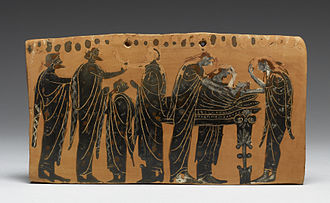
Image result for Ancient Greek burial vase

Speechless About the Life of the Mind

Recent teaching advice from the Chronicle of Higher Education: Go Easy on the Socratic Method.

Plato, Philebus 21d-e

P: This argument has made me completely speechless right now

S: Let’s not give up yet! Let’s take up and examine the life of the mind too.

P: What sort of life are you talking about?

S: If someone would accept living while possessing intelligence, thought, knowledge and perfect memory, but without having any small or great part of pleasure or pain but instead be completely untouched by these kinds of things.

P: Socrates, neither life seems attractive to me, nor to anyone else, I believe.”

ΠΡΩ. Εἰς ἀφασίαν παντάπασί με, ὦ Σώκρατες, οὗτος ὁ λόγος ἐμβέβληκε τὰ νῦν.

ΣΩ. Μήπω τοίνυν μαλθακιζώμεθα, τὸν δὲ τοῦ νοῦ μεταλαβόντες αὖ βίον ἴδωμεν.

ΠΡΩ. Τὸν ποῖον δὴ λέγεις;

ΣΩ. Εἴ τις δέξαιτ᾿ ἂν αὖ ζῆν ἡμῶν φρόνησιν μὲν καὶ νοῦν καὶ ἐπιστήμην καὶ μνήμην πᾶσαν πάντων κεκτημένος, ἡδονῆς δὲ μετέχων μήτε μέγα μήτε σμικρόν, μηδ᾿ αὖ λύπης, ἀλλὰ τὸ παράπαν ἀπαθὴς πάντων τῶν τοιούτων.

ΠΡΩ. Οὐδέτερος ὁ βίος, ὦ Σώκρατες, ἔμοιγε τούτων αἱρετός, οὐδ᾿ ἄλλῳ μή ποτε, ὡς ἐγᾦμαι, φανῇ.

Image result for Ancient GReek life of the mind

Re-Telling Myths as Experiential Learning

“Many words of the ancients still ring true:
Their stories are fine medicine for mortal fear.”

καὶ τῶν παλαιῶν πόλλ’ ἔπη καλῶς ἔχει·
λόγοι γὰρ ἐσθλοὶ φάρμακον φόβου βροτοῖς. –Euripides, fr. 1065

We all know that the young readers–and many older ones–are moved by and identify with stories that draw on myth. Modern authors are part of an ancient tradition of reception, participating in the tradition of giving myth new life by adapting it for new contexts. And students can benefit from engaging in this process on their own.

In partnership with my campus’ Office of Experiential Learning and Teaching I re-designed my myth course this semester to focus more on myth as discourse and training for coping with or responding to discourse. Here is the statement I included on my syllabus:

[Myth] is designated as an experiential learning course. In the pursuit of storytelling as a discourse that shapes the way we think, see, and impact our world, the study of Classical Myth facilitates a reconsideration of where we come from as a human community and a reconfiguration of our understanding of how we shape where we will and can go. The study of myth in this capacity is fundamentally experiential: as a type of cooperative learning, it shows how storytellers and audiences—alongside teachers and students—are partners in the creation and perpetuation of the narratives that define their worlds; it is both relevant and authentic in providing students with the ability to understand the impact of mythmaking on the ancient world and in their own lives. From this perspective, the study of myth can also be transformative in providing students with the ability to sense, to decode and to reuse storytelling to understand and act as participants in their own world.

In keeping with the spirit of mythmaking and reception, this class will also engage in active learning frameworks which include, in addition to regular individual and group interpretation of myth, the telling and retelling of stories for different audiences. The process of interrogating the use of storytelling in the ancient world helps us gain agency over narratives in our own lives, understand our place in a larger human community connected by discourse, and develop greater competence in identifying the social effects of storytelling.

Image result for Ancient GReek myth performance

Periodically during the semester I would break from the typical myth course’s reading and lectures to have students work in groups or individually (1) discussing myths they liked; (2) isolating myths that made them uncomfortable; (3) discussing different versions of myths and reasons for their development; and (4) identifying narratives that had been influential in their lives. In the final weeks of the semester, I used a grant from the Experiential Learning committee to bring a storyteller to campus to work with students of different approaches to storytelling.

This work culminated in a final assignment that had students re-author an ancient myth for a modern context. In this process, I have been influenced by the work of psychologist Michael White who has focused on the importance of identifying the effects of discourse on our lives and regaining control (agency) over our own narratives by retelling our own stories.

Here’s the assignment:

Final Project

Stories (‘myths’) influence our lives from our earliest moments by shaping our expectations about the world and our own lives. Who tells what story has a profound effect on the choices we can make in our lives and the roles we think we may play in the world. In this course we have focused on the variability and reception of myth, emphasizing as well myth’s function as discourse. Cultural discourse is not just an important aspect of our identities vis à vis one another, but it also shapes our sense of agency. Philosophers, social theorists, and psychologists have argued that a sense of agency—most often mediated by types of storytelling—influences the way we interpret past events, impacts our behavior in the present, and constricts our ability to make plans for the future. Retelling stories—both personal narratives and cultural discourses—provides an opportunity for individuals and groups to reconsider and reclaim agency.

This final assignment will ask students to retell stories from Ancient Greece from their own perspectives (meaning individual, temporal, cultural etc.) as part of a practice of reclaiming discourse and learning how to receive and adapt paradigmatic narratives for new purposes. Students may work alone or in groups. The assignments must be submitted by the last day of finals.

Options
Written: Rewrite a classical myth as a short story, either introducing a new variant that changes the narrative to make it applicable to different audiences/agencies or adapting it contextually to a different culture and time (preferably our own). The rewritten narrative should be 1-2 pages (minimum; 3-5 max) with a 2-3 page essay (1) identifying the specific sources you adapted, (2) isolating and explaining the creative choices you made, and (3) discussing any challenges or limitations you encountered when completing the project. This essay is self-reflective and evaluative—it is an essential part of the process. (Note: this option is best for students who would like to work alone; if completed by a group, each member must contribute a separate essay.)
[There were two other options, a video or a recording, and nearly all the students chose to write a story]

Some of the results of this project were absolutely phenomenal. Here’s a selection of what some students did:

Continue reading “Re-Telling Myths as Experiential Learning”

Cut off, Torn off, Morsel: Fragmentary Friday

Image result for Ancient Greek fragments

Homer, Od. 9.373-4

“Wine gurgled up from his throat
Along with fragments of human flesh. And he burped, drunk.”

…φάρυγος δ’ ἐξέσσυτο οἶνος
ψωμοί τ’ ἀνδρόμεοι· ὁ δ’ ἐρεύγετο οἰνοβαρείων.

Theognis, 453-456

“Dude, if you had a serving of brains equal to your ignorance
And were as wise as you are foolish,
Then you’d seem enviable to many of these citizens
Just as now you are worthy of nothing”

῎Ωνθρωπ’, εἰ γνώμης ἔλαχες μέρος ὥσπερ ἀνοίης
καὶ σώφρων οὕτως ὥσπερ ἄφρων ἐγένου,
πολλοῖσ’ ἂν ζηλωτὸς ἐφαίνεο τῶνδε πολιτῶν
οὕτως ὥσπερ νῦν οὐδενὸς ἄξιος εἶ.

Plato, Sophist 266d

“I have now learned and I accept there are two types of creative ability: there is a divine portion and a human portion. The first part concerns the reality of things and the second is the generation of the likeness of these same things.

Θεαίτητος
νῦν μᾶλλον ἔμαθον, καὶ τίθημι δύο διχῇ ποιητικῆς εἴδει: θείαν μὲν καὶ ἀνθρωπίνην κατὰ θάτερον τμῆμα, κατὰ δὲθάτερον τὸ μὲν αὐτῶν ὄν, τὸ δὲ ὁμοιωμάτων τινῶν γέννημα.

Woodhouse’s English to Greek Dictionary lists the following Greek nouns for the English word “fragment”

μέρος, τό: part of
μόριον, τό: portion of
τμῆμα, τό: somehing cut off
θραῦσμα, τό: something torn off
ψωμός, ὁ: Morsel

ἀτελής, adj.: fragmentary

Today for no special reason we are tweeting a large array of fragments. In part, this is because fragments comprise much of what we do. We present fragments; we make texts fragmentary by excerpting them; and we actively re-purpose the fragments we make by decontextualizing them and forcing them into real-world parallels on twitter (some intended, some merely serendipitous).

In this \we participate in the process that created many of what we now call fragments: rather than existing in tattered or reconstructed manuscripts, a large portion of fragments are actually quoted within other texts. The act of excerpting is an act of remaking—one needs only to read a little Plutarch to see the way he intentionally re-purposes lines he quotes.

The metaphors inherent to the Greek words for fragments above indicate a few things: the sense that a fragment belongs to something else, that it has been (violently) separated from this whole, and that a fragment may function like an appetizer, give us merely a taste of a larger ‘meal’. The sense of the adjective ἀτελής is also interesting—that which is fragmentary is incomplete?

Thinking about fragments—and our word is even more violent, it is something ‘broken off’—makes me think of what we are assuming when we consider a text ‘whole’, or non-fragmentary. Isn’t even a complete book merely a portion of someone’s output? What of a whole corpus or genres, are they not fragments of cultures long gone? Perhaps we should articulate more clearly that the study of fragments is, essentially, a metonym for the study of the whole.

Look for the hashtag.

Need, Benefit, Fear: Ancient Thinkers on the Origin of the Social Contract

We often make a lot of noise about our political beliefs and affiliations without coming straight out and saying what we think a government is for. Such questions are not merely ‘academic’–without an articulation of core beliefs, politics devolves into mere tribalism.

Today is the start of a virtual conference  “Teaching Leaders and Leadership Through Classics” . (You can participate by registering). In teaching courses on leadership, I have found that students are sometimes surprised by the questions “What is a state for? Why do we have government?”

In thinking about ancient politics and leadership, it is important to consider what authors say about where governments come from: Ancient states did not have constitutions and guiding treatises, they had traditions. But, sometimes, authors spoke to the issue directly.

A city develops to help us pursue the good?

Aristotle, Politics 1252a1-8

“Since we recognize that every state is some kind of a partnership and that every partnership has been undertaken for the sake of some good—for it seems that all people do everything for what seems good—it is clear that all states pursue some benefit, but that the most powerful state of all pursues the most powerful benefit which also includes all others. This state is called the city and this partnership is political.”

    ᾿Επειδὴ πᾶσαν πόλιν ὁρῶμεν κοινωνίαν τινὰ οὖσαν καὶ πᾶσαν κοινωνίαν ἀγαθοῦ τινος ἕνεκεν συνεστηκυῖαν (τοῦ γὰρ εἶναι δοκοῦντος ἀγαθοῦ χάριν πάντα πράττουσι πάντες), δῆλον ὡς πᾶσαι μὲν ἀγαθοῦ τινος στοχάζονται, μάλιστα δὲ καὶ τοῦ κυριωτάτου πάντων ἡ πασῶν κυριωτάτη καὶ πάσας περιέχουσα τὰς ἄλλας. αὕτη δ’ ἐστὶν ἡ καλουμένη πόλις καὶ ἡ κοινωνία ἡ πολιτική.

What is good? Is it to supply something we’re missing?

Plato, Republic 369b

“A city develops, I believe, because each of us isn’t self-sufficient— we lack much of what we need. Is there any other reason to build a community?”

γίγνεται τοίνυν, ἦν δ᾽ ἐγώ, πόλις, ὡς ἐγᾦμαι, ἐπειδὴ τυγχάνει ἡμῶν ἕκαστος οὐκ αὐτάρκης, ἀλλὰ πολλῶν ὢν ἐνδεής: ἢ τίν᾽ οἴει ἀρχὴν ἄλλην πόλιν οἰκίζειν;

Perhaps the good is to avoid what is bad…

Lucretius, De Rerum Natura 5.1145-1160

“The human race, tired of living in a state of violence 
and languishing in feuds, was eager 
to submit to law and strict judgments.
Otherwise, each person would turn to vengeance
More harshly than our current laws allow,
And this is why people have avoided living in a state of violence.
From here comes the fear that alters life’s rewards
Since violence and pain entrap the one who wields them
And tend to return most to those who acted first.
It isn’t easy to lead a quiet and peaceful life
If you break the faith of a community’s written peace.
Even if you deceive the races of god and man,
There’s no way to be sure to keep a secret forever.
Often many reveal themselves by speaking in sleep
Or confused by a lengthy illness, they finally
Disclose their deeply hidden memories and sins.”

nam genus humanum, defessum vi colere aevom,
ex inimicitiis languebat; quo magis ipsum
sponte sua cecidit sub leges artaque iura.

acrius ex ira quod enim se quisque parabat
ulcisci quam nunc concessumst legibus aequis,
hanc ob rem est homines pertaesum vi colere aevom.
inde metus maculat poenarum praemia vitae.
circumretit enim vis atque iniuria quemque
atque unde exortast, ad eum plerumque revertit,
nec facilest placidam ac pacatam degere vitam
qui violat factis communia foedera pacis.
etsi fallit enim divom genus humanumque,
perpetuo tamen id fore clam diffidere debet;
quippe ubi se multi per somnia saepe loquentes
aut morbo delirantes protraxe ferantur
et celata [mala] in medium et peccata dedisse.

Image result for Ancient Roman Government

Xenophon Memorabilia 2.1.12-14

Socrates: “Come now, if only this path wouldn’t lead through men at all, just as through slavery or dominion, you would be saying something. But, as it is, since you live among human beings, if you think it right neither to rule nor to be ruled, nor again to serve rulers willingly, I think that you may see that the stronger know how to make those weaker weep in public and in private—and how to use them as slaves. Or does it escape you that they cut the grain and harvest the trees where others have sown and planted, or that the powerful set siege to the weaker in every way until they “persuade” them to choose to serve as slaves instead of warring against the stronger? Don’t you think it’s the same in private life—that brave and capable men prey upon the weak and powerless once they have enslaved them?”

Aristippus said, “But, indeed, to avoid suffering these things, I do not bind myself to any state—I am a stranger [guest/foreigner] everywhere.”

Socrates: “You have now described a clever trick!” For since the time of Sinis, Skeiron and Procrustes died, no one has done a stranger wrong! But now men gathered together in their states and make laws so that they might not suffer harm, that they might acquire friends as help beyond what they have acquired by birth, and they have built defenses around their cities and acquired weapons to defend themselves against those who might do them wrong and, in addition to this, they have managed to make alliances in other lands. And even those who have done all these things still suffer injustice. Now you, who have none of these advantages, you spend time on the roads where men suffer harm the most and in every city you arrive you arrive you are weaker than all of the citizens—you are the sort of man who are especially exposed to those who want to harm someone. Given all this, you think that you will not suffer harm because you are a “guest”? Is it because the cities announce your safety when you are coming and going that you are so bold? Or is it because you think that you’re the kind of man who’d be of profit to no master? For who would welcome a man into his home who delights in living well but is unwilling to work?”

᾿Αλλ’ εἰ μέν, ἔφη ὁ Σωκράτης, ὥσπερ οὔτε δι’ ἀρχῆς οὔτε διὰ δουλείας ἡ ὁδὸς αὕτη φέρει, οὕτω μηδὲ δι’ ἀνθρώπων, ἴσως ἄν τι λέγοις· εἰ μέντοι ἐν ἀνθρώποις ὢν μήτε ἄρχειν ἀξιώσεις μήτε ἄρχεσθαι μηδὲ τοὺς ἄρχοντας ἑκὼν θεραπεύσεις, οἶμαί σε ὁρᾶν ὡς ἐπίστανται οἱ κρείττονες τοὺς ἥττονας καὶ κοινῇ καὶ ἰδίᾳ κλαίοντας καθίσαντες δούλοις χρῆσθαι· ἢ λανθάνουσί σε οἱ ἄλλων σπειράντων καὶ φυτευσάντων τόν τε σῖτον τέμνοντες καὶ δενδροκοποῦντες καὶ πάντα τρόπον πολιορκοῦντες τοὺς ἥττονας καὶ μὴ θέλοντας θεραπεύειν, ἕως ἂν πείσωσιν ἑλέσθαι δουλεύειν ἀντὶ τοῦ πολεμεῖν τοῖς κρείττοσι; καὶ ἰδίᾳ αὖ οἱ ἀνδρεῖον καὶ δυνατοὶ τοὺς ἀνάνδρους καὶ ἀδυνάτους οὐκ οἶσθα ὅτι καταδουλωσάμενοι καρποῦνται;

᾿Αλλ’ ἐγώ τοι, ἔφη, ἵνα μὴ πάσχω ταῦτα, οὐδ’ εἰς πολιτείαν ἐμαυτὸν κατακλείω, ἀλλὰ ξένος πανταχοῦ εἰμι.

καὶ ὁ Σωκράτης ἔφη· Τοῦτο ἤδη λέγεις δεινὸν πάλαισμα. τοὺς γὰρ ξένους, ἐξ οὗ ὅ τε Σίνις καὶ ὁ Σκείρων καὶ ὁ Προκρούστης ἀπέθανον, οὐδεὶς ἔτι ἀδικεῖ· ἀλλὰ νῦν οἱ μὲν πολιτευόμενοι ἐν ταῖς πατρίσι καὶ νόμους τίθενται, ἵνα μὴ ἀδικῶνται, καὶ φίλους πρὸς τοῖς ἀναγκαίοις καλουμένοις ἄλλους κτῶνται βοηθούς, καὶ ταῖς πόλεσιν ἐρύματα περιβάλλονται, καὶ ὅπλα κτῶνται οἷς  ἀμυνοῦνται τοὺς ἀδικοῦντας, καὶ πρὸς τούτοις ἄλλους ἔξωθεν συμμάχους κατασκευάζονται· καὶ οἱ μὲν ταῦτα πάντα κεκτημένοι ὅμως ἀδικοῦνται· σὺ δὲ οὐδὲν μὲν τούτων ἔχων, ἐν δὲ ταῖς ὁδοῖς, ἔνθα πλεῖστοι ἀδικοῦνται, πολὺν χρόνον διατρίβων, εἰς ὁποίαν δ’ ἂν πόλιν ἀφίκῃ, τῶν πολιτῶν πάντων ἥττων ὤν, καὶ τοιοῦτος, οἵοις μάλιστα ἐπιτίθενται οἱ βουλόμενοι ἀδικεῖν, ὅμως διὰ τὸ ξένος εἶναι οὐκ ἂν οἴει ἀδικηθῆναι; ἦ διότι αἱ πόλεις σοι κηρύττουσιν ἀσφάλειαν καὶ προσιόντι καὶ ἀπιόντι, θαρρεῖς; ἢ διότι καὶ δοῦλος ἂν οἴει τοιοῦτος εἶναι οἷος μηδενὶ δεσπότῃ λυσιτελεῖν; τίς γὰρ ἂν ἐθέλοι ἄνθρωπον ἐν οἰκίᾳ ἔχειν πονεῖν μὲν μηδὲν ἐθέλοντα, τῇ δὲ πολυτελεστάτῃ διαίτῃ χαίροντα;

The Difference Between Tyrants and Kings

Starting tomorrow a virtual conference “Teaching Leaders and Leadership Through Classics” is going live. (You can participate by registering). Part of the conversation there will be what ancient authors have to say about leadership and how their words resonate today. Over the past year, we have had many reasons to think about what influences our decisions to choose leaders. But that doesn’t mean we are any closer to understanding it.

So, here are some passages about tyranny, for no particular reason.

Why would some one choose an autocrat? Because he is awesome. That’s why.

Aristotle, Politics 1284b25-34

“But in the best state, there is an important question: what should be done when a man is conspicuous not for some other quality such as strength, wealth or networks of friends but for virtue? For, indeed, no one would claim it is right to exile or disenfranchise a man like this. Nor could you say that we should rule him. For if would be the same as if they should think it right to split up the duties and rule over Zeus. What is left, and what seems natural, is for everyone to obey a man like this happily in order to make this type of king revered in their cities.”

ἀλλ’ ἐπὶ τῆς ἀρίστης πολιτείας ἔχει πολλὴν ἀπορίαν, οὐ κατὰ τῶν ἄλλων ἀγαθῶν τὴν ὑπεροχήν, οἷον ἰσχύος καὶ πλούτου καὶ πολυφιλίας, ἀλλὰ ἄν τις γένηται διαφέρων κατ’ ἀρετήν, τί χρὴ ποιεῖν; οὐ  γὰρ δὴ φαῖεν ἂν δεῖν ἐκβάλλειν καὶ μεθιστάναι τὸν τοιοῦτον· ἀλλὰ μὴν οὐδ’ ἄρχειν γε τοῦ τοιούτου· παραπλήσιον γὰρ κἂν εἰ τοῦ Διὸς ἄρχειν ἀξιοῖεν, μερίζοντες τὰς ἀρχάς. λείπεται τοίνυν, ὅπερ ἔοικε πεφυκέναι, πείθεσθαι τῷ τοιούτῳ πάντας ἀσμένως, ὥστε βασιλέας εἶναι τοὺς τοιούτους ἀιδίους ἐν ταῖς πόλεσιν.

Plato uses lycanthropy to describe a man’s transformation into a tyrant.

From Plato’s Republic, Book 8 (565d)

“What is the beginning of the change from guardian to tyrant? Isn’t clear when the guardian begins to do that very thing which myth says happened at the shrine of Lykaion Zeus in Arcadia?

Which is? He said.

That once someone tastes a bit of human innards mixed up with the other sacrifices he becomes a wolf by necessity? Haven’t you heard this tale?

I have.

Is it not something the same with a protector of the people? Once he controls a mob that obeys him, he cannot restrain himself from tribal blood, but he prosecutes unjustly, the sorts of things men love to do, and brings a man into court for murder, eliminating the life of a man—and with tongue and unholy mouth that have tasted the murder of his kind, he exiles, kills, and promises the cutting of debts and the redistribution of land. Is it not by necessity that such a man is fated either to be killed by his enemies or to become a tyrant, to turn into a wolf from a man?”

Τίς ἀρχὴ οὖν μεταβολῆς ἐκ προστάτου ἐπὶ τύραννον; ἢ δῆλον ὅτι ἐπειδὰν ταὐτὸν ἄρξηται δρᾶν ὁ προστάτης τῷ ἐν τῷ μύθῳ ὃς περὶ τὸ ἐν ᾿Αρκαδίᾳ τὸ τοῦ Διὸς τοῦ Λυκαίου ἱερὸν λέγεται;

Τίς; ἔφη.

῾Ως ἄρα ὁ γευσάμενος τοῦ ἀνθρωπίνου σπλάγχνου, ἐν ἄλλοις ἄλλων ἱερείων ἑνὸς ἐγκατατετμημένου, ἀνάγκη δὴ τούτῳ λύκῳ γενέσθαι. ἢ οὐκ ἀκήκοας τὸν λόγον;

῎Εγωγε.

῏Αρ’ οὖν οὕτω καὶ ὃς ἂν δήμου προεστώς, λαβὼν σφόδρα πειθόμενον ὄχλον, μὴ ἀπόσχηται ἐμφυλίου αἵματος, ἀλλ’ ἀδίκως ἐπαιτιώμενος, οἷα δὴ φιλοῦσιν, εἰς δικαστήρια ἄγων μιαιφονῇ, βίον ἀνδρὸς ἀφανίζων, γλώττῃ τε καὶ στόματι ἀνοσίῳ γευόμενος φόνου συγγενοῦς, καὶ ἀνδρηλατῇ καὶ ἀποκτεινύῃ καὶ ὑποσημαίνῃ χρεῶν τε ἀποκοπὰς καὶ γῆς ἀναδασμόν, ἆρα τῷ τοιούτῳ ἀνάγκη δὴ τὸ μετὰ τοῦτο καὶ εἵμαρται ἢ ἀπολωλέναι ὑπὸ τῶν ἐχθρῶν ἢ τυραννεῖν καὶ λύκῳ ἐξ ἀνθρώπου γενέσθαι;

In ancient Greek myth, Lykaon (Lycaon, related to lúkos, “wolf”) was a king of Arcadia. According to Pausanias (8.31-5) , Lykaon sacrificed a newborn child to Zeus. In other sources he offers the infant mixed up with other food to test Zeus’ divinity (although some attribute the deed to his sons, see Apollodorus, 3.8.1). Zeus killed the sons with lightning; Lykaon was transformed into a wolf.

There may actually be physical evidence of human sacrifice in Arcadia now.

Where does the word tyrant come from?

Continue reading “The Difference Between Tyrants and Kings”

Building Ships, Feeding Minds: Reflections on Teaching in Latin and Greek

Today I teach the final classes of the semester, closing out a decade since I earned my PhD. For the first time in that span, I am not eager to have the semester end. So, here are some random Greek and Latin passages reflecting on teaching.

Teaching is of no minor import

Plato, Laws 803

“We should speak next about the teaching and communication of these subjects: how to do so, who should do it, and when it is right to apply each of them. In the same way that a shipwright anticipates the outline of his creation at the beginning in laying out the keel, I seem to be outlining the whole, trying to imagine the shape of lives based on the habits of their minds and in actuality then laying out their keels, by seeking out precisely through what method and with what habits we might best navigate through this journey of life.”

τούτων δὲ αὐτῶν διδασκαλία καὶ παράδοσις λεγέσθω τὸ μετὰ τοῦτο, τίνα τρόπον χρὴ καὶ οἷστισι καὶ πότε πράττειν ἕκαστα αὐτῶν· οἷον δή τις ναυπηγὸς τὴν τῆς ναυπηγίας ἀρχὴν καταβαλλόμενος τὰ τροπιδεῖα ὑπογράφεται <τὰ> τῶν πλοίων σχήματα, ταὐτὸν δή μοι κἀγὼ φαίνομαι ἐμαυτῷ δρᾷν τὰ τῶν βίων πειρώμενος σχήματα διαστήσασθαι κατὰ τρόπους τοὺς τῶν ψυχῶν, ὄντως αὐτῶν τὰ τροπιδεῖα καταβάλλεσθαι, ποίᾳ μηχανῇ καὶ τίσι ποτὲ τρόποις ξυνόντες τὸν βίον ἄριστα διὰ τοῦ πλοῦ τούτου τῆς ζωῆς διακομισθησόμεθα, τοῦτο σκοπῶν ὀρθῶς.

How does it balance with innate skills and character? It’s complicated.

Quintilian, 2.19

“In sum, nature is education’s raw material: the latter shapes, the former is shaped. There is no art without substance; material has a worth apart from art; and yet, the highest art is superior to the best material.”

Denique natura materia doctrinae est: haec fingit, illa fingitur. Nihil ars sine materia, materiae etiam sine arte pretium est; ars summa materia optima melior.

How important is education?

Plutarch, Can Virtue Be Taught 439f

“ ‘If people are not made better through education, their teacher’s pay is wasted’  The teachers are the first to guide children after they leave their mother and, just as nurses help shape the body with hands, teachers shape their character: with their habits they put children on the first step toward excellence. This is why the Spartan, when asked what he accomplished through teaching, said ‘I make noble things appealing to children.’ ”

“εἰ μὴ γίνονται μαθήσει βελτίονες ἄνθρωποι, παραπόλλυται ὁ μισθὸς τῶν παιδαγωγῶν”; πρῶτοι γὰρ οὗτοι παραλαμβάνοντες ἐκ γάλακτος, ὥσπερ αἱ τίτθαι ταῖς χερσὶ τὸ σῶμα πλάττουσιν, οὕτω τὸ ἦθος ῥυθμίζουσι τοῖς ἔθεσιν, εἰς ἴχνος τι πρῶτον ἀρετῆς καθιστάντες. καὶ ὁ Λάκων ἐρωτηθεὶς τί παρέχει παιδαγωγῶν, “τὰ καλά,” ἔφη, “τοῖς παισὶν ἡδέα ποιῶ.”

,Image result for Ancient Greek teaching vase

Hmmm, how do you do this?

Suetonius, On Grammarians 37

“Marcus Verrius flaccus, a freedman, became especially famous through his manner of teaching. For he was in the habit of matching students with their equals in order to encourage learning. He would not merely specify the subjects they would write about, but he would offer a prize which the winner would earn. This prize was some pretty or rare old book. For this reason, Augustus chose him as tutor to his grandsons….”

Verrius Flaccus libertinus docendi genere maxime claruit. Namque ad exercitanda discentium ingenia aequales inter se committere solebat, proposita non solum materia quam scriberent, sed et praemio quod victor auferret. Id erat liber aliquis antiquus pulcher aut rarior. Quare ab Augusto quoque nepotibus eius praeceptor electus

No course of learning is without some regrets….

Letters of Cicero, Fragments. (Suet. Gram. 26)

On Lucius Plotius Gallus,

“I still have a memory from my childhood when a certain Plotius began to teach in Latin for the first time. When crowds circled him and everyone was eager to study with him, I was upset because it was forbidden to me. I was restricted by the advice of the most educated men who used to believe that minds were better fed by training in Greek.”

Plotius Gallus. de hoc Cicero in epistula ad M. Titinium sic refert: equidem memoria teneo pueris nobis primum Latine docere coepisse Plotium quendam. ad quem cum fieret concursus et studiosissimus quisque apud eum exerceretur, dolebam mihi idem non licere; continebar autem doctissimorum hominum auctoritate, qui existimabant Graecis exercitationibus ali melius ingenia posse. (Suet.Gram. 26)