“Then a plague fell on the land, bringing unexpected death to people without sickness, also infecting the crops with barrenness and making the cattle stop reproducing. Drops of blood rained on the city too which added great superstition to the compulsory suffering.
When similar things happened to the people in Laeurentum, it seemed obvious to everyone that it was the crime against justice over Tatius and the murdered ambassadors which drove divine rage against the cities. Once the murderers were surrendered and punished on both sides, the horrors clearly ebbed. Romulus also cleansed the city with purificatory rites which people allege are still celebrated in our time at the Ferentine gate.”
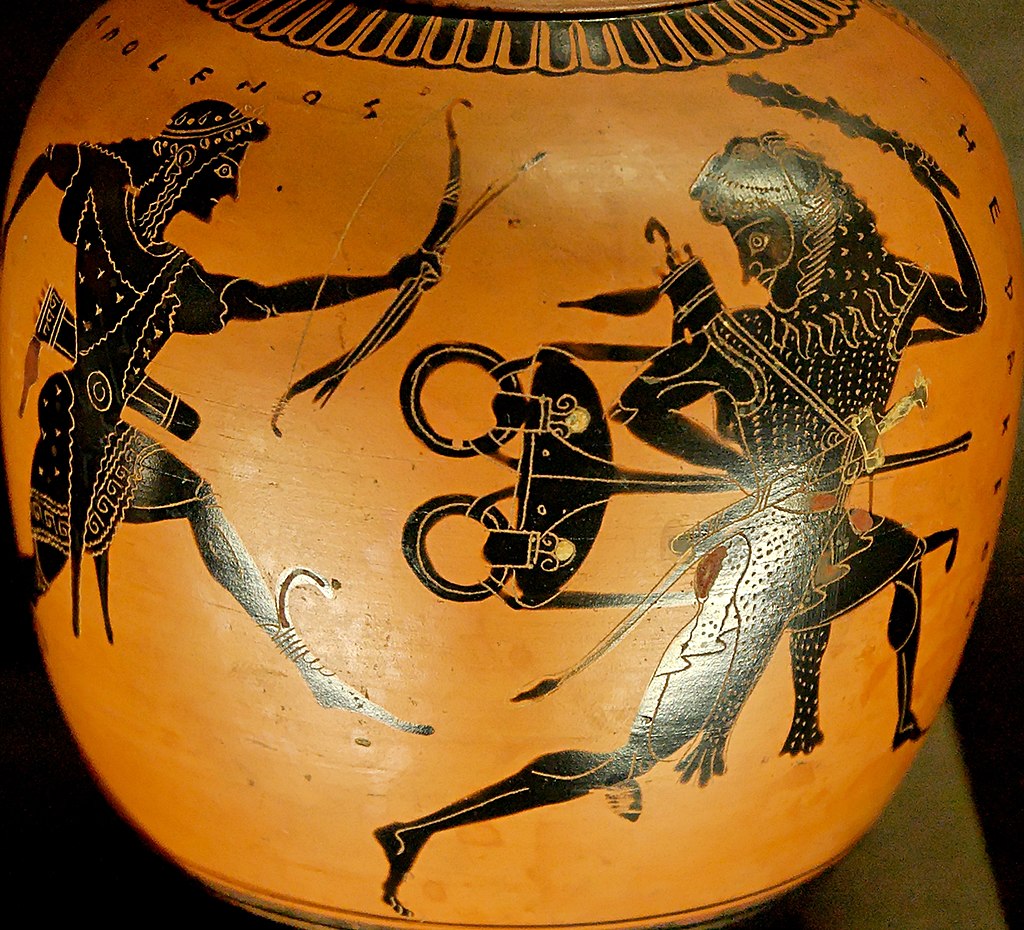
“There was one oracle, also an autophone, which he had sent to all peoples during the plague. It was a single line of verse, “Phoebus, with uncut hair, keeps off the cloud of plague.”
This line was to be seen everywhere, written on doorposts as a spell against the plague. In most cases it produced the opposite result. For, through some fortune, those homes on which the line was written were those which were especially impacted. Don’t imagine that I am saying that they were destroyed because of the line, but that it happened this way in some fashion. Perhaps the people who were encouraged by the words acted negligently or took everything too easily and did nothing to help the oracle against the disease because they believed they had these syllables to fight for them and “long-haired” Apollo to shoot down the plague with his bow.”
“This thing alone had to be mourned the most,
This lamented: how when anyone would give up
when they realized they had contracted the disease
As condemned to die, they would stretch out with a sad heart,
Surrendering their spirit while considering the rites of the dead.
For the spread of that greedy sickness did not stop
Even for a single moment from one to another,
Thick together as woolly flocks and horned heads—
That’s the reason why grave was piling on grave.
Whoever was reluctant to see their own sick,
For this very excessive love of life and fear of death
They were punished eventually with a foul and evil end,
As deserters without help, paid back for their neglect.
But those who stayed to help faced contagion too,
And the suffering which shame compelled them to meet.
The pleading voice of the weary mixed with cries of complaint.
Well, the best kinds of souls met death like this.
…Then some falling upon others, fighting to bury their masses
Of dead, worn out by tears and grief as they returned.
They surrendered to their beds for the better part.
No one could be found anywhere who was untouched by the disease
By the death, by the sorrow of times like these.”
Illud in his rebus miserandum magnopere unum
aerumnabile erat, quod ubi se quisque videbat
implicitum morbo, morti damnatus ut esset,
deficiens animo maesto cum corde iacebat,
funera respectans animam amittebat ibidem.
quippe etenim nullo cessabant tempore apisci
ex aliis alios avidi contagia morbi,
lanigeras tamquam pecudes et bucera saecla;
idque vel in primis cumulabat funere funus.
nam quicumque suos fugitabant visere ad aegros,
vitai nimium cupidos mortisque timentis
poenibat paulo post turpi morte malaque,
desertos, opis expertis, incuria mactans.
qui fuerant autem praesto, contagibus ibant
atque labore, pudor quem tum cogebat obire
blandaque lassorum vox mixta voce querellae.
optimus hoc leti genus ergo quisque subibat.
. . . . . . .
inque aliis alium, populum sepelire suorum
certantes; lacrimis lassi luctuque redibant;
inde bonam partem in lectum maerore dabantur.
nec poterat quisquam reperiri, quem neque morbus
nec mors nec luctus temptaret tempore tali.
Child murder, worries about immigrants, and paranoia about drugs. Why are the ancients so weird?
Scholia B on Euripides, Medea 264
Parmeniskos writes as follows: “The story is that because the Korinthian women did not want to be ruled by a foreign woman and poison-user, they conspired against her and killed her children, seven male and seven female. Euripides says that Medea had only two. When the children were being pursued, they fled to the temple of Hera Akraia and sheltered in the shrine. But the Korinthians did not restrain themselves even there—they slaughtered the children over the altar.
Then a plague fell upon the city and many bodies were ruined by the disease. When they went to the oracle, it prophesied that they should appease the god for the slaughter of Medea’s children. For this reason, even in our day, the Korinthians send seven young men and seven young women from the most illustrious families each year to spend the year in the sanctuary to appease the rage of the children and the divine anger which arose because of them.”
But Didymos argues against this and provides Kreophylos’ writings: “For Medea is said to have killed the leader of Korinth at the time, Kreon, with drugs, when she was living there. Because she feared his friends and relatives, she fled to Athens, but left her sons who were too young and incapable of accompanying here, at the altar of Hera Akraia. She thought that their father would provide for their safety. But once Kreon’s relatives killed them they circulated the tale that Medea not only killed Kreon but murdered her own children too.”
“When it comes to my family, I will do what you report seems right to our friends. Concerning where I am currently, the epidemic is certainly already over and, even though it lasted a while, it didn’t touch me. Plancius, the most dutiful man, longs to keep me with him and detains me here.
I was hoping to stay in some deserted place in Epirus where Piso and his soldiers would never come, but Plancius holds me here. He posts that it will turn out to be possible for him to leave for Italy with me. Should I see that day and return to your embrace and my families and get you and myself back again, I will judge that a great profit of your commitment and mine.”
De familia, quo modo placuisse scribis amicis faciemus. de loco, nunc quidem iam abiit pestilentia, sed quam diu fuit me non attigit. Plancius, homo officiosissimus, me cupit esse secum et adhuc retinet. ego volebam loco magis deserto esse in Epiro, quo neque Piso veniret nec milites, sed adhuc Plancius me retinet; sperat posse fieri ut mecum in Italiam decedat. quem ego diem si videro et si in vestrum complexum venero ac si et vos et me ipsum reciperaro, satis magnum mihi fructum videbor percepisse et vestrae pietatis et meae.
“But there are some souls who live with us on the earth and have come to possess unjust profit, which is clearly inhuman. They implore the guards, whether they are shepherds or guard-dogs, or the highest of all masters as they beg them, trying to persuade them with pleasing words and enchanting spells—as the stories of evil men go. They are able to profiteer among human beings without suffering anything!
But we say that the crime we call now “profiteering” is the same as a disease in the body’s flesh, or what we would call a plague in some seasons and years, or what, once the word is translated, is injustice itself in cities and states.”
N.B This is a different Pythagoras from the one with the theorem.
Suda, s.v. Pythagoras of Ephesos
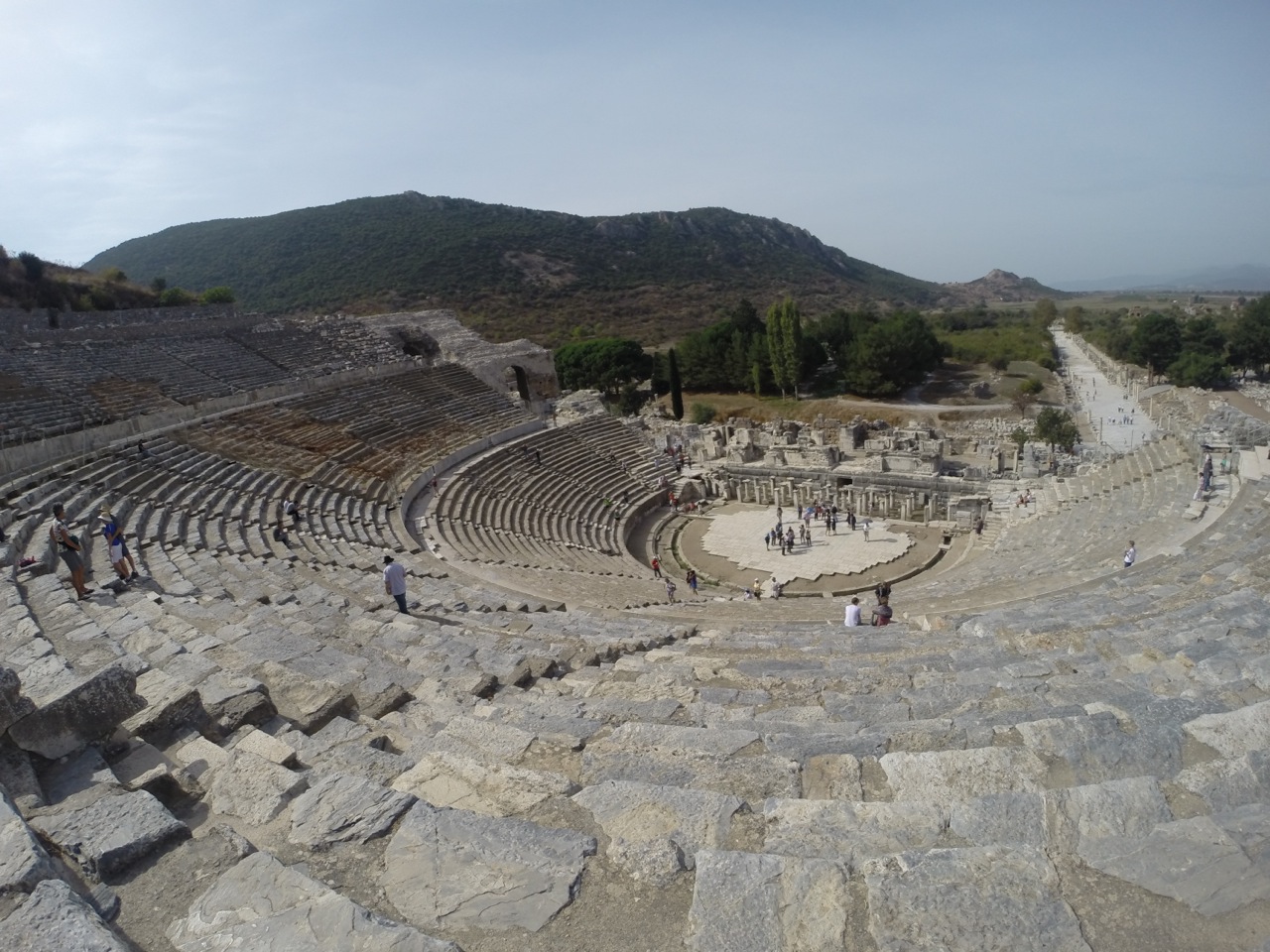
“Pythagoras of Ephesos. Once he overthrew the government called the reign of the Basilidai, Pythagoras became the harshest tyrant. He seemed and sometimes was very kind to the people and the masses, increasing their hopes, but under-delivering on their profits. Because he despoiled those in high esteem and power and liquidated their property, he was not at all tolerable.
He did not hesitate to impose the harshest punishments or to mercilessly kill those who had done no wrong—for he had gotten just this crazy. His lust for money was endless. He was also quickest to anger in response to any insults to those near to him. On their own, these things would have been enough reason for people to kill him in the worst way, but he also was contemptuous of the divine. Indeed, many of his previously mentioned victims he actually killed in temples.
When the daughters of one man took refuge in a temple, he did not dare to extract them forcefully, but he waited them out so long that the girls resolved their hunger with a rope. A plague then afflicted the people along with a famine and Pythagoras, who was worried for himself, sent representatives to Delphi, requesting relief from these sufferings. She said that he needed to build temples and take care of the dead. He lived before Cyrus of Persia, according to Batôn.”
“But there are some souls who live with us on the earth and have come to possess unjust profit, which is clearly inhuman. They implore the guards, whether they are shepherds or guard-dogs, or the highest of all masters as they beg them, trying to persuade them with pleasing words and enchanting spells—as the stories of evil men go. They are able to profiteer among human beings without suffering anything!
But we say that the crime we call now “profiteering” is the same as a disease in the body’s flesh, or what we would call a plague in some seasons and years, or what, once the word is translated, is injustice itself in cities and states.”
“When it comes to my family, I will do what you report seems right to our friends. Concerning where I am currently, the epidemic is certainly already over and, even though it lasted a while, it didn’t touch me. Plancius, the most dutiful man, longs to keep me with him and detains me here.
I was hoping to stay in some deserted place in Epirus where Piso and his soldiers would never come, but Plancius holds me here. He posts that it will turn out to be possible for him to leave for Italy with me. Should I see that day and return to your embrace and my families and get you and myself back again, I will judge that a great profit of your commitment and mine.”
De familia, quo modo placuisse scribis amicis faciemus. de loco, nunc quidem iam abiit pestilentia, sed quam diu fuit me non attigit. Plancius, homo officiosissimus, me cupit esse secum et adhuc retinet. ego volebam loco magis deserto esse in Epiro, quo neque Piso veniret nec milites, sed adhuc Plancius me retinet; sperat posse fieri ut mecum in Italiam decedat. quem ego diem si videro et si in vestrum complexum venero ac si et vos et me ipsum reciperaro, satis magnum mihi fructum videbor percepisse et vestrae pietatis et meae.
“This plague didn’t exist among our ancestors. It first invaded Italy during the principate of Tiberius Claudius when some Roman knight from Perusia, secretary to a quaestor, brought the infection with him after he had been serving in Asia Minor. Women, enslaved people, and those of the low or humble classes tend not to get this disease, but it spreads quickly through nobles thanks to a brief kiss. Many of those who endured the medicine for the sickness handled the scar more foully than the disease. It was cured by burning treatments and the symptom would return unless the flesh was burned up almost to the bone in that spot.
Many physicians came from Egypt—that parent of these kinds of blights—in order to dedicate themselves to this work only, gaining a considerable profit, since it is true that Manilius Cornutus, a man of praetorian rank and legate in Aquitania, paid two hundred thousand for the treatment of his disease.
It does often happen, however, that new kinds of diseases are experienced en masse. What discovery would be more surprising? Some afflictions appear in a certain part of the world and attack certain body parts or people of specific ages or stations—as if a sickness were selective—one harming children, another adults, this one for the nobles, and that one for the poor.”
III. Non fuerat haec lues apud maiores patresque nostros, et primum Ti. Claudi Caesaris principatu medio inrepsit in Italiam quodam Perusino equite Romano quaestorio scriba, cum in Asia adparuisset, inde contagionem eius inportante. nec sensere id malum feminae aut servitia plebesque humilis aut media, sed proceres veloci transitu osculi maxime, foediore multorum qui perpeti medicinam toleraverant cicatrice quam morbo. causticis namque curabatur, ni usque in ossa corpus exustum esset, rebellante taedio. adveneruntque ex Aegypto genetrice talium vitiorum medici hanc solam operam adferentes magna sua praeda, siquidem certum est Manilium Cornutum e praetoriis legatum Aquitanicae provinciae HS CC elocasse in eo morbo curandum sese. acciditque contra saepius ut nova genera morborum gregatim sentirentur. quo mirabilius quid potest reperiri? aliqua gigni repente vitia terrarum in parte certa membrisque hominum certis vel aetatibus aut etiam fortunis, tamquam malo eligente, haec in pueris grassari, illa in adultis, haec proceres sentire, illa pauperes?







#/media/File:Palermo-trionfo-della-morte-bjs.jpg)


#/media/File:Trajan_on_the_Roman_Mammisi_at_Dendera,_Egypt.jpg)