Gifts of Chicks and Shells: The Fragment of the Poet Hedyle

Antiquity has left us only one fragment of the iambic poet Hedyle. It is not iambic!

Athenaeus 7.297b

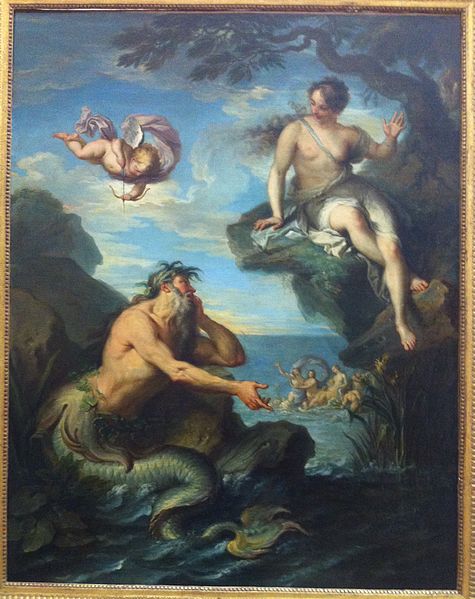
“Hêdulos, the Samian or Athenian, says that Glaukos threw himself in the sea after he fell in love with Melicertes. Hêdulê, his mother and the daughter of the Athenian Moskhinê, was a composer of iambic lines. In her poem called “Skylla”, she records that Glaukos went into his own cave after he fell in love with Skylla

“Either carrying shells as gifts
From the Erythaian cliff
Or halcyon chicks still unwinged
Presents for the girl from an anxious man.
His Siren girl neighbor felt pity
For he was swimming toward that beach
And the regions close to Aitna.”

Ἡδύλος δ᾿ ὁ Σάμιος ἢ Ἀθηναῖος Μελικέρτου φησὶν ἐρασθέντα τὸν Γλαῦκον ἑαυτὸν ῥῖψαι εἰς τὴν | θάλατταν. Ἡδύλη δ᾿ ἡ τοῦ ποιητοῦ τούτου μήτηρ, Μοσχίνης δὲ θυγάτηρ τῆς Ἀττικῆς ἰάμβων ποιητρίας, ἐν τῇ ἐπιγραφομένῃ Σκύλλῃ ἱστορεῖ τὸν Γλαῦκον ἐρασθέντα Σκύλλης ἐλθεῖν αὐτῆς εἰς τὸ ἄντρον

Σκύλλα
ἢ κόγχους δωρήματ’ ᾿Ερυθραίης ἀπὸ πέτρης
ἢ τοὺς ἀλκυόνων παῖδας ἔτ’ ἀπτερύγους
τῇ νύμφῃ δύσπιστος ἀθύρματα. δάκρυ δ’ ἐκείνου
καὶ Σειρὴν γείτων παρθένος ᾠκτίσατο·
ἀκτὴν γὰρ κείνην ἀπενήχετο καὶ τὰ σύνεγγυς
Αἴτνης.

File:Glaucus et Scylla.jpg
Scylla and Glaucus

Odysseus’s Sister and Names for In-Laws

Odysseus’ sister Ktimene is mentioned by the swineherd Eumaios but never by Odysseus. The scholia connect her to one of Odysseus’ companions. The evidence for this seems to be the fact that Ktimene was sent to Same for marriage (where Eurylochus is from) and a kinship term used for him by Odysseus. Also of interest, according to the scholion, Odysseus may have had more sisters.

Homer, Odyssey 15.364-41

Strong Ktimenê, the youngest of the children she bore.
I was raised with her, and she honored me little less.
But when we both made it to much-praised youth,
They gave her to Samê and received much in return
But she gave me a cloak, tunic and clothing
Dressing me finely and give me sandals for my feet
And sent me to the field. But she loved me more in her heart.

οὕνεκά μ’ αὐτὴ θρέψεν ἅμα Κτιμένῃ τανυπέπλῳ
θυγατέρ’ ἰφθίμῃ, τὴν ὁπλοτάτην τέκε παίδων·
τῇ ὁμοῦ ἐτρεφόμην, ὀλίγον δέ τί μ’ ἧσσον ἐτίμα.
αὐτὰρ ἐπεί ῥ’ ἥβην πολυήρατον ἱκόμεθ’ ἄμφω,
τὴν μὲν ἔπειτα Σάμηνδ’ ἔδοσαν καὶ μυρί’ ἕλοντο,
αὐτὰρ ἐμὲ χλαῖνάν τε χιτῶνά τε εἵματ’ ἐκείνη
καλὰ μάλ’ ἀμφιέσασα ποσίν θ’ ὑποδήματα δοῦσα
ἀγρόνδε προΐαλλε· φίλει δέ με κηρόθι μᾶλλον.

Schol. BW ad Od. 15.364 ex

“Ktimenê is the proper name of Odysseus’ sister, whom Eurylochus is supposed to have married.”

Κτιμένη] Κτιμένη κυρίως ἐκαλεῖτο ἡ ᾿Οδυσσέως ἀδελφὴ, ἧς
ὁ Εὐρύλοχος ὑπονοεῖται ἀνήρ. λέγει γὰρ “καὶ πηῷ περ ἐόντι μάλα
σχεδόν” (κ, 441.). B.Q.

“She bore the youngest of the children”: [this means] of the female children. For his father only had Odysseus [for a son]. There were more sisters of Odysseus.”

ὁπλοτάτην τέκε παίδων] θηλειῶν γοῦν. μόνον δ’ αὖτ’ ᾿Οδυσσέα πατὴρ τέκε (π, 119.). καὶ πλείους οὖν αἱ ᾿Οδυσσέως ἀδελφαί. Q.

Homer, Odyssey 10.438-442

“So he spoke, and I was turning over in my thoughts
As I began to draw the sharp-edged sword next to my thick thigh,
Whether I should cut off his head and drive him to the ground
Even though he really was my relative. But our companions
Were restraining me with gentle words from all sides.”

ὣς ἔφατ’, αὐτὰρ ἐγώ γε μετὰ φρεσὶ μερμήριξα,
σπασσάμενος τανύηκες ἄορ παχέος παρὰ μηροῦ,
τῷ οἱ ἀποτμήξας κεφαλὴν οὖδάσδε πελάσσαι,
καὶ πηῷ περ ἐόντι μάλα σχεδόν· ἀλλά μ’ ἑταῖροι
μειλιχίοισ’ ἐπέεσσιν ἐρήτυον ἄλλοθεν ἄλλος·

Schol. QVB ad Od 10.441 ex

Q “Instead of the genitive here, “even though he was an in-law”.

V. “Relative”

QV For he married Odysseus’ sister Ktimene.
B “even though he was my brother-in-law by my sister Ktimenê.”

καὶ πηῷ] ἀντὶ τοῦ, καὶ πηοῦ περ ἐόντος. Q. συγγενεῖ. V.
Κτιμένην γὰρ γεγαμήκει τὴν ᾿Οδυσσέως ἀδελφήν. Q.V. γαμβρῷ
μοι ὄντι ἐπὶ τῇ ἀδελφῇ Κτιμένῃ. B.

Suda

“Pêos: A relative by marriage. In-law. Also, “in-lawness” [Pêosunê], relation-by-marriage. There is also Pêôn [genitive plural], for “of relatives-by-marriage. Homer has: “relatives and friends” [Il. 3.163]

Πηός: ὁ κατ’ ἐπιγαμίαν συγγενής. καὶ Πηοσύνη, ἡ συγγαμβρία.
καὶ Πηῶν, τῶν συγγενῶν. ῞Ομηρος· πηούς τε φίλους τε.

Etymologicum Gudianum

“…There is a difference between in-law and friend. People who have no connection to you by birth are friends. In-laws are related to you through marriage.”

διαφέρει δὲ πηὸς φίλου· φίλοι μὲν λέγονται οἱ μηδὲν τῷ γένει προσήκοντες·  πηοὶ δὲ οἱ κατ’ ἐπιγαμίαν συγγενεῖς.

peos

For a beautiful narrative re-imagining of the life of Ktimene, see Mary Ebbot’s “Seeking Odysseus’ Sister”

Cries of Unexpected Joy

a fragment with limited context

Anonymous, Papiri Greci e Latini, x. 1932, no. 1181, p. 169. 7-23

“When a wave carried from Troy
[a vessel made] of many trees,
Some god announced that one [person]
Would stay there….
But the other would escape
Ruinous death.

Cries went up to the sky
In great numbers in response
To the unexpected joy.

The song of men [restrained]
On their seats was not unheard,
And the young girls prayed aloud
Ie, ie…”

μάλ᾿ ἔγε[ιρε] τοι[α]ύτα φάτις
ἐπεὶ δοκ[. . .]κια[. .]ν
ἐπεὶ πολυ[δεν]δρέ[ω]ν αι[.]ων
κῦμα πό[ρευσ᾿] ἀπ᾿ Ἰλίου
θεῶν τι[ς ἀ]μ-
εἶπε τὸν μὲν
αὖθι μένεῖν . . . . .]ερ[ . ]μιδι
τὸν δ᾿ οὐλόμε[νον . .]ειμεν
προφυγεῖν θά[νατ]ον.
ἐ]πασσύτεραι δ᾿ ἰα[χαὶ
οὐρανὸν ἷξον [
ἀέλπτωι περὶ χάρ[μα]τι [
οὐδ᾿ ἀνδρῶν
θώκοισι μετε[. . . .]τω[ν μέλος
ἄναυδον ἦν,
νέαι δ᾿ ἐπεύχο[ν]τ[ο . . .]λλαι
ἰὴ ἰή.

Color image close up of a Grek vase showing a ship with sail opened, men at oar rowing, and a prominent figure steering
On the internal surface, around the rim, four ships. Cemetery of Ancient Thera. 3rd quarter of the 6th cent. BC Archaeological Museum of Thera. [Wikimedia Commons]

The Time of Planning and Envy’s Crush

Bacchylides, Dithyramb 16.22-30

“Then, the unconquerable god
Wove for Deianeira a plan
Of many tears and guile,
Once she learned
The report of enduring grief
that Zeus’ indomitable son
Was sending to his bright home
White-armed Iole as a wife.

Oh! that unlucky, unhappy woman,
To have made such plans!
Broad-powered envy crushed her
Along with the opaque veil
Of events to come later
On that day at rose-covered Lukormis
When she took from Nessos
That divine sign.”

τότ᾿ ἄμαχος δαίμων
Δαϊανείραι πολύδακρυν ὕφα[νε
μῆτιν ἐπίφρον᾿ ἐπεὶ
πύθετ᾿ ἀγγελίαν ταλαπενθέα,
Ἰόλαν ὅτι λευκώλενον
Διὸς υἱὸς ἀταρβομάχας
ἄλοχον λιπαρὸ[ν] οτὶ δόμον πέ[π]οι
ἆ δύσμορος, ἆ τάλ[αι]ν᾿, οἷον ἐμήσατ[ο·
φθόνος εὐρυβίας νιν ἀπώλεσεν,
δνόφεόν τε κάλυμμα τῶν
ὕστερον ἐρχομένων,
ὅτ᾿ ἐπὶ 〚ποταμῶι〛 ῥοδόεντι Λυκόρμαι
δέξατο Νέσσου πάρα δαιμόνιον τέρ[ας.

Photograph of oil painting. In center, a centaur struggling with a woman in red and orange robes. In the background, a distant figure (Herakles).
Reni, Guido; Nessus and Deianeira; National Trust, Cragside; http://www.artuk.org/artworks/nessus-and-deianeira-170594

I Feel Bad For You, Let Me Marry Your Sister

In this Ode, Herakles encounters Meleager in the underworld and hears the story of how the Calydonian hero started to lose strength and fail during battle because his mother had thrown a magic log whose safety ensured his life onto a fire. Herakles is moved by the story and has a somewhat surprising response.

Bacchylides, 4. 156-176

“Then the only son of Amphitryon
Wept, pitying the fate of the long-suffering man
As he answered him saying this:

“The best thing for mortals is not to be born
Nor to see the light of the sun.
Ah, but since weeping over these things
Does no good
We must speak of what will be done.
Is there, in the halls of war-loving Oeneus
An unwed daughter,
Similar to you in appearance?
I am willing to make her
My glorious wife.”

Meleager’s battle-hardened soul said:

“I left in my home
Pale-limbed Deineira,
Still unfamiliar with
Golden Aphrodite, enchanter of mortals.”

Ἀμφιτρύωνος παῖδα μοῦνον δὴ τότε
τέγξαι βλέφαρον, ταλαπενθέος
πότμον οἰκτίροντα φωτός·
καί νιν ἀμειβόμενος
τᾶδ᾿ ἔφα·  ‘θνατοῖσι μὴ φῦναι φέριστον
μηδ᾿ ἀελίου προσιδεῖν
φέγγος· ἀλλ᾿ οὐ γάρ τίς ἐστιν
πρᾶξις τάδε μυρομένοις,
χρὴ κεῖνο λέγειν ὅτι καὶ μέλλει τελεῖν.

ἦρά τις ἐν μεγάροις
Οἰνῆος ἀρηϊφίλου
ἔστιν ἀδμήτα θυγάτρων,
σοὶ φυὰν ἀλιγκία;
τάν κεν λιπαρὰν <ἐ>θέλων θείμαν ἄκοιτιν.’
τὸν δὲ μενεπτολέμου

ψυχὰ προσέφα Μελεάγρου·

‘λίπον χλωραύχενα
ἐν δώμασι Δαϊάνειραν,
νῆϊν ἔτι χρυσέας
Κύπριδος θελξιμβρότου.’

Line drawing of the centaur Nessus trying to abduct Deianeira from Herakles.
Francesco Bartolozzi, “Hercules, Deianeira and Nessus ” Yale Center for British Art via Wikimedia Commons

Diomedes, The God

Pindar, Nemean 10.6-7

“And the fair-haired Grey-eyed goddess
Once made Diomedes an immortal god

Διομήδεα δ᾿ ἄμβροτον ξαν-
θά ποτε Γλαυκῶπις ἔθηκε θεόν·

Schol ad Pin. Nem 10.12a-12b

“And the fair-haired Grey-eyed goddess / Once made Diomedes an immortal god”: This is the Argive Diomedes who was immortalized because of his excellence. There is a sacred Island Diomedeia in the Adriatic where he is honored as a god. Ibykos records this.”

Διομήδεα δ’ ἄμβροτον ξανθά ποτε γλαυκῶπις ἔθηκε θεόν: καὶ οὗτος ᾿Αργεῖος, ὃς δι’ ἀρετὴν ἀπηθανατίσθη· καὶ ἔστι περὶ τὸν ᾿Αδρίαν Διομήδεια νῆσος ἱερὰ, ἐν ᾗ
τιμᾶται ὡς θεός. καὶ ῎Ιβυκος οὕτω (fr. 38)· ……..

“After marrying Hermione Diomedes was made a god with the Dioskouroi. For he shares their life. Polemon records this. Among the Argyrippoi he has a sacred place. And in Mentapontion as well he receives honor like a god. Among the Thourians as well, they put up statues of him as if he were a god.”

τὴν ῾Ερμιόνην γήμας ὁ Διομήδης ἀπηθανατίσθη σὺν τοῖς Διοσκούροις· καὶ γὰρ συνδιαιτᾶται αὐτοῖς. καὶ Πολέμων ἱστορεῖ (FHG III 122)· ἐν μὲν γὰρ ᾿Αργυρίπποις ἅγιόν ἐστιν αὐτοῦ ἱερόν· καὶ ἐν Μεταποντίῳ δὲ διὰ πολλῆς αὐτὸν αἴρεσθαι τιμῆς ὡς θεὸν, καὶ ἐν Θουρίοις εἰκόνας αὐτοῦ καθιδρύσθαι ὡς θεοῦ.

“Another explanation: Didn’t Athena also make Diomedes a god? For during the Theban War, Melanaippos, a Theban hero, wounded Tydeus. And Tydeus, enraged over the wound, sought Amphiaros to kill Melanippus and bring him his head. When the head was brought to him and his anger overcame his reason, he took a taste of the Melanippian meat, as Euripides writes in the Meleager: “he will arrive at man-eating pleasures / and tear into Melanippus’ head with blood-crusted jaws”

When Tydeus was wounded, Athena was planning on making him immortal, but she did not grant that gift because he ate human flesh. So, because he was not able to receive immortality, he thought it right for the goddess to transfer the gift to Diomedes. Diomedes is therefore honored as a god among the Thourians and Metapontians and there is no record of his death among the historians.”

ἄλλως. οὐχὶ δὲ καὶ τὸν Διομήδην ἡ ᾿Αθηνᾶ θεὸν ἐποίησε; κατὰ γὰρ τὸν Θηβαϊκὸν πόλεμον Μελάνιππος, ἦν δὲ οὗτος ἥρως Θηβαῖος, ἔτρωσε τὸν Τυδέα· ὁ δὲ πρὸς τὴν πληγὴν θυμήνας καθικέτευσε τὸν ᾿Αμφιάραον ἀνελεῖν τὸν Μελάνιππον καὶ προσαγαγεῖν αὐτοῦ τὴν κεφαλήν. προσαχθείσης δὲ αὐτῷ τῆς κεφαλῆς καὶ τῆς ὀργῆς νικησάσης τὸν δέοντα λογισμὸν, ἀπεγεύσατο τῶν Μελανιππείων κρεῶν, ὡς
καὶ Εὐριπίδης ἐν τῷ Μελεάγρῳ φησίν (fr. 537)·

εἰς ἀνδροβρώτους ἡδονὰς ἀφίξεται
κάρηνα πυρσαῖς γένυσι Μελανίππου σπάσας.

τετρωμένῳ οὖν τῷ Τυδεῖ ἡ ᾿Αθηνᾶ τὴν ἀθανασίαν παρήγαγε, καὶ οὐκ ἀπήλαυσε τῆς δωρεᾶς ἔτι διὰ τὴν τῶν ἀνθρωπείων κρεῶν βρῶσιν· εἶτα ὡς αὐτὸς οὐκ ἠδυνήθη τῆς ἀθανασίας τυχεῖν, ἠξίωσε τὴν θεὸν ἐπὶ τὸν Διομήδην τὸ δῶρον μεταθεῖναι. τιμᾶται γοῦν καὶ παρὰ Θουρίοις καὶ Μεταποντίοις ὡς θεὸς Διομήδης, καὶ οὐκ ἔστι παρὰ τοῖς ἱστορικοῖς εὑρέσθαι αὐτοῦ τὸν θάνατον.

Highly stylized painting with Domedes on the left in front of white horses. He is mostly nude with a crested helmet on. To the right is Aphrodite'Venus, holding her hand out towards him. This is likely a reference to Iliad book 6 where Diomedes wounds Aphrodite in the hand
Jean-Auguste-Dominique Ingres. Vénus blessée par Diomède (1800) Kunstmuseum Basel Suisse

Killed Him Some Lions, When He Was Only Six

Pindar, Nemean 3.40-49

“Someone born to glory grows super strong,
But one who has only learned is a shady figure,
Inspired about different things at different times and
Never putting down a sure foot– someone who tries to taste
Countless accomplishments without thinking things through.

So, fiery Achilles when he was staying in the home of Philyra,
Even though he was a child, would play out great deeds.
He shook the short, iron-edged javelins in his hands like the winds
And designed murder for wild lions and he slaughtered boars.
He used to carry their bodies still breathing to Kronos’ son, the Centaur,
From when he was six years old and forever after.

συγγενεῖ δέ τις εὐδοξίᾳ μέγα βρίθει.
ὃς δὲ διδάκτ᾿ ἔχει, ψεφεννὸς ἀνὴρ
ἄλλοτ᾿ ἄλλα πνέων οὔ ποτ᾿ ἀτρεκεῖ
κατέβα ποδί, μυριᾶν δ᾿ ἀρετᾶν ἀτελεῖ νόῳ γεύεται.

ξανθὸς δ᾿ Ἀχιλεὺς τὰ μὲν μένων Φιλύρας ἐν δόμοις,
παῖς ἐὼν ἄθυρε μεγάλα ἔργα· χερσὶ θαμινά
βραχυσίδαρον ἄκοντα πάλλων ἴσα τ᾿ ἀνέμοις,
μάχᾳ λεόντεσσιν ἀγροτέροις ἔπρασσεν φόνον,
κάπρους τ᾿ ἔναιρε· σώματα δὲ παρὰ Κρονίδαν
Κένταυρον ἀσθμαίνοντα κόμιζεν,
ἑξέτης τὸ πρῶτον, ὅλον δ᾿ ἔπειτ᾿ ἂν χρόνον·

Schol. Ad Pin. Nem3. 71b

“the meaning of this: who ever achieves noble things from practice and learning is shadowed and not similarly brilliant, because they are not always focusing on the same things, but they are changing their ways easily because of the weakness of their preparation from one set of goals to others.”

ὁ δὲ νοῦς· ὅστις δὲ ἐξ ἐπιτηδεύσεως καὶ μαθήσεως ἔχει τὰ καλὰ, σκοτεινός ἐστι καὶ οὐχ ὁμοίως ἐκλάμπων, οὐκ ἀεὶ τὰ αὐτὰ φρονῶν ἀλλ’ εὐμαρῶς μεταβαλλόμενος διὰ τὸ σαθρὸν τῆς ἐπιτηδεύσεως ἀφ’ ἑτέρων εἰς ἕτερα

Photograph of a Roman Wall painting showing a centaur pointing out something to a young nude hero holding a lyre
Roman Wall painting, Chrorn instructing Achilles, National Archaeological Museum, Naples, Italy

Oedipus’ Wisdom and Healing’s Soft Touch

Pindar, Pythian 4.262-275

“Now recognize the wisdom of Oedipus:
If someone could cleave the branches from
A giant oak tree with a sharp-edged axe
And wreck its eye-catching beauty,
It would still weigh in about itself even though
It could no longer bear fruit
If it came face to face with a winter’s fire in the end
Or if set upon columns for some master,
It provides the labor for someone else’s walls,
Leaving its place deserted.

But you are the most timely healer and Paian
Honors your light.
You need a soft touch to work on
An open wound.

It is easy for cowards to shake up a state,
But it is hard indeed to make it stable again,
Unless the leaders suddenly have a god
For a pilot.”

γνῶθι νῦν τὰν Οἰδιπόδα σοφίαν· εἰ
γάρ τις ὄζους ὀξυτόμῳ πελέκει
ἐξερείψειεν μεγάλας δρυός, αἰσχύ-
νοι δέ οἱ θαητὸν εἶδος,
καὶ φθινόκαρπος ἐοῖσα διδοῖ ψᾶφον περ᾿ αὐτᾶς,
εἴ ποτε χειμέριον πῦρ ἐξίκηται λοίσθιον,
ἢ σὺν ὀρθαῖς κιόνεσσιν
δεσποσύναισιν ἐρειδομένα
μόχθον ἄλλοις ἀμφέπει δύστανον ἐν τείχεσιν,
ἑὸν ἐρημώσαισα χῶρον.
ἐσσὶ δ᾿ ἰατὴρ ἐπικαιρότατος, Παι-
άν τέ σοι τιμᾷ φάος.
χρὴ μαλακὰν χέρα προσβάλ-
λοντα τρώμαν ἕλκεος ἀμφιπολεῖν.
ῥᾴδιον μὲν γὰρ πόλιν σεῖσαι καὶ ἀφαυροτέροις·
ἀλλ᾿ ἐπὶ χώρας αὖτις ἕσσαι δυσπαλὲς
δὴ γίνεται, ἐξαπίνας
εἰ μὴ θεὸς ἁγεμόνεσσι κυβερνατὴρ γένηται.

Schol. Ad Pin. Pyth. 3.467

“Now recognize the wisdom of Oedipus”: Pindar encourages Arkesilaos to examine his own riddle. For he wants him to consider the wisdom of Oedipus because he solved the riddle of the Sphinx. And he is riddling here, and he means this kind of thing. Some people were in revolt in Kyrene during Arkesilaos’ reign because they wanted to expel him from power. But because he was stronger than them, he sent them into exile from the country. Demophilos was among the rebels because he was an insurrectionist himself. He also went as exile into Thebes. Some people thought—since others claim that he gave money to Pindar for the victory ode—that Pindar was using the poem to reconcile him to Arkesilaos

γνῶθι νῦν τὰν Οἰδιπόδα σοφίαν: προτρέπεται τὸν ᾿Αρκεσίλαον ὁ Πίνδαρος συνορᾶν αὐτοῦ τὸ αἴνιγμα. τὸ γὰρ Οἰδιπόδα σοφίαν τοῦτο βούλεται, ὅτι κἀκεῖνος τὸ τῆς Σφιγγὸς αἴνιγμα ἔλυσεν. ὃ δὲ αἰνίττεται, ἔστι τοιοῦτον. ἐστασίασάν τινες ἐν τῇ Κυρήνῃ κατὰ τοῦ ᾿Αρκεσιλάου, βουλόμενοι αὐτὸν μεταστῆσαι τῆς ἀρχῆς· ὁ δὲ ἐπικρατέστερος αὐτῶν γενόμενος ἐφυγάδευσεν αὐτοὺς τῆς πατρίδος. ἐν τοῖς οὖν στασιώταις ἦν καὶ ὁ Δημόφιλος, ὃς καὶ αὐτὸς ἀνάστατος γέγονε τῆς πατρίδος, καὶ φυγαδευθεὶς ἔρχεται εἰς Θήβας καὶ ἀξιοῖ τὸν Πίνδαρον (τινὲς δὲ, ὅτι καὶ τὸν μισθὸν τοῦ ἐπινίκου δίδωσι τῷ Πινδάρῳ αὐτός), ὥστε τῇ τοῦ ἐπινίκου γραφῇ διαλλάξαι αὐτὸν πρὸς τὸν ᾿Αρκεσίλαον.

Oil painting of Oedipus and the Sphinx. Oedipus is mostly nude, knee raised on a stone, staff on his shoulder. He is pointing his hand at the Sphinx on the left hand margin in conversation
Jean-Auguste Dominique Ingres, Oedipus and the Sphinx (1808–27). Oil on canvas, 189 x 144 cm. Louvre, Paris

Everyone’s Heard of Peleus

Pindar, Isthmian 6.23-30

“There’s no city so foreign
Nor so tongue-tied that
It has not heard the fame of the Hero Peleus,
Blessed son-in-law to the gods,
Nor Ajax, the son of Telamon,
And his father–Alkmene’s son took him in ships
To the bronze-delighting war,
When he went as a willing ally
From Tiryns to Troy, that labor for heroes,
Because of Laomedon’s duplicity.”

οὐδ᾿ ἔστιν οὕτω βάρβαρος
οὔτε παλίγγλωσσος πόλις,
ἅτις οὐ Πηλέος ἀίει κλέος ἥ-
ρωος, εὐδαίμονος γαμβροῦ θεῶν,
οὐδ᾿ ἅτις Αἴαντος Τελαμωνιάδα
καὶ πατρός· τὸν χαλκοχάρμαν ἐς πόλεμον
ἆγε σὺν Τιρυνθίοισιν πρόφρονα σύμμαχον ἐς
Τροΐαν, ἥρωσι μόχθον,
Λαομεδοντιᾶν ὑπὲρ ἀμπλακιᾶν
ἐν ναυσὶν Ἀλκμήνας τέκος.

Oil painting with banquet scene in profile. Large number of semi-clothed divine people in post-renaissance romanticized style. All the figures are looking right at the appearance of a golden apple
Painting of the Feast of Peleus by Edward Burne-Jones, ca. 1872/1881.

The Fairest of them All

“A great calm listens to me, where I listen for hope.”
-Paul Valery, “Narcissus Speaks”

Ovid. Metamorphoses. Book III. 423-434 (Echo & Narcissus).

He desired himself without knowing it.
The one adoring was himself the one adored.
He pursues and he is the one pursued.
In equal parts he lights the flame and he burns.

How often his vain kisses for the trickster stream!
How often, grasping for the neck he saw there,
He plunged his arms amid the waters
And there failed to clasp himself!

What he sees, he does not understand.
Yet, what he sees he burns for.
What beguiles his eyes sustains his confusion.

Naif, why grasp in vain at a skirting image?
What you seek is nowhere.
What you love, just by turning away, you lose.
What you see is reflection’s shadow.
There’s nothing to it: it comes, it stays, with you.
With you it will leave, if you can leave.

Se cupit imprudens et qui probat, ipse probatur,
dumque petit, petitur, pariterque accendit et ardet.
Inrita fallaci quotiens dedit oscula fonti!
In mediis quotiens visum captantia collum
bracchia mersit aquis, nec se deprendit in illis!
Quid videat, nescit: sed quod videt, uritur illo,
atque oculos idem, qui decipit, incitat error.
Credule, quid frusta simulacra fugacia captas?
quod petis, est nusquam; quod amas, avertere, perdes.
Ista repercussae, quam cernis, imaginis umbra est:
nil habet ista sui; tecum venitque manetque,
tecum discedet, si tu discedere possis.

Figure with midlength brown-blond hair bent over, looking into his reflection
Caravaggio. Narcissus. 1597-1599. Galleria Nazionale d’Arte Antica. Rome, Italy.

Larry Benn has a B.A. in English Literature from Harvard College, an M.Phil in English Literature from Oxford University, and a J.D. from Yale Law School. Making amends for a working life misspent in finance, he’s now a hobbyist in ancient languages and blogs at featsofgreek.blogspot.com.