Penelope Addresses Odysseus

Homer, Odyssey 23. 205–230

“So he spoke, and her knees and dear heart grew weak there
As she recognized the signs which Odysseus pointed out as certain.
As she wept she went straight to him and threw her arms
Around Odysseus’ neck. She kissed him and spoke:

“Don’t be angry at me Odysseus, since in all other things
You knew the most of humans. The gods granted this grief
Who denied that we would remain with one another
To enjoy our youth and come together to old age.
Do not be angry with me or criticize me for this now,
Because I did not rejoice when I first saw you.
For the heart in my dear breast always was trembling,
Afraid that someone would arrive and deceive me with words.
For there are many men who devise evil plans.
Not even Argive Helen the offspring of Zeus
Would have joined in sex and bed with a foreign man
If she had understood that the warlike Achaeans
Would one day bring her home to her fatherland.
Truly, then, a god drove her to complete the shameful act—
And she did not conceive of this ruinous blindness in her mind,
Before this, the ruin from which grief also first came to us.
But now, since you have laid out the clear signs already
Of our bed, which no other mortal has spied,
Except for you and I and one single attendant alone,
Akrotis, whom my father gave to me when I was on my way here,
The girl who has guarded the doors of our strong bedroom,
You are persuading my heart, even though it is truly resistant.”

ὣς φάτο, τῆς δ’ αὐτοῦ λύτο γούνατα καὶ φίλον ἦτορ,
σήματ’ ἀναγνούσῃ, τά οἱ ἔμπεδα πέφραδ’ ᾿Οδυσσεύς·
δακρύσασα δ’ ἔπειτ’ ἰθὺς κίεν, ἀμφὶ δὲ χεῖρας
δειρῇ βάλλ’ ᾿Οδυσῆϊ, κάρη δ’ ἔκυσ’ ἠδὲ προσηύδα·

“μή μοι, ᾿Οδυσσεῦ, σκύζευ, ἐπεὶ τά περ ἄλλα μάλιστα
ἀνθρώπων πέπνυσο· θεοὶ δ’ ὤπαζον ὀϊζύν,
οἳ νῶϊν ἀγάσαντο παρ’ ἀλλήλοισι μένοντε
ἥβης ταρπῆναι καὶ γήραος οὐδὸν ἱκέσθαι.
αὐτὰρ μὴ νῦν μοι τόδε χώεο μηδὲ νεμέσσα,
οὕνεκά σ’ οὐ τὸ πρῶτον, ἐπεὶ ἴδον, ὧδ’ ἀγάπησα.
αἰεὶ γάρ μοι θυμὸς ἐνὶ στήθεσσι φίλοισιν
ἐρρίγει, μή τίς με βροτῶν ἀπάφοιτ’ ἐπέεσσιν
ἐλθών· πολλοὶ γὰρ κακὰ κέρδεα βουλεύουσιν.
οὐδέ κεν ᾿Αργείη ῾Ελένη, Διὸς ἐκγεγαυῖα,
ἀνδρὶ παρ’ ἀλλοδαπῷ ἐμίγη φιλότητι καὶ εὐνῇ,
εἰ ᾔδη, ὅ μιν αὖτις ἀρήϊοι υἷες ᾿Αχαιῶν
ἀξέμεναι οἶκόνδε φίλην ἐς πατρίδ’ ἔμελλον.
τὴν δ’ ἦ τοι ῥέξαι θεὸς ὤρορεν ἔργον ἀεικές·
τὴν δ’ ἄτην οὐ πρόσθεν ἑῷ ἐγκάτθετο θυμῷ
λυγρήν, ἐξ ἧς πρῶτα καὶ ἡμέας ἵκετο πένθος.
νῦν δ’, ἐπεὶ ἤδη σήματ’ ἀριφραδέα κατέλεξας
εὐνῆς ἡμετέρης, τὴν οὐ βροτὸς ἄλλος ὀπώπει,
ἀλλ’ οἶοι σύ τ’ ἐγώ τε καὶ ἀμφίπολος μία μούνη,
᾿Ακτορίς, ἥν μοι δῶκε πατὴρ ἔτι δεῦρο κιούσῃ,
ἣ νῶϊν εἴρυτο θύρας πυκινοῦ θαλάμοιο,
πείθεις δή μευ θυμόν, ἀπηνέα περ μάλ’ ἐόντα.”

Fracesco Primaticcio, Odysseus and Penelope (1563)


Penelope’s (In)Fidelity

Penelope’s Grave, Pausanias 8.12.5

“In addition to the roads discussed, there are two others to Orkhomenos. On one we find what is called the Ladan Stade where Ladas practiced running and near there a temple of Artemis. On the right side of the road, there is a high mound. People say that this is the burial place of Penelope, although in this they don’t agree with the story about her in the poem called the Thesprotis.

In that poem, Penelope has the child Ptoloporthês with Odysseus after he comes home from Troy.  But the story of the Mantineans says that she was accused by Odysseus of bringing lovers into his home and then he kicked her out. They say she returned to Lakedaimon but later moved from Sparta to Mantineia where she met the end of her life.”

ἐπὶ δὲ ὁδοῖς ταῖς κατειλεγμέναις δύο ἐς ᾿Ορχομενόν εἰσιν ἄλλαι, καὶ τῇ μέν ἐστι καλούμενον Λάδα στάδιον, ἐς ὃ ἐποιεῖτο Λάδας μελέτην δρόμου, καὶ παρ’ αὐτὸ ἱερὸν ᾿Αρτέμιδος καὶ ἐν δεξιᾷ τῆς ὁδοῦ γῆς χῶμα ὑψηλόν· Πηνελόπης δὲ εἶναι τάφον φασίν, οὐχ ὁμολογοῦντες τὰ ἐς αὐτὴν ποιήσει <τῇ> Θεσπρωτίδι ὀνομαζομένῃ. ἐν ταύτῃ μέν γέ ἐστι τῇ ποιήσει ἐπανήκοντι ἐκ Τροίας ᾿Οδυσσεῖ τεκεῖν τὴν Πηνελόπην Πτολιπόρθην παῖδα· Μαντινέων δὲ ὁ ἐς αὐτὴν λόγος Πηνελόπην φησὶν ὑπ’ ᾿Οδυσσέως καταγνωσθεῖσαν ὡς ἐπισπαστοὺς ἐσαγάγοιτο ἐς τὸν οἶκον, καὶ ἀποπεμφθεῖσαν ὑπ’ αὐτοῦ,  τὸ μὲν παραυτίκα ἐς Λακεδαίμονα ἀπελθεῖν, χρόνῳ δὲ ὕστερον ἐκ τῆς Σπάρτης ἐς Μαντίνειαν μετοικῆσαι, καί οἱ τοῦ βίου τὴν τελευτὴν ἐνταῦθα συμβῆναι.

This story is in part reported by Apollodorus, (Ep. 7.38-39)

“Some say that Penelope was corrupted by Antinoos and that Odysseus sent her back to her father Ikarios. When she came to Mantinea in Arcadia she had Pan with Hermes. Others allege that she was killed by Odysseus because of Amphinomos, who seduced her. There are also those who say that Odysseus was charged by the relatives of those he had killed who took Neoptolemos as judge, then king of the islands near Epirus. He handed down a judgment of exile and Odysseus went to Thoas the son of Andraimôn who married him to his daughter. When he died from old age, he left a son Leontophonos.

τινὲς δὲ Πηνελόπην ὑπὸ Ἀντινόου φθαρεῖσαν λέγουσιν ὑπὸ Ὀδυσσέως πρὸς τὸν πατέρα Ἰκάριον ἀποσταλῆναι, γενομένην δὲ τῆς Ἀρκαδίας κατὰ Μαντίνειαν ἐξ Ἑρμοῦ τεκεῖν Πᾶνα:  ἄλλοι δὲ δι᾽ Ἀμφίνομον ὑπὸ Ὀδυσσέως αὐτοῦ τελευτῆσαι: διαφθαρῆναι γὰρ αὐτὴν ὑπὸ τούτου λέγουσιν. [40] εἰσὶ δὲ οἱ λέγοντες ἐγκαλούμενον Ὀδυσσέα ὑπὸ τῶν οἰκείων ὑπὲρ τῶν ἀπολωλότων δικαστὴν Νεοπτόλεμον λαβεῖν τὸν βασιλεύοντα τῶν κατὰ τὴν Ἤπειρον νήσων, τοῦτον δέ, νομίσαντα ἐκποδὼν Ὀδυσσέως γενομένου Κεφαλληνίαν καθέξειν, κατακρῖναι φυγὴν αὐτοῦ, Ὀδυσσέα δὲ εἰς Αἰτωλίαν πρὸς Θόαντα τὸν Ἀνδραίμονος παραγενόμενον τὴν τούτου θυγατέρα γῆμαι, καὶ καταλιπόντα παῖδα Λεοντοφόνον ἐκ ταύτης γηραιὸν τελευτῆσαι.

Image result for Penelope ancient greek

The detail about Amphinomos might be drawn from a passage in the Odyssey where the narrative provides some insight into Penelope’s mind (16.394-398):

Amphinomos rose and spoke among them,
The dashing son of Nisos, the son of lord Arêtiades,
Who joined the suitors from grain-rich and grassy
Doulikhos. He was especially pleasing to Penelope
For he made good use of his brains.”

τοῖσιν δ’ ᾿Αμφίνομος ἀγορήσατο καὶ μετέειπε,
Νίσου φαίδιμος υἱός, ᾿Αρητιάδαο ἄνακτος,
ὅς ῥ’ ἐκ Δουλιχίου πολυπύρου ποιήεντος
ἡγεῖτο μνηστῆρσι, μάλιστα δὲ Πηνελοπείῃ
ἥνδανε μύθοισι· φρεσὶ γὰρ κέχρητ’ ἀγαθῇσιν·

It is somewhat amusing to compare this to what Telemachus says earlier when he describes the suitors.

Homer, Odyssey 15.518-524

“But I will tell you of another man you might encounter,
Eurymakhos, the shining son of sharp-minded Polyboios,
Whom the Ithakans now look upon the way they would a god.
He is by far the best man remaining and the best
To marry my mother and receive my father’s geras.
But Zeus is the one who knows these things as he rules on high”
Whether or not he will bring about a deadly day for them before a marriage.”

ἀλλά τοι ἄλλον φῶτα πιφαύσκομαι, ὅν κεν ἵκοιο,
Εὐρύμαχον, Πολύβοιο δαΐφρονος ἀγλαὸν υἱόν,
τὸν νῦν ἶσα θεῷ ᾿Ιθακήσιοι εἰσορόωσι·
καὶ γὰρ πολλὸν ἄριστος ἀνὴρ μέμονέν τε μάλιστα
μητέρ’ ἐμὴν γαμέειν καὶ ᾿Οδυσσῆος γέρας ἕξειν.

What to make of this difference? Telemachus’ evaluation appears to be based on Eurymakhos’ standing among the Ithakans. Penelope seems to favor someone who is not Ithakan and whose traits are like her own and her absent husband.

Lykophron in his Alexandra takes the view that Penelope was not faithful (768-773)

“For he will come, he will come to the harbor shelter of Reithron
And the cliffs of Nêritos. And he will see
His whole house upturned from its foundations
By wifestealing adulterers. And that vixen
Will hollow out his home with shameless whoring,
Pouring out the wretch’s fortune feast by feast”.

ἥξει γάρ, ἥξει ναύλοχον ῾Ρείθρου σκέπας
καὶ Νηρίτου πρηῶνας. ὄψεται δὲ πᾶν
μέλαθρον ἄρδην ἐκ βάθρων ἀνάστατον
μύκλοις γυναικόκλωψιν. ἡ δὲ βασσάρα
σεμνῶς κασωρεύουσα κοιλανεῖ δόμους,
θοίναισιν ὄλβον ἐκχέασα τλήμονος.

Lykophron is positively chaste compared to the account provided in the Scholia:

“And Douris writes in his work on the lewdness of Agathokleos that Penelope had sex with all of the suitors and then gave birth to the goat-shaped Pan whom they took up to be one of the gods.  He is talking nonsense about Pan, for Pan is the child of Hermes and a different Penelope. Another story is that Pan is the child of Zeus and Hubris.”

Καὶ Δοῦρις δὲ ἐν τῷ περὶ ᾿Αγαθοκλέους μάχλον φησὶ τὴν Πηνελόπην καὶ συνελθοῦσαν πᾶσι τοῖς μνηστῆρσι γεννῆσαι τὸν τραγοσκελῆ Πᾶνα ὃν εἰς θεοὺς ἔχουσιν (FHG II 47942). φλυαρεῖ δὲ περὶ τοῦ Πανός· ὁ Πὰν γὰρ ῾Ερμοῦ καὶ Πηνελόπης ἄλλης †T. καὶ ἕτερος δὲ Πὰν Διὸς καὶ ῞Υβρεως.

Plutarch has Erotic Stories: They’re Not What You’d Think

A terrible love story for Women’s History Month

Plutarch, Erotic Stories, Moralia 771

“In Haliartos in Boiotia, there was a certain girl of surpassing beauty whose name was Aristokleia. She was the Daughter of Theophanes. Stratôn the Orkhomenian and Kallisthenes the Haliartian were both wooing her.

Stratôn was wealthier and was somewhat more taken with the virgin. For he happened to see her once when she was bathing in the fountain Herkunêin Lebadeia. For she was making reading to carry a basket for Zeus the king. But Kallisthenes was closer to winning her, for he was related to her.

Theophanes was at a loss in the matter—for he was fearing Stratôn he stood apart from nearly all the Boiotians because of his family and wealth. He was planning on getting advice about the choice from Trophonios. Stratôn, however, was convinced by the girl’s servants that she was leaning towards him, so he considered it best to have the girl to be married make the choice. But when Theophanes asked his daughter in front of everyone, she chose Kallisthenes. It was clear that Stratôn took the dishonor badly.

After a period of two days, he approached Theophanes and Kallisthenes, saying he wanted to preserve their friendship, even if he had been denied the marriage by some envious god. They praised what he said and asked him to come to the feast for the wedding. But he, once he had gathered a mob of his friends and no small a retinue of servants which were distributed among the attendees unnoticed, waited until the girl wen to the Spring Kissoessa to make the customary sacrifice to the local nymphs. There, all the men who were in ambush rushed out and grabbed her. Stratos had gained a hold of the virgin. Kallisthenes, as one might expect, grabbed her in turn and those with him were helping. They all pulled on her until she died without them knowing, stretched to death in their hands.

Kallisthenes was out of sight immediately, either because he killed himself or left Boiotia as an exile. No one is able to say what happened to him. But Stratôn killed himself openty over the maiden.”

Ἐν Ἁλιάρτῳ τῆς Βοιωτίας κόρη τις γίνεται κάλλει διαπρέπουσα ὄνομα Ἀριστόκλεια· θυγάτηρ δ᾿ ἦν Θεοφάνους. ταύτην μνῶνται Στράτων Ὀρχομένιος καὶ Καλλισθένης Ἁλιάρτιος. πλουσιώτερος δ᾿ ἦν Στράτων καὶ μᾶλλόν τι τῆς παρθένου ἡττημένος· ἐτύγχανε γὰρ ἰδὼν αὐτὴν ἐν Λεβαδείᾳ λουομένην ἐπὶ τῇ κρήνῃ τῇ Ἑρκύνῃ· ἔμελλε γὰρ τῷ Διὶ τῷ βασιλεῖ κανηφορεῖν. ἀλλ᾿ ὁ Καλλισθένης γε πλέον ἐφέρετο· ἦν γὰρ καὶ γένει προσήκων τῇ κόρῃ. ἀπορῶν δὲ τῷ πράγματι ὁ Θεοφάνης, ἐδεδίει γὰρ τὸν Στράτων πλούτῳ τε καὶ γένει σχεδὸν ἁπάντων διαφέροντα τῶν Βοιωτῶν, τὴν αἵρεσιν ἐβούλετο τῷ Τροφωνίῳ ἐπιτρέψαι· καὶ ὁ Στράτων, ἀνεπέπειστο γὰρ ὑπὸ τῶν τῆς παρθένου οἰκετῶν, ὡς πρὸς αὐτὸν μᾶλλον ἐκείνη ῥέποι, ἠξίου ἐπ᾿ αὐτῇ ποιεῖσθαι τῇ γαμουμένῃ τὴν ἐκλογήν. ὡς δὲ τῆς παιδὸς ὁ Θεοφάνης ἐπυνθάνετο ἐν ὄψει πάντων, ἡ δὲ τὸν Καλλισθένην προύκρινεν, εὐθὺς μὲν ὁ Στράτων δῆλος ἦν βαρέως φέρων τὴν ἀτιμίαν· ἡμέρας δὲ διαλιπὼν δύο προσῆλθε τῷ Θεοφάνει καὶ τῷ Καλλισθένει, ἀξιῶν τὴν φιλίαν αὐτῷ πρὸς αὐτοὺς διαφυλάττεσθαι, εἰ καὶ τοῦ γάμου ἐφθονήθη ὑπὸ δαιμονίου τινός. οἱ δ᾿ ἐπῄνουν τὰ λεγόμενα, ὥστε καὶ ἐπὶ τὴν ἑστίασιν τῶν γάμων παρεκάλουν αὐτόν. ὁ δὲ παρεσκευασμένος ἑταίρων ὄχλον, καὶ πλῆθος οὐκ ὀλίγον θεραπόντων, διεσπαρμένους παρὰ τούτοις καὶ λανθάνοντας, ἕως ἡ κόρη κατὰ τὰ πάτρια ἐπὶ τὴν Κισσόεσσαν καλουμένην κρήνην κατῄει ταῖς Νύμφαις τὰ προτέλειαCθύσουσα, τότε δὴ συνδραμόντες πάντες οἱ λοχῶντες ἐκείνῳ συνελάμβανον αὐτήν. καὶ ὁ Στράτων γ᾿ εἴχετο τῆς παρθένου· ἀντελαμβάνετο δ᾿ ὡς εἰκὸς ὁ Καλλισθένης ἐν μέρει καὶ οἱ σὺν αὐτῷ, ἕως ἔλαθεν ἡ παῖς ἐν χερσὶ τῶν ἀνθελκόντων διαφθαρεῖσα. ὁ Καλλισθένης μὲν οὖν παραχρῆμα ἀφανὴς ἐγένετο, εἴτε διαχρησάμενος ἑαυτὸν εἴτε φυγὰς ἀπελθὼν ἐκ τῆς Βοιωτίας· οὐκ εἶχε δ᾿ οὖν τις εἰπεῖν ὅ τι καὶ πεπόνθοι. ὁ δὲ Στράτων φανερῶς ἐπικατέσφαξεν ἑαυτὸν τῇ παρθένῳ.

File:Pyxis01 pushkin.jpg
Wedding Preparation Vase, Wikimedia Commons

Plato’s Father Was (Probably) A Rapist

Diogenes Laertius, Lives of the Philosophers 3.1

“Plato was the son of Aristôn, an Athenian, and Periktionê, or Pôtônê, who alleged her heritage went back to Solon. For he had a brother named Drôpides who was the father of Kritias, the father of Kallaiskhros, the father of Kritias, who was one of the Thirty. He was also the father of Glaukôn, the father of Kharmides and Perictionê. Plato, then, as the son of Aristôn and that Perictionê, was the sixth generation after Solon. And Solon claimed his family descended from Neleus and Poseidon. They also claim that his father descends from Kodros the son of Melanthos and, they are said to descend from Poseidon, according to Thrasylos.

In his work named “The Feast for Plato” Speusippus writes, as Klearkhos claims in his Praise to Plato and Anaaxlaides records in his second book of On Philosopgers, that there was a story in Athens that Aristôn raped Perictionê when she was an adolescent girl and failed to get her [as a wife?]. When he stopped assaulting her, Apollo came to him in a dream. For this reason, he left her untouched of marriage until she gave birth.”

Πλάτων, Ἀρίστωνος καὶ Περικτιόνης—ἢ Πωτώνης,—Ἀθηναῖος, ἥτις τὸ γένος ἀνέφερεν εἰς Σόλωνα. τούτου γὰρ ἦν ἀδελφὸς Δρωπίδης, οὗ Κριτίας, οὗ Κάλλαισχρος, οὗ Κριτίας ὁ τῶν τριάκοντα καὶ Γλαύκων, οὗ Χαρμίδης καὶ Περικτιόνη, ἧς καὶ Ἀρίστωνος Πλάτων, ἕκτος ἀπὸ Σόλωνος. ὁ δὲ Σόλων εἰς Νηλέα καὶ Ποσειδῶνα ἀνέφερε τὸ γένος. φασὶ δὲ καὶ τὸν πατέρα αὐτοῦ ἀνάγειν εἰς Κόδρον τὸν Μελάνθου, οἵτινες ἀπὸ Ποσειδῶνος ἱστοροῦνται κατὰ Θρασύλον.

Σπεύσιππος δ᾿ ἐν τῷ ἐπιγραφομένῳ Πλάτωνος περιδείπνῳ καὶ Κλέαρχος ἐν τῷ Πλάτωνος ἐγκωμίῳ καὶ Ἀναξιλαΐδης ἐν τῷ δευτέρῳ Περὶ φιλοσόφων φασίν, ὡς Ἀθήνησιν ἦν λόγος, ὡραίαν οὖσαν τὴν Περικτιόνην βιάζεσθαι τὸν Ἀρίστωνα καὶ μὴ τυγχάνειν· παυόμενόν τε τῆς βίας ἰδεῖν τὴν τοῦ Ἀπόλλωνος ὄψιν· ὅθεν καθαρὰν γάμου φυλάξαι ἕως τῆς ἀποκυήσεως.

Image result for Plato
From this blog

Septicia’s Second Marriage and Final Testament

Valerius Maximus, Famous Words and Deeds, 7.7.4

“Septicia as well, the mother of Ariminum’s Trachali, because she was angry with her sons, married Publicius who was already old, even though she could no longer have children, as an insult against them. Then she took both of them out of her will.  When they appealed to him, the divine Augustus criticized both the woman’s marriage and her final allotments. He ordered that the sons have their mother’s inheritance and the dowry since she had not begun the marriage for the purpose of having children.

If Fairness herself were to judge this affair, could she have come up with a more just or more substantial opinion? You spurn the children you bore, make a sterile marriage, make a mess of a final will because of your malicious spirit, and you don’t blush to hand all your wealth over to a man whose body you climb under even when it has already been laid out like a corpse? So, since you acted like this, you are struck by divine lightning even among the damned!”

Septicia quoque, mater Trachalorum Ariminensium, irata filiis, in contumeliam eorum, cum iam parere non posset, Publicio seni admodum nupsit, testamento etiam utrumque praeteriit. a quibus aditus divus Augustus et nuptias mulieris et suprema iudicia improbavit: nam hereditatem maternam filios habere iussit, dotem, quia non creandorum liberorum causa coniugium intercesserat, virum retinere vetuit. si ipsa Aequitas hac de re cognosceret, potuitne iustius aut gravius pronuntiare? spernis quos genuisti, nubis effeta, testamenti ordinem malevolo animo confundis, neque erubescis ei totum patrimonium addicere cuius pollincto iam corpori marcidam senectutem tuam substravisti. ergo dum sic te geris, ad inferos usque caelesti fulmine adflata es.

Related image
Marriage scene on a sarcophagus


The ‘Wives’ of Telemachus

Tell me of Telemachus, Muse, and the tawdry tales
of his trio of tender-ankled temptresses

Hesiod, Fr. 221 (Eustathius in Hom. (π 117—20) p. 1796. 38)

“Well-belted Polycaste, the youngest daughter of Nestor Neleus’ son, gave birth to Persepolis after having sex with Telemachus Thanks to golden Aphrodite.”

Τηλεμάχωι δ’ ἄρ’ ἔτικτεν ἐύζωνος Πολυκάστη
Νέστορος ὁπλοτάτη κούρη Νηληϊάδαο
Περσέπολιν μιχθεῖσα διὰ χρυσῆν ᾿Αφροδίτην

This resonates with one moment in the Odyssey (3.464-5):

“Then pretty Polycaste, the youngest daughter of Nestor
the son of Neleus, bathed Telemachus”

τόφρα δὲ Τηλέμαχον λοῦσεν καλὴ Πολυκάστη
Νέστορος ὁπλοτάτη θυγάτηρ Νηληϊάδαο.

Dictys, BNJ 49 F10

“And Telemachus took the daughter of Alkinoos as bride, her name was Nausikaa.”

λαμβάνει δὲ Τηλέμαχος γαμετὴν θυγατέρα Ἀλκινόου Ναυσικάαν ὀνόματι.

Proclus (?), Chrestomathia 324-330

“And then Telegonos went sailing in search of his father; once he stopped in Ithaca he was trashing the island. Odysseus shouted out and was killed by his child because of ignorance.

Once Telegonos understood his mistake he returned the body of his father along with Penelope and Telemachus to his own mother. She made them immortal. Then he lived with Penelope and Telemachus lived with Kirke.

κἀν τούτῳ Τηλέγονος ἐπὶ ζήτησιν τοῦ πατρὸς πλέων ἀποβὰς εἰς τὴν ᾿Ιθάκην τέμνει τὴν νῆσον· ἐκβοηθήσας δ’ ᾿Οδυσσεὺς ὑπὸ τοῦ παιδὸς ἀναιρεῖται κατ’ ἄγνοιαν.
Τηλέγονος δ’ ἐπιγνοὺς τὴν ἁμαρτίαν τό τε τοῦ πατρὸς σῶμα

Image result for Ancient Greek vase Circe

Madness, Philosophy, and the Natural Realm

Menander, Aspis 305-310

[Khairestratos]:
“Daos, boy, I am not well
I am depressed because of these events. By the gods
I am not under my own control. I am almost completely crazy.
That fine brother of mine is forcing me
To such insanity with his vile behavior.
He is about to get married!”

ΧΑΙΡΕΣΤΡΑΤΟΣ
Δᾶε παῖ, κακῶς ἔχω.
μελαγχολῶ τοῖς πράγμασιν· μὰ τοὺς θεούς,
οὐκ εἴμ᾿ ἐν ἐμαυτοῦ, μαίνομαι δ᾿ ἀκαρὴς πάνυ·
ὁ καλὸς ἀδελφὸς εἰς τοσαύτην ἔκστασιν
ἤδη καθίστησίν με τῇ πονηρίᾳ.
μέλλει γαμεῖν γὰρ αὐτός.

Cicero, De Finibus 1.64

“In this way strength is drawn from natural philosophy against death; so too is determination against the fears of religion and a calmness of mind once the ignorance of all natural mysteries has been removed. So too comes moderation, once the nature and number of desires have been explained. And, finally, as I was just arguing, we can learn how to divine a lie from the truth, since this philosophy provides the Rule or Judgment of knowledge.”

Sic e physicis et fortitudo sumitur contra mortis timorem et constantia contra metum religionis et sedatio animi, omnium rerum occultarum ignoratione sublata, et moderatio, natura cupiditatum generibusque earum explicatis, et, ut modo docui, cognitionis regula et iudicio ab eodem illo constituto veri a falso distinctio traditur.

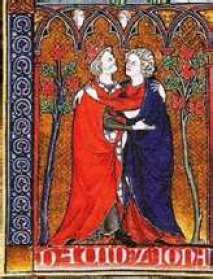
Image result for medieval manuscript marriage
Enter a caption

(Necessary) Bigamy in Classical Athens? Socrates’ Two Wives

A few years back, when I was collecting some anecdotes about Socrates’ wife Xanthippê, I willfully ignored the Suda’s comments on his second wife:

“And Socrates took home two wives: he had a son Lamprokles from Xanthippê and two sons with Myrto the daughter of Aristeides the just, Sophroniskos and Menedêmos or Menexenos, as some believe.”

καὶ γαμεταῖς δὲ συνῴκησε δύο, Ξανθίππῃ, ἀφ’ ἧς ἔσχεν υἱὸν Λαμπροκλέα·καὶ δευτέρᾳ Μυρτοῖ, τῇ ᾿Αριστείδου τοῦ δικαίου θυγατρί, ἐξ ἧς ἐγένετο Σωφρονίσκος καὶ Μενέδημος ἢ Μενέξενος, ὥς τισι δοκεῖ.

This detail doesn’t fit the basic narrative of an impoverished philosopher with a nagging wife. There is an explanation in the tradition found in Diogenes Laertius’, Lives of the Eminent Philosophers 2.26

“Aristotle records that Socrates had two wives. The first was Xanthippe who gave him a son, Lamprokles. The second was Myrto, who was the daughter of Aristeides the Just, whom he married without a dowry. She gave him two sons, Sophroniskos and Menexenos. Others report that he married Myrto second. And some—including Satyros and Hieronymous of Rhodes— claim that he married both at the same time. (They assert that because the Athenians had a lack of men and wanted to increase their number, they voted that citizen may marry one woman and have children with another. This is what Socrates did.)”

Φησὶ δ’ ᾿Αριστοτέλης (Rose 93) δύο γυναῖκας αὐτὸν ἀγαγέσθαι· προτέραν μὲν Ξανθίππην, ἐξ ἧς αὐτῷ γενέσθαι Λαμπροκλέα· δευτέραν δὲ Μυρτώ, τὴν ᾿Αριστείδου τοῦ δικαίου θυγατέρα, ἣν καὶ ἄπροικον λαβεῖν, ἐξ ἧς γενέσθαι Σωφρονίσκον καὶ Μενέξενον. οἱ δὲ προτέραν γῆμαι τὴν Μυρτώ φασιν· ἔνιοι δὲ καὶ ἀμφοτέρας ἔχειν ὁμοῦ, ὧν ἐστι Σάτυρός τε (FHG iii. 163) καὶ ῾Ιερώνυμος ὁ῾Ρόδιος (Hiller, xxvi. 3). φασὶ γὰρ βουληθέντας ᾿Αθηναίους διὰ τὸ λειπανδρεῖν συναυξῆσαι τὸ πλῆθος, ψηφίσασθαι γαμεῖν μὲν ἀστὴν μίαν, παιδοποιεῖσθαι δὲ καὶ ἐξ ἑτέρας· ὅθεν τοῦτο ποιῆσαι καὶ Σωκράτην.

Most of the anecdotes in Diogenes’ life speak of Xanthippe and not Myrto. Athenaeus repeats the detail (13.556a) and notes that if it were true, it probably would have been mentioned by the comic poets. But are there other records of legalized polygamy in classical Greece?

And what about the sons? Regardless of the mother, the number accords with what Plato has Socrates say in the Apology (34d) “I have three sons, Athenians, one an adolescent and two still children….” (μοί εἰσι καὶ ὑεῖς γε, ὦ ἄνδρες ᾿Αθηναῖοι, τρεῖς, εἷς μὲν μειράκιον ἤδη, δύο δὲ παιδία·)

Socrates
A face only (two) women could love….

Strabo (6.3.3) mentions something similar among the Spartans during their conflict with the Messenians. The Spartans are also said to have a concern about their lack of population at 8.5.4). Apart from some fragmentary historians, however, there’s not much evidence for the laws. Our good friend and contributor the Fabulous Festus pointed me to a Roman account:

Aulus Gellius, Attic Nights, 15.20

[Euripides] is reported to have hated women in a rather serious way, either because he despised the company of women by nature or because he had two wives at the same time (which was the law made by Athenian decree) and was worn down by his marriages. Aristophanes also memorializes his hatred in the first version of the Thesmophoriazusae:

Now, then, I address and advise all women
To punish this man for many reasons:
He has accosted us with bitter evils,
This man raised on a garden’s bitter harvest.

And Alexander the Aitolian composed these lines about Euripides:

The strident student of strong Anaxagoras, the mirth-hater,
Addressed me and never got used to making jokes while drinking.
But what he wrote, honey or a Siren could have made.”

6 Mulieres fere omnes in maiorem modum exosus fuisse dicitur, sive quod natura abhorruit a mulierum coetu sive quod duas simul uxores habuerat, cum id decreto ab Atheniensibus facto ius esset, quarum matrimonii pertaedebat. 7 Eius odii in mulieres Aristophanes quoque meminit en tais proterais Thesmophoriazousais in his versibus:

Νῦν οὖν ἁπάσαισιν παραινῶ καὶ λέγω
τοῦτον κολάσαι τὸν ἄνδρα πολλῶν οὕνεκα·
ἄγρια γὰρ ἡμᾶς, ὦ γυναῖκες, δρᾷ κακά,
ἅτ’ ἐν ἀγρίοισι τοῖς λαχάνοις αὐτὸς τραφείς.

8 Alexander autem Aetolus hos de Euripide versus composuit:

Ὁ δ᾽ Ἀναξαγόρου τρόφιμος χαιου στρίφνος μὲν ἔμοιγε προσειπεῖν
καὶ μισογελος καὶ τοθαζειν οὐδὲ παρ᾽ οἶνον μεμαθεκως,
ἀλλ᾽ ὅ τι γράψαι, τοῦτ᾽ ἂν μέλιτος καὶ Σειρηνον ἐτετεύχει.

A Model Response to an Engagement

Pliny, Letters 26

To Julius Servianus,

“I am happy and I congratulate because that your daughter is engaged to Fuscus Salinator. His house is patrician; his father most honorable and his mother his equal; the boy himself is educated, literate and even an orator—a boy in his directness, a youth for his charm, yet an older man when it comes to serious matters. I certainly am not deceived by my adoration—for I love as fully as he merits for his actions and his reverence for me—but I have my judgment still and it is as much sharper thanks to the depth of my affection.

I promise you as one who has known him that you will have a son-in-law who will be better than any prayer could anticipate. The only task left is that he will make a grandson like himself sooner rather than later. How happy a day it well be which delivers his children from your embrace—your grandchildren—as if they were my own children or grandchildren and my equal right to care for them. Farewell!

C. Plinius Serviano Suo S.
Gaudeo et gratulor, quod Fusco Salinatori filiam tuam destinasti. Domus patricia, pater honestissimus, mater pari laude; ipse studiosus litteratus etiam disertus, puer simplicitate comitate iuvenis senex gravitate. Neque enim amore decipior. Amo quidem effuse (ita officiis ita reverentia meruit), iudico tamen, et quidem tanto acrius quanto magis amo; tibique ut qui exploraverim spondeo, habiturum te generum quo melior fingi ne voto quidem potuit. Superest ut avum te quam maturissime similium sui faciat. Quam felix tempus illud, quo mihi liberos illius nepotes tuos, ut meos vel liberos vel nepotes, ex vestro sinu sumere et quasi pari cure tenere continget! Vale.

C13123-17 Royal 14 C vii, f. 124v
Matthew Paris, Historia Anglorum, England (St Albans), 1235-1259, Royal 14 C. vii, f. 124v

Tawdry Tuesday: Wanton Verse, Pure Heart. And Dicks for Sale (NSFW)

Hadrian, fr. II [A minor Latin Poet and a Major Roman Emperor]

“You were wanton in verse, but pure of thought”

Lascivus versu, mente pudicus eras.

 Martial, 12.97

“Even though your wife is a girl of a kind
A man would scarcely seek with inappropriate prayers
(rich, noble, erudite, chase, what a find!)
You bust your nut, Bassus, but on the hair
Of the the men you buy with your wife’s money.

And when to its mistress your dick is returned
Though it was for so many thousands bought
It is so limp that its full size cannot be earned
Even if by sweet whispers or soft strokings sought.

For once, have some shame or let’s go to court.
Bassus, you sold it—your dick ain’t yours.”

Uxor cum tibi sit puella qualem
votis vix petat improbis maritus,
dives, nobilis, erudita, casta,
rumpis, Basse, latus, sed in comatis,
uxoris tibi dote quos parasti.
et sic ad dominam reversa languet
multis mentula milibus redempta
ut nec vocibus excitata blandis
molli pollice nec rogata surgat.
sit tandem pudor aut eamus in ius.
non est haec tua, Basse: vendidisti.

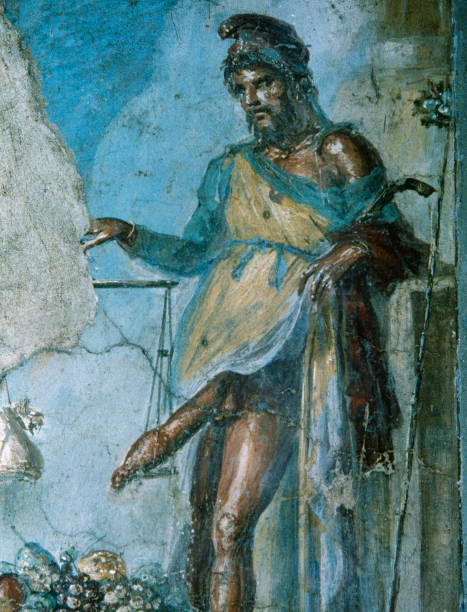
Image result for Priapus weighing penis pompeii
Wall-painting: Priapus weighing his phallus (Pompeii)