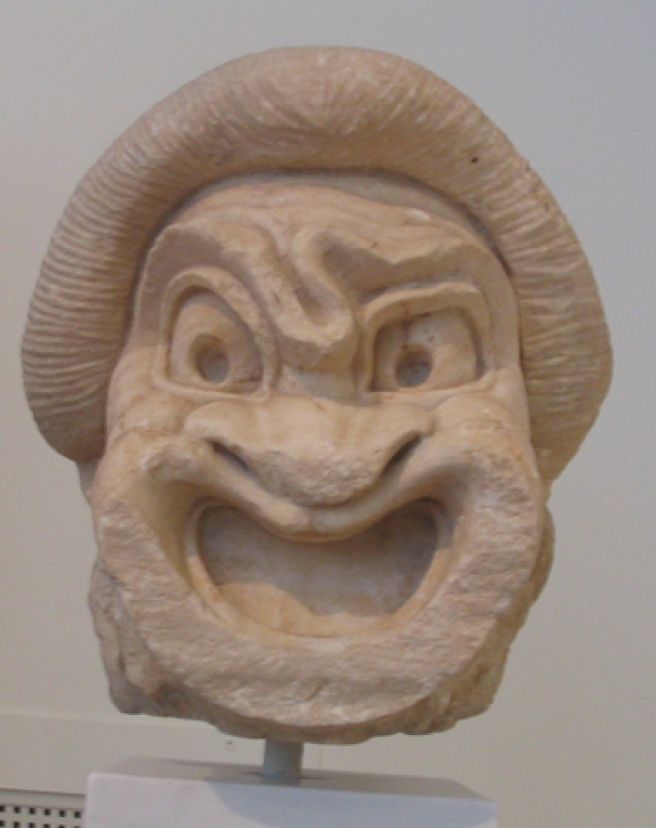
Don’t Be Half-Assed This Weekend: Three Donkey Proverbs from Photius

While perusing some comic fragments and testimonia I came upon one which attributed a strange proverb to Cratinus.  I had to investigate the source, the work of the lexicographer Photius.  What I found was exhilarating: a group of donkey proverbs.

Here is a short excerpt (yes, there’s more):

“A Donkey’s death”: A saying for those who tell stories about strange things

“A Tipping Donkey”: When a donkey leans in suddenly, hens are frightened and bust out of their pen. The owner of the birds brings a suit against the owner of the donkey. This is where the proverb comes from.

“Donkey Shearings”: A saying applied by Attic writers to endless and impossible things. These following sayings are similar: “washing a brick”; “plucking a wineskin”; “decorating a pot” and “fumigating an outhouse”. Aristarchus says that this saying developed because Cratinus imagined a man braiding a rope in Hades and a donkey eating it as he did so.”

῎Ονου θάνατος: ἐπὶ τῶν ἀλλόκοτα διηγουμένων

῎Ονου παρακύψεως: ὄνου παρακύψαντος, ὄρνιθες πτοηθεῖσαι ἱστὸν ἀνέρρηξαν· ὁ δὲ δεσπότης τοῦ ἱστοῦ τοῦ ὄνου δεσπότηι ἐνεκάλεσεν· ὅθεν ἡ παροιμία.

῎Ονου πόκαι: ἐπὶ τῶν ἀνηνύτων καὶ τῶν μὴ ὄντων λέγεται ἡ παροιμία ὑπὸ τῶν ᾿Αττικῶν· ὥσπερ αἱ τοιαῦται· πλίνθον πλύνειν· ἀσκὸν τίλλειν· χύτραν ποικίλλειν· εἰς κοπρῶνα θυμιᾶν· ᾿Αρίσταρχος δὲ διὰ τὸ Κρατῖνον ὑποθέσθαι ἐν Αἵδου σχοινίον πλέκοντα· ὄνον δὲ τὸ πλεκόμενον ἀπεσθίοντα·

Image result for Hindu goddess on a donkey

Tawdry Tuesday Returns: Masturbating in Latin

This is a much needed companion piece to our post on the same topic in Greek.  Note that many of lexical metaphors for masturbation are shared by the two languages. Much of the following material is drawn from J.N. Adams. The Latin Sexual Vocabulary. 1982. Note, however, that many of the examples are not truly masturbatory.

As an important prefatory note, the Latin word masturbor (whence modern “masturbate”) has unclear and irregular use in Latin (discussed by Adams 209-211 with some rather strong attacks on J. P. Hallet’s 1976 “Masturbator, Mascarpio.” Glotta, vol. 54: 292–308.) The word occurs most prominently in an agentive form  in Martial (translated here with considerable license):

Martial, 14.203 Puella Gaditana

“She sways with such curves and oozes sex so deep
That she’d turn Hippolytus himself into a masturbating creep.”

Tam tremulum crisat, tam blandum prurit, ut ipsum
masturbatorem fecerit Hippolytum.

Adams mast

Other words and terms

Frico, “to rub, chafe”, cf. cont. vulg: “rub one out”

Petronius 91.11

“it is that much more advantageous to rub your groin rather than your genius”

tanto magis expedit inguina quam ingenia fricare

Sollicito, “to shake, stir, rouse, agitate, excite, urge” etc.

Despite Adam’s assertion, the primary examples he cites are about the manipulation of genitals by another party.

Ovid, Amores 3.7.73-4

“Despite this, my girl was not reluctant
To stroke me gently once she moved her hand down…”

Hanc etiam non est mea dedignata puella
molliter admota sollicitare manu;

Martial, 11.22.4

“Who denies this? This is too much. But let it be enough
Stop urging on their groins with that fucker of a hand.”

quis negat?—hoc nimium est. sed sit satis; inguina saltem
parce fututrici sollicitare manu.

Petronius 20.2

“She stirred up my groin which was cold already because of a thousand deaths.”

Sollicitavit inguina mea mille iam mortibus frigida

Cf. Maximianus 5.58 “she began to handle my dirty parts with her hand / and to excite me too with her fingers.” contrectare manu coepit flagrantia membra / meque etiam digitis sollicitare suis

Tango, “touch”, cf. Divinyls Classic “I Touch Myself”

Ovid, Ars Amatoria 2.719–720

“When you find those places where the lady delights at being touched,
Don’t let shame get in the way of you touching her.”

Cum loca reppereris, quae tangi femina gaudet,
Non obstet, tangas quo minus illa, pudor.

Tracto: “to draw, haul, handle, treat” cf. perhaps “to jerk [off]” or “wank”

Martial 11.29.8

“I don’t need a finger: handle me like this, Phyllis”

nil opus est digitis: sic mihi, Phylli, frica

Priapea 80.1-2

“But this limp dick is not long enough nor does it stand up strong enough,
Even if you play with it, do you think it can grow?”

At non longa bene est, non stat bene mentula crassa
et quam si tractes, crescere posse putes?

Adams 1982, 208:

adams

(de)glubo: “to skin, flay, peel” cf. “skin off”

Ausonius, Epigram 79 “Inscribed Beneath the Picture of a Lusty Lady”

Beyond the genial joining of authorized sex
Sinful lust has discovered unnatural modes of love:
What the Lemnian lack posited to the heir of Herakles,
Or what the plays of Afranius in Roman garb presented
Or the total depravity that marked the Nolan people.
Somehow, in a single body, Crispa practices all three!
She masturbates, fellates, and rides with either hole—
So that she might not die frustrated, leaving anything untried.

LXXIX.—Subscriptum Picturae Mulieris impudicae

Praeter legitimi genialia foedera coetus
repperit obscenas veneres vitiosa libido:
Herculis heredi quam Lemnia suasit egestas,
quam toga facundi scaenis agitavit Afrani
et quam Nolanis capitalis luxus inussit.
Crispa tamen cunctas exercet corpore in uno:
deglubit, fellat, molitur per utramque cavernam,
ne quid inexpertum frustra moritura relinquat.

Stultifying Sentiments

Stultus, a, um -adj. “Foolish, simple, silly, fatuous”

Stultus, m. “a fool”

Publilius Syrus 451

“It is impossible for one who knows he is a fool not have some intelligence”

Non pote non sapere qui se stultum intellegit.

Dicta Catonis 18

“Be foolish when the time or the affair demands: sometimes to pretend foolishness is the greatest wisdom.”

Insipiens esto, cum tempus postulat aut res: stultitiam simulare loco, prudentia summa est.

Publilius Syrus 692

“Silence works as wisdom for a foolish person”

Taciturnitas stulto homini pro sapientia est.

Lucilius, 19.591

“Finally, nothing is enough for a fool even when he has everything”

Denique uti stulto nil sit satis, omnia cum sint

Publilius Syrus 144

“You make a criminal from a fool by forgiving too much”

Crebro ignoscendo facies de stulto improbum.

Seneca, EM 9.14 [Paraphrasing Chrysippus]

“A fool needs nothing since he knows how to use nothing but wants everything”

Contra stulto nulla re opus est, nulla enim re uti scit, sed omnibus eget

Publilius Syrus 118

“Contempt is harder on the wise than a beating is on a fool”

Contemni gravius est quam stulto percuti.

Macrobius, Saturnalia 1.10

“If someone who wants to buy a horse inspects not the horse itself but its saddle and bridle, he is a fool. Even more foolish is the one who thinks a person can be judged from his clothing or the chance that covers us like clothing.”

quemadmodum stultus est qui empturus equum non ipsum inspicit sed stratum eius ac frenos, sic stultissimus est qui hominem aut ex veste aut ex condicione quae nobis vestis modo circumdata est aestimandum putat.

Publilius Syrus 671

“Fortune makes whomever she wants to destroy into a fool”

Stultum facit Fortuna quem vult perdere

Seneca, EM 58

“Since the danger from living badly is greater than the danger of dying quickly, he is a fool who does not bet the price of a little time on a throw of great gain”

Et cum maius periculum sit male vivendi quam cito moriendi, stultus est, qui non exigua temporis mercede magnae rei aleam redimit.

Publilius Syrus 40

“The wise man rules his spirit, a fool serves his”

Animo imperabit sapiens, stultus serviet.

Ennius, Fr. 306

“It is a fool who, in desiring, desires desirously with a desirous mind.”

Stultus est qui cupida mente cupiens cupienter cupit


Image result for Medieval manuscript fool

The Dreamer and Majority Opinion: Some Passages and Words

Philo, On Dreams, 1.1

“The first dream proper to this category is the one which appeared to the dreamer on the stairway to heaven.”

 ὄναρ δ᾿ ἐστὶ πρῶτον οἰκεῖον εἴδει τῷ σημαινομένῳ τὸ φανὲν ἐπὶ τῆς οὐρανοῦ κλίμακος τόδε. [the dream he discusses is Gen. xxviii. 12–15]

107

“And I, when I am just a little free of my drunkenness, I am so allied with those men that I share the same enemy and friend. And even now I reject and hate the dreamer no less because those people hate him. No one who is reasonable can fault me for this because the opinions and the votes of the majority always prevail.”

ἐγὼ δ᾿ ἐκείνοις, ὅταν μικρὸν ἀνεθῶ τῆς μέθης, οὕτως εἰμὶ ἔνσπονδος, ὡς τὸν αὐτὸν ἐχθρὸν καὶ φίλον εἶναι νομίζειν. καὶ νῦν οὐδὲν ἧττον τὸν ἐνυπνιαστήν, ὅτι γε καὶ ἐκεῖνοι, προβαλοῦμαι καὶ στυγήσω· καὶ οὐδεὶς εὖ φρονῶν ἐπὶ τούτῳ μέμψαιτ᾿ ἄν με τῷ τὰς πλειόνων γνώμας τε καὶ ψήφους ἀεὶνικᾶν.

Some Words

ὕπαρ, τὸ: “day-dream”

ἐνύπιον, τὸ: “dream”

ἐνυπνιαστής: “dreamer”

ὄναρ, τὸ: “dream”

ὄνειρος, ὁ: “dream”

ὀνείρειος: “dreamy”

ὀνειρογενής: “dream-producing”

ὀνειροδάτις: “dream-giving”

ὀνειροκρίτης: “dream-judge”

ὀνειρόπληκτος: “dream-struck” (“frightened by dreams”)

ὀνειροπόλος: “dreamer, dream interpreter”

ὀνειρόσοφος: “wise in dreams”

ὀνειροφαντασία: “dream illusion”

Image result for Ancient Greek dream
From the Piraeus Archaeological Museum

Note ancient Greek does not have:

ὀνειροφόνος: “dream slayer”

ὀνειροκτόνος: “dream killer”


Aelian, Varia Historia 3.1

“The Peripatetics say that at day the soul is a slave encased by the body and it is not able to see the truth clearly. At night, it is freed from its service and, after takes the shape of a sphere in the area around the chest, it becomes somewhat prophetic: this is where dreams come from.”

Οἱ περιπατητικοί φασι μεθ’ ἡμέραν θητεύουσαν τὴν ψυχὴν τῷ σώματι περιπλέκεσθαι καὶ μὴ δύνασθαι καθαρῶς τὴν ἀλήθειαν θεωρεῖν• νύκτωρ δὲ διαλυθεῖσαν τῆς περὶ τοῦτο λειτουργίας καὶ σφαιρωθεῖσαν ἐν τῷ περὶ τὸν θώρακα τόπῳ μαντικωτέραν γίνεσθαι, ἐξ ὧν τὰ ἐνύπνια.

Arsenius, 17.66

“Windblown dreams and shadows of glory”: A proverb applied to those hoping for things in vain.

῾Υπηνέμια ὀνείρατα καὶ ἐπαίνων σκιαί: ἐπὶ τῶν μάτην ἐλπιζόντων.

Image result for medieval manuscript dream
Dream of Astyages Speculum humanae salvationis, France 1470-1480 Marseille, Bibliothèque municipale, ms. 89, fol. 4v

The Dreamer and Majority Opinion: Some Passages and Words

Philo, On Dreams, 1.1

“The first dream proper to this category is the one which appeared to the dreamer on the stairway to heaven.”

 ὄναρ δ᾿ ἐστὶ πρῶτον οἰκεῖον εἴδει τῷ σημαινομένῳ τὸ φανὲν ἐπὶ τῆς οὐρανοῦ κλίμακος τόδε. [the dream he discusses is Gen. xxviii. 12–15]

107

“And I, when I am just a little free of my drunkenness, I am so allied with those men that I share the same enemy and friend. And even now I reject and hate the dreamer no less because those people hate him. No one who is reasonable can fault me for this because the opinions and the votes of the majority always prevail.”

ἐγὼ δ᾿ ἐκείνοις, ὅταν μικρὸν ἀνεθῶ τῆς μέθης, οὕτως εἰμὶ ἔνσπονδος, ὡς τὸν αὐτὸν ἐχθρὸν καὶ φίλον εἶναι νομίζειν. καὶ νῦν οὐδὲν ἧττον τὸν ἐνυπνιαστήν, ὅτι γε καὶ ἐκεῖνοι, προβαλοῦμαι καὶ στυγήσω· καὶ οὐδεὶς εὖ φρονῶν ἐπὶ τούτῳ μέμψαιτ᾿ ἄν με τῷ τὰς πλειόνων γνώμας τε καὶ ψήφους ἀεὶνικᾶν.

Some Words

ὕπαρ, τὸ: “day-dream”

ἐνύπιον, τὸ: “dream”

ἐνυπνιαστής: “dreamer”

ὄναρ, τὸ: “dream”

ὄνειρος, ὁ: “dream”

ὀνείρειος: “dreamy”

ὀνειρογενής: “dream-producing”

ὀνειροδάτις: “dream-giving”

ὀνειροκρίτης: “dream-judge”

ὀνειρόπληκτος: “dream-struck” (“frightened by dreams”)

ὀνειροπόλος: “dreamer, dream interpreter”

ὀνειρόσοφος: “wise in dreams”

ὀνειροφαντασία: “dream illusion”

Image result for Ancient Greek dream
From the Piraeus Archaeological Museum

Note ancient Greek does not have:

ὀνειροφόνος: “dream slayer”

ὀνειροκτόνος: “dream killer”


Aelian, Varia Historia 3.1

“The Peripatetics say that at day the soul is a slave encased by the body and it is not able to see the truth clearly. At night, it is freed from its service and, after takes the shape of a sphere in the area around the chest, it becomes somewhat prophetic: this is where dreams come from.”

Οἱ περιπατητικοί φασι μεθ’ ἡμέραν θητεύουσαν τὴν ψυχὴν τῷ σώματι περιπλέκεσθαι καὶ μὴ δύνασθαι καθαρῶς τὴν ἀλήθειαν θεωρεῖν• νύκτωρ δὲ διαλυθεῖσαν τῆς περὶ τοῦτο λειτουργίας καὶ σφαιρωθεῖσαν ἐν τῷ περὶ τὸν θώρακα τόπῳ μαντικωτέραν γίνεσθαι, ἐξ ὧν τὰ ἐνύπνια.

Arsenius, 17.66

“Windblown dreams and shadows of glory”: A proverb applied to those hoping for things in vain.

῾Υπηνέμια ὀνείρατα καὶ ἐπαίνων σκιαί: ἐπὶ τῶν μάτην ἐλπιζόντων.

Image result for medieval manuscript dream
Dream of Astyages Speculum humanae salvationis, France 1470-1480 Marseille, Bibliothèque municipale, ms. 89, fol. 4v

For the Solstice: Which Season is Sweetest?

Check out the Center for Hellenic Studies’ Festival of the Muse today!

Bion, fr. 2 (preserved in Stobaeus 1.8.39)

Kleodamos

Myrsôn, what do you find sweet in the spring,
The winter, fall, or summer? Which do you pray for the most?
Is it summer when everything we have worked for is done,
Or is fall sweeter, when hunger is light for men,
Or is it winter, bad for work, when because of the season
Many warm themselves delighting in laziness and relaxation—
Or, surely, is it noble spring which pleases you more?
Tell me what’s on your mind, since leisure has allowed us to chat.

Myrsos

It is not right for mortals to judge divine deeds—
For all these things are sacred and sweet. But for you, Kleodamos,
I will confess what seems sweeter to me than the rest.
I do not wish for the summer, since the sun cooks me then.
I do not wish for the Fall, since that season brings disease.
The Winter brings ruinous snow—and I have chilling fear.
I long for  Spring three times as much for the whole year,
When neither the cold nor the heat weigh upon me.
Everything is pregnant in the spring, everything grows sweet in springtime
When humans have nights and days as equal, nearly the same.”

ΚΛΕΟΔΑΜΟΣ
Εἴαρος, ὦ Μύρσων, ἢ χείματος ἢ φθινοπώρω
ἢ θέρεος τί τοι ἁδύ; τί δὲ πλέον εὔχεαι ἐλθεῖν;
ἦ θέρος, ἁνίκα πάντα τελείεται ὅσσα μογεῦμες,
ἢ γλυκερὸν φθινόπωρον, ὅκ’ ἀνδράσι λιμὸς ἐλαφρά,
ἢ καὶ χεῖμα δύσεργον—ἐπεὶ καὶ χείματι πολλοί
θαλπόμενοι θέλγονται ἀεργίᾳ τε καὶ ὄκνῳ—
ἤ τοι καλὸν ἔαρ πλέον εὔαδεν; εἰπὲ τί τοι φρήν
αἱρεῖται, λαλέειν γὰρ ἐπέτραπεν ἁ σχολὰ ἄμμιν.

ΜΥΡΣΩΝ
κρίνειν οὐκ ἐπέοικε θεήια ἔργα βροτοῖσι,
πάντα γὰρ ἱερὰ ταῦτα καὶ ἁδέα· σεῦ δὲ ἕκατι
ἐξερέω, Κλεόδαμε, τό μοι πέλεν ἅδιον ἄλλων.
οὐκ ἐθέλω θέρος ἦμεν, ἐπεὶ τόκα μ’ ἅλιος ὀπτῇ·
οὐκ ἐθέλω φθινόπωρον, ἐπεὶ νόσον ὥρια τίκτει.
οὖλον χεῖμα φέρει νιφετόν, κρυμὼς δὲ φοβεῦμαι.
εἶαρ ἐμοὶ τριπόθητον ὅλῳ λυκάβαντι παρείη,
ἁνίκα μήτε κρύος μήθ’ ἅλιος ἄμμε βαρύνει.
εἴαρι πάντα κύει, πάντ’ εἴαρος ἁδέα βλαστεῖ,
χἀ νὺξ ἀνθρώποισιν ἴσα καὶ ὁμοίιος ἀώς.

Season Words

Spring: ἔαρ, τὸ: from IE *ves-r, cf. vernal.

Summer: θέρος, τὸ: from a root meaning “warm, heat”

Winter: χεῖμα, τὸ (ancient word for winter)

Fall: φθινόπωρον, τό:  from φθιν (φθίω “decay, waste, dwindle”)+ ὀπώρα (“end of summer, harvest”)

Ecclesiastes, 3 Latin Vulgate

omnia tempus habent et suis spatiis transeunt universa sub caelo
tempus nascendi et tempus moriendi tempus plantandi
et tempus evellendi quod plantatum est


London, British Library, MS Sloane 2435, f. 23r.

“I Defecated Because of Fear”

See here for our ongoing skatokhasm and the sheer variety of excremental words in ancient Greek.

Suda, Epsilon 93 [referring to Aristophanes, Frogs 479]

“I shat myself”: I defecated because of some fear. I pooped. Aristophanes says this in the Frogs. He is calling the god to help.”

᾿Εγκέχοδα: ἀπεπάτησα διὰ φόβον τινά, ἔχεσον. ᾿Αριστοφάνης Βατράχοις. κάλει θεὸν εἰς βοήθειαν.

Principal parts: χέζω, χεσοῦμαι, ἔχεσα, κέχοδα, κέχεσμαι….

Strattis, fr. 1.3

“If he will not have the leisure to shit,
Nor to visit a profligate man’s home, nor if he meets
Anyone, to talk to them at all…”

Εἰ μηδὲ χέσαι γ’ αὐτῷ σχολὴ γενήσεται,
μηδ’ εἰς ἀσωτεῖον τραπέσθαι, μηδ’ ἐάν
αὐτῷ ξυναντᾷ τις, λαλῆσαι μηδενί.

Image result for medieval manuscript defecation
Add_ms_49622_f061r_detail

Aristophanes, Clouds, 391

“When I shit, it’s like thunder: pa-pa-pa-papp-AKS!

χὤταν χέζω, κομιδῇ βροντᾷ “παπαπαππάξ,”

thunder dance


What We Need in Isolation: Masturbating in Latin and Greek

Aristophanes, Peace 290-292

“Now comes the time of for Datis’ song
The one he sang once at midday as he masturbated
“How I am pleased and I enjoy this and I am finding delight!”

ΤΡ.                Νῦν, τοῦτ’ ἐκεῖν’, ἥκει τὸ Δάτιδος μέλος.
δεφόμενός ποτ’ ᾖδε τῆς μεσημβρίας·
«῾Ως ἥδομαι καὶ χαίρομαι κεὐφραίνομαι.»

The small LSJ defines δέφω as “to soften by working by the hand, to make supple, to tan hides.” The 1902 LSJ uses Latin to explain: “sensu obscoeno, v. Lat. Masturbari.”

The Suda (delta 297) cuts to the chase on this one with “dephein: grabbing someone by the genitals. Also, “rubbing” (Dephomenos) instead of “flogging your genitals.” (Δέφειν: τὸ τοῦ αἰδοίου τινὰ ἅπτεσθαι. καὶ Δεφόμενος, ἀντὶ τοῦ ἀποδέρων τὸ αἰδοῖον). So, the active vs. middle voice is an important distinction (echoing something I have emphasized in teaching Greek: active voice is something you do to someone else, middle is what you do to yourself…).

Here’s a nice passage that shows the difference in active and passive voice:

Artemidorus, Dream Interpretation 1.78: 74-80

“I know of a certain slave who dreamed that he was masturbating his master—and he then became the teacher and nurse of his children. For he was holding his master’s genitals in his hands which was a symbol of his children. And again, I know of another who dreamed he was being jerked off by his master, and, later he was bound to a pillar and then he received many blows…”

οἶδα δέ τινα δοῦλον, ὃς ἔδοξε τὸν δεσπότην αὐτοῦ δέφειν, καὶ ἐγένετο τῶν παίδων αὐτοῦ παιδαγωγὸς καὶ τροφός· ἔσχε γὰρ ἐν ταῖς χερσὶ τὸ τοῦ δεσπότου αἰδοῖον ὂν τῶν ἐκείνου τέκνων σημαντικόν. καὶ πάλιν αὖ οἶδά <τινα> ὃς ἔδοξεν ὑπὸ τοῦ δεσπότου δέφεσθαι, καὶ προσδεθεὶς κίονι πολλὰς ἔλαβε πληγάς….

Most of the extant uses of this verb appear in comedy. And, not surprisingly, this means Aristophanes:

Aristophanes, Knights 23-24

ΟΙ. Β′                                               Πάνυ καλῶς.
῞Ωσπερ δεφόμενός νυν ἀτρέμα πρῶτον λέγε
τὸ μολωμεν, εἶτα δ’ αὐτο, κᾆτ’ ἐπάγων πυκνόν.

“Excellent.
Just as if you were masturbating, say it first now gently
“let us hurry” and then again pushing on, quickly.”

[Here’s a link to the whole play. Soon, one of the interlocutors stops “because the skin is irritated by masturbation.” (῾Οτιὴ τὸ δέρμα δεφομένων ἀπέρχεται, 29)]

The verb is not common, to say the least, so later commentators found it necessary to gloss it and explain Aristophanes’ joke. Through the explanations of the joke, it immediately becomes less funny, and the language used in the commentaries.

Scholia in Knights:

[1] “ ‘Just like dephomenos’: instead of “flogging your genitals” (apodérôn to aidoion). For, when men touch their genitals they don’t complete as they began, but they move more eagerly towards the secretion of semen. This plays on that, he means start small at first but then go continuously.

[2]dephomenos’: “having intercourse’. Flogging genitals.

[3]dephomenos’: They mean handling the penis. For, when men take hold of their penises they don’t move towards ejaculation the way they began, but more eagerly over time, as they are inflamed by the continuity of movement.”

 ὥσπερ δεφόμενος: ἀντὶ τοῦ ἀποδέρων τὸ αἰδοῖον. οἱ γὰρ ἁπτόμενοι τῶν αἰδοίων οὐχ ὡς ἤρξαντο, ἀλλὰ σπουδαιότερον κινοῦσι πρὸς τῇ τῆς γονῆς ἐκκρίσει. τοῦτο οὖν λέγει, ὅτι πρῶτον κατὰ μικρόν, εἶτα συνεχῶς λέγε. RVEΓ2M

δεφόμενος] ξυνουσιάζων, ἀποδέρων τὸ αἰδοῖον. M

δεφόμενος] ἤγουν τοῦ μορίου ἁπτόμενος. οἱ γὰρ ἁπτόμενοι τοῦ μορίου
πρὸς ἔκκρισιν τῆς γονῆς οὐχ ὡς ἤρξαντο κινοῦσιν ἀλλὰ σπουδαιότερον, ἐκπυρούμενοι τῇ συνεχείᾳ τῆς κινήσεως. VatLh

Aristophanes, Ecclesiazusae, 705–709

“It is decreed that the ugly and the wretched
Get to fuck first.
Take your pleasure on the porch in the meantime
Handling your fig-leaves in the courtyard”

τοῖς γὰρ σιμοῖς καὶ τοῖς αἰσχροῖς
ἐψήφισται προτέροις βινεῖν,
ὑμᾶς δὲ τέως θρῖα λαβόντας
διφόρου συκῆς
ἐν τοῖς προθύροισι δέφεσθαι.

The Suda interprets this passage as meaning that someone is masturbating with a fig leaf. Henderson ( The Maculate Muse. New Haven 1975) explains that the “fig-leaves” are the foreskin and the “courtyard” means outside of a vagina.

Image result for ancient Greek Masturbating vase

And just in case one might worry about moral dimensions of masturbation, ancient philosophers have already tackled the question:

From Sextus Empiricus Pyrrhonian Hypotyposes, 3.206-207

“Similarly, this seems shameful to one of the sages but not to another. For us it is wrong to marry your own mother or sister. But the Persians, especially those of them who seem to pursue wisdom, the Magi, marry their mothers just as the Egyptians marry their sisters. The poet also says: “Zeus addressed Hera, his wife and sister…”

Zeno of Citium even says that it is not strange to rub your mother’s genitals with your own, just as no one would claim it is wrong to rub any other part of her body with your hand. Chrysippus approves in his Republic of a father getting children from his daughter, a mother from her son, and a brother from his sister. Plato insisted generally that wives should be held in common. Zeno also does not disapprove of masturbation, which is shameful in our culture. We have also learned that others practice this wicked habit as if it were a good thing.”

οὕτω καὶ τῶν σοφῶν ᾧ μὲν οὐκ αἰσχρόν, ᾧ δὲ αἰσχρὸν ἐδόκει τοῦτο εἶναι. ἄθεσμον τέ ἐστι παρ’ ἡμῖν μητέρα ἢ ἀδελφὴν ἰδίαν γαμεῖν· Πέρσαι δέ, καὶ μάλιστα αὐτῶν οἱ σοφίαν ἀσκεῖν δοκοῦντες, οἱ Μάγοι, γαμοῦσι τὰς μητέρας, καὶ Αἰγύπτιοι τὰς ἀδελφὰς ἄγονται πρὸς γάμον, καὶ ὡς ὁ ποιητής φησιν,

Ζεὺς ῞Ηρην προσέειπε κασιγνήτην ἄλοχόν τε.

ἀλλὰ καὶ ὁ Κιτιεὺς Ζήνων φησὶ μὴ ἄτοπον εἶναι τὸ μόριον τῆς μητρὸς τῷ ἑαυτοῦ μορίῳ τρῖψαι, καθάπερ οὐδὲ ἄλλο τι μέρος τοῦ σώματος αὐτῆς τῇ χειρὶ τρῖψαι φαῦλον ἂν εἴποι τις εἶναι. καὶ ὁ Χρύσιππος δὲ ἐν τῇ πολιτείᾳ δογματίζει τόν τε πατέρα ἐκ τῆς θυγατρὸς παιδοποιεῖσθαι καὶ τὴν μητέρα ἐκ τοῦ παιδὸς καὶ τὸν ἀδελφὸν ἐκ τῆς ἀδελφῆς. Πλάτων δὲ καὶ καθολικώτερον κοινὰς εἶναι τὰς γυναῖκας δεῖν ἀπεφήνατο. τό τε αἰσχρουργεῖν ἐπάρατον ὂν παρ’ ἡμῖν ὁ Ζήνων οὐκ ἀποδοκιμάζει· καὶ ἄλλους δὲ ὡς ἀγαθῷ τινι τούτῳ χρῆσθαι τῷ κακῷ πυνθανόμεθα.

Note that many of lexical metaphors for masturbation are shared by the two languages. Much of the following material is drawn from J.N. Adams. The Latin Sexual Vocabulary. 1982. Note, however, that many of the examples are not truly masturbatory.

As an important prefatory note, the Latin word masturbor (whence modern “masturbate”) has unclear and irregular use in Latin (discussed by Adams 209-211 with some rather strong attacks on J. P. Hallet’s 1976 “Masturbator, Mascarpio.” Glotta, vol. 54: 292–308.) The word occurs most prominently in an agentive form  in Martial (translated here with considerable license):

Martial, 14.203 Puella Gaditana

“She sways with such curves and oozes sex so deep
That she’d turn Hippolytus himself into a masturbating creep.”

Tam tremulum crisat, tam blandum prurit, ut ipsum
masturbatorem fecerit Hippolytum.

Adams mast

Other words and terms

Frico, “to rub, chafe”, cf. cont. vulg: “rub one out”

Petronius 91.11

“it is that much more advantageous to rub your groin rather than your genius”

tanto magis expedit inguina quam ingenia fricare

Sollicito, “to shake, stir, rouse, agitate, excite, urge” etc.

Despite Adam’s assertion, the primary examples he cites are about the manipulation of genitals by another party.

Ovid, Amores 3.7.73-4

“Despite this, my girl was not reluctant
To stroke me gently once she moved her hand down…”

Hanc etiam non est mea dedignata puella
molliter admota sollicitare manu;

Martial, 11.22.4

“Who denies this? This is too much. But let it be enough
Stop urging on their groins with that fucker of a hand.”

quis negat?—hoc nimium est. sed sit satis; inguina saltem
parce fututrici sollicitare manu.

Petronius 20.2

“She stirred up my groin which was cold already because of a thousand deaths.”

Sollicitavit inguina mea mille iam mortibus frigida

Cf. Maximianus 5.58 “she began to handle my dirty parts with her hand / and to excite me too with her fingers.” contrectare manu coepit flagrantia membra / meque etiam digitis sollicitare suis

Tango, “touch”, cf. Divinyls Classic “I Touch Myself”

Ovid, Ars Amatoria 2.719–720

“When you find those places where the lady delights at being touched,
Don’t let shame get in the way of you touching her.”

Cum loca reppereris, quae tangi femina gaudet,
Non obstet, tangas quo minus illa, pudor.

Tracto: “to draw, haul, handle, treat” cf. perhaps “to jerk [off]” or “wank”

Martial 11.29.8

“I don’t need a finger: handle me like this, Phyllis”

nil opus est digitis: sic mihi, Phylli, frica

Priapea 80.1-2

“But this limp dick is not long enough nor does it stand up strong enough,
Even if you play with it, do you think it can grow?”

At non longa bene est, non stat bene mentula crassa
et quam si tractes, crescere posse putes?

Adams 1982, 208:

adams

(de)glubo: “to skin, flay, peel” cf. “skin off”

Ausonius, Epigram 79 “Inscribed Beneath the Picture of a Lusty Lady”

Beyond the genial joining of authorized sex
Sinful lust has discovered unnatural modes of love:
What the Lemnian lack posited to the heir of Herakles,
Or what the plays of Afranius in Roman garb presented
Or the total depravity that marked the Nolan people.
Somehow, in a single body, Crispa practices all three!
She masturbates, fellates, and rides with either hole—
So that she might not die frustrated, leaving anything untried.

LXXIX.—Subscriptum Picturae Mulieris impudicae

Praeter legitimi genialia foedera coetus
repperit obscenas veneres vitiosa libido:
Herculis heredi quam Lemnia suasit egestas,
quam toga facundi scaenis agitavit Afrani
et quam Nolanis capitalis luxus inussit.
Crispa tamen cunctas exercet corpore in uno:
deglubit, fellat, molitur per utramque cavernam,
ne quid inexpertum frustra moritura relinquat.

Very-Profitable (?): Turning Away from Truth

After Odysseus realizes he is not lost, but is in fact in Ithaca, the narrative describes him preparing to speak.

Od. 13.250-255

“So she spoke, and much-enduring, shining Odysseus
Was delighting in his own paternal land which Pallas Athena
Declared to him, the daughter of Aegis-bearing Zeus.
Then he responded to her with winged words—
He didn’t speak the truth, but he chose the opposite to that,
Since he was always fostering very-profitable thought in his chest.”

ὣς φάτο, γήθησεν δὲ πολύτλας δῖος ᾿Οδυσσεὺς
χαίρων ᾗ γαίῃ πατρωΐῃ, ὥς οἱ ἔειπε
Παλλὰς ᾿Αθηναίη, κούρη Διὸς αἰγιόχοιο·
καί μιν φωνήσας ἔπεα πτερόεντα προσηύδα· —
οὐδ’ ὅ γ’ ἀληθέα εἶπε, πάλιν δ’ ὅ γε λάζετο μῦθον,
αἰὲν ἐνὶ στήθεσσι νόον πολυκερδέα νωμῶν·

Schol.HV ad Od. 254 ex:

“Odysseus turned to the opposite; to the opposite of the truth which is he took up a story for a second time.”

πάλιν δ’ ὅγε λάζετο] εἰς τὸ ἐναντίον ἔστρεφεν. H. εἰς τοὐναντίον τοῦ ἀληθοῦς, ὅ ἐστιν, ἐκ δευτέρου δὲ τὸν λόγον ἀνελάβετο. V.

The scholia says this but misses the fact that in archaic and classical Greek poetry this compound is only applied to Odysseus.

Hesychius

“fostering a polykerdea mind: This means turning his deceptive and lying thought to many things, devising different thoughts for different matters”

νόον πολυκερδέα νωμῶν· τὸν ἀπατηλὸν καὶ ψεύστην νοῦν ἐπὶ πολλὰ τρέπων· ἄλλο ἐπ’ ἄλλο διανοούμενος (ν 255)

πολυκερδέα· πανοῦργον: polykerdea: doing anything, i.e. wicked.

But: πολὺ κέρδιον· πολὺ βέλτιον: polu kerdion [means] much better.

23.77 Eurykleia speaking to Penelope about Odysseus

“He would not allow me to say anything, thanks to the [devious thoughts] of his mind”

οὐκ εἴα εἰπεῖν πολυκερδείῃσι νόοιο.

24.167-8 Amphimedon telling the story of the slaughter

“But he ordered his wife with [very devious thoughts]
To set out the bow and gray iron for the suitors…”

αὐτὰρ ὁ ἣν ἄλοχον πολυκερδείῃσιν ἄνωγε
τόξον μνηστήρεσσι θέμεν πολιόν τε σίδηρον


Image result for Odysseus ancient Greek

Stupidity, Evil’s Sibling.

μωρολογία: properly, “stupid-talking” or “the talk of fools”. But why not: “the science of stupidity”?

Sophocles, fr. 924

“Stupidity is a terrible opponent to wrestle”

ὡς δυσπάλαιστόν <ἐστιν> ἀμαθία κακόν

Terence, Phormio, 659-660

“Whether I claim he does this because of stupidity or

malice—whether this is a knowing plot, or incompetence, I am unsure.”

utrum stultitia facere ego hunc an malitia
dicam, scientem an imprudentem, incertu’ sum.

Sophocles, fr. 925

“Stupidity really is evil’s sibling”

ἡ δὲ μωρία
μάλιστ᾿ ἀδελφὴ τῆς πονηρίας ἔφυ

Suetonius, Divus Claudius 38

“But he did not stay quiet even about his own stupidity: but claimed that he had faked it on purpose under Gaius because he would have not escaped and advanced to his eventual position otherwise—and that this was supported by certain oracles. But he persuaded no one. And after a brief time, a book was published with the title “The Ascension of Fools” which posited that no one can pretend stupidity.”

Ac ne stultitiam quidem suam reticuit simulatamque a se ex industria sub Gaio, quod aliter evasurus perventurusque ad susceptam stationem non fuerit, quibusdam oratiunculis testatus est; nec tamen49 persuasit, cum intra breve tempus liber editus sit, cui index erat μωρῶν ἐπανάστασις, argumentum autem stultitiam neminem fingere.

Plutarch, Rational Beasts 998a

“Note that a lack of intelligence or stupidity in some animals emerges in contrast with the abilities and sharpness of others as you might compare an ass or a sheep with a fox, a wolf or a bee. It would be the same if you would compare Polyphemos or that idiot Koroibos to your grandfather Autolykos. For I do not think that there is so great a difference between beasts as there is between individual people in thinking, using reason, and in memory.”

ἐννόησον δ᾿ ὅτι τὰς ἐνίων ἀβελτερίας καὶ βλακείας ἐλέγχουσιν ἑτέρων πανουργίαι καὶ δριμύτητες, ὅταν ἀλώπεκι καὶ λύκῳ καὶ μελίττῃ παραβάλῃς ὄνον καὶ πρόβατον· ὥσπερ εἰ σαυτῷ τὸν Πολύφημον ἢ τῷ πάππῳ σου τῷ Αὐτολύκῳ τὸν Κόροιβον ἐκεῖνον τὸν μωρόν οὐ γὰρ οἶμαι θηρίου πρὸς θηρίον ἀπόστασιν εἶναι τοσαύτην, ὅσον ἄνθρωπος ἀνθρώπου τῷ φρονεῖν καὶ λογίζεσθαι καὶ μνημονεύειν ἀφέστηκεν.

Andocides, On His Return 2

“These men must be the dumbest of all people or they are the most inimical to the state. If they believe that it is also better for their private affairs when the state does well, then they are complete fools in pursuing something opposite to their own advantage right now. If they do not believe that they share common interests with you, then they must be enemies of the state”

δεῖ γὰρ αὐτοὺς ἤτοι ἀμαθεστάτους εἶναι πάντων ἀνθρώπων, ἢ τῇ πόλει ταύτῃ δυσμενεστάτους. εἰ μέν γε νομίζουσι τῆς πόλεως εὖ πραττούσης καὶ τὰ ἴδια σφῶν αὐτῶν ἄμεινον ἂν φέρεσθαι, ἀμαθέστατοί εἰσι τὰ ἐναντία νῦν τῇ ἑαυτῶν ὠφελείᾳ σπεύδοντες· εἰ δὲ μὴ ταὐτὰ ἡγοῦνται σφίσι τε αὐτοῖς συμφέρειν καὶ τῷ ὑμετέρῳ κοινῷ, δυσμενεῖς ἂν τῇ πόλει εἶεν·

Seneca the Elder, Suasoriae, 21

“A special recognition for stupidity needs to be given to the rhetorician Corvus who said, “Since Xerxes is already sailing against us on his sea, shouldn’t we flee before the earth is taken from us””

Corvo rhetori testimonium stuporis reddendum est, qui dixit: “quidni, si iam Xerses ad nos suo mari navigat, fugiamus, ntequam nobis terra subripiatur?”

Image result for ancient greek stupidity