In our day and age, this might instead be a text message or a tweet to someone in a position of authority. But this letter is from Libanius to Julian the Apostate, Roman Emperor and our personal (anti-?)hero:
Ep. 86
“Even if you don’t send me letters, I still dine on your words. For whenever someone else gets one, we hear about it and immediately read it, either by persuading or overpowering the unwilling recipient. So, my profit is no less than theirs even though it is only their right to be honored. I would also ask for honor, for some love-token from you. For, clearly, if you would honor me in any way, you wouldn’t do it without love.”
“Firmus was nevertheless of huge stature with prominent eyes, curly hair, a scarred forehead, a darker complexion on his face while most of his body was white, although it was tough and hairy, so that many used to call him a Cyclops. He used to eat a lot of meat and allegedly ate an ostrich in a day. He drank some wine and a lot of water. He was extremely strong in mind, most robust in nerves to the extent that he overcame Tritannus, whom Varro mentions. For he endured an anvil placed on his chest and struck constantly while he seemed to be rising up rather than lying down because he was face up supporting himself on his hands.
Yet, [Firmus] had a drinking competition with Aurelian’s generals when they wanted to test him. For, when a certain Burburus, one of the standard-bearers and a notable drinker, challenged him to a drinking context, he sucked down two pails of wine but was still sober after the banquet. When Burburus asked him, “Why didn’t you drink the dregs?” he responded “Fool, the earth is not drunk.” We are pursuing lighter notes here, we must speak of more important ones.”
Fuit tamen Firmus statura ingenti, oculis foris eminentibus, capillo crispo, fronte vulnerata, vultu nigriore, reliqua parte corporis candidus sed pilosus atque hispidus, ita ut eum plerique Cyclopem vocarent. carne multa vescebatur, struthionem ad diem comedisse fertur. vini non multum bibit, aquae plurimum. mente firmissimus, nervis robustissimus, ita ut Tritannum vinceret, cuius Varro meminit. nam et incudem superpositam pectori constanter aliis tundentibus pertulit, cum ipse reclinis ac resupinus et curvatus in manus penderet potius quam iaceret. fuit tamen ei contentio cum Aureliani ducibus ad bibendum, si quando eum temptare voluissent. nam quidam Burburus nomine de numero vexillariorum, notissimus potator, cum ad bibendum eundem provocasset, situlas duas plenas mero duxit et toto postea convivio sobrius fuit; et cum ei Burburus diceret, “Quare non faeces bibisti?” respondit ille, “Stulte, terra non bibitur.” levia persequimur, cum maiora dicenda sint.
The classic Transylvanian-style vampire—male, nocturnal, fanged—is really a product of folklore and gothic horror after the middle ages (with garlic, mirrors, crosses and stakes coming at various times from various places). But human blood-eating creatures of pleasure were present in ancient folktales as well. They are not prominent, but the Lamia and the Empousa, both female creatures of death who live off the life-force of the young, are attested as early as the 5th century BCE. Our best references, however, come from later antiquity. For ease, I am just going to translate them both as ‘vampire’. (There will be a second post about Lamia.) Here are some facts about Empousa.
Vampires live in the East. They can be Frightened off with mockery.
“These things are from the first book. Let us move on to the material in the second. The story picks up and follows the journey from Persia to India—there, they experienced something surprising—he says that [Apollodorus] saw something paranormal, what he calls a vampire [empousa], on the road and that they drove it away with mockery”
“After they went over the Caucasus they saw people who were four-lengths tall and who already dark-skinned. Once they crossed the river into India, they saw others who were five lengths tall. In the journey up to this river, I have picked out these things as worthy of investigation. For they were traveling in the clear moonlight when a phantom of a vampire [empousa] met them, changing into this scary thing and then another and then nothing! Apollonius understood what thing it was and mocked the vampire himself and ordered his companions—for this is the response to this kind of attack. The apparition went into flight like a ghost.”
Vampires like to eat the young (their blood is better)
4.5-6 “She said “be quiet and go away” and seemed to be disgusted at what she heard. And, I think, she was mocking philosophers for always talking nonsense. When, afterward, the golden bowls and what seemed to be silver was shown to be unreal—when everything flew from our eyes as the cup-bearers, the cooks, and every kind of servant disappeared as they were cross-examined by Apollonios—then the apparition seemed to be crying and was pleading that he not test her or compel her to agree what kind of thing she was. But when Apollonius laid on the pressure, she confessed that she was a vampire [empousa] who had been fattening Menippus with delights to eat on his body since she typically ate fine young bodies because their blood was more vital.
I have drawn out this tale, which happens to be the best known concerning Apollonius, out of necessity—most know that it occurred somewhere in the middle of Greece, but they have acquired only a summary account of how he once trapped a Lamia in Korinth. They don’t know what she was doing and that it was for Melanippus. The story is told by Damis and now by me from his records.”
Vampires like to have sex with mortals and then eat them
4.4 “What I was saying is that this woman is one of the vampires [empousai], whom most people think are the same as Lamiae or werewolves. Vampires feel desire, but they long for human sex and flesh most of all. They use sex to catch the ones they want to eat.”
7.29 “King, would someone who is covetous enough of honor to appear to be a sorcerer seem to credit to a god what he had done himself? What awestruck audiences for his skill would there be if he were to hand the wonder to a god? What kind of a sorcerer would pray to Herakles? These wicked devils credit their kinds of acts to ditches and underworld gods from whom Herakles must be separated since he is cleansed and it good to people. I prayed to him at some point in the Peloponnese for there was some apparition of a vampire [lamia] there too eating the fine forms of young men….”
Empousa: A devilish apparition sent by Hekate and appearing to the unlucky. It seems to take on many different forms. In the Frogs, Aristophanes [mentions this]. The name Empousa comes from that fact that it goes on one leg [hen podizein]—for people think that the other one is bronze. Or, because she used to appear [eph-aineto] to the those initiated in the mysteries [muomenois]. She was also named Oinopôlê. But some say that she changed her form [to get this name]. She seems to appear in the middle of the day as people offer sacrifices to those who have died. Others claim that she is Hekate. There is also the name Onokôle because she has a donkey leg which they refer to as bolitinon because that is donkey-manure. Bolitos is the specific name for donkey feces.
Beekes on the uncertain etymology of both Empousa and Lamia:
Lamia is associated more frequently with attacking children. This, of course, merits a separate post.
Lamia, carrying off infant
We get by with a little help from our friends
In the 16th & 17th C there were vampire 'contagions' in E.Europe and the Greek islands – see Paul Barber, Vampires, Burial and Death (Yale). https://t.co/pQJRp59abe
“The reason [they are unwise] is that they don’t give their mind over to be cleansed by the traditional curriculum and they do not open those tightly closed eyes with it and clear the mist that has settled over them.
But because these people are like those who see a great light through a fog neither clearly nor sharply and because they think they do not see a clear light but a fire and they cannot see anything around it, they shout “Be afraid, shake, fire, flame, death, knife, blade…” interpreting in many names the force of a fire. Ah, it would be a lot easier to show how much worse than our own poets are these teachers of tales about ‘god’.”
“For me, the intensity of the business I am now engaged in might give me some reason for a lack of correspondence. In addition, the smell I have contracted from excessive association with the idiotic mob makes me less at ease in addressing you sophisticates who will grow irritable and intolerant if you don’t hear anything worthy of your own wisdom.
But you, I guess, since you are readier to speak than all the Greeks I know, are accustomed to making your voice public on any pretext. And I think I know the most famous people in your ranks. There is no reason for your silence. And that is enough about that.”
“Most learned man, I believe that I might commit a sin against learning if I procrastinate at all in offering you praise for fending off the end of all literature. When it has already been buried, you are celebrated as its reviver, its agent, and its guardian. Throughout Gaul in this tempest of wars, Latin works have gained safe harbor because you are their teacher even as Latin arms have endured disaster.
For this reason our peers and posterity should unanimously and with enthusiasm claim you as a second Demosthenes, a second Cicero, here with statues—if it is allowed—and there with portraits because your teaching has so shaped them and trained them that, even though they remain surrounded by an unconquerable and still foreign people, they safeguard the signs of their ancient birthright. For as the signs of dignity—the ways in which every noble person used to be separated from the base—become more distant the only remaining sign of nobility after this will be a literary education.
But the advantages from your teaching demand thanks from me beyond others because I am trying to compose something which people in the future might read. For a crowd of competent readers will always come from your school and your lectures. Farewell.”
Credidi me, vir peritissime, nefas in studia committere, si distulissem prosequi laudibus quod aboleri tu litteras distulisti, quarum quodammodo iam sepultarum suscitator fautor assertor concelebraris, teque per Gallias uno magistro sub hac tempestate bellorum Latina tenuerunt ora portum, cum pertulerint arma naufragium. 2. debent igitur vel aequaevi vel posteri nostri universatim ferventibus votis alterum te ut Demosthenen, alterum ut Tullium nunc statuis, si liceat, consecrare, nunc imaginibus, qui te docente formati institutique iam sinu in medio sic gentis invictae, quod tamen alienae, natalium1vetustorum signa retinebunt: nam iam remotis gradibus dignitatum, per quas solebat ultimo a quoque summus quisque discerni, solum erit posthac nobilitatis indicium litteras nosse. 3. nos vero ceteros supra doctrinae tuae beneficia constringunt, quibus aliquid scribere assuetis quodque venturi legere possint elaborantibus saltim de tua schola seu magisterio competens lectorum turba proveniet. vale.
The classic Transylvanian-style vampire—male, nocturnal, fanged—is really a product of folklore and gothic horror after the middle ages (with garlic, mirrors, crosses and stakes coming at various times from various places). But human blood-eating creatures of pleasure were present in ancient folktales as well. They are not prominent, but the Lamia and the Empousa, both female creatures of death who live off the life-force of the young, are attested as early as the 5th century BCE. Our best references, however, come from later antiquity. For ease, I am just going to translate them both as ‘vampire’. (There will be a second post about Lamia.) Here are some facts about Empousa.
Vampires live in the East. They can be Frightened off with mockery.
“These things are from the first book. Let us move on to the material in the second. The story picks up and follows the journey from Persia to India—there, they experienced something surprising—he says that [Apollodorus] saw something paranormal, what he calls a vampire [empousa], on the road and that they drove it away with mockery”
“After they went over the Caucasus they saw people who were four-lengths tall and who already dark-skinned. Once they crossed the river into India, they saw others who were five lengths tall. In the journey up to this river, I have picked out these things as worthy of investigation. For they were traveling in the clear moonlight when a phantom of a vampire [empousa] met them, changing into this scary thing and then another and then nothing! Apollonius understood what thing it was and mocked the vampire himself and ordered his companions—for this is the response to this kind of attack. The apparition went into flight like a ghost.”
Vampires like to eat the young (their blood is better)
4.5-6 “She said “be quiet and go away” and seemed to be disgusted at what she heard. And, I think, she was mocking philosophers for always talking nonsense. When, afterward, the golden bowls and what seemed to be silver was shown to be unreal—when everything flew from our eyes as the cup-bearers, the cooks, and every kind of servant disappeared as they were cross-examined by Apollonios—then the apparition seemed to be crying and was pleading that he not test her or compel her to agree what kind of thing she was. But when Apollonius laid on the pressure, she confessed that she was a vampire [empousa] who had been fattening Menippus with delights to eat on his body since she typically ate fine young bodies because their blood was more vital.
I have drawn out this tale, which happens to be the best known concerning Apollonius, out of necessity—most know that it occurred somewhere in the middle of Greece, but they have acquired only a summary account of how he once trapped a Lamia in Korinth. They don’t know what she was doing and that it was for Melanippus. The story is told by Damis and now by me from his records.”
Vampires like to have sex with mortals and then eat them
4.4 “What I was saying is that this woman is one of the vampires [empousai], whom most people think are the same as Lamiae or werewolves. Vampires feel desire, but they long for human sex and flesh most of all. They use sex to catch the ones they want to eat.”
7.29 “King, would someone who is covetous enough of honor to appear to be a sorcerer seem to credit to a god what he had done himself? What awestruck audiences for his skill would there be if he were to hand the wonder to a god? What kind of a sorcerer would pray to Herakles? These wicked devils credit their kinds of acts to ditches and underworld gods from whom Herakles must be separated since he is cleansed and it good to people. I prayed to him at some point in the Peloponnese for there was some apparition of a vampire [lamia] there too eating the fine forms of young men….”
Empousa: A devilish apparition sent by Hekate and appearing to the unlucky. It seems to take on many different forms. In the Frogs, Aristophanes [mentions this]. The name Empousa comes from that fact that it goes on one leg [hen podizein]—for people think that the other one is bronze. Or, because she used to appear [eph-aineto] to the those initiated in the mysteries [muomenois]. She was also named Oinopôlê. But some say that she changed her form [to get this name]. She seems to appear in the middle of the day as people offer sacrifices to those who have died. Others claim that she is Hekate. There is also the name Onokôle because she has a donkey leg which they refer to as bolitinon because that is donkey-manure. Bolitos is the specific name for donkey feces.
Beekes on the uncertain etymology of both Empousa and Lamia:
Lamia is associated more frequently with attacking children. This, of course, merits a separate post.
Lamia, carrying off infant
We get by with a little help from our friends
In the 16th & 17th C there were vampire 'contagions' in E.Europe and the Greek islands – see Paul Barber, Vampires, Burial and Death (Yale). https://t.co/pQJRp59abe
“Firmus was nevertheless of huge stature with prominent eyes, curly hair, a scarred forehead, a darker complexion on his face while most of his body was white, although it was tough and hairy, so that many used to call him a Cyclops. He used to eat a lot of meat and allegedly ate an ostrich in a day. He drank some wine and a lot of water. He was extremely strong in mind, most robust in nerves to the extent that he overcame Tritannus, whom Varro mentions. For he endured an anvil placed on his chest and struck constantly while he seemed to be rising up rather than lying down because he was face up supporting himself on his hands.
Yet, [Firmus] had a drinking competition with Aurelian’s generals when they wanted to test him. For, when a certain Burburus, one of the standard-bearers and a notable drinker, challenged him to a drinking context, he sucked down two pails of wine but was still sober after the banquet. When Burburus asked him, “Why didn’t you drink the dregs?” he responded “Fool, the earth is not drunk.” We are pursuing lighter notes here, we must speak of more important ones.”
Fuit tamen Firmus statura ingenti, oculis foris eminentibus, capillo crispo, fronte vulnerata, vultu nigriore, reliqua parte corporis candidus sed pilosus atque hispidus, ita ut eum plerique Cyclopem vocarent. 2carne multa vescebatur, struthionem ad diem comedisse fertur. vini non multum bibit, aquae plurimum. mente firmissimus, nervis robustissimus, ita ut Tritannum vinceret, cuius Varro meminit. 3nam et incudem superpositam pectori constanter aliis tundentibus pertulit, cum ipse reclinis ac resupinus et curvatus in manus penderet potius quam iaceret. fuit tamen ei contentio cum Aureliani ducibus ad bibendum, si quando eum temptare voluissent. nam quidam Burburus nomine de numero vexillariorum, notissimus potator, cum ad bibendum eundem provocasset, situlas duas plenas mero duxit et toto postea convivio sobrius fuit; et cum ei Burburus diceret, “Quare non faeces bibisti?” respondit ille, “Stulte, terra non bibitur.” levia persequimur, cum maiora dicenda sint.
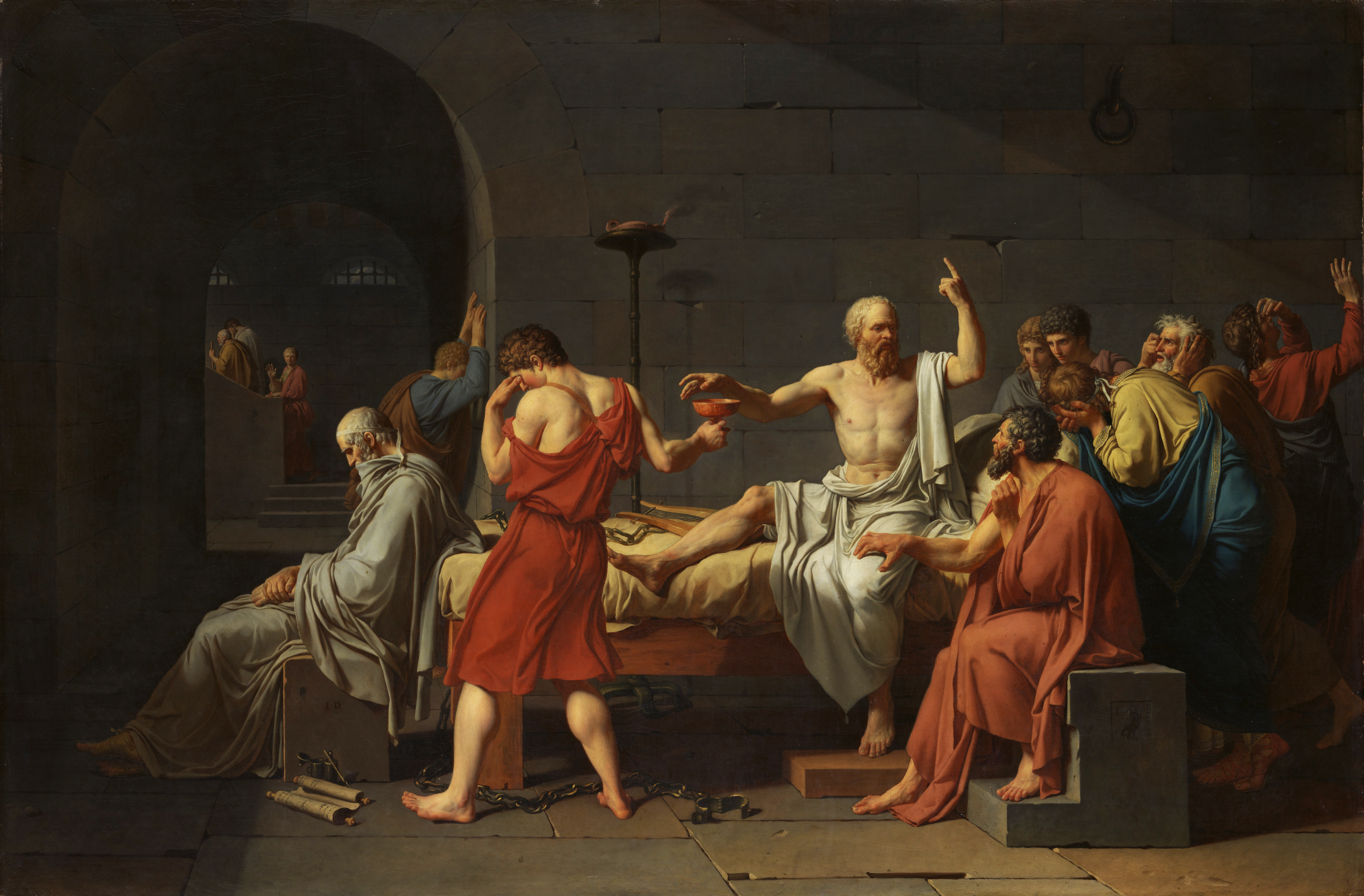
“The things I would do for Socrates, if I had lived at his time when those beasts were upon him—those three sycophants—I think it is right that I do thse very things for one who is a follower of Socrates now.
And I would have done those things and these which I am doing now not because I was afraid that they would suffer anything terrible because of those charges—for it is not terrible for a philosopher to be freed from his body, but instead the greatest good—but because I know that a man dedicated to philosophy is the greatest advantage to humanity no less than if the goods were to return to spend time with men in counseling and helping us—the kinds of things we have heard poets speak of.
For these reasons, I hate Anytos* and his kind. I was beseeching the gods for you—this is my kind of alliance—I was not seeking a favor with this, but instead returning one.”
In this day and age, this might instead be a text message or a tweet to someone in a position of authority. But this letter is from Libanius to Julian the Apostate, Roman Emperor and our personal (anti-?)hero:
Ep. 86
“Even if you don’t send me letters, I still dine on your words. For whenever someone else gets one, we hear about it and immediately read it, either by persuading or overpowering the unwilling recipient. So, my profit is no less than theirs even though it is only their right to be honored. I would also ask for honor, for some love-token from you. For, clearly, if you would honor me in any way, you wouldn’t do it without love.”