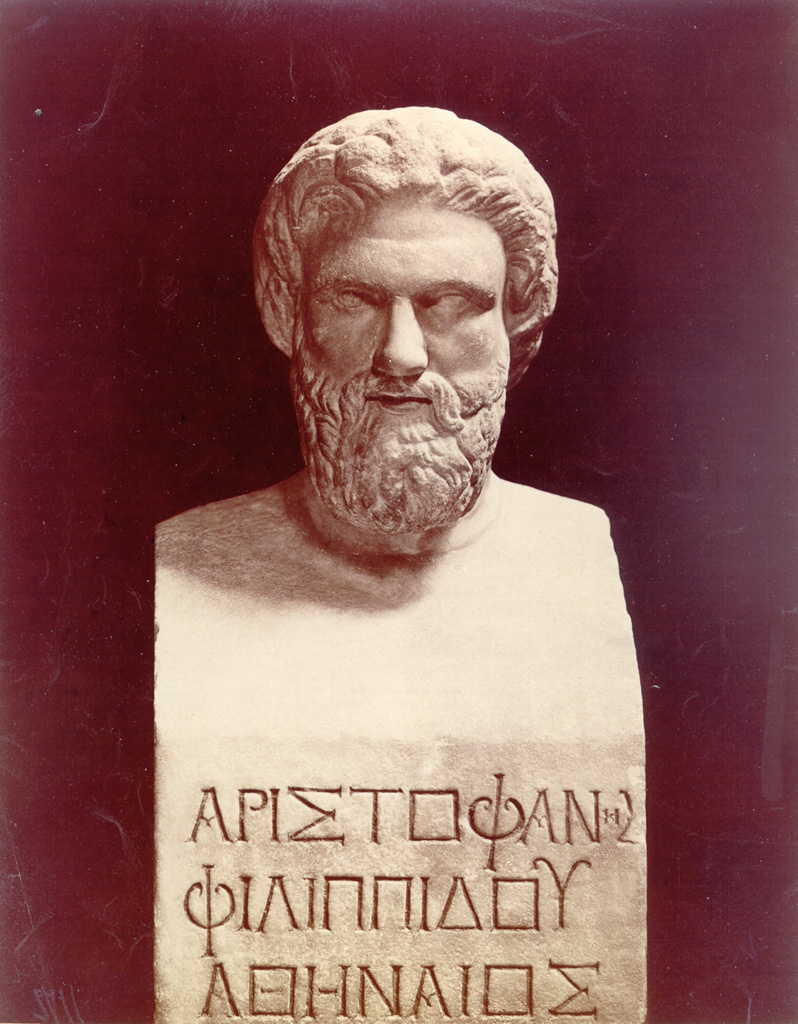
An Epitaph for Aristophanes

Greek Anthology, Antipater of Thessaloniki 9. 186

“The books of Aristophanes—divine labor—over which
Archanean ivy dangled its massive green hair.
See how much of Dionysus a page holds, how the stories
Echo, full of frightening charms.
Comic poet, best of heart, equal to the characters of Greece,
You both hated and mocked things that deserved it.”

Βίβλοι Ἀριστοφάνευς, θεῖος πόνος, αἷσιν Ἀχαρνεὺς
κισσὸς ἐπὶ χλοερὴν πουλὺς ἔσεισε κόμην.
ἠνίδ᾿ ὅσον Διόνυσον ἔχει σελίς, οἷα δὲ μῦθοι
ἠχεῦσιν, φοβερῶν πληθόμενοι χαρίτων.
ὦ καὶ θυμὸν ἄριστε, καὶ Ἑλλάδος ἤθεσιν ἶσα,
κωμικέ, καὶ στύξας ἄξια καὶ γελάσας.

Image result for Aristophanes

Why Weep Without Reason? All Mortals Die

IMT Kyz Kapu Dağ 1694  [= Greek Anthology 7.334] (Cyzicos, 2/3 Century CE)

“Pitiless god, why did you show me the light
Only for a brief number of few years?
Is it because you wanted to afflict my poor mother
With tears and laments through my short life?

She bore me and raised me and paid much more
Mind to my education than my father.
For he left me as a small orphan in this home
While she endured every kind of labor for me.

It would have been dear for me to have had success
Before our respected leaders with speeches in the law courts.
But the adolescent bloom of lovely youth did not
Reach my face. There was no marriage, no torches.

She did not sing the famous marriage song for me,
And the ill-fated woman never saw a child, a remnant
Of our much-lamented family. And it hurts me even when dead
My mother Polittê’s still growing grief
In her mourning thoughts over Phronto, the child she bore
Swift-fated, the empty pride of a dear country.

B. “Pôlittê, endure your grief, rein in your tears.
Many mothers have seen dead sons.
But they were not like him in their ways and life,
They were not so reverent toward their mother’s sweet face.
But why mourn so uselessly? Why weep without purpose?
All mortals will go to Hades in common.”

A.1 νηλεὲς ὦ δαῖμων, τί δέ μοι καὶ φέγγος ἔδειξας
εἰς ὀλίγων ἐτέων μέτρα μινυνθάδια;
ἦ ἵνα λυπήσῃς δι’ ἐμὴν βιότοιο τελευτήν
μητέρα δειλαίην δάκρυσι καὶ στοναχαῖς,
5 ἥ μ’ ἔτεχ’, ἥ μ’ ἀτίτηλε καὶ ἣ πολὺ μείζονα πατρός
φροντίδα παιδείης ἤνυσεν ἡμετέρης;
ὃς μὲν γὰρ τυτθόν τε καὶ ὀρφανὸν ἐν μεγάροισι
κάλλιπεν, ἣ δ’ ἐπ’ ἐμοὶ πάντας ἔτλη καμάτους·
ἦ μὲν ἐμοὶ φίλον ἦεν ἐφ’ ἁγνῶν ἡγεμονήων
10  ἐμπρεπέμεν μύθοις ἀμφὶ δικασπολίαις·
ἀλλά μοι οὐ γενύων ὑπεδέξατο κούριμον ἄνθος
ἡλικίης ἐρατῆς, οὐ γάμον, οὐ δαΐδας·
οὐχ ὑμέναιον ἄεισε περικλυτόν, οὐ τέκος εἶδε
δύσποτμος, ἐκ γενεῆς λείψανον ἡμετέρης
15 τῆς πολυθρηνήτου· λυπεῖ δέ με καὶ τεθνεῶτα
μητρὸς Πωλίττης πένθος ἀεξόμενον
Φρόντωνος γοεραῖς ἐπὶ φροντίσιν, ἣ τέκε παῖδα
ὠκύμορον, κενεὸν χάρμα φίλης πατρίδος.

B.19 Πωλίττα, τλῆθι πένθος, εὔνασον δάκρυ·
20 πολλαὶ θανόντας εἶδον υἱεῖς μητέρες· ——
ἀλλ’ οὐ τοιούτους τὸν τρόπον καὶ τὸν βίον,
οὐ μητέρων σέβοντας ἡδίστην θέαν· ——
τί περισσὰ θρηνεῖς, τί δὲ μάτην ὀδύρεαι;
εἰς κοινὸν Ἅιδην πάντες ἥξουσι βροτοί.

Image result for cyzicus ruins greece
Ruins at Cyzicos

Don’t Even Say it–Little Atthis, Eight Years Old

SEG 15:174  = IG II² 13124 (Attica, 2nd Century BCE)

“Don’t say it, if you look upon here,
The little Atthis…
Woe for the muse whose fine gifts she knew—
Her soul went to heaven when she was eight years old.

She left tears and moans of grief for her dear parents
Who, terribly, made her this monument instead of a marriage
When she went down to deep Acheron and Hades’ home,
All their hopes were poured into the fire and ash.”

1 [μ]ὴ̣ φῆτ’, ἢν̣ [ἐσίδητε ⏑–⏑⏑–⏑⏑–⏑]
Ἀτθίδα τὴν ὀλ[ίγην –⏑⏑–⏑⏑–]
αἰαῖ τῆς Μούσης [ἤδη καλὰ δῶρ’ εἰδυῖαν]
ὀκταέτιν· ψυχ[ὴ δ’ οὐρανὸν εἰσανέβη].
5 δάκρυα δὲ στον[αχάς τε φίλοις λείπουσα γονεῦσιν]
ἀντὶ γάμων οἴμ[οι τοῦτο τὸ σῆμ’ ἔλαχον],
τὸμ βαθὺν <ε>ἰς Ἀχ[έροντα μολοῦσ’ Ἀΐδαό τε δῶμα]·
εἰς πῦρ δὲ σπ[οδιάν τ’ ἐλπίδες ἐξεχύθεν].

Some liberties taken here

An Unmarried, Childless Corpse

IC I xxii 58  Crete, 2nd or 2rd Century CE

“Kratinos, the Son of Zôpuros

This dust holds Kratinos the son of Zôpuros, Traveler,
A child who brought the least pain to all mortals
And when he was just 18 years old he was killed
By a strong disease and went to the Hagesilan home.

You left groans and griefs for you mother and will not return,
Nor will they be diminished by your marriage [?]
But Sôsitô mourned while weeping much with her kin
When she saw your unmarried and childless corpse.

O toilsome daughter Aphrodisia, what kind of a child
You raised in your home! Chance did not allot a fate
But he could have lived enough, Zeus, with faith….
Of Zôpuros….”

Κρατῖνος Ζωπύρου.
Ζωπύρου ἅδε Κρατῖνον ἔχει κόνις, ὦ παροδῖτ[α],
παῖδα τὸν ἐν θνατοῖς πᾶσιν ἀλυπότατον
ὀκτὼ καὶ δεχέτης παρεὼν κρατερᾶς ὑπὸ νούσω

ἦλθ’ εἰς Ἁγεσίλα δῶμα βιαζόμενος,
ματρὶ λιπὼν στεναχὰς καὶ πένθεα κοὐκ ἐπανῆλ[θ]ες
οὔτε γάμοισι τεοῖς οἱ τυτθηνάμενοι·
πολλὰ δὲ ὀδυρομένη σὺν ὁμαίμοις ἐστενάχησε
Σωσιτὼ ὡς ἄγαμον κἄτεκνον εἶδε νέκυν.

ὦ θύγατερ πολύμοχθε Ἀφροδισία, οἶον ἔθραψας
παῖδα δόμοις· μοῖρα̣[ν δ’] ο̣[ὐ]κ’ ἐπέ[κλω]σε Τύχη,
ἀλ’ ἱκανῶς γίνοιτο, ὦ Ζεῦ, πίστει εσδ̣․․ε̣․ελλον
Ζωπύρου [— — — — — — — — — — — — — — —]
[— — — — — — — — — — — — — — — — — — —]

Image result for ancient greek vase hades
Persephone with Hermes

Death at Eighteen Years Old

SEG 54:788 Kos, 2nd/1st Century BCE

Funerary epigram for Stibos. White marble stele with upper molding.

“Stibos, before when you were still among the living
You took pleasure delighting in many valleys in glorious hunts.
But now that you’re dead the dark earth covers over you,
Hades brought death at only eighteen years old.
But you, Kyllenian god…
Take this child at the height of his youth to the reverent dead.”

πρὶν μὲν ἐνὶ ζωοῖσιν ἔτ’ ὤν, Στίβε, πολλὰ κατ’ ἄγκη
τέρπεο γαυριόων κυδαλίμοισιν ἄγραις, vacat
νῦν δέ σε τεθνειῶτα μέλαν νέφος ἀμφικαλύπτει·
ὀκτωκαιδεχέτη μοῖραν ἐπερχόμενον vacat
5 <– ⏑ ⏑ –>ν Ἀΐδας· ἀλλ’ <ὦ> Κυλλάνιε δαῖμον, vacat
παῖδα τὸν ἀκρήβην πέμψον ἐπ’ εὐσεβέας.

Related image
A different Epitaph


“Instead of a Bed, a Tomb; Instead of a Bride, A Stone”

CIRB 125 [Corpus Inscriptionum Regni Bosporani ]c. 50-1 BCE

“Mênodorus and Hêlodôros, the sons of Hêliodôros, greet you
Traveler, beneath me, the words—dear Heliodôros,
Eighteen years old, he had his father’s name.
With him lies his brother on the edge of adulthood,
Mênodorus, who has earned all the pity on Aeida.

Instead of a lovely marriage bed, they get a tomb;
Instead of a bride, a stone, and instead of a wedding, terrible grief for their parents.
I grieve for the pitiable mother who put her hands over their eyes.”

1    Μηνόδωρε καὶ
Ἡλιόδωρε
οἱ Ἡλιοδώρου,
χαίρετε.
5 ὧθ’ ὑπ’ ἐμοὶ παροδεῖτα, λόγων φίλος Ἡλιόδωρος
ὀκτωκαιδεχέτης, πατρὸς ἔχων ὄνομα·
σὺν τῶι Μηνεόδωρος ὁ μελλυμέναιος ἀδελφὸς
κέκλιται εἰν Ἀείδῃ πάντα λαχὼν ἐλέου·
ἀντὶ μὲν ἱμερτοῦ θαλάμου τάφον, ἀντὶ δὲ νύμφης′
στήλην, ἀντὶ γάμου δ’ αἰνὸν ἄχος γενέταις.
ματέρα τὰν δύστανον ὀδύρομαι, ἃ δυσὶ τέκνοις
θῆκεν ἀνυμφεύτοις χῖρας {²⁶χεῖρας}²⁶ ἐπὶ βλέφαρα.

Image result for ancient greek epitaph
A Different epitaph

“Nothing Wakes the Dead”: Your Weekly Reminder that Life is Short

IG IX,2 640 from Thessaly, c. ? from PHI

“They say either the Fates’ thread or some god’s rage
raged terribly at me, Parmonis, and violently
Rushed me out of bed unwillingly
when I was longing for my sweet husband Epitunkhanos.

If there is any memory for the dead, well, I led a blameless life—
Abandoning only my husband, a man I beg to stop
Torturing his heart with terrible grief and the terrible struggle.

For this is nothing more—since nothing wakes the dead—
Than wearing down the soul of those who still live. For there is nothing else.”

1 ἢ μίτος ὥς φασιν Μοιρῶν ἢ δαίμονος ὀργή,
ἥτις ἐμοὶ δεινῶς ἐχολώσατο καί με βιαίως
ἐξ εὐνῆς ποθέουσαν ἐμῆς ἀνδρὸς γλυκεροῖο
Παρμονὶν ἐξεδίωξε Ἐπιτυνχάνου οὐκ ἐθέλουσα[ν].

5 εἴ γέ τις οὖν μνήμη θνητοῖς, βίον ἔσχον ἄ[μ]εμπτον,
ἄνδρα μόνον στέρξασα, ὃν εἰσέτι θυμὸν ἀνώγω
παύσασθαι δεινοῦ πένθους δεινοῦ τε κυδοιμοῦ.
οὐδὲν γὰρ πλέον ἐστί —— θανόντα γὰρ οὐδὲν ἐγείρει ——
ἢ τείρει ψυχὴν ζώντων μόνον· ἄλλο γὰρ οὐδέν.
10 {²duae rosae partim deletae}²

Not quite sure about Παρμονὶν here, but I think it is her name…

Related image
A different Epitaph from the Museum of Fine Arts in St. Petersburg.


Killed By A Bear When He was 9 Times 3

IG IX,1² 2:340 [ ]Akarnania — Thyrrheion — 2nd/1st c. BC

“Stranger, I am leaving griefs and pains for my father Philiskos
And my pitiful mother, because I went down to Hades’ home—
I lost my life because of a savage bear who violently
Killed me, crushing my flesh with her jaws.

I died at 27 years old. Fate led miserable me
To go to Hades in this way.
My bedchamber is bereft, and I live now
Below the earth, gazing on a dusky bed chamber
Where my wife cannot lie beside me, nor my father
And I don’t look toward hearing my mother’s voice.

A dark cloud covers Timelas.
Ill-fated, I have charged upon this kind of end to life.”

πένθεα καὶ στοναχὰς λε′ίπω, ξένε, πατρὶ Φιλίσκωι
ματρί τε δυστάνοι βὰς Ἀΐδαο δόμους,
ἄρκου ὑπὸ στυγερᾶς ὀλέσας βίον, ἅ με βιαίως
ὤλεσε σαρκὸς ἐμᾶς δραξαμένα γένυσιν.

θνάσκω δ’ ἐννεάδεσσιν ἐτῶν τρισί· Μοῖρα γὰρ οὕτως
ἆγέ με δύστανον βάμεναι ‵ε′ἰς Ἀΐδαν.
χηρεύει θάλαμός μοι, ἐγὼ δ’ ὑπὸ νέρτερα γαίας
ναίω τὸν σκοτερὸν δερκόμενος θάλαμον,
ἔνθα μοι οὔτ’ ἄλοχος παρακλείνεται οὔτε πατρὸς μου,
οὐ ματρὸς φωνὰν δέρκομαι εἰς ἀκοάς·
ἀλλ’ Ἀΐδα σκότιον Τιμέλαν νέφος ἀμφικαλύπτει·
δύσμορος εἰς οἵαν μοῖραν ἔκυρσα βίου.

A Bear from the Middle Ages
Image result for ancient greek bear
Cycladic Bear

Psssst…We Are All Going to Die: An Epitaph

SEG 42:212
[ ]Att. — Rhamnous — 4th c. BC — Forteresse, 69; GV 1250a — BE 1994.35 — SEG 40.212

“Death is life’s shared end for everyone. But you leave
Behind you pity for your age and a longing for your wisdom.
Your parents lost you when you were only twenty years old
And when you died they arranged a funeral for you instead of a marriage.”

1 τέ[ρμα βίο]υ [κοινὸν τὸ] θανεῖν πᾶσιν, σὺ δὲ λε[ίπεις]
ἡλικίας ἔλεον, σωφροσύνης δὲ πόθον.
ἐν δεκάσιν δισσαῖσιν ἐτ[ῶν στέρξαν σε γονῆες]
οἳ τάφον ἀντὶ γάμου τ[εῦξαν ἀποφθιμένωι].

A different epitaph

Image result for ancient greek epitaph seg
This is from the british museum

The Tomb of Hygeia, Untouched by Marriage and Offspring

IG V,1 726 Lakonia and Messenia (IG V,1) : Lakonike (From the PHI Website)

“I am the tomb of a mother’s daughter and son–
They were allotted a swift passage to Hades.

The first of them used to be called Aleksanôr among the boys,
But the girl, Hygeia, died before marriage.

The Muse graced her young son with education;
and jealous Hades robbed her away as he grew.

So the mother has two children, but now she weeps
Three times as much for one untouched of mate and offspring.”

μητρὸς καὶ θυγατρὸς παιδός τ’ ἔτι τύμβος ὅδ̣’ εἰμί,
οἳ λάχον ὠκίστην ἀτραπὸν εἰς Ἀΐδην.

ὧν ὁ μὲν ἐν κούροισιν Ἀλεξάνωρ ἐκαλεῖτο,
ἡ δ’ Ὑγίεια, γάμου πρόσθεν ἀποφθιμένη·

ἄρρενι δ’ ἠϊθέῳ παιδείην ὤπασε Μοῦσα,
ἣν Ἀΐδης φθονερὸς νόσφισεν α̣ὐξομένου.

καὶ μήτηρ μὲν ἔχει παῖδας δύο, τρισσὰ δὲ πένθη
νῦν κλαίει γαμέτης ἄμμιγα καὶ γενέτη̣[ς].

Here’s what the inscription looks like in before being split up into couplets. I am pretty unsure about the third couplet.
1 μητρὸς καὶ θυγατρὸς παιδός τ’ ἔτι τύμβος ὅδ̣’ εἰμί, ❦ οἳ λάχον ὠκίστην ἀτραπὸν εἰς Ἀΐδην. ❦ ὧν ὁ μὲν ἐν κούρο<ι>-σιν Ἀλεξάνωρ ἐκαλεῖτο, ❦ ἡ δ’ Ὑγίεια, γάμου πρόσθεν ἀποφθιμένη· ❦ ἄρρενι δ’ ἠϊθέῳ παιδείην ὤπασε Μοῦσα, ❦ ἣν Ἀΐδης φθονερὸς νόσφισεν α̣ὐξομένου. ❦ καὶ μήτηρ μὲν ἔχει παῖδας δύο, τρισσὰ δὲ πένθη ❦ νῦν κλαίει γαμέτης ἄμμιγα καὶ γενέτη̣[ς].

Image result for funerary inscription Greek attica
Marble Grave Stele of Mnesagora and Nikochares (siblings) from Vari, Attica. 420-410 BC. NATIONAL ARCHAEOLOGICAL MUSEUM OF ATHENS.