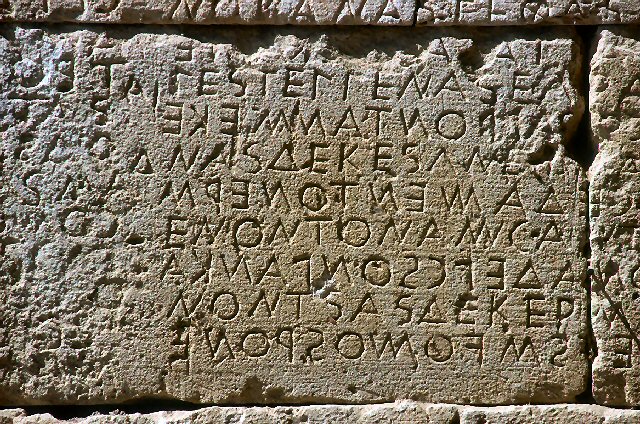
The Laws and the Soul of the State

These sayings come from the Gnomologium Vaticanum


112 “When Antagoras was about to cast a capital vote against someone he cried. Someone asked him “Why do you vote to condemn and cry?” He responded “It is necessary by nature to give our sympathy; the law demands my vote.”

῾Ο αὐτὸς καταδικάζειν τινὸς θανατικὴν ψῆφον μέλλων ἐδάκρυσεν· εἰπόντος δέ τινος· „τί παθὼν αὑτὸς καταδικάζεις καὶ κλαίεις”; εἶπεν· „ὅτι ἀναγκαῖόν ἐστι τῇ μὲν φύσει τὸ συμπαθὲς ἀποδοῦναι, τῷ δὲ νόμῳ τὴν ψῆφον.”


211 “Demosthenes used to say that the laws are the sinews of democracy”

῾Ο αὐτὸς ἔφησε τοὺς νόμους δημοκρατίας νεῦρα.


229 “Demosthenes used to say that the laws are the soul of the state. “just as the body dies when bereft of the soul, so too the city perishes when there are no laws”

῾Ο αὐτὸς ἔφη πόλεως εἶναι ψυχὴν τοὺς νόμους· „ὥσπερ δὲ σῷμα στερηθὲν ψυχῆς πίπτει, οὕτω καὶ πόλις μὴ ὄντων νόμων καταλύεται”.


443 “When asked how cities might be best inhabited, Plato said, “If philosophers are kings and kings practice philosophy.”

῾Ο αὐτὸς ἐρωτηθεὶς πῶς ἂν ἄριστα αἱ πόλεις οἰκοῖντο ἔφη· „εἰ φιλόσοφοι βασιλεύοιεν ἢ οἱ βασιλεῖς φιλοσοφοῖεν.”


Image result for ancient greek laws

Money, Wealth and Greed

These sayings come from the Gnomologium Vaticanum


29 “He [Aristippos] said it was right to learn to live with a little so that we might do nothing shameful for money”

῾Ο αὐτὸς ἔφη δεῖν ἐθίζειν ἀπὸ ὀλίγων ζῆν, ἵνα μηδὲν αἰσχρὸν χρημάτων ἕνεκεν πράττωμεν.


120 “Aristôn the philosopher used to say that wealthy people who are cheap are like mules who carry gold and silver but eat straw.”

᾿Αρίστων ὁ φιλόσοφος τοὺς πλουσίους καὶ φειδωλοὺς ὁμοίους ἔφησεν εἶναι τοῖς ἡμιόνοις, οἵτινες χρυσὸν καὶ ἄργυρον φέροντες χόρτον ἐσθίουσιν.


265 “Democritus used to say that greed is the mother-city of every wickedness”

Δημόκριτος τὴν φιλαργυρίαν ἔλεγε μητρόπολιν πάσης κακίας.

Image result for ancient greek money

Quipping with Diogenes

These sayings come from the Gnomologium Vaticanum


168 “Diogenes, after he saw a small city with big gates, said “Lock the gates so the city can’t escape!”

Διογένης θεασάμενος μικρὰν πόλιν μεγάλας πύλας ἔχουσαν ἔφη· „κλείσατε τὰς πύλας, μὴ ἡ πόλις ἐξέλθῃ”.


189 “When [Diogenes] was asked what is evil in life, he said “A pretty woman.”

῾Ο αὐτὸς ἐρωτηθεὶς τί κακὸν ἐν βίῳ ἔφη· „γυνὴ καλὴ τῷ εἴδει”.


201 “[Diogenes] to say that he had everything that happened in the tragedies: for he was a beggar, a wanderer, and he had an ephemeral life.”

῾Ο αὐτὸς ἔφη πάντα ἔχειν τὰ ἐν ταῖς τραγῳδίαις· εἶναί τε γὰρ πτωχός, πλανήτης, βίον ἔχων ἐφήμερον·

Image result for ancient greek sleep Diogenes the Cynic

Healing the Spirit: Sayings on Doctors and Philosophy

The following anecdotes are taken from the Gnomologium Vaticanum


37 “When people were asking [Aristippos] why he spent time with wretched men he said “Because doctors also minister to the sick.”

῾Ο αὐτὸς εἰπόντος τινὸς αὐτῷ, διὰ τί τοῖς μοχθηροῖς πλησιάζει, εἶπεν· „ὅτι καὶ ἰατροὶ τοῖς νοσοῦσιν.”


412 “Nikokles used to say that doctors are lucky because the sun shines on their successes while the earth hides their mistakes.”

῾Ο αὐτὸς τοὺς ἰατροὺς εὐτυχεῖς ἔλεγεν, ὅτι τὰς μὲν ἐπιτυχίας αὐτῶν ὁ ἥλιος ὁρᾷ, τὰς δὲ ἀποτυχίας ἡ γῆ καλύπτει.


289 “Erasistratos [the doctor] used to say that medicine was philosophy’s sister: one treats maladies of the spirit, the other treats those of the body.”

῾Ο αὐτὸς τὴν ἰατρικὴν τῆς φιλοσοφίας ἔφησεν ἀδελφὴν εἶναι· τὴν μὲν γὰρ τὰ ψυχικά, τὴν δὲ τὰ σωματικὰ θεραπεύειν ἀῤῥωστήματα.


226 “After [Demosthenes] saw that a bad wrestler was acting as a doctor he said “Now you’ve found a way you can throw everybody down!”

῾Ο αὐτὸς ἰδὼν κακὸν παλαιστὴν ἰατρεύοντα „νῦν” εἶπεν „εὕρηκας μέθοδον, δι’ ἧς πολλοὺς καταβαλεῖς”.

Image result for Ancient Greek doctor vase

Poets and Audiences, Some Pithy Sayings

The following anecdotes are taken from the Gnomologium Vaticanum

106

“When Antagoras the poet had a performance at Thebes and obtained no honor, he said “Thebans, Odysseus screwed up when he covered his companions’ ears as he was sailing by the Sirens. It would have been right for him to hire you as sailors.”

᾿Ανταγόρας ὁ ποιητὴς ἀκρόασιν παρέχων ἐν Θήβαις καὶ μηδεμιᾶς τυγχάνων τιμῆς εἶπεν· „ὦ ἄνδρες Θηβαῖοι· ἥμαρτεν ᾿Οδυσσεὺς ἐμφράξας τῶν ἑταίρων τὰς ἀκοάς, ὅτε τὰς Σειρῆνας παρέπλει· ἔδει γὰρ αὐτὸν ὑμᾶς ναύτας μισθώσασθαι.”


109

“When Antagoras the Rhodian epic poet was reading his composition the Thebais in Thebes and no one was applauding him, he took the book and said, “You are rightly called Boiotians, for you all have cows’ ears!”

᾿Ανταγόρας ὁ ῾Ρόδιος ἐποποιὸς ἐν Θήβαις ἀναγινώσκων τὸ τῆς Θηβαΐδος σύγγραμμα, ὡς οὐδεὶς ἐπεσημαίνετο, εἱλήσας τὸ βιβλίον εἶπεν· „δικαίως καλεῖσθε Βοιωτοί· βοῶν γὰρ ὦτα ἔχετε.”


454

“When Persinos the poet was asked who the best poet is he says “each poet is to himself, but Homer to everyone else.”

Περσῖνος ὁ ποιητὴς ἐρωτηθεὶς τίς ἄριστός ἐστι ποιητὴς „παρ’ ἑαυτῷ μὲν ἕκαστος”, <εἶπε>, „παρὰ δὲ τοῖς ἄλλοις ῞Ομηρος”.


468

“Protagoras, when he was slandered by some poet because he didn’t take his poems, said “Wretch—it’s better for me to be slandered by you than to listen to your poems.”

Πρωταγόρας ἐποποιοῦ τινος αὐτὸν βλασφημοῦντος ἐπὶ τῷ μὴ ἀποδέχεσθαι τὰ ποιήματα αὐτοῦ „ὦ τάν”, ἔφη· „κρεῖττόν μοι ἐστι κακῶς ἀκούειν ὑπό σου ἢ τῶν σῶν ποιημάτων ἀκούειν”.


Image result for Ancient Greek vase poet performance

“Ability, Practice, and Time”: Some Ancient Sayings about Education

These sayings [‘Apophthegmata’] are drawn from the Gnomologium Vaticanum. Most are apocryphal.


24: “Aristippos used to say the he took money from students not in order to straighten their lives but how so they might learn to spend their money on fine things.”

῾Ο αὐτὸς παρὰ τῶν μαθητῶν λαμβάνειν ἔφασκε μισθόν, οὐχ ὅπως τὸν βίον ἐπανορθώσῃ, ἀλλ’ ὅπως ἐκεῖνοι μάθωσιν εἰς τὰ καλὰ δαπανᾶν.


50: “Aristotle said that education is a decoration for the lucky but a refuge for the unfortunate.”

῾Ο αὐτὸς ἔφη τὴν παιδείαν εὐτυχοῦσι μὲν εἶναι κόσμον, ἀτυχοῦσι δὲ καταφύγιον.


87: “When he was asked whom he loved more, Phillip or Aristotle, Alexander said “both the same—for the first gave me the gift of life and the second taught me to live well.”

῾Ο αὐτὸς ἐρωτηθεὶς τίνα μᾶλλον ἀγαπᾷ, Φίλιππον ἢ ᾿Αριστοτέλην, εἶπεν· „ὁμοίως ἀμφοτέρους· ὁ μὲν γάρ μοι τὸ ζῆν ἐχαρίσατο, ὁ δὲ τὸ καλῶς ζῆν ἐπαίδευσεν.”


164: “Glukôn the philosopher called education a sacred refuge.”

Γλύκων ὁ φιλόσοφος τὴν παιδείαν ἔλεγεν ἱερὸν ἄσυλον εἶναι.


259: “When Demetrios [of Phalerus] was asked what was the noblest of animals he said “A human adorned by education.”

῾Ο αὐτὸς ἐρωτηθεὶς τί τῶν ζώων κάλλιστόν ἐστιν εἶπεν· „ἄνθρωπος παιδείᾳ κεκοσμημένος”.


302: “[Zeno the Stoic] used to say that education was sufficient for happiness”

῾Ο αὐτὸς ἔφη τὴν παιδείαν πρὸς εὐδαιμονίαν αὐτάρκη.


314: “Heraclitus used to say that learning is a second sun for the educated”

῾Ηράκλειτος τὴν παιδείαν ἕτερον ἥλιον εἶναι τοῖς πεπαιδευμένοις ἔλεγεν.


439: [Plato] used to say that someone being educated needs three things: ability, practice and time.”

῾Ο αὐτὸς ἔλεγεν ὅτι ὁ παιδευόμενος τριῶν τούτων χρῄζει· φύσεως, μελέτης, χρόνου.


469: “[Protagoras] used to say “knowing a lot helps a lot and hurts a lot.”

῾Ο αὐτὸς ἔφη· „πολυμαθίη κάρτα μὲν ὠφελέει, κάρτα δὲ βλάπτει”.

Image result for ancient greek education

Sweetest in Life: Exploring the Unknown

Sayings Attributed to Socrates in the Gnomologium Vaticanum.

470

“Socrates, when asked what is sweetest in life, said “education, virtue, and the investigation of the unknown”

Σωκράτης ὁ φιλόσοφος ἐρωτηθεὶς τί ἥδιστον ἐν τῷ βίῳ εἶπε· „παιδεία καὶ ἀρετὴ καὶ ἱστορία τῶν ἀγνοουμένων”.

471

“Socrates, when asked what possession is the most advantageous, said “a steadfast friend.”

Σωκράτης ἐρωτηθεὶς τί κτῆμα συμφορώτατον εἶπε· „φίλος βέβαιος.”

478

After he had been condemned to die by the Athenians and when his wife Xanthippe was weeping and saying “Socrates, you are dying unjustly”, Socrates the Athenian said to her “would you want me to die justly?”

Σωκράτης ᾿Αθηναῖος καταδικασθεὶς ὑπὸ ᾿Αθηναίων κατακρημνισθῆναι τῆς γυναικὸς Ξανθίππης κλαιούσης καὶ λεγούσης· „ὦ Σώκρατες, ἀδίκως ἀποθνήσκεις” εἶπε πρὸς αὐτήν· „σὺ οὖν ἐβούλου με δικαίως ἀποθνήσκειν;”

484

“When Socrates saw an uneducated wealthy man he said “Look, a golden sheep!”

<Σ>ωκράτης ἰδὼν πλούσιον ἀπαίδευτον „ἰδού,” φησί, „τὸ χρυσοῦν πρόβατον.”

485

“Socrates used to say that jealousy is a wound from the truth.”

Σωκράτης ἔλεγε τὸν φθόνον ἕλκος εἶναι τῆς ἀληθείας.

489

“When Socrates was asked if the world is spherical he said “I haven’t examined it from every side.”

Ὁ αὐτὸς ἐρωτηθεὶς εἰ σφαιροειδής ἐστιν ὁ κόσμος ἔφη· ” οὐχ ὑπερέκυψα.”

499

“When he was asked why he was not writing any treatises, Socrates said “because I see the unwritten selling for more than the written.”

῾Ο αὐτὸς ἐρωτηθεὶς διὰ τί συντάγματα οὐ γράφει ἔφη· „ὅτι τὰ ἄγραφα τῶν γεγραμμένων ὁρῶ πλείονος πωλούμενα.”

Image result for Socrates ancient Greek

Philosophy, Wickedess and the Enemy of Mankind: More Sayings from Ancient Sages

Some more sayings from the Gnomologium Vaticanum.

7
“When Antisthenes was asked by someone what he should teach his child, he said “If you want him to live with the gods, philosophy; but if you wish him to live among men, then rhetoric.”

῾Ο αὐτὸς ἐρωτηθεὶς ὑπό τινος, τί· τὸν υἱὸν διδάξει, εἶπεν· „εἰ
μὲν θεοῖς αὐτὸν συμβιοῦν ἐθέλοις, φιλόσοφον· εἰ δὲ ἀνθρώποις, ῥήτορα”.

12
“Antisthenes used to say that virtue had a short justification while the argument for wickedness was endless.”

῾Ο αὐτὸς ἔφη τὴν ἀρετὴν βραχύλογον εἶναι, τὴν δὲ κακίαν ἀπέραντον.

13
“When Plato was chattering on at length about something, Antisthenes said “the one who speaks is not the measure of his audience—it is the audience who makes a limit for the speaker!”

῾Ο αὐτὸς Πλάτωνός ποτε ἐν τῇ σχολῇ μακρολογήσαντος εἶπεν·„οὐχ ὁ λέγων μέτρον ἐστὶ τοῦ ἀκούοντος, ἀλλ’ ὁ ἀκούων τοῦ λέγοντος.”

14
“Anarchasis used to say that the Greeks really messed things up because their craftsman compete and the ignorant judge them.”

᾿Ανάχαρσις ἔφη τοὺς ῞Ελληνας ἁμαρτάνειν, ὅτι παρ’ αὐτοῖς οἱ μὲν τεχνῖται ἀγωνίζονται, οἱ δ’ ἀμαθεῖς κρίνουσιν.

18
“When Anacharsis was asked by someone what was humanity’s enemy, he said “themselves”.

῾Ο αὐτὸς ἐρωτηθεὶς ὑπό τινος, τί ἐστι πολέμιον ἀνθρώποις, εἶπεν· „αὐτοὶ ἑαυτοῖς”.

19

“When Anacharsis was asked by someone why jealous people are always aggrieved he said “because their own troubles are not the only thing biting them: other people’s good fortune bothers them too.”

῾Ο αὐτὸς ἐρωτηθεὶς ὑπό τινος, διὰ τί οἱ φθονεροὶ ἄνθρωποι ἀεὶ λυποῦνται, ἔφη· „ὅτι οὐ μόνον τὰ ἑαυτῶν αὐτοὺς κακὰ δάκνει, ἀλλὰ καὶ τὰ τῶν πέλας ἀγαθὰ λυπεῖ”.


The website “Sharing Ancient Wisdom” is a really interesting and useful collection of proverbial sayings. Check it out.

Image result for Ancient Greek Sages

Spartan Women Once Said…[Apophthegmata Gunaikôn, Part 2]

This is the second part of the sayings attributed to women in the Gnomologium Vaticanum (568-576)

“Sayings of women and their thoughts”

᾿Αποφθέγματα γυναικῶν, ἤτοι φρονήματα.


“When a Spartan woman was speaking to her son who had been crippled in battle and was depressed because of that she said “don’t be sad, child—for each step recalls your private virtue”

Γυνὴ Λάκαινα τοῦ υἱοῦ αὐτῆς ἐν παρατάξει χωλωθέντος καὶ δυσφοροῦντος ἐπὶ τούτῳ „τέκνον”, εἶπε, „μὴ λυποῦ· καθ’ ἕκαστον γὰρ βῆμα τῆς ἰδίας <ἀρετῆς ὑπομνησθήσῃ.”>


“When a Spartan woman heard that her son died in the battle line she said “Child, you paid your country back well for your upbringing.”

Γυνὴ Λάκαινα ἀκούσασα τὸν υἱὸν αὐτῆς ἐν παρατάξει τεθνηκέναι „τέκνον”, εἶπεν, „ὡς καλὰ τροφεῖα τῇ πατρίδι ἀπέδωκας!”


“The mother of Clearchus the Ramphian, after her son was slandered for betraying Greece to the Persians, wrote this kind of letter. “To Klearchus the son from his Mother: evil rumors are falling all around you. Either get rid of them or no longer be [alive? My son?]”

῾Η Κλεάρχου τοῦ ῾Ραμφίου μήτηρ ἐπειδὴ διεβλήθη ὁ υἱὸς αὐτῆς προδιδόναι τοῖς Πέρσαις τὴν ῾Ελλάδα τοιαύτην ἐπιστολὴν ἔγραψεν· „ἁ μάτηρ Κλεάρχῳ τῷ υἱῷ· κακά τευ κακκέχυται φάμα· ἢ ταύταν ἀπόθευ ἢ μὴ ἔσο.”


“Xanthippê, when asked what Socrates’ greatest attribute was, said “This, that he has the same face for noble and lowborn men.”

Ξανθίππη ἐρωτηθεῖσα τί μέγιστον ὑπῆρχεν τῷ Σωκράτει „τοῦτο”, ἔφη, „ὅτι καὶ ἐπὶ ἀγαθοῖς καὶ ἐπὶ φαύλοις ἡ αὐτὴ ὄψις ἦν αὐτῷ”·


“Theanô the Pythagorean said, “What is noble to speak about is shameful to be silent on; and what is shameful to mention, is noble to keep silent about.”

Θεανὼ ἡ Πυθαγορικὴ ἔφη· „περὶ ὧν λέγειν καλόν, περὶ τούτων σιωπᾶν αἰσχρόν, καὶ περὶ ὧν λέγειν αἰσχρόν, περὶ τούτων σιωπᾶν καλόν.”


“A Spartan woman said of her son who was thankful that he was the only one to survive a battle-line “why aren’t you ashamed that you’re the only one alive?”

Λάκαινα γυνὴ σεμνυνομένου τοῦ υἱοῦ αὐτῆς ἐπὶ τῷ μόνον ἐκ τῆς παρατάξεως σεσῶσθαι ἔφη· „τί οὖν οὐκ αἰσχύνῃ μόνος ζῶν;”


“When Olympias, Alexander’s mother was asked by someone why she wasn’t adorned, she said “Alexander is sufficient decoration for me.”

᾿Ολυμπιὰς ᾿Αλεξάνδρου μήτηρ ἐρωτηθεῖσα ὑπό τινος [ὅτι] „διὰ τί οὐ κοσμῇ;” εἶπεν· „ὅτι ἀρκεῖ μοι ὁ ᾿Αλεξάνδρου κόσμος.”


The website “Sharing Ancient Wisdom” is a really interesting and useful collection of proverbial sayings. Check it out.