On His Birthday: Nero Sings and Renames Things

Ps-Lucian, Nero 6

Menekrates: “Musonius, that voice which made him music-mad and longing for Olympian and Pythian games, how was the tyrant’s voice? Some people who sailed to Lemnos were amazed by it, others mock it.”

Musonius: “Well, Menekrates, his voice really merits neither wonder nor mockery, since nature has made him moderately and unquestionably in tune. He speaks with a naturally open and deep voice, since his throat is deep, and when he sings he buzzes a little because of his throat shape. Nevertheless, the tones of his voice make him seem smoother if he does not try too hard, but relies instead on the melody, good accompaniment, and selecting the right time to walk, to stop, to move, and to nod his head along with the music. What is shameful is that a king appears to want success in these pursuits.”

ΜΕΝΕΚΡΑΤΗΣ
6. Ἡ φωνὴ δέ, Μουσώνιε, δι᾿ ἣν μουσομανεῖ καὶ τῶν Ὀλυμπιάδων τε καὶ Πυθιάδων ἐρᾷ, πῶς ἔχει τῷ τυράννῳ; τῶν γὰρ Λήμνῳ προσπλεόντων οἱ μὲν ἐθαύμαζον, οἱ δὲ κατεγέλων.
ΜΟΥΣΩΝΙΟΣ
Ἀλλ᾿ ἐκεῖνός γε, ὦ Μενέκρατες, οὔτε θαυμασίως ἔχει τοῦ φθέγματος οὔτ᾿ αὖ γελοίως· ἡ γὰρ φύσις αὐτὸν ἀμέμπτως τε καὶ μέσως ἥρμοκε. φθέγγεται δὲ κοῖλον μὲν φύσει καὶ βαρύ, ἐγκειμένης αὐτῷ τῆς φάρυγγος· μέλη δ᾿ οὕτω κατεσκευασμένης βομβεῖ πως. οἱ δέ γε τόνοι τῶν φθόγγων ἐπιλεαίνουσι τοῦτον, ἐπεὶ μὴ θαρρεῖ αὑτῷ, χρωμάτων δὲ φιλανθρωπίᾳ καὶ μελοποιίᾳ εὐαγώγῳ μὲν δὴ καὶ κιθαρῳδίᾳ εὐσταλεῖ καὶ <τῷ> οὗ καιρὸς βαδίσαι καὶ στῆναι καὶ μεταστῆναι καὶ τὸ νεῦμα ἐξομοιῶσαι τοῖς μέλεσιν, αἰσχύνην ἔχοντος μόνου τοῦ βασιλέα δοκεῖν ἀκριβοῦν ταῦτα.

Suetonius, Lives of the Caesars: Nero 53, 55

“He was mostly deranged by a desire for popularity and was an enemy to anyone who had any sway over the popular mob. Most believed that after all of his accomplishments on the stage he was going to compete among the Athletes at the next Olympian games. He was wrestling endlessly and he had watched the gymnastic contests all over Greece as a judge would, sitting on the ground of the stadium. If any competitors withdrew too far back, he would push them forth again with his own hand. Because he was alleged to have equaled Apollo in song and the Sun in chariot-driving, Nero planned to rival the deeds of Herakles too. People claim that a lion had been trained which he would be able to kill naked in the amphitheater in front of all the people with either a club or his arms’ embrace.”

Maxime autem popularitate efferebatur, omnium aemulus, qui quoquo modo animum vulgi moverent. Exiit opinio post scaenicas coronas proximo lustro descensurum eum ad Olympia inter athletas; nam et luctabatur assidue nec aliter certamina gymnica tota Graecia spectaverat quam brabeutarum more in stadio humi assidens ac, si qua paria longius recessissent, in medium manibus suis protrahens. Destinaverat etiam, quia Apollinem cantu, Solem aurigando aequiperare existimaretur, imitari et Herculis facta; praeparatumque leonem aiunt, quem vel clava vel brachiorum nexibus in amphitheatri harena spectante populo nudus elideret.

“He had a desire for eternal and endless fame, but it was ill-considered. Because of this he changed the names of many things and places from their ancient titles to something from his own name. So, he called the month of April Neroneus and planned to have Rome renamed Neropolis.”

Erat illi aeternitatis perpetuaeque famae cupido, sed inconsulta. Ideoque multis rebus ac locis vetere appellatione detracta novam indixit ex suo nomine, mensem quoque Aprilem Neroneum appellavit; destinaverat et Romam Neropolim nuncupare.
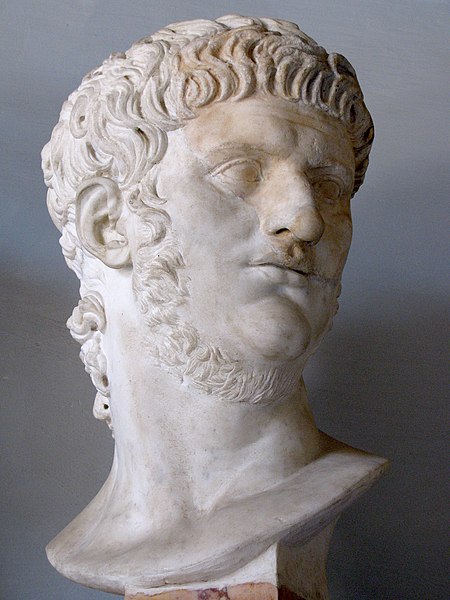
File:Nero 1.JPG
Bust of Nero at the Capitoline Museum

What’s Your Writing Like Without Quotations?

Diogenes Laertius, Chrysippos  7.7.180

“Apollodorus the Athenian in his Summary of Beliefs, because he wants to demonstrate that the works of Epicurus were written with personal force and were prepared with far fewer quotations than the books of Chrysippos, says in this very wording: “if the books of [Chrysippos] were scrubbed of all the superfluous quotations, only empty paper would be left to him.”

So much for Apollodorus.  The old women who used to sit next to [Chrysippos], according to Diocles, used to claim that he wrote 500 lines each day. Hekatôn reports that he turned to philosophy because the property left to him by his father was confiscated to the royal treasury.”

Καὶ Ἀπολλόδωρος δ᾿ ὁ Ἀθηναῖος ἐν τῇ Συναγωγῇ τῶν δογμάτων, βουλόμενος παριστάνειν ὅτι τὰ Ἐπικούρου οἰκείᾳ δυνάμει γεγραμμένα καὶ ἀπαράθετα ὄντα μυρίῳ πλείω ἐστὶ τῶν Χρυσίππου βιβλίων, φησὶν οὕτως αὐτῇ τῇ λέξει· “εἰ γάρ τις ἀφέλοι τῶν Χρυσίππου βιβλίων ὅσ᾿ ἀλλότρια παρατέθειται, κενὸς αὐτῷ ὁ χάρτης καταλελείψεται.” καὶ ταῦτα μὲν Ἀπολλόδωρος. ἡ δὲ παρεδρεύουσα πρεσβῦτις αὐτῷ, ὥς φησι Διοκλῆς, ἔλεγεν ὡς πεντακοσίους γράφοι στίχους ἡμερησίους. Ἑκάτων δέ φησιν ἐλθεῖν αὐτὸν ἐπὶ φιλοσοφίαν, τῆς οὐσίας αὐτοῦ τῆς πατρῴας εἰς τὸ βασιλικὸν ἀναληφθείσης.

25909_2[1]
Hedgehog number 2,  British Library, MS Egerton 1121, f. 44v.

Cato’s Radical Tax Plan

From Plutarch’s Life of Marcus Cato 18

“He also levied a tax of three on every thousand so that people, distressed by these charges, would note also that families of equal wealth whose lives were modest and simple paid less to the public treasury and repent from their behavior.

Both those who paid the taxes because of luxury and those who gave up their luxury because of the taxes were angry to him. For most people believe that hindering the display of their wealth deprives them of it and also that the display comes from their luxuries not their necessities.

This is what they say really surprised Ariston the philosopher, that those who possess superficial excess are thought to be luckier than those who are well-supplied with what is needed and useful.”

 καὶ προσετίμησε τρεῖς χαλκοῦς πρὸς τοῖς χιλίοις, ὅπως βαρυνόμενοι ταῖς ἐπιβολαῖς καὶ τοὺς εὐσταλεῖς καὶ λιτοὺς ὁρῶντες ἀπὸ τῶν ἴσων ἐλάττονα τελοῦντας εἰς τὸ δημόσιον ἀπαγορεύωσιν. ἦσαν οὖν αὐτῷ χαλεποὶ μὲν οἱ τὰς εἰσφορὰς διὰ τὴν τρυφὴν ὑπομένοντες, χαλεποὶ δ᾿ αὖ πάλιν οἱ τὴν τρυφὴν ἀποτιθέμενοι διὰ τὰς εἰσφοράς. πλούτου γὰρ ἀφαίρεσιν οἱ πολλοὶ νομίζουσι τὴν κώλυσιν αὐτοῦ τῆς ἐπιδείξεως, ἐπιδείκνυσθαι δὲ τοῖς περιττοῖς, οὐ τοῖς ἀναγκαίοις. ὃ δὴ καὶ μάλιστά φασι τὸν φιλόσοφον Ἀρίστωνα θαυμάζειν, ὅτι τοὺς τὰ περιττὰ κεκτημένους μᾶλλον ἡγοῦνται μακαρίους ἢ τοὺς τῶν ἀναγκαίων καὶ χρησίμων εὐποροῦντας.

Image result for Ancient Roman Marcus Cato

Pythagorean Self-Invention

Scholion to Sophocles Electra 62.2

“Pythagoras shut himself in a hole in the ground and told his mother to tell people that he was dead. After that, once he reappeared again later, he was telling fantastic tales of reincarnation and the people of Hades, explaining to the living about the matters of the dead. From these stories, he created that kind of repute for himself that, before the Trojan War, he was Aithalidês the son of Hermes and then Euphorbos, and then Hermotimos of Samos, then Delian Pythios and after all of them, Pythagoras.”

…Πυθαγόρας καθείρξας ἑαυτὸν ἐν ὑπογείῳ λογοποιεῖν ἐκέλευσε τὴν μητέρα, ὡς ἄρα τεθνηκὼς εἴη. καὶ μετὰ ταῦτα ἐπιφανεὶς περὶ παλιγγενεσίας καὶ τῶν καθ’ ᾅδου τινὰ ἐτερατεύετο, διηγούμενος πρὸς τοὺς ζῶντας περὶ τῶν οἰκείων, οἷς ἐν ᾅδου συντετυχηκέναι ἔλεγεν. ἐξ ὧν τοιαύτην ἑαυτῷ δόξαν περιέθηκεν, ὡς πρὸ μὲν τῶν Τρωϊκῶν Αἰθαλίδης ὢν ὁ Ἑρμοῦ, εἶτα Εὔφορβος, εἶτα Ἑρμότιμος Σάμιος, εἶτα Πύθιος Δήλιος, εἶτα ἐπὶ πᾶσι Πυθαγόρας.Monday

A Leader’s First Duty

Plutarch, Theseus and Romulus 2

“A ruler’s first duty is to save the state itself. This is saved no less in refraining from what is not fitting than from pursuing what is fitting. But the one who shirks or overreaches is no longer a king or a ruler, but in fact becomes a demagogue or a despot. He fills the subjects with hatred and contempt. While the first problem seems to come from being too lenient or a concern for humanity, the second comes from self-regard and harshness.”

δεῖ γὰρ τὸν ἄρχοντα σώζειν πρῶτον αὐτὴν τὴν ἀρχήν· σώζεται δ᾿ οὐχ ἧττον ἀπεχομένη τοῦ μὴ προσήκοντος ἢ περιεχομένη τοῦ προσήκοντος. ὁ δ᾿ ἐνδιδοὺς ἢ ἐπιτείνων οὐ μένει βασιλεὺς οὐδὲ ἄρχων, ἀλλ᾿ ἢ δημαγωγὸς ἢ δεσπότης γιγνόμενος, ἐμποιεῖ τὸ μισεῖν ἢ καταφρονεῖν τοῖς ἀρχομένοις. οὐ μὴν ἀλλ᾿ ἐκεῖνο μὲν ἐπιεικείας δοκεῖ καὶ φιλανθρωπίας εἶναι, τοῦτο δὲ φιλαυτίας ἁμάρτημα καὶ χαλεπότητος.

Theseus Minotaur BM Vase E84.jpg
Tondo of an Attic red-figured kylix, ca. 440-430 BC BM E84

Sweetness and the Joy of Life

Diogenes Laertius, Lives of the Philosophers: Epicurus 125-6

“Just as people choose not just the greater amount of food but the better quality, so too they enjoy the amount of time not for being the longest but for its sweetness. The person who orders the young to live happily and the old to make a good end of it is simple-minded not just because of the joy life brings but also because the same worry should teach one to live well and die well.

Even worse is someone [like Theognis] who says that it is good not to be born and “if born to cross Hades’ threshold as fast as possible” [425/427]. If he says what he believes, why doesn’t he stop living? There are methods at the ready for him, if he is so firm in his conviction. If he speaks in jest, he speaks pointlessly for those who do not trust him.”

ὥσπερ δὲ τὸ σιτίον οὐ τὸ πλεῖον πάντως ἀλλὰ τὸ ἥδιστον αἱρεῖται, οὕτω καὶ χρόνον οὐ τὸν μήκιστον ἀλλὰ τὸν ἥδιστον καρπίζεται. ὁ δὲ παραγγέλλων τὸν μὲν νέον καλῶς ζῆν, τὸν δὲ γέροντα καλῶς καταστρέφειν εὐήθης ἐστὶν οὐ μόνον διὰ τὸ τῆς ζωῆς ἀσπαστόν, ἀλλὰ καὶ διὰ τὸ τὴν αὐτὴν εἶναι μελέτην τοῦ καλῶς ζῆν καὶ τοῦ καλῶς ἀποθνήσκειν. πολὺ δὲ χεῖρον καὶ ὁ λέγων, καλὸν μὲν μὴ φῦναι, “φύντα δ᾿ ὅπως ὤκιστα πύλας Ἀΐδαο περῆσαι”
εἰ μὲν γὰρ πεποιθὼς τοῦτό φησι, πῶς οὐκ ἀπέρχεται τοῦ ζῆν; ἐν ἑτοίμῳ γὰρ αὐτῷ τοῦτ᾿ ἔστιν, εἴπερ ἦν βεβουλευμένον αὐτῷ βεβαίως· εἰ δὲ μωκώμενος, μάταιος ἐν τοῖς οὐκ ἐπιδεχομένοις.

Our man with a plan

Plutarch’s Advice On What To Watch

Plutarch’s prepared guidelines for choosing what to watch on Netflix.

Plutarch, Pericles 1.1

“When Caesar saw that many wealthy foreigners in Rome were carrying around and caring for puppies and monkey babies, he asked whether or not their wives bore children—he was warning in a masterly way that they were wasting our innate love and affection on beasts when it is owed to human beings.

Therefore, when our soul naturally possesses a certain love of learning and love of observation, isn’t it logical to rebuke people who fail to use it for anything worthy of hearing or seeing, people who neglect what is noble or useful?

Perhaps it is necessary for our perception—which apprehends the things it meets through the experience of their force—to examine everything which appears for whether it is useful or not. But each person, if he wishes to use his mind, can naturally turn himself away and change most easily to gaze upon something which seems right—with the result that it is necessary to pursue what is best, not only to look at it, but to be enriched by doing so.”

 Ξένους τινὰς ἐν Ῥώμῃ πλουσίους κυνῶν τέκνα καὶ πιθήκων ἐν τοῖς κόλποις περιφέροντας καὶ ἀγαπῶντας ἰδὼν ὁ Καῖσαρ, ὡς ἔοικεν, ἠρώτησεν εἰ παιδία παρ᾿ αὐτοῖς οὐ τίκτουσιν αἱ γυναῖκες, ἡγεμονικῶς σφόδρα νουθετήσας τοὺς τὸ φύσει φιλητικὸν ἐν ἡμῖν καὶ φιλόστοργον εἰς θηρία καταναλίσκοντας ἀνθρώποις ὀφειλόμενον.  ἆρ᾿ οὖν, ἐπεὶ φιλομαθές τι κέκτηται καὶ φιλοθέαμον ἡμῶν ἡ ψυχὴ φύσει, λόγον ἔχει ψέγειν τοὺς καταχρωμένους τούτῳ πρὸς τὰ μηδεμιᾶς ἄξια σπουδῆς ἀκούσματα καὶ θεάματα, τῶν δὲ καλῶν καὶ ὠφελίμων παραμελοῦντας; τῇ μὲν γὰρ αἰσθήσει κατὰ πάθος τῆς πληγῆς ἀντιλαμβανομένῃ τῶν προστυγχανόντων ἴσως ἀνάγκη πᾶν τὸ φαινόμενον, ἄν τε χρήσιμον ἄν τ᾿ ἄχρηστον ᾖ,  θεωρεῖν, τῷ νῷ δ᾿ ἕκαστος εἰ βούλοιτο χρῆσθαι, καὶ τρέπειν ἑαυτὸν ἀεὶ καὶ μεταβάλλειν ῥᾷστα πρὸς τὸ δοκοῦν πέφυκεν, ὥστε χρὴ διώκειν τὸ βέλτιστον, ἵνα μὴ θεωρῇ μόνον, ἀλλὰ καὶ τρέφηται τῷ θεωρεῖν.


Image result for ancient roman theater

Obligatory Ides of March Post: Caesar Wanted to Go Out With A Bang, Not A Whimper

Suetonius, Divus Julius Caesar 86-7

“Caesar left certain of his friends the impression that he did not want or desire to live longer because  of his worsening health. This is why he ignored what the omens warned and what his friends revealed. Others believe that he dismissed the Spanish guards who accompanied him with swords because he was confident in the Senate’s recent decree and their sworn oath. Others report that he preferred to face the plots that threatened him at once rather than cower before them. There are those who assert that he used to say that his safety should be of more importance to the state than to himself: he had acquired an abundance of power and glory already, but the state, should anything happen to him, would have no rest and would suffer civil war in a worse condition than before.

The following is generally held to be the case, however: his manner of death was scarcely against his desire. For, when he read Xenophon’s account of how in the final days of illness Cyrus gave the plans for his own funeral, Caesar expressed disdain for so slow a death and wished that his own would be sudden and fast. And on the day before he died during dinner conversation at the home of Marcus Lepidus on the topic of the most agreeable end to life, Caesar said he preferred one that was sudden and unexpected.”


Suspicionem Caesar quibusdam suorum reliquit neque uoluisse se diutius uiuere neque curasse quod ualitudine minus prospera uteretur, ideoque et quae religiones monerent et quae renuntiarent amici neglexisse. sunt qui putent, confisum eum nouissimo illo senatus consulto ac iure iurando etiam custodias Hispanorum cum gladiis †adinspectantium se remouisse. [2] alii e diuerso opinantur insidias undique imminentis subire semel quam cauere … solitum ferunt: non tam sua quam rei publicae interesse, uti saluus esset: se iam pridem potentiae gloriaeque abunde adeptum; rem publicam, si quid sibi eueniret, neque quietam fore et aliquanto deteriore condicione ciuilia bella subituram.

illud plane inter omnes fere constitit, talem ei mortem paene ex sententia obtigisse. nam et quondam, cum apud Xenophontem legisset Cyrum ultima ualitudine mandasse quaedam de funere suo, aspernatus tam lentum mortis genus subitam sibi celeremque optauerat; et pridie quam occideretur, in sermone nato super cenam apud Marcum Lepidum, quisnam esset finis uitae commodissimus, repentinum inopinatumque praetulerat.

By Vincenzo Camuccini – Own work, user:Rlbberlin, Public Domain, https://commons.wikimedia.org/w/index.php?curid=77355355

Plato’s Sister and the Women Among His Students

Diogenes Laertius IV.1

“These facts are as accurate details about Plato as we are able to gather in our laborious research of the things said about him. Speusippus, an an Athenian son of Eurymedon, took over for him. He was from the deme of Myrrhinos and was the son of Plato’s sister, Pôtônê.

Speusippos was the leader of the school for eight years, and he began after the 108th Olympiad. He had statues of the Graces dedicated in the Museion which Plato built in the Academy. Although he remained an adherent to Plato’s theories, he was not like him at all in his character.  For he was quick to anger and easily induced by pleasures. People say that he threw a little dog into a well in a rage and he went to Macedonia to the marriage of Kassander thanks to pleasure.

Two women, Lastheneia of Mantinea and Aksiothea of Phlios, were students of Plato who are said to have heard Speusippus speak. Writing at the time, Dionysus says mockingly: “It is possible to evaluate your wisdom from your Arcadian girl of a student.” And, while Plato made everyone who came to him exempt from tuition, you “send everyone a bill and take money from the willing and unwilling alike!”

Τὰ μὲν περὶ Πλάτωνος τοσαῦτα ἦν ἐς τὸ δυνατὸν ἡμῖν συναγαγεῖν, φιλοπόνως διειλήσασι τὰ λεγόμενα περὶ τἀνδρός. διεδέξατο δ᾿ αὐτὸν Σπεύσιππος Εὐρυμέδοντος Ἀθηναῖος, τῶν μὲν δήμων Μυρρινούσιος, υἱὸς δὲ τῆς ἀδελφῆς αὐτοῦ Πωτώνης. καὶ ἐσχολάρχησεν ἔτη ὀκτώ, ἀρξάμενος ἀπὸ τῆς ὀγδόης καὶ ἑκατοστῆς Ὀλυμπιάδος· Χαρίτων τ᾿ ἀγάλματ᾿ ἀνέθηκεν ἐν τῷ μουσείῳ τῷ ὑπὸ Πλάτωνος ἐν Ἀκαδημείᾳ ἱδρυθέντι. καὶ ἔμεινε μὲν ἐπὶ τῶν αὐτῶν Πλάτωνι δογμάτων· οὐ μὴν τό γ᾿ ἦθος διέμεινε τοιοῦτος. καὶ γὰρ ὀργίλος καὶ ἡδονῶν ἥττων ἦν. φασὶ γοῦν αὐτὸν ὑπὸ θυμοῦ τὸ κυνίδιον εἰς τὸ φρέαρ ῥῖψαι καὶ ὑφ᾿ ἡδονῆς ἐλθεῖν εἰς Μακεδονίαν ἐπὶ τὸν Κασάνδρου γάμον.

Ἐλέγοντο δὲ αὐτοῦ καὶ αἱ Πλάτωνος ἀκούειν μαθήτριαι, Λασθένειά τε ἡ Μαντινικὴ καὶ Ἀξιοθέα ἡ Φλιασία. ὅτε καὶ Διονύσιος πρὸς αὐτὸν γράφων τωθαστικῶς φησι· “καὶ ἐκ τῆς Ἀρκαδικῆς σου μαθητρίας ἔστι καταμαθεῖν τὴν σοφίαν. καὶ Πλάτων μὲν ἀτελεῖς φόρων τοὺς παρ᾿ αὐτὸν φοιτῶντας ἐποίει· σὺ δὲ δασμολογεῖς καὶ παρ᾿ ἑκόντων καὶ ἀκόντων λαμβάνεις.”

Image result for plato women school