A List of Women Authors from Ancient Greece and Rome for #InternationalWomensDay

In our  annual tradition, we are re-posting this list with more names and updated links. Most of the evidence for these authors has been collected only in Wikipedia. I have added new translations and new names over the past few years (especially among the philosophers). Always happy to have new names and links suggested.

I originally received a link to the core list in an email from my undergraduate poetry teacher, the amazing poet and translator Olga Broumas. The post is on tumblr on a page by DiasporaChic, bit the original author is Terpsikeraunos.

** denotes names I have added
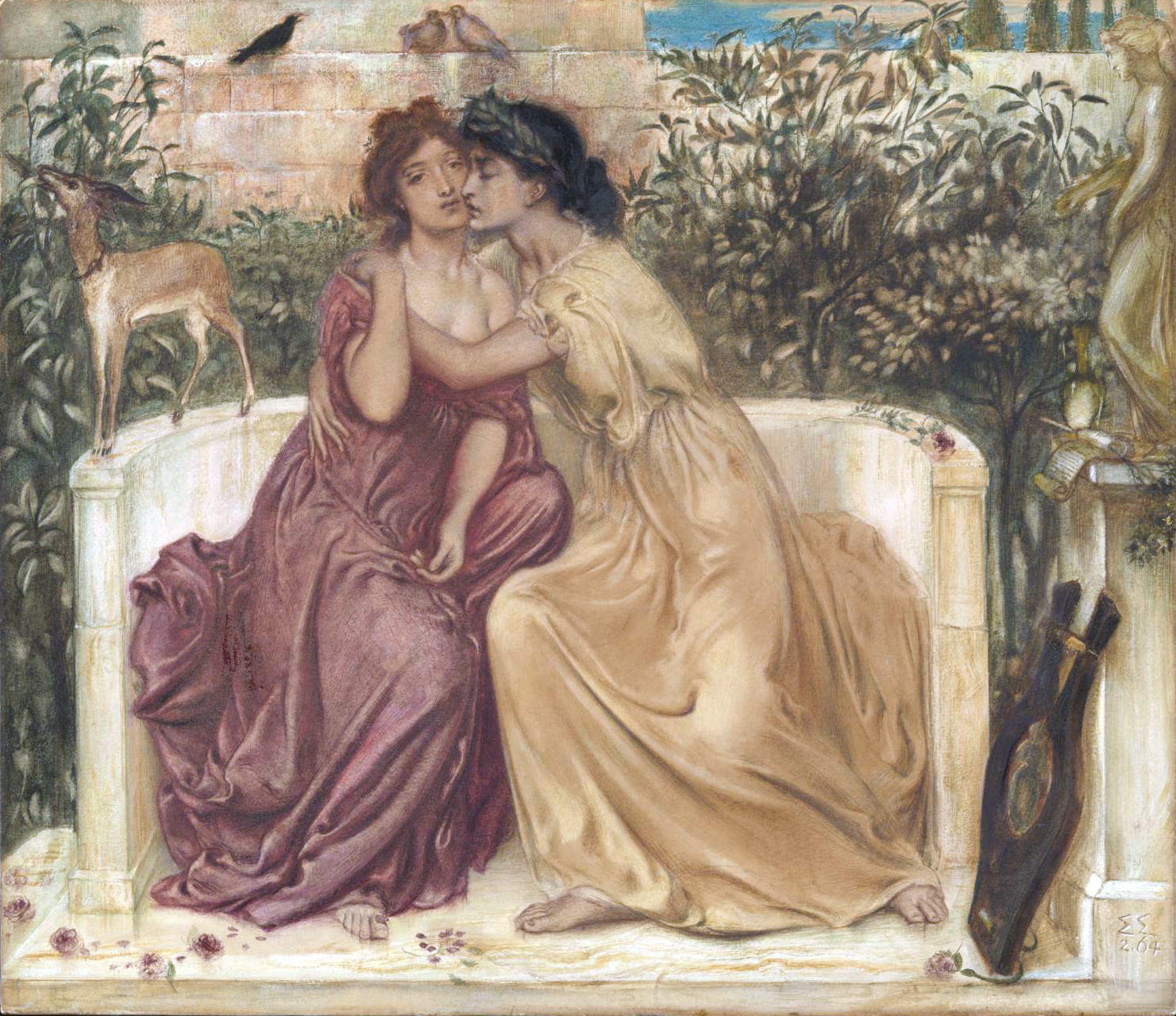
Sappho and Erinna in a Garden at Mytilene by Simeon Solomon
Women in ancient Greece and Rome with surviving works or fragments


PHILOSOPHY

Here is a list of Women philosophers with testimonia and fragments (with French translations and commentary).

Aesara of Lucania: “Only a fragment survives of Aesara of Lucania’s Book on Human Nature, but it provides a key to understanding the philosophies of Phintys, Perictione, and Theano II as well. Aesara presents a familiar and intuitive natural law theory. She says that through the activity of introspection into our own nature – specifically the nature of a human soul – we can discover not only the natural philosophic foundation for all of human law, but we can also discern the technical structure of morality, positive law, and, it may be inferred, the laws of moral psychology and of physical medicine. Aesara’s natural law theory concerns laws governing three applications of moral law: individual or private morality, laws governing the moral basis of the institution of the family, and, laws governing the moral foundations of social institutions. By analyzing the nature of the soul, Aesara says, we will understand the nature of law and of justice at the individual, familial, and social levels.” – A History of Women Philosophers: Volume I: Ancient Women Philosophers, 600 B.C.-500 A.D., by M.E. Waith

*Wikipedia on Aesara

A translation of her work

**Aspasia of Miletus: wikipedia entry

**Axiothea of Phlius: wikipedia entry

**Bistala

**Damo: daughter of Pythagoras and Theano. wikipedia entry

**Deino of Croton: A student of Pythagoras.

A translation of Diogenes Laertius’ account.

**Diotima: wikipedia entry

**Eurydice: cf. Plutarch Conj. praec. 145a and e

**Hipparchia of Maronea: wikipedia entry

A translation of Diogenes Laertius’ account

**Klea: Cf.  Plut. Mul. virt. 242 ef

**Lasthenia of Mantinea: wikipedia entry

**Leontion: an Epicurean philosopher

Melissa: “Melissa (3rd century BC)[1][2] was a Pythagorean philosopher…Nothing is known about her life. She is known only from a letter written to another woman named Cleareta (or Clearete). The letter is written in a Doric Greek dialect dated to around the 3rd century BC.[2] The letter discusses the need for a wife to be modest and virtuous, and stresses that she should obey her husband.[2] The content has led to the suggestion that it was written pseudonymously by a man.[2] On the other hand, the author of the letter does not suggest that a woman is naturally inferior or weak, or that she needs a man’s rule to be virtuous.[1]” –Wikipedia

**Myia of Samos: wikipedia article

Perictione (I and II): “Two works attributed to Perictione have survived in fragments: On the Harmony of Women and On Wisdom. Differences in language suggest that they were written by two different people. Allen and Waithe identify them as Perictione I and Perictione II. Plato’s mother was named Perictione, and Waithe argues that she should be identified as the earlier Perictione, suggesting that similarities between Plato’s Republic and On the Harmony of Women may not be the result of Perictione reading Plato, but the opposite–the son learning philosophy from his mother. On the Harmony of Women, however, is written in Ionic prose with occasional Doric forms. This mixed dialect dates the work to the late fourth or third centuries BC. The reference in On the Harmony of Women to women ruling suggests the Hellenistic monarchies of the third century BC or later. On Wisdom is written in Doric and is partly identical with a work by Archytas of the same name. This work should be dated later, to the third or second centuries BC. Both the dates of the works and their dialects mean Perictione as the mother of Plato could not have written them. We then have two Pythagorean texts, attributed to otherwise unknown women named Perictione who should be dated perhaps one hundred years apart.” –Women Writers of Ancient Greece and Rome: An Anthology, by I.M. Plant

*N.B. This account leaves out the the basic narrative from Diogenes Laertius, that Plato’s father Ariston raped his mother Perictione.

A translation of a fragment attributed to Perictione here.

Phintys: “Phintys (or Phyntis, Greek: Φίντυς; 4th or 3rd century BC) was a Pythagorean philosopher. Nothing is known about her life, nor where she came from. She wrote a work on the correct behavior of women, two extracts of which are preserved by Stobaeus.” –Wikipedia

*Note, Stobaeus (4.32.61a) calls her the daughter of Kallikrates the Pythagorean (Φιντύος τᾶς Καλλικράτεος θυγατρὸς Πυθαγορείας). Here are some of her fragments on the prudence befitting women: part 1 and part 2.

Ptolemais of Cyrene: “Ptolemais is known to us through reference to her work by Porphyry in his Commentary on the Harmonics of Ptolemy. He tells us that she came from Cyrene and gives the title of her work, The Pythagorean Principles of Music, which he quotes. She is the only known female musical theorist from antiquity. Her dates cannot be known for sure. She clearly preceded Porphyry, who was born about AD 232; Didymus, who is also quoted by Porphyry, knew Ptolemais’ work and may even have been Porphyry’s source for it. This Didymus is probably the one who lived in the time of Nero, giving us a date for Ptolemais of the first century AD or earlier…One of the problems in dealing with this text is that it is in quotation. Porphyry does not clearly distinguish between the text he quotes from Ptolemais and his own discussion of the issues raised…A second issue is the problem of the accuracy of the quotation. Porphyry says in the introduction to fragment 4 that he has altered a few things in the quotation for the sake of brevity. We should not assume that this is the only quotation to have suffered from editing. On the other hand, where he quotes the same passage twice (fragment 3 is repeated almost verbatim in fragment 4) his consistency is encouraging. Ptolemais’ extant work is a catechism, written as a series of questions and answers. She discusses different schools of thought on harmonic theory, distinguishing between the degree to which they gave importance to theory and perception. Her text prefers the approach of Aristoxenus to that of the Pythagoreans, thus she should not be thought a Pythagorean, despite the title of her work.” –Women Writers of Ancient Greece and Rome: An Anthology, by I.M. Plant

A new translation of her fragment

**Theano the Pythagorean (I have collected her words here)

“When Theano the Pythagorean philosopher was asked what eros is, she said ‘the passion of a soul with spare time.’ ”

Θεανὼ ἡ πυθαγορικὴ φιλόσοφος ἐρωτηθεῖσα τί ἐστιν ἔρως ἔφη· ” πάθος ψυχῆς σχολαζούσης.”

“While Theano was walking she showed her forearm and some youth when he saw it said “Nice skin”. She responded, “it’s not communal”.

Θεανὼ πορευομένη ἔξω εἶχε τὸν βραχίονα· νεανίσκος δέ τις ἰδὼν εἶπε· ” καλὸν τὸ δέμας·” ἡ δὲ ἀπεκρίνατο· ” ἀλλ’ οὐ κοινόν.”

**Timycha of Sparta: wikipedia entry

Continue reading “A List of Women Authors from Ancient Greece and Rome for #InternationalWomensDay”

Odysseus’s Sister and Names for In-Laws

Odysseus’ sister Ktimene is mentioned by the swineherd Eumaios but never by Odysseus. The scholia connect her to one of Odysseus’ companions. The evidence for this seems to be the fact that Ktimene was sent to Same for marriage (where Eurylochus is from) and a kinship term used for him by Odysseus. Also of interest, according to the scholion, Odysseus may have had more sisters.

Homer, Odyssey 15.364-41

Strong Ktimenê, the youngest of the children she bore.
I was raised with her, and she honored me little less.
But when we both made it to much-praised youth,
They gave her to Samê and received much in return
But she gave me a cloak, tunic and clothing
Dressing me finely and give me sandals for my feet
And sent me to the field. But she loved me more in her heart.

οὕνεκά μ’ αὐτὴ θρέψεν ἅμα Κτιμένῃ τανυπέπλῳ
θυγατέρ’ ἰφθίμῃ, τὴν ὁπλοτάτην τέκε παίδων·
τῇ ὁμοῦ ἐτρεφόμην, ὀλίγον δέ τί μ’ ἧσσον ἐτίμα.
αὐτὰρ ἐπεί ῥ’ ἥβην πολυήρατον ἱκόμεθ’ ἄμφω,
τὴν μὲν ἔπειτα Σάμηνδ’ ἔδοσαν καὶ μυρί’ ἕλοντο,
αὐτὰρ ἐμὲ χλαῖνάν τε χιτῶνά τε εἵματ’ ἐκείνη
καλὰ μάλ’ ἀμφιέσασα ποσίν θ’ ὑποδήματα δοῦσα
ἀγρόνδε προΐαλλε· φίλει δέ με κηρόθι μᾶλλον.

Schol. BW ad Od. 15.364 ex

“Ktimenê is the proper name of Odysseus’ sister, whom Eurylochus is supposed to have married.”

Κτιμένη] Κτιμένη κυρίως ἐκαλεῖτο ἡ ᾿Οδυσσέως ἀδελφὴ, ἧς
ὁ Εὐρύλοχος ὑπονοεῖται ἀνήρ. λέγει γὰρ “καὶ πηῷ περ ἐόντι μάλα
σχεδόν” (κ, 441.). B.Q.

“She bore the youngest of the children”: [this means] of the female children. For his father only had Odysseus [for a son]. There were more sisters of Odysseus.”

ὁπλοτάτην τέκε παίδων] θηλειῶν γοῦν. μόνον δ’ αὖτ’ ᾿Οδυσσέα πατὴρ τέκε (π, 119.). καὶ πλείους οὖν αἱ ᾿Οδυσσέως ἀδελφαί. Q.

Homer, Odyssey 10.438-442

“So he spoke, and I was turning over in my thoughts
As I began to draw the sharp-edged sword next to my thick thigh,
Whether I should cut off his head and drive him to the ground
Even though he really was my relative. But our companions
Were restraining me with gentle words from all sides.”

ὣς ἔφατ’, αὐτὰρ ἐγώ γε μετὰ φρεσὶ μερμήριξα,
σπασσάμενος τανύηκες ἄορ παχέος παρὰ μηροῦ,
τῷ οἱ ἀποτμήξας κεφαλὴν οὖδάσδε πελάσσαι,
καὶ πηῷ περ ἐόντι μάλα σχεδόν· ἀλλά μ’ ἑταῖροι
μειλιχίοισ’ ἐπέεσσιν ἐρήτυον ἄλλοθεν ἄλλος·

Schol. QVB ad Od 10.441 ex

Q “Instead of the genitive here, “even though he was an in-law”.

V. “Relative”

QV For he married Odysseus’ sister Ktimene.
B “even though he was my brother-in-law by my sister Ktimenê.”

καὶ πηῷ] ἀντὶ τοῦ, καὶ πηοῦ περ ἐόντος. Q. συγγενεῖ. V.
Κτιμένην γὰρ γεγαμήκει τὴν ᾿Οδυσσέως ἀδελφήν. Q.V. γαμβρῷ
μοι ὄντι ἐπὶ τῇ ἀδελφῇ Κτιμένῃ. B.

Suda

“Pêos: A relative by marriage. In-law. Also, “in-lawness” [Pêosunê], relation-by-marriage. There is also Pêôn [genitive plural], for “of relatives-by-marriage. Homer has: “relatives and friends” [Il. 3.163]

Πηός: ὁ κατ’ ἐπιγαμίαν συγγενής. καὶ Πηοσύνη, ἡ συγγαμβρία.
καὶ Πηῶν, τῶν συγγενῶν. ῞Ομηρος· πηούς τε φίλους τε.

Etymologicum Gudianum

“…There is a difference between in-law and friend. People who have no connection to you by birth are friends. In-laws are related to you through marriage.”

διαφέρει δὲ πηὸς φίλου· φίλοι μὲν λέγονται οἱ μηδὲν τῷ γένει προσήκοντες·  πηοὶ δὲ οἱ κατ’ ἐπιγαμίαν συγγενεῖς.

peos

For a beautiful narrative re-imagining of the life of Ktimene, see Mary Ebbot’s “Seeking Odysseus’ Sister”

Alexander’s Earth

“He worked, not like someone who works in order to live, but like someone who wants nothing but to work, and that is because he has no regard for himself as a human being . . .” 

–Thomas Mann, “Tonio Kröger” 

Arrian, The Anabasis of Alexander, VII.1.5-6.

“I commend the wise Indians who, people say, were passing time in the open air of a meadow when Alexander came upon them.  When they saw his face and his army, none of them did anything but stamp his feet on the ground where he stood. 

Alexander asked through interpreters what this gesture meant. They replied with this: 

‘King Alexander, each man occupies as much of the earth as he stands on. You are a man like other men, except you’re hyperactive and brazen. You range much of the earth, away from your own land, doing this and that and making demands of other people. And yet, when you die in a little while, you too will occupy only as much of the earth as suffices to bury your body.’”

Arrian

. . . ἐπαινῶ τοὺς σοφιστὰς τῶν Ἰνδῶν, ὧν λέγουσιν ἔστιν οὓς καταληφθέντας ὑπ᾽ Ἀλεξάνδρου ὑπαιθρίους ἐν λειμῶνι, ἵναπερ αὐτοῖς διατριβαὶ ἦσαν, ἄλλο μὲν οὐδὲν ποιῆσαι πρὸς τὴν ὄψιν αὐτοῦ τε καὶ τῆς στρατιᾶς, κρούειν δὲ τοῖς ποσὶ τὴν γῆν ἐφ᾽ ἧς βεβηκότες ἦσαν. ὡς δὲ ἤρετο Ἀλέξανδρος δι᾽ ἑρμηνέων τι νοοῖ αὐτοῖς τὸ ἔργον, τοὺς δὲ ὑποκρίνασθαι ὧδε: βασιλεῦ Ἀλέξανδρε, ἄνθρωπος μὲν ἕκαστος τοσόνδε τῆς γῆς κατέχει ὅσονπερ τοῦτό ἐστιν ἐφ᾽ ὅτῳ βεβήκαμεν: σὺ δὲ ἄνθρωπος ὢν παρα πλήσιος τοῖς ἄλλοις, πλήν γε δὴ ὅτι πολυπράγμων καὶ ἀτάσθαλος, ἀπὸ τῆς οἰκείας τοσαύτην γῆν ἐπεξέρχῃ πράγματα ἔχων τε καὶ παρέχων ἄλλοις. καὶ οὖν καὶ ὀλίγον ὕστερον ἀποθανὼν τοσοῦτον καθέξεις τῆς γῆς ὅσον ἐξαρκεῖ ἐντεθάφθαι τῷ σώματι.

Thomas Mann

Er arbeitete nicht wie jemand, der arbeitet, um zu leben, sondern wie einer, der nichts will als arbeiten, weil er sich als lebendiger Mensch für nichts achtet . . .

color photograph of a tombstone in front of an open graveLarry Benn has a B.A. in English Literature from Harvard College, an M.Phil in English Literature from Oxford University, and a J.D. from Yale Law School. Making amends for a working life misspent in finance, he’s now a hobbyist in ancient languages and blogs at featsofgreek.blogspot.com.

Don’t Try to Philosophize with Everyone!

Seneca, Moral Epistle 29.1-3

“You have been inquiring about and want to know what our friend Marcellinus is doing. He rarely visits me, and there’s no other reason than that he is afraid of hearing the truth, a danger he is keeping his distance from. You can’t talk to someone unless they are willing to listen.

This is why some doubt whether or not Diogenes and the rest of the Cynics–who practiced an exceptional freedom of speech and gave advice to everyone they met–ought to have acted the way they did. Why carp on the deaf or those speechless from some disease since birth?

What, you say, should I be cheap with words when they are free? I cannot know if I will help anyone I advise, but I know that I will help someone if I advise many. Advice should be given by the handful. It is impossible not to succeed sometimes if you try a lot!”

Well, Lucilius my friend, I think this is exactly what a great person shouldn’t do. This dilutes their authority and there’s no enough weight any long to help anyone because it has  been compromised. An archer shouldn’t hit bullseye only sometimes; he should miss only sometimes. Something that works mostly by chance isn’t an art; and wisdom is an art. It should be aimed only at those who will make progress and give up on those whom it regards as having no potential. But, don’t give up on them quickly, only when you have tried extreme solutions amid fading hope.”

De Marcellino nostro quaeris et vis scire, quid agat. Raro ad nos venit, non ulla alia ex causa quam quod audire verum timet, a quo periculo iam abest. Nulli enim nisi audituro dicendum est. Ideo de Diogene nec minus de aliis Cynicis, qui libertate promiscua usi sunt et obvios monuerunt, dubitari solet, an hoc facere debuerint. Quid enim, si quis surdos obiurget aut natura morbove mutos? “Quare,” inquis, “verbis parcam? Gratuita sunt. Non possum scire, an ei profuturus sim, quem admoneo; illud scio, alicui me profuturum si multos admonuero. Spargenda manus est. Non potest fieri, ut non aliquando succedat multa temptanti.”

Hoc, mi Lucili, non existimo magno viro faciendum; diluitur eius auctoritas nec habet apud eos satis ponderis, quos posset minus obsolefacta corrigere. Sagittarius non aliquando ferire debet, sed aliquando deerrare. Non est ars, quae ad effectum casu venit. Sapientia ars est; certum petat, eligat profecturos, ab is, quos desperavit, recedat, non tamen cito relinquat et in ipsa desperatione extrema remedia temptet.

color photography of a small marble statue of the the philosopher Diogenes. He is old and nude, bent slightly forward with a dog by his left side
A small Roman marble statue (54.1 cm with plinth) depicting Diogenes the Cynic, in the collection of the Met Museum

A Physician’s Notes on the Lives and Deaths of Women

Hippocrates, Epidemics 5.101

 “A woman in Abdera developed cancer on her chest, and bloody plasma leaked out through her nipple. Once the flowing stopped, she died.”

Γυναικί, ἐν Ἀβδήροισι καρκίνωμα ἐγένετο περὶ στῆθος, διὰ τῆς θηλῆς ἔρρει ἰχὼρ ὕφαιμος· ἐπιληφθείσης δὲ τῆς ῥύσιος ἔθανεν.

There is an earlier account of breast cancer in Herodotus:

Herodotus, 3.133

“A little while later following these events, some other things happened. Cyrus’ daughter and Dareios’ wife, Atossa, developed a swelling in her breast. It burst out and expanded. As long as it was rather small, she hid it and told no one because she was ashamed. But when it became worse, she summoned Democedes and showed him. He told her that he could make her  healthy again but had her swear to him that she would reward him with whatever he asked from her, but that he would request nothing which would bring shame on her.”

ἐν χρόνῳ δὲ ὀλίγῳ μετὰ ταῦτα τάδε ἄλλα συνήνεικε γενέσθαι. Ἀτόσσῃ τῇ Κύρου μὲν θυγατρὶ Δαρείου δὲ γυναικὶ ἐπὶ τοῦ μαστοῦ ἔφυ φῦμα, μετὰ δὲ ἐκραγὲν ἐνέμετο πρόσω. ὅσον μὲν δὴ χρόνον ἦν ἔλασσον, ἣ δὲ κρύπτουσα καὶ αἰσχυνομένη ἔφραζε οὐδενί: ἐπείτε δὲ ἐν κακῷ ἦν, μετεπέμψατο τὸν Δημοκήδεα καί οἱ ἐπέδεξε. ὁ δὲ φὰς ὑγιέα ποιήσειν ἐξορκοῖ μιν ἦ μέν οἱ ἀντυπουργήσειν ἐκείνην τοῦτο τὸ ἂν αὐτῆς δεηθῇ: δεήσεσθαι δὲ οὐδενὸς τῶν ὅσα ἐς αἰσχύνην ἐστὶ φέροντα.

This has been called the “earliest account of inflammatory mastitis

Hippocrates of Cos Epidemics 5.25

“In Larissa, Dyseris’ servant, when she was still young, experienced severe pain whenever she had intercourse. But she was without pain otherwise. She was never pregnant. When she was sixty, she started feeling pan at midday as if she were in severe labor pains. Before midday, she had eaten many leeks and when the pain overcame her and was the strongest of all, she rose up and felt something rough-edged near the entrance to her womb. Then, because she had already fainted, another woman inserted her hand and withdrew a stone which was as big as a spindle top and very rough. After that she was immediately healthy.”

Ἐν Λαρίσῃ ἀμφίπολος Δυσήριδος, νέη ἐοῦσα ὁκότε λαγνεύοιτο περιωδύνει ἰσχυρῶς, ἄλλως δὲ ἀνώδυνος ἦν. ἐκύησε δὲ οὐδέποτε. ἑξηκονταέτης γενομένη ὠδυνᾶτο ἀπὸ μέσου ἡμέρης, ὡς ὠδίνουσα ἰσχυρῶς· πρὸ δὲ μέσου ἡμέρης αὕτη πράσα τρώγουσα πολλά, ἐπειδὴ ὀδύνη αὐτὴν ἔλαβεν ἰσχυροτάτη τῶν πρόσθεν, ἀναστᾶσα ἐπέψαυσέ τινος τρηχέος ἐν τῷ στόματι τῆς μήτρης. ἔπειτα, ἤδη λειποψυχούσης αὐτῆς, ἑτέρη γυνὴ καθεῖσα τὴν χεῖρα ἐξεπίεσε λίθον ὅσον σπόνδυλον ἀτράκτου, τρηχύν· καὶ ὑγιὴς τότε αὐτίκα καὶ ἔπειτα ἦν.

5.50

“Nerios’ beautiful virgin daughter was twenty years old when she was struck on the forehead by a flat hand when she was playing with a young woman friend. When it happened, she became blind and out of breath; when she went home, a fever came over her right away. Her head hurt; she was flushed all over her face. By the seventh day, a bad-smelling pus flowed out of her right ear—it was red colored and there was more than a fifth of a cup of it. She seemed to feel better and was relieved. But she was stretched out again later because of a fever. She was feeling badly and was speechless. The right part of her face was contracted and she breathed with difficulty. She also had spasms of trembling. Her tongue stopped working. Her eye was affected. She died on the ninth day.”

Ἡ παρθένος ἡ καλὴ ἡ τοῦ Νερίου ἦν μὲν εἰκοσαέτης, ὑπὸ δὲ γυναίου φίλης παιζούσης πλατέῃ τῇ χειρὶ ἐπλήγη κατὰ τὸ βρέγμα. καὶ τότε μὲν ἐσκοτώθη καὶ ἄπνοος ἐγένετο, καὶ ὅτε ἐς οἶκον ἦλθεν αὐτίκα τὸ πῦρ εἶχε, καὶ ἤλγει τὴν κεφαλήν, καὶ ἔρευθος ἀμφὶ τὸ πρόσωπον ἦν. ἑβδόμῃ ἐούσῃ, ἀμφὶ τὸ οὖς τὸ δεξιὸν πύον ἐχώρησε δυσῶδες, ὑπέρυθρον, πλεῖον κυάθου, καὶ ἔδοξεν ἄμεινον ἔχειν, καὶ ἐκουφίσθη. πάλιν ἐπετείνετο τῷ πυρετῷ, καὶ κατεφέρετο, καὶ ἄναυδος ἦν, καὶ τοῦ προσώπου τὸ δεξιὸν μέρος εἵλκετο, καὶ δύσπνοος ἦν, καὶ σπασμὸς τρομώδης ἦν. καὶ γλῶσσα εἴχετο, ὀφθαλμὸς καταπλήξ· ἐνάτῃ ἔθανεν.

Image result for medieval manuscript medicine women
Wellcome Library, London, MS 49, Apocalypse

Achilles’ (Missing) Sister

Iliad, 16.173-178

“Menestheus of the dancing-breastplate led one contingent,
son of the swift-flowing river Sperkheios
whom the daughter of Peleus, beautiful Poludôrê bore
when she shared the bed with the indomitable river-god, Sperkheios
although by reputation he was the son of Boros, the son of Periêrês
who wooed her openly by offering countless gifts.”

τῆς μὲν ἰῆς στιχὸς ἦρχε Μενέσθιος αἰολοθώρηξ
υἱὸς Σπερχειοῖο διιπετέος ποταμοῖο·
ὃν τέκε Πηλῆος θυγάτηρ καλὴ Πολυδώρη
Σπερχειῷ ἀκάμαντι γυνὴ θεῷ εὐνηθεῖσα,
αὐτὰρ ἐπίκλησιν Βώρῳ Περιήρεος υἷι,
ὅς ῥ’ ἀναφανδὸν ὄπυιε πορὼν ἀπερείσια ἕδνα.

The confusion, shock and horror of this detail—which I presume the vast majority of Homer’s audiences have overlooked or forgotten as with the sad fate of Odysseus’ sister—can be felt as well in the various reactions of the Scholia where we encounter (a) denial—it was a different Peleus!; (b) sophomoric prevarication—why doesn’t Achilles talk about her, hmmm?; (c) conditional acceptance through anachronistic assumptions—she’s suppressed because it is shameful that she is a bastard; (d) and, finally, citation of hoary authorities to insist upon a ‘truth’ unambiguous in the poem.

I have translated the major scholia below. Note that we can see where the ‘fragments’ of several authors come from here (hint: they’re just talked about by the scholiasts). We can also learn a bit about the pluralistic and contradictory voices to be found in the Homeric scholia. The bastard child bit is my favorite part.


Schol A. ad Il. 16.175

“Pherecydes says that Polydora was the sister of Achilles. There is no way that this has been established in Homer. It is more credible that this is just the same name, as in other situations, since [the poet] would have added some sign of kinship with Achilles.”

ὃν τέκε Πηλῆος θυγάτηρ: ὅτι Φερεκύδης (Fr. 61-62) τὴν Πολυδώραν φησὶν ἀδελφὴν ᾿Αχιλλέως. οὐκ ἔστι δὲ καθ’ ῞Ομηρον διαβεβαιώσασθαι. πιθανώτερον οὖν ὁμωνυμίαν εἶναι, ὥσπερ καὶ ἐπ’ ἄλλων, ἐπεὶ προσέθηκεν ἂν τεκμήριον τῆς πρὸς ᾿Αχιλλέα συγγενείας.


Schol T. ad Il. 16.175

”  “Daughter of Peleus”: A different Peleus, for if he were a nephew of Achilles, this would be mentioned in Hades when they speak about his father and son or in the allegory of the Litai when he says “a great spirit compelled me there” or “my possessions and serving women” he might mention the pleasure of having a sister. The poet does not recognize that Peleus encountered some other woman. Neoteles says that Achilles’ cousin leads the first contingent and gives evidence of knowledge of war. And he gave countless gifts to marry the sister of Achilles. Should he not mentioned her in Hades? Odysseus does not mention Ktimene [his sister].

Pherecydes says that [Polydore] was born from Antigonê, the daughter of Eurytion; the Suda says her mother was Laodameia the daughter of Alkmaion; Staphulos says she was Eurudikê the daughter of Aktôr. Zenodotos says the daughter’s name was Kleodôrê; Hesiod and everyone else calls her Poludôrê.”

ex. Πηλῆος θυγάτηρ: ἑτέρου Πηλέως· εἰ γὰρ ἦν ἀδελφιδοῦς ᾿Αχιλλέως, καὶ ἐμνήσθη αὐτοῦ ἐν τῷ ῞Αιδῃ περὶ τοῦ πατρὸς καὶ τοῦ υἱοῦ ἐρωτῶν (cf. λ 494—537), καὶ ἐν ταῖς Λιταῖς, φάσκων „ἔνθα δέ μοι μάλα <πολλὸν> ἐπέσσυτο θυμός” (Ι 398), „κτῆσιν ἐμὴν δμῶάς τε” (Τ 333), ἔφασκεν ἂν καὶ τῆς ἀδελφῆς ἀπόλαυσιν. Πηλέα τε οὐκ οἶδεν ὁ ποιητὴς ἑτέρᾳ γυναικὶ συνελθόντα. Νεοτέλης δὲ ὡς ἀδελφιδοῦν᾿Αχιλλέως φησὶ τῆς πρώτης τάξεως ἡγεῖσθαι, ὡς καὶ μαρτυρεῖ ἐπιστήμην πολέμου· †ὡς ἀχιλλέως τε ἀδελφὴν γαμεῖν† ἀπερείσια δίδωσιν ἕδνα (cf. Π 178). εἰ δὲ μὴ ἐμνήσθη αὐτῆς ἐν ῞Αιδου· οὐδὲ γὰρ ᾿Οδυσσεὺς Κτιμένης (cf. ο 363 cum λ 174—9). Φερεκύδης (FGrHist 3, 61 b) δὲ ἐξ ᾿Αντιγόνης τῆς Εὐρυτίωνος, Σουίδας (FGrHist 602, 8) ἐκ Λαοδαμείας τῆς ᾿Αλκμαίωνος, Στάφυλος (FGrHist 269,5) ἐξ Εὐρυδίκης τῆς῎Ακτορος. Ζηνόδοτος (FGrHist 19,5) δὲ Κλεοδώρην φησίν, ῾Ησιόδου (fr. 213 M.—W.) καὶ τῶν ἄλλων Πολυδώρην αὐτὴν καλούντων.

Schol. BCE ad Il. 16.175

“They say that she is from another Peleus. For if he were a nephew of Achilles wouldn’t this be mentioned or wouldn’t he ask about his sister in Hades along with his father and son? At the same time, the poet does not know that Peleus encountered some other women. More recent poets say that Menestheus is his nephew and that this is the reason he leads the first contingent and shows knowledge of war and that ‘he gave countless gifts to marry the sister of Achilles’. But if he does not mention it, it is not necessarily foreign to him. For the poet is rather sensitive to certain proprieties.”

ἑτέρου, φασί, Πηλέως· εἰ γὰρ ἦν ἀδελφιδοῦς ᾿Αχιλλέως, πῶς οὐκ ἐμνήσθη αὐτοῦ ἢ τῆς ἀδελφῆς ἐν τῷ ῞Αιδῃ περὶ τοῦ πατρὸς ἐρωτῶν καὶ τοῦ υἱοῦ; ἅμα τε οὐκ οἶδεν ὁ ποιητὴς Πηλέα ἑτέρᾳ συνελθόντα γυναικί. οἱ δὲ νεώτεροι ἀδελφιδοῦν αὐτοῦ λέγουσιν· ὅθεν καὶ τῆς πρώτης τάξεως ἡγεῖται καὶ πολέμων ἐπιστήμων μαρτυρεῖται, καὶ ὡς †ἀχιλλέως ἀδελφὴν γαμῶν ἀπερείσια δίδωσιν. εἰ δὲ μὴ ἐμνήσθη αὐτῆς ἢ τούτου, οὐ ξένον· περὶ γὰρ τῶν καιριωτέρων αὐτῷ ἡ φροντίς.

Schol. b ad Il. 16.175

“Since, otherwise, if Polydora were his sister, she would be a bastard and he would not want to mention her. Or, maybe it is because she has already died.”

ἄλλως τε ἐπειδὴ νόθη ἦν ἡ Πολυδώρη αὐτοῦ ἀδελφή, τάχα οὐδὲ μνημονεύειν αὐτῆς ἐβουλήθη. ἢ ὅτι καὶ αὐτὴ ἤδη τετελευτηκυῖα ἦν.

Schol D ad Il. 16.175

“Did Peleus have a daughter Polydôrê from another? Staphulos says in the third book of his Thessalika that she was born from Eurydike the daughter of Aktôr. Pherecydes says it was the daughter of Eurytion; others says Laodameia, the daughter of Alkmaion.”

ἐκ τίνος Πηλεὺς Πολυδώρην ἔσχεν; ὡς μὲν Στάφυλός φησιν ἐν τῇ τρίτῃ Θεσσαλικῶν, ἐξ Εὐρυδίκης τῆς ῎Ακτορος θυγατρός. Φερεκύδης δὲ ἐξ ᾿Αντιγόνης τῆς Εὐρυτίωνος, ἄλλοι δὲ ἐκ Λαοδαμείας τῆς ᾿Αλκμαίωνος.

What happened to Peleus’ first wife—if they were married? According to John Tzetzes (see Fowler 2013, 444) Peleus accidentally killed his father-in-law during the Kalydonian Boar Hunt, so he had to go abroad and in Iolkos the king’s wife tried to seduce him and told Antigone that Peleus would abandon her. Antigone killed herself, leaving Peleus free to marry Thetis. (But who took care of their daughter?).

It can get more confusing: some traditions (Apollodorus, 3.163 and 168) make a Polymele the daughter of Peleus and Patroklos’ mother whereas Polydora is Peleus’ wife in between Antigone and Thetis. Whatever the case, we can do our own scholiastic justification for Achilles not talking about his sister without creating a second Peleus. She must have been a bit older than Achilles since by all accounts Peleus fathered her before (1) the Kalydonian Boar Hunt, (2) the sacking of Iolkos and (3) the Voyage of the Argo. She would likely have been raised in a separate household from Achilles and married off before he went to study with the centaur Cheiron!

(More importantly: In the poetic world of Homer, sisters just don’t matter. Brothers do. Helen does not mention missing her sisters. Hektor talks to multiple brothers, but where are his sisters? In the Odyssey, Achilles asks about his father and son because Odysseus is interested in fathers and sons. This may make it more, not less, appropriate that Achilles says nothing of his sister: Odysseus just doesn’t care about sisters. Nor, it seems, does Homer.)

Works Consulted (apart from the Greek Texts).

Timothy Gantz. Early Greek Myth. Baltimore, 1993.
Robert Fowler. Early Greek Mythography. Vol. 2:Commentary, 2013.

Image result for ancient greek achilles

Wherever You Go, You’re Still You

Seneca, Moral Epistle 28.1-2

“Do you think that this has happened to only you and you are surprised as if it is a revelation that after so long a trip through so many different places you cannot escape your sadness and the weight on you mind? You need to change your spirit, not the weather.  Sure, you can cross the wide open see and let, as our Vergil says, “the lands and the cities to fade behind you,”  but wherever you go, there your faults are.

Socrates once said to someone complaining, “Why are you shocked that travelling doesn’t help you when you take yourself everywhere? The very thing that chased you away is on top of you still.” How can the novelty of other lands delight you? How can learning new cities and regions please? This travelling produces nothing. Do you ask why your escape doesn’t help you? Well , you’re fleeing with yourself.”

Hoc tibi soli putas accidisse et admiraris quasi rem novam, quod peregrinatione tam longa et tot locorum varietatibus non discussisti tristitiam gravitatemque mentis? Animum debes mutare, non caelum. Licet vastum traieceris mare, licet, ut ait Vergilius noster, “Terraeque urbesque recedant” sequentur te, quocumque perveneris, vitia.

Hoc idem querenti cuidam Socrates ait: “Quid miraris nihil tibi peregrinationes prodesse, cum te circumferas? Premit te eadem causa, quae expulit.” Quid terrarum iuvare novitas potest? Quid cognitio urbium aut locorum? In inritum cedit ista iactatio. Quaeris quare te fuga ista non adiuvet? Tecum fugis.

meme of cartoon figure with two buttons. One is "change self" the other is "schedule vacation". The character is labelled as Lucilius, the fictional addressee of Seneca's letter

A Funerary Inscription for a Twelve-Year Old Girl

This inscription is from Attica, dating to around 350 BCE.

SEG 25:298 (SEG 23.166 Peek: Greek from the PHI Website)

“Traveler, weep for the age of this dead girl—
For she left when she was only twelve, causing her friends much grief
And leaving behind immortal pain. The rest of it
This memorial announces to everyone who passes by.

Much-wept Hades, why did you take Kleoptolemê when she
Was still a girl, at an ill-fated age? Didn’t you feel any shame?
You left for her dear mother Mnêsô everlasting grief
In exchange for mortal misfortune.

Dear Mother and sisters and Meidotelês who fathered you
As a source of pain for himself, Kleoptolemê,–
They look forward only to grief, and not your bed-chamber, now that you’ve died,
but a lament instead of a husband, a funeral instead of a marriage.”

ἡλικίαν δάκ[ρυσον, ὁδοιπόρε, τῆσδε θανούσης]·
δωδεκέτις [γὰρ ἐοῦσ’ ὤιχετο, πολλὰ φίλοις]
στερχθεῖσ’, ἀθά[νατον δὲ λιποῦσ’ ἄλγος· τὰ δὲ λοιπὰ]
πᾶσι τόδ’ ἀγγέλλει [μνῆμα παρε]ρ[χομένοις]·

ὦ πολύκλαυθ’ Ἅιδη, τ[ί Κλεοπτολ]έμη[ν ἔτι κούραν]
ἥρπασας ἡλικίας δύσ̣[μορον; οὐ] σέ[βεαι];
μητρὶ δὲ τεῖ μελέαι πένθ[ο]ς Μνη[σοῖ προλέλοι]πας
ἀθάνατον θνητῆς εἵνεκα συν[τυχία]ς

ὦ μελέα μῆτερ καὶ ὁμαίμονες ὅς τέ σ’ ἔφυσεν
Μειδοτέλης αὑτῶι πῆμα, Κλεοπτολέμη·
οἳ γόον, οὐ θάλαμον τὸν σὸν προσορῶσι θανούσης,
θρῆνόν τε ἀντ’ ἀνδρὸς καὶ τάφον ἀντὶ γάμου.

Image result for funerary inscription Greek attica
Grave Relief for Naiskos of Sime at the Getty

Perictione and the Harmonious Woman

Perictione, On a Woman’s “Harmony” [=Stob. 4.28.19 p. 688]

“A woman must recognize that harmony is full of thought and wisdom. For a mind must be thoroughly trained for virtue in order to be just, brave, thoughtful, improved by self-sufficiency, and hateful to empty opinion. From these qualities, a woman gains noble deeds for herself and her husband. Her children and home benefit too. Often there is also benefit for the state if a woman like this governs cities or peoples as we observe in kingdoms.

For the one who rules her own desires and passion becomes divine and harmonious. Lawless lusts do not pursue her and she will be able to maintain her husband, children, and whole household in friendship. Indeed, all the women who become seduced by foreign beds also become hostile to all those in their home who are free and dedicated to the family. A woman like this works up tricks against her husband and manufactures lies about him so that she alone might seem to stand apart for her good mind and her conduct of the household when she really loves laziness. Truly, this is the ruin of all the things that are common for her and her husband.

But I have said enough about these things. It is necessary to arrange the body to the measure of nature for food, clothes, bathing, anointing, hair-dos, and everything that comes from gold and stone for jewelry. For all the women who eat, drink, dress, and carry these expensive things are prepared to fall into the folly of complete wickedness in their beds and criminal behavior in other things too. It is right only to sate hunger and thirst with things which are simple and to keep off the cold with wool or some cloak of hair.

No small a vice is forsworn by staying far away from food either sold for a a lot or of great renown. And it is great foolishness to don excessively thin clothing or garments decorated with due from seashells or any other expensive color. For the body wants only not to be cold or naked for the sake of propriety, but it asks for nothing else. Human opinion longs for empty and useless things because of ignorance. Also, a woman should not wrap gold around her, or Indian stone or anything coming from another place; she will not braid her hair with excessive artifice, nor will she anoint herself with scents smelling of Arabia, nor color the face by making it whiter or making it blush or darkening her eyebrows and eyes, making her hair light with dyes nor take lots of baths. The one who pursues these strategies is looking for someone who admires feminine lack of control.

“Beauty comes from intelligence and not from those things—and it commends women who do well. Necessity should not compel nobility and wealth and coming from great city and the repute and friendship of famous and royal men. If she misses these things, she does not grieve; if she does not miss them, she does not press to seek them. For a thoughtful woman is not hindered from living apart from these things. If she allows those things which she has been allotted, her mind must never doubt at the great and wondrous things, but instead let her depart far from them. For when they fall into misfortune it harms more than it helps. Conspiracy, envy, and betrayal are proper to these things so that a woman of this sort would never be at peace. Instead one needs to revere the gods to gain the good hope of happiness and to obey her country’s laws and customs.

After these precepts, I advise a woman to honor and revere her parents. For they are equal to the gods in all ways and act on behalf of their relatives. In respect to her husband it is right that she live lawfully and rightly, keeping nothing private in her thoughts but watching and guarding their bed. Everything is common in this. She must endure everything  from her husband—if he is unlucky and if he makes any mistakes because of ignorance, or sickness or drunkenness or has relationships with other women. For this fault is at home with men, but never women, and vengeance is set for it.

“She must preserve custom and not be jealous. She needs to endure anger, and cheapness, and faultfinding, and envy, and evil speech and anything else he has his nature and will put everything in a way that will be dear to him in her prudence. For a woman who is dear to her husband and works for him well is harmonious and loves her whole household and makes those outside of it well-intentioned toward it. When she does not love the home, she is not willing to see her household, or her own children, or her servants or the possessions she has safe, but in stead she curses them and prays for every kind of ruin, as if she were an enemy, and she prays for her husband to die, as if he is hateful to her so that she is a neighbor to others and hates all those who tend to him.

“I think that a woman like this is harmonious, if she is full of intelligence and prudence. For she will not only help her husband, but also her children and relatives and slaves and the whole household in which her possessions and friends, citizens and guests, reside. Her body supports things things by not being excessive, by pursuing and heeding noble actions, by following her husband in the practice of shared opinion in their common life, by following along with those he admits to their family and friendships and by believing the same things are sweet and bitter as her husband, she is not disharmonious in any way.”

Περὶ γυναικὸς ἁρμονίας

Τὴν ἁρμονίην γυναῖκα γνώσασθαι δεῖ φρονήσιός τε καὶ σωφροσύνης πλείην· κάρτα γὰρ ψυχὴν πεπνῦσθαι δεῖ εἰς ἀρετήν, ὥστ’ ἔσται καὶ δικαίη καὶ ἀνδρηίη καὶ φρονέουσα καὶ αὐταρκείῃ καλλυνομένη καὶ κενὴν δόξην μισέουσα. ἐκ τούτων γὰρ ἔργματα καλὰ γίνεται γυναικὶ ἐς αὐτήν τε καὶ ἄνδρα· καὶ τέκεα καὶ οἶκον· πολλάκις δὲ καὶ πόλει, εἴ γε πόλιας ἢ ἔθνεα ἡ τοίη γε κρατύνοι,  ὡς ἐπὶ βασιληίης ὁρέομεν. κρατέουσα ὦν ἐπιθυμίας καὶ θυμοῦ, ὁσίη καὶ ἁρμονίη γίγνεται· ὥστε οὐδὲ ἔρωτες αὐτὴν ἄνομοι διώξουσιν, ἀλλ’ ἐς ἄνδρα τε καὶ τέκεα καὶ τὸν οἶκον ξύμπαντα φιλίην ἕξει. ὁκόσαι γὰρ ἐράστριαι τελέθουσιν ἀλλοτρίων λεχέων, αὗται δὲ πολέμιαι γίγνονται πάντων τῶν ἐν τῇ οἰκίῃ ἐλευθέρων τε καὶ οἰκετέων· καὶ συντιθῆ ψύθη καὶ δόλους ἀνδρὶ καὶ ψεύδεα κατὰ πάντων μυθίζεται πρὸς τοῦτον, ἵνα μούνη δοκέῃ διαφέρειν εὐνοίῃ καὶ τῆς οἰκίης κρατῇ ἀργίην φιλέουσα. ἐκ τούτων γὰρ φθορὴ γίγνεται συμπάντων ὁκόσα αὐτῇ τε καὶ τῷ ἀνδρὶ ξυνά ἐστι.

καὶ ταῦτα μὲν ἄχρι τῶνδε λελέχθω. σκῆνος δὲ ἄγειν χρὴ πρὸς μέτρα φύσιος τροφῆς τε πέρι καὶ ἱματίων καὶ λουτρῶν καὶ ἀλειψίων καὶ τριχῶν θέσιος καὶ τῶν ὁκόσα ἐς κόσμον ἐστὶ χρυσοῦ καὶ λίθων. ὁκόσαι γὰρ πολυτελέα πάντα ἐσθίουσι καὶ πίνουσι καὶ ἀμπέχονται καὶ φορέουσι τὰ φορέουσι γυναῖκες, ἐς ἁμαρτίην ἕτοιμαι κακίης συμπάσης ἔς τε λέχεα καὶ ἐς τὰ ἄλλα ἀδικοπρηγέες. λιμὸν ὦν καὶ δίψαν ἐξακέεσθαι δεῖ μοῦνον, κἢν ἐκ τῶν εὐτελέων ἔῃ, καὶ ῥῖγος, κἢν νάκος κἢν σισύρη.

βρωτῆρας δὲ εἶναι τῶν τηλόθεν ἢ τῶν πολλοῦ πωλεομένων ἢ τῶν ἐνδόξων κακίη οὐχὶ μικρὰ πέφαται· ἠμφιάσθαι <δ’> εἵματα ἀπεικότα λίην καὶ ποικίλα ἀπὸ θαλασσίης βάψιος τοῦ κόχλου ἢ ἄλλης χρόης πολυτελέος μωρίη πολλή. σκῆνος γὰρ ἐθέλει μὴ ῥιγέειν μηδὲ γυμνὸν εἶναι χάριν εὐπρεπείης, ἄλλου δ’ οὐδενὸς χρῄζει. δόξα δὲ ἀνθρώπων μετὰ ἀμαθίης ἐς τὰ κενεά τε καὶ περισσὰ  ἵεται. ὥστ’ οὔτε χρυσὸν ἀμφιθήσεται ἢ λίθον ᾿Ινδικὸν ἢ χώρης ἐόντα ἄλλης, οὐδὲ πλέξεται πολυτεχνίῃσι τρίχας, οὐδ’ ἀλείψεται ᾿Αραβίης ὀδμῆς ἐμπνέοντα, οὐδὲ χρίσεται πρόσωπον λευκαίνουσα ἢ ἐρυθραίνουσα τοῦτο ἢ μελαίνουσα ὀφρύας τε καὶ ὀφθαλμοὺς καὶ τὴν πολιὴν τρίχα βαφαῖσι τεχνεωμένη, οὐδὲ λούσεται θαμινά. ἡ γὰρ ταῦτα ζητέουσα θηητῆρα ζητεῖ ἀκρασίης γυναικηίης.

κάλλος γὰρ τὸ ἐκ φρονήσιος, οὐκὶ δὲ τὸ ἐκ τούτων, ἁνδάνει ταῖς γινομέναισιν εὖ. ἀναγκαῖα δὲ μὴ  ἡγεέσθω εὐγενηίην καὶ πλοῦτον καὶ μεγάλης πόλιος πάντως γενέσθαι καὶ δόξαν καὶ φιλίην ἐνδόξων καὶ βασιληίων ἀνδρῶν· ἢν μὲν γὰρ ἔῃ, οὐ λυπέει· ἢν δὲ μὴ ἔῃ, ἐπιζητέειν οὐ ποιέει· τούτων γὰρ δίχα φρονίμη  γυνὴ ζῆν οὐ κωλύεται. κἢν ἔῃ δὲ ταῦτα ἅπερ λελάχαται, τὰ μεγάλα καὶ θαυμαζόμενα μή ποτε διζέσθω ψυχή, ἀλλὰ καὶ ἄπωθεν αὐτῶν βαδιζέτω· βλάπτει γὰρ μᾶλλον ἐς ἀτυχίην ἕλκοντα ἢ ὠφελέει. τούτοισι γὰρ ἐπιβουλή τε καὶ φθόνος καὶ βασκανίη προσκέεται, ὥστε ἐν ἀταραξίῃ  οὐκ ἂν γένοιτο ἡ τοιήδε. θεοὺς δὲ σέβειν δεῖ ἐς εὐελπιστίην εὐδαιμονίης,  νόμοισί τε καὶ θεσμοῖσι πειθομένην πατρίοισι.

μετὰ δὲ τούτους μυθεύομαι [τοὺς θεοὺς] γονέας τιμᾶν καὶ σέβειν· οὗτοι γὰρ ἴσα θεοῖσι πάντα  πέλουσι καὶ πρήσσουσι τοῖς ἐγγόνοισι. πρὸς δὲ τὸν ἄνδρα τὸν ἑαυτῆς ζώειν ὧδε δεῖ νομίμως καὶ κρηγύως, μηδὲν ἐννενωμένην ἰδίῃ, ἀλλ’ εὐνὴν τηρεῦσαν καὶ φυλάσσουσαν· ἐν τούτῳ γάρ ἐστι τὰ ξύμπαντα. φέρειν δὲ χρὴ τῶ ἀνδρὸς πάντα, κἢν ἀτυχῇ, κἢν ἁμάρτῃ κατ’ ἄγνοιαν ἢ νοῦσον ἢ μέθην, ἢ ἄλλῃσι γυναιξὶ συγγένηται· ἀνδράσι μὲν γὰρ ἐπιχωρέεται ἁμαρτίη αὕτη· γυναιξὶ δὲ οὔκοτε, τιμωρίη δ’ ἐφέστηκεν.

σώσασθαι ὦν τὸν νόμον δεῖ καὶ μὴ ζηλοτυπέειν· φέρειν δὲ καὶ ὀργὴν καὶ φειδωλίην καὶ μεμψιμοιρίην καὶ ζηλοτυπίην καὶ κακηγορίην καὶ ἤν τι ἄλλο ἔχῃ ἐκ φύσιος, καὶ τούτω θήσεται πάντα ὅκως φίλον ἐστὶν αὐτέῳ σωφρονέουσα. γυνὴ γὰρ ἀνδρὶ φίλη οὖσα καὶ τἀνδρὸς πρήσσουσα κρηγύως, ἁρμονίη ὑπάρχει, καὶ οἶκον τὸν ξύμπαντα φιλέει καὶ τοὺς θύρηθεν εὐνόους τῇ οἰκίῃ ποιέει· ἐπὴν δὲ μὴ φιλέῃ, οὔτε οἶκον οὔτε παῖδας τοὺς ἑωυτῆς οὔτε θεράποντας οὔτε οὐσίην ἡντιναῶν ἐθέλει σῴαν ἐσιδέειν, φθορὴν δὲ πᾶσαν ἀρεῖται καὶ εὔχεται εἶναι, ὡς πολεμίη ἐοῦσα, καὶ τὸν ἄνδρα εὔχεται τεθνάναι ὡς ἐχθρόν, ὅπως ἄλλοισιν ὁμουρέῃ, καὶ ὁκόσοι ἁνδάνουσι τουτέῳ ἐχθαίρει.

ἁρμονίην δὲ αὐτὴν ὧδε δοκέω, εἰ πλεῖος τελέθει φρονήσιός τε καὶ σωφροσύνης. οὐ γὰρ μοῦνον ὠφελήσει τὸν ἄνδρα, ἀλλὰ καὶ παῖδας καὶ συγγενέας καὶ δούλως καὶ τὴν οἰκίην ξύμπασαν, ἐν ᾗ καὶ κτήματα καὶ φίλοι πολιῆταί τε καὶ ξένοι εἰσί· καὶ ἀπεριεργίῃ τὸ σκῆνος διάξει τουτέων, λεσχαίνουσά τε καὶ ἀκούουσα καλά, καὶ ἀκολουθέουσά τε αὐτέῳ καθ’ ὁμοδοξίην τῆς ξυνῆς βιοτῆς, καὶ οἷς ἐκεῖνος αὔξει ξυγγενέσι τε καὶ φίλοισι ξυνομαρτέουσα, καὶ ταὐτὰ ἡγεομένη γλυκέα τε καὶ πικρὰ τὠνδρί, ἢν μὴ ἀναρμόνιος εἰς τὸ πᾶν ἔῃ.

NOT for a ‘harmonious woman’. A Make-up pot from Paestum.

Buying Erudition

Seneca, Moral Epistle 27.5-8

“In our memory there was a rich guy named Calvisius Sabinus. He had the wealth and brains of a freedman. I never saw a more indecently lucky guy. His memory was so bad that he forget the name Odysseus, or Achilles or Priam, those names we know as well as our elementary school teachers. No aged concierge who can’t remember names assigns them as randomly as Sabinus would make up the names for Trojan and Achaeans.

Yet he used to wish to appear educated, so he came up with this strategy. He paid a high price for enslaved men, one who knew Homer and another who knew Hesiod, and he assigned nine individual slaves to each of the lyric poets. Don’t be surprised at how much he spent on this. If he didn’t find people, he made sure to have them made.

Once he completed this collection, he used to terrorize his dinner guest. He would keep them at his feet to ask for verses to repeat and he would often forget them in the middle of a line. Satellius Quadratus, a parasite of stupid millionaires and, what follows, a flatterer too (since this quality is a partner of the others) suggested that he should get some professors to clean up the fragments too. When Sabinus admitted that he had spent 100,000 sesterces on each enslaved person, Satellius said, “You could have bought a whole library.” But Sabinius was of the opinion that he knew whatever a member of his household did.”

Calvisius Sabinus memoria nostra fuit dives. Et patrimonium habebat libertini et ingenium; numquam vidi hominem beatum indecentius. Huic memoria tam mala erat, ut illi nomen modo Vlixis excideret, modo Achillis, modo Priami, quos tam bene2 quam paedagogos nostros novimus. Nemo vetulus nomenclator, qui nomina non reddit, sed inponit, tam perperam tribus quam ille Troianos et Achivos persalutabat. Nihilominus eruditus volebat videri. Hanc itaque conpendiariam excogitavit: magna summa emit servos, unum, qui Homerum teneret, alterum, qui Hesiodum; novem praeterea lyricis singulos adsignavit. Magno emisse illum non est quod mireris; non invenerat, faciendos locavit. Postquam haec familia illi conparata est, coepit convivas suos inquietare. Habebat ad pedes hos, a quibus subinde cum peteret versus, quos referret,  saepe in medio verbo excidebat.

Suasit illi Satellius Quadratus, stultorum divitum adrosor, et quod sequitur, adrisor, et quod duobus his adiunctum est, derisor, ut grammaticos haberet analectas. Cum dixisset Sabinus centenis milibus sibi constare singulos servos; “Minoris,” inquit, “totidem scrinia emisses.” Ille tamen in ea opinione erat, ut putaret se scire, quod quisquam in domo sua sciret.

Moral Epistle 27.1

“Listen to me as if I were talking to myself.”

Sic itaque me audi, tamquam mecum loquar.

Drawing of a man with a beard and long hair, a handband around his head

Bust-length Study of the Blind Homer, drawing, Paul Buffet (MET, 2013.1122)