Buying Erudition

Seneca, Moral Epistle 27.5-8

“In our memory there was a rich guy named Calvisius Sabinus. He had the wealth and brains of a freedman. I never saw a more indecently lucky guy. His memory was so bad that he forget the name Odysseus, or Achilles or Priam, those names we know as well as our elementary school teachers. No aged concierge who can’t remember names assigns them as randomly as Sabinus would make up the names for Trojan and Achaeans.

Yet he used to wish to appear educated, so he came up with this strategy. He paid a high price for enslaved men, one who knew Homer and another who knew Hesiod, and he assigned nine individual slaves to each of the lyric poets. Don’t be surprised at how much he spent on this. If he didn’t find people, he made sure to have them made.

Once he completed this collection, he used to terrorize his dinner guest. He would keep them at his feet to ask for verses to repeat and he would often forget them in the middle of a line. Satellius Quadratus, a parasite of stupid millionaires and, what follows, a flatterer too (since this quality is a partner of the others) suggested that he should get some professors to clean up the fragments too. When Sabinus admitted that he had spent 100,000 sesterces on each enslaved person, Satellius said, “You could have bought a whole library.” But Sabinius was of the opinion that he knew whatever a member of his household did.”

Calvisius Sabinus memoria nostra fuit dives. Et patrimonium habebat libertini et ingenium; numquam vidi hominem beatum indecentius. Huic memoria tam mala erat, ut illi nomen modo Vlixis excideret, modo Achillis, modo Priami, quos tam bene2 quam paedagogos nostros novimus. Nemo vetulus nomenclator, qui nomina non reddit, sed inponit, tam perperam tribus quam ille Troianos et Achivos persalutabat. Nihilominus eruditus volebat videri. Hanc itaque conpendiariam excogitavit: magna summa emit servos, unum, qui Homerum teneret, alterum, qui Hesiodum; novem praeterea lyricis singulos adsignavit. Magno emisse illum non est quod mireris; non invenerat, faciendos locavit. Postquam haec familia illi conparata est, coepit convivas suos inquietare. Habebat ad pedes hos, a quibus subinde cum peteret versus, quos referret,  saepe in medio verbo excidebat.

Suasit illi Satellius Quadratus, stultorum divitum adrosor, et quod sequitur, adrisor, et quod duobus his adiunctum est, derisor, ut grammaticos haberet analectas. Cum dixisset Sabinus centenis milibus sibi constare singulos servos; “Minoris,” inquit, “totidem scrinia emisses.” Ille tamen in ea opinione erat, ut putaret se scire, quod quisquam in domo sua sciret.

Moral Epistle 27.1

“Listen to me as if I were talking to myself.”

Sic itaque me audi, tamquam mecum loquar.

Drawing of a man with a beard and long hair, a handband around his head

Bust-length Study of the Blind Homer, drawing, Paul Buffet (MET, 2013.1122)

“What Kinds of Things Are Roses”: More Poems from Nossis

Yesterday I posted some fragments from Nossis. Here are some more.

Greek Anthology, 6. 265

“Reverent Hera, who often comes down
From the sky to gaze upon your fragrant Lakinian home.
Take the linen robe which Theophilos, the daughter of Kleokha
Wove for you with the help of her noble daughter Nossis.”

Ἥρα τιμήεσσα, Λακίνιον ἃ τὸ θυῶδες
πολλάκις οὐρανόθεν νεισομένα καθορῇς,
δέξαι βύσσινον εἷμα, τό τοι μετὰ παιδὸς ἀγαυᾶς
Νοσσίδος ὕφανεν Θευφιλὶς ἁ Κλεόχας.

6.138

“These weapons the Brettian men hurled down from their unlucky shoulders
As they were overcome by the hands of the fast-battling Lokrians.
They are dedicated here singing the Lokrians glory in the temple of the gods.
They don’t long at all for the hands of the cowards they abandoned.”

Ἔντεα Βρέττιοι ἄνδρες ἀπ᾿ αἰνομόρων βάλον ὤμων,
θεινόμενοι Λοκρῶν χερσὶν ὕπ᾿ ὠκυμάχων,
ὧν ἀρετὰν ὑμνεῦντα θεῶν ὑπ᾿ ἀνάκτορα κεῖνται,
οὐδὲ ποθεῦντι κακῶν πάχεας, οὓς ἔλιπον.

7.414

“Pass by me, give an honest laugh, and speak over me
A loving word. I am Rhintho from Syracuse,
A minor nightingale of the Muses. But from my tragic
Nonsense poems, I made my own ivy crown.”

Καὶ καπυρὸν γελάσας παραμείβεο, καὶ φίλον εἰπὼν
ῥῆμ᾿ ἐπ᾿ ἐμοί. Ῥίνθων εἴμ᾿ ὁ Συρακόσιος,
Μουσάων ὀλίγη τις ἀηδονίς· ἀλλὰ φλυάκων
ἐκ τραγικῶν ἴδιον κισσὸν ἐδρεψάμεθα.

Greek Anthology, 5.170

“There is nothing sweeter than love: all other blessings
Take second place. I even spit honey from my mouth.
This is what Nossis says. Whomever Kypris has not kissed,
Does not understand her flowers, what kinds of things roses are.”

Ἅδιον οὐδὲν ἔρωτος· ἃ δ᾽ ὄλβια, δεύτερα πάντα
ἐστίν· ἀπὸ στόματος δ᾽ ἔπτυσα καὶ τὸ μέλι.
τοῦτο λέγει Νοσσίς· τίνα δ᾽ ἁ Κύπρις οὐκ ἐφίλασεν,
οὐκ οἶδεν τήνας τἄνθεα, ποῖα ῥόδα.

Greek Anthology, 9.604

“This frame has the picture of Thaumareta. The painter
Caught the form and the age of the soft-glancing woman well.
Your house dog, the little puppy, would paw at you if she saw this,
Believing that she was looking down at the lady of her home.”

Θαυμαρέτας μορφὰν ὁ πίναξ ἔχει· εὖ γε τὸ γαῦρον
τεῦξε τό θ᾿ ὡραῖον τᾶς ἀγανοβλεφάρου.
σαίνοι κέν σ᾿ ἐσιδοῖσα καὶ οἰκοφύλαξ σκυλάκαινα,
δέσποιναν μελάθρων οἰομένα ποθορῆν.

The Age of Knowing Better

Seneca, Moral Epistle 26.1-3

“I was just telling you that I am in sight of old age. Well, I fear that I am already past it. Now some other word applies to these years, or at least to this body,–since old age is the title of a time of weariness, not being broken. Count me among the derelicts and those just reaching the end.

Still, I am thankful to myself with you as my witness: I don’t see any weakness to my mind, although I feel it in my body. Only my faults and those servants of my faults have grown old. My spirit is strong and takes joy in the fact that it is not all wrapped up in this body. It has laid the great part of its burden down to rest. Yet it celebrates and communes with me about old age. It says that this is its season to bloom. And I want to believe it–let me make good use of it.”

Modo dicebam tibi, in conspectu esse me senectutis; iam vereor, ne senectutem post me reliquerim. Aliud iam his annis, certe huic corpori, vocabulum convenit, quoniam quidem senectus lassae aetatis, non fractae, nomen est; inter decrepitos me numera et extrema tangentis.

Gratias tamen mihi apud te ago; non sentio in animo aetatis iniuriam, cum sentiam in corpore. Tantum vitia et vitiorum ministeria senuerunt; viget animus et gaudet non multum sibi esse cum corpore. Magnam partem oneris sui posuit. Exultat et mihi facit controversiam de senectute. Hunc ait esse florem suum. Credamus illi; bono suo utatur.

meme from dazed and confused with matthew mcconaughey saying "that's what I love about minds, the body gets older but it starts to shine."

Sappho’s Equal? Some Epigrams Assigned to the Poet Nossis

Nossis is one of the best attested woman poets from the ancient world. Don’t feel bad if you haven’t heard of her.

Greek Anthology, 6.353

“Melinna herself is here. Look how her pure face
Seems to glance gently at me.
How faithfully she looks like her mother in every way.
Whenever children equal their parents it is beautiful.”

Αὐτομέλιννα τέτυκται· ἴδ᾿ ὡς ἀγανὸν τὸ πρόσωπον
ἁμὲ ποτοπτάζειν μειλιχίως δοκέει·
ὡς ἐτύμως θυγάτηρ τᾷ ματέρι πάντα ποτῴκει.
ἦ καλὸν ὅκκα πέλῃ τέκνα γονεῦσιν ἴσα.

7.718

“Stranger, if you sail to the city of beautiful dances, Mytilene,
The city which fed Sappho, the the Graces’ flower,
Tell them that the land of Lokris bore for the Muses
A woman her equal, by the name of Nossis. Go!”

Ὦ ξεῖν᾿, εἰ τύ γε πλεῖς ποτὶ καλλίχορον Μυτιλάναν,
τὰν Σαπφὼ χαρίτων ἄνθος ἐναυσαμέναν,
εἰπεῖν, ὡς Μούσαισι φίλαν τήνᾳ τε Λοκρὶς γᾶ
τίκτεν ἴσαν ὅτι θ᾿ οἱ τοὔνομα Νοσσίς· ἴθι.

6.275

“I expect that Aphrodite will be pleased to receive
As an offering from Samutha, the band that held her hair.
For it is well made and smells sweetly of nektar,
That very nektar she uses to anoint beautiful Adonis.”

Χαίροισάν τοι ἔοικε κομᾶν ἄπο τὰν Ἀφροδίταν
ἄνθεμα κεκρύφαλον τόνδε λαβεῖν Σαμύθας·
δαιδαλέος τε γάρ ἐστι, καὶ ἁδύ τι νέκταρος ὄσδει,
τοῦ, τῷ καὶ τήνα καλὸν Ἄδωνα χρίει.

9.332

“Let’s leave for the temple and go to see Aphrodite’s
Sculpture—how it is made so finely in gold.
Polyarkhis dedicated it after she earned great
wealth from the native glory of her body.”

Ἐλθοῖσαι ποτὶ ναὸν ἰδώμεθα τᾶς Ἀφροδίτας
τὸ βρέτας, ὡς χρυσῷ διαδαλόεν τελέθει.
εἵσατό μιν Πολυαρχίς, ἐπαυρομένα μάλα πολλὰν
κτῆσιν ἀπ᾿ οἰκείου σώματος ἀγλαΐας.

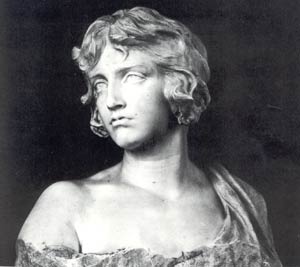
Nossis.jpg
Bust by Francesco Jerace

On the Road with Alexander

Arrian, Anabasis of Alexander VI.25.3.

“While some were left behind on the roads because of illness, others were because of  exhaustion, or because of the heat, or because they could no longer withstand thirst. And when they fell behind there was no one to guide them on, nor did anyone stop to help them. 

That is because the march was made at great speed, and he [Alexander], concerned for the army as a whole, necessarily did not care about individual men. 

Some were left behind on the roads because sleep overcame them (the marches were made mostly at night). When these men got up again, even when they were still able to follow the tracks of the army, only a few out of many were saved. The majority of them, like men tumbling into the sea, died in the sand.” 

. . . οἱ μὲν νόσῳ κατὰ τὰς ὁδοὺς ὑπελείποντο, οἱ δὲ ὑπὸ καμάτου καύματος τῷ δίψει οὐκ ἀντέχοντες, καὶ οὔτε οἱ ἄξοντες ἦσαν οὔτε οἱ μένοντες θεραπεύσοντες: σπουδῇ γὰρ πολλῇ ἐγίγνετο στόλος, καὶ ἐν τῷ ὑπὲρ τοῦ παντὸς προθύμῳ τὸ καθ᾽ ἑκάστους ξὺν ἀνάγκῃ ἠμελεῖτο: οἱ δὲ καὶ ὕπνῳ κάτοχοι κατὰ τὰς ὁδοὺς γενόμενοι οἷα δὴ νυκτὸς τὸ πολὺ τὰς πορείας ποιούμενοι, ἔπειτα ἐξαναστάντες, οἷς μὲν δύναμις ἔτι ἦν κατὰ τὰ ἴχνη τῆς στρατιᾶς ἐφομαρτήσαντες ὀλίγοι ἀπὸ πολλῶν ἐσώθησαν, οἱ πολλοὶ δὲ ὥσπερ ἐν πελάγει ἐκπεσόντες ἐν τῇ ψάμμῳ ἀπώλλυντο.

Color photograph of dozens of pairs of boots discarded in a desert
Paul Vinten. Old army boots abandoned
in the desert.

Larry Benn has a B.A. in English Literature from Harvard College, an M.Phil in English Literature from Oxford University, and a J.D. from Yale Law School. Making amends for a working life misspent in finance, he’s now a hobbyist in ancient languages and blogs at featsofgreek.blogspot.com.

WWED? (What Would Epicurus Do?)

Seneca, Moral Epistle 25.5-6

“Act in every way as if Epicurus were watching you.” It is certainly an advantage to get yourself a minder to consult, someone you consider an overseer for your thoughts. It is far better to live as if some noble man were always in your sight, but I am happy if you do what you do as if anyone else is watching–isolation commends every kind of evil to us.

When you have advanced so far that you are also embarrassed in front of yourself, then you can dismiss your witness. In the meantime, choose some other authority as a guardian for yourself, a Cato or Scipio or Laelius or any person whose presence would curb the offenses of even the worst kind of wastrel. Do this as long as it takes to make yourself the kind of person in whose presence you wouldn’t dare to sin.

When you have accomplished this and you begin to have real self-respect, I will start to let you do what Epicurus advises in another passage: “The best time to retreat within yourself is when you are compelled to be in a crowd.”

“Sic fac,” inquit, “omnia, tamquam spectet Epicurus.” Prodest sine dubio custodem sibi inposuisse et habere, quem respicias, quem interesse cogitationibus tuis iudices. Hoc quidem longe magnificentius est, sic vivere tamquam sub alicuius boni viri ac semper praesentis oculis, sed ego etiam hoc contentus sum, ut sic facias, quaecumque facies, tamquam spectet aliquis; omnia nobis mala solitudo persuadet. Cum iam profeceris tantum, ut sit tibi etiam tui reverentia, licebit dimittas paedagogum; interim aliquorum te auctoritate custodi, aut Cato ille sit aut Scipio aut Laelius aut talis, cuius1 interventu perditi quoque homines vitia supprimerent, dum te efficis eum, cum quo peccare non audeas. Cum hoc effeceris, et aliqua coeperit apud te tui esse dignatio, incipiam tibi permittere, quod idem suadet Epicurus: “Tunc praecipue in te ipse secede, cum esse cogeris in turba.”

Water cup with sticker that says "what would epicurus do" on it
I found this here: https://www.redbubble.com/i/sticker/What-Would-Epicurus-Do-Sticker-by-StregaSuprema/107168791.EJUG5#&gid=1&pid=1

Tacitus on Germanic Standards for Women and Child-Rearing

Some of the rhetoric here seems a bit familiar...

Tacitus, Germania 19-20

In that country, no one finds vice amusing; nor is seducing or being seduced celebrated as a sign of the times. Even better are those communities where only virgins marry and a promise is made with the hope and vow of a wife. And so, they have only one husband just as each has one body and one life so that there may be no additional thought of it, no lingering desire, that they may not love the man so much as they love the marriage. It is considered a sin to limit the number of children or to eliminate the later born. There good customs are stronger than good laws.

There are children there naked and dirty in every house growing into the size of limbs and body at which we wonder. Each mother nourishes each child with her own breasts; they are not passed around to maids and nurses.”

nemo enim illic vitia ridet, nec corrumpere et corrumpi saeculum vocatur. melius quidem adhuc eae civitates, in quibus tantum virgines nubunt et cum spe votoque uxoris semel transigitur. sic unum accipiunt maritum quo modo unum corpus unamque vitam, ne ulla cogitatio ultra, ne longior cupiditas, ne tamquam maritum, sed tamquam matrimonium ament. numerum liberorum finire aut quemquam ex agnatis necare flagitium habetur, plusque ibi boni mores valent quam alibi bonae leges.In omni domo nudi ac sordidi in hos artus, in haec corpora, quae miramur, excrescunt. sua quemque mater uberibus alit, nec ancillis aut nutricibus delegantur.

Image result for medieval manuscript Tacitus germania

Festivals for Women and Different Marriage Customs

Paradoxographus Vaticanus, 25-28, 45

25 “Among the Iberians there is a tribe [and] and in a certain festival they honor women with gifts, however so many demonstrate at that time that they can weave the most numerous and beautiful cloaks.”

Παρὰ τοῖς ῎Ιβηρσιν ἔθνος ἐστὶ ἐν ἑορτῇ τινι τὰς γυναῖκας τιμῶν δώροις, ὅσαι ἂν πλεῖστα καὶ κάλλιστα ἱμάτια ὑφήνασαι τότε ἐπιδείξωσιν.

26 “Among the Krobuzoi it is the custom to mourn when an infant is born and consider the one who dies lucky”

Παρὰ Κροβύζοις ἔθος ἐστὶ τὸ μὲν γεννώμενον βρέφος θρηνεῖν, τὸν δὲ θανόντα εὐδαιμονίζειν.

27 “Among the Nasamoi in Libya it is the custom that on the first day a woman is married that she has sex with everyone who is present and then take gifts from them. After that, she has sex only with the one who marries her.”

Παρὰ Νασαμῶσι τοῖς ἐν Λιβύῃ νόμος ἐστὶ τὴν γαμουμένην τῇ πρώτῃ ἡμέρᾳ συγγίνεσθαι πᾶσι τοῖς παροῦσι καὶ παρ’ αὐτῶν δῶρα λαμβάνειν καὶ μετὰ τοῦτο τῷ γήμαντι μόνῳ μίγνυσθαι.

28 “The women of the Sauromatoi do not get married unless they kill an enemy man.”

Αἱ τῶν Σαυροματῶν γυναῖκες οὐ πρότερον γαμοῦνται, ἂν μὴ ἄνδρα κτάνωσι πολέμιον.

45 “The Liburnians have shared wives and they raise their children in common for five years. When they make it to the eighth year, they compare the children for their similarity to the men and they distribute to each one who is similar. And that one keeps him as a son.”

Λιβύρνιοι κοινὰς τὰς γυναῖκας ἔχουσι καὶ τὰ τέκνα ἐν κοινῷ τρέφουσι μέχρι ἐτῶν πέντε· εἶτα τῷ ἔκτῳ συνενέγκαντες ἅπαντα τὰ παιδία τὰς ὁμοιότητας πρὸς τοὺς ἄνδρας εἰκάζουσι, καὶ ἑκάστῳ τὸν ὅμοιον ἀποδιδόασι, καὶ λοιπὸν ἐκεῖνος ὡς υἱὸν ἔχει.

51 “The Assyrians sell their daughters in the marketplace to whoever wants to settle down with them. First the most well-born and most beautiful and then the rest in order. Whenever they get to the least attractive, they announce how much someone is willing to take to live with them and they add this consolation price from the fee charged for the desirable girls to these [last ones].”

᾿Ασσύριοι τὰς παρθένους ἐν ἀγορᾷ πωλοῦσι τοῖς θέλουσι συνοικεῖν, πρῶτον μὲν τὰς εὐγενεστάτας καὶ καλλίστας, εἶτα τὰς λοιπὰς ἐφεξῆς· ὅταν δὲ ἔλθωσι ἐπὶ τὰς φαυλοτάτας, κηρύττουσι πόσον τις θέλει προσλαβὼν ταύταις συνοικεῖν, καὶ τὸ συναχθὲν ἐκ τῆς τῶν εὐπρεπῶν τιμῆς ταύταις προστίθενται [ταῖς παρθένοις].

Image result for ancient greek wedding

A Philosopher is Done with Doing

Seneca, Moral Epistles 24.25-26

“The brave and wise person shouldn’t flee life, but merely leave. And that affect that plagues many–a lust for death–should be avoided. Just as with other things, Lucilius, the mind has an unconsidered inclination to death that often afflicts the kindest and most serious people as much as the ignorant and dissolute. The former hate life; the latter are annoyed by it.

Others are moved by being done with doing and seeing, not by a hatred of life but by boredom. We slide into this as philosophy itself pushes. So we say, “How long for the same things? Do I just keep on waking, sleeping, getting hungry, getting bored, growing cold, then warm again? There’s no end to things, but everything is tied up in a circle, fleeing and following.  Night presses upon day, day presses upon night, summer gives way to autumn, winter replaces fall and in turn melts into spring.

I do nothing new; I see nothing new. Eventually you get sick of this too.” There are many who don’t think being alive is a hardship, but that it is empty. Goodbye.”

Vir fortis ac sapiens non fugere debet e vita, sed exire. Et ante omnia ille quoque vitetur affectus, qui multos occupavit, libido moriendi. Est enim, mi Lucili, ut ad alia, sic etiam ad moriendum inconsulta animi inclinatio, quae saepe generosos atque acerrimae indolis viros corripit, saepe ignavos iacentesque; illi contemnunt vitam, hi gravantur.. Everything moves in this way to return.

Quosdam subit eadem faciendi videndique satietas et vitae non odium sed fastidium, in quod prolabimur ipsa inpellente philosophia, dum dicimus: “Quousque eadem? Nempe expergiscar dormiam, esuriam fastidiam, algebo aestuabo. Nullius rei finis est, sed in orbem nexa sunt omnia, fugiunt ac secuntur. Diem nox premit, dies noctem, aestas in autumnum desinit, autumno hiemps instat, quae vere conpescitur; omnia sic transeunt ut revertantur. Nihil novi facio, nihil novi video; fit aliquando et huius rei nausia.” Multi sunt, qui non acerbum iudicent vivere, sed supervacuum. Vale.

Meme of Matthew mcconaughey from True Detective with Latin meaning: there's no end to anything, everything is tied up in a circle

The Best Omen

Homer, Iliad 12. 238-244

“Why are you telling me to listen to thin-winged birds?
I don’t care about them at all or worry whether
they go to the right towards the dawn and the sun
Or drift to the left to the dark of dusk.

Let us obey the will of great Zeus who rules
Above all mortals and all gods.
One bird sign is best: defend your country.
Why then are you afraid of war and battle?”

τύνη δ᾽ οἰωνοῖσι τανυπτερύγεσσι κελεύεις
πείθεσθαι, τῶν οὔ τι μετατρέπομ᾽ οὐδ᾽ ἀλεγίζω
εἴτ᾽ ἐπὶ δεξί᾽ ἴωσι πρὸς ἠῶ τ᾽ ἠέλιόν τε,
εἴτ᾽ ἐπ᾽ ἀριστερὰ τοί γε ποτὶ ζόφον ἠερόεντα.
ἡμεῖς δὲ μεγάλοιο Διὸς πειθώμεθα βουλῇ,
ὃς πᾶσι θνητοῖσι καὶ ἀθανάτοισιν ἀνάσσει.
εἷς οἰωνὸς ἄριστος ἀμύνεσθαι περὶ πάτρης.
τίπτε σὺ δείδοικας πόλεμον καὶ δηϊοτῆτα;

A white stork