Odysseus’ Wanderings As Allegory

Heraclitus, Homeric Problems 70

“Generally, then, if one wants to examine it carefully, you will find Odysseus’ wandering to be an allegory. Homer has positioned Odysseus as some kind of an instrument of every kind of virtue and he has used him to philosophize, since he hated the wickedness which governs human life.

The land of the Lotus-eaters, a farm of exotic temptation, represents the temptation of pleasure through which Odysseus sailed in perfect control. He snuffs out the savage anger of each of us with the advice from his words as if cauterizing it. This anger is named the Cyclops, the one who steals away [hypoklôpôn] our faculties of reason.

What of this—does it not seem that Odysseus who ‘overcame the winds’ was the first to anticipate fair sailing through his knowledge of the stars? And he was superior to Kirkê’s drugs because he discovered a cure for addictive delicacies thanks to his deep wisdom.

And his intelligence extends even to Hades so that nothing in the underworld might go unexplored. Who listens to the Sirens and learns a diverse history of all time? Charybdis is an obvious name for luxury and endless drinking. Homer has allegorized manifold shamelessness in Skylla, which is why she would logically have a belt of dogs, guardians for her rapacity, daring, and pugnacity. The cattle of the sun are about controlling your eating—for he would not even allow starvation to be a compulsion to do injustice.

These stories were told mythically for their audiences, if someone delves into the allegorized wisdom, it will be the most useful to those who apprehend it.”

Καθόλου δὲ τὴν ᾿Οδυσσέως πλάνην, εἴ τις ἀκριβῶς ἐθέλει σκοπεῖν, ἠλληγορημένην εὑρήσει·

 πάσης γὰρ ἀρετῆς καθάπερ ὄργανόν τι τὸν ᾿Οδυσσέα παραστησάμενος ἑαυτῷ διὰ τοῦτο πεφιλοσόφηκεν, ἐπειδὴ τὰς ἐκνεμομένας τὸν ἀνθρώπινον βίον ἤχθηρε κακίας.

 ῾Ηδονὴν μέν γε, τὸ Λωτοφάγον χωρίον, ξένης γεωργὸν ἀπολαύσεως, ἣν ᾿Οδυσσεὺς ἐγκρατῶς παρέπλευσεν·  τὸν δ’ ἄγριον ἑκάστου θυμὸν ὡσπερεὶ καυτηρίῳ τῇ παραινέσει τῶν λόγων ἐπήρωσε.  Κύκλωψ δὲ οὗτος ὠνόμασται, ὁ τοὺς λογισμοὺς ὑποκλωπῶν.

     Τί δ’; οὐχὶ πρῶτος εὔδιον πλοῦν δι’ ἐπιστήμης ἀστρονόμου τεκμηράμενος ἔδοξεν ἀνέμους δεδωκέναι; Φαρμάκων τε τῶν παρὰ Κίρκης γέγονε κρείττων, ὑπὸ πολλῆς σοφίας πεμμάτων ἐπεισάκτων κακῶν λύσιν εὑρόμενος.

     ῾Η δὲ φρόνησις ἕως ῞Αιδου καταβέβηκεν, ἵνα μηδὲ τῶν νέρθεν ἀδιερεύνητον ᾖ.  Τίς δὲ Σειρήνων ἀκούει, τὰς πολυπείρους ἱστορίας παντὸς αἰῶνος ἐκμαθών;  Καὶ Χάρυβδις μὲν ἡ δάπανος ἀσωτία καὶ περὶ πότους ἄπληστος  εὐλόγως ὠνόμασται·  Σκύλλαν δὲ τὴν πολύμορφον ἀναίδειαν ἠλληγόρησε, διὸ δὴ κύνας οὐκ ἀλόγως ὑπέζωσται προτομαῖς ἁρπαγῇ, τόλμῃ καὶ πλεονεξίᾳ πεφραγμέναις·

 αἱ δ’ ἡλίου βόες ἐγκράτεια γαστρός εἰσιν, εἰ μηδὲ λιμὸν ἔσχεν ἀδικίας ἀνάγκην.

     ῝Α δὴ μυθικῶς μέν ἐστιν εἰρημένα περὶ τοὺς ἀκούοντας, εἰ δ’ ἐπὶ τὴν ἠλληγορημένην σοφίαν καταβέβηκεν, ὠφελιμώτατα τοῖς μιμουμένοις γενήσεται.


Mosaic of Ulysses tied to the mast of a ship to resist the songs of the Sirens, from Dougga, in the Bardo Museum

The Haters of Odysseus

Sophocles, fr. 965

“I am called Odysseus for evil deeds correctly:
For many who have been my enemy hate me.”

ὀρθῶς δ’ ᾿Οδυσσεύς εἰμ’ ἐπώνυμος κακῶν•
πολλοὶ γὰρ ὠδύσαντο δυσμενεῖς ἐμοί

Pausanias, Description of Greece Phocis 31

“If you look again to the higher part of the painting, you will see Ajax from Salamis right next to Actaeon and near to him, Palamedes and Thersites playing a game with dice, something Palamedes invented. The other Ajax is watching as they play. This Ajax’s skin is the color of a shipwrecked sailor with salt still raised on his skin.

Polygnotos has put together all of the enemies of Odysseus into one place. Ajax, son of Oileus, started to hate Odysseus because he encouraged the Greeks to stone Ajax for the rape of Kassandra. I learned from the epic verses of the Kypria that Palamedes was drowned when he went after a catch of fish—Diomedes and Odysseus killed him.”

Εἰ δὲ ἀπίδοις πάλιν ἐς τὸ ἄνω τῆς γραφῆς, ἔστιν ἐφεξῆς τῷ Ἀκταίωνι Αἴας ὁ ἐκ Σαλαμῖνος, καὶ Παλαμήδης τε καὶ Θερσίτης κύβοις χρώμενοι παιδιᾷ, τοῦ Παλαμήδους τῷ εὑρήματι· Αἴας δὲ ὁ ἕτερος ἐς αὐτοὺς ὁρᾷ παίζοντας. τούτῳ τῷ Αἴαντι τὸ χρῶμά ἐστιν οἷον ἂν ἀνδρὶ ναυαγῷ γένοιτο ἐπανθούσης τῷ χρωτὶ 2ἔτι τῆς ἅλμης· ἐς δὲ τὸ αὐτὸ ἐπίτηδες τοῦ Ὀδυσσέως τοὺς ἐχθροὺς ἤγαγεν ὁ Πολύγνωτος· ἀφίκετο δὲ ἐς Ὀδυσσέως δυσμένειαν ὁ τοῦ Ὀιλέως Αἴας, ὅτι τοῖς Ἕλλησιν Ὀδυσσεὺς παρῄνει καταλιθῶσαι τὸν Αἴαντα ἐπὶ τῷ ἐς Κασσάνδραν τολμήματι· Παλαμήδην δὲ ἀποπνιγῆναι προελθόντα ἐπὶ ἰχθύων θήραν, Διομήδην δὲ τὸν ἀποκτείναντα εἶναι καὶ Ὀδυσσέα ἐπιλεξάμενος ἐν ἔπεσιν οἶδα τοῖς Κυπρίοις

Pindar, Nemean 7.20-21

“I think that the story of Odysseus’ suffering was exaggerated by sweet-worded Homer”

ἐγὼ δὲ πλέον’ ἔλπομαι
λόγον ᾿Οδυσσέος ἢ πάθαν
διὰ τὸν ἁδυεπῆ γενέσθ’ ῞Ομηρον·

The Quarrel of Odysseus and Ajax

Poor, Enduring Odysseus

Euripides, Cyclops 375-381

Odysseus: “Zeus! What can I say when I have witnessed awful things,
Terrible things inside this cave, the kinds of things mortals only see in myths?!”

Chorus: What’s up, Odysseus? Is it really true that the most
Unholy Kyklops has gobbled up your dear companions?

Odysseus: Oh, he saw two of them and weighed them in his hands,
Taking those who were the fattest!

Chorus: Oh, my poor dude, how have you endured these things!?”

ΟΔΥΣΣΕΥΣ

ὦ Ζεῦ, τί λέξω, δείν᾿ ἰδὼν ἄντρων ἔσω
κοὐ πιστά, μύθοις εἰκότ᾿ οὐδ᾿ ἔργοις βροτῶν;

ΧΟΡΟΣ
τί δ᾿ ἔστ᾿, Ὀδυσσεῦ; μῶν τεθοίναται σέθεν
φίλους ἑταίρους ἀνοσιώτατος Κύκλωψ;

ΟΔΥΣΣΕΥΣ
δισσούς γ᾿ ἀθρήσας κἀπιβαστάσας χεροῖν,

οἳ σαρκὸς εἶχον εὐτραφέστατον πάχος.
ΧΟΡΟΣ
πῶς, ὦ ταλαίπωρ᾿, ἦτε πάσχοντες τάδε;

Odysseus Hands the Cyclops Polyphemus a Bowl of Wine. The cyclops has three eyes abd is holding a dismembered ram. This is a wall mosaic
Villa Romana del Casale, Piazza Armerina, Italy

Appropriating Like A Stoic

CW: Slavery, self harm, suicide

Seneca, Moral Epistle 77.14-15

“Now, you think I am going to offer examples of great men? I’ll talk about a boy.  There’s a tale of that Spartan youth that people still tell. When he was captured, he was shouting, “I will not serve” in his own Doric dialect. And he kept his promise. As soon as he was ordered to carry out some basic and insulting service–he was ordered to empty a chamber pot–he bashed is head against a wall.

Freedom is so close, yet some people are still slaves? Wouldn’t you prefer your own child to die this way rather than through slow old age. Why are you upset when even a child can die bravely. Imagine you don’t want to follow this example? You will be taken there. Wrest control over what belongs to another! Won’t you take up the that boy’s spirit and say, “I am not a slave!”

Sad man, you are a slave to people, to things, to life. For life is slavery if you are not brave enough to die.”

Exempla nunc magnorum virorum me tibi iudicas relaturum? Puerorum referam. Lacon ille memoriae traditur inpubis adhuc, qui captus clamabat “non serviam” sua illa Dorica lingua, et verbis fidem inposuit; ut primum iussus est servili fungi et contumelioso ministerio, adferre enim vas obscenum iubebatur, inlisum parieti caput rupit. Tam prope libertas est; et servit aliquis? Ita non sic perire filium tuum malles quam per inertiam senem fieri? Quid ergo est, cur perturberis, si mori fortiter etiam puerile est? Puta nolle te sequi; duceris. Fac tui iuris, quod alieni est. Non sumes pueri spiritum, ut dicas “non servio”? Infelix, servis hominibus, servis rebus, servis vitae. Nam vita, si moriendi virtus abest, servitus est.

GIF from Spartacus where everyone says "i am spartacus" but the title says "i am a stoic"

Learning Like the Kids

Seneca, Moral Epistles 76.1-3

“You are threatening to become my enemy if I leave you ignorant of what I am doing every day. Look how straightforward I am with you when I tell you even this. I am listening to a philosopher and I am on my fifth day listening to his lectures at school, starting at two in the afternoon.

“A fine time of life for that!” you say. What’s wrong with it? What’s more foolish than not learning because you haven’t don so in a while? “What, then? Should we act like the groupies and the kids?” Well, things are pretty good for me if this alone besmirches my old age.

This school accepts people from every age. “Should we grow old just to follow the kids?” I will enter the theater as an old man or get taken to the games and refuse any bout fought to the finish without me, but I should be embarrassed at attending a philosopher’s talk? As long as you are ignorant, you have to learn. If we trust the old saying, as long as you live! And nothing fits this situation better: as long as you are alive you must keep learning how to live.”

Inimicitias mihi denuntias, si quicquam ex iis, quae cotidie facio, ignoraveris. Vide, quam simpliciter tecum vivam: hoc quoque tibi committam. Philosophum audio et quidem quintum iam diem habeo, ex quo in scholam eo et ab octava disputantem audio. “Bona,” inquis, “aetate.” Quidni bona? Quid autem stultius est quam, quia diu non didiceris, non discere? “Quid ergo? Idem faciam, quod trossuli et iuvenes?” Bene mecum agitur, si hoc unum senectutem meam dedecet. Omnis aetatis homines haec schola admittit. “In hoc senescamus, ut iuvenes sequamur?” In theatrum senex ibo et in circum deferar et nullum par sine me depugnabit ad philosophum ire erubescam?

Tamdiu discendum est, quamdiu nescias; si proverbio credimus, quamdiu vivas. Nec ulli hoc rei magis convenit quam huic: tamdiu discendum est, quemadmodum vivas, quamdiu vivas.

Steve Buscemi "hello fellow kids" meme with Latin "Oh Kids, as long as you are alive you need to learn how to live"

Unpolished Words and Saying What You Mean

Seneca, Moral Epistles 75.1-3

“You grumble that my letters to you are not very polished. Well, who speaks with polish unless they want to talk ostentatiously? I want my letters to have the quality of the kind of conversation we’d have while sitting next to each other or walking: easy and unlabored, since there is nothing forced or false about them.

If I could, I would prefer to show rather than tell you what I am feeling. Even if I were debating with you, I wouldn’t stomp my foot, or wave my hands around, or raise my voice–I’d abandon those tricks to the orators because I am happy to have shared my experiences with you without elaborating them or cheapening them.

I wish I could make this single thing clear to you: whatever I say, I don’t just feel it, I mean it. Men kiss their girlfriends one way and their children another, but enough emotion is clear in the parental embrace too, since it is sacred and restrained.”

Minus tibi accuratas a me epistulas mitti quereris. Quis enim accurate loquitur, nisi qui vult putide loqui? Qualis sermo meus esset, si una sederemus aut ambularemus, inlaboratus et facilis, tales esse epistulas meas volo, quae nihil habent accersitum nec fictum. Si fieri posset, quid sentiam, ostendere quam loqui mallem. Etiam si disputarem, nec supploderem pedem nec manum iactarem nec attollerem vocem, sed ista oratoribus reliquissem, contentus sensus meos ad te pertulisse, quos nec exornassem nec abiecissem. Hoc unum plane tibi adprobare vellem: omnia me illa sentire, quae dicerem, nec tantum sentire, sed amare. Aliter homines amicam, aliter liberos osculantur; tamen in hoc quoque amplexu tam sancto et moderato satis apparet adfectus.

Batman slapping robin meme. Robin is saying "your letters are sloppy" Batman says, "I say what I mean"

The Old Drink and Slink

Erasmus, Adagia 383

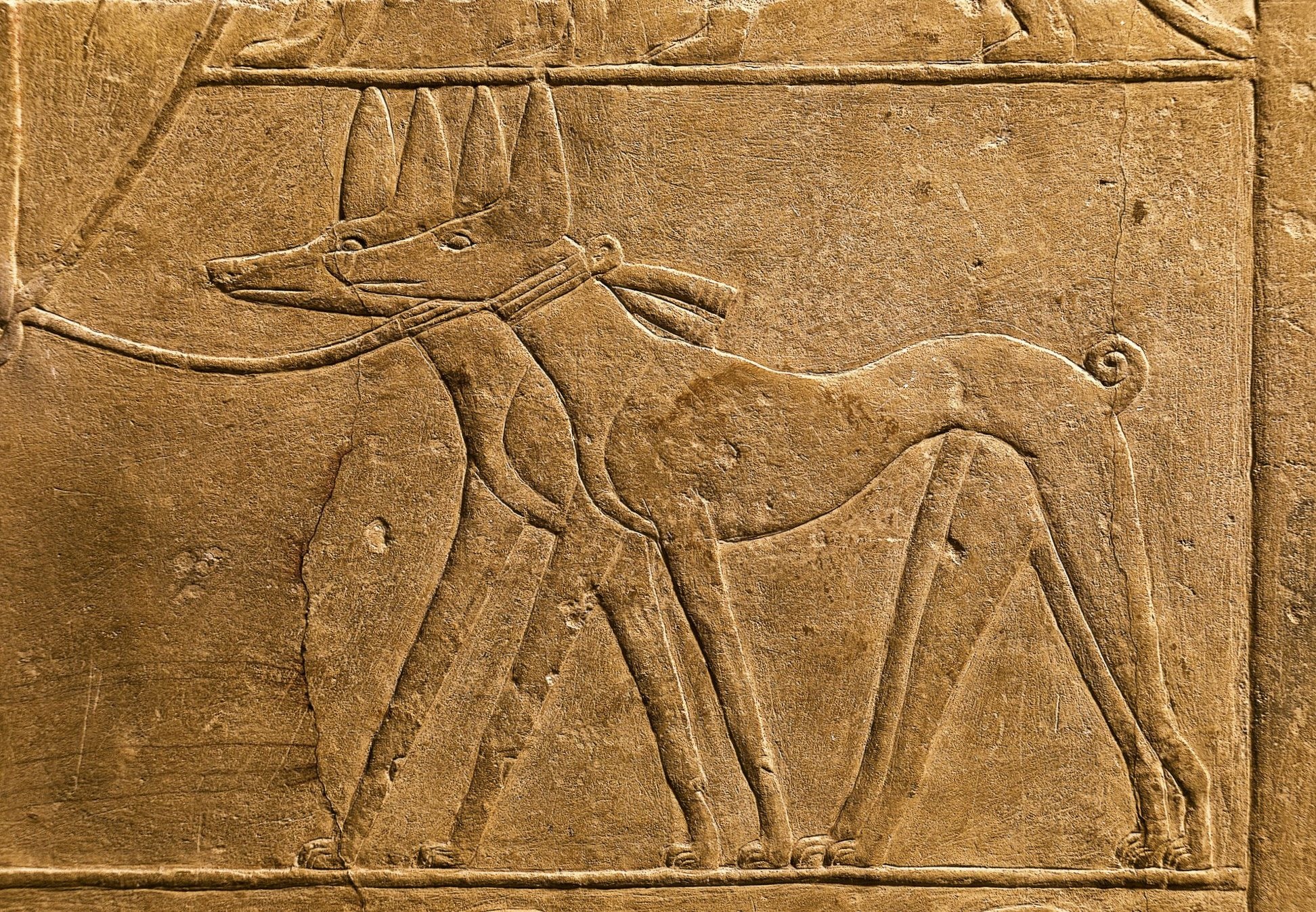
“Like a dog from the Nile…”

This adage is apparently taken from the apophthegm which Macrobius recalls in the first book of his Saturnalia, and it’s of this sort: after the flight at Mutina, as people asked what Marc Antony was doing, one of his close associates said that he was doing what a dog in Egypt does: drinking and running away. For it’s understood that the dogs in Egypt, being terrified of getting caught by crocodiles, drink and run off. One can use it this way: if we want to indicate that someone has dabbled in poetry by-the-by and in a trifling way, we say that they have at some time drunk from the poets, but in the manner of dogs drinking from the Nile.

Dogs, Mereruka 2C - G. Dagli Orti.jpg

Hoc adagium ex eo apophthegmate• natum apparet, cuius meminit Macrobius in primo Saturnalium, id est huiusmodi: Post fugam Mutinensem quaerentibus, quid ageret Anthonius, quidam familiaris eius respondit ‘quod canis in Aegipto: bibit et fugit’. Nam in illis regionibus constat canes raptu crocodilorum exterritos bibere et fugere. Eo hunc in modum vti licebit, vt si quem poeticam cursim et leuiter attigisse significemus, eum olim e poetis hausisse dicamus, sed ita vt canes e Nilo.

Happy Birthday Rome–You Were Almost Remora!

Traditional founding of Rome: April 21, 753 BCE

This passage from Ennius is preserved in Cicero’s De Divinatione 1.48

“They were struggling over whether the city would be called Roma or Remora.
And worry about which one of them would rule infected all men.
They were awaiting the word as when the consul wishes to give the signal
And all men eagerly look to the wall’s border to see
How soon he will send out the chariots from the painted mouths—
This is the way the people were watching and holding their mouths
For which man the victory would elevate to a great kingdom.
Meanwhile, the white sun receded into the darkness of night.
When suddenly a white light struck the sky with its rays.
At the same time there came flying straight down the most beautiful
Bird from the left and then the golden sun rose.
Three times, four sacred forms of birds descended from the sky
And settled themselves in propitious and noble positions.
In this, Romulus recognized that the first place was granted to him,
A kingdom and place made certain by the signs of birds.”

Certabant urbem Romam Remoramne vocarent.
Omnibus cura viris uter esset induperator.
Expectant vel uti, consul cum mittere signum
Volt, omnes avidi spectant ad carceris oras,
Quam mox emittat pictis e faucibus currus:
Sic expectabat populus atque ora tenebat
Rebus, utri magni victoria sit data regni.
Interea sol albus recessit in infera noctis.
Exin candida se radiis dedit icta foras lux.
Et simul ex alto longe pulcherruma praepes
Laeva volavit avis: simul aureus exoritur sol.
Cedunt de caelo ter quattor corpora sancta
Avium, praepetibus sese pulchrisque locis dant.
Conspicit inde sibi data Romulus esse priora,
Auspicio regni stabilita scamna locumque.

Festus, Sextus Pompeius, On the Meaning of Words, p. 266 M. (= p. 326, 35 L.)

“Alcimus says that Romulus was the son born to Tyrrhenia and Aeneas and that Alba was Aeneas’ granddaughter from her, whose son, named Rhodius, founded the city of Rome.”

Alcimus ait, Tyrrhenia Aeneae natum filium Romulum fuisse, atque eo ortam Albam Aeneae neptem, cuius filius nomine Rhodius condiderit urbem Romam.

Servius Danielis, Aeneid, 1, 373

“The Annals were gathered in this way: the pontifex had a whitened tablet for each year on which he kept written the names of the consul and the rest of the magistrates and below which he typically kept notes of anything worthy of remembering which happened at home or abroad and at sea or on land on a daily basis. Ancient authorities edited the annual records kept with this care and they named them after the pontifices who assembled them, the Annales Maximi.”

ita autem annales conficiebantur: tabulam dealbatam quotannis pontifex maximus habuit, in qua praescriptis consulum nominibus et aliorum magistratuum digna memoratu notare consueverat domi militiaeque terra marique gesta per singulos dies. cuius diligentiae annuos commentarios in octoginta libros veteres rettulerunt eosque a pontificibus maximis, a quibus fiebant, Annales Maximos appellarunt.

Aulus Gellius, Attic Nights 11 .14

The most noble and chaste response of King Romulus on the use of wine

Lucius Piso Frugi displays the simplest elegance of phrase and style in the first book of his Annales when he writes concerning the lifestyle and diet of King Romulus. These are the words who he has written: “They say that when Romulus was invited to dinner he didn’t drink much because he had business the next day. His fellow dinners remarked, “Romulus, if all men acted like you, wine would be cheaper.” And Romulus replied, “No, it would be more dear: if each man drank as he much as he desired: for I drank what I wanted.”

Sobria et pulcherrima Romuli regis responsio circa vini usum.

1 Simplicissima suavitate et rei et orationis L. Piso Frugi usus est in primo annali, cum de Romuli regis vita atque victu scriberet. 2 Ea verba, quae scripsit, haec sunt: “Eundem Romulum dicunt ad cenam vocatum ibi non multum bibisse, quia postridie negotium haberet. Ei dicunt: “Romule, si istuc omnes homines faciant, vinum vilius sit”. His respondit: “immo vero carum, si, quantum quisque volet, bibat; nam ego bibi quantum volui”.

Plutarch, Theseus and Romulus 2

“A ruler’s first duty is to save the state itself. This is saved no less in refraining from what is not fitting than from pursuing what is fitting. But the one who shirks or overreaches is no longer a king or a ruler, but in fact becomes a demagogue or a despot. He fills the subjects with hatred and contempt. While the first problem seems to come from being too lenient or a concern for humanity, the second comes from self-regard and harshness.”

δεῖ γὰρ τὸν ἄρχοντα σώζειν πρῶτον αὐτὴν τὴν ἀρχήν· σώζεται δ᾿ οὐχ ἧττον ἀπεχομένη τοῦ μὴ προσήκοντος ἢ περιεχομένη τοῦ προσήκοντος. ὁ δ᾿ ἐνδιδοὺς ἢ ἐπιτείνων οὐ μένει βασιλεὺς οὐδὲ ἄρχων, ἀλλ᾿ ἢ δημαγωγὸς ἢ δεσπότης γιγνόμενος, ἐμποιεῖ τὸ μισεῖν ἢ καταφρονεῖν τοῖς ἀρχομένοις. οὐ μὴν ἀλλ᾿ ἐκεῖνο μὲν ἐπιεικείας δοκεῖ καὶ φιλανθρωπίας εἶναι, τοῦτο δὲ φιλαυτίας ἁμάρτημα καὶ χαλεπότητος.

Feelings and What You Feel from Them

Seneca, Moral Epistle 74.33-34

“What is more demented than to be crushed by future events but not to preserve oneself for the torture only instead to seek and invite misery? You should put these things off, if you can’t escape them completely. Don’t you know that no one should be tortured by the future? Whoever has heard that they will have to undergo sufferings in fifty years is not upset unless they somehow jump over the space in between and have immersed themselves in trouble scheduled for the next generation.

It’s the same when spirits that are happily sick and casting about for reasons for sorrow grow sad over ancient and forgotten things. Both the past and the future go missing–we don’t feel either one. There is no grief, moreover, except what you get from what you feel. Goodbye”

Quid autem dementius quam angi futuris nec se tormento reservare, sed arcessere sibi miserias et movere? Quas optimum est differre, si discutere non possit. Vis scire futuro neminem debere torqueri? Quicumque audierit post quinquagesimum annum sibi patienda supplicia, non perturbatur, nisi si medium spatium transiluerit et se in illam saeculo post futuram sollicitudinem inmiserit; eodem modo fit, ut animos libenter aegros et captantes causas doloris vetera atque obliterata contristent. Et quae praeterierunt et quae futura sunt, absunt; neutra sentimus.1 Non est autem nisi ex eo, quod sentias, dolor. Vale.


spiderman meme with one saying quae praeterierunt another saying quae futura sint and the middle one saying quod sentio

Remembering To Forget

Augustine, Confessions 10.3.24

“When I utter the word “forgetfulness” and I similarly see what I am naming, how would I acknowledge it if I have not remembered it? I don’t mean the word’s sound, but the thing that it means. If I had forgotten it, I would not be able to connect the meaning with the sound. So when I remember memory, then it is present in itself for itself at that moment. But when I recall forgetfulness, both memory and forgetfulness are there at the same time. Memory in allowing me to remember and forgetfulness is the thing I recall.

But what is forgetfulness if it isn’t the negation of memory? How can it be there in order to be remembered when I cannot remember it in its true presence? But if we retain what we have remembered in our memory, then if we did not remember forgetfulness, we would never be able to acknowledge that that word means when we hear it spoken. Forgetfulness is preserved by memory.”

16. (24) Quid, cum oblivionem nomino atque itidem agnosco quod nomino, unde agnoscerem nisi meminissem? non eundem sonum nominis dico, sed rem quam significat. quam si oblitus essem, quid ille valeret sonus agnoscere utique non valerem. ergo cum memoriam memini, per se ipsam sibi praesto est ipsa memoria. cum vero memini oblivionem, et memoria praesto est et oblivio, memoria qua meminerim, oblivio quam meminerim. Sed quid est oblivio nisi privatio memoriae? quomodo ergo adest ut eam meminerim, quando cum adest meminisse non possum? at si quod meminimus memoria retinemus, oblivionem autem nisi meminissemus, nequaquam possemus audito isto nomine rem quae illo significatur agnoscere, memoria retinetur oblivio.

John Martin, “Sadak in Search of the Waters of Oblivion” 1812