Zonaras 7.11 Part I: Knowledge Purchased Unwillingly, Sold Illegally

Superbus buys the Sibylline Books; Marcus Acillius executed

“Tarquinius Superbus handed the prophecies of the Sibyl down to the Romans unwillingly. For a certain prophetess, whom the Romans called the Sibyl, came to Rome bearing either three or nine books, which she gave Tarquinius the chance to purchase as explained their importance. When he paid no heed to her, she burnt either one or three of the books. When Tarquinius again dishonored her, she burnt the same portion of the remaining books. As she was about to burn the rest, the augurs compelled Tarquinius to purchase the remaining books, which he purchased for the same price which he would have paid for the full number of books. He then entrusted them to the guardianship of two senators. Because they did not entirely understand what was written, they sent to Greece and paid two men there to study and interpret the texts. The nearby inhabitants, wishing to know what was explained in the books, bought off Marcus Acillius and transcribed some of the text. Once the crime of Marcus was detected, he was put into a leather sack and thrown into the sea. Subsequently, this was the prevalent punishment used against patricides, so that neither the land, nor the water, nor the sun would be polluted by their deaths.”

Τοὺς δὲ τῆς Σιβύλλης χρησμοὺς ῾Ρωμαίοις καὶ ἄκων προσεποιήσατο. γυνὴ γάρ τις θεόμαντις, ἣν Σίβυλλαν ὠνόμαζον, ἐς τὴν ῾Ρώμην ἐλήλυθε βιβλία τρία ἢ ἐννέα φέρουσα, καὶ ταῦτα πρίασθαι τῷ Ταρκυνίῳ ἐδίδου καὶ τὴν τιμὴν τῶν βιβλίων ὡρίσατο. ἐκείνου δὲ μὴ προσεσχηκότος αὐτῇ, τὸ ἓν ἢ τὰ τρία τῶν βιβλίων κατέκαυσεν. ὡς δ’ αὖθις ὠλιγώρει αὐτῆς ὁ Ταρκύνιος, κἀκ τῶν λοιπῶν ὁμοίως διέφθειρε. μελλούσης δὲ καὶ τὰ ἔτι λοιπὰ καταφλέξειν, ἠνάγκασαν αὐτὸν οἱ οἰωνισταὶ τὰ γοῦν σωζόμενα πρίασθαι. καὶ ὠνήσατο ταῦτα ὅσου τὰ πάντα κτήσασθαι ἔμελλε, καὶ δύο βουλευταῖς ἀνδράσι φυλάσσειν παρέδωκεν. ὡς δ’ οὐ πάνυ τῶν γεγραμμένων συνίεσαν, εἰς τὴν ῾Ελλάδα στείλαντες δύο ἄνδρας ἐκεῖθεν μισθοῦ ἤγαγον τοὺς ἀναγνωσομένους ταῦτα καὶ ἑρμηνεύσοντας. οἱ δὲ περίοικοι μαθεῖν ἐθελήσαντες ὅ,τι ποτὲ τὸ διὰ τῶν βιβλίων εἴη δηλούμενον, τὸν ἕτερον τῶν φυλασσόντων αὐτὰ Μάρκον ᾿Ακίλλιον χρήμασιν ἀναπείσαντες μετεγράψαντό τινα. γνωσθέντος δὲ τοῦ ἔργου ὁ Μάρκος βύρσαις δύο συρραφείσαις ἐμβληθεὶς κατεποντώθη, ὃ ἐξ ἐκείνου μετέπειτα κατὰ τῶν πατροκτόνων ἐπεκράτησε γίνεσθαι, ἵνα μήτε ἡ γῆ μήτε τὸ ὕδωρ μήτε ὁ ἥλιος μιανθῇ αὐτοῦ θνήσκοντος.

Shopping List for Thanksgiving: Good Music and Poetry, Fine Wine

Some advice from Athenaeus for your Thanksgiving preparations:

Athenaeus, Deipnosophists 1.4.34-1.5.5

“For this reason, someone may say Antiphanes’ famous lines of him appropriately: “You are always near the Muses and their words, whenever any work of wisdom is consulted.” Or, to use the Theban lyric poet:

He glories in
The finest type of song
The kind men play often
At a friendly table.

By inviting these men to dinner, [Athenaeus] says, he made Rome feel like their homeland. For who longs for things at home when he knows a man who throws his house open to friends? It’s like the comic Apollodorus says:

Whenever you enter the house of a friend,
You can see, Nicophon, your friend’s love
As soon as you pass through the doors.
First, the doorkeeper is happy and the dog
Wags its tale as it comes up; a servant immediately
Offers you a chair, even if no one says
Anything.

It would be right if the rest of rich people were like this. And someone might say to those who don’t act this way: “Why are you so cheap? Your shelters are full of wine—it befits you to have a fine feast for the elders!” [paraphrase of Il. 9.70-1]. Alexander the Great was this magnanimous!

banquet

… διόπερ ἐκεῖνα τῶν ᾿Αντιφάνους ἐρεῖ τις εἰς αὐτόν (II 124 K)·
ἀεὶ δὲ πρὸς Μούσαισι καὶ λόγοις πάρει,
ὅπου σοφίας ἔργον ἐξετάζεται. —

ἀγλαίζεται δὲ καὶ
μουσικᾶς ἐν ἀώτῳ·
οἷα παίζομεν φίλαν
ἄνδρες ἀμφὶ θαμὰ τράπεζαν,

κατὰ τὸν Θηβαῖον μελοποιόν (Pind. O I 14). καὶ ἐπὶ τὰς ἑστιάσεις δὲ παρακαλῶν πατρίδα, φησί, τὴν ῾Ρώμην πᾶσιν ἀποφαίνει. τίς γὰρ τὰ οἴκοι ποθεῖ τούτῳ
ξυνὼν ἀναπεπταμένην ἔχοντι τοῖς φίλοις τὴν οἰκίαν; κατὰ γὰρ τὸν κωμῳδιοποιὸν ᾿Απολλόδωρον (IV 455 M)·

εἰς οἰκίαν ὅταν τις εἰσίῃ φίλου,
ἔστιν θεωρεῖν, Νικοφῶν, τὴν τοῦ φίλου
εὔνοιαν εὐθὺς εἰσιόντα τὰς θύρας.
ὁ θυρωρὸς ἱλαρὸς πρῶτόν ἐστιν, ἡ κύων
ἔσηνε καὶ προσῆλθ’, ὑπαντήσας δέ τις
δίφρον εὐθέως ἔθηκε, κἂν μηδεὶς λέγῃ
μηδέν.
τοιούτους ἔδει καὶ τοὺς λοιποὺς εἶναι πλείους ὡς τοῖς γε μὴ τοῦτο ποιοῦσιν ἐρεῖ τις ‘τί μικρολόγος εἶ;’ —‘πλεῖαί τοι οἴνου κλισίαι· δαίνυ δαῖτα γέρουσι θάλειαν· ἔοικέ τοι (I 70. 71. H 475).’ τοιοῦτος ἦν τῇ μεγαλοψυχίᾳ ὁ μέγας ᾿Αλέξανδρος.

The Unsupported Fabric of Pride and Power

Edward Gibbon, The Decline and Fall of the Roman Empire 12.1:

Circular epistles were sent, without delay, to all the principal cities of the empire, Treves, Milan, Aquileia, Thessalo nica, Corinth, Athens, Antioch, Alexandria, and Carthage, to claim their obedience, and to inform them of the happy revolution, which had restored the Roman senate to its ancient dignity. Two of these epistles are still extant. We likewise possess two very singular fragments of the private correspondence of the senators on this occasion. They discover the most excessive joy, and the most unbounded hopes. “Cast away your indolence,” it is thus that one of the senators addresses his friend, “emerge from your retirements of Baiae and Puteoli. Give yourself to the city, to the senate. Rome flourishes, the whole republic flourishes. Thanks to the Roman army, to an army truly Roman; at length we have recovered our just authority, the end of all our desires. We hear appeals, we appoint proconsuls, we create emperors; perhaps too we may restrain them—to the wise a word is sufficient.” These lofty expectations were, however, soon disappointed; nor, indeed, was it possible that the armies and the provinces should long obey the luxurious and unwarlike nobles of Rome. On the slightest touch, the unsupported fabric of their pride and power fell to the ground. The expiring senate displayed a sudden lustre, blazed for a moment and was extinguished forever.

“A Capriccio of the Roman Forum” by Giovanni Paolo Panini

Zonaras 7.10 Part IV: The Destruction of Gabii

NOTE: Zonaras returns! Earlier this fall, a technical problem (tea on laptop) combined with a moderately soul-crushing semester interrupted my momentum on the project of translating all of Zonaras’ history of Rome, but I will be returning to regular small installments. This portion, the last segment of 7.10, plunges one in medias res, so you may consider catching up on previous installments.

Tarquinius Superbus Gives ‘Security Clearance’ to His Son:

“And then Sextus thus fell upon the people of Gabii; he killed the nobles and gave their possessions to the poor. Subsequently, when some had been killed and the rest were either deceived or entrusted all things to him, he took the city with some of his Roman guards and Gabian deserters (which he had gathered together for that purpose) and gave it to his father. Superbus entrusted the management of the city to his son, while he himself proceeded to conduct various wars against other peoples.”

Καὶ ὁ Σέξτος οὖν οὕτω τοὺς Γαουίνους μετῆλθε, καὶ τοὺς μὲν κρείττους ἀπώλλυε, τῷ πλήθει δὲ τὰ σφῶν διένειμε χρήματα. καὶ μετὰ τοῦτο τῶν μὲν διαφθαρέντων ἤδη, τῶν δὲ λοιπῶν ἠπατημένων καὶ πάντα πιστευόντων αὐτῷ, μετὰ τῶν αἰχμαλώτων ῾Ρωμαίων καὶ τῶν αὐτομόλων, οὓς πολλοὺς διὰ τοῦτο συνήθροισε, κατέσχε τὴν πόλιν καὶ τῷ πατρὶ παραδέδωκε. καὶ ὃς ἐκείνης τῷ υἱῷ παρεχώρησεν, αὐτὸς δὲ πρὸς ἄλλα ἐπολέμησεν ἔθνη.

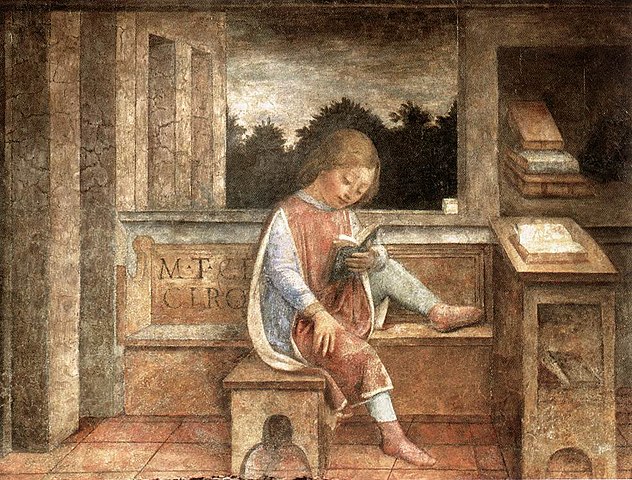
Cicero Says: You Were Born to Work Hard for Your Country

“I would not have hesitated to toss myself headlong into the gravest storms and thunder for the sake of saving my fellow citizens and to win public tranquility at the expense of my own danger. For our fatherland did not bear and educate us with the intent that it should expect no assistance from us and, serving only our personal interests, provide a safe space for our leisure and a quiet spot for our rest. Rather, it raised us so that it could take the greatest part of our spirit, our intellect, and our counsel for its benefit, and leave to our own private use only as much as was left over.”

“The Young Cicero Reading” by Vincenzo Foppa

non dubitaverim me gravissimis tempestatibus ac paene fulminibus ipsis obvium ferre conservandorum civium causa, meisque propriis periculis parere commune reliquis otium. neque enim hac nos patria lege genuit aut educavit, ut nulla quasi alimenta exspectaret a nobis, ac tantummodo nostris ipsa commodis serviens tutum perfugium otio nostro suppeditaret et tranquillum ad quietem locum, sed ut plurimas et maximas nostri animi ingenii consilii partis ipsa sibi ad utilitatem suam pigneraretur, tantumque nobis in nostrum privatum usum quantum ipsi superesse posset remitteret.

Idomeneus, Cretan Kleptocrat?

In our new political age, it seems that we might require more indirect language to speak the truth. perhaps in these examples below there is something useful for describing kleptocracy.

From the Suda

“To speak Cretan to Cretans: Since they liars and deceivers”

Κρητίζειν πρὸς Κρῆτας. ἐπειδὴ ψεῦσται καὶ ἀπατεῶνές εἰσι.


Hesychius

krêtizein: used for lying and deceiving. People use this phrase because Krêtans are liars.”

κρητίζειν· ἐπὶ τοῦ ψεύδεσθαι καὶ ἀπατᾶν. ἔταττον δὲ τὴν λέξιν ἀπὸ <τοῦ> τοὺς Κρῆτας ψεύστας εἶναι


Zenobius, 4.62.10

“To be a Cretan: People use this phrase to mean lying and cheating. And they say it developed as a proverb from Idomeneus the Cretan. For, as the story goes, when there was a disagreement developed about the greater [share] among the Greeks at troy and everyone was eager to acquire the heaped up bronze for themselves, they made Idomeneus the judge. Once he took open pledges from them that they would adhere to the judgments he would make, he put himself in from of all the rest! For this reason, it is called Kretening.”

Κρητίζειν: ἐπὶ τοῦ ψεύδεσθαι καὶ ἀπατᾶν ἔταττον τὴν λέξιν, καὶ φασὶν ἀπὸ τοῦ ᾿Ιδομενέως τοῦ Κρητὸς τὴν παροιμίαν διαδοθῆναι. Λέγεται γὰρ διαφορᾶς ποτὲγενομένης τοῖς ἐν Τροίᾳ ῞Ελλησιν περὶ τοῦ μείζονος, καὶ  πάντων προθυμουμένων τὸν συναχθέντα χαλκὸν ἐκ τῶν λαφύρων πρὸς ἑαυτοὺς ἀποφέρεσθαι, γενόμενον κριτὴν τὸν ᾿Ιδομενέα, καὶ λαβόντα παρ’ αὐτῶν τὰς ἐνδεχομένας πίστεις ἐφ’ ᾧ κατακολουθῆσαι τοῖς κριθησομένοις, ἀντὶ πάντων τῶν ἀριστέων ἑαυτὸν προτάξαι. Διὸ λέγεσθαι τὸ Κρητίζειν.


Dionysius Attic, Aelian

Krêtizein: to lie. For Idomenus, when he was placed in charge of distributing the bronze from the spoils, chose the best for himself.”

κρητίζειν· τὸ ψεύδεσθαι. ᾿Ιδομενεὺς γὰρ ἐπιτραπεὶς τὸν ἀπὸ τῶν λαφύρων χαλκὸν διανεῖμαι τὸν ἄριστον αὑτῷ ἐξείλετο.


Photius

Krêtizein: to lie. For Idomenus, when he was placed in charge of distributing the bronze from the spoils, chose the best for himself.”

Κρητίζειν: τὸ ψεύδεσθαι· ᾿Ιδομενεὺς γὰρ ἐπιτραπεὶς τὸν ἀπὸ τῶν λαφύρων χαλκὸν διανεῖμαι, τὸν ἄριστον αὐτωῖ ἐξείλετο.

idomeneus
Give me the loot.


A Woman and a Dog Giving Birth, Fables from Phaedrus

A Woman Giving Birth, Phaedrus 1.18

No one happily returns to the place of her wound
When the months had past and birth was soon
A woman was lying on the ground, releasing tremulous moans.
Her husband was trying to get her to climb onto her bed
So she could more easily deliver nature’s burden.
“No,” she said, “I don’t think an evil can be relieved
In the very place where it was first conceived.”

I.18. Mulier Parturiens

Nemo libenter recolit qui laesit locum.
Instante partu mulier actis mensibus
humi iacebat, flebilis gemitus ciens.
Vir est hortatus, corpus lecto reciperet,
onus naturae melius quo deponeret.
“Minime” inquit “illo posse confido loco
malum finiri quo conceptum est initio”.

medieval-birth-scene


A Dog Giving Birth

“The sweet whispers of an evil man are really a trap,
We should avoid them: the following verses tell us that.
When a dog in labor asked another
If she might enter her home to become a mother
She entered easily and begged again in pleas
Asking for a bit more time, to take her leave
When the pups were strong enough to flee.
When this time too had come and gone
And she asked more strongly for them to move on,
She said if you are equal to my pack all alone,
Then I will gladly now leave your home.”

I.19. Canis Parturiens

Habent insidias hominis blanditiae mali;
quas ut vitemus, versus subiecti monent.
Canis parturiens cum rogasset alteram,
ut fetum in eius tugurio deponeret,
facile impetravit. Dein reposcenti locum
preces admovit, tempus exorans breve,
dum firmiores catulos posset ducere.
Hoc quoque consumpto flagitari validius
cubile coepit. “Si mihi et turbae meae
par” inquit “esse potueris, cedam loco”.

A Scholar Kills His Horse

Philogelos 9b:

A scholar, wishing to teach his horse not to eat so much, stopped giving it food. Later, when the horse died of hunger, the scholar said, “Ah, I’ve suffered a great loss! Just when he learned not to eat, he died!”

    β: Σχολαστικὸς θέλων τὸν ἵππον αὐτοῦ διδάξαι μὴ τρώ-

γειν πολλὰ οὐ παρέβαλλεν αὐτῷ τροφάς. ἀποθανόντος δὲ τοῦ

ἵππου τῷ λιμῷ ἔλεγε· Μεγάλως ἐζημιώθην· ὅτε γὰρ καλῶς

ἔμαθε μὴ τρώγειν, τότε ἀπέθανεν.

“Don’t Look at An Old Man’s Ass”, Some Proverbs from the Suda

Another proverb from the Suda:


“An old’s man head is a raisin: this is a metonym from the fact that their whole body is weak. It is used for people who are no longer useful. There is also the proverb “an old man’s jaws are stiff”—this is used for people who eat a lot when they are old. Also, “don’t look at an old man’s ass”, which is used for people who are no longer useful in the same things. There is also: “When a man is doing badly, his friends are away”—this is applied to those who find no help in hard time from their friends.”

spanking

Ἀνδρὸς γέροντος ἀσταφὶς τὸ κρανίον: ἀπὸ μέρους. ἐπὶ τῶν μηδαμοῦ χρησιμευόντων, παρόσον ὅλον τὸ σῶμα ἀσθενές. καὶ, Ἀνδρὸς γέροντος αἱ γνάθοι βακτηρίαι, ἐπὶ τῶν πρὸς τὸ γῆρας πολλὰ ἐσθιόντων. καὶ, Ἀνδρὸς γέροντος μήποτ’ ἐς πυγὴν ὁρᾶν, ἐπὶ τῶν πρὸς ἔνια μὴ χρησίμων. καὶ, Ἀνδρὸς κακῶς πράσσοντος ἐκποδὼν φίλοι, ἐπὶ τῶν ἐν τοῖς κακοῖς μηδεμίαν εὑρισκόντων παρὰ τῶν φίλων ὠφέλειαν.

Drinking Races, Ugly Spouses and Funny Monkeys: The Wild Ways of Anacharsis the Scythian

I posted the sayings of Anacharsis the Scythian earlier today. Palaiophron was entertained. Here’s some more.

Athenaeus, Deipnosophists 10.50

“Anacharsis the Skythian, when a they had a drinking contest at Periander’s house, asked for the first prize because he was the first of the drinkers to get drunk, believing that the  goal of a drinking contest was the same as running: being first.”

᾿Ανάχαρσις δ’ ὁ Σκύθης παρὰ Περιάνδρῳ τεθέντος ἄθλου περὶ τοῦ πίνειν ᾔτησε τὸ νικητήριον πρῶτος μεθυσθεὶς τῶν συμπαρόντων, ὡς ὄντος τέλους τούτου καὶ τῆς ἐν τῷ πότῳ νίκης ὥσπερ καὶ τῆς ἐν τῷ τρέχειν.


10.64

“Anacharsis has shown that getting drunk keeps our eyes from seeing clearly—that opinions of the drunk tend to be wrong. For when a fellow drinker saw his wife at a party, he said “Anacharsis, you have married an ugly woman.” And he responded, “That’s quite clear to me. But pour me a stronger drink, child, and I’ll make her pretty!”

ὅτι δὲ τὸ μεθύειν καὶ τὰς ὄψεις ἡμῶν πλανᾷ σαφῶς ἔδειξεν ᾿Ανάχαρσις δι’ ὧνεἴρηκε, δηλώσας ὅτι ψευδεῖς δόξαι τοῖς μεθύουσι γίγνονται. συμπότης γάρ τις ἰδὼν αὐτοῦ τὴν γυναῖκα ἐν τῷ συμποσίῳ ἔφη· ‘ὦ ᾿Ανάχαρσι, γυναῖκα γεγάμηκας αἰσχράν.’ καὶ ὃς ἔφη· ‘πάνυ γε κἀμοὶ δοκεῖ· ἀλλά μοι ἔγχεον, ὦ παῖ, ποτήριον ἀκρατέστερον, ὅπως αὐτὴν καλὴν ποιήσω.’

14.2

“I also know that Anacharsis the Skythian, when comedians were performing at a dinner party, sat there without laughing. But when a monkey came in, he laughed and said “This is funny by nature; but the man has to practice.”

καίτοι γε οἶδα καὶ ᾿Ανάχαρσιν τὸν Σκύθην ἐν συμποσίῳ γελωτοποιῶν εἰσαχθέντων ἀγέλαστον διαμείναντα, πιθήκου δ’ ἐπεισαχθέντος γελάσαντα φάναι, ὡς οὗτος μὲν φύσει γελοῖός ἐστιν, ὁ δ’ ἄνθρωπος ἐπιτηδεύσει.

Anacharsis.png

Suda

s.v. Angkura: Note that Anakharsis, a Skythian philosopher, invented the anchor and the potter’s wheel. He lived around the time of Kroisos.

Ἄγκυραν: ὅτι Ἀνάχαρσις Σκύθης φιλόσοφος εὗρεν ἄγκυραν καὶ τὸν κεραμεικὸν τροχόν. ἦν δὲ ἐπὶ Κροίσου.

“s.v. Anacharsis, the son of Gnuros, and a Greek woman. A Skythian, philosopher, and brother of the king of the Skythians, Kadouias. He wrote Laws of the Scythians in epic verse, On the Simplicity of the Affairs of Human Life, adding up to around eight hundred lines. He invented the anchor and the potter’s wheel. He died while performing Greek rites because his brother was conspiring against him. According to others, he died in deep old age, nearly 100 years old.”

᾿Ανάχαρσις, Γνύρου, μητρὸς δὲ ῾Ελληνίδος, Σκύθης, φιλόσοφος, ἀδελφὸς Καδουΐα τοῦ Σκυθῶν βασιλέως. ἔγραψε Νόμιμα Σκυθικὰ δι’ ἐπῶν, Περὶ εὐτελείας τῶν εἰς τὸν ἀνθρώπινον βίον ἔπη πάντα ω′. εὗρε δὲ οὗτος ἄγκυραν καὶ τὸν κεραμεικὸν τροχόν. ἦν δὲ ἐπὶ Κροίσου. καὶ τετελεύτηκεν ῾Ελληνικὰς τελετὰς ἐπιτελῶν ἐν Σκύθαις, ἐπιβουλεύσαντος αὐτῷ τοῦ ἀδελφοῦ· κατὰ δέ τινας ἐν γήρᾳ βαθεῖ

καὶ μέχρις ἐτῶν ρ′.