Antigone, Dragging

Pausanias, Description of Greece: Boeotia 25

“Not too far off from Menoeceus’ grave is where people claim that Oedipus’ sons fought each other in single combat and died at each other’s hands. The battle is commemorated by a pillar on top of which is a stone shield. They also mark out the place where the Thebans claim Hera was tricked by Zeus into nursing Herakles as a child.

The whole area is called Antigone’s Drag. When she realized that she did not have the strength to carry her brother’s body, even though she wanted to, she came up with the back-up plan of dragging him. So she hauled him right up to Eteokles’ burning pure and pushed him on top.”

 τοῦ δὲ Μενοικέως οὐ πόρρω τάφου τοὺς παῖδας λέγουσιν Οἰδίποδος μονομαχήσαντας ἀποθανεῖν ὑπὸ ἀλλήλων· σημεῖον δὲ τῆς μάχης αὐτῶν κίων, καὶ ἀσπὶς ἔπεστιν ἐπ᾿ αὐτῷ λίθου. δείκνυται δέ τι χωρίον ἔνθα Ἥραν Θηβαῖοί φασιν Ἡρακλεῖ παιδὶ ἔτι ἐπισχεῖν γάλα κατὰ δή τινα ἀπάτην ἐκ Διός· καλεῖται δὲ ὁ σύμπας οὗτος τόπος1 Σῦρμα Ἀντιγόνης· ὡς γὰρ τὸν τοῦ Πολυνείκους ἄρασθαί οἱ προθυμουμένῃ νεκρὸν οὐδεμία ἐφαίνετο ῥᾳστώνη, δεύτερα ἐπενόησεν ἕλκειν αὐτόν, ἐς ὃ εἵλκυσέ τε καὶ ἐπέβαλεν ἐπὶ τοῦ Ἐτεοκλέους ἐξημμένην τὴν πυράν.

Juvenal, Satire 8 227-230

“Have the ancestors’ statues wear the prizes from your voice.
Put on your long Thyestes outfit in front of Domitius’ feet
Or maybe the mask of Antigone or Melanippe
And hang your lyre from a marble colossus.”

maiorum effigies habeant insignia vocis,
ante pedes Domiti longum tu pone Thyestae
syrma vel Antigones aut personam Melanippes,
et de marmoreo citharam suspende colosso.

Greek Anthology, 8.37.5-8

“You have obtained a blessed station! What about the mask
Of the girl in your hand, what play is she from?

Call her Antigone if you want or Electra–you’re not wrong either way
For both are at the peak of the playwright’s achievement.”

Ὄλβιος, ὡς ἁγνὴν ἔλαχες στάσιν· ἡ δ᾿ ἐνὶ χερσὶν
κούριμος, ἐκ ποίης ἥδε διδασκαλίης;
α. Εἴτε σοι Ἀντιγόνην εἰπεῖν φίλον, οὐκ ἂν ἁμάρτοις,
εἴτε καὶ Ἠλέκτραν· ἀμφότεραι γὰρ ἄκρον.

Sallustius, Arg, in Soph Ant ii.

‘There’s some conflict in the stories about the heroine Antigone and her sister Ismene. For example, Ion claims in his dithyrambs that both sisters were burned to death in the temple of Hera by Laodamas, Eteocles’ son. Mimnermus, however, insists that Ismene was killed by Tydeus at Athena’s direction as she had sex with Periklymenos. These are the strange stories recorded about the heroines.”

στασιάζεται δὲ τὰ περὶ τὴν ἡρωίδα ἱστορούμενα καὶ τὴν ἀδελφὴν αὐτῆς Ἰσμήνην. ὁ μὲν γὰρ Ἴων ἐν τοῖς διθυράμβοις) καταπρησθῆναί φησιν ἀμφοτέρας ἐν τῷ ἱερῷ τῆς Ἥρας ὑπὸ Λαοδάμαντος τοῦ Ἐτεοκλέους· Μίμνερμος δέ φησι τὴν μὲν Ἰσμήνην προσομιλοῦσαν Περικλυμένῳ ὑπὸ Τυδέως κατὰ Ἀθηνᾶς ἐγκέλευσιν τελευτῆσαι. ταῦτα μὲν οὖν ἐστιν τὰ ξένως περὶ τῶν ἡρωίδων ἱστορούμενα.

Nikiforos Lyrtras, “Antigone in front of the dead Polynices” 1865

Culture v Control

F.A. Hayek. Individualism: True and False, in Individualism and Economic Order.

“Quite as important . . . are the traditions and conventions which evolve in a free society and which, without being enforceable, establish flexible but normally observed rules . . . The readiness ordinarily to submit to the products of a social process which nobody has designed and the reasons for which nobody may understand is also an indispensable condition if it is to be possible to dispense with compulsion.”

Below are three voices from Antigone: dictatorial power, submission to such power, and customs-based resistance to it.

Sophocles, Antigone.
Creon to Haemon (666-672):

You must heed the man the city puts in charge–
On small matters, just things,
Things neither small nor just . . .
No evil is greater than having no one in charge.

ἀλλʼ ὃν πόλις στήσειε τοῦδε χρὴ κλύειν
καὶ σμικρὰ καὶ δίκαια καὶ τἀναντία . . .
ἀναρχίας δὲ μεῖζον οὐκ ἔστιν κακόν.

Ismene to Antigone (59-67):

We will die in the worst way
If, the power of custom notwithstanding,
We transgress a tyrant’s decree or power . . .
Since I’m acting under compulsion,
I will obey the men in charge.

ὅσῳ κάκιστ᾿ ὀλούμεθ᾿, εἰ νόμου βίᾳ
ψῆφον τυράννων ἢ κράτη παρέξιμεν . . .
ὡς βιάζομαι τάδε,
τοῖς ἐν τέλει βεβῶσι πείσομαι . . .

Antigone to Creon (453-457):

I did not believe your proclamations,
Mortal things, had strength enough
To trump customs credited to the gods.
These customs are alive,
Not today, not yesterday, but always,
And no one knows how long ago they appeared.

οὐδὲ σθένειν τοσοῦτον ᾠόμην τὰ σὰ
κηρύγμαθʼ, ὥστʼ ἄγραπτα κἀσφαλῆ θεῶν
νόμιμα δύνασθαι θνητὸν ὄνθʼ ὑπερδραμεῖν.
οὐ γάρ τι νῦν γε κἀχθές, ἀλλʼ ἀεί ποτε
ζῇ ταῦτα, κοὐδεὶς οἶδεν ἐξ ὅτου ʼφάνη.

picture of a smiling older man with a mustache, white receding hair, and glasses

Liberal squish, F.A. Hayek.

Plutarch’s Advice on Being a Good Father

Plutarch, On the Education of Children 20

“Once I add a few more things, I will complete my proposals. Beyond all other things, it is necessary that fathers, by avoiding transgressions and doing everything that is required, offer themselves as a clear example to their children, so that when looking at their father’s life as if in a mirror they may turn away from shameful deeds and words. Whoever makes the same mistakes as those for which they punish their sons become their own accusers under their sons’ names without realizing it . Men who live life poorly in every way do not possess the right to criticize their slaves, much less their sons. In addition, they could become their sons’ advisors and teachers of crime. For whenever old men behave shamefully, it is by necessity that their young are the most shameless.”

Βραχέα δὲ προσθεὶς ἔτι περιγράψω τὰς ὑποθήκας. πρὸ πάντων γὰρ δεῖ τοὺς πατέρας τῷ μηδὲν ἁμαρτάνειν ἀλλὰ πάνθ’ ἃ δεῖ πράττειν ἐναργὲς αὑτοὺς παράδειγμα τοῖς τέκνοις παρέχειν, ἵνα πρὸς τὸν τούτων βίον ὥσπερ κάτοπτρον ἀποβλέποντες ἀποτρέπωνται τῶν αἰσχρῶν ἔργων καὶ λόγων. ὡς οἵτινες τοῖς ἁμαρτάνουσιν υἱοῖς ἐπιτιμῶντες τοῖς αὐτοῖς ἁμαρτήμασι περιπίπτουσιν, ἐπὶ τῷ ἐκείνων ὀνόματι λανθάνουσιν ἑαυτῶν κατήγοροι γιγνόμενοι• τὸ δ’ ὅλον φαύλως ζῶντες οὐδὲ τοῖς δούλοις παρρησίαν ἄγουσιν ἐπιτιμᾶν, μή τί γε τοῖς υἱοῖς. χωρὶς δὲ τούτων γένοιντ’ ἂν αὐτοῖς τῶν ἀδικημάτων σύμβουλοι καὶ διδάσκαλοι. ὅπου γὰρ γέροντές εἰσιν ἀναίσχυντοι, ἐνταῦθ’ ἀνάγκη καὶ νέους ἀναιδεστάτους εἶναι.


Father

This my fifth father’s day since my father’s passing. His example(s), though fading, remain.

When We Were Girls….

Erinna, The Distaff,  fragment [Ed. pr. Vitelli-Norsa, Papiri Greci e Latini, ix. 1929, no. 1090, p. 137, Plate IV. = LCL360, 120]

“…Into the deep wave
You leapt from  white horses with maddened feet–
But I hollered, “I’ve got you, friend!” And when you
Were the tortoise you ran, bouncing, through the courtyard.

I mourn deeply, mulling over these memories, poor Baukis.
These outlines of you remain here in my heart, girl,
Still warm–those pleasures we took before are fading coals.

We held on to our dolls in our bedrooms when we were girls
Pretending to be new brides without cares. Then near dawn
Your mother, who measures out the wool for the weaving women,
Came to call you to help with salting the meat.

What fear the Mormo brought us when we were small–
It had enormous ears on its head a and walked along
On four feet as it changed its face from one woman to another.

But when you went to a man’s bed, dear Baucis, then
You forgot all the things you heard from your mother when
You were small. Aphrodite cast forgetfulness over your thoughts.
So I set aside my grief for you, even as I mourn.

My feet are not unclean enough to leave this home.
I may not yet look upon a corpse or mourn with hair unbound.
For still shame’s blush overtakes me.”

ἐς βαθ]ὺ κῦμα
λε]υκᾶν μαινομέν[οισιν ἐσάλαο π]οσσὶν ἀφ᾿ ἵ[π]πω[ν·
ἀλ]λ᾿, ἴσ[χ]ω, μέγ᾿ ἄυσα, φ[ίλα. τὺ δ᾿ ἔοισα] χελύννα
ἁλ]λομένα μεγάλας [ἔδραμες κατὰ] χορτίον αὐλᾶς.
τα]ῦτα τύ, Βαῦκι τάλαι[να, βαρὺ στονα]χεῖσα γόημ[ι·
τα]ῦτά μοι ἐν κρα[δίαι τεῦς, ὦ κό]ρα, ἴχνια κεῖται
θέρμ᾿ ἔτι· τῆν[α δ᾿ ἃ πρίν ποκ᾿ ἐπα]ύρομες ἄνθρακες ἤδη.
δαγύ[δ]ων τ᾿ ἐχ[όμεσθα νεαν]ίδες ἐν θαλάμοισι
νύμ[φαι]σιν [προσόμοιοι ἀκηδ]έες· ἅ τε πὸτ ὄρθρον
μάτηρ, ἃ ἔ[ριον νέμεν ἀμφιπόλ]οισιν ἐρίθοις,
τήνα σ᾿ ἦλθ[ε κρέας προκαλευμέ]να ἀμφ᾿ ἁλίπαστον.
αἲ μικραῖς τ[όκα νῶιν ὅσον] φόβον ἄγαγε Μο[ρμ]ώ,
τᾶ]ς ἐν μὲν κο[ρυφᾶι μεγάλ᾿ ὤ]ατα, ποσσὶ δ᾿ ἐφοίτη
τέ]τρασιν, ἐκ δ᾿ [ἑτέρας ἑτέραν] μετεβάλλετ᾿Ὀπωπάν.
ἁνίκα δ᾿ ἐς [λ]έχος [ἀνδρὸς ἔβας, τ]όκα πάντ᾿ἐλέλασο
ἅσσ᾿ ἔτι νηπιάσα[σα] τ[εᾶς παρὰ] ματρὸς ἄκουσας,
Β]αῦκι φίλα· λάθα[ν ἄρ᾿] ἐ[νὶ φρεσὶ θῆκ᾿] Ἀφροδίτα.
τῶ τυ κατακλαίοισα τὰ [κάδεα νῦν] παραλείπω·
οὐ [γ]άρ μοι πόδες [ἐντὶ λιπῆν] ἄπο δῶμα βέβαλοι,
οὐδ᾿ ἐσιδῆν φάε[σσι πρέπει νέ]κυν οὐδὲ γοᾶσαι
γυμναῖσιν χαίταισιν, [ἀτὰρ φο]ινίκεος αἰδὼς
δρύπτει μ᾿ ἀμφι . . [

According to the Suda, this is part of a larger poem.

Suda. s.v. Erinna (eta, 521)

“Erinna, Teian or Lesbian, or some say Telian. Telos is a little island near Knidos. Some believe that she was Rhodian too. She was an epic poet. She wrote The Distaff, a poem in Aeolic and Doric dialect of around 300 lines. She wrote epigrams too. She died a 19 year old virgin. Her verses were judged equal to Homer’s. She was a companion of Sappho and fromd around the same time.”

Ἤριννα, Τεί̈α ἢ Λεσβία, ὡς δὲ ἄλλοι Τηλία: Τῆλος δέ ἐστι νησίδιον ἐγγὺς Κνίδου: τινὲς δὲ καὶ Ῥοδίαν αὐτὴν ἐδόξασαν. ἦν δὲ ἐποποιός. ἔγραψεν Ἠλακάτην: ποίημά δ’ ἐστιν Αἰολικῇ καὶ Δωρίδι διαλέκτῳ, ἐπῶν τ#. ἐποίησε δὲ ἐπιγράμματα. τελευτᾷ παρθένος ἐννεακαιδεκέτις. οἱ δὲ στίχοι αὐτῆς ἐκρίθησαν ἶσοι Ὁμήρῳ. ἦν δὲ ἑταίρα Σαπφοῦς καὶ ὁμόχρονος.

Terracotta Ancient Greek dolls. Exhibited in the National Archaeological Museum in Athens, Room 56. Picture by Giovanni Dall’Orto, November 11 2009.

History, Stranger than Fiction

Pseudo-Cicero, Letter to Octavian 7

“What a pitiful overthrow of the state–so fast and twisted, so rushed! Who will have the ability to entrust these events to words in a way that they seem facts instead of fiction? Who will have the ease of mind to read them as something other than fantastic, even when they have been faithfully recorded in time?”

o miseram et in brevi tam celerem et tam variam rei publicae commutationem! quisnam tali futurus ingenio est, qui possit haec ita mandare litteris ut facta, non ficta videantur [esse]? quis erit tanta animi facilitate qui quae verissime memoria propagata fuerint non fabulae similia sit existimaturus?

A Pensioner of the Revolution, by John Neagle, The American Revolution Institute collection Note: The portrait depicts Joseph Winter, a homeless veteran living on the street in Philadelphia.

A Wise Doctor, a Final Word

Sophocles, Ajax 581-582

“Close it quickly: it is not a sign of a wise doctor
To chant spells over a wound that needs cutting.”

πύκαζε θᾶσσον. οὐ πρὸς ἰατροῦ σοφοῦ
θρηνεῖν ἐπῳδὰς πρὸς τομῶντι πήματι.

691-2

“You, do what I advise and perhaps you will quickly learn
That even if I am unlucky, I have survived.”

ὑμεῖς δ᾿ ἃ φράζω δρᾶτε, καὶ τάχ᾿ ἄν μ᾿ ἴσως
πύθοισθε, κεἰ νῦν δυστυχῶ, σεσωμένον.

864-5

“This is the final word your Ajax ever says
I’ll tell the rest below in Hades to the dead.”

τοῦθ᾿ ὑμὶν Αἴας τοὔπος ὕστατον θροεῖ,
τὰ δ᾿ ἄλλ᾿ ἐν Ἅιδου τοῖς κάτω μυθήσομαι.

Ajax (Carstens).jpg
Asmus Jakob Carstens, Sorrowful Ajax with Termessa and Eurysakes

On Counting and Thinking and Souls

Plato, Euthydemos 294b

“Are you also talented at these kinds of things, counting the stars and the sands?”

Ἦ καὶ τὰ τοιαῦτα, τοὺς ἀστέρας, ὁπόσοι εἰσί, καὶ τὴν ἄμμον;

Plato, Theaetetus 198c

“Shall we make counting nothing different from examining how great a number happens to be?”

Τὸ δὲ ἀριθμεῖν γε οὐκ ἄλλο τι θήσομεν τοῦ σκοπεῖσθαι πόσος τις ἀριθμὸς τυγχάνει ὤν.

Aristotle, On Indivisible Lines 96ba-b

“The thought of touching each point of an infinite series is not counting, if someone should imagine that the mind approaches infinity in this way. Perhaps this is impossible. For the movement of thought is not like the movement of things carried along in a continuous sequence. But, whatever the case, even if movement like this can happen, it is not counting. For counting needs discrete stopping points.”

Οὐδὲ δὴ τὸ καθ᾿ ἕκαστον ἅπτεσθαι τῶν ἀπείρων τὴν διάνοιαν οὐκ ἔστιν ἀριθμεῖν, εἰ ἄρα τις καὶ νοήσειεν οὕτως ἐφάπτεσθαι τῶν ἀπείρων τὴν διάνοιαν. ὅπερ ἴσως ἀδύνατον· οὐ γὰρ ἐν συνεχέσι
καὶ ὑποκειμένοις ἡ τῆς διανοίας κίνησις, ὥσπερ ἡ τῶν φερομένων.
Εἰ δ᾿ οὖν καὶ ἐγχωρεῖ κινεῖσθαι οὕτως, οὐκ ἔστι τοῦτο ἀριθμεῖν· τὸ γὰρ ἀριθμεῖν ἐστὶ τὸ μετὰ ἐπιστάσεως.

Plotinus, Ennead 1.1

“But how do we have God? For he travels on the true nature of thought and reality as it really is. Here is we we come to meet him, in the third lot counted from him. As Plato says, “from the undivided above” and from those things that are divided into bodies.

We need to imagine this portion of the soul as also divided into bodies and that it supplies itself in part as the size of the bodies in relations to how much each living thing is proportionally, since it gives itself to everything, even though it is one….”

Τὸν δὲ θεὸν πῶς; Ἢ ὡς ἐποχούμενον τῇ νοητῇ φύσει καὶ τῇ οὐσίᾳ τῇ ὄντως, ἡμᾶς δὲ ἐκεῖθεν τρίτους ἐκ τῆς ἀμερίστου, φησί, τῆς ἄνωθεν καὶ ἐκ τῆς περὶ τὰ σώματα μεριστῆς, ἣν δὴ δεῖ νοεῖν οὕτω μεριστὴν περὶ τὰ σώματα, ὅτι δίδωσιν ἑαυτὴν τοῖς σώματος μεγέθεσιν, ὁπόσον ἂν ζῷον ᾖ ἕκαστον, ἐπεὶ καὶ τῷ παντὶ ὅλῳ, οὖσα μία·

Actors without Masks and Dancing Monkeys

Lucian, Apology 5

“These accusers will have no shortage of other examples for you. Some will liken you to tragic actors who strut the stage like an Agamemnon Creon, or even Herakles in the flesh, only with their masks off like a Polus or Aristodemus, acting parts for cash. They get booed and chased from the stage and sometimes they even get whipped when the audience wants it.

Others will claim you’re more like the monkey that Kleopatra is known for. It was taught to dance with charm and rhythm and was as much an object of praise because it kept up this charade, parading around in a proper fashion to accompany the singers and musicians of a bridal procession.”

οὐκ ἀπορήσουσι δὲ οἱ κατηγοροῦντες καὶ ἄλλων παραδειγμάτων ἐπί σε, ἀλλ᾿ οἱ μὲν τοῖς τραγικοῖς ὑποκριταῖς εἰκάσουσιν, οἳ ἐπὶ μὲν τῆς σκηνῆς Ἀγαμέμνων ἕκαστος αὐτῶν ἢ Κρέων ἢ αὐτὸς Ἡρακλῆς εἰσιν, ἔξω δὲ Πῶλος ἢ Ἀριστόδημος ἀποθέμενοι τὰ προσωπεῖα γίγνονται ὑπόμισθοι τραγῳδοῦντες, ἐκπίπτοντες καὶ συριττόμενοι, ἐνίοτε δὲ καὶ μαστιγούμενοί τινες αὐτῶν, ὡς ἂν τῷ θεάτρῳ δοκῇ. ἄλλοι δὲ τὸ τοῦ πιθήκου πεπονθέναι σε φήσουσιν ὃν Κλεοπάτρᾳ τῇ πάνυ φασὶ γενέσθαι· ἐκεῖνον γὰρ διδαχθέντα τέως μὲν ὀρχεῖσθαι πάνυ κοσμίως καὶ ἐμμελῶς καὶ ἐπὶ πολὺ θαυμάζεσθαι μένοντα ἐν τῷ σχήματι καὶ τὸ πρέπον φυλάττοντα καὶ τοῖς ᾄδουσι καὶ αὐλοῦσι συγκινούμενον ὑμέναιον…

Dancing monkey at the Daman i Koh park, Margalla Hills, near Islamabad, Pakistan

The Great Contest and a Reason For Weddings

Antiphon, Stob. 4.22.66

“Marriage is a great contest for a person”

μέγας γὰρ ἀγὼν γάμος ἀνθρώπῳ

Epictetus, Discourses According to Arrian 1.11: On Family Affection

“When someone came to him, asking him about some other matters, Epictetus asked if had had children and a spouse. When he learned from him that he did, Epictetus asked, “How is marriage going for you?” the man answered, “Terribly.” And Epictetus replied, “In what way? For people don’t marry and have children to be miserable, but to be happy instead!”

Ἀφικομένου δέ τινος πρὸς αὐτὸν τῶν ἐν τέλει πυθόμενος παρ᾿ αὐτοῦ τὰ ἐπὶ μέρους ἠρώτησεν, εἰ καὶ τέκνα εἴη αὐτῷ καὶ γυνή. τοῦ δ᾿ ὁμολογήσαντος προσεπύθετο· Πῶς τι οὖν χρῇ τῷ πράγματι;—Ἀθλίως, ἔφη.—Καὶ ὅς· Τίνα τρόπον; οὐ γὰρ δὴ τούτου γ᾿ ἕνεκα γαμοῦσιν ἄνθρωποι καὶ παιδοποιοῦνται, ὅπως ἄθλιοι ὦσιν, ἀλλὰ μᾶλλον ὅπως εὐδαίμονες.—

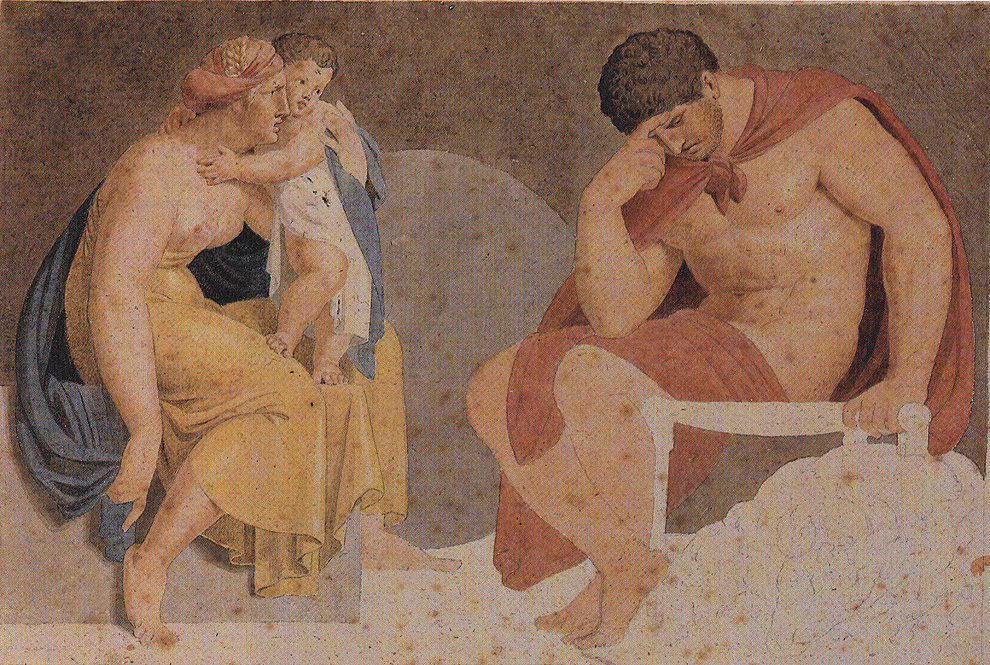
Crono e Rea assistita da Iride, affresco, quarto stile, c. 65 d. C., da modello di età classica. Da Pompei, Casa del Poeta tragico. Napoli, Museo Archeologico Nazionale (Luciano Pedicini, Napoli)

Our Debts to Self and Time

Plutarch, On Borrowing 831d

“And so each person in debt doesn’t sell their own land or home, but one that belongs to their lender, whom they made master of their things under the law.”

καὶ τῶν χρεωστῶν οὐ πωλεῖ ἕκαστος τὸ ἑαυτοῦ χωρίον οὐδὲ τὴν ἰδίαν οἰκίαν, ἀλλὰ τὴν τοῦ δανείσαντος ὃν τῷ νόμῳ κύριον αὐτῶν πεποίηκε.

Aristotle, Nicomachean Ethics 9 1165a

“So, what I was just saying, in general, debts should be paid back. But if a gift tips the balance with nobility or necessity, then we should be inclined towards giving.”

ὅπερ οὖν εἴρηται, καθόλου μὲν τὸ ὀφείλημα ἀποδοτέον, ἐὰν δ᾿ ὑπερτείνῃ ἡ δόσις τῷ καλῷ ἢ τῷ ἀναγκαίῳ, πρὸς ταῦτ᾿ ἀποκλιτέον

Aristotle, Problems 29.2

“Where there’s debt, there are no friends. For you don’t lend to a friend, you give.”

οὗ δὲ τὸ χρέος, οὐ φίλος· οὐ γὰρ δανείζει, ἐὰν ᾖ φίλος, ἀλλὰ δίδωσιν

Palladas, Greek Anthology, 11.62

“All mortals owe a debt to death
And no one knows if they will live in the morning
Learn this well, and take a joyous breath—
You have wine to help you forget,
and brief life still leaves time to enjoy sex—
Let Chance take care of all the rest.”

Πᾶσι θανεῖν μερόπεσσιν ὀφείλεται, οὐδέ τις ἐστὶν
αὔριον εἰ ζήσει θνητὸς ἐπιστάμενος.
τοῦτο σαφῶς, ἄνθρωπε, μαθὼν εὔφραινε σεαυτόν,
λήθην τοῦ θανάτου τὸν Βρόμιον κατέχων.
τέρπεο καὶ Παφίῃ, τὸν ἐφημέριον βίον ἕλκων·
τἄλλα δὲ πάντα Τύχῃ πράγματα δὸς διέπειν.

Jan Steen, “The Debtor” 1679