The Rise and Fall of Republican Rome as Stages in a Life: Which Age Are We?

Seneca the Elder, Historical Fragments, 1 [=Lactant. Inst. Div. 7.15.14]

“Seneca outlined the periods of Roman history in “life-stages”. The first was her infancy under the king Romulus, who parented Rome and educated her. Then there followed a childhood under various kings thanks to whom the city grew and was shaped by many practices and institutions. Then, while Tarquin was king and Rome began to become more adult, it could not endure servitude and, once the yoke of arrogant rule was thrown off, preferred to heed laws instead of kings.

Once the Roman adolescence ended with the close of the Punic war,  it began to show the full strength of adulthood. For, when Carthage was subdued, that city which was an ancient rival for power, Rome extended her hands over the whole earth, both land and sea until every king and nation had bent to her power.

But, since there was no reason left for wars, Rome began to use her strengths poorly and wore herself out. This was the first step of old age: when Rome was wounded by civil wars and suffering from internal evil, she returned again to the practice of individual rule, as if she had devolved into a second infancy. Thus she lost the freedom which she defended when Brutus was its agent and champion and grew weak in old age, as if she had not the strength to support herself unless she could use the ‘cane’ of kings.”

Seneca Romanae urbis tempora distribuit in aetates; primam enim dixit infantiam sub rege Romulo fuisse, a quo et genita et quasi educata sit Roma, deinde pueritiam sub ceteris regibus, a quibus et aucta sit et disciplinis pluribus institutisque formata. At vero Tarquinio regnante, cum iam quasi adulta esse coepisset, servitium non tulisse, et reiecto superbae dominationis iugo maluisse legibus obtemperare quam regibus, cumque esset adulescentia eius fine Punici belli terminata, tum denique confirmatis viribus coepisse iuvenescere. Sublata enim Carthagine, quae diu aemula imperii fuit, manus suas in totum orbem terra marique porrexit, donec regibus cunctis et nationibus imperio subiugatis, cum iam bellorum materia deficeret, viribus suis male uteretur, quibus se ipsa confecit. Haec fuit prima eius senectus, cum bellis lacerata civilibus atque intestino malo pressa rursus ad regimen singularis imperii recidit quasi ad alteram infantiam revoluta. Amissa enim libertate, quam Bruto duce et auctore defenderat, ita consenuit tamquam sustentare se ipsa non valeret nisi adminiculo regentium uteretur.

Image result for Ancient Rome Republic old man
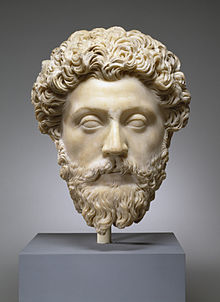
Head of Old Man, 1st Century BCE. Torlonia Museum (Rome)

Injustice: A Greater Portion of Good; A Lesser Share of Evils

Demosthenes, Against Olympiodorus 46

“This is the greatest sign of all, jurors, by which you will know that this man is an unjust and selfish person.”

ὃ δὲ πάντων μέγιστόν ἐστιν, ὦ ἄνδρες δικασταί, ᾧ καὶ γνώσεσθε ταυτονὶ ὅτι ἄδικός ἐστιν καὶ πλεονέκτης ἄνθρωπος·

Pleonektes

Aristotle, Nicomachean Ethics 1129b (Book 5)

“Let us consider now how many ways a man may be called unjust. It is indeed clear that a man who breaks laws is unjust but so is someone who is greedy and inegalitarian—thus it is clear that the just man will be law-abiding and fair. Justice, then, is lawful and fair; injustice is unlawful and unfair.

Since the unjust man someone who is greedy, he will be selfish regarding good things, not everything, but those things upon which good fortune and bad fortune rely—those things which are universally always good but not always for the same person. People pray for these things and pursue them; it is not right, however, that they pray for things which are universally good and good for them, but that they choose things that are just good for them.

The unjust man does not always choose the larger portion;for he will choose the smaller portion of bad things. But even here he is more selfish of the good because he appears to take on less evil, which is a type of good, and for that reason he seems greedy. He should be called unfair. This also embraces the common sense.”

εἰλήφθω δὴ ὁ ἄδικος ποσαχῶς λέγεται. δοκεῖ δὴ ὅ τε παράνομος ἄδικος εἶναι καὶ ὁ πλεονέκτης καὶ ἄνισος, ὥστε δῆλον ὅτι καὶ [ὁ] δίκαιος ἔσται ὅ τε νόμιμος καὶ ὁ ἴσος. τὸ μὲν δίκαιον ἄρα τὸ νόμιμον καὶ τὸ ἴσον, τὸ  δ’ ἄδικον τὸ παράνομον καὶ τὸ ἄνισον. ἐπεὶ δὲ πλεονέκτης ὁ ἄδικος, περὶ τἀγαθὰ ἔσται, οὐ πάντα, ἀλλὰ περὶ ὅσα εὐτυχία καὶ ἀτυχία, ἃ ἐστὶ μὲν ἁπλῶς ἀεὶ ἀγαθά, τινὶ δ’ οὐκ ἀεί. οἱ δ’ ἄνθρωποι ταῦτα εὔχονται καὶ διώκουσιν· δεῖ δ’ οὔ, ἀλλ’ εὔχεσθαι μὲν τὰ ἁπλῶς ἀγαθὰ καὶ αὑτοῖς ἀγαθὰ εἶναι, αἱρεῖσθαι δὲ τὰ αὑτοῖς ἀγαθά. ὁ δ’ ἄδικος οὐκ ἀεὶ τὸ πλέον αἱρεῖται, ἀλλὰ καὶ τὸ ἔλαττον ἐπὶ τῶν ἁπλῶς κακῶν· ἀλλ’ ὅτι δοκεῖ καὶ τὸ μεῖον κακὸν ἀγαθόν πως εἶναι, τοῦ δ’ ἀγαθοῦ ἐστὶν ἡ πλεονεξία, διὰ τοῦτο δοκεῖ πλεονέκτης εἶναι. ἔστι δ’ ἄνισος· τοῦτο γὰρ περιέχει καὶ κοινόν.


Image result for Stylized picture greek trump


Chocolate Bar Roman History

While searching for images to put into one of the old Zonaras posts, I found that Chocolat Poulain used to print scenes from Roman history on their chocolate bars. This is the sort of custom which needs to be restored immediately!

Poetry in a Language Not Yet Understood

Basil Gildersleeve, Hellas and Hesperia:

“Must everybody learn Greek? Such a conclusion would savor too much of that plea for Greek which I declined to make at the outset of these talks. And yet I should like to say a word in closing by way of reply to those who sneer at a smattering of this language and that. It is astonishing, I have said elsewhere, how much enjoyment one can get from a language one understands imperfectly; and Prince Kropotkin, a linguist as all Russians are, asks, ‘Is there a higher aesthetic delight than to read poetry in a language which one does not yet quite thoroughly understand?’ It is astonishing what a moral effect the sentences of a foreign tongue can exercise. It is astonishing what a feeling of fellowship is engendered by a stock quotation from Latin and Greek. Whether it is worth while to spend so much time on Latin and Greek in order to recall a musical line from Homer or Virgil, to say from the heart some of the untranslatables, such as Sunt lacrimae rerum, such as μετὰ καὶ τόδε τοῖσι γενέσθω, to put one’s self into sympathetic relation with the scholarly past, it is not for me to say, as my testimony may be suspect, and might reveal more of my life than would be fitting. All that the best of us reach in any range of study is a smattering, and I am only thankful for my own smatterings. In crises of life the words that come up to one are not always the words of the mother tongue, but those that had been acquired at school, the words of comfort and counsel that saved the lesson from being an unmitigated bore. Those nails fastened by the masters of assemblies are golden nails.”

Learning to Speak and to Hear the Truth: Reading a Teacher’s Comments

From Marcus Aurelius to M. Cornelius Fronto

To my teacher,

“I received two letters from you at the same time. In one of them, you were criticizing me and you were showing that I wrote a sentence rashly; in the second, however, you were trying to approve my work with praise. Still, I swear by my mother and by my health that I got more joy from the first letter, to which I often yelled out while reading: “Lucky me!” And someone might ask whether I am happy because I have a teacher who teaches me to write a gnome with more care, precision, and concision?  No! This is not the reason I say I am lucky. Why then? Because I learn from you to speak the truth.

This lesson—speaking truly—is hard for both gods and men. There is no oracle so truthful that it is not also ambiguous or unclear or which does not have some obstacle which may catch the unwise who interprets whatever is said the way he wants to and understands this only after the moment when the affair is complete. But this is advantageous and clearly it is customary to excuse these things as sacred error or silliness.

But what you say—whether they are criticisms or rules—they show the path itself immediately and without deceit or riddling words. I ought to give you thanks since you teach me foremost to speak the truth and at the same time how to hear it too! Therefore, you should get a double reward, which you will endeavor that I will not pay. If you wish to accept nothing, how may I balance our accounts except through obedience? [some incomplete lines].

Farewell my good, my best teacher. I rejoice that we have become friends. My wife says hello.

Magistro meo.

Duas per id<em> tempus epistulas tuas excepi. Earum altera me increpabas et temere sententiam scripsisse arguebas, altera vero tueri studium meum laude nitebaris. Adiuro tamen tibi meam, meae matris, tuam salutem mihi plus gaudii in animo coortum esse illis tuis prioribus litteris; meque saepius exclamasse inter legendum O me felicem! Itane, dicet aliquis, feiicem te, si est qui te doceat quomodo γνώμην sollertius dilucidius brevius politius scribas? Non hoc est quod me felicem nuncupo. Quid est igitur?  Quod verum dicere ex te disco. Ea res—verum|dicere—prorsum deis hominibusque ardua: nullum denique tam veriloquum oraculum est, quin aliquid ancipitis in se vel obliqui vel impediti habeat, quo imprudentior inretiatur, et ad voluntatem suam dictum opinatus captionem post tempus ac negotium sentiat. Sed ista res lucrosa est, et plane mos talia tantum pio errore et vanitate ex<cus>are. At tuae seu accusationes seu lora confestim ipsam viam ostendunt sine fraude et inventis verbis. Itaque deberem etiam gratias agere tibi si verum me dicere satius simul et audire verum me doces. Duplex igitur pretium solvatur, pendere quod ne valeam <elabora>bis. Si resolvi vis nil, quomodo tibi par pari expendam nisi obsequio? Impius tamen mihi malui te nimia motum cura . . . . die<s isti quom essent> vacui, licuit me . . . . bene st<udere et multas sententias> excerpere . . . . Vale mi bone et optime <magister. Te>, optime orator, sic m<ihi in  amicitiam> venisse gaudeo. | Domina mea te salutat.

Screen Shot 2016-02-18 at 6.36.43 AM.png
See Sarah E. Bond’s great post on Ancient School Exercises

A Pirate Orator! A Late-Arriving Orphan! Slandering Cicero…

I had coffee with a wonderful Cicero scholar today. I went home to find something cool by Cicero to post but then I read this:

Pseudo-Sallust, Against Cicero

“I would have a hard time enduring your attacks with a level mind, Marcus Tullius, if I believed that this petulance of yours came from good judgment rather than a sick mind. But, since I discover in you neither balance nor modesty, I will answer you just so you may lose the pleasure you get from slandering someone when you are slandered yourself.

Where shall I complain, whom shall I address, Senators, to tell that the Republic is being divided up as booty for any kind of daring pirate? Can I call to the Roman people, the people who are so corrupted by expenditures that they offer themselves and their fortunes for sale? Can I call to you, Senators, whose authority is a joke to any of the foulest and most criminal—especially when Marcus Tullius defends the laws, the courts, and the Republic and lords over this order as if he were the last scion of a famous family of Scipio Africanus and not some orphan citizen, just recently rooted in this city?

Come on, Marcus—aren’t your words and deeds perfectly clear? Haven’t you lived in such a way from boyhood that you believed that there was nothing sinful which anyone could do to your body? Or, I guess you did not develop this excessive elegance of yours with Marcus Piso by offering up your shame? It is thus hardly a wonder that you sell it so criminally since you won it so disgustingly.”

[The text goes on to insult Cicero’s wife, daughter, his relationship with Crassus and more…Many apologies to anyone who cares for Cicero, I have a weakness for excessive Latin invective…and Cicero did too…]

Graviter et iniquo animo maledicta tua paterer,M. Tulli, si te scirem iudicio magis quam morbo animi petulantia ista uti. Sed cum in te neque modum neque modestiam ullam animadverto, respondebo tibi ut si quam male dicendo voluptatem cepisti, eam male audiendo amittas.

Ubi querar, quos implorem, patres conscripti, diripi rem publicam atque audacissimo cuique esse praedae? apud populum Romanum? qui ita largitionibus corruptus est, ut se ipse ac fortunas suas venales habeat. an apud vos, patres conscripti? quorum auctoritas turpissimo cuique et sceleratissimo ludibrio est; ubi M. Tullius leges, iudicia, rem publicam defendit atque in hoc ordine ita moderatur quasi unus reliquus e familia viri clarissimi, Scipionis Africani, ac non reperticius, accitus, ac paulo ante insitus huic urbi civis.

An vero, M. Tulli, facta tua ac dicta obscura sunt? an non ita a pueritia vixisti ut nihil flagitiosum corpori tuo putares quod alicui collibuisset? aut scilicet istam immoderatam eloquentiam apud M. Pisonem non pudicitiae iactura perdidicisti! itaque minime mirandum est quod eam flagitiose venditas quam turpissime parasti.


Image result for Cicero

The Idle Vanity of Knowing Classical Passages

George Eliot, Middlemarch:

“Certainly this affair of his marriage with Miss Brooke touched him more nearly than it did any one of the persons who have hitherto shown their disapproval of it, and in the present stage of things I feel more tenderly towards his experience of success than towards the disappointment of the amiable Sir James. For in truth, as the day fixed for his marriage came nearer, Mr. Casaubon did not find his spirits rising; nor did the contemplation of that matrimonial garden scene, where, as all experience showed, the path was to be bordered with flowers, prove persistently more enchanting to him than the accustomed vaults where he walked taper in hand. He did not confess to himself, still less could he have breathed to another, his surprise that though he had won a lovely and noble-hearted girl he had not won delight,—which he had also regarded as an object to be found by search. It is true that he knew all the classical passages implying the contrary; but knowing classical passages, we find, is a mode of motion, which explains why they leave so little extra force for their personal application.

Poor Mr. Casaubon had imagined that his long studious bachelorhood had stored up for him a compound interest of enjoyment, and that large drafts on his affections would not fail to be honored; for we all of us, grave or light, get our thoughts entangled in metaphors, and act fatally on the strength of them. And now he was in danger of being saddened by the very conviction that his circumstances were unusually happy: there was nothing external by which he could account for a certain blankness of sensibility which came over him just when his expectant gladness should have been most lively, just when he exchanged the accustomed dulness of his Lowick library for his visits to the Grange. Here was a weary experience in which he was as utterly condemned to loneliness as in the despair which sometimes threatened him while toiling in the morass of authorship without seeming nearer to the goal. And his was that worst loneliness which would shrink from sympathy. He could not but wish that Dorothea should think him not less happy than the world would expect her successful suitor to be; and in relation to his authorship he leaned on her young trust and veneration, he liked to draw forth her fresh interest in listening, as a means of encouragement to himself: in talking to her he presented all his performance and intention with the reflected confidence of the pedagogue, and rid himself for the time of that chilling ideal audience which crowded his laborious uncreative hours with the vaporous pressure of Tartarean shades.”

Image result for scholar reading

Cities and Women With the Same Name: The Ever-Clever Menelaos

The scene: Menelaos has been shipwrecked in Egypt. He left Helen—the fake one sent to Troy before the beginning of the war—in a cave for safekeeping before coming to town. Outside the house of Proteus, he meets an old servant who tells him that Proeteus’ son is not home, but that Helen, Zeus’ daughter from Sparta, is inside. Menelaos is dumfounded.

Euripides, Helen 483–499

‘What am I saying? What can I say? I am learning
terrible troubles on top of my old ones.
If I brought my wife, captured from Troy,
When I came here and she is safe in a cave,
Then someone else has the same name as my wife
And lives in this house here.
But this old lady said that she is the child of Zeus.
Is there some dude named Zeus who lives
On the banks of the Nile? There’s only one in heaven.
Where on earth is there a Sparta except where
The steams flow from only one lovely-reeded Eurotas?

Does the famous Tyndareion name have a twin?
Is there any place with the same name as Lakedaimon
Or Troy? I don’t know what to say.
Many things, I guess, over the great earth
have the same names: cities named the same,
Women named the same. Nothing should be surprising.”

Με. τί φῶ; τί λέξω; συμφορὰς γὰρ ἀθλίας
ἐκ τῶν πάροιθε τὰς παρεστώσας κλύω,
εἰ τὴν μὲν αἱρεθεῖσαν ἐκ Τροίας ἄγων
ἥκω δάμαρτα καὶ κατ’ ἄντρα σώιζεται,
ὄνομα δὲ ταὐτὸν τῆς ἐμῆς ἔχουσά τις
δάμαρτος ἄλλη τοισίδ’ ἐνναίει δόμοις.
Διὸς δ’ ἔλεξε παῖδά νιν πεφυκέναι·
ἀλλ’ ἦ τις ἔστι Ζηνὸς ὄνομ’ ἔχων ἀνὴρ
Νείλου παρ’ ὄχθας; εἶς γὰρ ὅ γε κατ’ οὐρανόν.
Σπάρτη δὲ ποῦ γῆς ἐστι πλὴν ἵνα ῥοαὶ
τοῦ καλλιδόνακός εἰσιν Εὐρώτα μόνον;
διπλοῦν δὲ Τυνδάρειον ὄνομα κλήιζεται,
Λακεδαίμονος δὲ γαῖά τις ξυνώνυμος
Τροίας τ’; ἐγὼ μὲν οὐκ ἔχω τί χρὴ λέγειν.
πολλοὶ γάρ, ὡς εἴξασιν, ἐν πολλῆι χθονὶ
ὀνόματα ταὔτ’ ἔχουσι καὶ πόλις πόλει
γυνὴ γυναικί τ’· οὐδὲν οὖν θαυμαστέον.

Image result for Ancient Greek Menelaus

The Wonder of Fantastic Lies

Isocrates, Helen 1-3

“There are some people who get puffed up if they manage to talk about something tolerably after they have themselves selected a strange and impossible subject. Men have also grown old claiming that it is impossible to say or disprove a lie or to speak two ways about the same matters. Others claim that courage, wisdom, and justice are the same thing, that we have none of these by nature, and that there is a single knowledge about them all. Others waste their time in conflicts which bring no benefit, which can only create more trouble for those who approach them.

I, if I saw that this superfluity had only just emerged in speeches and that these men were eager for honor in the novelty of what they discover, I would not be a surprised at them. But, now, who is such a late-learner that he does not know Protagoras and the sophists who were active at his time and that they left to us these types of things and speeches even more excessively composed than these? How could anyone overcome Gorgias who dared to say that nothing exists at all or Zeno who tried to demonstrate that the same things are possible and impossible or even Melissos who—although some things are countless in number—tried to provide a proof that everything is one!”

Εἰσί τινες οἳ μέγά φρονοῦσιν, ἢν ὑπόθεσιν ἄτοπον καὶ παράδοξον ποιησάμενοι περὶ ταύτης ἀνεκτῶς εἰπεῖν δυνηθῶσι· καὶ καταγεγηράκασιν οἱ μὲν οὐ φάσκοντες οἷόν τ᾿ εἶναι ψευδῆ λέγειν οὐδ᾿ ἀντιλέγειν οὐδὲ δύω λόγω περὶ τῶν αὐτῶν πραγμάτων ἀντειπεῖν, οἱ δὲ διεξιόντες ὡς ἀνδρία καὶ σοφία καὶ δικαιοσύνη ταὐτόν ἐστι, καὶ φύσει μὲν οὐδὲν αὐτῶν ἔχομεν, μία δ᾿ ἐπιστήμη καθ᾿ ἁπάντων ἐστίν· ἄλλοι δὲ περὶ τὰς ἔριδας διατρίβουσι τὰς οὐδὲν μὲν ὠφελούσας, πράγματα δὲ παρέχειν τοῖς πλησιάζουσι δυναμένας.

Ἐγὼ δ᾿ εἰ μὲν ἑώρων νεωστὶ τὴν περιεργίαν ταύτην ἐν τοῖς λόγοις ἐγγεγενημένην καὶ τούτους ἐπὶ τῇ καινότητι τῶν εὑρημένων φιλοτιμουμένους, οὐκ ἂν ὁμοίως ἐθαύμαζον αὐτῶν· νῦν δὲ τίς ἐστιν οὕτως ὀψιμαθής, ὅστις οὐκ οἶδε Πρωταγόραν καὶ τοὺς κατ᾿ ἐκεῖνον τὸν χρόνον γενομένους σοφιστάς, ὅτι καὶ τοιαῦτα καὶ πολὺ τούτων πραγματωδέστερα συγγράμματα κατέλιπον ἡμῖν; πῶς γὰρ ἄν τις ὑπερβάλοιτο Γοργίαν τὸν τολμήσαντα λέγειν ὡς οὐδὲν τῶν ὄντων ἔστιν, ἢ Ζήνωνα τὸν ταὐτὰ δυνατὰ καὶ πάλιν ἀδύνατα πειρώμενον ἀποφαίνειν, ἢ Μέλισσον ὃς ἀπείρων τὸ πλῆθος πεφυκότων τῶν πραγμάτων ὡς ἑνὸς ὄντος τοῦ παντὸς ἐπεχείρησεν ἀποδείξεις εὑρίσκειν;


Image result for Isocrates

Goodbye Cato, Cicero and Sallust: Loving Literature until It Hurts

Aurelius to Fronto

“Am I supposed to study when you are in pain—especially when you are in pain because of me? Should I not voluntarily punish myself with every kind of discomfort? It is deserved, by Hercules. What other person caused the pain in your knee which you wrote increased last night, except for Centumcellae, except for me? What can I do when I cannot see you and I am tortured with worry? And, in addition, even if I could study, the courts prohibit it since, as those who know say, they consume whole days.

Nevertheless, I sent you today’s maxim and yesterday’s commonplace. We traveled on the road the whole day yesterday. Today it is difficult to do anything but the evening maxim. Do you, you say, sleep so long a night? I certainly can sleep, for I am big on sleep. But it is so cold in my room that I can barely reach my hand from my clothes!

In all honesty, what distracted my mind the most from studies especially was that, because I love literature too much, I was a burden for you at the Harbor, as events proved. So, then, goodbye to all the Catos, the Ciceros, and the Sallusts, provided that you are well and that I may see you healthy even without books.

Farewell, my greatest joy, my sweetest teacher.

Egone ut studeam quom tu doleas, praesertim quom mea causa doleas? Non me omnibus incommodis sponte ipse adflictem? Merito hercule. Quis enim tibi alius dolorem genus, quem scribis nocte proxima auctum, quis alius eum suscitavit, nisi Centumcellae, ne me dicam? Quid igitur faciam, qui nec te video et tanto angore | discrucior? Adde eo quod etiamsi libeat studere, iudicia prohibent, quae, ut dicunt qui sciunt, dies totos eximent. Misi tamen hodiernum γνώμην et nudiustertianum locum communem. Heri totum diem in itinere adtrivimus. Hodie difficile est ut praeter vespertinam γνώμην quicquam agi possit. Nocte, inquis, tam longa dormis? Et dormire quidem possum, nam sum multi somni; sed tantum frigoris est in cubiculo meo, ut manus vix exseri possit. Sed re vera illa res maxime mih-animum a studiis depulit, quod, dum nimium litteras amo, tibi incommodus apud Portum fui, ut res ostendit. Itaque valeant omnes Porcii et Tullii et Crispi, dum tu valeas, et te vel sine libris firmum tamen videam. Vale, praecipuum meum gaudium, magister dulcissime.


Image result for Ancient Roman letter Aurelius